Most of us spend our lives searching for peace.
We look for it in our careers, relationships, achievements, holidays, personal development courses, and even our meditation practice. We often believe that once life becomes less stressful or more predictable, peace will naturally follow.
But what if we've been looking in the wrong place all along?
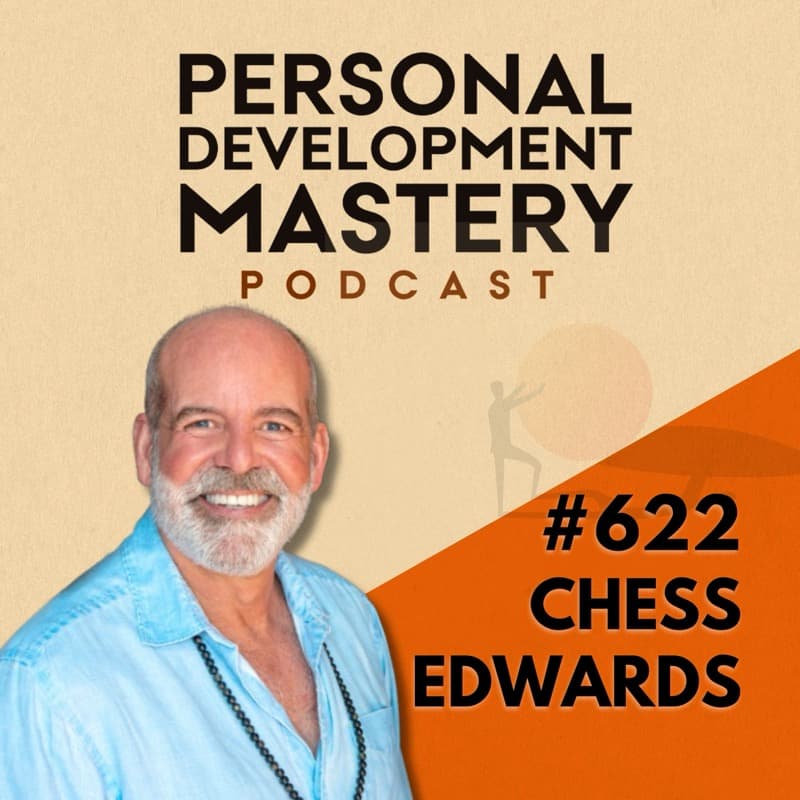
In this episode of Personal Development Mastery, I welcome back inner journey guide Chess Edwards for a fascinating conversation about the true nature of inner peace. Rather than discussing peace as a temporary feeling or a mental state, Chess offers a refreshing perspective that challenges one of our deepest assumptions.
His central message is both simple and profound: inner peace is not something we create. It is who we are.
Peace Beyond the Thinking Mind
One of the most powerful insights from our conversation is that inner peace is not dependent on having a perfectly quiet mind.
Many people believe that meditation is about eliminating thoughts. When the mind continues to wander, they assume they are failing. Chess suggests a completely different way of looking at the experience.
He describes meditation as an intentional interruption of our habitual thinking patterns. The purpose is not to manufacture peace, but to reconnect with the awareness that exists beneath the constant stream of thoughts.
He uses the beautiful analogy of a pond. While the surface may be disturbed by ripples and waves, the water beneath remains calm. Our minds may be busy, emotional, and reactive, but beneath that activity lies an unchanging stillness that has always been present.
The invitation is not to fight the waves but to discover the calm beneath them.
The Self We Mistake for Ourselves
Why do so many people continue searching for happiness outside themselves?
According to Chess, most of us identify almost entirely with what he calls the egoic self. This is the version of ourselves shaped by our upbringing, culture, education, expectations, and conditioning. It is constantly trying to become better, achieve more, avoid failure, and earn approval.
When this conditioned identity becomes our only reference point, it naturally seeks peace in external circumstances because it cannot find lasting peace within itself.
The challenge is that we mistake this conditioned identity for who we truly are.
Through meditation, self-inquiry, and conscious awareness, we begin to recognise that our true nature exists prior to all of those thoughts, stories, and beliefs.
There I Am
One practical idea that stood out during our discussion was Chess's suggestion to change the way we think about moments of stillness.
Instead of saying, "I experienced a peaceful state," he encourages us to say, "There I am."
It is a subtle shift in language, yet it completely changes our relationship with the experience.
Rather than believing we briefly achieved peace before inevitably losing it again, we recognise that our awareness never disappeared. We simply returned our attention to what had always been there.
Chess compares this to bringing your attention to your left foot. Your foot did not suddenly appear. It was there all along. You simply noticed it again.
The same is true of our deeper awareness.
Why the Mind Keeps Returning
Anyone who meditates knows the experience.
You settle into stillness and within moments your mind begins planning tomorrow's meeting, replaying yesterday's conversation, or worrying about something that has not even happened.
Chess reassures us that this is entirely natural.
Instead of becoming frustrated, he recommends becoming curious.
Notice the thought.
Acknowledge that the mind is doing what minds do.
Then ask a simple question:
What is aware of this thought?
That question shifts our attention away from the content of thinking and towards the awareness in which all thoughts appear.
It is this awareness, not the thoughts themselves, that remains constant.
The Importance of Study and Experience
Another valuable point from our conversation was the relationship between intellectual understanding and direct experience.
Meditation without understanding can leave us confused about what we are experiencing.
Equally, endless reading without practice can become another form of avoidance.
Chess explains that study provides the framework that helps us recognise our experiences correctly, while practice allows those insights to become lived reality.
The two work together.
Knowledge alone is not enough, but neither is experience without understanding.
Why Guidance Matters
Many people assume they should be able to navigate the inner journey entirely on their own.
Chess challenges this belief by comparing spiritual guidance to learning any other meaningful skill.
If someone wanted to become a concert pianist, they would naturally seek an experienced teacher. The same applies to inner transformation.
A guide cannot give us truth, but they can point us towards it.
More importantly, they help us recognise the subtle ways the ego resists change.
Sometimes that resistance appears as jumping endlessly from one practice to another. Other times it appears as impatience, self-doubt, or the belief that nothing is working.
Recognising these patterns allows us to remain committed rather than constantly searching for the next technique.
The Power of Patience
Perhaps the greatest lesson from this conversation is that genuine transformation takes time.
Modern culture encourages quick fixes and instant results, but awakening to our true nature is rarely an overnight process.
It requires patience.
It requires devotion.
It requires a willingness to keep returning to ourselves, even when the mind insists on looking elsewhere.
The beautiful paradox is that we are not becoming someone new.
We are simply remembering who we have always been beneath the noise, the conditioning, and the endless activity of the thinking mind.