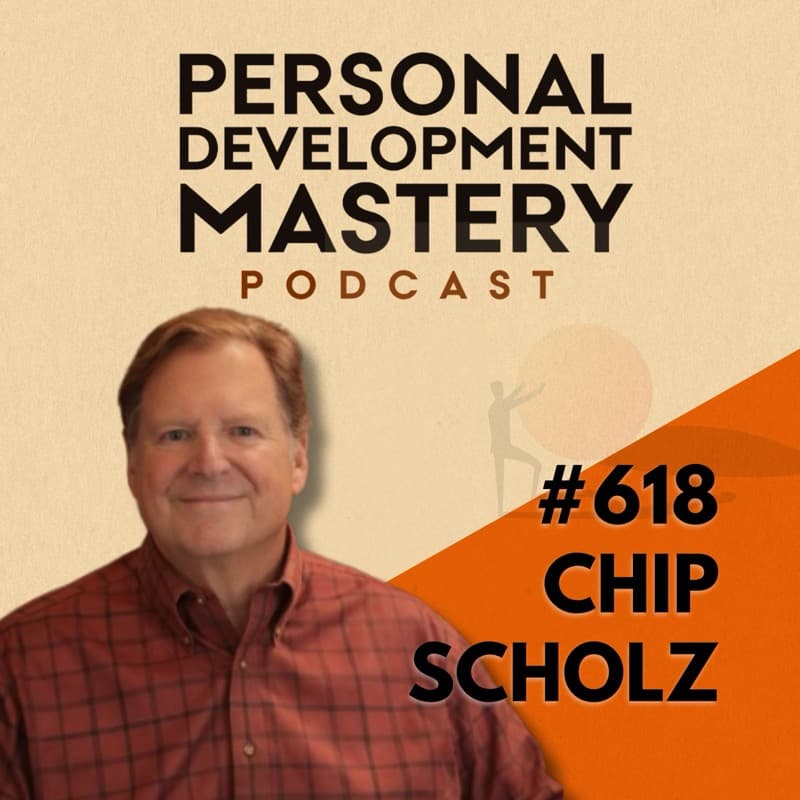
When people think about transforming their lives, they often imagine making one bold, life changing decision. It could be changing careers, moving to a new city, starting a business, or finally pursuing a long held dream. While these moments certainly matter, they are rarely the true reason lasting change occurs.
According to executive coach and author Chip Scholz, the real power lies elsewhere. It is found in the small decisions we make every day.
In this episode, Chip shares powerful insights on identity, leadership, emotional awareness, and the hidden influence of everyday choices. His message is both simple and profound. The biggest shifts in our lives are not usually created by dramatic moments. They are built one small decision at a time.
When your identity no longer fits
One of the most thought provoking parts of the conversation explores how our identities can become outdated.
Many people define themselves by their profession, business, or achievements. This can be especially true for leaders and business owners who have spent decades building an organisation. Eventually, however, there comes a point when the identity that once served us begins to hold us back.
Chip shares examples of business owners who struggled to step away after years of leading successful companies. Their role had become so intertwined with who they were that letting go felt almost impossible.
This challenge is not limited to executives. Anyone can become attached to an identity, whether it is being the dependable employee, the high achiever, the caregiver, or the expert. As life changes, these identities sometimes need to evolve.
The difficult question becomes: who are you when the role changes?
Recognising that an identity no longer serves you is often the first step towards meaningful growth.
Moving from doing to being
Throughout much of our lives, we are rewarded for what we do.
At school we are praised for good grades. At work we are recognised for productivity, promotions, and results. Success often becomes closely linked to performance.
As we mature, however, there is an opportunity to make a different transition. Instead of focusing solely on doing, we begin to focus on being.
Chip describes this shift as one of the defining moments in leadership and personal development.
Rather than constantly proving yourself through activity, you begin asking different questions.
How can I contribute?
How can I help others grow?
How can I become more useful?
For Chip, this transformation was accelerated by a health crisis that forced him to rethink his priorities. Instead of striving to be performative, he found himself wanting simply to be useful.
It is a subtle but powerful distinction that has the potential to reshape every area of life.
Emotional literacy is a skill worth developing
Another fascinating part of the discussion centres on emotional literacy.
Many of us experience emotions every day without fully understanding them. We might say we are stressed, angry, or frustrated, but often struggle to describe what we are actually feeling.
Chip explains that increasing emotional awareness begins by paying attention to how emotions show up physically.
Where do you feel anger in your body?
What colour would you give it?
What shape does it have?
These questions may sound unusual at first, but they encourage genuine self reflection. The more accurately we can identify our emotions, the better equipped we become to respond thoughtfully instead of reacting automatically.
Self awareness is not about eliminating difficult emotions. It is about recognising them early enough to make conscious choices rather than unconscious ones.
Why small decisions matter more than big ones
The central theme of the episode is summed up perfectly in one sentence:
"It is not the big ones that change our life, it is the small ones."
Every significant achievement is built upon countless small decisions.
Choosing not to smoke today.
Choosing to exercise even when motivation is low.
Choosing integrity when no one is watching.
Choosing patience during a difficult conversation.
Each individual decision may seem insignificant, yet over weeks, months, and years they accumulate into lasting change.
Chip illustrates this beautifully through personal stories, including rebuilding his life after redundancy, losing over 100 pounds following a health crisis, and navigating major life transitions through a series of practical daily choices.
Success is rarely the result of one defining moment. More often, it is the product of consistent action repeated over time.
Self awareness creates better choices
The conversation repeatedly returns to one essential quality: self awareness.
Without awareness, we simply operate on autopilot.
We repeat habits without questioning them. We react emotionally without understanding why. We continue living out identities that no longer fit because we never pause long enough to examine them.
Developing self awareness allows us to interrupt those automatic patterns.
It helps us notice when we are acting from fear rather than purpose.
It encourages us to reflect before reacting.
Most importantly, it enables us to make better small decisions each day.
Those decisions eventually become better habits, stronger relationships, healthier leadership, and a greater sense of meaning.
Final thoughts
Personal growth is rarely dramatic. It is usually quiet.
It happens when we choose curiosity over certainty.
When we pause before reacting.
When we become more aware of our emotions.
When we let go of identities that no longer serve us.
And when we make one small decision that moves us in the direction of the person we want to become.
These small moments may seem insignificant in isolation, but together they create the biggest shifts of all.