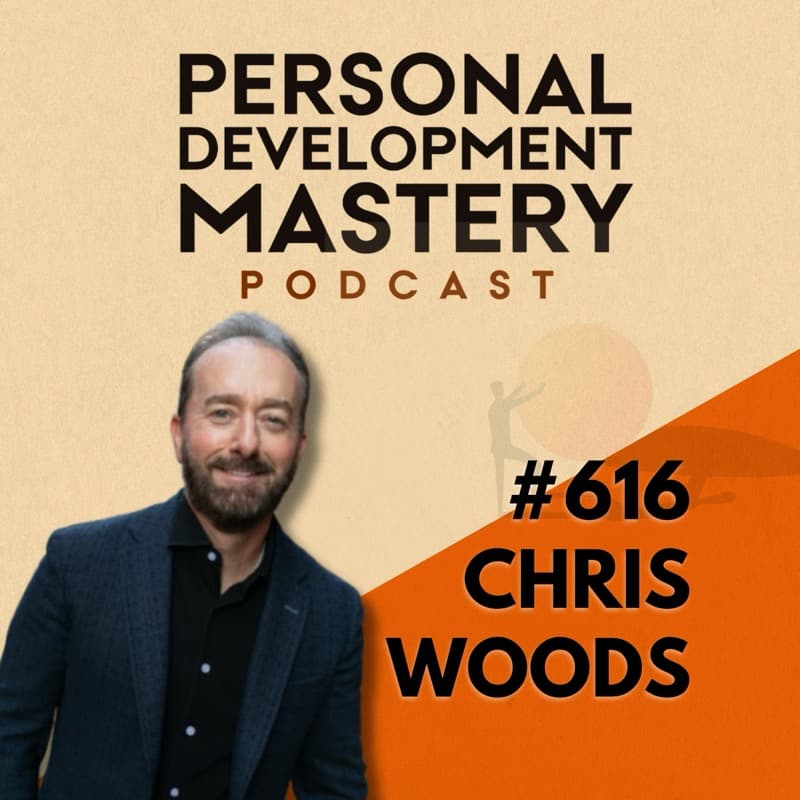
In this episode, host Agi Keramidas speaks with Chris Woods, a former Google sales leader turned coach and author of Balls and Brains. Chris shares a deeply personal story about a life-threatening health crisis that forced him to re-evaluate everything he thought he knew about success, fear, and fulfilment.
On the surface, his life looked like a textbook definition of achievement. A senior role at Google, admission to Harvard, and a strong upward career trajectory. Internally, however, the experience was very different, shaped by anxiety, pressure, and a constant sense that something could go wrong at any moment.
The Moment Everything Changed
Chris describes how a seemingly ordinary moment, doing yard work, led to a sudden medical emergency. A tick bite triggered a serious reaction that resulted in cardiac Lyme disease. In hospital, his heart stopped and he flatlined for just over a minute before being revived.
Although he does not recall the experience while unconscious, he remembers the aftermath clearly. He could hear medical staff but was unable to move or speak. That moment of awareness, combined with the gravity of what had happened, became the starting point for a major internal shift.
Rather than returning to life exactly as it was before, Chris began to question how he wanted to live the years ahead, especially after being told he likely had many more years ahead of him following the installation of a pacemaker.
A Life Driven by Fear and Achievement
Looking back, Chris reflects on how much of his early motivation was shaped by fear. Losing his father at a young age created an underlying sense of uncertainty about life expectancy. That translated into a drive to achieve, perform, and stay ahead.
Externally, this looked like success. Internally, it often felt like pressure. He describes it as living in a way that was more focused on building an obituary than building a life. The achievement was real, but the emotional experience behind it was not always aligned with fulfilment.
The Shift Towards Awareness and Choice
The turning point was not a rejection of ambition, but a reconsideration of its driver. Chris began to notice how often fear influenced his decisions. Rather than trying to eliminate fear completely, he started asking how life might change if fear was no longer in control of his choices.
This led him to a simpler but powerful question that he now encourages others to explore: who would you be in the absence of your concerns?
Rather than focusing on problems or limitations, the question invites reflection on identity beyond anxiety. Chris suggests writing down the answers, revisiting them over time, and allowing the response to develop gradually. For many people, this becomes a way of reconnecting with a version of themselves that is less constrained by worry and external expectations.
From Weakness Fixing to Strength Building
A significant part of Chris’s perspective involves shifting attention away from weaknesses and towards strengths. He explains that many people spend a large portion of their lives trying to improve what they are not good at, often at the expense of what they naturally excel in.
Instead, he encourages a strengths-led approach, supported by tools such as CliftonStrengths. The goal is not to ignore development areas, but to prioritise where energy and capability naturally align.
When people operate from their strengths, they are more likely to experience flow, performance, and a greater sense of internal alignment. This also tends to improve outcomes in professional environments, where contribution becomes more effective and sustainable.
Redefining Success and Fulfilment
Before his health crisis, Chris defines success primarily through achievement and progression within large organisations. After his experience, success became less about status and more about alignment.
He now describes fulfilment as the ability to integrate who he is with what he does. Rather than switching between different roles or identities, he aims to show up consistently across work, relationships, and personal life.
Fulfilment, as he explains it, is not something that can be achieved through a fixed formula. Instead, it emerges through alignment, awareness, and the ongoing decision to engage with work and life in a way that feels meaningful.
Gratitude as a Daily Practice
One of the most practical elements Chris shares is his daily gratitude practice. He begins and ends each day by reflecting on what he is grateful for, from major aspects of life such as family, to simple comforts like a bed or air conditioning.
Over time, this practice trains the mind to notice more positives throughout the day. Rather than being a passive exercise, it becomes a reinforcing habit that shapes perspective and emotional tone.
Balls and Brains and Helping Others
Chris also discusses his book Balls and Brains, written primarily for younger men who may be reluctant to engage with topics such as fear and emotional awareness. The book is designed to be accessible and direct, offering a starting point for reflection rather than a purely theoretical approach.
The broader aim of his work is to help people move from fear-driven patterns towards a more aligned way of living, where strengths are recognised and used more intentionally.
Final Reflections
This conversation highlights how external success can sometimes mask internal tension, and how major life events can create space for reassessment. Chris’s journey is not about rejecting ambition, but about redefining what it is for and how it is experienced.
For many listeners, the key takeaway may be the idea that awareness is the starting point for change. Noticing what drives decisions, identifying patterns of fear, and reconnecting with strengths can all contribute to a more intentional way of living.