Modern professional life places heavy demands on attention, decision making, and emotional resilience. Many people function at a high level for years, even decades, yet quietly struggle with mental overload. When pressure builds, the instinct is often to think harder, analyse more deeply, or push through. This episode offers a different approach.
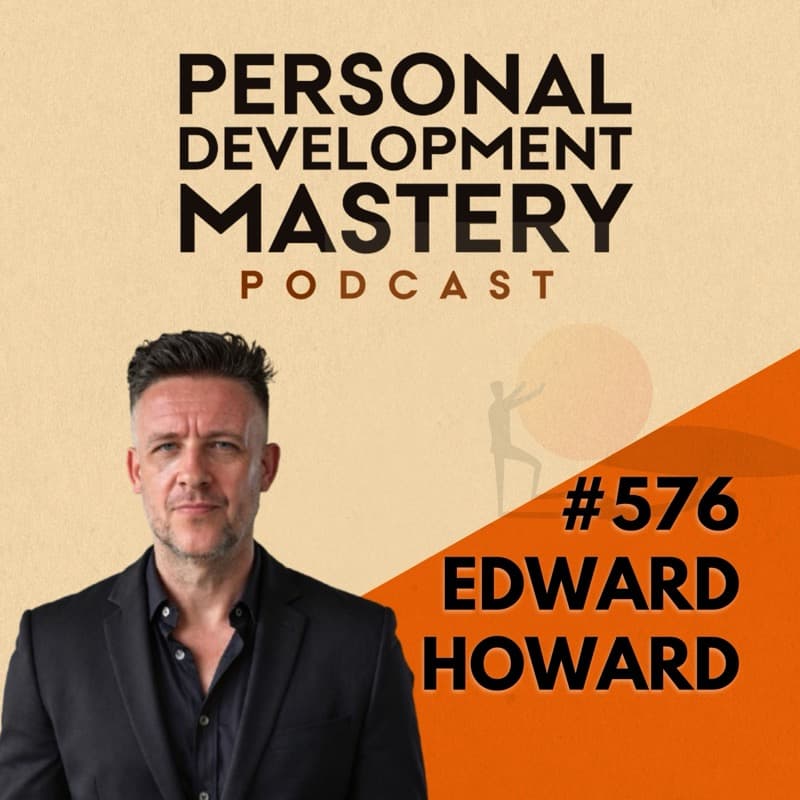
In conversation with Agi Keramidas, Edward Howard shares how awareness, when used practically, can help restore calm, clarity, and decisiveness in moments that matter.
Two Worlds, One Practice
Edward spent over 20 years in global banking, working in demanding leadership roles across international environments. Alongside this career, he trained in Zen for more than three decades, including time spent in Japan and in monasteries.
For many years, these two paths remained separate. One was driven by deadlines, compliance, and responsibility. The other was grounded in stillness, observation, and inner discipline. The turning point came after a significant personal loss, which prompted Edward to reflect deeply on how he wanted to live and work.
This reflection led him to integrate both worlds. The result is a practical framework that blends contemplative practice with modern leadership and neuroscience.
Why We Get Stuck
A central theme of the conversation is the idea of stuckness. Edward explains that being stuck is not about failure or weakness. It is about resistance to what is happening in the present moment.
In professional transitions or high-pressure situations, the mind often becomes trapped in loops of judgement, fear, and over-analysis. This can show up as indecision, defensiveness, or constant mental noise. The more pressure there is to make the right choice, the harder clarity becomes.
Rather than trying to force solutions, Edward suggests first noticing what state the mind is in.
The Three Modes of Mind
Drawing from Zen and contemporary neuroscience, Edward describes three modes of mind.
The first is the analytical mode. This is where judging, planning, and problem solving happen. It is essential for many tasks, but when overused it leads to stress and mental fatigue.
The second is a mode of open awareness. In this state, judgement softens and attention widens. Instead of trying to fix or decide, the mind takes in information. Patterns, relationships, and underlying dynamics become visible.
The third mode is action without inner debate, often referred to as flow. In this state, action feels natural and timely. There is focus without strain.
The key skill is recognising which mode you are in and being able to shift when needed.
Awareness as a Practical Skill
Awareness is often misunderstood as something abstract or passive. Edward reframes it as a functional skill. Awareness is simply noticing what is happening in your mind and body in real time.
This noticing creates a small but crucial gap between stimulus and response. In that gap, choice becomes possible.
Instead of reacting automatically, you can respond deliberately.
The One Breath Reset
At the heart of Edward’s work is the One Breath method. It is intentionally simple so it can be used anywhere.
The breath is taken in through the nose for a slow count of six, drawing the breath down into the lower belly. This is followed by a slow exhale through the nose for the same count. Attention follows the breath as it moves through the body.
This single breath acts like a handbrake on mental momentum. It interrupts spirals of thought and activates the body’s natural calming response.
What makes the method effective is consistency. Edward encourages practising this breath throughout the day during ordinary transitions, such as opening a door, answering a message, or switching tasks.
Over time, these moments accumulate. When pressure arises during a difficult conversation or decision, the body already knows how to settle.
Using the Practice in Real Life
One of the strengths of the One Breath method is its discretion. It can be done silently in meetings, on phone calls, or during emotionally charged conversations. No one else needs to know.
This makes it especially useful in professional environments where stepping away to meditate is unrealistic. Rather than withdrawing from pressure, the practice allows you to stay present within it.
As the nervous system calms, listening improves. Defensiveness softens. Decisions become clearer, not because the situation has changed, but because the internal state has.
Leadership Starts With Self-Management
Although Edward’s work is often applied in leadership contexts, the foundation is self-management. Before leading others, it is necessary to understand and regulate your own reactions.
Managing attention, emotions, and stress is not a soft skill. It directly affects judgement, communication, and performance.
Edward’s book, One Breath Leadership, explores these ideas in greater depth, combining practical exercises with scientific explanation. However, the essential practice can be learned in moments.
One breath is enough to begin.
A Subtle but Powerful Shift
This episode does not offer dramatic transformation or instant answers. Instead, it points to a subtle shift that can change how challenges are met.
By learning to pause, notice, and breathe, clarity becomes more accessible. Decisions feel less forced. Action arises from steadiness rather than urgency.
In a world that rewards constant motion, choosing to pause for one breath may be one of the most effective skills you can develop.