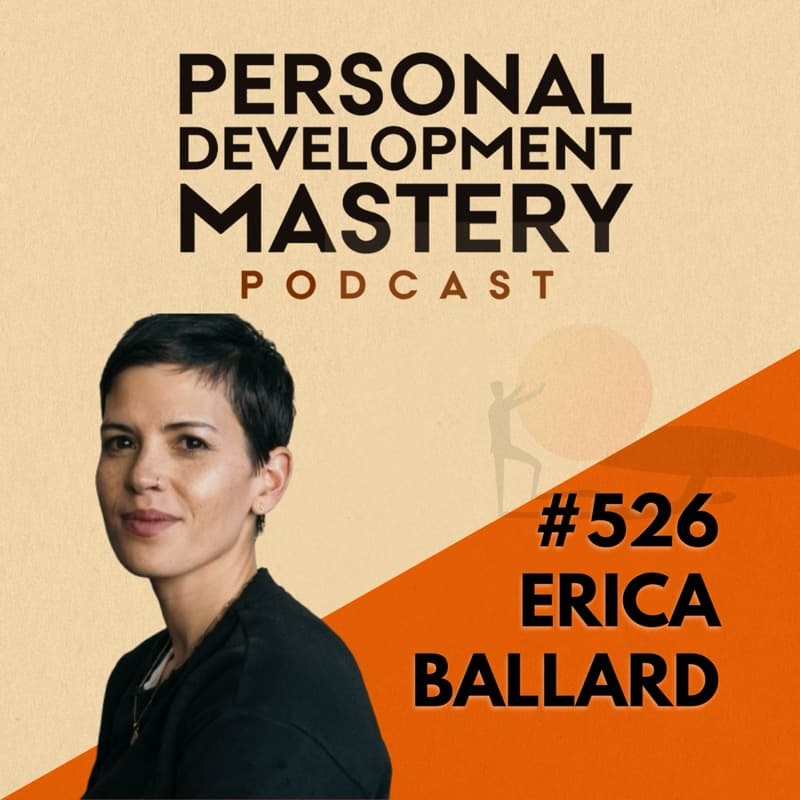
In a culture that celebrates hustle and external achievement, it can be challenging to hear, let alone trust, your inner voice. But what if reconnecting with your intuition is not only the most spiritual thing you can do, but also the most practical? In a recent episode of Personal Development Mastery, host Agi Keramidas spoke with Erica Ballard, a spiritual teacher, mindfulness facilitator, and mother of two, about intuition, acceptance, and the transformative power of inner guidance.
A Spiritual Turning Point
Erica's journey into deeper self-awareness began not with a retreat or a vision, but with a disruptive life event: getting fired from her job while on maternity leave. At first glance, it appeared to be a setback. But for Erica, it became a spiritual turning point.
Instead of rushing to fix the situation or launching into problem-solving mode, she paused. She allowed herself to be present with what was happening. In that space, she noticed something surprising: despite the upheaval, she was happy. For the first time in a long while, she was meditating regularly, listening to herself, and not pushing. It felt natural, freeing, and deeply aligned.
Acceptance as a Practice
One of the key insights Erica shared was the distinction between the natural tendency to accept and the difficulty many adults face in doing so. Children, she observed, have an innate ability to accept what happens, feel their feelings, and move on. Adults, however, are often clouded by conditioning, overthinking, and a fear-based narrative about what should or should not be happening.
To reconnect with that natural acceptance, Erica recommends a simple but powerful practice: name your thoughts. By acknowledging your spinning thoughts without trying to change them, you disrupt the cycle. The mind, seeking efficiency, stops sending those thoughts when it realises they are not being acted upon.
When the Mind Won't Quiet
There are times, Erica noted, when we are too deep in our emotions or thoughts to step back and observe. In those moments, she suggests a somatic approach. Rather than resisting or pushing away difficult feelings, she advises sitting with them. Close your eyes, find where the emotion lives in your body, and allow it to express itself. Often, this leads back to clarity and a deeper connection with your inner truth.
Over time, these practices become quicker and more effective. What might take twenty minutes at first can, with consistency, shift your state in just a few minutes.
Distinguishing Intuition from Ego
A common struggle many face is telling the difference between intuition and ego. Erica offers a straightforward way to tell them apart. Intuition is loving. Even if it guides you toward a difficult step, like setting a boundary or leaving a job, the tone is gentle, and the result brings peace, joy, or freedom. Ego, on the other hand, is driven by fear and shoulds. It speaks with urgency and pressure.
With regular practice, you become more attuned to these internal voices. You start to feel the difference between a push born from fear and a pull guided by love.
Rebuilding Connection with Your Inner Guidance
For those who feel disconnected from their spiritual selves or inner voice, Erica's advice is simple: rebuild the connection like a muscle. Start small. Set the intention to hear your inner guidance. Ask for clarity. Spend just one or two minutes a day in stillness, without pressure. Do not bulldoze your way back into connection. Instead, honour where you are and build capacity gradually.
She emphasises that this part of you wants to be known. It is not distant, but often crowded out by noise and demands. With intention and practice, the connection strengthens.
The Role of Intuition in Career and Life Choices
For high achievers focused on advancing or transitioning careers, intuition might seem irrelevant or even indulgent. But Erica challenges this mindset. She argues that reconnecting with your inner guidance is the most practical step you can take if you want a life that feels fulfilling.
Using a Venn diagram as a metaphor, she describes two circles: ambition and enjoying your life. Most people live in the ambition circle, hoping it will lead to the other. But the sweet spot is where the two overlap. To find that overlap, you must know what enjoyment feels like. This means doing the things that light you up, even if they seem small or unrelated to your goals.
When you rediscover what brings you joy and let yourself feel it, you create a roadmap. You begin to understand how you want to feel in your work and in your life. From there, your intuition becomes a reliable guide, helping you make choices that align with your values and vision.
A Message to Her Younger Self
If Erica could go back and offer advice to her 18-year-old self, it would be simple: do what you love. Despite having a supportive father who encouraged her artistic and adventurous inclinations, she still chose the corporate path. Looking back, she wishes she had honoured her true interests earlier. It is a powerful reminder that success is not about ticking boxes, but about listening to your own internal compass.
Trust Love
As the conversation wrapped up, Erica left listeners with a final piece of wisdom: trust love. It may not always be the loudest voice, but it is always the truest guide. When you trust love, in whatever form it shows up, you move closer to a life that is not only successful, but also meaningful.