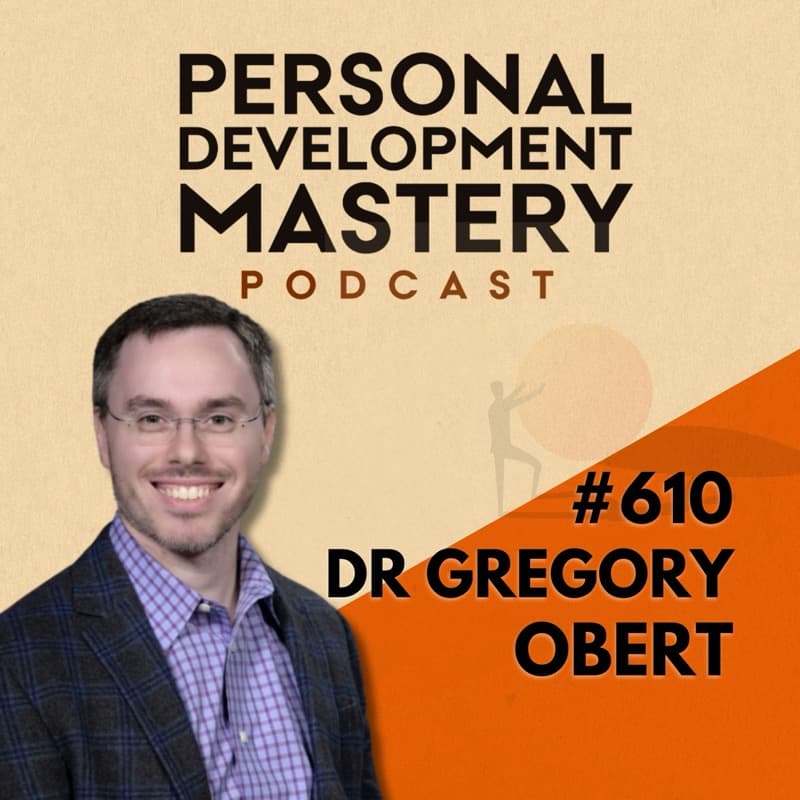
Most people like to think they are in control of their decisions. Yet in reality, much of what we do each day is driven by automatic reactions that happen before conscious thought even kicks in. This episode explores how these “autopilot” patterns shape behaviour, especially under stress, and what can be done to interrupt them.
Clinical psychologist Gregory Obert explains how recognising and working with these patterns can help people think more clearly, regulate emotions, and respond more effectively in challenging situations.
What Autopilot Really Means
Autopilot is the term Gregory Obert uses to describe habitual and automatic thinking and behaviour. It is the mental mode where actions and interpretations happen without deliberate awareness. This is not inherently negative. In fact, autopilot is essential for everyday efficiency.
Simple tasks such as putting on a shirt, driving a familiar route, or making a cup of tea do not require full conscious attention. The brain automates them so mental energy can be saved for more complex decisions.
The problem arises when autopilot extends into emotionally charged or high stakes situations. In these moments, the mind can jump to conclusions without checking whether they are accurate or helpful.
For example, if someone walks past and does not respond to a greeting, the automatic interpretation might be that they are rude or upset. This interpretation then triggers an emotional response such as frustration or anxiety, which can influence behaviour in a way that escalates tension unnecessarily.
Mindfulness as a Way to Interrupt Automatic Reactions
A key concept introduced in the episode is mindfulness. Gregory Obert defines it simply as:
“It is paying attention on purpose to the present moment, non-judgmentally.”
This definition highlights two important ideas. First, mindfulness requires intentional attention rather than passive awareness. Second, it involves observing what is happening without immediately judging it as good or bad.
When applied to everyday experiences, mindfulness creates space between an event and the reaction to it. Instead of instantly believing a thought such as “they are ignoring me”, there is an opportunity to notice that this is just a thought, not necessarily a fact.
This shift may seem small, but it is powerful. It allows individuals to respond based on evidence rather than assumption.
Learning to Defuse from Thoughts
A central psychological skill discussed in the episode is called cognitive defusion. This involves stepping back from thoughts rather than becoming fused with them.
When a thought appears, such as “they are a jerk”, it can feel like truth. Defusion introduces distance. A simple reframe is to notice, “I am having the thought that they are a jerk”.
This subtle change reduces the emotional grip of the thought. It does not deny the thought or suppress it. Instead, it acknowledges it as a mental event rather than an objective reality.
Over time, this practice helps reduce impulsive reactions and improves clarity in decision making. It becomes easier to question whether a thought is supported by evidence or influenced by stress, fear, or past experience.
The Role of Emotional Intensity
Not all emotional reactions are the same. Gregory Obert explains that emotional intensity plays a key role in how much control a person has over their response.
He describes a scale from zero to ten. When emotions are in the lower to mid range, rational thinking is still accessible. This allows mindfulness techniques such as defusion to work effectively.
However, when emotions reach a high intensity, typically around eight to ten, the rational part of the brain becomes less effective. In these moments, thinking clearly is much harder and physical regulation becomes more important.
This is why someone might react in ways they later regret during intense anger or fear. It is not a lack of intelligence or awareness, but a temporary shift in how the brain processes information under stress.
Using the Body to Regulate the Mind
When emotions are very strong, cognitive strategies alone may not be enough. The episode highlights the importance of using the body to regulate emotional intensity.
One practical technique is the use of cold exposure. Splashing cold water on the face or using a cold compress can activate the body’s dive response, which helps calm the nervous system.
This physical intervention can quickly reduce emotional intensity, making it easier to regain mental clarity. Other strategies include going for a walk, doing physical movement such as jumping jacks, or stepping away from the triggering situation.
The key idea is that emotional regulation is not purely mental. The body and mind are deeply connected, and calming the body can help restore clearer thinking.
Sitting with Difficult Emotions
Another important theme in the episode is the difficulty of sitting with uncomfortable emotions. While mindfulness encourages observing emotions without reacting, this is not always easy in practice.
Humans naturally want to avoid discomfort. Whether it is anxiety, anger, or sadness, the instinct is often to escape or suppress the feeling. However, avoidance can reinforce the emotional pattern over time.
Gregory Obert explains that growth often comes from staying with discomfort long enough to learn from it. This does not mean forcing oneself to endure extreme distress without support. Rather, it means gradually building tolerance for emotional experiences without immediately reacting to escape them.
This process helps reduce the power that emotions have over behaviour and supports long term resilience.
Aligning Actions with Long Term Goals
One of the most practical insights from the episode is the importance of remembering long term goals during moments of emotional discomfort.
When people are overwhelmed, short term relief often takes priority. This can lead to decisions that feel good in the moment but do not align with broader intentions.
By consciously reconnecting with long term goals, it becomes easier to pause before reacting. Small environmental cues such as reminders on a phone or visible notes can help reinforce this awareness.
Over time, this practice strengthens self regulation and supports more intentional decision making.
Final Thoughts
This episode offers a grounded and practical exploration of how the mind operates under pressure. It shows that while automatic reactions are natural, they are not fixed or uncontrollable.
With mindfulness, defusion techniques, and simple physical regulation strategies, it is possible to create space between stimulus and response. In that space lies the ability to choose a more thoughtful and effective reaction.