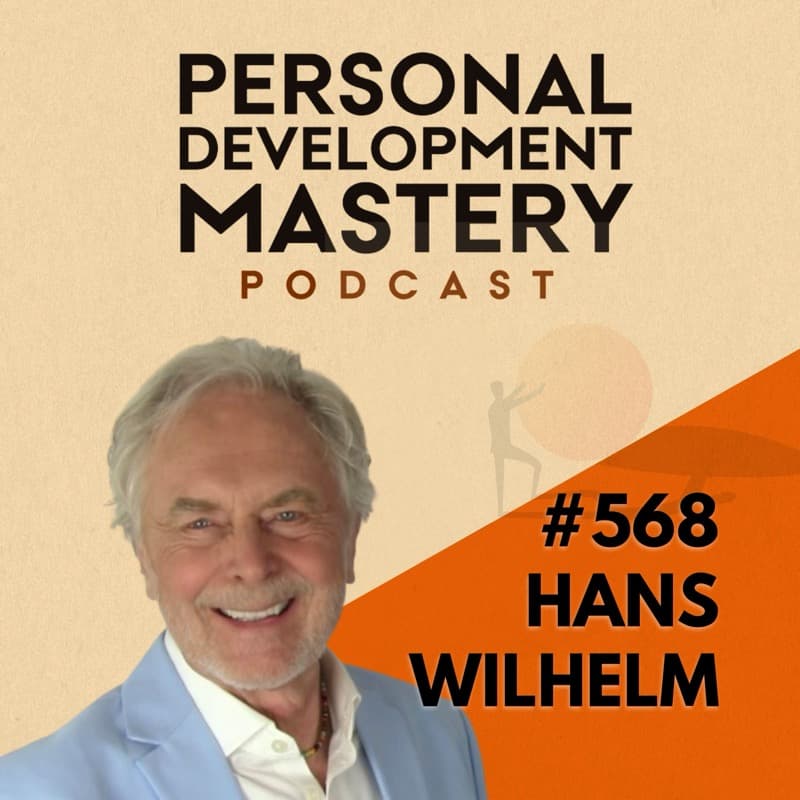
Midlife transitions often arrive quietly and then demand our full attention. A career shift, loss of direction, or sense that the old identity no longer fits can leave us feeling uncertain and unsettled. In this episode, Hans Wilhelm joins Agi Keramidas to explore how spiritual insight can help us navigate these periods of change with greater clarity, trust, and inner peace.
Rather than offering quick fixes or rigid plans, Hans invites us to look inward and reconnect with a deeper source of guidance that is always available.
When There Is No Clear Direction
One of the most challenging aspects of transition is the absence of clarity. We may know that something needs to change, but have no idea what comes next. Hans reframes this lack of clarity as an opportunity rather than a problem.
He explains that while we may not have a clear picture of the future, we always have clarity about what brings us joy. Joy, in this sense, is not about pleasure or escapism, but about the activities and experiences that feel naturally aligned with who we are. According to Hans, this inner joy is the language of the higher self.
By following what feels meaningful in the present moment, even if it appears small or unrelated to our career, we remain open to unexpected possibilities. The next step often reveals itself only after we have taken the current one.
The Power of Living in the Now
Hans emphasises that true guidance only operates in the present moment. The higher self does not live in the future or dwell in the past. It communicates through what feels right now.
This means that transitions are not solved by obsessing over long-term outcomes, but by paying attention to what feels alive and authentic today. Whether that is writing, gardening, mentoring, or simply taking a walk, these moments of alignment can lead us to connections and opportunities we could never have planned.
Rigid future visions, while comforting to the ego, can actually block this natural flow.
Expectations Versus Preferences
A central theme of the conversation is the role of expectations in creating suffering. Hans explains that unfulfilled expectations are at the root of much emotional and even physical pain.
The alternative he offers is deceptively simple. Replace expectations with preferences. An expectation says, this must happen for me to be okay. A preference says, I would like this to happen, but I am open to other outcomes.
This subtle shift reduces emotional attachment and opens us to new possibilities. When something does not work out, we are less likely to collapse into self-pity and more able to ask, what else might be available to me now?
Moving Beyond the Victim Mindset
During periods of transition, it is easy to fall into victim thinking. Thoughts like why does this always happen to me or what did I do wrong can quickly drain energy and close us off from solutions.
Hans points out that situations themselves are neutral. It is our interpretation that turns them into suffering. When we see ourselves as victims, we lose access to our inner strength and creativity.
One practical technique he shares is to actively look for three positive aspects in any difficult situation. These positives always exist, even if the ego initially resists seeing them. Focusing on them shifts our emotional state and restores a sense of agency.
Letting Go of Old Identities
A major challenge in midlife transitions is releasing an identity that has defined us for years. Careers such as dentist, lawyer, or business owner often become deeply entwined with our sense of self and our social value.
Hans suggests that gratitude is the key to letting go. By genuinely appreciating what a past role has given us, including skills, experiences, and the chance to serve others, we can release it without resentment or fear.
Identity, he reminds us, is not who we truly are. It is simply a role we played for a time. When that role ends, it creates space to discover new ways of expressing the same underlying essence.
Service as a Natural Evolution
As people grow older and more self-aware, the desire to serve often becomes stronger. Hans explains that service is not limited to grand acts or specific professions. It is about bringing kindness, presence, and love into whatever we do.
True service arises naturally when we reconnect with our deeper nature. It is not about self-sacrifice or proving worth, but about expressing who we really are. Even the smallest acts, such as a smile or a kind word, can have profound impact.
In this way, transitions become less about personal success and more about meaningful contribution.
Gratitude as the Highest Vibration
The conversation closes with a powerful reminder of the importance of gratitude. Hans describes gratitude as the highest vibration we can embody. It reconnects us with life’s supportive flow and gives us the energy to move forward with trust.
By being grateful not only for what is easy, but also for what is challenging, we align ourselves with growth rather than resistance. From this place, transitions no longer feel like endings, but like invitations.
For the full episode, show notes, and links, click here.