I have worn glasses since I was six years old. So when my eyesight changes, it doesn’t make me think I’m getting old. It’s simply been part of my life for as long as I can remember.
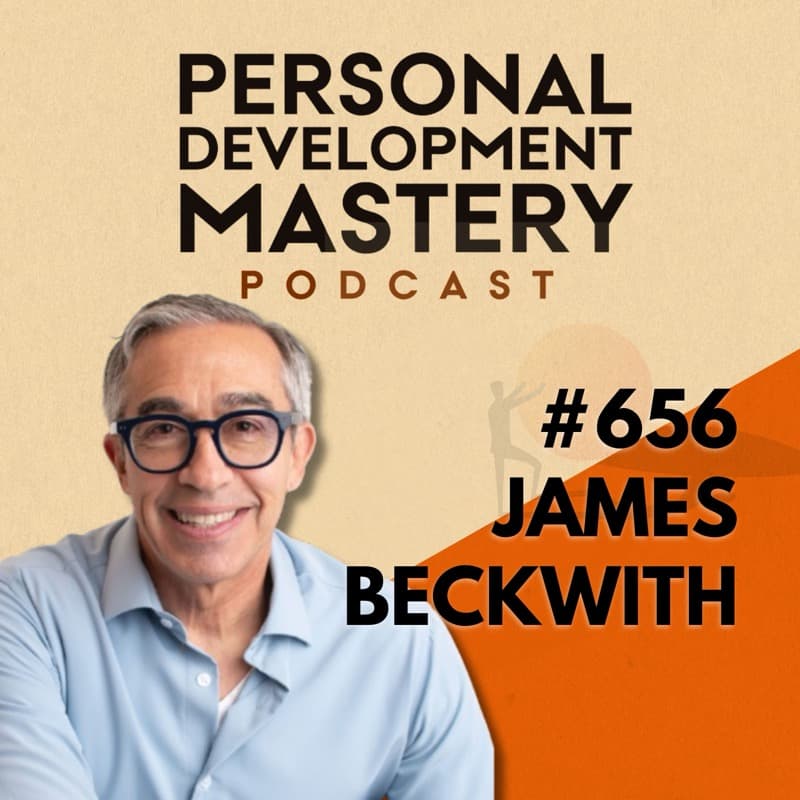
For many people, though, it’s different. The moment they can’t read the menu in a restaurant, a thought quietly appears: “I’m getting old.” My recent guest on the Personal Development Mastery Podcast, optometrist Dr James Beckwith, has heard those words from his patients for more than 35 years. What concerned him was how quickly they treated age as a reason to slow down, expect less and stop trying new things.
Our conversation left me with three insights I felt compelled to share with you.
The words we use shape the life we live
James makes a distinction that I found very precise. Everyone grows older, but not everyone gets old.
We are growing older when we are twelve, and we are growing older when we are sixty. That never changes, and that’s okay. But when do we call ourselves old? As James put it, that’s up to us. We have a birthday every year, yet the label “old” is one we choose to put on ourselves.
He told me about a patient of his, a retired police officer who had to leave the force early because of a head injury. He lives with double vision and frequent headaches. And yet, he walked into James’s practice happier than ever. When James asked how those symptoms affected him, the man said that every headache reminded him that he had helped people, and that he got them by doing good.
Where others might see a punishment, he sees a medal. That is what James calls reframing our losses as lessons. And I will repeat that, because I want it to sink in: the meaning we give to what happens to us matters as much as what happens.
Swimming against the tide
During our conversation, I shared a metaphor I read in a book years ago. When we are young, roughly up to our late thirties or early forties, it’s as if we are swimming with the tide. We can stay up late, eat badly, have a few glasses of wine, and the tide carries us forward anyway. At some point, though, the tide turns. From then on, we are swimming against it.
James loved the image, and he added something I hadn’t considered. There’s an old saying that if we keep doing what we did, we’ll keep getting the same results. With ageing, that simply isn’t true. If we keep doing the same things, we get less and less.
So we need to adjust. That means taking sleep more seriously, exercising with thought and intention, working on balance and flexibility, and paying attention not just to what we eat, but when we eat it. In James’s words, if you’re going to swim against the tide, maybe it’s time to get some flippers.
He also spoke about structure. Many people love retirement for about a year, and then they feel lost. The job has gone, and with it the routine and the daily contact with colleagues. James sees retirement as a portal rather than an ending: a passage into a new part of life that brings new challenges, but also new opportunities. Lifelong learning, volunteering, reconnecting with friends and family, all become possible. To him, a calendar is simply a series of goals we have set time aside to accomplish.
The power of the pause
The third insight came through a story that has stayed with me since we recorded.
James and his wife were walking through Peace Plaza at the Mayo Clinic in Minnesota when fog began to rise from around the edges of a reflecting pool. They thought nothing of it at first. Hours later, it happened again. Then they found a sign explaining that the fog represents the breath of life, and that it is released in real time whenever someone is born or dies at the clinic.
After reading that, you can’t walk past it in the same way. You stop. You think of the families experiencing joy or grief, and of the doctors and nurses at their side. Life and death were happening a few steps away, and without pausing, they would never have noticed.
As we grow older, we often have more opportunities to pause. The question is whether we take them.
The time will pass anyway
When James was eighteen, he complained to his mother that becoming an optometrist would take eight years of study. She told him that the time was going to pass anyway, so he might as well do something worthwhile with his life.
That advice is just as true at sixty as it is at eighteen. It allows us to do two things at once: to embrace the age we are, and still to keep becoming a better version of ourselves. Not in a selfish way, but so that we can contribute more, mentor others and set an example.
It reminded me of a line I once read: do not resent growing old, it is a privilege denied to many.
So, having said that, I would like to leave you with a question. Where in your life have you been telling yourself, “I’m too old for this”? And what small step could you take this week to prove that voice wrong?