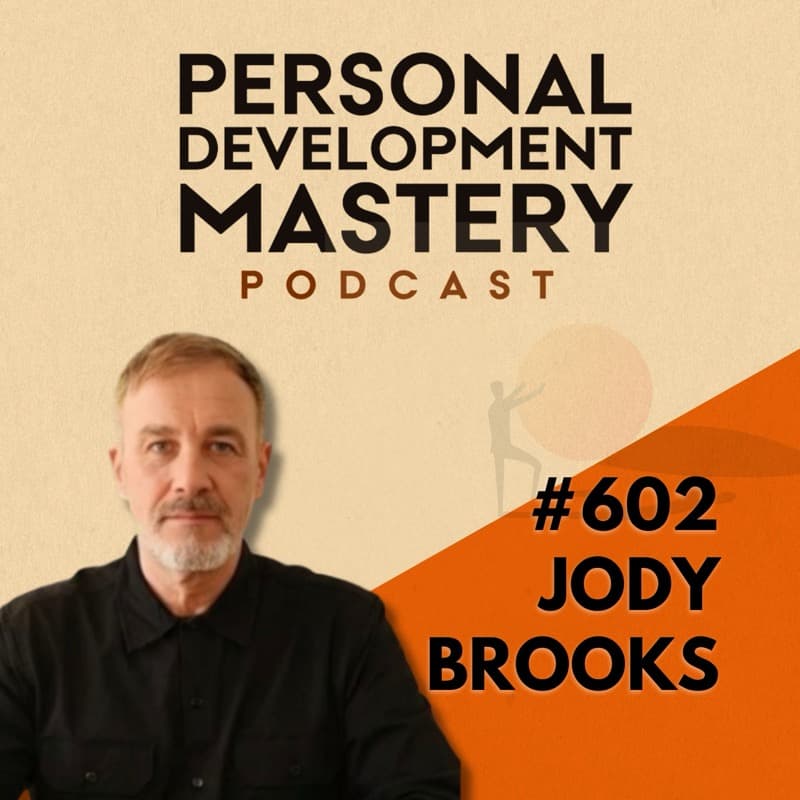
There comes a point in many people’s lives when outward success no longer feels like enough. On paper, everything may look fine. The career is established, responsibilities are being handled, and life appears to be moving in the right direction. Yet internally, something feels off. There is a quiet sense of disconnection, a feeling of being overwhelmed, or the unsettling awareness that you are no longer living in a way that feels true to who you really are.
That is exactly the territory explored in this powerful conversation with Jody Brooks. At the heart of the episode is a deeply human message. Feeling lost in midlife is not a sign that something has gone wrong beyond repair. It may actually be a signal that your inner self is asking to be heard.
The wake-up call of awareness
Jody describes awareness as the first principle of authentic living, and for good reason. Before anything can change, we need to notice what is really happening within us. So often, people push through stress, fatigue, and emotional discomfort without stopping to ask what those feelings are trying to communicate.
One of the most striking moments in the episode is Jody’s description of a personal turning point while working in a high-pressure corporate environment. From the outside, things seemed successful. Internally, however, the pressure had built to such an extent that it became impossible to ignore. That moment became the beginning of a new level of awareness.
Jody uses a memorable metaphor to explain this. Your authentic self is like someone sending you a text message, then calling you, then leaving voicemails, all of which you keep ignoring. Eventually, the messages pile up. The longer you avoid them, the louder and more uncomfortable they become.
It is such a clear way of understanding overwhelm. Anxiety and stress do not always appear out of nowhere. Often, they are the result of ignored signals that have been building over time.
Why journalling matters so much
One of the most practical takeaways from this episode is the importance of journalling. Jody describes it as a non-negotiable practice when helping clients become more self-aware, and host Agi Keramidas strongly agrees, sharing that journalling has been part of his own daily life for years.
What makes this especially helpful is how simple Jody keeps the practice. It is not about writing perfectly or producing profound reflections every day. It is about giving yourself time and space to check in honestly.
The suggested format is straightforward. In the morning, ask yourself: How do I feel today? What are my three gratitudes? What will make today good? In the evening, reflect again and begin setting an intention for the following day.
This is powerful because it interrupts autopilot. Instead of rushing from one task to the next without thinking, journalling helps you pause and listen. It creates a bridge between the conscious and subconscious mind, bringing hidden feelings and patterns to the surface.
Perhaps most reassuring of all is the reminder that the value of journalling is not dependent on writing something beautiful. Some days, the page may only contain resistance, frustration, or confusion. That still counts. The practice itself is what matters.
When success and happiness are not the same thing
Another major theme in the conversation is the difference between success and happiness. Many people spend years chasing the version of success they have been taught to value: status, achievement, financial security, or external recognition. Yet reaching those milestones does not always bring the fulfilment they expected.
Jody makes an important distinction here. We are often taught to believe that success leads to happiness. But in reality, happiness may be the truer measure of success.
That shift changes everything. Instead of pursuing goals because they look impressive from the outside, we are invited to ask a deeper question: what actually matters to me? What kind of life feels aligned, nourishing, and real?
This is where the conversation moves into the subject of core values.
Using your values as a compass
Jody explains that many people have lost touch with their core values, or perhaps never consciously identified them in the first place. Without that clarity, it is easy to end up living according to other people’s expectations.
The practical exercise offered in the episode is to work through a large list of possible values and gradually narrow them down to five core ones. These might include things like integrity, authenticity, justice, growth, or making a difference.
At first, this may sound abstract. But Jody takes it a step further by showing how each value can be turned into a lived sentence. For example, integrity is not just a word on a page. It becomes a commitment to show up truthfully, make decisions honestly, and refuse to betray your deeper sense of self.
That is when values become useful. They stop being nice ideas and start becoming a real compass for decision-making. They help you recognise what is aligned and what is not. They give you a clearer sense of direction, especially when life feels noisy or confusing.
Creating a purpose that comes from within
The conversation also explores purpose, but in a way that feels more grounded than the usual grand statements people are often encouraged to create. Rather than inventing a lofty mission based on what sounds impressive, Jody suggests building purpose from your values.
This makes the process far less intimidating. If you know what matters to you and how you want to live those values out, your purpose starts to emerge naturally. It becomes something internal rather than external. It is not about chasing an image. It is about living in a way that feels true.
For anyone unsure where to begin, Jody offers one final practical prompt: write down what makes you happy, and what does not. Over time, the patterns in those lists can reveal your values and point you towards a more authentic direction.
This episode is a thoughtful reminder that feeling overwhelmed is not weakness. It may be a call back to yourself. By becoming more aware, journalling regularly, and reconnecting with your core values, you can begin to move from autopilot into a more intentional and authentic way of living.