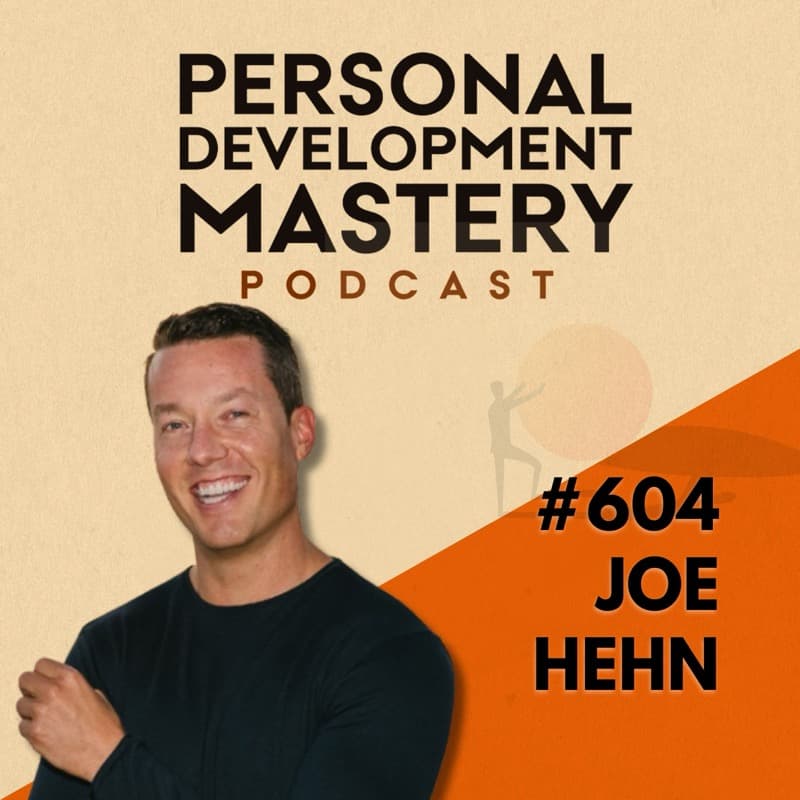
There are moments in life that change everything. Not just what we do, where we live, or who we spend our time with, but the very way we understand ourselves and reality.
In this powerful conversation, Joe Hehn shares the story of losing his wife to cancer, walking through grief, questioning everything he once believed, and eventually discovering a new way to live. His journey took him across continents, through spiritual traditions, personal development, and deep self-enquiry. But at the heart of his message is something profoundly practical: the quality of our life is shaped not only by what happens to us, but by how we interpret and experience it.
This episode is an invitation to look within, not to avoid life’s difficulties, but to meet them with greater awareness, presence, and self-acceptance.
When Life Takes Away Your Identity
Joe describes having what many would consider a successful life. He was married to the love of his life, had a good career, close friends, and a future that seemed full of possibility. Yet, as he explains, he was often unable to truly see the abundance around him. His attention was consumed by bills, ambition, comparison, and the pressure to succeed.
Then his wife was diagnosed with cancer.
Her illness became a devastating confrontation with mortality. Joe became her carer, supporting her through the most difficult months of her life. When she passed away, he did not just lose his wife. He lost his business partner, best friend, future family, and the identity he had built around their shared life.
That loss pushed him into a profound inner crisis. While travelling through South America, he found himself sick and emotionally empty on a bed in Bolivia, in a place where he did not want to die, but did not want to live either.
It was there that a question began to emerge: What if the way he was living was not the answer?
The Search for Meaning
That question became the beginning of a new journey.
Joe travelled the world searching for healing, wisdom, and understanding. He studied different spiritual traditions and philosophies, including Christianity, Stoicism, Buddhism, Taoism, and other forms of personal and spiritual development. He was not looking for a single label or system to adopt. He was looking to understand consciousness, suffering, and the deeper nature of human experience.
Through this search, he came to a central realisation: our interpretation of life has a major influence on the quality of our life.
This does not mean denying pain or pretending that difficult things do not happen. Joe’s story is far from simplistic positivity. Instead, it points to the possibility that even when we cannot control what happens externally, we can learn to work with our inner world.
We can observe our thoughts. We can question our beliefs. We can come back to the present moment. We can train the way we relate to ourselves, others, and reality.
Presence as a Pathway to Peace
One of the most powerful ideas Joe shares is that “Presence is the reduction of suffering.”
Presence, in this context, is not an abstract spiritual concept. It is the simple act of returning to what is happening now. Taking a breath. Looking around. Listening. Feeling the body. Noticing what is real in this moment, rather than being pulled into regret about the past or anxiety about the future.
Joe explains that the mind often tries to steal us away from presence. It takes us into old pain, future fear, frustration, judgement, or resistance. Self-awareness, then, becomes the ability to notice when we are no longer present.
That noticing is powerful. Once we realise we have been taken away by thought, we can begin to return.
This is not about becoming perfectly calm or enlightened. It is about reducing unnecessary suffering by recognising when our inner experience is being shaped by attachment, fear, or rejection of reality.
Accepting Yourself in the Moment
A key part of Joe’s approach is authenticity, which he describes as being present with ourselves. Can we accept ourselves in this moment, in this circumstance, around these people, exactly as we are?
For many people, that is not easy. We are often harshest with ourselves. We judge who we have been, criticise who we are, and doubt who we can become.
Joe offers a simple but powerful self-acceptance practice using four phrases:
“I’m proud of you.”
“You’re doing the best you can.”
“I believe in you.”
“I love you.”
These statements speak to the past, present, future, and the deeper need for acceptance. They may feel uncomfortable at first, especially for someone who is used to self-criticism. But spoken sincerely, they can become a way of rebuilding trust with ourselves.
Self-acceptance is not complacency. It does not mean giving up on growth. It means creating an inner foundation from which genuine transformation becomes possible.
Creating a New Inner Script
Joe also shares a three-step framework for transformation: belief, evidence, and energy.
First, we need to set a clear and empowering belief or goal. Too often, people become obsessed with what they do not want. They focus on stress, fear, frustration, and everything that feels wrong. Joe suggests redirecting attention towards what we do want to experience.
Second, we need to gather evidence that supports this new belief. This can happen through gratitude, reflection, visualisation, and noticing moments that align with the person we are becoming. In this way, we begin to train the mind to recognise possibility rather than limitation.
Third, we bring energy to the process. This includes discipline, action, habits, routines, resilience, and consistent effort. But Joe is clear that action alone is not enough if our consciousness is still rooted in limiting beliefs.
When belief, evidence, and energy work together, they create momentum. Not overnight transformation, but steady, meaningful growth.
Start With Today
Perhaps the most encouraging part of Joe’s message is its simplicity. You do not need to master every spiritual tradition or completely revolutionise your life in one day. You can begin by asking one question: What can I learn today that will help me feel good about who I am and the life I am living?
That small daily investment can compound over time.
Healing does not always arrive as a dramatic breakthrough. Sometimes it begins with one breath, one new thought, one moment of self-kindness, and one decision to become curious about what else might be possible.
Joe’s story reminds us that even after profound loss, life can open again. Not because the pain never mattered, but because our consciousness has the capacity to grow, expand, and transform the way we experience being alive.