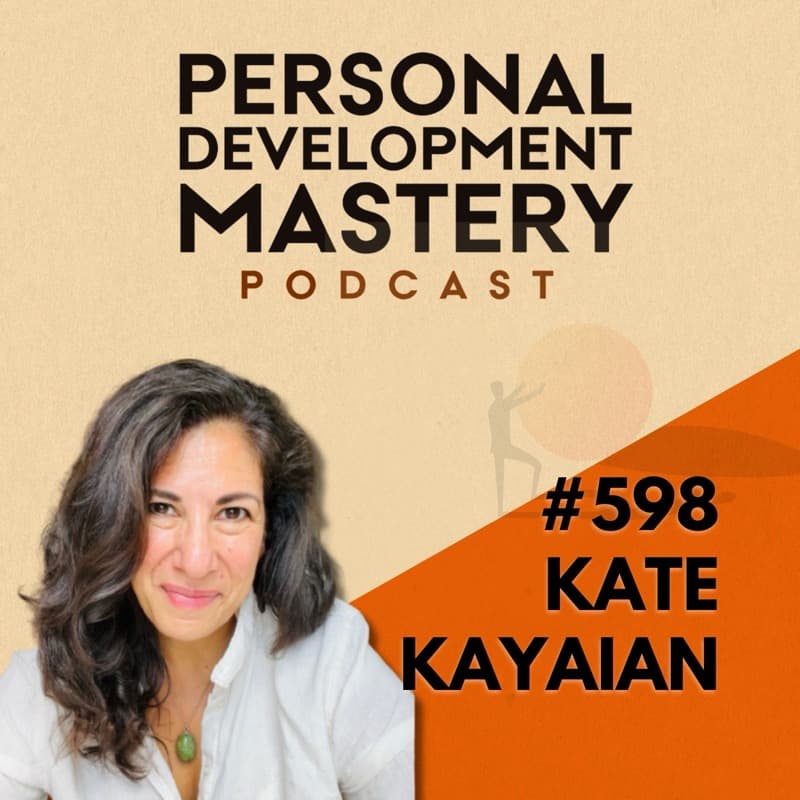
What happens when the life you worked so hard to build no longer feels like the life you truly want?
That is the powerful question at the heart of this conversation with Kate Kayaian. From the outside, Kate had achieved a level of success many people dream of. She was a professional concert cellist, performing at a very high level and living the kind of career that looked deeply impressive. Yet beneath that success, something had shifted. She still enjoyed the music. She was not burnt out. She was not tired of performing. But she began to feel that something was off.
This episode explores a reality that many people experience, especially in midlife. You can be competent, accomplished, and admired, and still feel disconnected from your work. That feeling can be confusing because it challenges the very identity you have spent years building. Kate shares her own story and offers a clear, thoughtful framework for navigating that transition.
The Quiet Conflict Between Achievement and Alignment
One of the most relatable parts of this conversation is the way Kate describes the gradual nature of her shift. There was no dramatic collapse or crisis. Instead, there was a growing awareness that the life that once suited her no longer matched the person she was becoming.
She talks about walking on stage, fully capable of performing, yet quietly asking herself, what is the point of this? That question will resonate with many listeners who have followed the expected path, met society’s standards, and still find themselves yearning for something more meaningful.
This kind of inner conflict can be especially difficult because it is not easy to explain to others. If everything looks successful from the outside, people may struggle to understand why you would want change. Yet inner alignment matters. A career that looks good is not always one that feels good.
Why Identity Can Keep Us Stuck
A major theme of the episode is identity. When we have done something for many years, our work becomes much more than a job. It becomes the answer to who we are. That is why change can feel so uncomfortable. It is not only about choosing a new direction. It is about loosening our grip on an identity that has shaped how other people see us and how we see ourselves.
Kate explains that many of our early life choices are more arbitrary than we realise. She became a cellist after choosing the instrument as a small child, and she later recognised how much of her path had been shaped before she was old enough to question it. This realisation became the foundation for a new way of thinking. If an identity was formed through circumstance, influence, or early decisions, then it can also be re-examined.
That idea is liberating. It creates distance between who you are at your core and the label you have carried for years.
A Framework for Reinvention
Kate’s approach to personal and professional reinvention is built around three steps: reassess, redefine, and reignite.
The first step, reassess, is about understanding how you got where you are. It means looking honestly at the stories, expectations, and assumptions that shaped your current identity. This process helps you see that your present path is not the only one available to you.
The second step, redefine, invites you to imagine what else could be possible. Rather than assuming you are trapped by your qualifications or past experience, you begin to ask who you want to become now. This is where possibility starts to emerge.
The third step, reignite, is about action. Clarity alone is not enough. Once you know what matters, you need to take real steps towards it. Kate is refreshingly practical here. She reminds us that growth is not about fantasy. It is about making time, building habits, and focusing on actions that genuinely move your life forward.
The Difference Between Motion and Progress
One of the most useful ideas from the episode is Kate’s concept of "rocking chair steps". These are actions that make you feel busy and productive, but do not actually create progress.
It is a brilliant distinction. Many people spend time on surface-level tasks because they feel safe and manageable. We organise, plan, and prepare endlessly, but avoid the bolder actions that require courage. Real progress often involves discomfort. It means sending the email, starting the project, having the conversation, or taking the first visible step before you feel fully ready.
Kate also shares the five stages of internal growth that support meaningful change: responsibility, attitude, improved mental game, courage, and identity shift. Together, these stages help explain why real transformation is both practical and emotional. It is not only about what you do. It is about how you think, what you believe, and whether you are willing to act in spite of fear.
You Are Not Starting From Nothing
Another standout moment in the conversation is the discussion around competence. Many successful people hesitate to begin something new because they are used to being good at what they do. Starting over can feel humbling. It can seem as though all of your confidence belongs to your old role.
Kate offers a more encouraging perspective. She suggests looking for the link between who you have always been and what you want to do next. The profession may change, but your core traits often remain the same. Curiosity, precision, creativity, leadership, empathy, discipline, and insight can all transfer into a new chapter.
This is an important reminder. You may be changing direction, but you are not losing yourself. In many cases, you are becoming more fully yourself.
A Simple Step Towards Your Next Chapter
Towards the end of the episode, Kate offers a powerful reflection exercise. Imagine meeting the version of yourself who has already done the things you keep saying you want to do. Who are they? What have they chosen? What did they do differently?
Then ask yourself what has stopped you so far. Question each answer. Often, what feels impossible becomes much more manageable when broken down into one small next step.
That is what makes this episode so valuable. It is thoughtful, honest, and deeply practical. It gives listeners permission to grow, permission to question, and permission to evolve.