There comes a point in life when you begin to wonder whether the choices you are making are truly yours. From the outside, everything may appear functional enough. You are working, coping, doing what needs to be done, and carrying out the roles expected of you. Yet underneath all of that, something feels off. There is a quiet sense that the life you are living does not fully reflect who you really are.
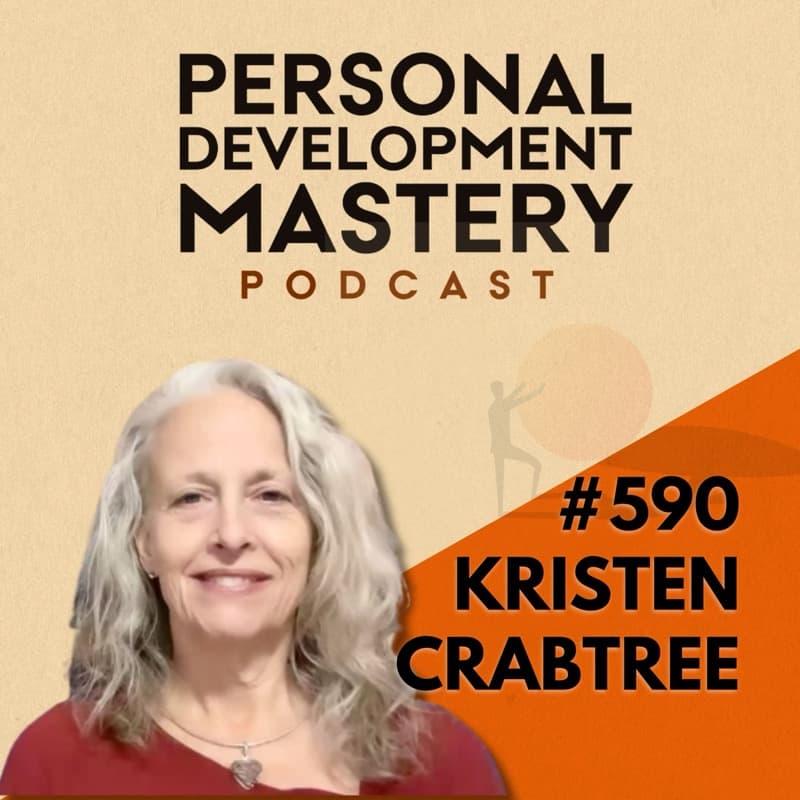
That is the heart of this episode with Kristen Crabtree. In a deeply thoughtful conversation, Kristen shares how people can reconnect with their inner truth, break free from reactive patterns, and begin making decisions from the version of themselves they are becoming.
Her work centres on helping people remember who they are beneath the identities, defences, and stories they have picked up through life. Rather than becoming somebody new, the real task is often returning to what has always been there.
The Moment You Realise Something Is Not Right
Kristen briefly shares the context behind her own transformation. After years in a deeply unhealthy marriage shaped by trauma and control, she reached a point where her body and mind could no longer ignore what her deeper self had been trying to communicate.
One of the most striking ideas she offers is that your true self tries to get your attention gradually. First it whispers. Then it becomes louder. Eventually, if ignored for long enough, it can show up as panic, anxiety, physical distress, or complete internal collapse.
That image is powerful because it reflects something many people experience. Misalignment does not always begin as a dramatic breakdown. It often starts as a small but persistent feeling that something is wrong. The challenge is that many of us have become so used to overriding ourselves that we no longer trust those signals.
What Kristen Means by the “Future Self”
A key theme in the episode is the idea of the future self. Kristen is not talking about a polished fantasy version of who you wish you could be. She is describing a self that is rooted in your truth, values, strengths, and potential.
She explains that this future self is not created from empty ambition. It is uncovered through reflection. By looking at life experiences, memories, values, passions, and even trauma, people can begin to see the patterns that reveal who they really are. Kristen uses vivid metaphors such as artefacts, a tree of becoming, and a carpenter’s jig to illustrate this process.
The central idea is simple but profound. When you know who you are becoming, you can use that understanding to make present-day decisions that are aligned with that identity. Instead of chasing goals mechanically, you begin living as that person now.
Knowing Is Not the Same as Embodying
One of the most practical parts of the conversation is the distinction between understanding your future self intellectually and actually embodying it in daily life.
It is one thing to read about growth, healing, or authenticity and think, yes, that resonates. It is quite another to respond differently when you are stressed, triggered, angry, afraid, or overwhelmed.
Kristen explains that this gap is often maintained by automatic patterns. Thoughts create emotions. Emotions trigger chemical responses in the body. Those chemical responses reinforce behaviours. Behaviours then create experiences that validate the original thoughts. The loop keeps repeating.
This is why self-awareness matters so much. If you cannot recognise the loop when it is happening, you are likely to keep living from habit rather than intention.
Breaking the Loop in Real Time
A major takeaway from the episode is that you can interrupt the cycle at any point. You might catch it at the level of thought. You might notice the emotion. You might become aware of your behaviour. Or you might recognise it only once the experience is already unfolding. The important thing is that awareness creates a doorway to change.
Kristen offers practical tools that can help. One is the simple pause of taking a few deep breaths. Another is mindfulness, not as an intimidating formal practice but as a return to direct experience. She suggests examples such as paying close attention to the textures and flavours of a meal or noticing colours and details on a walk that you would normally overlook.
These practices help quiet what she calls the “monkey mind”, the constant internal chatter that pulls attention away from the present. As that mental noise begins to settle, you become more capable of observing your reactions instead of being carried away by them.
Why Gratitude Changes Everything
One of the strongest practical tools discussed in the episode is gratitude. Kristen describes a moment when her mind spiralled into self-criticism and old conditioning. Instead of feeding the pattern, she consciously shifted her focus towards what she was grateful for.
That changed everything.
Gratitude does not deny difficulty or pain. It interrupts the emotional momentum of fear, anger, and shame. It gives your mind somewhere else to stand. As Kristen points out, the object of gratitude does not even have to be directly related to the problem in front of you. It can be your family, a friend, your body, your job, or simply the fact that you are still here.
That is what makes gratitude such a practical tool. It is accessible in almost any moment and can quickly help move you into a more grounded state.
Remembering Who You Really Are
Towards the end of the episode, Kristen shares simple reflective exercises to help listeners reconnect with themselves. These include speaking about yourself in the third person during an ordinary task, asking “Who am I?” in different ways, and even walking around your house like a detective investigating a missing person.
What makes these exercises powerful is that they help create separation between the persona you perform and the deeper self beneath it. They make self-inquiry feel experiential rather than abstract.
Ultimately, this conversation is an invitation to listen more closely to yourself. To notice the patterns you have inherited. To question the roles you have accepted. And to choose, with greater intention, the person you want to embody now.
The future self is not a distant destination. It is a way of living that begins with the next decision you make.