Have you ever achieved something you worked hard for, only to find that the voice of doubt was still there, waiting for you on the other side?
I will raise my hand here. I have self-doubt, and after many conversations on the podcast, I have learnt that I am far from alone. Many of the people I speak with are good at what they do. They are capable, experienced and respected. And yet, quietly, they still wonder whether they are enough.
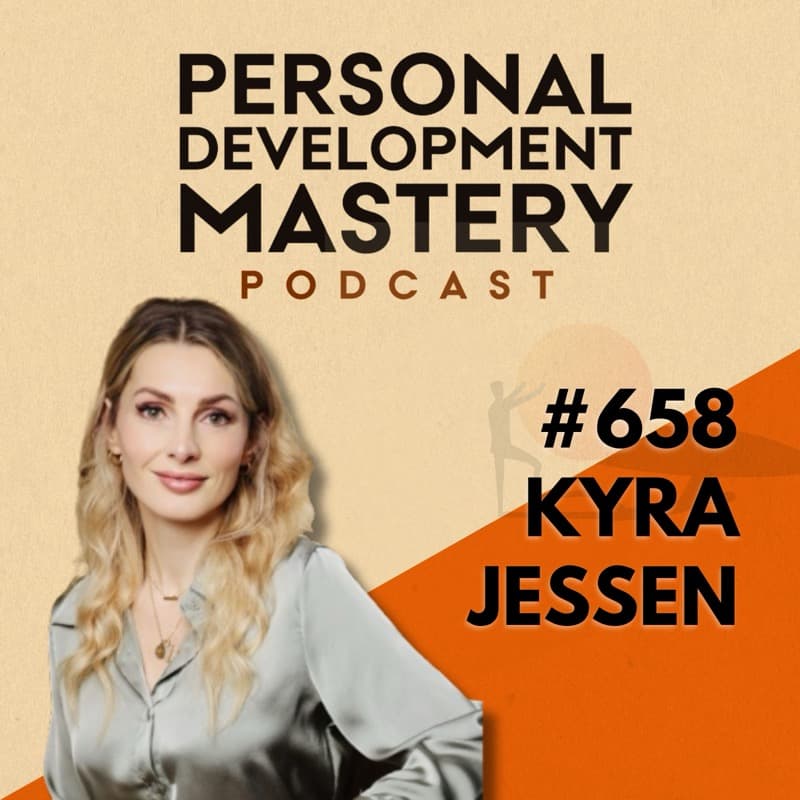
This is why I felt drawn to my recent conversation with Kyra Jessen, a neuroscience coach and author of The Anticipation Principle. Kyra spent years anticipating what others needed before they even asked, until anxiety and panic attacks made ordinary days impossible. Today, she helps people work with the beliefs behind self-doubt and self-sabotage, the ones we often carry for years without ever choosing them.
Three ideas from our conversation have stayed with me, and I would like to share them with you.
Competence is not the same as worth
We often say that confidence comes from competence. Kyra agrees, but only up to a point. As you build your skills, your competence grows. Your self-image, however, can stay exactly where it was.
So what happens? You end up stacking new skills on top of an old belief. Perhaps you learnt in childhood that you had to look after your siblings, bring home good grades or keep a parent calm after a difficult day. The belief that forms is something like this: if I stop proving my worth, something bad will happen. And that belief keeps running in the background, however successful you become.
In fact, more success can bring more pressure, because the stakes rise with every step. As Kyra explained, a lack of competence is a skill issue, and skills can be learnt. A lack of confidence is about self-worth and self-trust, and that asks us to work on a different level entirely.
Putting a belief on trial
How do you work on that deeper level? Kyra described limiting beliefs as a one-way street. Our brains love efficiency, so our thinking flows down the same familiar route, mostly without our awareness.
The way out is not to fight the street, but to see the whole map around it. Kyra shared her own example. She believed she had to prove her worth in order to be loved. Then she asked herself whether she had ever experienced otherwise. With her grandmother, she never had to prove anything. With her sister, the same. So the belief had cracks in it.
From there, she explored how the belief made her think, act and feel. She noticed the constant pressure, the over-giving, and the quiet resentment towards friends who never asked about her needs, needs she had never actually voiced. Once you see all of this, your mind cannot simply return to the old route.
And I will repeat one thing she said, because I want it to sink in: other people’s reactions are not about your worth.
What do you gain by not changing?
The third idea is the one I found most practical. Kyra sees self-sabotage as a form of protection. Think of the person who never applies for the promotion, because if they don’t apply, nobody can turn them down. Or the person who keeps polishing a project, because once it is handed in, it is open to criticism.
Her question is a simple one. Think of something you would love to change. Now ask yourself: what do I get out of not changing it?
Every behaviour serves a positive intention, even when we don’t see it at first. Perhaps you enjoy having less responsibility. Perhaps you would rather avoid a weekly meeting with a difficult boss. Perhaps, deep down, you worry about outgrowing a parent’s success. Once you see the hidden benefit, you can ask whether there is another way to meet that need, or whether the change you wanted is truly what you want.
Kyra prefers “what” questions to “why” questions, because “why” can put us on the defensive. I shared a small nuance of my own: when I ask “why”, I listen for my heart’s answer rather than my mind’s. Either way, the aim is the same, to gather data about ourselves rather than to put ourselves on trial.
An invitation to reflect
Kyra’s parting words have stayed with me since we spoke: what you’re not changing, you’re choosing.
So I invite you to sit with that for a moment. What are you not changing right now? And what might you be choosing by leaving it as it is?
If you would like to explore this further, Kyra offers a free ten-question tool at elitementalmastery.com/stuck that points to a belief that may be holding you back.