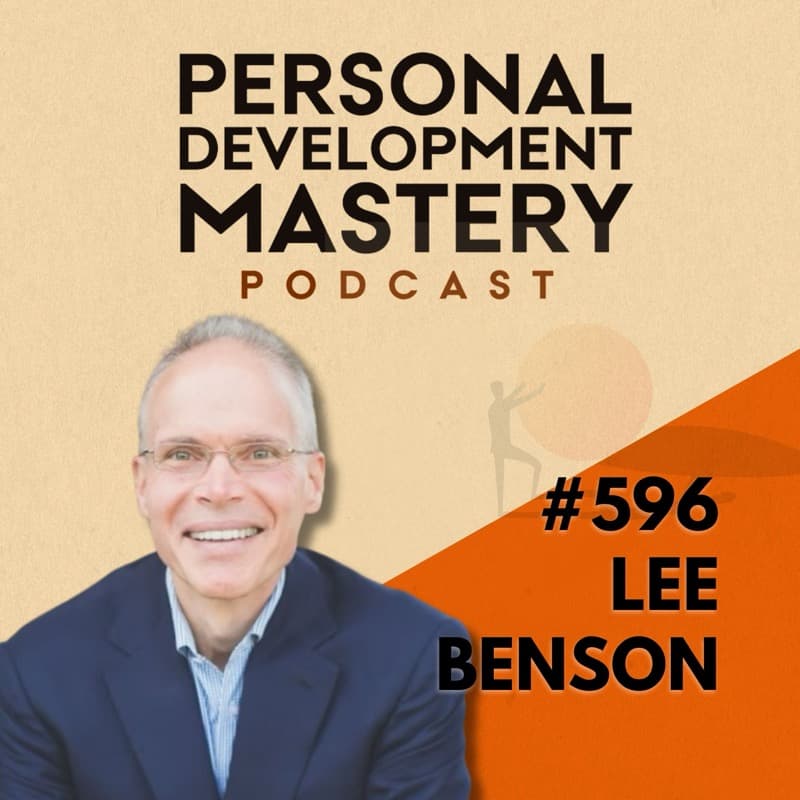
What does success really mean once you have achieved the things you once dreamed about?
That is the central question in this thought-provoking conversation with Lee Benson, serial entrepreneur, author, and advocate for what he calls holistic value creation. On paper, Lee has all the credentials many people associate with success. He built eight companies from scratch, achieved multiple exits, including one in the nine-figure range, and continues to lead and influence businesses today.
Yet the most powerful part of his story is not the financial success. It is the realisation that money alone does not create a meaningful life. In this episode, Lee shares how his perspective evolved from chasing outcomes to focusing on how he feels while moving through life, and how that shift led him towards a deeper understanding of fulfilment.
The Most Important Number
One of the standout ideas from this episode is Lee’s belief that fulfilment is his most important number.
That is a striking phrase in a world that often measures worth by income, status, or achievement. Lee explains that fulfilment is not something fixed. It can grow over time if we are doing the right work, but it can also plateau or slide backwards if we are living out of alignment with what truly matters.
This invites an important reflection for all of us. Many people are taught to focus on external milestones such as career progression, financial growth, and recognition. These goals can be valuable, but they do not automatically produce inner peace or satisfaction. Fulfilment asks a different question. It asks not only what you are building, but also who you are becoming in the process.
A More Balanced Way to Create Value
A core theme of the conversation is Lee’s model of holistic value creation. Rather than focusing only on money, he describes three forms of value that need to be brought into balance.
The first is material value. This includes money, business success, financial stability, and the ability to support yourself and your family. Lee is clear that material value matters. It is easy to dismiss money in theory, but in practice it affects security, freedom, and quality of life.
The second is emotional energy. Lee sees positive emotional energy as one of the scarcest and most powerful resources available to us. When your energy is high, setbacks are easier to handle, challenges become more manageable, and you can keep moving forward with curiosity and resilience. When your energy is low, even minor issues can feel overwhelming.
The third is spiritual value, which Lee describes largely in terms of connectedness. This is about meaningful relationships, community, and feeling linked to something greater than yourself. In his view, true success cannot be separated from the quality of our relationships and our sense of contribution.
This model is especially useful because it offers a more complete picture of what it means to thrive. A person may be financially successful but emotionally exhausted. Another may feel connected and inspired but lack the stability they need. The goal is not perfection, but balance.
Positive Emotional Energy Changes Everything
Another memorable part of the episode is Lee’s emphasis on positive emotional energy.
For anyone who feels that optimism, motivation, or resilience is not their natural strength, his message is encouraging. He does not see emotional energy as a fixed personality trait. He sees it as something that can be cultivated intentionally.
He reflects on growing up in a difficult and toxic environment and how leaving that behind became the start of a new emotional reality. From an early age, he began to work on feeling better, thinking differently, and becoming more energised by life.
This matters because emotional energy affects everything. It shapes how we respond to setbacks, how we approach relationships, and how much capacity we have to create value in the world. Lee’s point is simple but powerful. Even if this is not currently your strength, it can become one.
Practical Foundations for a Better Life
The conversation also moves into practical territory, especially around self-care. Lee offers a direct insight that many people need to hear. Taking care of yourself is not optional. It is foundational.
He speaks about nourishing yourself properly, moving your body, and recovering well through sleep and rest. These habits may sound basic, but they are often neglected, particularly during stressful seasons of life. Many people postpone looking after themselves until work settles down, the children grow up, or life becomes easier. The truth is that life rarely creates perfect conditions for self-care. We have to choose it.
Lee also expands the idea of nourishment beyond food. He talks about self-talk, mental habits, and the emotional burden of trying to control other people’s lives. This is an important point. Caring for ourselves is not just physical. It is also about the stories we tell ourselves, the expectations we carry, and the emotional patterns we repeat.
Focus on the Value
If there is one phrase that captures the spirit of this episode, it is this: focus on the value.
Lee returns to this idea several times. Whether in business, personal growth, family life, or adversity, he believes that keeping your attention on the value you are creating is one of the clearest ways to move forward. There may be noise around you. People may misunderstand you, resist you, or create unnecessary drama. But if your focus stays on creating genuine value, you remain anchored.
This is particularly relevant for those in midlife who have achieved a certain level of success but feel unfulfilled. Lee’s suggestion is not to throw everything away or chase a completely different life overnight. It is to ask a better question: how do you want to create value in the world?
That question can become a compass. It shifts the focus from performance to purpose, from comparison to contribution, and from empty achievement to meaningful progress.
Fulfilment as an Ongoing Journey
This episode is a reminder that fulfilment is not something we arrive at once and for all. It is something we build through awareness, balance, struggle, and intentional action.
Lee’s closing reflections are both simple and memorable: do less better, and struggle better. Those words capture a wiser, steadier approach to life. Rather than trying to do everything, we can focus on what matters. Rather than avoiding struggle, we can learn to grow through it.