In a world that constantly encourages speed, productivity, and endless information, many people have become disconnected from one of their greatest sources of wisdom: the body.
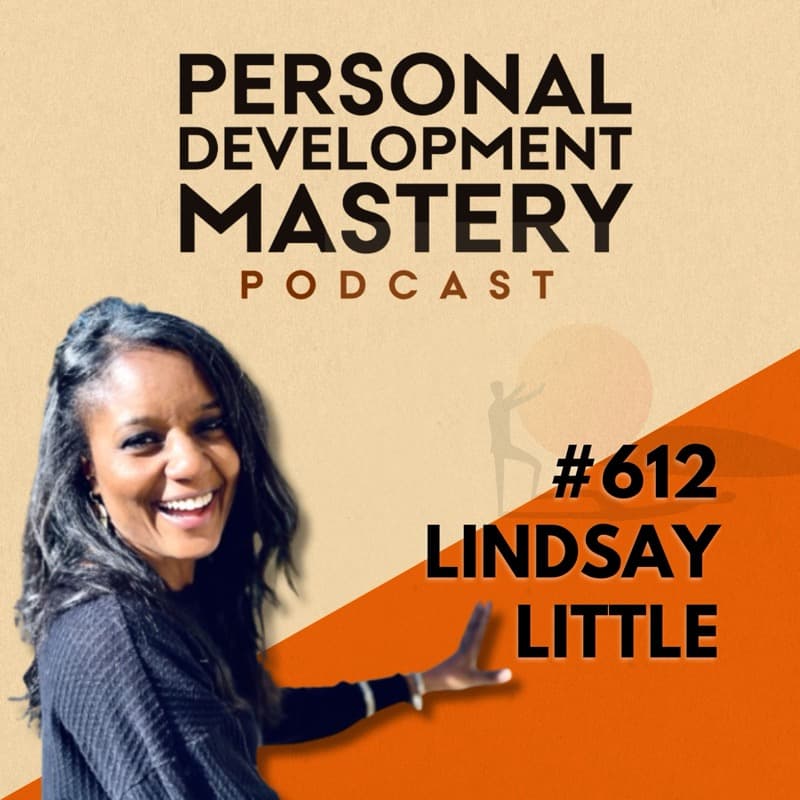
In this fascinating conversation, Lindsay Little explores how reconnecting with the body can help us become more present, grounded, and capable of making clearer decisions in everyday life. Together with host Agi Keramidas, she discusses the subtle ways modern life pulls us away from ourselves and offers simple practices to reconnect with what she calls “the rest of the signal”.
Why So Many People Feel Disconnected
One of the key themes of the episode is that disconnection often develops gradually and unconsciously. Lindsay explains that many of us learn from a very young age to override the body’s natural signals.
As children, we may ignore feelings of discomfort, suppress emotions, or prioritise external expectations over internal awareness. Over time, these patterns become deeply ingrained. Combined with modern habits such as prolonged sitting, constant screen use, and chronic busyness, many people lose touch with how their body actually feels.
The result is that stress, tension, and emotional overwhelm can become normalised. People may feel anxious, exhausted, or mentally overloaded without recognising the physical patterns underlying those experiences.
Lindsay highlights that these patterns are often subtle. They can develop slowly over years through posture, breathing habits, emotional suppression, or repetitive behaviours. What may eventually appear as stress or physical discomfort is often the culmination of long-standing unconscious patterns.
The Importance of Movement
A major part of reconnecting with the body involves movement.
Lindsay explains that movement helps interrupt habitual physical and emotional patterns. Modern lifestyles often keep people seated for long periods, reducing natural movement and limiting the body’s capacity to release tension and energy.
The conversation explores how movement does not have to be extreme or complicated. Walking, stretching, yoga, strength training, or simply changing posture throughout the day can help restore flow and awareness within the body.
Children naturally move freely and expressively, but adults often lose that spontaneity. Lindsay suggests that movement allows us to reconnect with a sense of vitality that many people assume they have lost.
Importantly, movement also creates awareness. By paying attention to how the body feels while moving, people begin noticing areas of tension, rigidity, or constriction that previously operated below conscious awareness.
Breath as a Gateway to Presence
The discussion then shifts to the role of breath in cultivating self-awareness and presence.
Lindsay describes breath as one of the simplest and most accessible tools for reconnecting with ourselves. Stress and anxiety often show up physically through shallow breathing, raised shoulders, or tightened muscles. Simply pausing to notice the breath can interrupt automatic mental patterns and create space for awareness.
One particularly practical insight from the episode is the value of beginning with a conscious exhalation. Fully breathing out before inhaling helps soften the body and calm the nervous system.
Agi shares his own experience of how intentional breathing helps interrupt negative mental narratives and bring him back to the present moment. Both he and Lindsay emphasise that awareness of breath creates a bridge between mind and body.
Breathing consciously is not about forcing relaxation. It is about noticing what is already happening and creating enough awareness to respond differently.
Decision-Making and Inner Wisdom
One of the most compelling parts of the conversation focuses on decision-making.
Many people approach difficult decisions by gathering endless information, analysing every possibility, and trying to eliminate uncertainty. While logic and data are valuable, Lindsay explains that relying exclusively on analysis can disconnect us from our deeper sense of knowing.
She describes how the body constantly provides signals about what feels aligned or misaligned. Tension, constriction, openness, or ease can all offer important information during times of uncertainty.
The challenge is that overthinking often drowns out those signals.
Lindsay encourages listeners to balance rational analysis with inner awareness. Instead of searching for perfect certainty, she suggests developing enough clarity and self-trust to take the next step.
This perspective reframes uncertainty not as something to fear, but as a natural part of life and growth.
As Lindsay beautifully states during the conversation:
“I find that the present moment is really where the change is possible.”
Slowing Down in a Fast-Paced World
Perhaps the most practical and relatable part of the episode centres on slowing down.
Modern culture rewards speed and constant stimulation. Many people feel uncomfortable with stillness because they are so accustomed to perpetual activity and distraction.
Lindsay explains that slowing down does not necessarily require dramatic lifestyle changes. It can begin with very small moments of intentional awareness.
Simple practices include:
Taking a conscious breath before responding
Going for a mindful walk
Noticing physical sensations
Looking around the room with fresh awareness
Paying attention to sounds, temperature, or movement
These small pauses interrupt autopilot behaviour and reconnect us with the present moment.
The conversation also highlights how familiarity causes people to stop truly seeing their surroundings. By intentionally noticing the environment again, even ordinary spaces can become anchors for presence and awareness.
Returning to the Present Moment
At its heart, this episode is an invitation to return to ourselves.
Rather than seeking endless external solutions, Lindsay reminds listeners that wisdom, clarity, and awareness are often already available within the body. The challenge is creating enough stillness to notice them.
The practices discussed throughout the conversation are simple, but not always easy. They require intentionality, patience, and a willingness to slow down in a culture that constantly pushes for more speed and more information.
Yet within that slowing down lies the possibility for deeper presence, clearer decisions, and a more grounded relationship with ourselves.