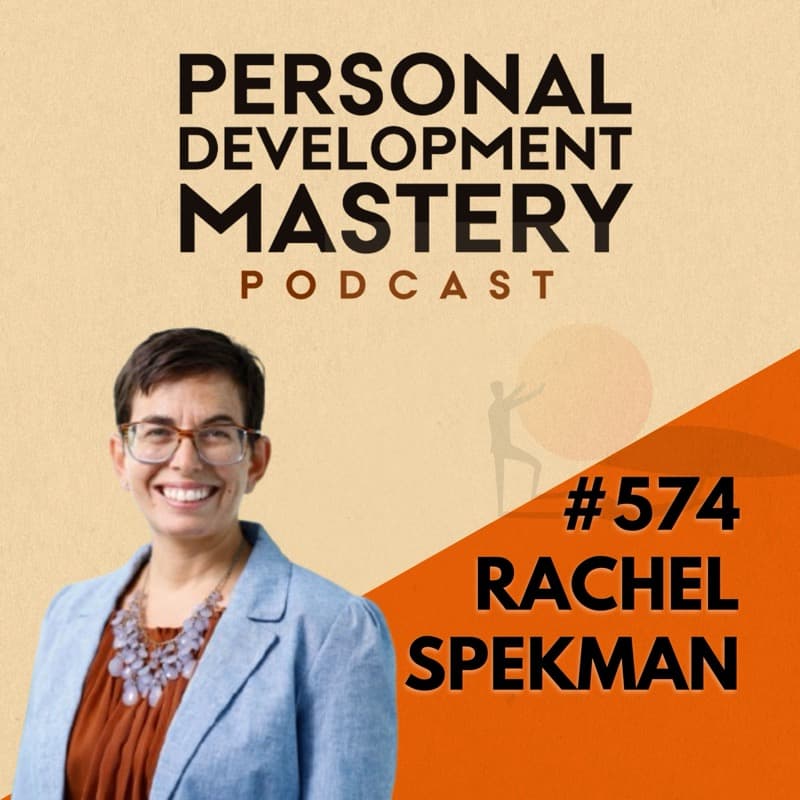
Many high-achieving professionals reach a point where their career looks impressive from the outside but feels deeply unfulfilling on the inside. Titles, income, and status no longer compensate for the sense that something is missing. In this episode, Agi Keramidas is joined by Rachel Speckman to explore why career success and fulfilment do not always go hand in hand, and what can be done when you realise your work no longer aligns with who you are.
Rachel brings a rare blend of experience, having worked in corporate marketing, advised startup founders, and trained as a therapist. This combination gives her a unique perspective on what truly drives meaningful work and why so many capable people remain stuck in roles that quietly drain them.
Why So Many Successful People Stay Unhappy at Work
According to Rachel, the simplest answer is fear. Fear of change, fear of financial instability, fear of disappointing others, and fear of stepping into the unknown all play a role. Many professionals feel trapped by the qualifications they have earned or the identity they have built. A law degree, engineering background, or corporate title can start to feel like a contract that cannot be broken.
Rachel explains that people often believe change has to be dramatic and immediate. In reality, fulfilment is built incrementally. Someone might be only twenty percent happy in their role, but the goal is not to leap straight to eighty percent overnight. Sustainable change happens through small, deliberate steps that slowly increase alignment and energy.
The Cost of Staying Stuck
Remaining in an unfulfilling career does not just affect work performance. Over time, it takes a toll on mental health, physical wellbeing, and personal relationships. Rachel uses a powerful analogy: most people would never stay in a house that was falling apart, yet they tolerate careers that feel sixty or eighty percent broken.
This disconnect often goes unnoticed until it becomes unbearable. By the time many professionals seek support, they are exhausted and questioning how they ended up so far from what they actually want.
A Practical Starting Point for Clarity
For those who know something needs to change but do not know what that change should look like, Rachel offers simple but effective exercises. One of the most impactful is designing your ideal workday. Rather than focusing on job titles, you imagine how your day unfolds hour by hour. When do you start work? Who are you interacting with? What problems are you solving? What activities energise you?
Another exercise involves reviewing how you actually spend your time. By listing the main tasks from the past few days and rating both the time spent and enjoyment level, patterns quickly emerge. This data-based approach highlights where energy is being lost and where it could be redirected.
Meaningful Work and the Three Cs
Rachel introduces a framework she uses with clients to define meaningful work. She calls it the Three Cs: community, contribution, and challenge.
Community refers to the type of people you want to be surrounded by. Contribution is about the impact you want your work to have, whether that is on individuals, organisations, or society. Challenge reflects the kinds of problems you enjoy solving and feel proud of overcoming.
By reflecting on past roles, favourite moments, and even early experiences such as school projects or volunteer work, people can uncover recurring themes. These themes often point towards work that feels more natural and satisfying.
Navigating the Reality of Career Transitions
Making a change is rarely straightforward. Rachel highlights two major challenges people face once they decide to pivot. The first is managing other people’s opinions. Friends, colleagues, and family members often offer unsolicited advice, usually rooted in their own fears. Learning to be selective about whose advice you take becomes essential.
The second challenge is ego. Moving from being an expert to a beginner can be humbling. Many professionals struggle with no longer having all the answers. Rachel encourages embracing curiosity and remembering that expertise is always built over time. No one starts a new role as an authority on day one.
The Power of Transferable Skills
One of the biggest confidence boosts during a transition comes from recognising transferable skills. Communication, attention to detail, relationship building, leadership, and problem solving are not tied to a single industry. They travel with you.
Rachel suggests creating an internal résumé that captures moments you are proud of, even if they were never formally recognised. These moments reveal strengths that can be carried into new roles and environments.
You Are Allowed to Want More
At its core, this conversation is about permission. Permission to admit that success alone is not enough. Permission to change direction thoughtfully and responsibly. Permission to believe that fulfilment is not reserved for a lucky few.
Rachel’s closing message is simple but powerful. If listeners leave feeling slightly more empowered, with one new idea or one meaningful conversation ahead of them, that is success.