What does it really mean to be emotionally strong as a man?
For many men, strength has long been linked with productivity, control, independence, and the ability to keep going no matter what. From an early age, men are often encouraged to focus on achievement, performance, and problem-solving. What is far less commonly taught is how to recognise emotions, understand stress signals, express vulnerability, and build genuine emotional connection with others.
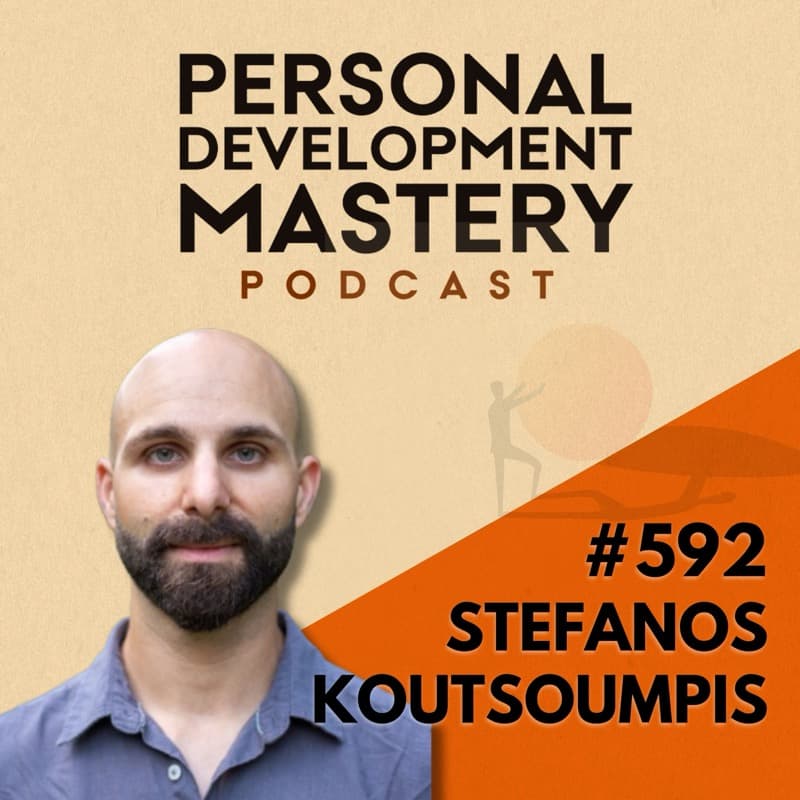
In this conversation, Agi Keramidas speaks with Stephanos Koutsoumpis about the emotional skills many men were never taught, and why learning them can have a profound effect on communication, leadership, relationships, and mental health.
This is not simply a discussion about feelings in the abstract. It is a practical and deeply relevant conversation about how men can live with more awareness, empathy, purpose, and inner stability.
Emotional intelligence is often misunderstood
Stephanos begins by challenging a common assumption that women are naturally more emotionally intelligent than men. He explains that emotional intelligence is broader than many people realise. It includes self-awareness, self-insight, self-motivation, social awareness, empathy, and the ability to relate effectively to others.
Men, he says, are often quite strong in self-motivation. Many can push themselves, stay focused on goals, and keep moving forward. Where they often struggle more is in social awareness and empathy. That means recognising what others may be feeling, understanding the emotional context beneath a conversation, and responding in a way that helps others feel heard and understood.
This is not necessarily because men are incapable of emotional depth. Rather, many have not been taught to develop these skills. If anything, they have often been encouraged to neglect them.
Why empathy is a skill, not a personality trait
One of the most valuable ideas in the episode is that empathy is not just something you either have or you do not have. It is a skill that can be developed through practice.
Stephanos makes the point that reading about empathy is not enough. You can read books on body language, communication, or emotional intelligence, but that alone will not create change. These skills are embodied. They must be experienced and practised in real life.
A simple starting point is asking better questions. Questions such as: How is this person feeling right now? What might be happening in their life? How would I feel if I were in their position?
This kind of reflection helps shift attention away from quick judgement and towards deeper understanding. It encourages men to slow down, listen properly, and become more curious about the human experience of the person in front of them.
That matters in every area of life, from intimate relationships to friendships to work.
Better emotional skills lead to better communication
A lack of emotional awareness often shows up as poor communication. When people do not feel seen, heard, or understood, relationships become strained. Misunderstandings increase. Conversations become transactional. Teams stop functioning well. Partnerships lose trust.
Stephanos highlights how important emotional awareness is in leadership and collaboration. It helps people understand team dynamics, motivate others more effectively, and notice what may be happening beneath the surface. In a world where so much communication now happens through messages and email, it is easier than ever to miss tone, emotional nuance, and unspoken tension.
That is often why long email chains get nowhere until someone finally says, let’s have a meeting.
Human connection works differently in person. Facial expressions, posture, tone of voice, and emotional presence all communicate something meaningful. Emotional skill helps us read those signals and respond more wisely.
The hidden cost of ignoring emotional signals
The conversation then moves into men’s mental health and the consequences of failing to recognise emotional signals early enough.
Stephanos explains that emotions act as signals. Feeling uneasy, sad, angry, or disconnected may be an indication that something is not working in your life. When these signals are repeatedly ignored, they may begin to show up in physical ways too, such as headaches, gut issues, exhaustion, or chronic stress.
For some men, the result is burnout. For others, it may become emotional numbness, addiction, cynicism, or a constant sense of dissatisfaction.
What makes this especially challenging is that many men are highly capable of staying busy. In fact, busyness can become a form of escape. If there is always more work to do, another goal to chase, or another demand to meet, then there is less space to notice what is happening internally.
But that comes at a cost. A man may appear successful on the outside while feeling increasingly empty, overwhelmed, or disconnected within.
The early signs matter most
One of the most practical parts of the episode is Stephanos’ description of the earlier signs that something is wrong.
Before full burnout hits, there are often quieter indicators. A lack of joy in daily life. The absence of meaningful connection. Feeling unmotivated, disappointed, or emotionally flat. Losing a sense of purpose. Not feeling understood. No longer enjoying time with friends or family. A lingering belief that things will not improve.
These signs can be easy to dismiss, especially for men who are used to pushing on regardless. Yet this is precisely when awareness matters most.
By learning to listen earlier, men have a chance to change direction before stress becomes crisis.
Why men’s groups can be so powerful
Towards the end of the episode, the conversation turns to men’s groups and the relief many men experience when they finally enter a space where they can speak openly without judgement.
Stephanos describes how rare it is for men to feel truly heard. Many conversations between male friends stay at the level of updates, banter, or shared activity. There may be little room for deeper honesty.
A men’s group offers something different. It provides space, attention, acceptance, and the chance to speak without being interrupted, analysed, or immediately given advice. That alone can be deeply healing.
When men feel safe enough to open up, they often begin to reconnect with themselves as well as with others. They realise they are not alone in what they are carrying.
Giving yourself permission to be human
Perhaps the most powerful message from this episode is also the simplest. Men need permission to be human.
That means permission to feel tired, stressed, sad, joyful, uncertain, and hopeful. It means recognising that emotional skill is not weakness. It is part of being fully alive, fully present, and genuinely connected.
Learning these skills does not just improve communication or performance. It can improve the quality of life itself.