There is a moment that many of us know, even if we rarely speak about it. You reach something you have worked towards for years, a promotion, a business milestone, a number in the bank, and instead of the deep satisfaction you expected, a quieter question appears underneath. Is this it?
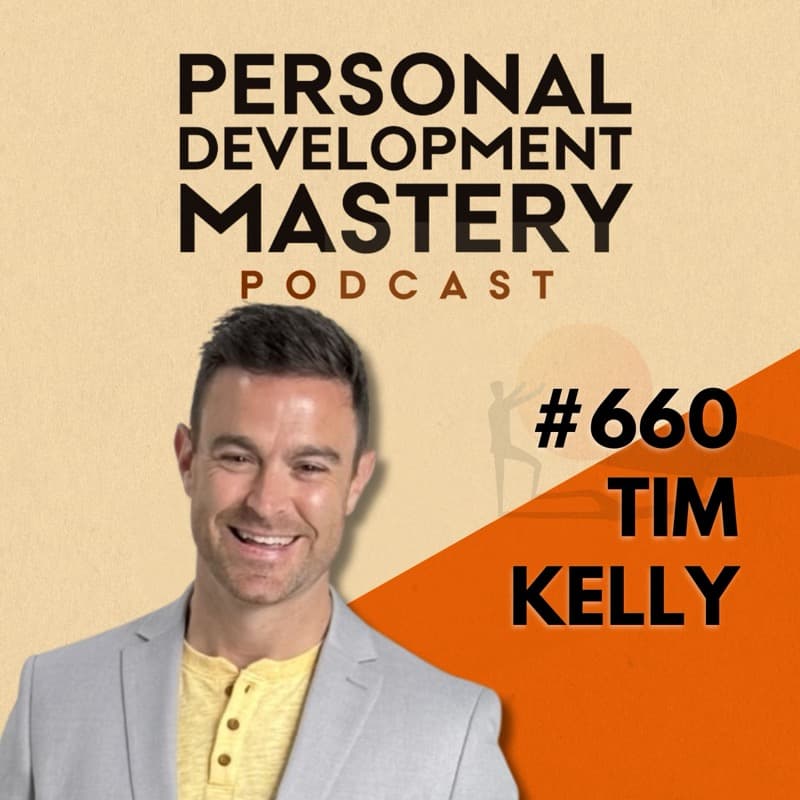
In episode 660 of the Personal Development Mastery Podcast, I spoke with Tim Kelly, a high-performance coach who knows that question from the inside. Tim left the US Navy after 15 years, just four years before his pension would have started, and built financial freedom through real estate and business. And yet, as he shared with real honesty, reaching that goal did not answer the question of who he was becoming.
Tim put it in a way that has stayed with me. Many high performers, he said, climb to the summit only to discover they are standing on top of the wrong mountain. I felt compelled to write about our conversation because I believe this is exactly where many midlife professionals find themselves: successful on paper, and quietly wondering what the success is for.
There are three insights from our conversation that I have been reflecting on since.
Clarity begins underneath the title
The first is clarity, and Tim frames it through three simple questions. Who am I? Where am I going? And why does that matter?
When most of us hear "who am I?", we reach for our job title. I am a doctor. I am an investor. Or, in Tim's case, I am a chief in the Navy. The difficulty, as he explained, is that when our identity is tied to the title, leaving the role can feel as if we have disappeared along with it. I know something of this myself. For many years, my honest answer would have been "I am a dentist", and stepping away from that meant asking who I was without it.
Tim invites us to look underneath the uniform, whatever our uniform happens to be, and to describe ourselves through qualities rather than roles: grounded, courageous, vibrant.
The third question, why does it matter, is where the real depth lies. Tim suggests asking "why?" six or seven layers deep. At the surface, the answer might be financial freedom. A few layers down, it might be the memory of parents who worked three jobs each and never got to enjoy their retirement. That deeper why, he said, is what carries you through the valleys, because the path from where you are to where you want to be is never a straight line.
Your actions are casting votes
The second insight came from Tim's own story. When he left the Navy, he had more freedom than he had ever imagined. Then came a very dark period, including a divorce and the loss of much of the wealth he had built. Through that time, he told me, the people who truly mattered showed up, and he found his way through by surrendering to God and committing to his own personal development.
What emerged was a different question. Not "how do I achieve more freedom?" but "how do I become the person responsible and capable enough to steward the freedom I am asking for?"
To answer it, Tim looks at the evidence. What do your actions over the last 30 or 90 days say about who you are becoming? If you say you want to be present for your family, yet you are on your phone through every meal, that is a gap. Every action, as he put it, is casting a vote.
And here is the part I want to underline. Having gaps is not the problem. The problem is refusing to acknowledge them. I will repeat that, because I want it to sink in: the gaps are not the problem, refusing to see them is. Once you see a gap, you know where to put your work.
The courage gap is often closer to home
And this brings me to the third insight, which I found the most personal. Tim has noticed that many successful people are courageous at work. They negotiate deals and hold difficult meetings without hesitation. Yet, in his words, "It takes real courage to have hard conversations with the people that you love."
So he offers one question. What conversation am I avoiding?
Most of us can answer that quickly. Tim's suggestion is practical: take five minutes to write down what you actually want to say, then commit to having that conversation within the next 24 to 48 hours.
From listening to doing
Tim's parting message was a gentle challenge. If you listen to a conversation like this and nothing changes, it is, shall we say, just entertainment. If nothing changes, nothing changes.
So I invite you to take one small step this week. Write down the three questions. Look honestly at the evidence of your last 30 days. And ask yourself which conversation you have been putting off. If you would like to go further, Tim has created a free clarity assessment at thetimothykelly.com.
For the full episode, show notes, and links, click here.