Have you ever reached something you worked hard for, felt a brief flicker of satisfaction, and then heard yourself ask, almost straight away, “Right, what’s next?”
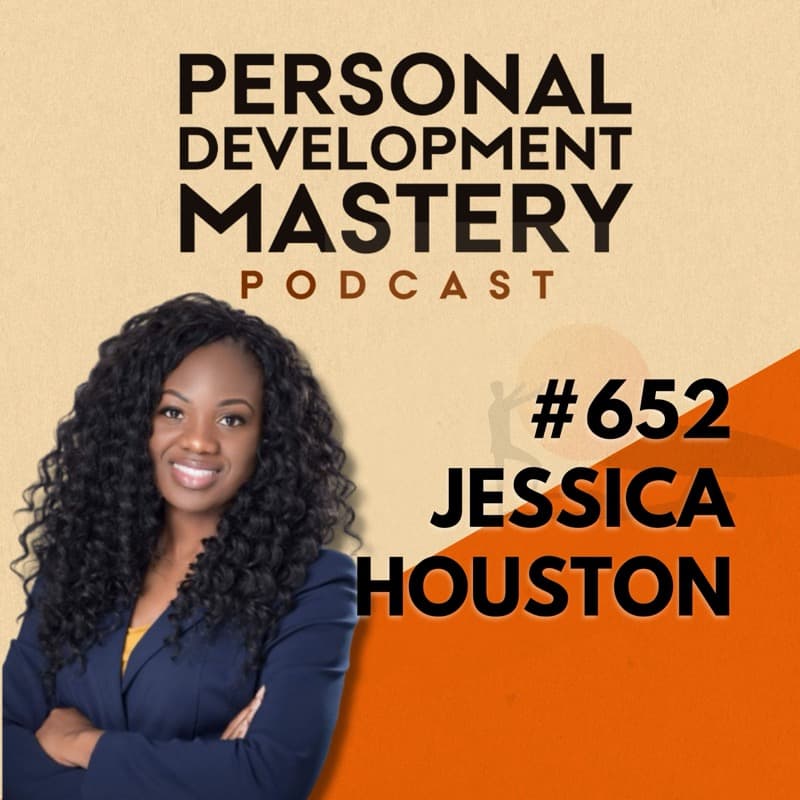
I have, more times than I would like to admit. And when I sat down with Dr Jessica Houston for this episode, I realised very quickly that I was speaking with someone who knows that question intimately.
Successful on paper, struggling inside
Jessica is a high achiever. She loves to win, she pushes herself, and by her own admission, she has never liked saying no. People saw the success and everything she had achieved. What they couldn’t see was what it was costing her: overwhelm, burnout, stress, and physical struggles that came from constantly overextending herself.
When I asked her what the voice in her head was saying at the time, she told me there wasn’t just one. There were several.
The first came from her childhood. Jessica grew up in poverty and decided she would never go back there. So whenever she wanted to slow down, the voice answered: you can’t slow down, you can’t afford to slow down, you don’t ever want to be broke again.
The second was quieter but just as powerful: the need to be liked. If she said no, people might call her mean or selfish. So even when she was exhausted, she said yes anyway.
I think many of us can relate to both. I certainly can. We take the stories we tell ourselves as fact, and we rarely step back long enough to ask whether they are true.
Filtering your yes
So where do you begin? For Jessica, the first step was looking honestly at what she was saying yes to, and why. She realised she had made achievement her identity. When she reached something big, she didn’t celebrate. She simply moved on to the next thing.
Today she runs every request through a set of filters. Will this give me energy or drain it? Is it aligned with my values, or am I doing it because someone else wants me to? Do I really want to do this? And will taking it on throw me into overwhelm?
I love this because it brings into the open what has often been going undetected, shall we say, in our minds. But I also put a challenge to Jessica, because in my own experience, awareness alone is not enough. Under stress, or in the middle of a conflict, the old habit tends to take over before we have had a chance to breathe. So how do we carry that awareness into the moment itself?
Write it down, then call it out
Her answer was practical. Our thought patterns are habits, she said, and you cannot change something you are not willing to confront. So start by writing down the thoughts that keep returning. Then challenge them. Jessica literally tells herself, “This is not true.” Everything is not going to fall apart if she misses one meeting.
I have found the same myself. A thought inside your head feels very different from the same thought written on paper or spoken out loud. Once it is out there, it becomes much easier to recognise the next time it appears.
And yes, sometimes you will miss it. I joked with Jessica that I never have, which of course is nonsense. I miss it all the time. But every time you notice, even after the fact, you are building a muscle.
Talking to yourself from the outside
The practice that stayed with me most was how Jessica speaks to herself when rejection arrives. When a proposal is turned down, she could easily spiral, get back into bed and pull the covers over her head. Instead, she talks to herself as though she were someone else: “Jessica, we are not doing this today.” She reminds herself of the contract she won last week, and asks what she can do differently next time.
As she described it, I thought of the mirror. Facing your own reflection, using your own name, and offering yourself the encouragement you would give a friend. The next time you feel the urge to withdraw or give up, it is well worth a try.
The thought is not the decision
Perhaps the most freeing idea in our conversation was this: success does not make the negative thoughts disappear. Jessica still has them. The difference is that they no longer drive her decisions or her actions. A thought can appear, she told me, without her having to agree with it.
You don’t have to learn to control your thoughts. You have to learn not to be controlled by them. For me, meditation has been a great help with this. For Jessica, it is what she calls her “self-I-care” time each morning: meditating, reading, moving her body, drinking enough water. Caring for yourself inside and out, because it is all connected.
An invitation
As we closed, Jessica left us with a line I keep coming back to: internal growth precedes external growth.
So I will leave you with a question. What is the voice in your head telling you this week, and is it actually true? Write it down. Look at it honestly. And then decide whether you agree.