What if the biggest transformations in your life don't come from one bold move, but from the small decisions you make every single day?
TO WATCH THE CONVERSATION ON YOUTUBE, CLICK HERE.
Many of us unknowingly cling to identities that once helped us succeed but now hold us back. Whether you're navigating a career transition, stepping into leadership, facing midlife changes, or simply questioning what's next, this conversation explores how greater self-awareness, emotional literacy, and intentional daily choices can help you create a more meaningful and fulfilling life.
What you'll learn:
How to recognise when an identity that once defined your success is now limiting your growth, and what it takes to let it go.
Why emotional literacy is one of the most overlooked keys to self-awareness, better leadership, and healthier decision-making.
How seemingly insignificant daily decisions create lasting momentum that shapes your habits, character, and future.
Press play to discover how increasing your self-awareness and making intentional small decisions can lead to the biggest shifts in your life.
˚
˚
MEMORABLE QUOTE:
"It's not the big ones that change our life, it's the small ones."
˚
VALUABLE RESOURCES:
Chip's website: https://scholzandassociates.com/
˚
Coaching with Agi: https://personaldevelopmentmasterypodcast.com/mentor
˚
🎙️ Want to be a guest on Personal Development Mastery?
Message Agi on PodMatch: https://www.podmatch.com/member/personaldevelopmentmastery
˚
Personal development podcast for midlife professionals, offering actionable insights for personal growth, mindset tips, self mastery and purposeful living.
˚
Subscribe to our weekly email: https://personaldevelopmentmasterypodcast.com/email
---
A personal development podcast for midlife professionals, offering mindset tips and practical tools for personal growth, self mastery, personal mastery, and purposeful living. Discover psychology tips for emotional intelligence and growth mindset, including overcoming impostor syndrome and building self mastery.
Personal Development Mastery features personal development interviews and solo episodes empowering professionals, entrepreneurs, and seekers to cultivate self mastery and create a meaningful, fulfilling life aligned with who they truly are.
[Agi Keramidas]
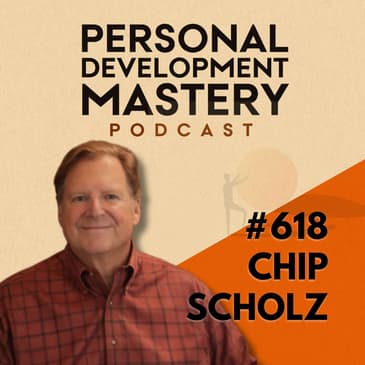
In this episode, you will discover how small daily decisions and outdated identities can quietly hold you back and what it takes to move toward greater clarity and purpose. Welcome to Personal Development Mastery, the podcast that helps you gain clarity, overcome what holds you back, and take confident next steps towards a more meaningful and aligned life. I am your host, Dr. Aggie Keramidas, a personal development mentor and coach, and this is episode 618. If you are looking to navigate life transitions with greater clarity and create lasting change through everyday choices, this conversation explores how letting go of outdated identities and embracing small decisions can transform your life. If you are questioning what's next in your life or career, or want to become more intentional in the decisions you make every day, then this episode is for you. Before we start, if you would like to find clearer direction and take confident next towards a life more meaningful and aligned, I offer one-to-one coaching to support you on your journey.
To learn more, visit personaldevelopmentmasterypodcast.com slash mentor. The link is in the episode description. Now, let's begin.
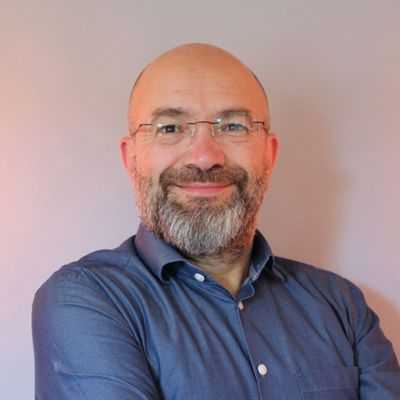
Today, my guest is Chip Schultz. Chip, you are an executive coach, author, and storyteller who explores how people grow and change. Through your work, you help people navigate transition, rethink their identity, and pay closer attention to the quieter moments that shape a life.
Chip, welcome to the show. It's a real pleasure to speak with you. Thank you, Aggie.
[Chip Scholz]
I am so glad to be here.
[Agi Keramidas]
I am very glad that you are here. I will say to the listeners straight away that we will talk and you will discover how small decisions have immense power and how to let go of some outdated identities so we can move through transition with more clarity. That's, Chip, in a nutshell what I would like to explore with you.
I don't know if you want to make a comment on that particular art and how that is something that is part of your work.
[Chip Scholz]
Yeah, I'll take the second one first. There's a couple of things that come to mind. First of all, I see so many business owners that hold on way too long and they may have other family members.
In fact, most of the businesses that I've worked with over the last 30 years are family-run businesses. They may be really good-sized enterprises. They may be $150, $200, $300 million companies, but they're still family-run.
They're still run by perhaps a patriarch or his son. There's one in particular that I've worked with that the son has just stepped down as CEO. The son is 68 years old and decided to pass it along to the next generation.
It's only been his father that ran the company and then him. Well, that's going to take an awful lot of letting go because your identity gets so tied up with your business that you really can't separate the two. I had a client who was head of a nonprofit here in Charlotte, North Carolina.
He had been there 30 years and everybody knew him as the face of that organization. He was going to retire. And he didn't know how he's going to handle it.
So the coaching in the last five years was to talk about, okay, so what are you going to do after? Because if your whole plan is to go home and help your wife around the house, that's probably not a good plan.
[Agi Keramidas]
Can I take it back now a bit now, since we started talking about the identities and how people hold on to. Let's say, and that's why I'm bringing it a little bit back. How can someone tell, that's my question, that they are trapped in an identity that they no longer, or it no longer serves them?
And I'm asking this question because for many, this concept, this identity comes quite subconsciously. So without some coaching, without something that will bring it about, most people don't even know that there is something that is called identity that has this, this, and that. So how can one understand or discern if they are indeed in an identity that no longer serves them?
I hope my question makes sense.
[Chip Scholz]
Yeah, it does. And I guess, so there was a great book by Arthur Brooks, Arthur C. Brooks, called From Strength to Strength.
And it talks about the transition from fluid intelligence to crystallized intelligence. And my understanding of the difference is that it moves from a problem solving and a doing phase to a more being phase. And in fact, that's why they say that older people make better teachers, because they have such great recall of all these things, all the life experience, all the lived experience they've had.
But they're in a different phase. It's kind of like why, you know, there is a certain arc to a creator's lifetime and work style. So, you know, when I think of pop musicians, some pop musicians like Paul McCartney have lasted a lifetime and are still writing songs and that kind of thing went into his 80s.
But most of the pop musicians have a lifespan of 15 to 20 years, where they're writing, they're creative, and then they're living on the thing that got them there. So that's one of those things that you reach a certain point where, and I talk about it all the time in leadership, we move from a way of doing to a way of being. And what I'm talking about there is, look, we are rewarded our whole life for what we do, right?
You know, in school, getting good grades in our professions, for making so much money, or, you know, we're rewarded for that. And we're lauded for that. Society sees that as a positive outcome.
Well, sometimes, you know, especially as you move up in an organization, or you move up in your life, it has to be, you've become something else. And that's the identity shift, is when you go from being an engineer to being a leader. Now, you can be a leader of engineers, but it doesn't mean that you have to get into all of the project work, and all of the things that got you there.
But you just, you've got to let go of that. And the really successful ones, the successful leaders, are the ones that have let go. In my life, it was moving from working my butt off, traveling 200 nights a year, being on airplanes all the time, executive platinum on whatever airline that I was flying.
And, you know, all of a sudden, that didn't work. And it took me a health crisis to do that. But all of a sudden, that didn't work.
And what I found coming out of that health crisis is I was less performative. And all I wanted to be was useful. And it changed the way I thought about things.
So I hope nobody goes through a health crisis that gets you there. But I also, you've got to know when to let go. And perhaps that takes a coach.
Perhaps that takes a great partner. Perhaps that takes other influences in your life. But, you know, I've watched it in the successful, especially CEOs, the successful CEOs have learned to let go.
[Agi Keramidas]
I liked very much the shift you've described from performative to useful. And I think that is connected with what you were saying also from the way of doing to the way of being. So what I wanted to ask you to go a little bit in more detail is this particular way of being.
And in particular, what I think would be very interesting for someone listening is how can practically one, what can they do as something, you know, that they can help them go to that direction from the way of doing to the way of being?
[Chip Scholz]
You know, oftentimes, oftentimes it takes a crisis and it may be a health crisis or maybe something else, but oftentimes it takes a crisis. There's a, there's another book called David, it's called The Second Mountain by David Brooks. And it talks about the two mountains we climbed.
The first mountain is about fame and money and all that kind of stuff. And then there's a, there's a crisis and you end up in the valley. And the second climb is about meeting another purpose.
And, you know, I have a good friend that he's, he's a good friend just met. I, he's a podcast host and he and I have just hit it off and gotten to know a little bit about our stories and he is on that second mountain climb towards meeting a purpose. And so he has, he has now dedicated his life to helping midlife men become better at what they are and become more useful and, and, and to find that, that meaning and purpose that, that goes beyond all of the money and all of the, all of the fame and all of that kind of stuff.
So, you know, like I said, a lot of times it takes a crisis. A lot of times it takes some deep reflection and, and there has to be a reason, you know, whether that be self-doubt or whether that be some outside influence. There has to be a reason to push you there.
I don't, I don't know if, if we are all that self-aware to be able to make that decision for ourselves.
[Agi Keramidas]
I wish we were, I very much doubt it. Self-awareness is unfortunately lacking a lot and it's, I mean, I'm not surprised because it's not easy, especially to, you can have some moments of self-awareness, but becoming self-aware and staying self-aware, that is, you know, it's a lifelong effort and work that you, you do.
[Chip Scholz]
Well, Aggie, let me, let me just say one thing. Are you, are you aware of the term emotional literacy? Yes.
Okay. So, so one of the things that Brene Brown talks about is that we're all emotionally illiterate. And she says, if we cannot mention, if we cannot name 25 words for emotion in 30 seconds, or excuse me, in 60 seconds, we're emotionally illiterate.
Now I've asked a hundred groups of these people about that and had them do the exercise. And the average I get is about eight. The most anyone has ever said in, in probably a thousand people of doing this is, is 18, which means that we, you know, especially men we're, we're told, you know, big boys don't cry and all of that kind of stuff.
We're told to stuff our emotions in a bag and, you know, just stuff them down deep. But it happens to everybody. And that's the key is, is to understanding your emotions.
That's the key to self-awareness is to be able to understand your emotions. Like, Aggie, let me, let me ask you a question. Have you, have you ever been angry?
[Agi Keramidas]
How did you guess? Of course I have, of course I have.
[Chip Scholz]
Okay. So what does angry feel like to you?
[Agi Keramidas]
It feels like some pressure that comes upwards and it goes to the head and creates a response to a situation that is, let's say, unlike how I am or how the kind of person that I am, or at least the kind of person that I would like to be. So in other words, it feels like it is affecting my thoughts and my behaviors at that time. Until, of course, the moment that self-awareness kicks in, it might be quickly or it might be later on.
Eventually it will kick in, but I'm, that's my answer to what you're asking.
[Chip Scholz]
Well, yeah. And, and so what, what happens is, first of all, it takes you about four hours to come down. And that's, that's highly predictive.
It takes about four hours. That's why when you're in a argument with a partner and, and we call it a discussion around our house, but it's, it, you know, certainly might be even a fight that, that four hours later you think to yourself, geez, I shouldn't have said, or geez, I wish I said, because your, your, your amygdala cuts off your, your cortex and you really aren't able to think at your best when you're angry, but then it's, it's understanding the, the physical effects of your anger. So you talked about a, a, um, a squeezing or, or a pushing up into, uh, into the head. Well, you know, there's a, there's an exercise that I do where I ask people to close their eyes and to, you know, tell me what part of the body they feel the emotion and tell me, uh, um, what color it is, what shape it is, what texture it is, et cetera.
And everybody that I worked with is able to do that. Well, then the next step is to say, okay, so what does joy feel like? And where do you feel it in your body?
And, and what does, uh, what does sadness feel like? And, and what does despair feel like? And what does contempt feel like?
And what does disgust feel like? I mean, there are 672 words for emotion in the English language. And, and by the way, 70% of them are negative.
Interesting. Yeah. Which, which is we think more about what's going to go wrong than what's going to go right.
Right.
[Agi Keramidas]
Unfortunately, yes, we do. I hadn't realized that there is such a big difference in the amount of words, but I suppose that really represents, uh, what you just, uh, say, but out of these hundreds of words, I, I wonder how many one could write down and describe emotions. Uh, you can mention it earlier.
[Chip Scholz]
Yep. Yep. Yep.
And, and I'm not, I'm not that good at it either, but, uh, um, you know, we, we don't, we run out of names for emotion. We run out of names for, for, um, what we feel. Um, but the, the important thing is, is to understand and be self-aware enough to, to know what we're feeling.
And, you know, look, you know, when something is not going right, and it may be just a subtle change, but it's, it's that, that understanding of what that subtle change is in the atmosphere and in yourself that, that helps you to move on to, to that next experience, that next, uh, that next life, you know, you have to make an adjustment.
[Agi Keramidas]
I will reiterate because I think it's very useful what you just said about the exercise, at least that's how I perceived it. The exercise of feeling it's emotion, uh, because it is, it's a great, you know, practice and because it allows you to do some self inquiry and, uh, these answers might not readily, uh, come. They come when you start looking.
Uh, Chip, I would, I will, I will switch gears a bit now. I mentioned earlier on in the introduction that I would like to speak to you and hear your thoughts on what you say about the power of small decisions, you know, versus the, the big ones. So guide us through your understanding of that so we can pick it from there.
[Chip Scholz]
Well, I'll, I'll preface it by saying that even as logical as we think we are, we still make emotional decisions. And, and, you know, if you take a look at the work of Amos Tversky and Danny Kahneman, um, who, who founded the, uh, the field of behavioral economics, um, what they sought to describe are all of the biases, um, that, that we hold that are emotional decisions, um, that pass off as logic, you know, and, and the most famous one is probably confirmation bias, which means that we recognize a pattern and we make a decision based on, on that, that recognition of a pattern, even though that may or may not be the, the solution. Um, but we have, we have a, a large feeling that in, in, we have a large belief in our rightness of that action based on the confirmation bias.
Um, but there, so, so when we're talking about decisions, um, you know, are we making decisions on the best possible, um, or the, for the best possible outcome, or are we making decisions based on some biases that we have? Um, but when, when I talk about small decisions, um, we make small decisions every day. And, and here's the weird part is that 85% of what we do, we don't even think about, you know, the way we brush our teeth, the way we comb our hair or lack of it.
Um, the way we, uh, the way we take care of our beard, the, uh, um, the way that we put on our clothes and, and button our shirts and, and all of that, we don't even think about it anymore. And it's not until you have some, some kind of an event like, um, I had shoulder surgery on my, on my right shoulder. And so I couldn't use my right arm for about, oh God, like three or four weeks.
Well, I'm right-handed and all of a sudden having to use your left hand is just not a very comfortable thing. Um, but it's, it's just, um, you've, you've got to, you've got to make those small decisions every day. So if you, if you want to, um, if you want to quit smoking, you know, I don't know if you've ever smoked.
I did it at one time, but if you want to quit smoking, you've got to make a small decision every day. And the small decision every day is, is to not light up. And, you know, it even is a small decision.
Um, after, after a meal, when you really want one or when you've had a stressful day and you really want one, it's, it's a small decision. Um, you know, after the health crisis, I lost 110 pounds and, uh, and you have to make that small decision every day. So you may, you know, it may be in the context of the bigger shifts that you're looking for, but you still have to make those small decisions.
Um, uh, you know, years ago, uh, um, in, uh, in 98, I, I got laid off from a job and we decided to start over and, and move from Los Angeles to North Carolina, which is like total culture shock and, and very strange to do. Um, I love North Carolina. I'd lived here at one point in my life, but, uh, um, you know, I, I was only here for a couple of years and that was way back in the late seventies, early eighties.
And, uh, um, and so we decided to, to move back and, uh, um, you know, it's, it's a thousand and one small decisions. It's small decisions about, you know, do you buy a house or don't you buy a house? Do you, do you, you know, what we ended up with is, uh, um, we, uh, um, moved in a 19 foot travel trailer.
We spent a month and a half on the road coming from Los Angeles to, uh, to North Carolina, to Charlotte. And, uh, and we did it with five cats, two dogs, and, and, uh, three humans. And, uh, um, you know, it's a great story.
Um, at the time it felt kind of weird, but it was a great story. And, uh, um, and think about all the small decisions that had to go in it, you know, so, so we found out that we could not, um, kennel our, our, our cats. Um, and we wanted to travel with our dogs, we wanted to kennel the cats and we found out we couldn't kennel the cats for a month and a half.
And it was going to be outrageously expensive. So we made the decision to bring them along with us, which changed a lot of things. And you have to make all the decisions about that.
And, oh, by the way, um, at first we had them all riding in the, in the truck with us and, uh, um, and they were so loud and, and just caterwauling like crazy that we finally just put them in the, uh, in, in the trailer while it was the middle of summer. So now you couldn't travel more than a couple hours, you know, between air conditioning to, to keep the, uh, the kitties cool enough that, uh, um, that they weren't going to, um, have a, have an health issue. And, and, uh, um, you know, it's just, it's, it's all small decisions.
It's small decisions. It's small decisions we make every day. And it's not the big ones that change our life.
It's the small ones.
[Agi Keramidas]
Indeed. And, uh, you know, you were saying about, uh, smoking earlier, and I will use that also as, uh, as my example, because, uh, you know, with the small decisions, once you do them consistently, then there is momentum that happens and momentum brings a compounding afterwards. So for your example of, uh, of smoking, when you take the small decision not to light up one day and then the next day, the next day, eventually you don't even have to take that small decision because it is completely out of your system because of the momentum and everything that has happened.
And, uh, I am very much personally aware of that, uh, because I grew up in Greece. So, you know, in late seventies, early eighties, smoking was very normal in Greece. I mean, I remember my, uh, as a child, as a kid, I remember my parents after dinner, both lighting up on the dinner table.
It was completely normal at that time. So I picked it up, uh, myself after when I got, uh, you know, 17 or so or 18. So I do remember what you said.
So anyway, I have personal experience, uh, of that and how the keeping on taking that decision in this particular example of that, or when you, you know, want to develop any new habit or lose weight or become healthier, the more you take the same decision, the same simple decision, the easier it gets. And eventually it's, you don't even have to worry about the decision.
[Chip Scholz]
Yeah. And it doesn't even have to be a personal, it can be a work thing. You know, it's a small decision whether, you know, whether you have integrity or not, you know, whether you, uh, um, uh, you decide to, you know, hold to your ethics or, or your, uh, um, your morals or, or not it it's, um, you know, there are all kinds of small decisions that we make in the moment that, um, that have a great effect on our lives.
[Agi Keramidas]
And I think I will again bring back that we, the self-awareness that we were talking about, because in order to take the, that small decision, the right one, the one that, you know, deep down that it is the right decision, you have to have the self-awareness when you are making it and not allow the, the habitual, the auto-pilot, if you want the response to, to take over. Thank you. This has been a really fascinating conversation.
And I think there were some quite useful and practical things that someone who has listened can pick up. One that I will reiterate one more time, because I think it stayed with me, it resonated and I will probably invest some of my time to do it properly, was that taking some time to feel its emotion and writing down the, you know, all that as a method of improving our emotional literacy. Before we wrap up, first tell me where can the listener find out more about you, where do you want to direct them?
[Chip Scholz]
Yeah, my website is scholes and associates.com, I'm sure you're going to put that in the show notes and you can get to me on all socials, I'm on Facebook and LinkedIn, etc. I've got a couple books out, one that came out in October, one that came out in March. The one in October was Small Decisions, Big Shifts, and so both of them are available on Amazon and a number of different audiobook platforms as well.
So, you know, I would love the opportunity to talk to whoever and thank you.
[Agi Keramidas]
It's my real pleasure, I want to thank you also and wish you all the very best with continuing this transformative work that you do. I will leave it to you for your parting wisdom or perhaps a message for someone who has listened to us for the last half an hour, what's something that you want to leave him with?
[Chip Scholz]
The biggest thing is work on your self-awareness and as you work on your self-awareness, ask yourself are you in the right place and are you doing the right things and have you become something else rather than just stuck in a way of doing?
[Agi Keramidas]
Thank you for listening to this conversation with Chip Schultz. I hope it has given you a new perspective on the power of small decisions and the importance of self-awareness. One practical action tip to remember from today is to choose one small decision each day that aligns with the person you want to become.
Rather than waiting for a life-changing moment, focus on one consistent action and notice how these small choices gradually create lasting change. Join us every Monday for in-depth conversations and every Thursday for shorter solo episodes with insights and tools you can use. If you would like to find clearer direction and take confident next steps towards a life more meaningful and aligned, I offer one-to-one coaching to support you on your journey.
To learn more visit personaldevelopmentmasterypodcast.com slash mentor. Until next time, stand out, don't fit in.

 5.00 (74 Reviews)