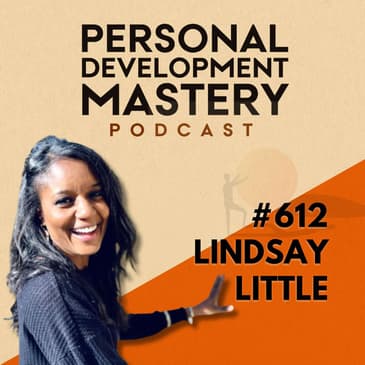
What if the clarity you’re searching for isn’t in more information, but already within your body?
Many thoughtful, intelligent people spend so much time analyzing decisions, solving problems, and managing daily pressures that they gradually lose connection with the signals their body is constantly sending them. In this episode, we explore how subtle patterns of stress, breath, posture, movement, and emotional responses shape the way we think, feel, and make decisions—often without us even noticing.
If you’ve ever felt stuck in overthinking, disconnected from yourself, or uncertain about your next step in life, this conversation offers a grounded and practical way back to presence, clarity, and self-trust.
- Discover how slowing down and reconnecting with the body can help interrupt unconscious mental patterns and bring more awareness into everyday life.
- Learn simple, practical ways to use movement and breath to become more present, reduce stress, and feel more grounded during uncertain moments.
- Understand how to balance external information with inner wisdom so you can make decisions with greater clarity, trust, and alignment.
Press play to discover how reconnecting with your body can help you move beyond overthinking and make clearer, more grounded decisions in every area of life.
˚
KEY POINTS AND TIMESTAMPS:
01:49 - Why We Become Disconnected From Our Body
04:54 - The Subtle Physical Patterns We Stop Noticing
07:49 - Reconnecting Through Movement and Awareness
10:18 - Using Breath to Interrupt Stress and Overthinking
15:28 - How Self-Awareness Influences Difficult Decisions
18:27 - Balancing Logic, Data, and Inner Wisdom
24:21 - Simple Practices to Slow Down and Become Present
30:03 - Practical Ways to Return to the Present Moment
˚
MEMORABLE QUOTE:
"I find that the present moment is really where the change is possible."
˚
VALUABLE RESOURCES:
Lindsay's website: https://somalingua.com/
˚
Coaching with Agi: https://personaldevelopmentmasterypodcast.com/mentor
˚
🎙️ Want to be a guest on Personal Development Mastery?
Message Agi on PodMatch: https://www.podmatch.com/member/personaldevelopmentmastery
˚
Personal development podcast for midlife professionals, offering actionable insights for personal growth, mindset tips, self mastery and purposeful living.
˚
Subscribe to our weekly email: https://personaldevelopmentmasterypodcast.com/email
---
A personal development podcast for midlife professionals, offering mindset tips and practical tools for personal growth, self mastery, personal mastery, and purposeful living. Discover psychology tips for emotional intelligence and growth mindset, including overcoming impostor syndrome and building self mastery.
Personal Development Mastery features personal development interviews and solo episodes empowering professionals, entrepreneurs, and seekers to cultivate self mastery and create a meaningful, fulfilling life aligned with who they truly are.
[Agi Keramidas]
In this episode, you will learn how to reconnect with your body's inner signals, so you can make clearer, more grounded decisions without getting lost in overthinking. Welcome to Personal Development Mastery, the podcast that helps you gain clarity, overcome what holds you back, and take confident next steps towards a more meaningful and aligned life. I am your host, Aggie Keramidas, a personal development mentor and coach, and this is episode 612.
If you are looking to make more grounded decisions and reconnect with yourself, this conversation explores how awareness of the body and breath can help you move beyond overthinking into presence and self-trust. Keep listening to learn simple, practical ways to use movement and breath to reduce stress and feel more grounded, especially during uncertain moments. If you often find yourself stuck in your head and overwhelmed by overthinking, this episode is for you.
Before we start, if you would like to find clearer direction and take confident next steps towards a life more meaningful and aligned, I offer one-to-one coaching to support you on your journey. To learn more, visit personaldevelopmentmasterypodcast.com slash mentor. The link is in the episode description.
Now, let's begin. Today, I'm delighted to speak with Lindsay Little. Lindsay, you are a somatic practitioner exploring what it means to be truly present and connected to ourselves, not just in theory, but in everyday life.
Your work focuses on the body, breath, and patterns, helping people reconnect with themselves through the body so that they can live with more presence and choice. Lindsay, welcome to the show.
[Lindsay Little]
It's a real pleasure to speak with you. It's great to be here. Thanks so much for having me.
[Agi Keramidas]
I'm looking forward to our conversation and one of the things that I would really like to explore with you today is how to reconnect with one's body and use that awareness to many things, but in particular, decision-making and how we can make more grounded decisions that are more true to who we are. That's what I would like to explore. Let me start really with this.
Why do you think there are so many intelligent, successful, thoughtful people out there that remain disconnected from their body and without realizing it most of the time?
[Lindsay Little]
Yeah, I think that's a great question and I think it's probably, there's a different answer for everyone. And from my personal experience, I think there's just so many ways that we're invited to take on ideas that are not really, that are outside of us. So in marketing, advertisement, it's take this product or work with this person or take this program and see your life or experience X, Y, or Z.
And I think all those things can be wonderful and really helpful. But I think if we're going to this external, whatever it is, to satisfy something that's really inside of us or that we have our own agency around that we've kind of just learned to ignore, I think that's where it starts. And it can start at such a young age.
I mean, even before we're verbal and it can continue to build. And so I think it's often very subtle, even as a little kid, we might be told, Oh, give this person a hug. And we might have this feeling of not wanting to do that or needing to use the bathroom and I'll do it later.
There's just ways that we can override these signals that our body is sending us. At least ways I override it. Right.
So I think it's a, I think it's a constant relearning or reexamining or reconnecting that for some of us, we've been connected in many ways, I think, even from a young age and we've learned to disconnect over time. And in some ways we've been connected and we're strengthening that connection over time. I think there's so much nuance to it.
[Agi Keramidas]
Yes, there is. And I will try to narrow it down a little bit right now by asking, let's say someone listening right now, and he's listening to what we are saying about reconnecting, as you said, with the body and says, okay, Lindsay, can you give me an example? What is it that I'm not connected with?
Because I feel that I am connected with my body, but what it is, or perhaps you can share some kind of common, let's say, element of connection with the body that is missing from many people without them even realizing so.
[Lindsay Little]
Well, I think there are ways that our body does things for us that we don't even realize until we're kind of creating a new pattern. So for example, with phones or the computer, we don't move as much as a society. I mean, I know I definitely moved more as a child before cell phones and computers were a thing.
And even if you look at a child playing and running outside, there's so much free movement that, you know, I think as adults, we sometimes say, wow, kids are so flexible and they have so much energy. But I think we have a lot of energy that's available for us too. But when we're in these patterns of sitting for a long time, for example, or holding our phone, then our body starts to sort of let that pattern hold in our body.
So if I'm going to hunch over, my body will start to say, oh, well, we can just sort of keep this position for you. So it's not as much effort to hunch over or, or in what, you know, holding the phone or whatever it is. And so over time, and there can be years of this pattern developing and strengthening and becoming more rigid.
And so then we might not recognize that we have some space in a particular area in our body. And so that's one way that the pattern can happen over time. It can also happen in one action that we do from, you know, a certain muscle that we haven't really has been underutilized that we've been overcompensating for.
And we do one thing and then that takes, starts to form a pattern. And so I think there are ways that are so subtle that, and it could also be something emotional where we had a certain experience that didn't maybe get to complete. So we kind of held our breath and we kind of started to change our breath pattern over time.
So I think a lot of these things can be subtle and start to develop over time rather than, oh, I slept weird last night and now I have this pain. Maybe it's just starting to manifest itself, but has already been, that pattern has slowly been developing over time.
[Agi Keramidas]
So how can one start to reverse this and get more connected with the messages that the body sends?
[Lindsay Little]
Yeah, that's a great question. So I think a lot of it is just noticing, oh, I do have this pain here. Sometimes it's very simple things, getting more sleep.
And sometimes it's actually someone else working with us or witnessing us to point out things that we might not recognize. So whether that's a friend, a colleague, a practitioner who is maybe skilled in a particular area where we might be underdeveloped or unaware can be really useful. So whether that's a coach, a body worker, massage therapist, personal trainer, I think there's so much that can be available in movement because we start to interrupt these patterns.
[Agi Keramidas]
Tell me a bit more about the movement. You mentioned the movement a few times already. So I want to hear a bit more about are there specific kinds of movement?
Is it any movement? Is it being aware of the movement? So go a little bit further in that.
[Lindsay Little]
Yeah. Again, I feel that it can be different for each person, what works well for them. Some people might benefit more from yoga, with weightlifting, any sort of movement.
But I think just walking, I've experienced in myself and also in my own research and learning that there's so much more that can be available when we're moving our body. There's just more energy. There's more that can flow.
And so, yeah, I think any kind of movement can be helpful rather than just sitting every couple of hours or if we're just sitting hour after hour, only getting up to use the restroom or we're in meetings all day, we're kind of losing opportunity to move our body and let energy flow through our body. And so that's part of these patterns. Yeah.
These patterns that can start to form and sort of constrict that movement of energy. And when I say energy, I just mean having something flowing and moving in our body.
[Agi Keramidas]
I think everyone listening can understand when we say energy, what do we mean with that? Before, and I will ask you about the decision making in a moment, but I want to stay here a little bit more. And I wanted to ask the role of breath, because I mentioned the breathing in the beginning, in helping this kind of awareness of the body.
What is the role of the breath and how can one utilize it in an effective way to increase the awareness of the body?
[Lindsay Little]
Yeah, that's great. So one thing that I find really useful with breath is just stopping to notice it sometimes. Sometimes being really focused on something, I might notice my shoulders are higher or that my breath is higher or at a higher rate.
And so sometimes if I start to notice that I feel stress or anxiety or worry about something, rather than creating all these stories in my mind or trying to say, oh, why is this happening? If I just stop and I pause and I say, okay, what's happening with my breath? And what if I really pay attention to my breath?
And even starting with an exhale, letting it all out, all my breath out, and then starting to inhale, then I can start to notice my body soften. And so I use that for myself as a way just in practical life where I can notice what's happening in my body. And as I start to pay attention to my breath, I start to have more awareness of the space that I'm in.
Oh, there's a wall over there. My feet are here. And so it's kind of just a way to pause.
And I found in my exploration of breath, so many modalities include breath. Even in body work, there's ways that we work with the body to allow breath to flow more easily, more efficiently, because there's so many parts of our body that are helping us breathe. It's not just the lungs.
And so fascinating, even in energy work, I find patterns of breath and how we're moving energy just through breath from outside of a physiological perspective or an anatomical perspective. And even in music and song and dance, there's a lot of focus on breath. And so it's fascinating to me how it goes way beyond just what we might think of breath or what I think of when it comes to breath.
[Agi Keramidas]
And me too. And with the breath, I will add, Lindsay, to what you're saying that for me, personally, being aware of the breath and what you said, it can be as simple as a deep exhalation and a conscious inhalation at that time. For me, what it does, of course, it helps me to become present, to come to the present moment.
But I find that it helps me interrupt the story that is been running unconsciously to the most part of it inside my mind. So the narrative or the internal dialogue, however you want to call it, when it really is not going in any direction that I would like it to go. And indeed, the body will at that time, if you pay attention, feel different in a way you might feel or I might feel my chest tightened or I can feel my shoulders being raised like this.
So taking a deliberate and intentional breath at that moment helps me to stop that, at least to interrupt it for a moment enough for me to become aware that, okay, there is this story now that is playing. I might still continue the story afterwards, but I would still have a little glimpse of, all right, that's not me. This is happening while I am very much absorbed in it to understand what's happening with my self-awareness.
So I'm just putting that as my own personal experience. And I don't know if you would like to add anything to that.
[Lindsay Little]
Yeah, no, I think that's beautiful. The only thing that I would be curious about, and what I want to get curious about too, is that story itself, because sometimes there might be an emotion attached to that story or that's really, really taking us out of the present moment. And so that could be another step of that pause than saying, okay, what happened right before this?
And if I can go back to that moment and recognize that without it, again, being a spiral of the story, but getting underneath to the root of what that emotion might have been or what the root of that story came, where that root came from.
[Agi Keramidas]
Let's speak about our sense gears and speak about the actual decision-making and how being self-aware or what we have been discussing so far during our conversation, the last 10 minutes, how can this influence our decision-making? So I would like to hear your thoughts on this. The influence, that's the word I was looking for, how self-connection, this kind of self-awareness influences the way that we make decisions, especially in uncertain situations.
I don't mean the simple, I mean, it influences all the decisions, but I'm more interested to hear your thoughts about the difficult, shall we say, decisions, the decisions that there is a lot of uncertainty. It can be in transition, like many listeners of the podcast have, a transition in their life or whatever else it is. But yeah, I'd like to hear your thoughts.
[Lindsay Little]
Well, to me, in my experience, it's kind of like what you were sharing about this story that can be created and that breath bringing awareness to the present moment. I think in my experience, when there are these deep, big decisions to make, it can be really easy for those stories to keep showing up and the overthinking and wanting to get it right or wanting to get enough data to make the decision that feels like the right decision. But I find that that really just takes me out of the present moment because then I'm trying to get all this data and I have so much of my awareness going here that I'm missing or overriding.
Maybe I feel like I'm constricting a little bit when I think about a yes to this or a no to that. And so I find that it's so helpful to get that data. I love to analyze and use my mind.
But I also find that if I can bring in the rest of the signals that my body is aware of and that my body is sending, I can make a better decision. Whereas if I just take that data in and create all these stories, I'm starting to lose connection to the present moment. And I find that the present moment is really where the change is possible.
And we might not have all the answers. In fact, I usually don't have all the answers, all the information. But as I start to pay attention to the signal and I take that first step and I'm in movement, that next step becomes easier and that next step and then the picture starts to unfold.
But if I begin from a place of gathering all the information, getting all the data in my mind and trying to make sure I know everything possible, I really just start to disconnect so much from reality that my decision is more distorted than what is actually aligned for me.
[Agi Keramidas]
I liked how you said, you mentioned the first signal, which is the rest of the signal, which is the other part, not the analyzing or all the data, as you were saying. And actually that's what I wanted to discuss with you next. If we, let's say hypothetically, we put on one hand all the external information, all the data, all the facts, the numbers, the pros and cons, you know, the least that we can make with our rational or our analytic brain.
If let's say we put all that on one side, on one hand, and on the other hand, we put the, I will use the phrase inner wisdom. We haven't said it like that, but I suppose it is a good description of what we've been talking about. So if we put the inner wisdom in this, the rest of the signal, as you said earlier, on the other hand, is there a point in between that one can look for the decision?
Is it more of one, more of the other? Do they have to be kind of in balance? And I'm asking that question.
I will also tell you why I'm asking it because personally I have seen and heard completely the opposite or sometimes at extreme points. And I think much of, and I'm digressing for a bit, but I think it is relevant. Much of the personal development is focused on external things to learn more, do better, you know, this and that.
But there is the other school of thought that, you know, all the arsenals are within. Of course, in a way, it depends how this is being said, because I can say yes, but not really. So what I wanted, and that's why I'm concluding my big here description of the question I want to ask, is between these two, is there a fine line?
Where should one look to balance if such a thing exists between these two?
[Lindsay Little]
Yeah, I think that's a great question and one that I've been in exploration of myself, especially because I've worked in so many areas. I've worked, you know, as a massage therapist, I'm working with people in a more functional way. And I've been working in coaching, doing somatic experiencing.
I've worked with refugees and asylum seekers, unaccompanied children, nonprofit professionals, higher education. So I've worked in a lot of fields, and I haven't been strictly in professional development or strictly in health and wellness. And so I see decision making happening all the time.
I've had my own personal decisions, and that's something I've always been in a curiosity of myself, because I find, like you said, so many schools of thought can take a more black and white stance. And I wonder where that nuance is. And I feel that it's probably different for each person based on what beliefs might be getting in their way, or what sense of control might want to be over some particular things.
I think sometimes that data just gives us a sense of control. And I'm always curious about how much can I let go of control and also just be in the present moment where there's a lot of uncertainty. And so for me, it's kind of that space where there's clarity, but also self-trust, which often has an element of uncertainty.
I think if everything is... So I guess by clarity, I mean, there's less fog, but not necessarily, okay, now everything is crystal clear. I know exactly what's happening.
It's just, or what's going to happen after I take step one. It's just enough clarity to take that first step and to feel grounded in that step, not from urgency, not from pressure, but from this real sense of self-trust. And that might require more of that data.
It might require more of that inner wisdom somewhere in between. I'm not sure.
[Agi Keramidas]
It is also my own quest. I call it self-mastery, my own way of describing this in a different way, but I think it is that element of self-trust, which as you very well said, it includes uncertainty because if we know everything that there is about something, there is very little room for self-trust to have a place there if it is all predictable, certain. And, but yeah, that's hardly how things work.
Yeah.
[Lindsay Little]
I'm sure you probably also have the experience too, where you've been so clear, so sure about something you've taken steps. And then years later you look back and think, wow, I can't believe that was the thing that I did because I would have chosen something different today. And so I think as we go through life and as we have new experiences, our sense of clarity can start to filter even more.
And we can start to realize or to become aware that, wow, I was kind of limiting myself here. And I thought I was the most free I'd ever been. And so, yeah, it's very interesting to me how that can happen.
[Agi Keramidas]
For someone listening right now, Lindsay, and would like to, let's say, increase or enhance, if you want, this bringing in the rest of the signal that you said earlier. I like that phrase, so I'm repeating it. What's a simple practice that they can do repeatedly, I suppose, because there are no one-offs in these things.
It's an ongoing thing, but what's one simple practice that one can implement to bring more of that into her life?
[Lindsay Little]
I find, at least for myself, what seems to be the most helpful and useful, and even with those I work with, is really just slowing things down, which can also be the most uncomfortable thing because we're in such a fast environment. I mean, we want everything, I want everything quickly. If the internet is slow, I want it to be faster.
So, yeah, so I think slowing down is always a great place to start, and it can be slowing down and just, again, bringing awareness to breath, bringing awareness to where am I in time and space, even going for a walk and intentionally noticing the wind, the sound of birds, the temperature, and really feeling that against your skin, and just being aware of what is happening around me and how am I responding to that is a simple thing that we can do all the time anywhere. It can even be in a grocery store with people around.
There's a lot of sounds to notice and pay attention to, but there's something about slowing down and getting bigger, like noticing the environment, people, and things that are around.
[Agi Keramidas]
Do you recommend a specific practical way to slow down? I mean, because it's nice to say, yes, slow things down, but sometimes it can be a little bit abstract what slowing down might mean. So, if you can offer something more practical, something one can implement in order to slow down.
[Lindsay Little]
Yeah, I guess it could be helpful to set a timer and just have a focused time to slow down. But I think anytime there's an awareness that, oh, I'm moving quickly, I'm being really quick in my decisions, and I think once there is this familiarity with slowing down, those decisions can come faster once those signals are, there's more connection to them. But yeah, I think just taking a moment to intentionally be still, whether that's a particular time every day, whether it's one moment, whether it's multiple moments, but really being intentional.
And whenever one thinks, oh, maybe I could slow down here. I know I had a job where I would get hundreds of emails a day, and then I changed my status with this organization to a consultant where I got like two emails a week. And I had a hard time with that initially because I would keep checking my email.
How am I not getting emails? I'm so used to getting so many. And so that forced me to slow down in ways I didn't expect or plan to, because I had been such, it was such a intense role that by slowing things down, and I'm sure everyone can relate with the pandemic and being forced to slow down.
But I think if we just find a way to make that practical, whether again, it's setting a timer or taking a breath before saying the next thing, there's just ways to implement that if we're intentional about it, I find. And sometimes it happens for us, like for me, my job changed and my emails changed, and sometimes we can just do it intentionally. Or it can be something like going for a walk and just noticing while doing the walk with intentional slowness, but also doing the walk with intentional focusing on the senses of one's body.
What does it feel like for my feet to hit the ground? What does it feel like to breathe and experience the wind or the sounds? How far can I allow myself to hear?
I can hear what happens if I try to listen to the street traffic as distant as possible, or what happens if I just pay attention to the grass, whatever it is, just a way of bringing awareness to something outside of oneself can really help to orient one in time and space. And then start to be more connected to oneself, one's own signals, and how we respond to the external.
[Agi Keramidas]
Sure. Again, what comes to mind is the same, as I said earlier about the breath, that by doing that, by slowing down, by taking a walk and feeling your feet against the ground or observing the grass or anything like that, breaks the story, the narrative that might be happening as an autopilot, as a default for most people, and brings us to the present moment where, well, everything is there, the present moment.
[Lindsay Little]
Another practice that maybe could be practical and helpful is just to look around the room. Look up at the ceiling, look down at the ground, just move the head. That can be helpful as well.
[Agi Keramidas]
It is. And now that you say it, I realize, looking around myself, that because of familiarity, I suppose, and other reasons, the way that our mind processes information, something that we have seen it over and over again, we stop observing it with fresh perspective, shall we say. We accept it from our memory, more or less, and it just exists in the background without really, whereas if I were to walk in this room for the very first time, I would look at everything in a very, very different way.
So, thank you for the reminder to move your head and look around because, again, it brings your awareness to now, to here, to where I am, to what I am doing, and having the opportunity to look at it again with a fresher perspective rather than relying on my memory or my story or whatever I have already in my subconscious about the environment. Yeah. Lindsay, as we start to wrap this intriguing conversation up, I wanted to ask you next, for someone listening that has found everything you've talked about very intriguing, what is the best way for them to learn more about you and connect?
[Lindsay Little]
Yeah. So, I have a website, somalingua.com, and that has a little bit more about what I do as a coach, as a massage therapist, and I also work as a consultant and have a blog on there too, so that's a great place to find me.
[Agi Keramidas]
I want to thank you very much. This has been a fascinating conversation, and I believe there were some simple but pertinent reminders because it is not something that people don't know about. It is something obvious that we have forgotten or have been disconnected with, and it's great to have this reminder that there it is.
It's right in front of you, but you have to look.
[Lindsay Little]
It is so true. I feel like the hardest things are the simplest ones. Not always, but often.
[Agi Keramidas]
Often, indeed. Indeed. So, I want to wish you all the very best with carrying on this work that you do and sharing it with others.
I really appreciate it. I will leave it for you for your final parting words.
[Lindsay Little]
I just really appreciate this conversation and the time that you have shared with me here, and I hope your listeners are also benefiting from something small, just an invitation to step into the present moment in a new and fresh way.
[Agi Keramidas]
Thank you for listening to this conversation with Lindsay Liedtke. I hope it has given you another perspective on the connection between body awareness and making clearer decisions in everyday life. One practical action tip to remember from today is to pause before making a decision and check in with your breath and body first.
When a choice arises, take a slow exhale and notice what happens in your chest, in your shoulders, and in your stomach. Pay attention to any sense of ease, tension, or resistance, as this can give you valuable insight beyond overthinking and help you choose with more clarity. Join us every Monday for in-depth conversations and every Thursday for shorter solo episodes with insights and tools you can use.
If you would like to find clearer direction and take confident next steps towards a life more meaningful and fulfilled, I offer one-to-one coaching to support you on your journey. To learn more, visit personaldevelopmentmasterypodcast.com slash mentor. The link is in the episode description.
Until next time, stand out, don't fit in.

 5.00 (74 Reviews)