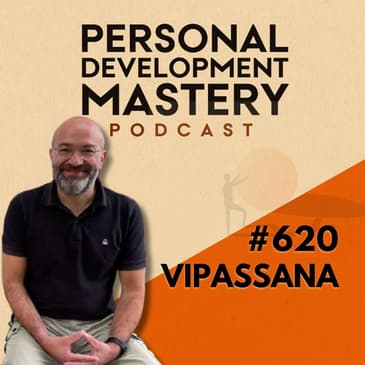
"I wish I could bottle that smile." That's what my partner said to me when the silence finally broke, after 10 days.
This is the third chapter of a story that began in 2022. I just completed my second 10-day silent retreat. In this episode, I share with vulnerability the rollercoaster of those ten days: the resistance of day one, the release of day four, the wall I hit on day nine, and the realisation that changed how I see my own podcast, my own mission, and the gap between what we do and why we really do it.
Whether or not you ever sit in silence for ten days yourself, this episode will ask you the same question it asked me: what is your true volition behind what you do?
Press play now, and if something in you is leaning forward as you listen, don't wait.
Explore Vipassana for yourself.
˚
Vipassana website: https://dhamma.org
˚
The previous episodes I discussed Vipassana:
My first Vipassana retreat - episode #267:
https://personaldevelopmentmasterypodcast.com/267
The 3-day refresher course - episode #333:
https://personaldevelopmentmasterypodcast.com/333
˚
˚
KEY POINTS AND TIMESTAMPS:
0:00 - The “bottled smile” and opening reflection
3:37 - New retreat setting and key differences from the first experience
5:29 - Entering the retreat: expectations, resistance, and early adjustment
7:01 - Emotional release and the unfolding inner “rollercoaster”
9:33 - Physical discipline, fasting structure, and habit observations
11:09 - Mental patterns of perception and projection
13:14 - Teaching on mental, vocal, and physical action
16:00 - Volition and the nature of action as intention
19:30 - Integration: relationship reflection, return journey, and closing insights
˚
Subscribe to our weekly email: https://personaldevelopmentmasterypodcast.com/email
---
A personal development podcast for midlife professionals, offering mindset tips and practical tools for personal growth, self mastery, personal mastery, and purposeful living. Discover psychology tips for emotional intelligence and growth mindset, including overcoming impostor syndrome and building self mastery.
Personal Development Mastery features personal development interviews and solo episodes empowering professionals, entrepreneurs, and seekers to cultivate self mastery and create a meaningful, fulfilling life aligned with who they truly are.
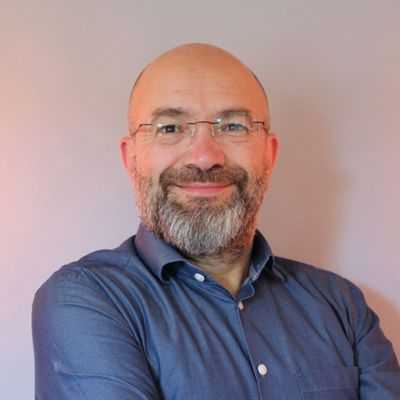
"I wish I could bottle that smile that you have now." These were the words that my partner, Thoko, told me at the end of the retreat. On the morning of day 10, when the silence finally broke and we were able to speak to each other again for the first time in 10 days.
That's what she said to me. I wish I could bottle that smile. You see, my smile was not my usual smile.
It was a smile that was coming from an inner tranquility. That smile, you know, sometimes you see some monks or a wise elderly person or a spiritual teacher and they have this calmness, this serenity that comes across in their smile. So what does a smile like that mean and where did it come from? This is what this episode will talk about.
This is the third chapter of a story that began in 2022. The first chapter was my first 10-day Vipassana silent meditation retreat, which I talked about in episode 267. I stepped completely into the unknown back then, not knowing what to expect and I came out changed.
The second chapter of the story was the three-day refresher course that I did and which I discussed in episode 333. And chapter 3 is this episode, coming to you just after I have finished my second 10-day silent meditation retreat. And if you want the full detail on the technique, on the schedule, on what Vipassana actually is, episode 267 is where to go.
You will find the link in the show notes. Here, today, we will pick up the story where it left off. And the first thing to share with you is, and I think it's a great starting point, is the why.
Why did I go back after that time? And also, why does it matter to you? Why to listen? I will tell you why. Because whether you ever do a retreat like that or not, what emerged from those 10 days about volition, about the gap between what we are doing and why we're really doing it, these are directly relevant to your own life, whether you do a retreat in the future or not. As for my personal reason for returning, it was wanting to reconnect with the practice and deepen it, deepen my knowledge in the practice of Vipassana meditation.
The pull to return was strong. Since the beginning of this year, I have felt this calling towards spiritual practices. And so I returned for my second Vipassana course, but not to the same place I had gone previously.
I went to a different center this time in the west of England. I did the retreat together with my partner, Toco, even though together is a figure of speech, because the males and females are completely separate during the first nine days. So we didn't see each other.
Another big difference was that my first retreat was in November and this one in June. So nature was very much different and the days were bright and long. There was a small forest which was our walking area where we could take some strolls during our breaks.
And I think one of the things that most people got out of this course, certainly I also did, was a deeper appreciation for nature. Because you slow down, you have time to observe and be present. And because you don't have any external distractions, you pay more attention to looking.
Looking at the sheer beauty of flowers or hearing the birds in the forest or seeing squirrels and rabbits or whatever else was there in that beautiful nature. And compared to my first course, in this one there were some elements, especially the ones on the external level, that were more familiar to me because I had done it before. For example, I knew the timetable.
I knew that I would wake up at 4am with the bell. I knew what 11 hours of meditation a day feels like, in your back particularly. That familiarity gave me something solid to begin.
However, on the internal level, it was a completely new experience for me. Not better or worse or easier or more difficult than the first one, but different, unique. It is unique.
I spoke with other students as well and I've come to understand that each one's experience is unique to their own. And if they do multiple retreats, they have multiple different experiences. So it doesn't mean that it gets easier when you do it.
Each retreat is its own journey. Sometimes when I describe an experience of 10 days like this, the word rollercoaster comes to my mind and for a good reason really. There were days that they were high and there were days that they were low and everything else in between.
Interestingly for me, day one was very difficult. Many of my resistances came up. I started thinking, why on earth did I sign up to do this again? I was surprised at myself because I was expecting it to be easier to begin with.
Of course, by day two, I had fully gotten over it. I got accustomed to the schedule and that became a structure for me to lean on during my days. And this actually gave me an insight about myself that as a foundation, I look for predictability.
I look for a level of certainty. Then the rollercoaster continued with day four where something broke open after a long meditation we had on that day. I left the hall and I burst into tears without knowing why.
I cried for a while. Afterwards, I felt completely spaced out walking with very slow steps with my head down. For a couple of hours, I was lost like something had been released.
Then the rollercoaster carried on and got into an apex on day nine, which for me seemed endless. Again, to my surprise, knowing that the next day is the last day of the retreat, I was amazed to see how much resistance I felt towards that seemingly endless day. Like thoughts of wanting it to be over.
Thoko then told me that she also hit her wall on day seven and she was thinking of leaving. So just because one has done it before, it does not make it easier. The mind will still bring up the things that are at a deeper level.
Complexes at the root level of the mind come to the surface. Before I talk about the insights, the mental dimension of the retreat for me, let me make a brief note about the physical dimension. Two things came up for me.
The first, I am a coffee drinker. I drink coffee every day. So during the course, I didn't have any coffee.
And that was an interesting self-knowledge to realize that it was easy for me, that it is a habit for me and not a dependency as I had thought sometimes. I didn't have any withdrawal symptoms or headaches as I've heard people have. The second note about the physical aspect is this.
For the old students, and by that I mean students who had done the course before, like me. So for the old students, there is no dinner. That effectively meant that every day I would do a 19 hour intermitted fasting.
So there was just a five hour window each day to eat breakfast and lunch. And that was it. And that was also something very helpful for me to look at the mind's urge to hoard food at lunch because it knew that the following meal would be 19 hours afterwards.
And then of course, realizing that overeating doesn't help. Actually, it makes things worse. Some small realizations, but I found them useful.
And let's now go to the mental dimension of my experience, my insights, the real essence of this episode. There were two big insights that I had. One was a pattern that I had noticed when I did my first Vipassana.
And I was actually quite surprised to see that it was still there. And that pattern is creating elaborate mental portraits of people from tiny observations. So for example, I see a behavior or some apparent behavior of a person.
And I can use that observation and my interpretation of that observation to paint a mental portrait of them. And then I will filter my further thoughts and therefore my attitude towards that person based on that. In other words, projecting that mental image to them.
And on the one hand, I was surprised, even disappointed for a while that this pattern was still there. But on the other hand, the big value isn't that the pattern has gone. The big value for me is the awareness now of the pattern.
Seeing it again more clearly means that I am more aware of it and I will be more cognizant of it next time it happens and the next time. And it will lessen and lessen. This is how the work goes.
But it was the second insight that really cracked something open. The other insight I had, and actually that was my biggest realization from this retreat. And that did not happen during meditation.
It happened during the evening discourse. So every evening for an hour, we watched a video of the teacher who explains the technique. And in that particular evening on day four, he was talking about the three levels of action.
So there is the physical level, the vocal level, and the mental level. And most people perceive that the physical level is the one that has the most importance. So let me give you an example.
If I, let's say, hit someone, punch someone at the physical level, that's usually considered the worst thing that I can do. If instead I use the vocal level of action and start shouting at them, or swearing, or insulting them, generally that's considered less bad than physically punching them. And if you go to the mental level, so I am thinking something bad about the person, but I keep it to myself.
I don't express it vocally or physically. Someone might think, okay, that's not too bad. And what the teacher said is that actually it is the opposite.
The mental level is the most important level of action because that's where all external action starts from. Mental action is the seed that will give results. Vocal and physical actions are merely projections of that mental action and they are yardsticks to measure the intensity of the mental action.
We have to understand that the vocal and physical actions originate as mental action and this mental action then manifests at the vocal or physical level. So if you insult or if you hurt someone on the physical level, it just shows how intense the mental action was. He called that mental action, that mental level of action, volition.
And now that word really resonates with me. I love this word now, volition. And I have goosebumps now that I describe it because when he was talking about that and actually before I tell you my insight, let me give you an example that he shared.
Let's say that someone hates someone else and they take a knife and they stab them in the stomach and the other person dies, they kill them. In another situation, let's say someone has a stomach ulcer that can't be treated in any other way and he needs to be operated on. So the surgeon takes the scalpel, opens up the stomach and the patient dies during the operation.
On the external level, the action is the same. Both people took a knife and stabbed it on someone's stomach and the end result is the same. The person died both of the times.
But the volition is completely different in those two cases. So to recap this, in those three levels of action, physical, vocal, mental, most people rank physical as the most serious but the truth is the opposite. Volition is where all action begins and that leads me to my own personal realization which as I said was the most important insight I had and my realization had to do with the podcast with Personal Development Mastery that has been ongoing for over six years now and it is a big part of my life.
What I realized is that on the vocal and physical level of action the podcast is serving you, the listener. But when I looked honestly at my mental level of action, my volition, then I saw and now I'm here completely open and transparent and vulnerable with you. I saw that my volition has been self-benefit and when I say self-benefit, I don't mean anything wrong I mean things like learning from the conversation I had or self-expression or financial return, nothing wrong but not quite the same as having the volition of giving freely without wanting anything in return and I realize now what I would like the volition of the podcast to be and actually when I think of it, it is the reason why I started the podcast in the first place and the time has come to move more consciously towards that because sharing the message with Personal Development Mastery is my mission, it is purpose, it is sharing my unique gift with the world, it's contributing to the awakening of human consciousness, it is my, to use the Greek word, my duty and that is to inspire positive change, to influence you, to take action to improve your life and on that note, a friend of mine said something after I described those 10 days to her, she thought that I wasn't just describing a retreat, I was describing a life, the good days and the days of doubt, the flow and the resistance, the moments of grace and the moments of wanting to give up.
Before I conclude this episode, I will share one story from the retreat and that is actually the drive home and what it means to have this experience together. As I told you, I took the retreat together with my partner Thoko and because in Vipassana, the male and female students are separate throughout the course, I only saw her and spoke with her on day 10 when the noble silence that we had been observing ended. On the way back home, we had a four and a half hour drive and we spent those four and a half hours talking non-stop, sharing our experience with each other and then we arrived home, we parked the car and we actually stayed in the car for another hour talking about it, not wanting to break that in-between state that we were in and it made me reflect on the significance of doing something like this, spiritual practice together as a couple and the shared experience, the bonding, going through something this deep with your life partner, it's a gift and I'm ending with that, with gratitude.
Let me come back to where I started. Thoko said she wished she could bottle that smile. Now I can tell you where that smile came from.
It came from the inner peace, I found in that silence. It came from that release, that shift, that cleansing I had on day four and of course, it came from the insights I shared with you earlier on. Overall, I feel that much of the mental noise has cleared.
I also have a renewed daily practice of meditation and even more, I have a clearer sense of my mission. I will leave you with two questions. What if you examined not just what you do, but why at the deepest level you do it? What if 10 days of silence could show you things about yourself that years of busy living have kept hidden? The time is not some day.
If something in you is leaning forward as you listen to this, it is worth paying attention to. Take action on it. Go to the Vipassana website, it's in the episode notes.
Or if you have a question that comes up for you, send me a message about it and I'll be happy to answer you. As a closing, I would like to share about why I am recording this episode. My volition.
And now I choose that word intentionally, deliberately. And my volition is to move you, if you are intrigued, to take the next step, to explore, to book a course. The course is free.
Centers exist around the world. Episode 267 of the podcast will tell you everything you need to know about what to expect. The invitation is not to become a meditator.
It is to discover for yourself the art of living that Vipassana teaches. How to live a happy, harmonious life from the inside out.

 5.00 (74 Reviews)