
What if growing older didn’t have to mean getting old?
When the menu starts to blur, your body takes longer to recover, or a chapter of life comes to a close, it’s tempting to say, “I’m getting old.” But what if those very words shape what comes next? For more than 35 years, optometrist Dr James Beckwith has heard his patients say exactly that. He has also watched a couple in their nineties, who still go bowling two nights a week, walk out of his practice holding hands. In this conversation, James shares how the beliefs we hold about ageing influence the way we experience it, and how we can make our later years a time of growth, purpose and connection.
In this episode, you’ll discover how to:
- Reframe ageing as an opportunity for growth, by looking differently at physical changes and life’s challenges, and learning to see losses as lessons rather than limitations.
- Build habits that help you age well, by creating structure in your days, taking movement, sleep, nutrition and balance more seriously, and adjusting as your needs change.
- Find renewed purpose and fulfilment at any age, through lifelong learning, nurturing your relationships, staying open to new experiences, and using your wisdom to make a positive difference to others.
Press play to discover how a shift in mindset and a few small, meaningful actions can help you grow older with purpose, vitality and a renewed sense of possibility.
˚
KEY POINTS AND TIMESTAMPS:
01:12 - Introduction to Dr James Beckwith
03:55 - What makes people say “I’m getting old”
06:23 - Reframing losses as lessons
09:16 - Growing older versus getting old
11:15 - The hidden advantages of ageing
13:53 - The power of the pause
16:23 - Habits and structure for ageing well
18:38 - Retirement as a portal to a new chapter
21:03 - Swimming against the tide
25:53 - Anti-ageing versus embracing your age
29:15 - Positively Not Old and acting on the spark
˚
MEMORABLE QUOTE:
“If we keep doing the same thing, we’re going to get less and less.”
˚
VALUABLE RESOURCES:
Connect with Dr James Beckwith at https://drjbeckwith.com/
˚
Coaching with Agi: https://personaldevelopmentmasterypodcast.com/mentor
˚
🎙️ Want to be a guest on Personal Development Mastery?
Message Agi on PodMatch: https://www.podmatch.com/member/personaldevelopmentmastery
˚
Personal development podcast for midlife professionals, offering actionable insights for personal growth, mindset tips, self mastery and purposeful living.
˚
Subscribe to our weekly email: https://personaldevelopmentmasterypodcast.com/email
---
A personal development podcast for midlife professionals, offering mindset tips and practical tools for personal growth, self mastery, personal mastery, and purposeful living. Discover psychology tips for emotional intelligence and growth mindset, including overcoming impostor syndrome and building self mastery.
Personal Development Mastery features personal development interviews and solo episodes empowering professionals, entrepreneurs, and seekers to cultivate self mastery and create a meaningful, fulfilling life aligned with who they truly are.
[Agi Keramidas]
Everyone grows older, but not everyone gets old. So, when do you decide that you're old? And what if that decision has been shaping your life more than your age ever has?
Welcome to Personal Development Mastery, the podcast that helps you gain clarity, overcome what holds you back, and take confident next steps toward a more meaningful and aligned life. I'm your host, Agi Keramidas, a personal development mentoring coach, and this is episode 656. If you are looking to stop treating age as a reason to expect less and want to grow older with purpose and vitality, this conversation explores how the beliefs we hold about aging shape what comes next and why the moment we call ourselves old is a choice rather than a birthday.
[Agi Keramidas]
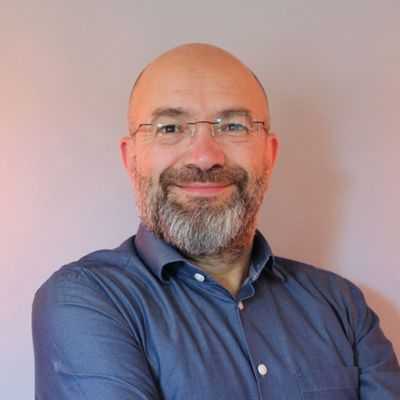
Today my guest is Dr. James Beckwith. James, for more than 35 years you have heard your patients say, Doc, I'm getting old. What concerned you was how quickly they treated age as a reason to slow down, expect less or stop trying new things in their life.
You believe that everyone grows older, but not everyone gets old. And you help people change the way they think about themselves. James, it's a real pleasure to have you on the show.
Welcome. I'm looking forward to this conversation very much.
[James Beckwith]
Thank you. Me too. I enjoy your show and I'm really, really proud to be on it.
So thank you.
[Agi Keramidas]
The topic of getting old or aging well or, you know, being able to maintain, you know, our level of health, mobility, cognitive functions, etc., etc., as we get older is something that I believe is important. I mean, way important for me and I believe for many of our listeners that are, you know, let's say past a certain age. I will just leave it to that.
Whoever feels like this is appropriate for them, they can keep on listening. But what I'm really looking forward to exploring with you today, Jim, is discovering how our beliefs or the beliefs we hold about getting old or aging actually shape what comes next in our life. And I will also be very interested in finding out some small actions or some small steps to start looking at this in a different way so that our later years are not dictated by, you know, some things.
Anyway, I don't want to go too much into my own things. What I would like to begin with, really, and I mentioned that in the introduction, you've had for many, many years patients, your patients telling you, I'm getting old. So did you notice something in particular happening to their lives when they were expressing that to you?
Let's start with that, and then we will pick it from there.
[James Beckwith]
Sure. Yeah, you know, I mean, being an optometrist, my patients, the natural thing is a decline in the vision, right? And that's something that they note typically, you know, in their mid-40s, but sometimes it's in their 30s.
And what I hear them say is, Doc, I'm getting old. You know, I can't see the menu or whatever it is. And, you know, also as a doctor, my practice ages with me.
So when I opened my practice, I was 28 years old, and I had a lot of young patients, and I'm 64 now. And so they're aging, and they're encountering more challenges, age-related challenges, and they share them with me. You know, we have a great relationship.
And as we talk through those things, you know, it started to crystallize to me that, hey, we need a way to kind of reframe this. And other patients are the ones that gave me the ideas that inspired me. You know, we have just last week I had a couple in.
One was 93, one was 91, and they both bowl two nights a week, and they walked out holding hands. And you just go, wow, how do you bottle that? So that's kind of the inspiration and the thought of, you know, how can we share some of these success stories and the little things that we need to do to grow old gracefully and to age well.
[Agi Keramidas]
Because you mentioned the declining in the vision. Personally, because I've been wearing glasses since I was six years old, so I have seen my vision declining all my life. So that on its own for me is not enough to trigger any thoughts that I'm getting older.
But you mentioned that age challenges. So I would like to hear a few more of those, apart from the declining vision, some other common characteristics that your patients told you that made them... You know, what I'm trying to get to here is what actually triggers this thought that I am getting old.
Are they specific physical symptoms? Are there other things? Is this past a certain age?
Is it combinations? That's what I would really like to hear, your thoughts.
[James Beckwith]
Yeah, I think it's a lot of things, because, yeah, the physical stuff is obvious. But there's also the things that build up through our life, you know, maybe the relationships that fragmented, maybe the loss of purpose as we get older, those types of things. And with many things, with just about everything, if you don't address it, it's just going to get worse.
And that's one of the problems with aging is that we tend to ignore those things that we don't want to think about. And, you know, I'll give you an example. I had a retired police officer in recently, and he had to retire early because of head trauma.
And he has some double vision. He gets headaches a lot. And he was just the most jolly.
He's a longtime patient, but he was just way jollier than I expected him to be. And he said to me, Doc, you know, I am happier than I've ever been in my whole life. And I said, Oh, really?
I said, You know, what about the headaches and the double vision? You know, how does that impact you? And he says, When those things happen, it's a reminder to me that I helped people and that I got these by doing good.
And so that's a way that, you know, as we get older, if we can reframe our losses as lessons, as, you know, things that, in his case, thinking about it in a way that, wow, this is a medal, right? This is an award that I got. And while other people might view it as penance, he views it as a victory.
And when we do that, we really shift ourselves. And when we get that positive attitude like he has, I mean, our whole world opens up to us.
[Agi Keramidas]
Most definitely the positive attitude. And we will talk more about that for sure. I liked very much you said reframing losses as lessons.
And I think that is a very, it's a great way to think about it. When, let's say someone listening to us is starting now to realize that they are attributing to getting old, this or that, whatever is happening in their life. And they realize that, oh, yeah, I'm actually saying that to myself, that I'm getting old or I'm too old for this.
When one realizes that, okay, this is something that I'm starting to say to myself or to others, what's the first thing one can do, you know, to start looking at it differently?
[James Beckwith]
Yeah, you know, the, when we, attitude, we have good attitude, we have poor attitude, but this is, it's not black and white. There's this continuum that changes on a daily basis, on a weekly basis. And we're generally somewhere in between and kind of understanding what moves that needle for us, what gets us in a better space.
And, you know, when we think of getting older, we're getting older when we're 12 and we're 13, right? It's no different now. We're all, I like to say growing older because we grow.
And so as we grow older, that's not going to change and that's okay. But what is it that, when do we call ourselves old? That's up to us, right?
I mean, we have a birthday, but putting that label on it that we're old is up to us. And so, you know, what can we do to not think in those terms? And I think a lot of it is remaining active and doing things because it is in doing that we change our mindset.
You know, mindset and action are truly intertwined.
[Agi Keramidas]
I like the difference between growing older, as you just said, and getting old. And that is, I'm just repeating that for, you know, to stick. Because I think it is a very precise distinction between those two.
And, you know, these words that we use can really define how we think and act.
[James Beckwith]
Yeah, there's really so many advantages to aging that we don't consider.
[Agi Keramidas]
I would like to hear some. Now, when you said that, my initial response was, oh, really? Like what?
So please share some of that with us.
[James Beckwith]
Yeah, I mean, we definitely gain wisdom. Our life experiences teach us lessons and really make us more rich as a person. You know, I would hope we become more empathetic.
I think if we grow the right way, we do. You know, just these different perspectives that we have allow us to see the world in different ways that we didn't in our youth. You know, I know myself and many people, when we're younger, the younger we are, the more self-centered we are.
When we're six years old, we think we're the center of the universe. And as we grow older, we begin to learn that we are just a cog in the wheel of the universe. And we play a role.
We play a role at any age. And we play a role by trying to help others and to better ourselves. And those are really the two big things in life as we move forward.
How do we evolve as a person in a positive way? And how are we able to help others and be a positive impact in society?
[Agi Keramidas]
I like that very much. And you said earlier the mindset and the actions and how one, well, at least should follow the other or they are intertwined. I think that's how you said it.
It is, I think, what you just described of a way to look at ourselves as getting older, as more experienced, more empathetic, more fitting to contribute with everything that we have gained materially or in other ways intellectually, to contribute that to the world and keep in contributing. I think that is a very powerful factor in the mindset that can keep one, let's say, feeling younger than perhaps what the number of his biological age is. I would like to hear a couple of more mindset, I don't want to use the word tricks, but, you know, mindset methods that one can keep used so that they do not get old when they grow older.
[James Beckwith]
Yeah. You know, I think one of the things is to pause. You know, in our environment, we are so move, move, move that we don't take a step back.
And I can share a story with you, if you'd like, about I was at the Mayo Clinic in Minnesota, one of the most world-renowned medical complexes. And I was there and they have a public space called Peace Plaza that connects Mayo to downtown Rochester, Minnesota. And in that plaza is this reflecting pool and it's just gorgeous.
And my wife and I were walking by there and this fog was emitted from the perimeter of the reflecting pool. And we thought, well, it's kind of random, whatever. And we, you know, moved on.
And then a few hours later, it happened again. And we're like, well, that's, what is going on with that? And then we noticed in the plaza, there was a sign that explained the different artworks there and the reflecting pool and the fog.
And it said that the fog represented the breath of life. So the first breath of life and the last breath of life. And that fog was emitted in real time when someone died or was born at the Mayo Clinic.
And so when you read that, the next time this happened a few hours later, wow, you just stop in your tracks. You pause, you pray, you think about the people involved, the people that are experiencing that joy or that difficult time. You think about the people that are the doctors and nurses, the staff that are helping in that situation.
And it just changes your attitude. It moves you. And so that pausing is, we don't notice that if we don't pause.
We just go by our day and this breath of life is happening. People being born and dying just steps from us and we're oblivious. So that pause, I think, is something that can really change our mindset.
[Agi Keramidas]
And I think when we grow older, we have even more opportunities to pause. I think it comes more naturally. Jim, I would like to also discuss some more practical things about aging well when we grow older.
And you talk about habits for aging well. And I completely agree that everything that makes a difference is a habit that you do repeatedly. You also talk about upward spiral.
And I understand these concepts. I would like to hear your thoughts on that, on the power of habits when one grows older to age better or well. And then we can discuss about some perhaps particular practices that you have found to be very effective or people tend to do them more and so on.
[James Beckwith]
Yeah, you know, there's so many habits and whether they're physical, lifting weights or cardio or things like sleep or sauna or breath work or meditation. I mean, there are so many things. But I think one of the things as we get older, as we move away from a life of full time work or maybe hectic family life, we have more time.
And we can choose to organize that time well or we can just let the day happen. And I like to think that organizing and having a calendar and having a structure is vital. I mean, a calendar to me is a series of goals that I've set time aside to accomplish.
And so that's something that I see when people retire. They love it for a year and then they're lost because they don't have that structure. And so I think that's an important thing to do, to create that structure, which helps to create that purpose and helps us to move to action and to do those things that can help us age well.
[Agi Keramidas]
Now that you said retiring, have you noticed any increase, increased incidence of people telling you that I'm getting old after their retirement? Because I think for most, for many people, that is a very significant event that, you know, it signifies that from now on, it is the last part of my life. I have stopped working, so I would like to hear your thoughts on the, you know, the psychological impact that that has on someone.
[James Beckwith]
Yeah, it's a big life change. And just like other life changes, whether it's, you know, having a child or graduating from college and or moving to another city, when we have these big life changes, all of a sudden our time is different. It's occupied differently or not occupied differently.
And I like to think of retirement as sort of a destination, you know, it's a milestone. So it's a portal where we're moving from one part of our life to another. And as we enter that portal, there are new challenges, but there are also new opportunities.
And so as we move into that new portal to try and think about, oh, you know, now that I have this time and I don't have to work or I don't have to take the classes someone else wants, I can learn whatever I want. I mean, lifetime learning is fabulous. I can learn what I want.
I can work if I want, but it's not for money. It's more for joy. It could be volunteer work.
There's so many things we can do. But as we become retired, you know, it's not just the job that we move away from. It's the social connection of our fellow workers or that industry.
When we move away from that, we need to replace that. And so really reconnecting with friends and neighbors and relatives that you haven't spent the time with, that is really vital to boosting yourself and filling your life with joy. So there's a lot of things like that.
[Agi Keramidas]
There's one thing that came to my mind. I had read it in a book that was actually funny enough about how to age well. I read it years ago.
And it was saying that when we are young, let's say up to our mid-30s perhaps or early 40s, it's like we're swimming with the tide. So no matter, we can abuse our body. We can, you know, do stuff that they don't cause too much harm because, you know, we have the tide, which is our young age behind us and, you know, pushing us.
However, at some point it turns and then you swim against the tide. So things like having a couple of glasses of wine, whereas back when you were younger, they would not affect you. Now you can feel the impact very much the next day, much more and things like that.
So you need to make much more effort. That's what I remember from the description. When you are, you know, past your 40s or your 50s, because the tide is against you, but you can still go and progress and grow towards that direction.
It just needs more effort of a different kind, of course. But anyway, I just brought that up. I don't know what you think of this.
I find it a very nice metaphor of how our life is.
[James Beckwith]
I love that metaphor. It is so accurate, so dead on. You know, there's an old saying that, you know, if we keep doing what we did, we're going to get the same result.
Well, that's not true with aging. It's just not true. If we keep doing the same thing, we're going to get less and less.
So we need to make adjustments. We need to make adjustments in our sleep. Like you said, when we're 25, we could stay up to midnight and get up at five.
And it's, you know, it's not that big a deal. We're going to make adjustments in our sleep. We need to be more serious about our exercise, not just going to the gym and, you know, starting to live without any thought behind it.
We need to work on things like balance. And we need to stretch and do these things that maybe we ignored before. You know, our nutrition.
Gosh, our nutrition, we could not just what we eat, but when we eat. You know, we could have a big hamburger at midnight and go to bed when we were younger. But that's just not a good thing for me at 64.
That's a problem. So you're right. There are so many things that we need to look at.
And I think that's where when people say or we go back to you had asked about people saying I'm getting old and, you know, what makes them think that way. And I think that's probably part of it, you know, that that they haven't changed and evolved and done the things that that make going against that tide a little easier. Right.
You know, hey, I'm going to go against that tide. Maybe I should get some flippers. All right.
Maybe I should I should have a little little motorboat ride or whatever it is. So so I think when when you are suddenly that tide changes and you're still fighting it with the same with the same tools. Yeah, you're going to you're going to feel it and you're going to feel that it's it's it's a hurdle you can't overcome and that it's, you know.
And so I think that's that goes back to that that original question that, yeah, it's you've got to change. You've got to evolve. And that's one of the beauties.
You know, that's one of the beauties of aging is we get to we get to play a role in steering that evolution. And and if we we don't, it's it's we're still going to evolve, but we're not in charge of it.
[Agi Keramidas]
Absolutely. And I want to use what you just said again to remind that the way that we look at getting older plays a very big role. So the moment we start thinking that this is happening because I'm old or I'm getting older, then it leaves a very little opportunity to do something about it.
But if you see it in one of the ways that you were describing or, you know, that metaphor of the diet, it's it's something that you can look at in a different way and not use it. As you know, you have discovered many times as an excuse not to do things or to give up or to say that I'm done with that forever and so on. There is one more thing that I would like to hear your thoughts about, because all this time we've been talking about aging well or there is a different, let's say, philosophy also in that term, which you can, you know, I don't know, you can call it anti-aging or, you know, reversing age or you hear lots of things.
I would like to hear your thoughts about someone looking at aging within a prison that, oh, I will figure out some kind of process or medicine or serum or whatever it is, a elixir of youth. And reverse it, not go back. Personally, I'm asking you this because I think it is in some ways a dangerous way of thinking, not to say disappointing eventually.
But I would like to hear your thoughts because I truly believe that aging well is much more appropriate as a way of thinking rather than trying to go against nature. This comes very naturally to me, so I would love to hear your thoughts.
[James Beckwith]
Yeah, I think that's really interesting because we want to fight aging as far as the ailments and make those adjustments in our life, but I do think it's important we embrace the age we are. I mean, just like that example I gave about the police officer, we got here and we got here and through doing different things in our life and learning lessons and growing and evolving, and we should be happy with that. We should embrace it.
It doesn't mean we can't try to be the better version of ourselves going forward. When I was a kid and I was talking to my mother, I was 18 years old, and I wanted to be an optometrist, and I was complaining that, oh, it's going to take eight years of schooling, that's such a long time. And she said to me, the time is going to pass anyway.
You might as well do something worthwhile with your life. And while that was great advice for an 18-year-old, it's great advice now. It's great advice every day when you wake up that, hey, the time is going to pass, let's do something worthwhile.
And so when we look at life like that, it enables us to do both, to embrace who we are, the age we are, and yet still to try and better ourselves, not in a selfish way, but in a way that allows us to become a better contributor to society and to help others and to be a mentor and to be an example. And so those are our responsibilities that come with aging, and they're also really cool. I mean, it's fun to be able to be in that position.
[Agi Keramidas]
You reminded me of something I had read, do not resent getting old. It's a privilege denied to many. Yes, yes, absolutely.
Jim, where would you like to direct the listener of the viewer of this conversation that wants to learn more? And tell us also about your book, who would benefit by reading it?
[James Beckwith]
Yeah, you know, my book is called Positively Not Old, and it's mindset and longevity habits for aging well, and it's available everywhere. And, you know, it's a book that is a series of short essays. I've got 73 short essays, and they're on different topics, whether it's courage or gratitude or cardio or just kind of an eclectic mix of things that we go through as we age.
And hopefully readers will enjoy that. They can find me at drjbeckwith.com. That's drjbeckwith.com.
Yeah, you know, it's interesting that one of the things as we age and we need to change, one of the things that's really important is to open ourselves up to the universe, really to make ourselves available to that spark, that thing that will get us to move. And it's out there all the time, but so many times we're not paying attention. And then when we get that spark, to act on it, to act on it right away.
But if we delay, that spark fades. And so if we can keep that in mind, to be open to those clues we get and those things that bring us curiosity, enthusiasm, excitement, and then to act on it, you know, we're on our way.
[Agi Keramidas]
Thank you for listening to this conversation with Dr. James Beckwith. I hope it has given you a fresh perspective on the difference between growing older and getting old, and how a shift in the way you see your losses, your habits, and your time can open up a later life full of growth and contribution. One practical action tip to remember from today is to catch yourself the next time the words I'm getting old come to mind and replace them with a different question.
What do I need to adjust? As James said, if we keep doing the same things as we grow older, we get less and less. So choose one habit that no longer serves the body you have today, perhaps going to bed too late, eating too close to bedtime, or exercising without much thought, and change it this week.
Join us every Monday for in-depth conversations and every Thursday for shorter episodes with insights and tools you can use. If you enjoy the podcast and find it useful, the simple favor I'm asking of you is to click the subscribe button. Until next time, stand out, don't fit in.

 5.00 (74 Reviews)