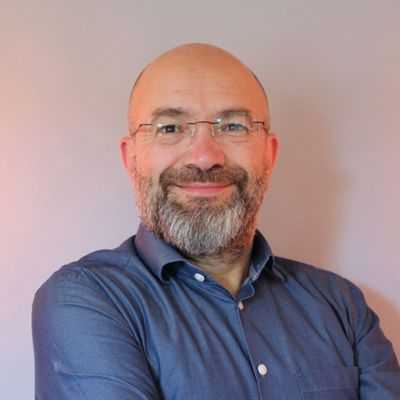
Brian Lovegrove is a leadership developer & results coach, and an Amazon best selling author. He started his own personal development at a very young age - actually his first job in the industry was helping promote seminars for Anthony Robbins. During the years he has partnered with some of the biggest names in the personal growth industry, and he is passionate about helping his clients design and implement the strategies to truly become successful & fulfilled in every aspect of their life.
𝗞𝗲𝘆 𝘁𝗮𝗸𝗲𝗮𝘄𝗮𝘆𝘀:
* Learning is not enough to make lasting change
* What am I tolerating in my life?
* Focusing on the outcome and what it means - the benefits of the benefits
* Closing the performance gap and self mastery
* Accepting personal responsibility for ourselves and our actions
𝗩𝗮𝗹𝘂𝗮𝗯𝗹𝗲 𝗿𝗲𝘀𝗼𝘂𝗿𝗰𝗲𝘀:
Web: https://www.brianlovegrovecoaching.com/
Masterclass: www.becomeunstoppable.info
𝗠𝗲𝗺𝗼𝗿𝗮𝗯𝗹𝗲 𝗾𝘂𝗼𝘁𝗲:
"Learn how to focus on doing the right things, and then consistently do them over and over and over. Consistently take action on those things that truly matter for you."
-Brian Lovegrove
𝗔𝗯𝗼𝘂𝘁 𝘁𝗵𝗲 𝗵𝗼𝘀𝘁:
I am Agi Keramidas, a knowledge broker and podcaster. I firmly believe in the power of self-education and personal development in radically improving one's life.
The "Essential Personal Development Blueprint": bit.ly/agiscourse
Join my Facebook group for personal development, inspiration, and actionable knowledge: bit.ly/pdmgroup
#PersonalDevelopmentMastery
_____
Episode Transcript
_____
0:03
Welcome to the personal development mastery podcast. I'm Agi Keramidas. And my mission is to inspire you to grow, stand out and take action towards the next level of your life. I interview leaders, authors, successful entrepreneurs, spiritual teachers, exceptional people who will inspire you to improve your life. Tune in for two episodes each week, and make sure you subscribe to get them as soon as they are released. In today's show, it is my real pleasure to speak with Brian Lovegrove. Brian, you are a leadership developer and results coach and an Amazon best selling author, you started your own personal development at a very young age. And actually your first job in the industry was helping promote seminars for Tony Robbins. During the years you have partnered with some of the biggest names in the personal growth industry. You have graded your system, the five keys of success, and you're passionate about helping your clients design and implement the strategies to truly become successful and fulfilled in every aspect of their life what you call been incredible. Brian, welcome to personal development mastery. It's a real pleasure to speak with you today.
1:28
Well, thank you, oggy. It's a pleasure to be here and to share some of this with your audience. I'm very
1:35
much looking forward to it. And actually, I can't wait to start with. I would love to hear that story when you're 17. And you listen, I suppose it was an Anthony Robbins cassette tapes at that time. Yeah, tell us about
1:52
it. We'll start at the very beginning. See, I was introduced to personal development at a very young age. My father was a commercial real estate broker. And I grew up in Montana. And anytime we left town, we were going to be going a long way for a long time. And so my dad would plug in these tape series from work. And of course, this was back before the iPod, the noise cancelling headphones and that great wonderful device that many of us grew up with the Sony Walkman. So I got stuck, listen to the whatever he put in there. So I got to introduce to the Great's guys like Earl Nightingale, Jim Rohn, and my favourite Zig Ziglar. And then when I was 17, and he stopped to think about when you were 17, what did you spend your money on? I actually went and spent my money on Tony Robbins programme, unlimited power. And I again, that was the cassette tapes. And I wore those out, I actually went and bought a second set of cassettes off of ebay because I worn out a couple of my tapes, and I needed to replace them. And so yes, I started a very, very young age. I've been doing it ever since off and on, but it was seminar junkie. But my biggest challenge doggy was I wasn't really getting the results that I wanted.
3:13
You, then you you bring me in then nicely to ask you during this journey, because you started at a very young age, personal development much younger than most people that I know or have spoken with. And I can only imagine, you know, the the ups, the downs, the twists and turns and everything. You I think you and we were discussing about this just before we started recording about your big realisation and why this personal development, this amount of personal development was not giving you the results. So do you want to share the first of all the story behind it how how the the aha moment happened?
4:01
Well, there was a lot of frustration, because again, I knew what to do, but I wasn't doing it. And for the longest time, it was like why can I accomplish this? I knew what to do, but I wasn't following through. I wasn't, I would go and I would try it a little bit. And it would be hard or it wouldn't work the way I thought it would. It wouldn't work perfectly the first time out of the gate. And like most people, I'd give up, or it would get hard or it would get scary. Or there was something that would hold me back. And for a very long time. I didn't realise what that was. Because you know, they would be talking about you know, the fear of failure or the procrastination or all of these things. And I didn't really realise that I had that problem. Because from a fear perspective, you know, fear was like, paralysing fear but I never I experienced that when I was doing my business or doing the personal growth realm. But I realised later on when I sat down and was really introduced to what fear is and how it holds us back, and how really, it's the subconscious, that's using the fear, that help you stay safe and comfortable to survive. We're not made our subconscious isn't designed to keep up make us successful, or make us happy even. It's designed to keep us safe, and to survive. And those are usually opposing views. Because anytime we want to grow, where do we gotta go? We got to go out into the growth zone. And now the growth zone is outside the comfort zone. And that's where the big ugly monster likes to show up and go, Hey, what are you doing? Get back in the room? So so it really was actually I was you asked the story, when, when did I learn it? Well, I was actually sitting in one of my education programmes, was another seminar I bought, invested several 1000s of dollars. And I remember was after lunch, 6000 people in the room, and the guy got up there. And he really introduced me to what fear really was. And I was sitting there, I use the term gobsmacked in the book, unleash your fear. But I really wrote about this experience that I had, because really, it was like, I saw this enemy for what it truly was. And I saw that it had a positive intent. But it was not in alignment with where I was trying to go. And so that made me shift my focus from Okay, it's not about I have to go learn more. Because that's the other challenge that we I was running into, I was running around thinking that I needed to go learn more. And there's something some magical piece of information that once I learned that piece of information, then everything will be roses in in series, you know, whatever, you know, pick, pick whatever analogy you want to use, but everything would be easy and successful. And then, you know, easy straight from here on out. But that's not the case, you actually got to go through it and do the hard stuff. And that's what I didn't really recognise. It's not learning about more, it's doing it long enough to get good at.
7:34
Can you tell me what was? How did what was that you realised about fear at that time? What was it that was missing? And that you said that you show fear in a different way you realise what it was? Can you describe that for me? Well, really, it was it really saw how fear was holding me back. Right?
8:00
You know, I as he was sitting there explaining how the subconscious uses fear to keep you safe to keep you between the lines. I didn't think I had that problem. I didn't think I had somebody some that. That self sabotage was a real thing. I didn't get that. But it was when it was just the way it was explained to me and it was like, and I saw, you know, I kind of as I sat there, gobsmacked, like going, Oh my god, this is my problem. This is why I have failed over and over and over. This is why I haven't been successful. This is why I never followed through, because I allowed my fear to hold me back. But I also saw where I was successful, where I did do it long enough, where when I was able to achieve the level of results that I wanted, and was able to get to where I was because you know, I had some success. My problem was as I wasn't stringing them together to where I was really going up I was, you know, I was going up and down up in debt. And so was it a continual growth. I was up and down and I was ending up coming back down to the same level or worse, lower, because at one point I ended up weighing over 260 pounds depressed, thought I had a heart attack, but it was really an anxiety attack because of where I was in the situation and it took me stopping and realise that Hey, you got to do a better job of taking care of yourself. And you know I've lost the weight down 60 pounds and really made tremendous progress towards who I wanted to be. And it comes back to part of one of the biggest keys in the five keys to success is clarity which is knowing what you Want. And then the second biggest key, which is the commitment, being willing to pay the price, in order to achieve it.
10:10
I will come back to the five keys of success, I still want to ask you something more about fear. You said that you realise that, that you thought that you didn't have any fear before. And you just realised how it was presenting. And I can relate with that. Because I believe that fear many times does not present itself to us as fear. As such, what we, we usually have a very specific idea of what fear is, it's like if we see a physical danger or something like that. But this self sabotage is very insidious, it can present itself like, I'm not in the mood for it, or some very, very subtle things, which we tend to ignore as well. Well, I'm not in the mood for it, but it's fear behind it. What do you think?
11:09
Oh, absolutely. Fear is at the root of it. And, you know, when we were younger, we didn't want to be called chicken, or afraid or being a coward, or, heaven forbid, somebody, triple dog dare you. And so we learned that being afraid, was bad, that beer was bad. And so you avoided fear. And so we did things to avoid fear. Now, we also learned not to make mistakes, you know, our education process, making mistakes was bad, we got our hand smack. So again, something else to avoid. So again, so the fear of failure, the fear of looking stupid, the fear of criticism, the fear of, you know, some the fear of the fear of the fear of we don't as adults, the thing is, is we don't call fear fear, we have a different name for it to make it more palatable and more tolerable. We call it anxiety, we call it, you know, concern, we call it distraction. We call it procrastination, or worse one that some people wear as a badge of courage. We call it stress, yes. Oh, I'm stressed. No, you're scared. You're not addressing the pain that's in front of you. And that's really what we were, I kind of help people because I wrote a book called unleash your fear. And because it's really when you learn what fear is, what its purpose is, you can then turn that fear from being your enemy, to being your ally. Because imagine what would happen if you could be afraid of not accomplishing what you set out to do? Afraid of not missing out on all the potential that you have within you. That is the fear that I want to help people have.
13:23
Even though I know that the question is going to sound broadly difficult to answer in such a short conversation, but to switch your mindset from Ferrin? What you what's uncomfortable, LA, San Jose, all what will put you out of your comfort zone, switching to fearing staying at the same place and not progressing with your life? How can one go about and do a mindset shift like that?
13:58
Well, there's an exercise that I show people and teach people how to do. But it really comes down to one thing. What are you focusing on? You know, I think, you know, for example, if you, if I was to walk in, take one of your children hold a gun to their heads and says you need to go, you know, grow. You need to go, you know, I give you your your go accomplish your big goal in the next 48 hours. how motivated Are you going to be to do that you're going to be extremely motivated, compared to right now, where are you? You know, on a scale of, you know, that's a level 12 on a scale of zero to 10. Where are you right now on that scale? You know, that varies depending upon what you're focusing on. If you're focusing on all the work and all of the hard stuff that you got to do, you're your level of motivation is going to be a two or a three. But if you're focusing on what you get on what you will accomplish about what that really means for you, and you take a deeper dive into, well, what does that mean? There is something that we talked about in the marketing realm called the benefits of the benefits. Okay, so if you want to go, you know, get a new cell phone, okay, well, what's the benefit of a new cell phone? It's faster, okay, that's a feature. It's faster, I get more done. Okay. That's the real benefit. Well, what does that mean? It means that I'm able to be more efficient. That means I'm able to do more, I'm able to take care of my clients better, you know, on and on, and on and on. And the deeper you dive into what it truly means, clarity, you then will have the motivation to move through the muck to take the journey, do the hard stuff that powers you through. You know, you've heard the story of you know, it's about your wife know, you
16:09
what your why is that good?
16:14
Because that's the fuel that helps you get through the hard stuff. But most people don't set it up. Oh, my, why is my kids. Okay, great. Why go deeper? What does it mean? But also, what does it mean, when you don't follow through? You know, Tony Robbins talks about pain versus pleasure. You know, a lot of times our Y is about pleasure.
16:40
Right? The challenge is, there's a lot of pain between us and that pleasure. And so what you're doing is you create pain for staying put.
16:54
What does it mean for you not to follow through? What message if your kids or your Why? What message? Are you sending your kids, if you don't follow through? What does it mean to your kids if you don't follow through. So if you don't become successful, you can't give them what you want, you can't pay for that vacation. You can't take them to Disneyland, you can't pay for their college, you get on and on and on. And you stack the pain for staying put. And you stack the pleasure for moving forward. And it really comes down to is something as simple as that. But the problem is, we struggled to do that, when we're just sitting down by ourselves. And that's where having a coach who kind of guide you through this process that helps you really look at it and dive deeper and deeper and deeper, because the deeper that you mind that the more powerful and automatic, it becomes to take the action, you know, you need to take to move you forward.
17:59
And I think that's the key point here, this automatic automatic way to be able to switch your focus automatically, because it's one thing to you know, know our outcome or really focus on the why the benefits of the benefits and shown and tried pages of it. But unless we are able to bring our focus on that it will then one I suppose it happens with me I suppose it happens with many people that ability to focus on that gets completely forgotten when something is overwhelming or difficult or very uncomfortable. I think the skill lies to actually practice that and take deliberately your focus from that, towards that outcome. I think that that is the challenge I think for right people.
18:59
Yes, if you're exactly right, because again, that's the subconscious trying to keep you safe. You know, because again, it doesn't want it wants to avoid pain. The subconscious main purpose is to keep you safe, right? That means avoiding pain. So you got to create the pain of staying put it because if you don't create the pain of staying put, then the subconscious can't work for you. And so it's paying attention to the pain that you're experiencing right now that you were tolerating. That was one of the great questions that I got out of Tony Robbins up who What are you tolerating in your life right now? And really dive into that What are you tolerating What do I deserve? Because again, we've got this problem of, you know, we're not worthy. What do I really deserve what What have I earned? What have I, what do I deserve? And we deserve so much. We put you know, who we are? And that's again, it goes back to the value we put on ourselves. And how much do we value ourselves? Because at the end of the day, that's really what it comes down to? How much do we value ourselves and worth the effort? Is the goal worth the effort? And we may not value ourselves as much, but again, that Who are we doing it for? Again, what are they worth? In stalking the value in making it worth the effort, again, you've got to be willing to pay the price in order to accomplish your goals. And in order for you to be willing to pay that price, you have to see the value in the accomplishment of the goal.
21:00
It's a very, it's a great way that you're describing it's also very, I think, practical in a sense that you know, it can it makes sense to implement in such a way. Yes. I would also like I'm going to change the subject. A little bit. You mentioned earlier, I think it's very important to discuss this. And the difference that there is in terms of growth and personal development between learning, and doing and many people, myself included, and I think to yourself included as well. And I think most of us have got kind of addicted, I will use that word, because I've heard it quite a lot already. It's called janky, personal development janky. And all these things, which, you know, we keep on learning. And we get a high dopamine rush by learning new things. And we usually the events, for example, Tony Robbins are in a big environment of tremendous energy show you feel good.
22:15
Yes.
22:17
However, the trap with all that is that all this learning without actually doing something with it, is I will use the word that might be harsh word, but it's pointless, really, because you use a knowledge, which is not implemented. It's completely useless. Well, what's the use of it? It's only useful when you apply it to something. So that's something I want your your thoughts about what's the missing links, I would say between learning and taking the action? Maybe it's a fear that you've been saying, but Well, sir, so we'll discuss this with more. Yes. Okay.
22:57
So Well, there's there's several things that have popped into my head along the way. Um, I tell people, we don't have a learning problem. We have a doing problem. The there's so much information out there there are you know, john Maxwell, who's I'm a certified coach trainer speaker with has written over 100 books. The information is there, you want to be the best leader in the world. Go read all of John's material. But that won't make you a great leader. I mean, the his best selling book ever is the 21 irrefutable laws of leadership. And why is it a great book? He says this principles are in here. But if you read this book, does that make you a leader? No, it doesn't. It's only when we apply and implement the strategies that we learn in the books that we learn in the seminars, we learn in the programmes. It's only when we apply and implement them where they become our new normal. Do they really add value to us? It feels great going to the seminar. There's a lot of Tony Robbins specifically. I love you pw it's a fantastic experience, fully merged and you get to really feel the experience. But the problem is, you feel like you're drinking from five fire hoses for three and a half days. You know, I remember the firewalk at one o'clock in the morning, on the first day. Yeah. And it was like and then you probably have heard you I was encouraged to take the next day off just to process the information. But okay, so it for me it was five days I put my life on hold for five days. What happens when you come home? You unpause and you're done. avalanche of all the demands that were put on hold. And so are you focusing on the all the growth that you've just did? know you're focusing on getting caught up and getting back in the routines? The same routines that gave you the same results that you don't want, why you went to the seminar in the first place. And by the time you get back up and you're able to breathe again, you go, look, you'll find the book, you go, Oh, yeah, that was a great experience. But what is changed? The all the energy and all the excitement that you had it the event is now gone. And now it's like, Okay, how do I implement? How do I try to do all this stuff? And that's one of the reasons why when I do my education, we do it differently. Because it's not about learning the information. You know, if you've done up dw once, and you go back and use it again and again, and again, what are you looking for? What's the complaint? What is that piece, you keep going back to get the high, like you said, there are people that are addicted to the high of this. And that's what they do. That's what they want. They don't necessarily want necessarily really want to grow. Because if they truly wanted to grow, they would implement. But they don't know how to implement because that's unfortunate. Tony does a good job of that. But there's a lot of other people that they it's like going to the class and they wave, okay, go have fun. And there's no support or help on the backend. There's like, Okay, how do I implement this stuff, I learned this, when I invested several 1000s of dollars in another programme, that actually, I picked up the bonus, which was that six month coaching programme. Now, I met with a with a guy for six times, once a month, I got more done in those six months, and I had the previous five years around this particular topic. And I realised that I did more because again, when I when I went to get on the phone with him, I didn't again, it was the pain of telling him I didn't follow her. So I actually realised as I because after the six months were over, I started slacking off again, I wasn't following through as much. I actually realised I did more in the week before the call than I did the previous three weeks. Like, oh, yep, I gotta get on the call, which is one of the reasons why. One of the big things that I help people with is accountability. In factually, that's the fourth key in the five keys of success
27:51
is accountability. Because until we hold ourselves accountable, usually with an external person, if you do it right. You have somebody else, and you're paying them. And I go into this in another programme, about why you want a true accountability coach, because I've been I'm sure you've been to your people as well. You've gone to a programme you invested in Oh, yeah, we're gonna have accountability partners for the next six months. Woohoo. Well, Mrs. They're in the same boat you are. They're making the same excuses you are. They're the same level of education as you are. They can't help you solve the problems you're running into. And so again, we end up going and the other challenges is most A lot of people don't want to be held accountable. Why is that? Because again, who held us accountable at the very beginning, our parents and our teachers, and that was, Hey, I remember being a teenager and I was rebelling myth.
28:52
And a lot of people are still rebelling. Like, oh, I can handle it all by myself. And this is like, No, you can't.
29:00
Because you can't see what you're missing. Because you're in the picture. The outside perspective will show you what you're missing in this whole process, from learning to doing the challenge is the act well doing part
29:26
while you learn how do you apply, and that's one of the things Tony Robbins, he covers the whole gamut new pw there's like okay, there's so much information. Where do I start? Pick one thing, not 12. Okay, maybe two. Okay, you could do one on one, one related to your your business or career and one around, you're okay, you can pick two things. No more than three. You pick more, more than three. You're going to fail at almost all of them. You got to focus on Have one or two things and then you stay focused on it until it becomes your new normal. You know, I use weight loss as a great example. You know, if you haven't been to the gym and forever My where I start people off is go to the gym.
30:21
That's your objective. You guys today success is you going to the gym.
30:27
If you get to the gym and you realise I can't do it today, that's okay, that's still a success. But chances are, if you go to the gym, you're going to go inside. And if you're going to go inside, you're going to do something you get on the treadmill for 20 minutes you go lift, you know, do a few reps of with the weights. In the pool, you'll do something because again, once you get there, but again, if you drive into the parking lot, and you go, Ah, I can't do it today. That's still a success because you went to the gym. And it's an easy make it stupidly easy. Everybody can go to the gym, right? Okay, and then once you get consistent going to the gym, because of that habit, you're already there. Well, I mean, like, well, I'm here, I might as well do something. Okay, so yeah, and you visit with a trainer, he gives you a plan, okay, you go work the plan. And eventually again, but what's the key habit? The key habit of showing up
31:34
making the time to show up. So what's that key habit for what you want to do? Or what you really need to grow? What's the biggest area you need to grow in?
31:47
identify that? And then what are the specific things you need to do in order to achieve that level of growth? What's the behaviour that you need to create? One of things we talked about is what's the leading indicator versus the lagging indicator? You know, for example, a salesperson. But the lagging indicator is how much money did you make? How much commission Did you get at the end of the month? The leading indicator is how many cold calls did you make. So we start there, we focus on the sales, the cold calls, because we know the game, we make enough of cold calls, we're going to get enough opportunities for appointments, we're going to have enough opportunities to do presentations to make enough sales that is going to make my commission check go up. So what is that when it comes to personal development? Is that sitting down and spending 30 minutes a day reading the book? Is it sitting down? And for 30 minutes in practising that strategy? What pick a strategy that you learned? And then what how do I implement that strategy? How do I break that down into nice easy steps? And then get busy. Take action, Tony says take massive action, which is really one of the biggest reasons why it's number three on the five keys of success.
33:25
That was a wonderful description on my original question about, you know, going from the learning to implement implementing, and I will offer just my own quick recap of all these things that you said just for. I did take the long way around on that. Well, that was it was amazing. And I was taking notes because it's very important and I think if if someone understands that process and how it goes in terms of personal growth, then they have discovered something very big that they can actually shift their life and show my than a recap of what you said is that in order to implement or if the question is how to implement the first thing we need to look at is accountability and external accountability not someone who is our parent we have the similar level, shall we say of growth, someone who's completely objective to our situation or our task? And then you said, out of all the wealth of knowledge that you have gained from a book or an event, pick one or two or three maximum things and rarely Focus on voles and nothing else apart from that. And the key there is to be consistent until they become a habit and habits. make it as easy as you can, when you were describing your that example earlier, I remember that I have done that myself, because I run and now I'm actually training for the London Marathon in a few months. And there are times that you know very well, the last thing I want to do is go out. And so I find this trick to myself. So I'm saying instead of going out and doing 10 miles or whatever distance was meant to do, I'll just go out for 10 minutes or five minutes just to go out, it's better than not going out at all. And of course, by that, then it's much easier once a mouth. I will more certainly do more than that. So it's very, it's a very easy way to, let's say, trick your mind into something that. And yeah, so that was my, my summary. So we'll see if what you what you said. Yes. The one thing that came to mind is negotiating with ourselves.
36:24
And how we negotiate Oh, well, okay. It's kind of like it's this give and take, well, I'm too tired. And a lot of times we can just give in. It's like, but no, no, I gotta complete the task. You know, and so if there's enough motivation, it's like, okay, so you make it to eat because, again, once you get chick, it's the you got to get changed. You got to put on the shoes, you got to go, you know, maybe you drive to wherever you're going to start, you know, you're not, you know, you're not going out the front door, and you're going to go run. So well, I'll just go run for 10 minutes. Well, and then it's in your there's, oh, I'm already here. Let's go another mine. And I've heard you know, a marathon is running one mile when he six times. So just keep running the next mile. Yeah. And that's a great analogy to us moving forward. You know, you heard and I've heard it to so many times is, oh, if you want to be successful, you'd have to go read 50 books a year. Hmm, that's great. If you're gonna want to be exposed to the information. It's not great if you're wanting to grow. If you're wanting to truly learn and apply and implement the strategies that you find in a great book, go go read that great book 50 times and do the exercises in the book. I can't tell you how many times, you know how many times have you read the book, and you don't do the exercises? At the end of the chapter? Oh, we'll come back and do those later. You know, these are things that we again, we're negotiating with ourselves, because again, we Ooh, that's really good. Oh, yeah, yeah, we're getting that we again, we're addicted to learning base to see we we don't get high on drugs, we get high on learning.
38:21
But the high that you get from accomplishment in from success is one times more powerful than the drug than in the high of learning. Yes.
38:37
Is that is a better hi out there. Absolutely. Tell me you mentioned during our conversation, you mentioned four out of the five keys of success. So you said that. And I would like a little bit of a brief overview of of them. So you said the clarity, commitment options and accountability. You mentioned this during the conversation. So do you want just to give us an overview of this show? Well, we can understand that much better?
39:13
Absolutely. I came up with the five keys. Because again, I've got lots of shelves, full of books, programmes tape series, different things that I've done. Time and time again. I was exposed to a lot of information. And I came down and I boiled it down to Okay, what are the key, the havior what are the key things we need to master in order to be successful? And I went back and a lot of the great stuff had for the five. Some of them had three a lot of them had to at least two of them had three, a few had four, but none of them really had all Five. And so number one is clarity. You've got to be clear on what you want, where you're going, where you are, as well as your why. And the big one that a lot of people miss is the plan. How do I go from point A to point B? Oh, you get a nice big vision. Great. How you going to get there? What are you going to do today? To get you there? What's you know if that's the summit of your mountain? What's the first base camp? What's the track, that's going to take you to that first base camp and focus on that first commitment is number two, and this is a one or a lot of people missed the boat is they are not committed to paying the price to achieve their goal, they would rather be more comfortable than they would be successful. The third one is taking the action. And this is one again, when it gets hard. Failing forward is the way that you succeed. Number four is accountability. Because it and this was really the rocket booster for me. When I started having regular coaches in my life, my trajectory went from from, you know, a little bit of growth, to exponential growth. The fifth key is self mastery. called I call it get correct. Because again, it's when we focus on those things that truly matter. Those behaviours and habits that truly change us make us realise our full potential. I mentioned the performance gap, the getting beginning what we know and could do and what we consistently do. that gap is filled with fear. And so part of your process and developing self mastery is to close your performance gap. And to develop the momentum that we're looking for. Because I remember the one, I loved the story that Zig Ziglar told about the few guys on the road and they stop and want to drink a water on the Hot Texas day. And they go to the old fashioned water pump the well and you got to pump it and your pump and pump and pump and pump it and you don't get any water, maybe get a little trickle. And then you got to pump it because again what you're doing for those people that may not be familiar with this, because you're too young to know what this truly is because you're used to being able to go up to a tap and water just automatically flows out. You're what you're doing is you're pulling the water from the very bottom down at the bottom of the well and you're pulling it up this pipe and you're creating a vacuum that draws the water up the pipe to the top of the spigot where it's going to actually come out. And we got to put in a lot of effort to get that first water out.
43:13
And this is true with success. You got to pump and pump and pump. But the problem is most people don't pump long enough. Because the learning spectrum
43:28
is much different than what we understand it to be. Because we think learning stops when we're exposed to the ideas and understand the theory. That's not learning that's that's why the continuum is you know, you start that's, that's conscious incompetence. You now know what you don't know. It's only when you get consciously competent, that you start to get good. mastery is when it becomes unconsciously competent, when it becomes an automatic habit.
44:06
And so what are those key things that you need to do to stay consistent?
44:13
What are those things that are going to help you reach the level of excess success that you want in your life? Because that really what matters, is just doing those few things. It's not 50,000 things. It's not the latest fad. I've met some very successful people who do and they've learned they do certain key things consistently. It's not necessarily about trying to do more, or learn more or whatever the next flavour thing is because I went back and I was listening to this stuff over and over and over again. And these five things kept popping up and you go back to the very very beginning in the Greeks, Aristotle, I mean,
45:06
success, or excellence is a habit.
45:12
You know, that right there tells me that this, it's everybody's just reap spinning the same thing over and over again, I'm spinning the same thing over and over again. But hopefully in a way that causes people to move forward, and I deliver, I help people, I can't take the journey for you. But I'm happy and would love to take the journey with you.
45:39
Because see, that's the biggest challenge that I think a lot of us run into. We're trying to take the journey alone. And when we do it alone, we get scared, it gets hard.
45:54
And we're not comfortable there, which causes us again, run back to the comfort zone. When there's somebody there that we can say, I'm struggling how me Hey, man, you know, you've fallen down, you've fallen into the pit, you run into the ditch, I want a coach coming alongside you pick you up, dust you off, says Hey, man, you got this. See, here's, here's what you did wrong. Here's where you learn from your mistake. Number four, keep going. You got this.
46:26
And that's what it's all about. Helping people move forward.
46:31
I think your your message is very clear, loud and clear. So thank you very much for sharing that, and especially the what you said about mastery. Because my podcast is personal development mastery, this topic of mastery is something that I have a great deal of fascination about. And it was a very intriguing to find out your thoughts on that. So I really appreciate it. And Brian, I would also like to ask you some quickfire questions to start wrapping things up for the day. So my first one is what does the term personal development mean to you?
47:18
Personal Development means growing, it means taking the time because again, development is different than training or learning. Development is a process. Growth is a process. It's going through that process. That's what is development. Again, moving from being exposed to the idea to where that idea is now. The normal behaviour for you. That's what personal development is all about for me.
47:54
Awesome. And let's say you could go back in time and meet your 18 year old self. What's the one piece of advice you would have given him?
48:08
Well, take the five cases or the incredible 91 day journey.
48:15
Learn how to focus on doing the right thing. And then consistently do them over and over and over again.
48:29
That's the biggest thing that I could if I could go back and tell myself a thing, consistently take action on those things that really truly matter for you. Because that was what I missed out on for so long, was I didn't take the right action consistently.
48:45
And I get it. And let's say you had a magic wand and you could wave with incense change something in the world as it is today. What would you change? I would and I love that
49:04
I have if I could change one thing in the world, I would get everybody to accept personal responsibility for themselves in their actions. I think that alone would solve 90% of the world's problems.
49:20
Simply because we remote society promotes victimhood yes to being a sheep being dependent upon somebody else for what you have. But when we take control when we take ownership of our lives,
49:41
that is the first real step into freedom. And that is where we will find our success. Amazing. Thank you for this. Brian. Emerging from this conversation. I know there have been Quite a lot so far, things that the listener could pick up and to implement. But if I were to ask you right now we have concluded almost our conversation. If you were to give to the listener, one actionable item, something they can pick up out of everything and to implement straightaway or tomorrow, because you didn't say pick one or two. So yes, yeah, what's what's one, what's the one?
50:28
Well focus on the one thing, one thing and then get in, then focus on that one thing, and then get good at it. So many times, people are trying to shotgun their personal development. Pick one thing to focus on. Master that and once you've mastered that, it should have ideally, you're picking what is referred to as a key performance topic or key performance habit that will automatically it will wait it's like throwing the rock into the into the pond, the ripples will have positive impacts in the other areas of your life. And once you focus on that one habit, pick that one habit, spend night spend the next 90 days focusing on that one habit. And then sit down one of the behaviours I need to focus on what are the habits that I need to work on, and get clear on what it's going to be? And what you're going to do about it creating that plan. And then also setting this as well. Okay, why is it so important to get the commitment down, and then get busy doing taking the actions, get somebody to hold you accountable to complete those actions. And that will cause you to grow. That's the five keys of success. Very, very succinctly put that I love it.
52:01
Bro, how can people connect with you and find out more about your work?
52:08
Well, we've got a lot of great information available at Bryan law, real coaching comm I do my own podcast called the five keys of success. We are just getting started with that we've only got about eight to 10 episodes out right now. But we're continuing to grow that I actually sat down and one of the things that I was doing was I was planning out the calendar and when we're going to be doing what we've got about 40 different podcasts already scheduled and planned out. So we've got a lot of stuff coming down the pipe. But one of the things that there's again, we've spent maybe about an hour together here today, and this is a lot longer than I usually go when I do a podcast. But there was probably some information that I didn't dive as deep into is that your audience may want to learn more about I did a masterclass called become unstoppable. And it takes a deeper dive into the fear and a deeper dive into the five keys of success. And so if your people are interested in learning more you can go to become unstoppable dot info. To register for that free masterclass, we do them live about once a month. And if you don't want to wait, you can get the replay. So it's an opportunity for your audience to be able to go learn more and take a deeper dive in in this material. But it also gives them an opportunity to learn more about me in this process. So if you're listening and you want to go ahead and register for that, maybe on the car, you can actually text the word results, the 77948 and you'll that'll actually bring up the webpage so you can register for that. Otherwise you can go to become unstoppable dot info, which I'm sure will be in the show notes somewhere. And audio do a good job of making sure that you get connected with that.
53:48
Absolutely. Brian, I want to thank you very much. This has been a truly absorbing conversation from me. I really enjoyed what you said earlier that normally your podcasts are not as long. I hope that's a good thing. And not a bad thing for this one. Oh,
54:06
I tell people you got to be careful. You want me up and I'm gonna go and go and go and go just like the Energizer Bunny.
54:15
I want to wish you all the very best. I really enjoyed our conversation and thank you very much for your time and the insights that you shared with with us today. Any last parting words? Yet busy?
54:30
That's the biggest thing that I wish people would do more of is just get busy. Because again, your people are here. They've been listening. They've been learning. So now go do it's time to do people get crankin
54:47
I appreciate you listening. If you enjoyed it, please share this episode with someone who you think will benefit from it. If you want to support my podcast and gain access to exclusive content from me And my guests then Become my PATREON. The link is in the show notes or you can type bits dot L wise last pdmp at and until next time, stand out don't fit in
Transcribed by https://otter.ai

 5.00 (74 Reviews)