What is your life actually calling you towards?
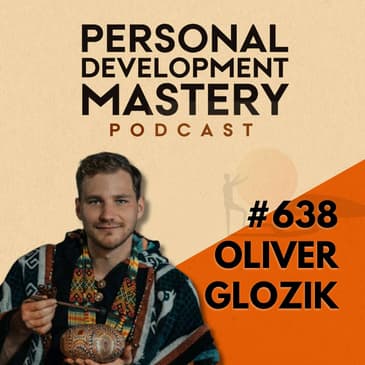
I sit down with Oliver Glozik, founder of Harmonica Ayahuasca Retreat in Colombia, who has facilitated over 35 retreats a year for the past five years. He describes Ayahuasca, stripped of all the mysticism, as an honest conversation you have with yourself. We talk about what happens in the body and mind during a ceremony, and what happens after: integration, intention, and the return to everyday life.
In this episode, you will:
Gain a clear understanding of what Ayahuasca is, and why people are drawn to it for healing, self-understanding, and personal transformation.
Discover how a profound experience like this can reveal hidden patterns, unresolved relationships, and motivations that may be quietly shaping your life.
Learn why integration and personal responsibility are what turn insight into lasting change, and why the real work often begins after the ceremony ends.
Press play. This might be the honest conversation with yourself you have been putting off.
˚
KEY POINTS AND TIMESTAMPS:
01:18 - Meet Oliver Glozik and Harmonica Ayahuasca Retreat
03:01 - What Is Ayahuasca?
04:36 - Who Is Drawn to Ayahuasca?
06:54 - What Happens to the Body and Mind During a Ceremony
09:49 - How People Change After a Ceremony
14:38 - Safety, Contraindications and Emotional Readiness
19:02 - Spirituality and the Role of the Shaman
22:54 - Staying in the Driver's Seat: Addressing the Fear of Disruption
28:39 - Integration: Turning Insight Into Lasting Change
34:50 - Closing Thoughts and Where to Find Oliver
˚
MEMORABLE QUOTE:
“In the end, Ayahuasca brings you more back to you.”
˚
VALUABLE RESOURCES:
Harmonica Retreat Website: https://ayahuasca-retreat.com
˚
Coaching with Agi: https://personaldevelopmentmasterypodcast.com/mentor
˚
🎙️ Want to be a guest on Personal Development Mastery?
Message Agi on PodMatch: https://www.podmatch.com/member/personaldevelopmentmastery
˚
Personal development podcast for midlife professionals, offering actionable insights for personal growth, mindset tips, self mastery and purposeful living.
˚
Subscribe to our weekly email: https://personaldevelopmentmasterypodcast.com/email
---
A personal development podcast for midlife professionals, offering mindset tips and practical tools for personal growth, self mastery, personal mastery, and purposeful living. Discover psychology tips for emotional intelligence and growth mindset, including overcoming impostor syndrome and building self mastery.
Personal Development Mastery features personal development interviews and solo episodes empowering professionals, entrepreneurs, and seekers to cultivate self mastery and create a meaningful, fulfilling life aligned with who they truly are.
Agi Keramidas
(0:00) Today we are talking about a plant medicine used for thousands of years and the honest conversation it forces you to have with yourself. Welcome to Personal Development Mastery, the podcast that helps you gain clarity, overcome what holds you back, and take confident next steps towards a more meaningful and aligned life. I am your host Agi Keramidas and this is episode 638.
If you are looking to understand yourself more deeply and finally have the conversations you keep avoiding, this episode explores how Ayahuasca, an ancient plant medicine, can bring what has been sitting beneath the surface into full view. If you are sensing that something in your life needs to change, but you have not yet found the courage or the clarity to face it, then this episode is for you. Let's begin.
Today it is my real pleasure to speak with Oliver Glozik. Oliver, you are the founder of Harmonica Ayahuasca Retreat in Colombia. Over five years now, with 35 retreats a year, you have sat with hundreds of people going through some of the most, as you say, disorientated but clarifying experiences in their life.
You are here with us today to help people listening understand what Ayahuasca actually is and what it does, how can it be useful to someone. So Oliver, welcome to the show. I'm delighted to speak with you today.
Oliver Glozik
(2:04) Thank you very much, Agi. I'm very looking forward to it. Ayahuasca is such a big topic with a lot of hopes, desires, fears as well, and to be able to explore it from the sense of a facilitator is not just a person having had one experiences or a couple, but to really dive into it.
I hope we can give a deep level of understanding for your listeners around the topic of Ayahuasca, if it may be the right tool for them or not, or spark a level of curiosity around it.
Agi Keramidas
(2:33) Definitely. And what I will use perhaps as a preamble, or perhaps if you want a frame through which we can have the conversation, is looking at Ayahuasca as medicine, plant medicine, as a healing practice of some kind. So we'll use that frame, but let's start from the very basics, the very beginnings.
So for someone listening now who doesn't know much, who has heard perhaps about it, but doesn't know much, what actually is Ayahuasca? Let's start with this.
Oliver Glozik
(3:12) Absolutely. So Ayahuasca is a plant medicine from the Amazonas jungle. Also, if you think about it, modern nature gives us nutrients for our physical body, but apart from nutrients for our physical body, also medicines for our body if we have certain sicknesses or illnesses.
And in the same way, Ayahuasca is a medicine for thinking, for emotion, for our spirit, something that's been done in a ceremonial context for centuries, if not thousands of years. And it's important to have one's own personal intentions, one's own personal search within oneself to be able to look within. And in that extraordinary state of consciousness, one is able to find out the real things that are going on in our subconscious that also navigates so much of our day-to-day life without us being aware of it.
So that's, I would like to say, is like the short version of what Ayahuasca is.
Agi Keramidas
(4:10) It is a short version, and I will keep there, you used the word medicine again, which I like to maintain that focus. You used the word intention also. I will ask you, first of all, and perhaps it is important for that to relate with someone listening.
What is, who, actually not what, I will say who, what are some characteristics of a person interested or intrigued in Ayahuasca ceremony? What is it that calls them towards that? I suppose you have seen some common elements with the hundreds of people you've worked with.
Oliver Glozik
(4:58) Absolutely. So I think one common element is a genuine search within oneself and the wantingness to look within. That's one part.
Then you can also find a lot of people who have tried different types of healing modalities and they work to a degree and they notice some positive changes in their life, but they also notice that they don't quite go as deep as they want them to be. So for able to get that level of shift, that's another type of person that comes here. Then I think you could also categorize it in two different aspects.
One is more around the topic of healing, accepting oneself, overcoming anxiety, depression, addictions as well. The other part you could categorize more into the transformation, the personal development to understand oneself better, to have a level of inner guidance, to look at one's subconscious. So I would say if I look at two big types of people, one type of people looking for healing, other type of people looking for a guidance, looking for that level of understanding, deeper level of introspection, comprehensions about their life.
Agi Keramidas
(6:17) This is very good and I'm glad you gave such a very clear and very relatable, I believe, explanation of that. What I would like also to ask is, I've started to get into the very basics and then we can move to the actual effects because in those two things that you said, one the healing and second the self-understanding or the guidance is both something that I would like to discuss a bit more in detail, the effects of it anyway later. But before we go there, what happens, and again explain to us briefly because it is a powerful plant medicine, a psychedelic, so explain, describe to us what happens to the body and I suppose more importantly the mind during a ceremony when someone drinks ayahuasca, what happens to the mind and body then?
Oliver Glozik
(7:22) So I feel like there are a couple of different aspects. So you have that ceremony, there's certain things that happen outside of the ceremony, the things that shaman does, the level of harmonizations, the instruments to maintain that level of order within the ceremony, and the second aspect is what happens inside of you. On a physical level you have a level of purge which can be diarrhea, which can be vomiting as well, and it's one thing that many people shy away from ayahuasca like, oh no, why would I want to do something that makes me sick?
But if you think about it, trauma is stored in the body and we all carry a level of tension, so it's a level of physical release, but apart from the physical release there's also a level of emotional release as well. If you think about it, we all carry things that don't belong to us, things that happened in the past that we still resent, and those things are being released in that part. So I think there's also a level of scientific understanding, okay, this is why you vomit, all that kind of stuff, and then there's a level of spiritual component which is important to mention, which is important to believe in as well, that to not over-scientificize ayahuasca, and if I would take away all the mysticism from it, I would say it's an honest conversation that you are having with yourself in that extraordinary amplified state of consciousness. So in a sense it's also not the shaman that's going to heal you, it's not the ayahuasca that's going to heal you, it's you that you have that conversation with yourself.
You see the things which you're doing well, you feel yourself the things that you need to change, and if you think about it, maybe your parent or whoever has told you before like, oh you need to change this or that, and there's always that level of resentment, but if you start to feel it for yourself, then you're going to start making those deeper level of shifts as well. So that's what I would say, that deep level of introspection, you have that conversation with yourself, and then the changes that you're making after, that's going to depend how effective the treatment of ayahuasca is as well.
Agi Keramidas
(9:49) Absolutely, and I will ask straight away since you just mentioned it, in what way one is different afterwards? And I know it's a general question, but I think there must be some kind of realization, and I'm asking now some of these questions, Oliver, with also sharing that I am interested, I have been for a few years now interested in attending an ayahuasca ceremony myself, I have not done it yet, so I do have also some of my own, you know, questions or things that I believe they are important also to go out for someone that is intrigued and might want, you know, perhaps some information or some inspiration, even better, to make a decision and follow that healing method or not follow it, because, you know, it's not for everyone, and I don't want to go to too many directions now, so I will take a pause right here if you want to add anything to what I just said.
Oliver Glozik
(11:02) Yes, so I like to say it's a very individual process as well, a metaphor that I like to use, it's like being blindfolded and touching an elephant, and 10 different people are going to have 10 different experiences of touching that elephant, and then 10 different ways that they might remember how that experience of touching the elephant was, so that's the first part, everybody is their own unique individual, their own inner universe, and there are still some general topics, general themes, one of them I would say a level of aliveness, when I first started to drink ayahuasca, I had a level of mild depression, I was like in my own prison of my own mind, and after my first retreat, I noticed a level of waking up, a level of feeling more alive, even my mom after four months told me that your eyes are a lot more brighter, I would look at a pineapple and I would like notice the beautiful symmetric structure of it, that otherwise I would just go past and not notice it, so I think that level of personal aliveness, that energy coming back to oneself, that's one common topic, another one, my father actually noticed it, that a lot of people the first time that they drink ayahuasca, it's about the truly important topics in their life, and many times it's around family, it's about one's parents, it's about one's kids, one's spouse, it's usually not about one's job or whatever else, and family is complicated, and it brings out the best and the worst in us as well, but there is a likelihood that many people have some unresolved issues with their parents and their kids, which really makes them tense, which makes them walk through life, and the lens of their world, of the way that they perceive it, is very much influenced also by our primary caretakers, and if we are able to start shifting that, our experience of the world can start being a lot different as well.
So those are a couple of things, and the other part is maybe you, and I know I have experienced certain impressionable moments in one's life that made us shrink, that made me not go out as confidently as I was before, and being able to process that, to bring some acceptance, some compassion, some forgiveness around those moments, again allows you to walk with more confidence, with that extra level of spark through life as well. Also level of connection to nature is something that many people observe, level of connectedness to their friends, the changing of their values, so those are some general themes, and then obviously the individual theme depends on the individual universe that decides to drink ayahuasca.
Agi Keramidas
(14:22) Wonderful answer, and there was one word that you said a few times, so I will repeat it because it's so beautiful to hear, and I think relatable, aliveness, you said that as a result, so that's what a wonderful thing. Oliver, I will go deeper into and perhaps discuss some of the healing effects, but before we do, I would like also to make a brief mention, obviously it is not something for everyone, so are there some people that either physically or mentally they shouldn't, or they should not look further or avoid it?
Oliver Glozik
(15:06) So ayahuasca is a safe medicine for the majority of the people, and there are some physical contraindications, which include certain heart diseases, certain respiratory diseases, epilepsy, apart from that, some psychiatric conditions as well, if you have bipolar disorder, schizophrenia, borderline personality, those people can be more easily destabilized through ayahuasca in even a very impactful way. If you take certain medication that affects your brain chemistry, whether it's ADHD medication or even more antidepressants, you would need to get off it, which is obviously an individual process as well, so there's a physical element of safety, which is very important to adhere to.
The other part is that emotional readiness. It's important that nobody convinces you to drink ayahuasca. Let's say you have a nagging spouse, and she's like, yeah, you have that level of depression, and I've seen this celebrity go drink ayahuasca, and it has helped them, so you should do it too, and then the person says, I don't know if that makes my wife stop nagging, I'm going to go on this retreat and do it, but it's not coming from their own intention, but they've been pushed that experience onto them. That's not a good thing.
And I think it's also, me personally, I'm not a fan of people drinking ayahuasca out of a level of curiosity. I just want to see what it does. You also wouldn't do a heart surgery just because you want to see what's going on in your heart, because it's like going on a roller coaster, and if you're on the roller coaster, you're on the roller coaster, and I would like to talk about an example.
For example, after you drink ayahuasca, and you finish a ceremony, and you might come back after your retreat, and let's say your intention was to let go of your anxiety, and now after your retreat, you notice you have a lot more anxiety, and I would say now having all this experience, good. Now ayahuasca is teaching you in which moments anxiety comes up. It's teaching you in which moment you are not authentic, where you are not living your truth, which is not your path, not your environment, and that anxiety is trying to teach you something, and it's trying to nudge you to a level of change, so you are able to overcome it, and there's a lesson in it.
But if you just drink it out of curiosity, and now your anxiety is amplified, and now you're just like, oh, I thought this would help me, but it just made my life worse. So it's that own intention, and knowing that the work is going to continue on as well, and I actually think one of the biggest risks is people realizing that their life is not as great as they made it out to be, because you think, okay, I have this job, I'm in this relationship, I have my friends, and whatever, and then you realize, well, the job you just do for validation and for money. Your friendships are just on a transactional basis, and you haven't been really vulnerable and been putting on masks in your relationship, and your life all of a sudden feels estranged.
And in a way, it's good that you start noticing that you've been building a facade in your life, and that your own inner spirit is not happy with that, and is craving for a level of change. But those experiences can obviously be challenging, because now you have to rethink certain values and a certain direction about your life as well.
Agi Keramidas
(18:44) Thank you, and you use the word intention for doing a ceremony, rather than curiosity. And for me, it has to be, and the way that I feel it, apart from a calling, which perhaps it is a general word, but it comes from inside. For me, there has to be some kind of spiritual element to this quest.
So, I personally see it very much connected, and you were saying earlier about the expanded consciousness. I don't remember the exact phrase that you used, but all of that, for me, it implies a level, a spiritual level. So, I would like to hear a few thoughts on that element.
And also, since we're talking about, we're going to talk about that, tell me a few words also about the shaman who facilitates the ceremony, and what is their role in there? What is it that they do?
Oliver Glozik
(19:49) So, if you look at spirituality, and also like the spirituality in Asia, it's very much connected to breathwork, to yoga, to meditation. And if you look at the spirituality in the Americas, and especially in the Latin Americas, it's very much connected to the spirituality of plants. And for the indigenous, when they eat a plant, when they drink a plant, when they smoke a plant, it's not just the act of doing it, but in a way, connecting with the consciousness, with the element of that plant as well.
And I see that it's very beautiful, because apart from all the religion, apart from all the dogma, we can all say that we live in this world, which is governed by nature, by the four elements, water, earth, air, and the fourth one, I escaped my mind, fire, fire, yes, and that we are all made up of the same things. And to have that level of, okay, I'm coming back to nature, also in the indigenous worldview, they say, whatever is older, has more wisdom. And if you look at nature, nothing is rushed, everything is in perfect harmony.
And then you look at us humans, always in a rush, always trying to fix this thing up and being unhappy with whatever is over here. And the level of destruction that we bring on the outside and on the inside as well. So I think it's about learning from nature, it's about reconnecting to that essence and our mother.
And so that's the way that I see spirituality, and that it's open to all religions as well. And then I would like to say it's again, what the shaman does and what the shaman doesn't do, and the lineage that we work with. First one, the shaman is not going to be the one that heals you or doesn't heal you.
The shaman is going to be in a way a guardian of this medicine, and he's sharing it with you. So you have that inner conversation with yourself. And the job of the shaman is to harmonize the space to bring a level of protection to the space, and to make sure that everything is within the parameters of a safe container for everybody involved.
So that's the job of the shaman. We work with the Kamsa Bia tradition from the Sibundo region, the Putumayo region in the south of Colombia. And the person who shares the medicine at our center is Sergio Henao, who's been working on this, walking on this path for 16, 17 years.
He studied philosophy, he studied literature, and he was on his own search of trying to understand his own spirituality. It has helped him a lot in his own life, and then it kept on developing to the point where for over 10 years, he's been sharing ayahuasca in various contexts.
Agi Keramidas
(22:54) That's great. And Oliver, I will bring it back to some, and I've actually remembered hearing that question, or having that conversation years ago with someone. It was in the, along the lines of, because ayahuasca is, or can be so powerful, and you can have quite a profound experience, some people might worry that having this kind of experience might disrupt when they go back, you know, their stable life, whatever they have behind, or they might start going in a, you know, hippie direction, or perhaps not the kind of, I think you understand what I'm trying to say. What would you say to someone that has concerns of that kind?
Oliver Glozik
(23:52) Absolutely, no, I think it's a very valid concern, because sometimes you look into those spiritual places, and you're like, okay, they can do whatever they want to do, but that's not really me. And what does it mean if I do this, I'm going to be like that? Well, maybe there is a mismatch there.
So what I would say is that you are the one in the driver's seat. And you might have seen videos where people tell me, like, ayahuasca told me to do XYZ. So I did that.
And now I left my wife, I left my job, I went on a world tour. And now I'm in depth. I have a comment like that in one of my videos.
And it's okay. It's one thing. And again, if you go back, you have that conversation with yourself.
But the decisions that you are making after you have that conversation with yourself, are your own decisions. And it's important that you take responsibility for it. And maybe for that particular person might have got a message, hey, I need to stop being as rigid.
And I need to create more spontaneity in my life. And maybe for that person, she interpreted it in a very extreme way. And it led them off that pathway that many people are afraid to go down as well.
So I think it's also important that there's a level of guidance within the retreat infrastructure. But ideally, even afterwards, that one is starting to integrate those lessons more within oneself. What I would also say is that in the end, ayahuasca brings you more back to you.
And what resonates to your own inner heart and inner calling. And if you've been a certain way for 30, 40, whatever much years, it's also not that likely that you put away all of your values and you start to completely redo your life and all of the things that were important back to you are not as important anymore. I think that's also what many people feel around the topic of, let's say, making money.
And they say, OK, I have a level of anger and I have a level of, but I like my anger because anger gives me a level of drive towards something. And I don't want to lose my anger because if I lose my anger, I lose my level of edge in creating whatever business or success in my life. And OK, it's a valid point.
And you can create a successful business based out of anger. But if you're able to release the anger, you might notice you plateau on your level of motivation and then you can find new motivations. You can also create a level of successful business for the love of yourself, your family, your kids, and creating, finding that drive out of that wantingness to create.
And there's a level of metamorphosis happening. And if you arrive on the other sense, it's going to be a lot more happy for you. It's going to be a lot more pleasant experience to create a successful life based on creating it for the love of the people around you than out of a level of anger.
And I need to prove myself and that my high school teachers were wrong or whatever it might be. So I hope that I'm able, I understand it's a valid concern. There is some truth to it and important that you are in the driver's seat and by building your life on truth, by understanding what is actually shaping my decision.
And so, for example, you're an engineer. Let's say you're an engineer and it's good to question your motivation. Why do you want to be an engineer?
Do you just want to be an engineer because your father is an engineer and you want to have the approval of him? Or do you want to be an engineer because you really enjoy creating things or is it something else? And hopefully, you're going to find out that you like being an engineer because you like creating things.
But if you find out you just do it for the validation and maybe you actually hate creating things, well, maybe it's better you find it out at age 35 than at age 70. So again, these can be some important questions to ask oneself. They can lead to big changes in one's life.
But going back also that each individual has their own inner landscape, which I believe there is a huge value in exploring and based on that living one's life.
Agi Keramidas
(28:39) That's great and Oliver there is one last, I mean there are we could we could go on for three times as long. There is one element again that refers to what happens after a ceremony and I refer to the integration which I understand that it is something important and useful because I can only imagine, I mean I remember going back from a 10 day silent meditation retreat that I went and afterwards I was, it took me a while you know to operate back in the normal world. So I can only imagine that it's going to be a similar if not much more powerful transition or perhaps the way that you feel just afterwards.
So I would like to hear a few words about integration, its importance and you know how should one look at that.
Oliver Glozik
(29:46) I mean of course that's the whole point of it, you can do as many silent retreats as you want but if you go back to your life and nothing changes and you still feel stressed and overwhelmed in your day to day and it doesn't matter how many hours you meditated or how many ceremonies you have done, it's about the ceremony of your own life and your own inner experience of your life. There's a couple of quick pointers again we could go on this four hours as well. I think if you look at your day-to-day life about the environments you're in, the people you spend time with, do they bring your energy up?
Do they bring your energy down? If you start doing more that bring your energy up, your life is going to be different in two months down the line. Another question that you can ask yourself what is the one thing that I'm doing that's really holding me back and if you're honest with yourself you know that and if you just you know you can optimize for the positive or you can optimize by eliminating the negative and by just eliminating the negative that can start to bring very positive changes to you as well.
Also there's a level of neuroplasticity after ayahuasca where you again feel that aliveness that gives you the strength to make those shifts as well and then I like to say there's the easy conversations to have you know people that you might feel a lot of gratitude to reach out to them because right now you're in that state and you can increase the level of connection that you feel towards a person and then there's the difficult conversations and that's a difficult that's a whole not a topic but there is the elephant in the room and usually it's around family and in Christmas there's a present and everything is perfect and just something needs to drop and boom something explodes but because there are those unresolved issues and it's good to start talking about those there's ways to talk about them there's ways not to talk about them understand that they're on their own timeline of healing take expectation take judgment out of it have compassion with the other person be able to apologize look at your own mistakes as well but I also feel those hard conversations that we are avoiding ayahuasca or those retreats apart can give you that strength to start approaching that and a hug from your dad a hug from your mom being able to say I love you mom or I love you dad which maybe before you were not even able to say it created so much tension now being able to express it that's going to liberate so much energy in your life and make a lot of changes so those are some common themes that I start noticing and then it's also in one's own personal responsibility in one's own willingness how much do I actually want to change do I just want to keep on being in my habit of a destructive addiction am I not ready to have this conversation do I just keep on postponing it well then your life is not going to be changing that much because you yourself are not going to be ready for that change so I think those are a couple of words around integration I'll add one more sorry to like make it so long but I get very enthusiastic about these topics and it's also you might become a lot more aware of you of the negative consequences of your coping mechanism because before you might have just thought them daily weed smoker because I didn't know better how to regulate my nervous system but once I start to notice how I'm hurting myself by me re-engaging in it it's actually gonna hurt more there's gonna be more pain associated to it as well so once you start to gain some awareness it comes with responsibility and in a way if you re-engage in that it becomes a more conscious choice and it's gonna hurt you more as well so I think it's also a calling to step into one's own responsibility into one's own power to start changing one's life as well thank you for this
Agi Keramidas
(33:57) answer Oliver and there was one question that you you said which I highlighted how ready am I for this change and I think through that you get some very important and real answers on what's the best path for you before we start wrapping up this fascinating conversation Oliver I would like to ask you where do you want to direct the listeners so they can find more about your retreat your ayahuasca retreat in Colombia and how to connect absolutely thanks very much so just
Oliver Glozik
(34:34) type in harmonica retreats on google you're gonna find our instagram handle our youtube channel with more than 40 different videos you're gonna find our website ayahuasca-retreat.com with the upcoming retreats the different type of packages that we have so just whatever speaks to you google harmonica
Agi Keramidas
(34:50) retreat and you'll find what you're looking for I think it is of course such a a big conversation and we could go on many different nuances but I think for the purpose of you know the intention of my podcast personal development mastery and having this conversation I do believe that someone listening now that has been interested let's say or about or intrigued about ayahuasca she found some answers or perhaps some inner understanding to to take some kind of action towards that one way or the other or make a decision or whatever else it is so I want to you very much for sharing all these things that you did in a very clear way and I think it was also very relatable here and there you mentioned some examples for example the family dinner or some things like that that I think different examples like that resonate with people so I want to wish you all the very best with your retreat in Colombia and to carry on offering this powerful healing to people I will leave it to you for your part in words if you want to give to the listener or the viewer of this conversation one final message whatever it is
Oliver Glozik
(36:27) that you want to end with spend some more time in nature spend some time with yourself and find out what your own inner calling and what your own heart wants to teach you thank you for listening
Agi Keramidas
(36:46) to this conversation with Oliver Glosick I hope it has given you a fresh perspective on what it actually takes to turn awareness into lasting change one practical action tip to remember from today is this ask yourself how ready you actually are for the change you say you want awareness alone will not change your life it is what you choose to do with it afterwards that will join us every Monday for in-depth conversations and every Thursday for shorter episodes with insights and tools you can use if you appreciate what we're doing here the small quick favor I'm asking of you is to click the subscribe button until next time stand out don't fit in

 5.00 (74 Reviews)