What would you do differently if a single moment forced you to confront how fear has been shaping your entire definition of success?
TO WATCH ON YOUTUBE, CLICK HERE.
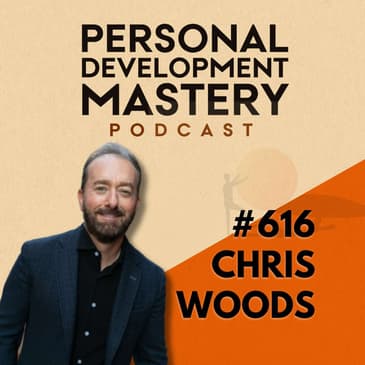
In this episode, Chris Woods shares how a life-threatening health crisis, where he flatlined in hospital, became the turning point that exposed the hidden fear-driven patterns behind his high-achieving career at Google and beyond. If you’ve ever felt successful on the outside but anxious, driven, or disconnected on the inside, this conversation will help you make sense of what’s really driving your decisions and how to start shifting it.
By listening to this episode, you will discover how to:
Recognise fear-based thinking patterns that quietly shape your career, choices, and sense of self
Shift from fixing weaknesses to intentionally building your life around your natural strengths
Redefine success in a way that leads to genuine fulfillment rather than constant achievement pressure
Press play now to learn how to step out of fear-driven success and start building a more aligned, strengths-led, and fulfilling way of living.
˚
KEY POINTS AND TIMESTAMPS:
04:02 - Life before the health crisis and fear-driven achievement
05:17 - Health crisis: tick bite, cardiac Lyme disease, and flatlining
08:46 - Gratitude and realisation after a second chance
12:35 - “Who would you be without your concerns?” exercise
17:58 - Why focusing on strengths beats fixing weaknesses
20:38 - Redefining success after leaving Google
28:14 - Where to find Chris Woods and his coaching work
˚
MEMORABLE QUOTE:
"I was living to build an obituary as opposed to living to build a life."
˚
VALUABLE RESOURCES:
Chris' website: https://chriswoodscoach.com
˚
Coaching with Agi: https://personaldevelopmentmasterypodcast.com/mentor
˚
🎙️ Want to be a guest on Personal Development Mastery?
Message Agi on PodMatch: https://www.podmatch.com/member/personaldevelopmentmastery
˚
Personal development podcast for midlife professionals, offering actionable insights for personal growth, mindset tips, self mastery and purposeful living.
˚
Subscribe to our weekly email: https://personaldevelopmentmasterypodcast.com/email
---
A personal development podcast for midlife professionals, offering mindset tips and practical tools for personal growth, self mastery, personal mastery, and purposeful living. Discover psychology tips for emotional intelligence and growth mindset, including overcoming impostor syndrome and building self mastery.
Personal Development Mastery features personal development interviews and solo episodes empowering professionals, entrepreneurs, and seekers to cultivate self mastery and create a meaningful, fulfilling life aligned with who they truly are.
[Agi Keramidas]
In this episode, you will discover how a life-threatening health crisis can reveal the hidden fear driving high achievement, and how to shift towards a more aligned and fulfilling definition of success. Welcome to Personal Development Mastery, the podcast that helps you gain clarity, overcome what holds you back, and take confident next steps towards a more meaningful and aligned life. I am your host, Dr. Aggie Keramidas, a personal development mentor and coach, and this is episode 616. If you are looking to recognize fear-driven patterns and redefine what success really means, by listening to this episode, you will discover how to recognize fear-based thinking patterns that quietly shape your career choices and sense of self, and you will also learn how to shift from fixing weaknesses to intentionally building your life around your natural strengths. Before we start, if you would like to find clearer direction and take confident next steps towards a life more meaningful and aligned, I offer one-to-one coaching to support you on your journey. To learn more, visit personaldevelopmentmasterypodcast.com slash mentor. The link is in the episode description. Now, let's begin. Today, it's my real pleasure to speak with Chris Woods.
Chris, you are a coach, former Google sales leader, and author of Balls and Brains, where you draw on your own experience of a life-changing health crisis, and you help people overcome fear, focus on their strengths, and redefine success by replacing their fear-based patterns with a more sustainable way of living. Chris, welcome to the show. It's a real pleasure to speak with you today.
[Chris Woods]
Thank you so much for having me. I really do appreciate the opportunity.
[Agi Keramidas]
It is something that I believe we can draw some, all of us can draw some very useful and conclusions, perhaps, or inferences, maybe, from your own personal journey and what you experienced and how things changed for you. So, for the listening right now to the conversation, I will say that you will learn to recognize patterns that are fear-based and redefine success and also reconnect with your strengths. So, these are the things that I'm going to speak with you today about, Chris.
What I'd like to begin with is, you know, that moment that things changed for you in a way that was quite radical. So, at that time, and I'm giving my own, you know, preamble of this, from the outside, your career looked highly successful, but then you had the health crisis. You actually flat-lined on a hospital bed, and then things changed very much.
So, what I would like to ask is, if you take us just before the health crisis, how did that period actually feel from the inside before you had the crisis?
[Chris Woods]
So, it felt pretty high-pressured, but it also felt like I had been doing the things that I had set out to do, at least that I had intended when the intentions and goals of a young man. So, I had always wanted to be successful and was very driven. A strange driver was that my father had died when I was two years old, when he was 40.
So, I'm the youngest of five. My mother went in to wake him up, and he had died in the bed at 40 years old. So, I grew up in the aftermath of that and had a strange kind of either knowing or dread that I would go early as well.
So, I used that as a real driver to overachieve, I think. And I have said to people, upon reflection, it felt like I was living to build an obituary as opposed to living to build a life. So, I had a lot going for me at the time, and still do.
So, I was 40 years old, working for Google. I had just recently gotten into Harvard, and I was in a Master's in Public Administration program that Harvard was paying for. I was done with a semester and was on mid-semester break.
I was doing some yard work, and I ended up being bitten by a tick in my back. My body had an adverse reaction to it. I eventually had cardiac Lyme disease.
And when I was in the hospital, my heart stopped. So, fortunately, I was in the best hospital available in Mass General in Boston. And they called a code blue and brought me back with the paddles.
So, I came to and was in a room full of doctors, and they said, Mr. Woods, do you know what just happened? I'm not sure. And they said, you flatlined for about a minute and four seconds, and we brought you back.
We're going to keep you now in the hospital until we figure out what's going on. So, they did. They kept me in the hospital for a few weeks and ran a bunch of tests.
They believed that it was an adverse reaction that I had to the tick bite that then gave me the cardiac Lyme disease. They installed a pacemaker in my chest and then said, you know, based off of this, we want to keep seeing you every six months or so. Anything like this happens, again, your pacemaker's there to safeguard you.
We think you have another 50 years to live. So, that's the great news. But then it gave me the opportunity to then say, how do I want to live these next 50 years differently than the first 40 years?
[Agi Keramidas]
Out of interest, and that's perhaps not entirely the topic of the conversation, but during that, you said one minute, 40 seconds that you flatlined.
[Chris Woods]
One minute and four seconds.
[Agi Keramidas]
Four seconds.
[Chris Woods]
Yeah, yeah.
[Agi Keramidas]
Did you have any experience of it at all then? There was no something else that you didn't know that anything happened at all then during that time. It was only the doctors that told you about it.
[Chris Woods]
Yes. So, I don't remember anything that happened during that time. But what I do remember is then regaining consciousness and being aware of where I was, but being unable to speak or open my eyes.
So, I could hear everything that was happening in the room. And I wanted to be able to say, hey, just give me a minute. I'm coming back.
But I couldn't. I couldn't open my eyes and I couldn't speak. So, that felt like it went on for a bit.
But I could hear them saying, okay, we have a heartbeat now. Let's see what happens when he comes back. So, that was the part that I do remember was, okay, this is good, but this is strange.
Why can't I communicate?
[Agi Keramidas]
Thank you for that. So, it sounds and the way that you describe it like, and I suppose that would make a conclusion for an experience like that, that you were, in a way, given a second chance because that one minute and four seconds, it is something that could have gone the other way. So, tell us what the realizations that you had was and the changes that, not necessarily the actions that you took, but the internal changes that happened while you were processing what had happened.
And as you said, the 50 years, how you wanted to live.
[Chris Woods]
So, the first thing was a gratitude that I was there, that it happened there. So, they asked me and asked my mother at the time a lot of questions about my father. And so, he had died in 1972 in his bed and they never did a full autopsy.
So, they wrote it off to a heart attack. So, they asked her a lot of more detailed research questions. And I had had a couple of times over my life, this thing called vasovagal syncope, where if you have a physical trauma, sometimes your blood pressure can drop and you can lose consciousness for like five seconds.
And that had happened to me a few times. And so, they asked her whether that had happened to my father and she said, oh yeah, he had that as well. So, a theory is that the thing that they said that I had, which was a sinister vasovagal.
So, as opposed to then just the blood pressure dropping, my heart stopped. They theorized that that could have been the same thing that happened to my father, but he was all alone in his bed, whereas I was surrounded by the best doctors in the world. So, that was one of the first things that went through my mind was that, wow, how lucky am I?
And maybe now I'm not going to follow the same pathway that my father did. And that's what ended up then kicking off the whole thought process of how do I want to do things differently, as opposed to just saying, okay, thanks for the second chance. I'm just going to continue on my own way, the exact way that I've been.
[Agi Keramidas]
So, what was it that you felt like you needed to do differently?
[Chris Woods]
I got in touch with the fear-driven mindset that I had, that I had adopted it early and it seemed to work for me. If you look at externally that I was working for Google, I'd gotten into Harvard, I had a top tier MBA, I had achieved all these things. But every day was very much anxiety-driven and I was always thinking that doom was right around the corner.
And so, being able to then see this and feeling like as if I'm waking up and the birds are chirping and the sun is shining and it's now time to do a reset, as opposed to blowing everything up, I was like, okay, so how can this be better? And as I started looking into it, I was like, how much different and better can my life be if the thought patterns and what is driving me is no longer fear? Now, I didn't think that I could just snap my fingers and it would all go away, but can I make progress against this and actually enjoy my life and then lean in to the things that bring me joy, as opposed to working so hard, feeling like it could all end at any moment?
[Agi Keramidas]
So, for someone listening to us now, Chris, and they would like to understand better whether there are fears, internal fears that are driving their own life, because as you very well know, and I do too, those things tend to go quite without very much of our conscious awareness, at least most of the time, and it takes something to shake us up like this. So, for someone that would vicariously learn from your experience without having to have a shock in their life, how can they understand what is happening? Are they driven by fear and how is there a process that can help clarify that for them?
And I suppose that is the first step when you actually see what is happening.
[Chris Woods]
Yes. So, there's a very powerful question that I heard posed by Peter Crone, who's a British kind of spiritual, but also kind of life guide, who I think very highly of. And he asks this question, who would you be in the absence of your concerns?
So, I love how that's phrased. And what I always recommend people do is ask themselves that same question and write down the answers, because the thing that's amazing about that, it doesn't ask you what your concerns are. It just says, who would you be in the absence of it?
And only you know the answer to that, but you do, and your soul knows the answer to that. And so, to be able to then open up that part of your mind, to be able to see what you would be, how you would feel, and then how you would live your life on a day-to-day, week-to-week basis in the absence of your concerns. So, I always recommend people start with that, because it's so powerful to be able to do that, first to ask yourself that question and answer it honestly, as you would, and write it down too.
A lot of times in stream of consciousness, and then you look back on it, because that provides you and us with a real North Star, that this is who you were meant to be. And so, what I always now try to do in my work with people is about overcoming fears and maximizing strengths, and getting back to kind of the factory settings, what you were put on earth here to do before you became afraid of things, and before fear interrupted, you know, your kind of joyous pattern, is to reconnect with that. And then secondarily, look at the things that bring you joy, and your strengths, the thing that you were really put on here on earth to do, and how much of that are you actually doing on a day-to-day basis.
That, the answers to those things, I think can set people on a trajectory to a much more fulfilling day-to-day life.
[Agi Keramidas]
And we'll come back to the strengths, the maximizing the strengths that you said. I wanted to ask a little bit more about that particular exercise, or question, you framed it as a question, but I see it as an exercise, you know, who would you be in the absence of your concerns, you said. So, someone listening right now, how do you propose that they do it?
It's a matter of sitting down and thinking and writing, and how long should one write, or are there other factors in this if we look at it as an exercise that might give us insight?
[Chris Woods]
So, I always recommend just do it the first time and ask yourself the question. If you don't have a pen and paper, just ask it and start opening up that part of your brain. And then go back and do it and write it down.
And then I also recommend is then let it kind of sit and marinate for a couple of days and then ask again and see if there's other things that add on to it, because it can first come out as a trickle. And then the more that you're prompting and giving yourself permission to look at, look at the real answer to that, you can add on layers to it. Because I always say to people, this isn't me giving that to you.
And this isn't you went to a teacher and they told you this is what you should do. This is really an answer that's coming from within. And sometimes it comes all flowing out all at once, but sometimes people need to do it in an iterative process.
And that could really be more of like an exercise as you refer to it.
[Agi Keramidas]
I do see, Chris, these things personally and from my own journey and my own self-exploration, I see these kinds of questions as exercises rather than, because question can be a bit casual. And I think there is so much potential when you invest in exploring the question and not the question as such, but what comes up as an answer. That's why I use the word exercise.
Salve, let's go to the strengths that you mentioned earlier, maximizing our strengths. So let's clear that for someone that has perhaps focused very much on improving their weaknesses and many people, unfortunately, well, we're taught like that, that if you're not good at something, work extra hard at this, which of course it's not the right thing to do, but many of us do it anyway because that's how they have been programmed, let's say. So give us the overview of why should someone shift from trying to improve their weaknesses to trying to maximize their strengths?
And then we can talk about practically how one can do it, but let's start a step before.
[Chris Woods]
Sure. Because I think that it improves not only, and most importantly, your internal alignment when you are spending your days and weeks and months actually playing to your strengths. But then if you also then extend that and say you're working in a business environment or any other one where there's other people who are impacted by your work, you are most more likely to be successful when you were playing to your strengths and you're putting your effort into going from good to great, as opposed to putting your effort in from underperforming to get to average.
Now, what I do say on this is we all have developmental areas and I'm not saying that you just ignore those. But one of the things that I say is that depending upon what your profession is or what the role is, if there are things you need to get better at that there's no way around it, I understand it. But what I would prefer somebody to do is to be able to take an honest look at what they're really good at.
I recommend doing the Clifton Strength Finders or something like that. So it's an online diagnosis you can take that will then kick you back your top five and your top ten strengths. And also recommendations on how else you could be exercising those.
As well as watch outs, and we can talk about that in a second, because with every kind of strength comes a potential thing that you need to be aware of. But if people are, first off, lack awareness of the things that they're generally really good at and they've just gotten themselves into a work kind of grind where they're doing just what the job is and wondering why things aren't great, I always recommend let's take a real look at what you're currently doing and map that against what these strengths are. And what can you be doing now more to lean into your strengths?
And what I always say to people, I'm not telling you to then blow up your life. I'm not saying that you're going to quit your job or then do all these things. It's more like it then gives you an opportunity to start mapping a trajectory as to how can you be spending more of your time playing to your strengths as opposed to spending your time playing catch up.
Because that's not the way to win and it really doesn't feel good.
[Agi Keramidas]
And let me connect that with something we haven't discussed yet. And we mentioned success and the definition of success. So how is it different for you, Chris, now compared to how it was before when that health incident?
[Chris Woods]
So before the definition of success for me was achievement and I was working in, you know, large corporations. I'd worked for Google, I'd worked for Sony years prior to that. And it was moving up within organizations and, you know, doing what the job entailed.
The thing that really changed for me is that when I first went to Google in 06, it was still at an earlier stage. It was still growing and it was decent size, but it was like they hadn't bought YouTube yet and hadn't gone into a lot of different things. So when we first, for example, bought YouTube as a salesperson, you had a lot of autonomy to be able to come up with ways to sell it because we really, really weren't sure what we were doing.
And so those days I was very successful in that because there wasn't necessarily a roadmap on it. Later in my Google days, when it became closer to 180,000 people there and it was all very much structured, everybody had to stay kind of in their lane and do these things. And that felt less in the flow to me.
So my Clifton's Strength Finders was telling me, and I got these actually while I was at Google and I had an executive coach, is my passion and talents were better suited in an entrepreneurial role and or a turnaround role. So being hired by companies to go in and turn around underperforming companies. So that's what I did.
So when I left Google, I initially started a CEO consulting business and then got the opportunities to go in and turn around underperforming businesses. So to answer your question, how does success look different post flatline to pre-flatline? Pre was really just, I'm staying in my lane because this is what they've told me to do.
And this is what I need to do. And it doesn't feel great, but Hey, I've got responsibilities and I need a paycheck to, I can now leverage all the skills that I've had here, as well as the real passion that I have to still do well professionally, but to lean into the things that actually fuel me as opposed to feel like it's a grind.
[Agi Keramidas]
You said feel me in the word that came to my mind was fulfillment, which, you know, contains the, the feel bit. And it's, let's talk about fulfillment a little bit more. Is there something you would like to add about this?
[Chris Woods]
So I feel very fortunate that I've been able to get to the point here that what I do now for my work is actually my passion and it's who I am so that I don't feel like I put on a different hat, so to speak, to go to work, to then, you know in my family life or with my friends, I am the same person in all aspects of my life. And I feel very fortunate that I've been able to find this at this stage where I can use my skills and passion to actually positively impact people. And so when we talk about the phrase of impact, sometimes that's, you know, it's, it's a word that people throw around, but in our work, when we're actually working with people, you can see it and you can measure it.
And so the real fulfilling part it's been for me over these last few years, when I've been full-time coaching is all the referrals that I end up getting from previous, very happy clients who then are out to dinner with people. And it comes up that they worked with me and they said, you know, I think you'd, you could really benefit from that because that's a real sincere indication that I'm having an impact that's lasted. And that is what is fulfillment for me.
[Agi Keramidas]
Definitely. And I remember that phrase that, because you said earlier that success for you was achievement was about achieving. And I remember the distinction between the science of achievement, because achieving can be replicated if you follow a step, but fulfillment is not a science, it's an art.
So it is something that you have to create in a way yourself. No one can give you a blueprint of how to be fulfilled.
[Chris Woods]
That is absolutely right. And that's one of the things that I think is such an opportunity for me as a coach, for you as a coach, for coaches just in general, to be able to help people find that way. Because so many people have just, you know, they've been stuck in their heads and in their bodies their whole lives and being able to benefit from somebody who gives them an external perspective.
And that's what really did it for me when I was at first introduced to an executive coach when I was at Google, because she was able to kind of hold up a mirror for me, for me to be some blind spots, as well as gave me the CliftonStrength finders and all these other things that opened up my eyes to a much more fulfilling path than I would have probably been able to find on my own if I just kept kind of grinding.
[Agi Keramidas]
Chris, tell us about our book, your book, Balls and Brains. Who is it for, and what will they gain by reading it?
[Chris Woods]
So I named it Balls and Brains as an attention grabber, as I'm sure you can appreciate. And in this day and age with, you know, short attention spans, you need to be able to approach things that way. And so the foundation of my coaching that I do with both males and females starts with strengths and with fears, and then we go into goals, etc.
But I mostly wrote this book for younger men, so men in their 20s and 30s, who will pay attention to that Balls and Brains, like, what is that? And all right, I'll listen. Because I know that oftentimes men in the early stages of their careers, and even later, are resistant to talk about fear.
And they're like, listen, I got it handled. I don't really want to talk about fear, any of these things. And it's meant to be an accessible way for them to say, listen, I'm bringing it up.
I'm telling you that you could be better. And I'm not saying you need to lay down on a couch and we're going to do therapy. I'm saying, let's just have, start with this process that you can just read the book in the comfort of your own home and be able to then start opening up how you can be better.
Because what I always now say about these things is to move you from grinding to aligning, or the visual I always say is moving you from feeling like you're in a rowboat, where you're doing everything from effort, and it's really all on you, to moving into more of a sailboat. So you're still going across the water, you'll go at a better clip, you're still guiding it, you're still deciding the direction on it, but you're using larger things that are available to you that you're not currently tapped into. So that's Balls and Brains.
That's the intention on Balls and Brains, is to be an invitation for young, younger men to be able to say, all right, and then after they've read through the Balls part of it about overcoming fears, and then the Brains part about really leaning, identifying and leaning into your strengths, it then says, based off of this, if you wanted to go deeper, we could work together or I could give you some additional guidance.
But I feel like those are the two most important steps to set you on a more inflow trajectory, which is to address, get awareness of fears as well as your strengths.
[Agi Keramidas]
And where can the listener find out more about you, Chris?
[Chris Woods]
So I, as you had mentioned before, I have a very simple name, right? So it's Chris Woods with an S. So C-H-R-I-S, Woods with an S.
And I'm a coach. So my website is simply chriswoodscoach.com. So there you can see more details about how I work with people.
There's testimonials from lots of happy clients. There is a link to Amazon to check out Balls and Brains, as well as there's a way to message me directly if any of the things that you've just heard today resonate with you and you'd like to have more of a conversation.
[Agi Keramidas]
Thank you. And Chris, before I start wrapping these things up, I have two quick questions I would like to ask you. And the first one is what does personal development mean to you?
[Chris Woods]
I like to think that we should always be focusing on personal development. Everybody should be, right? You're never a finished product.
And so what I think is, A, as a coach, helping somebody see and achieve the best possible version of themselves that they're capable of being. And I see that as my role as a coach, but I also then encourage that for people, a couple of things. One, people come to me oftentimes through referrals, or they come to me if I'm working with a corporation that they've selected somebody to have executive coaching.
And I think that it's the greatest gift that a company can give to somebody, but then also a person can give to themselves. Because as we've said a little bit earlier, you're in your own head for all your life. And a lot of times people aren't as open to, or maybe just aren't given the opportunity to work with somebody who can help them see some things that they wouldn't see on their own.
So I think personal development is something in no matter what role you're doing and what walk of life you're in, should be a lifetime commitment. And a lot of times people don't get the opportunity to do it. And I'd like to help as many people as I can.
[Agi Keramidas]
And hypothetically, if you could go back in time and meet your 18 year old self, what's one piece of advice you would give him?
[Chris Woods]
Worry less and start practicing gratitude now. So that's something that I do now is practicing gratitude. And I really feel like it's changed my life and it changes the world around you.
And I do feel like it's, you know, it's not a secret. They've been talking about it for forever, but it was a secret to me as 18. And I would say, worry less and be thankful more.
[Agi Keramidas]
Thank you. And I will squeeze in one more question now, because you mentioned gratitude again for the, you mentioned it earlier, but now you're repeating it. So you said practice gratitude.
So define this for us. I mean, in your case, how do you practice gratitude? I'm focusing on that because it is, you know, different people say different things.
[Chris Woods]
So it's the first thing I do when I wake up in the morning and it's the last thing I do when I'm going to bed at night. So both times I'm doing it horizontally in bed. And so when I wake up, I get up very early every morning and it's the first thing that I do.
I say, you know, I think that I have another day ahead of me. And I just run through everything in my life that I'm grateful for, starting with my children and everything else. And then I do the exact same exercise at night, but oftentimes it ends up saying, I'm grateful for this bed and how comfortable this pillow is.
And the fact that I, when it's hot here, I have air conditioning. So it's once it starts and you start seeing and asking your mind, looking for more things to be grateful for, you'll see even more. And it just becomes this kind of snowball effect that the more that you're developing that muscle, the more things you'll just see to be grateful for it.
[Agi Keramidas]
That's great. Chris, I want to thank you very much for this fascinating conversation. I think there were some very useful and lots of practical elements that someone who watched us or listened to us can take away hopefully and implement from my point of view, if they pick one thing out of the whole half an hour that we talked about and put it into practice in their life, that's a mission accomplished.
So I want to wish you all the very best with continuing, empowering others and helping others see their strengths and what fulfills them. And I will leave it to you for your part in words and any final message you want to share with the listener of the viewer or the viewer of the conversation.
[Chris Woods]
I would say that the world will show you what you're looking for. So if you're looking for the negative and you're looking for the problems, you'll see them. But if you can change your perspective as much as possible to look for the things that are working, your strengths, the things that you can now put down, the fears that you had that have been holding you back, life gets a lot lighter and a lot brighter.
[Agi Keramidas]
Thank you for listening to this conversation with Chris Woods. I hope it has given you a fresh perspective on fear, success and how to build a life aligned with your strengths rather than your weaknesses. One practical action tip to remember from today is to notice where fear is quietly driving your decisions.
So when you feel pressure or anxiety about a choice, pause and ask yourself whether this is coming from alignment or from worry about what might go wrong. Then write down one small way you could act from your strengths instead, even if it feels unfamiliar at first. Join us every Monday for in-depth conversations and every Thursday for shorter solo episodes with insights and tools you can use.
If you would like to find clearer direction and take confident next steps towards a life more meaningful and aligned, I offer one-to-one coaching to support you on your journey. To learn more, visit personaldevelopmentmasterypodcast.com slash mentor. Until next time, stand out, don't fit in.

 5.00 (74 Reviews)