Why isn't understanding your problems enough to change them?
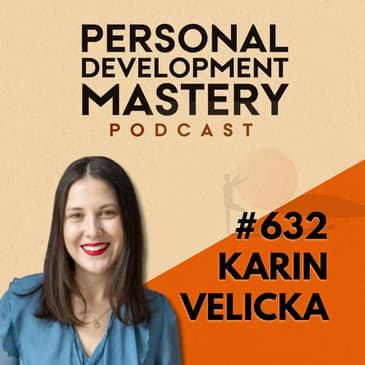
Many high achievers know something needs to change, but insight alone rarely leads to transformation. In this episode, Karin Velicka shares why lasting change starts with reconnecting to your body and nervous system, not just your mind. Discover how regulating stress, releasing stored emotions, and creating inner safety can help you move from simply surviving to living with greater authenticity, fulfillment, and resilience.
- Discover why external success doesn't always lead to fulfillment, and how to reconnect with what truly matters to you.
- Learn how nervous system regulation and neurosomatic breathwork can help release accumulated stress, reduce reactivity, and create lasting emotional change.
- Explore practical breathing, movement, and sound techniques you can use to feel calmer, respond more intentionally, and build greater trust in yourself.
Press play to discover how reconnecting with your body can unlock the lasting personal change you've been searching for.
˚
MEMORABLE QUOTE:
"We can only change what we acknowledge."
˚
VALUABLE RESOURCES:
Karin's website: https://www.velickakarin.com/
˚
Coaching with Agi: https://personaldevelopmentmasterypodcast.com/mentor
˚
🎙️ Want to be a guest on Personal Development Mastery?
Message Agi on PodMatch: https://www.podmatch.com/member/personaldevelopmentmastery
˚
Personal development podcast for midlife professionals, offering actionable insights for personal growth, mindset tips, self mastery and purposeful living.
˚
Subscribe to our weekly email: https://personaldevelopmentmasterypodcast.com/email
---
A personal development podcast for midlife professionals, offering mindset tips and practical tools for personal growth, self mastery, personal mastery, and purposeful living. Discover psychology tips for emotional intelligence and growth mindset, including overcoming impostor syndrome and building self mastery.
Personal Development Mastery features personal development interviews and solo episodes empowering professionals, entrepreneurs, and seekers to cultivate self mastery and create a meaningful, fulfilling life aligned with who they truly are.
[Agi Keramidas]
Is the stress you carry holding you back? In this episode, we're exploring how to regulate your nervous system and reconnect with yourself. Welcome to Personal Development Mastery, the podcast that helps you gain clarity, overcome what holds you back, and take confident next steps towards a more meaningful and aligned life.
I am your host, Agi Keramidas, a personal development mentor and coach, and this is episode 632. If you are looking to create lasting personal change and feel more fulfilled, this conversation explores how nervous system regulation and neurosomatic breathwork can help you bridge the gap between knowing what needs to change and actually changing it. If you are successful on the outside but feel disconnected, overwhelmed, or stuck in reactive patterns, then this episode is for you.
Let's begin. Today, my guest is Karin Velitska. Karin, you spent years building a successful career in finance at the European Central Bank before leaving to train as a life coach and neurosomatic breathwork facilitator.
You now help high-achieving sensitive people reconnect with themselves and create real change without losing who they are. Karin, welcome to the show. It's a real pleasure to speak with you.
[Karin Velicka]
Hi, thank you so much for having me. I'm looking forward to the conversation.
[Agi Keramidas]
Me too, and for someone watching us now or listening, I will say that you are going to discover, among other things, what it actually takes to create lasting change and also why understanding a problem is not enough to change it and solve it. So, Karin, what I would like to begin with, you built, as I mentioned in your introduction, a successful career in finance. What made you finally walk away and retrain as a coach?
[Karin Velicka]
That's such a beautiful question, what it took me to leave. It is, you know, I have been in that job for four years, and ever since the beginning, I knew that the content of the job was not something that I truly liked, but it was a journey to be able to accept that about myself because there were so many contradictory emotions connected to it, especially the job itself was successful. So, people were celebrating me, people were able to give me validation, and that was something that I was living for because I was living externally.
But throughout the journey, I was going to therapy, I was doing coaching, and I was doing self-development work, and slowly I had to also admit to myself that even though I am successful, I am not fulfilled. So, that's why I started this journey of exploring what else can I do, how could I find out something that speaks directly from my heart, and it was a difficult journey. There was a lot of guilt connected to it and shame because I had to admit I don't actually like where I am, and what finally helped me was to become very authentic about where do I want to go, what it is I want to achieve because I am a very ambitious person, and I didn't want to dampen my ambition.
I just wanted to put it somewhere where I really feel like I can thrive, and in the end, it was a lot of regulation tools that helped me to find out the core of who I am, to find my mission, my passion, and then in the end, it was also the courage to take the leap and maybe also have people around myself that supported me in that decision.
[Agi Keramidas]
That's great. There was some of the things that you said. One was the external validation you mentioned at the beginning, and later on you tied it with something that I think resonates with many people, successful but not fulfilled, and there is, I mean, people can be successful and fulfilled, but many, if not most, especially people listening, might be in that category.
I also, and I would like you to comment a bit more about this because it intrigued me, you mentioned something about dealing with guilt and while transitioning. What's something that, and I will bring it practically to someone watching us now, that may be actually experiencing this, wanting to transition or already transitioning, and they do have that feeling or feelings that they're doing something wrong in a way, either to themselves or to someone else. So, what's something that you can tell him or her that might help with this dealing with guilt and shame, perhaps, of changing, transitioning?
[Karin Velicka]
Yeah. Maybe I will first speak about my own feelings and then tie it to what people can do with it. But honestly, the first part of it is that I have spent five years at a university learning about all of these different topics.
Then I spent four years doing the work of finance, so I have dedicated nine years of my life in finance. Also, posing myself as a professional in finance, so who am I to change to something that is so different? It felt like 180, going from very structured, maybe even a rigid environment to something that is so open and free, coaching, breathwork, so it's the exact opposite.
This guilt was, I spend so much time working on myself and I want to throw it away. That was my first thought. Then it also came, my parents invested so much time and energy to get me to get good education, so I was feeling I have to be loyal to that path as well.
And all of this was also the combination of how the culture and society is structured, because there is a certain path you take, and I was doing these rational steps forward. I was having a career that is successful, that is rational, and that can get me the validation, the money, so why do I want to divert from a path that is actually successful, that is actually set in stone, that's how I felt like, and it felt like I would be going against the tide. So these are the feelings of the guilt, and the feelings of shame were connected to the fact that I am in a very high position, I am working for European Central Bank, there are people who want to get in and cannot, there are people who would like to take their career to the next path, and here I am having this external success, but actually I felt like, oh my god, I have to become aware of these feelings inside, and I felt like I am spoiled, that I have done this journey, but then I want to quit, and I want to shift to something else, and there are so many people who have it worse, so why can I not just be happy with where I am?
And that's why all of these feelings were so contradictory, because I just, in the end, I just had to connect to myself and become very truthful about what are my dreams, and yeah, these feelings came into the discussion. And what helped the most is actually regulation tools, so there are many out there in the world, and more and more people are talking about it, and going on this journey, and you know, there is meditation, there is breath work that I also practice, and it became a part of my work, because they are very simple, but at the same time very effective, because they help you silence the fear, and they help you release these feelings of shame, and maybe sometimes even anger, frustration, so that is the way how I managed to get a hold of myself, become responsible for myself, but I also learned that I am an adult, and I can handle difficult conversations, I can handle difficult situations, and I can handle this change, even though it would mean that I am on my own, because you know, when we have this structure, the workplace, it is something that we can feel safe within, and going towards something new, it requires a lot of courage, and also self-development to create yourself, so it is quite a lengthy answer, but that is capturing all of these tricky emotions that are beautiful, because they show us where our limitations are.
[Agi Keramidas]
Thank you, and you know, there was something that you said, perhaps you didn't use those words that I'm about to use, like because you had spent time studying and working, you would feel, and I know I have experienced that myself, that I have wasted all this time doing something that I plan to stop doing, but for me it worked very well as a reframing of that, rather than invest, than wasted that time, was invested it, because if I hadn't gone through that, I wouldn't be doing what I'm about to do now, it was necessary part of the journey, so just a small, you know, mindset shift that helps a lot with whether that feels like a waste of time and effort, and money, and energy, etc., or it was the previous step leading forward, and you know, you mentioned, and I will bring it to that, you mentioned about regulation tools, and since we are talking about, or you started talking a little bit about breathwork, let me first ask, what is neurosomatic breathwork, how is different, what is its uniqueness, compared to, you know, other breathwork techniques?
[Karin Velicka]
Yeah, before I go to the breathwork, if I can just reply to exactly what you were saying, you framed it so beautifully, because we often think that it's a waste of time, but without that journey, for example, now that I'm coaching, I am understanding the perspective of people working in corporate life, and I can use the finance in building my own business, so that's beautiful what you mentioned, that it's never a waste of time, it is a foundation that I maybe needed to be able to work in this environment right now, so thank you for the reframe, and regarding the breathwork, the one that I'm really passionate about is neurosomatic breathwork, which is actually combining the breath with the movement, also with sound, and then allowance, and allowance means that we are allowing the body to express more, and it is a nervous system regulation tool, where once we learn a little bit more about the nervous system, we find out that very often, it is not that we are maybe frustrated or agitated, but it's actually that we are in a certain state of our nervous system, and we are reacting instead of being grounded, and speaking from that place of regulated nervous system, and I would say most of the people are in a very dysregulated nervous system, which then creates many fights, many arguments, because we are in a reactive mode, and we are constantly reacting to the outside environment, rather than coming from this inside place, so that is what I focus on, on regulating the nervous system, and the neurosomatic breathwork, it helps to close the loops of stress, and this is so beautiful, because imagine that you have the Google Chrome, and then you have many tabs open there, and if you can imagine that it's very often, we have many tabs open, which is created of stress, so maybe I have some stress, because I have a fight with my partner, and maybe I have a stress, because something is happening in my family, and then workplace, and maybe for some people, it could be still education system, so we have all these different ways that we are accumulating stress, and unless we start to close it down, we are constantly carrying this stress with us, and until you start to learn to close it, we're always going to be weighted down, with all this stress that we hold in our body, so that is one of the ways that the neurosomatic breathwork can help, that we close the loop stress, we also connect to the body, connect to our nervous system, to actually feel our feelings, instead of just rationalizing them, and then we are allowing any expression that we need, so that is the beauty of the nervous system regulation, and Jen, when you were talking about stress, and
[Agi Keramidas]
how it gets accumulated, one after the other, what the image that came to my mind was, you know, when you stress something, and keep on stressing it, eventually something breaks, something snaps, there's only so much stress that anything can handle, I would like to stay in this, and you know, discuss a bit about breathwork, and its ability, you know, to regulate your nervous system, but I will split it into two different situations, one is, you know, what you can do as a practice at home, perhaps as part of your morning routine, or whatever it is at a safe environment, shall we say, and the other is out there in the field, when something unexpected happens, that brings up an intense emotional reaction, unconsciously, because of, you mentioned the reactive mode, but you know, that is the second situation that I would like to hear how breathwork can help you in that moment, in that peak, just before you react, so that you don't react, and of course, breaking the other thing, also the practice that you do at home, because I know there is no magic button you can press at that time, when an intense emotion arises, and you need to cultivate it with your daily practice, but I would like to hear your thoughts about those two situations, and how can one benefit from breathwork.
[Karin Velicka]
Yes, that's so beautiful, I can't wait to go deeper on all of this, and I want to say one more thing, which is that the breathwork also helps us feel safer in our own body, and safer in also having these emotions, so very often we think that, okay, when I have anger, it's a bad emotion, it's a bad thing, and I need to kind of detach from it, but what I'm also saying with breathwork, is that we are actually allowing every single emotion to exist, because each emotion can actually tell us something more, and that's why I love to also combine it then with coaching, because you can start to see your limitations, and start to see where are some restrictions in your life, and what you mentioned with the routine, I would say that it's very important to have a routine, but also not have it in a rigid way, so I would also tell you an example from my own life, I used to meditate every day, and I was only doing it because it was part of my routine, which then I could take it off my checklist, and I could feel proud about myself, but in the end, maybe I was in a meditation just to meditate, instead of attending to the body, and instead of giving the energy to what I need, what my nervous system needs, so instead of creating a rigid routine, I always advise to have the dedicated time, but allow the body to have anything that it needs, and usually, when we want to go into a calmer mind, it is usually that we are going from a 100, as if we are running a marathon, so I am at work all day, I am constantly under the stress, and then I tell myself, I want to go to a meditation tool, or I want to come to breathwork, so that I am in the complete state of mind, where I'm calm, and this is something that, as if imagine that you are running the marathon, and then somebody tells you, lie down and just exist and breathe, and you're like, but I am in the middle of running here, so that's what we need to start realizing, that before we come into stillness, when we are stressed, what can we do for the body to discharge, and in order to discharge, we can use the breathwork, we can use the movement, we can use the sound, so sometimes when we are angry, we just want to do like, oh my god, right, you want to let it out, you want to let go, and that's why we need to allow that to happen, and the breathwork can help you with that, so you breathe through it, you activate your body, you bring this activation, you maybe increase the heart rate to let go and discharge, and then come into the grounding and integration, so that's what we can start working with, and that's why we, when we go to activation, we can go much quicker and much deeper in the relaxed mode, so when people want to integrate this into their routine, there are so many ways, there are so many types of breathwork, and some of them are easy, like box breathing, that people might already know, which is something that is helping you to ground, and the point of breathwork is to be in the present moment, so that we are not dwelling on the past, we are not overthinking the future, but the breathwork kind of helps you ground into yourself, because you need to focus on the breath, count the breath, and then let go, so that is the reason why we want to present moment with the body, and then you were mentioning what we can do when we are in the stressful situations, and this is so also beautiful, because the point of nervous system regulation is not to be constantly grounded, but it's when I do go to a stressful situation, how quickly can I come back to my own body, to a grounded place, and so when we are in the situations, first step before we even begin to shift it, is to acknowledge it, so that's what I also tell my clients, okay, the fact that you were able to tell yourself, I am angry right now, and still act on your anger, but just to have a mental note, like okay, I am stressed, okay, I am angry, that already helps you to shift, because you are acknowledging something, and we can only change what we acknowledge, so that's why we need to start first understanding and acknowledge our state, to then be able to create these shifts, and what I also say is that we want to create small consistent steps, instead of big change, and we can do so by taking a breath before I reply, because the breath is what always grounds me, or there are small little practices that are they are called somatic practices, that can help you, which is tapping, or yeah, tapping would be the easiest, because that's available to you anywhere, you don't even need to, you know, create big movement, so yeah, there are many that I could mention right now, but I also feel like I'm giving a lot of information, so I don't want to over stimulate the listeners, so maybe this is where I stop for now.
[Agi Keramidas]
Karin, one thing, and I will go back a little bit, because I think it's interesting, it's probably very practical also, earlier on when you were describing the breathwork, you talked about movement and sound, so I would like to hear a little bit about what kind of movement do you mean, and what kind of sound one can use in the breathwork practice?
[Karin Velicka]
Yes, in the breathwork practice, the anchor is always the breath, so the type of movement we use is in alignment with the breath, and the reason why we also want to use the movement to become in the present moment, and not try to run away in our mind, but also because with the movement we can do much more than we currently think, so the movement itself can help us create some boundaries, and we can have this feeling in the body that I can push something away, so all of these subtle cues to the body are helping us feel safer in our nervous system, and also the reason why we are using the sound is when we look into the animal kingdom, because our body is very animal-like, and we wouldn't be speaking up, we wouldn't be using our voice unless we would feel safe in our environment, and because we want to bring this safety to the nervous system, we are using the sound, and we are also releasing a lot through the sound, and because the sound is also vibrating on our vagus nerve, it gives us an even higher feeling of safety, because it is activating our parasympathetic nervous system, so that is the reason why we want to combine more tools, more than just the breath, and that is why we are introducing all of these different modalities.
[Agi Keramidas]
So are you talking about an internal sound that you produce, not an external sound that you play?
[Karin Velicka]
Yes, exactly, so we are using our voice, and it's beautiful, because many clients now tell me like, I didn't know that I can be heard, and many people, we have such restriction in using our voice, and at the beginning we feel uncomfortable and silly, because it's not really polite in our society to use the voice, to be loud. You're always told to be quiet, or just be enough, or just be in a moderate state, but that's why we want to bring the voice, and maybe we want to use it in a louder way, so that we can bring the safety, but also to retrain ourselves to use it, and so it has a lot of psychological meaning to when we use our voice.
[Agi Keramidas]
Practically though, how can we use our voice while doing breath work? That's what I'm trying to understand.
[Karin Velicka]
Okay, I will give you one simple exercise, so that maybe that would be great, something practical, an example, so that we can understand that. Perfect, okay, so one of the best ones that I love using, because it's very understandable, is that we imagine that you create a box, and then you put all of your intentions here, so what is the stress you want to let go of, or what it is that you want to release, and you put it all into this imaginary box, and then you imagine that you put it on the ground, and then we are going to smash the box, and we're going to smash it with our breath, with our movement, and with our voice, so you need to breathe in, and as you do, you are also increasing your hands up, and then you're chopping the wood, chopping the box down, so you are using your breath and your sound, so on the exhale you're doing ha, and that's how you are actually chopping and destroying the box of stress, so that is one of the examples that we can do, and you can also scream out ha, or you can scream out no, depends on what it is the intention behind, so that is one of the ways how we can do it, and it sounds maybe silly for some people, maybe uncomfortable, but there's a lot of psychological connections to it, so when we are breaking the box, we are actually letting go of the stress, and we are using the type of movement that is actually discharging, that is actually releasing, and there's also just maybe to give you some example also from the animal kingdom, because that's where we can look for some examples, and it is that in the nature when animals are stressed, they don't hold onto the stress, so imagine that somebody was chasing this little rabbit, then they are discharging this energy, or maybe let's take a zebra, because I really have seen some cute videos about it, that once they are under stress, the way they discharge is actually they shake it off, or when you have dogs, they need to run in circles to discharge this stress, but we as people, we are holding on to this stress in our body, and that's what we need to do, we need to shake it out, we need to discharge and release, and that's what we are bringing into the body through the breath as well, that we can let go of this stress and all of these emotions.
---
[Agi Keramidas]
I like it and you used many times so far the word discharge, which I think it is very appropriate for what this situation describes. And thank you for the practicality of what you shared with us. Karin, where can someone who enjoyed listening to you and wants to find out more about your work, find more about you?
[Karin Velicka]
The best way would be to visit my website. I am describing there the neurosomatic breath work in more details and also a bit more about the coaching and how I actually combine the two. And then I also have a Substack community and everything you can find on the website.
Thank you for asking.
[Agi Keramidas]
That's great. And before I close, there is something that has come up in my mind three times so far during the conversation. And I think it deserves to be mentioned a little bit more.
You've already mentioned it, actually. You said about feeling safer in our own body or in our nervous system. So I would like to hear, and perhaps we can leave that as your comment or your ending comment or the epilogue.
But I would like to hear more about the importance of feeling safer in our own body. And the reason why I think this is important to be explained a little bit more is that for many people, they might not even be aware that they are not safe in their own body. What does that mean, safer in my own body?
So I will leave it to you to give us a conclusion regarding that, because I think it is very important.
[Karin Velicka]
Thank you for asking that, because it also gives me the ability to tell a bit more about it and explain. And indeed, we are very often disconnected from our body. And what it means is that we are overriding our own needs in order to belong in a friend's group or in order to be accepted at work.
And we are very often overriding the body. And what we want to do with the breathwork is to connect back to ourselves and see where we have some limitations. So when we say we want to feel safer in the body, it means that I can trust myself not to override, not to avoid my emotions.
So very often, we need to create the detachment and avoid our emotions because we are not really taught how to process our emotions. We are very often rationalizing, but we are not allowing ourselves to feel. So when I talk about being safe in our body, it's also this compassion to ourselves, to have also positive self-talk, to maybe silence the critical voice, but not by suppressing it, but to allow it to show them that we can trust ourselves and we can feel safe with who we are.
So that is what I mean by it. I think we can have a whole new discussion just about that. But I also want to keep it breathe.
And when I talk about the safety to the body, it's about inner alignment, that what I feel inside, I can also express outside.
[Agi Keramidas]
Thank you very much. And you used the word allowing earlier, allowing an emotion or something without suppressing it or deeming it as bad, just comes for me as perhaps reiterating what you said. Karina, I want to thank you very much for this conversation we had today.
I hope it was useful. And I'm sure it was useful because they were practical elements that one can take, even what you were saying about chopping the box and making some sounds and things like that. I think all one has to do is try it once for themselves and see whether they do experience something.
I have done similar, not exactly this practice, but similar practices where I have an energetic sword and I cut something or things like that. And they are very powerful when you do that. So thank you very much for the conversation we had.
And I wish you all the best with your work and helping others find fulfillment in their life.
[Karin Velicka]
Thank you so much for having me. And you made me feel safe that I can talk about all of these topics. So thank you so much for that.
[Agi Keramidas]
Thank you for listening to this conversation with Karin Velitska. I hope it has given you a fresh perspective on how lasting change begins with feeling safe in our own body, not just understanding our thoughts. One practical action tip to remember from today is to pause and acknowledge what you're feeling before reacting.
Then take one slow, intentional breath to reconnect with your body. This simple practice helps regulate your nervous system, creating the space to respond with more clarity, instead of reacting automatically. Join us every Monday for in-depth conversations and every Thursday for shorter episodes with insights and tools you can use.
If you appreciate what we're doing here, the small quick favor I'm asking of you is to click the subscribe button. Until next time, stand out, don't fit in.

 5.00 (74 Reviews)