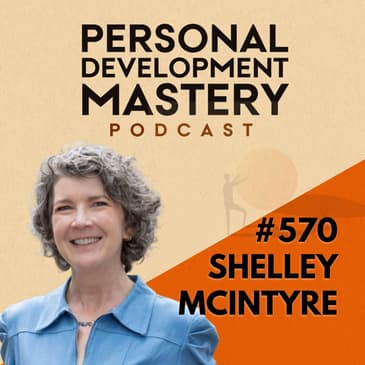
TO WATCH THE CONVERSATION ON YOUTUBE, CLICK HERE.
Are you a midlife professional feeling a growing disconnect between your career success and your personal fulfillment?
Many Generation X professionals reach midlife with impressive achievements, yet silently struggle with a deep sense of dissatisfaction, identity confusion, or the haunting feeling that time is running out to live a truly meaningful life. This episode offers a compassionate, insightful roadmap for those questioning their current career path and seeking a purpose-driven reinvention.
Discover why high performers often feel disconnected at midlife, and what to do when the “mask” you’ve worn at work no longer fits.
Learn practical ways to explore new possibilities through tiny experiments, identity redefinition, and values discovery.
Hear a deeply personal story of transition from corporate leadership to purpose-led coaching, with actionable advice on navigating financial fears, identity loss, and uncertainty.
Listen now to learn how to begin designing a life and career that reflects who you truly are – not just the role you've always played.
˚
KEY POINTS AND TIMESTAMPS:
00:41 - Introducing Shelley McIntyre & the midlife disconnect
03:04 - Masks, midlife reckoning and inner identity
06:53 - Options, evidence and experimenting with possibility
09:17 - Values, meaning and redefining what work must provide
11:18 - Shelley’s personal transition story
16:26 - Practical first steps: finances and portfolio careers
19:33 - Challenges of transition: uncertainty, off-gassing and relationships
24:14 - Identity, masks and rediscovering what you love
30:16 - Professional identity, caring professions and essence work
˚
MEMORABLE QUOTE:
"All knowledge is rumor until it is in the bones."
˚
VALUABLE RESOURCES:
Shelley's website: https://burnthemapcoaching.com/
˚
Coaching with Agi: https://personaldevelopmentmasterypodcast.com/mentor
˚
🎙️ Want to be a guest on the podcast?
Message Agi on PodMatch: https://www.podmatch.com/member/personaldevelopmentmastery
˚
Conversations and insights on career transition, career clarity, career change and career pivots for midlife professionals, including second careers, new ventures, leaving a long-term career with confidence, better decision-making, and creating purposeful, meaningful work.
˚
Career transition and career clarity podcast content for midlife professionals in career transition, navigating a career change, career pivot or second career, starting a new venture or leaving a long-term career.
Discover practical tools for career clarity, confident decision-making, rebuilding self belief and confidence, finding purpose and meaning in work, designing a purposeful, fulfilling next chapter, and creating meaningful work that fits who you are now. Episodes explore personal development and mindset for midlife professionals, including how to manage uncertainty and pressure, overcome fear and self-doubt, clarify your direction, plan your next steps, and turn your experience into a new role, business or vocation that feels aligned.
Agi Keramidas (0:00)
Are you a midlife professional feeling a growing disconnect between your career success and your personal fulfillment? Then this episode is for you. Welcome to Personal Development Mastery, the podcast helping midlife professionals in transition turn uncertainty into clear direction and confident next steps. I'm your host, Agi Keramidas. Join us every Monday for in-depth conversations with experts and every Thursday for shorter solo episodes with insights and tools you can use. This is episode 570. If you are looking to reinvent your career and identity, the following conversation explores how to navigate the messy but meaningful journey of midlife transition with clarity and intention. Keep listening to discover why so many high performance feel disconnected in midlife and learn practical ways to explore new possibilities and design a career that truly fits where you are. Before we start, if you are a midlife professional ready for change, I offer one-to-one coaching to help you get clear on what's next and create a realistic plan forward. As a former dentist who has made this transition myself, I know how challenging this can feel. To explore this, visit personaldevelopmentmasterypodcast.com slash mentor or tap the link in the show notes. Now let's begin. My guest today is Shelly McIntyre. Shelly, you are a certified coach helping generation X professionals reinvent their careers and reclaim their identity. You have worked for decades in consulting and tech and now you guide midlife professionals through the creative and messy sometimes process of living corporate life and designing a purpose-driven path forward. Shelly, welcome to the show. It's a pleasure to speak with you today.
Shelley McIntyre (2:18)
Thanks for having me.
Agi Keramidas (2:20)
I'm looking forward to exploring today with you, navigating a career invention and also the identity shifts that can come with it. What I would like to start with, many high-achieving professionals reach success, especially midlife, and then feel some disconnect or something internal that they can't necessarily name or understand perhaps. Why do you think this is so common nowadays?
Shelley McIntyre (3:04)
I think a lot of professionals started their career by understanding what type of mask they need to put on to get by in the corporate world. So we all have a lot of training understanding the mode to be in. Maybe that's a hard-driving mode. Maybe it's the workaholic mode or the person who always speaks up in meetings or creates political turmoil. Whatever it was, we have adapted to a way of being in the corporate world that served us very well. Then I think as a lot of people hit midlife, they come to a reckoning that they don't have as much time in front of them as they have behind them. Turning 50, for a lot of people, can be that moment of reckoning, like, oh, I don't actually have 50 more years. I need to be more intentional about how I want to spend the rest of my life. That's, I think, the moment where the person below the mask demands to be seen. When that demand happens, it is hard to shut that person up. We can't set them aside anymore because they need our attention and our care. Like a toddler, they're going to throw a fit if they don't get it.
Agi Keramidas (4:46)
This is a great way of describing. Thank you. I will ask, as a continuation of this, I mean, I liked how you mentioned the mask and the person behind the mask that speaks up. As you know, and as I know, many people, regardless, despite that, they still remain in a career that is not, well, I will say it makes them unhappy or they leave them unhappy. Can you tell me why do you think that happens, especially since given what you just said that the voice gets louder and it can't be ignored? But I do believe many people still ignore it and carry on.
Shelley McIntyre (5:39)
Yeah. A lot of people don't have the option or they believe that they don't have the option of going somewhere else. They might have pretty intense financial obligations. They might still be paying for kids to go through college. Their parents might need more care and be aging. This is the sandwich generation that we're talking about. They have a lot of responsibilities. I think if somebody has been a career employee and received that regular paycheck, it's really hard to even imagine what life could be like as a different kind of employee or being self-employed. They might not have the vocabulary for that yet. It's so foreign to them that it's like the devil you know situation where they understand that their souls are rotting from the inside, but they believe that this is the only way to be. Until they have evidence that they can be another way, it's really hard to make a move.
Agi Keramidas (6:53)
How can one get evidence of something that they are not yet?
Shelley McIntyre (7:00)
Yeah. It goes back to one of my favorite proverbs, which is all knowledge is rumor until it is in the bones. We don't believe these theories. If you're a corporate employee, you might be reading articles about following your passion and that you can be a fractional person or you can have your own consulting business. You go, yeah, yeah, yeah, yeah, yeah. It just sounds like a ridiculous theory because you haven't tried it on and allowed it to penetrate your body and your knowledge centers. One thing that people can do is just start to do these tiny experiments. Just maybe talk to somebody who has left and ask them, what is your life like? How do you handle the uncertainty of a lumpy income that isn't steady anymore? What do you do to plan for it? Tell me about your schedule. If you don't have to get up every day at 6.30 and commute and work all day long, what is it like for you? The more you talk to people, the more you are gathering evidence that you might have a different option available to you.
Agi Keramidas (8:28)
That's a very solid piece of advice. Let me stay with this a little bit more. I will, more specifically, let's imagine someone listening right now that are at the crossroads. They have realized what you were saying about the person behind the mask and they are considering, should I stay? Should I go? Should I pivot? Should I do something different? Are there some questions or some perhaps ways that one can start solidify more their decision of what is right for them?
Shelley McIntyre (9:17)
Yeah. One thing that I often talk to clients about is their values and which of their values are being underserved in the current way that their lives are set up. I do a deep values exploration with all of my clients to really understand what motivates them, what drives them, what's meaningful to them in their life. Of course, we all need a sense of achievement and we all want to feel like we're getting recognized for our efforts. All of that stuff matters, but it's probably not what's really driving you. Maybe that's family, maybe it's justice, maybe it's community. There's something deeper under there that we need to discover. It's really tempting for people to try to go quickly to solutions. Okay, if I'm not going to be in this corporate job, what am I going to do instead? I need to make a list of possible jobs. I need to start networking. We need to slow it down because understanding what you're getting out of work, the emotional breadth, the engagement with other people, a sense of purpose and meaning, really healthy relationships you might be receiving from work. You're going to need to build all of that on the outside. So there's a question of whether you need to find a new job that delivers all of that to you or if there's a combination of work and outside activities that can take the pressure off of the job to be your best friend.
Agi Keramidas (11:18)
I will digress for a moment and I want to discuss something from your personal journey. I read that your own transition and reinvention, as you say, it didn't start exiting dramatically. What you were just saying, it started with experiment. You used that word, experimenting. So what did that experiment look like?
Shelley McIntyre (11:48)
Yeah, it was kind of wild. I was working at a boutique consulting firm and I was running the marketing department and trying to explore different ways of just getting the word out. And at the time, there was something called experiential marketing that was really popular. Basically, a brand creates an environment for a person to step into. So it's not like you're looking at an ad on a screen, but you're going to an event that the brand sponsors. So I was like, oh, that seems really interesting. And then I realized pretty quickly that my investigation was more about me and what I was starting to imagine for my own future and less about the company. So I kind of abandoned this experiential marketing because that led me to this immersive theater world. Like, oh, there's this whole other way of doing theater. Let me understand that. And I just kept following my curiosity. And these immersive theater shows that I really enjoyed going to got smaller and smaller and smaller. And until I was going to shows that was just me and one other person. And what I learned from that is that it was being in this meaningful, high stakes conversation that was really opened my eyes to something that I hadn't been getting from my corporate career. Like, oh, I feel very present in this moment. And I believe that my presence matters. I am required to be in this one-on-one experience that we are creating together. And who else is doing these types of high stakes experiences, which led me very quickly into the death care community? Because if we want to have a high stakes conversation, the highest stake conversation is about death. And I met these incredible people and started going to events with kind of death care innovators. And a few of them said, Shelly, we think you need to explore the world of grief because we need more people who are versed in the language of grief because it's everywhere and we're not talking about it enough. So by then I was ready to leave my job. And I did. It happened to coincide with lockdown for COVID the same week. And I very quickly started training to become a grief coach. And that's sort of how the transition happened. Like everybody's transition is very windy and weird. But when you look back, it makes complete sense. You can see exactly how we all got here. So for me to say that my transition began in immersive marketing and ended up in grief makes total sense to me.
Agi Keramidas (15:20)
I will very quickly add to that because you said it was the week before the lockdowns. I started this podcast a month before the lockdown. And I have heard similar stories of people doing something that time, February, March 2020. So I think there was a big, let's say, energy towards doing something that led many of us to a different direction. I will come back to what we were discussing about, you know, the transitions. Let's say someone and I will carry on a kind of a timeline here. Let's say that someone has thought about it, has done their values work, or all the other stuff. And they have decided that it is time for me to change my career, do something different. What are the first practical steps that you recommend one takes?
Shelley McIntyre (16:26)
Yeah, I think looking at your finances is a really important step. A lot of people don't make a move because they are afraid. Even if they have, you know, money in the bank, maybe their financial advisor is saying, go for it, you can handle making a change, we can adjust some things. Maybe they are worried about what their partners will think. But getting that in order and understanding what the options are, is an important first step that can take like this, this thing that might not be the blocker. But we just don't have enough information about it. It can, it can allow us to move forward without this big, scary thing hanging over us. So really understanding where you're at financially, what the options are, if you need to go, you know, if you are going to switch careers, and you'll, you'll still, of course, have to pull in an income, does it have to be the same income as you have been making? Can it be less? What are the options there? So understanding that I think is a really important first step, because that's often the thing that blocks people from making a move. And, and then more, kind of more on the metal level, inquiring about what the job has to do for you? What is the job of work? Does it have to fulfill your financial requirements, plus give you all of your relationships, plus give you your meaning and your purpose, plus your sense of achievement? Does it have to do all of that? Or can we take the pressure off of the job? If it has to fulfill, like, let's say, your sense of emotional engagement, and achievement, because we all need to that, and some relationships, but you can, you have meaning in activities or outside of work. Like, let's say, you can treat this as a portfolio exercise, and run a portfolio career. And this is becoming far more common now where people have multiple revenue streams, where you're going to put together a few activities that make sense, some of which you will be paid for, and some of which you might not, to create this more rounded life, because we don't want to take you out of the frying pan and put you right back into the fire. And just, you know, even if you go out on your own, that you become a workaholic, and you burn yourself out with your solo career. We don't want that either. So let's look at this as a suite of things that you can put together to fulfill all of the stuff that you need at your core.
Agi Keramidas (19:33)
That's great. And let's also talk about challenges that one faces, you know, during the transition. Obviously, uncertainty, I think it goes without saying that it is part of it, no matter how well you plan it, there will be an element of uncertainty. So let's start with that. How do you advise one to deal with that inherent uncertainty? You know, you're going into the unknown, uncertainty is by definition part of it.
Shelley McIntyre (20:13)
Yeah, I mean, it's a totally normal part of it. And and I think where there's a couple things, I think people are really hard on themselves for feeling uncertain, and for pausing. So if you feel the uncertainty, could we maybe not make it worse by punishing ourselves for feeling that just allow the feelings to happen, which is already a challenge for a lot of people. And then I think some people have trouble when they try to act quickly. So let's say they get laid off from a job, which is a really devastating thing for a lot of people. And then right away, they think, okay, I have to start my own company, I think I have this idea, and I need to act on it very quickly. But what what is actually happening is that they are entering this phase that I call the off gassing phase, which can last for about three months after you leave a company or a job. And that is the deep programming time, where your nervous system has to rewire itself, where you are still grappling with, Oh, God, I didn't finish that project, you're still having the dreams that are waking you up in the middle of the night. And you are cognitively impaired. For those first three months, you might feel a little drunk all the time, you have trouble focusing, you start projects, you can't finish them. This is not the time to try to lock into a new mode of productivity. This is the time to like, be gentle with yourself, understand that your whole world internally and externally is changing. And we don't have to rush things. Can you just be in that squishy in between liminal space for a little while, before your body and your heart starts believing that you're not still back there. It needs time to catch up.
Agi Keramidas (22:32)
I like that. And, you know, three months when one says three months, it doesn't seem like a big amount of time. But when you're going through these three months, it feels like it's much longer.
Shelley McIntyre (22:48)
It does. But you know, it's funny, I think people can tend to isolate themselves in that off gassing period, but they don't have to. Because if they could call a friend and say, Hey, I'm feeling kind of loopy. And I don't, I can't put sentences together very well. But, but would you come over and just watch reality TV shows with me, your friend is going to be so excited to do that with you. So, we can have company, we can have partners in that time so that we're not losing our connections because losing the work relationships can be really hard on people. And one thing that can surprise them is that they stop hearing from their work friends. They assume that because they had a close work relationship with somebody that it will continue after they're gone. And a lot of times it does not. And that is a real heartbreak for a lot of people, which means that you really need to start boosting your relationships outside of work that will endure. And you can do that long before you leave your job.
Agi Keramidas (24:14)
Absolutely. Let's talk about one more challenge, which I think is closely related to what we are discussing. And that is identity. So, especially when one has worked a specific career or profession for decades, they very much tend to identify with it. I mean, it is so common when you ask someone they say I am a, in the state profession, so that I am really creates a very strong sense of identity. So, when someone has that over the years, over the decades, and they suddenly realize that they are not that anymore. What are some perhaps strategies or some ways one can start, first of all, disengaging from that previous identity? And second, creating space for the new identity, which perhaps it might not be articulate yet, but creating space for it. I think that's the best way for me to ask the question.
Shelley McIntyre (25:35)
Yeah, really, that is such a common thing where people become identified with the mask that they've had on. And I think the first thing to understand is that all of this has worked well for you. We're not going to make you wrong for having identified with the mask. It's okay. This is why you have achieved so much in your life, that you had this persona. That persona protected you from all sorts of situations. It gave you status. It gave you clout. It gave other people a shorthand to sort of understand you. But they were always understanding this quite arbitrary mask that was hiding you. So we don't want to rip the mask off your face and leave some kind of sensitive skin exposed to the air too quickly. One thing I like to reframe people for is lead with what you like instead of what a corporation has decided that you are. Because you were never that. That VP of product is a ridiculous title that doesn't mean anything or means something different in every company that you go to. But it never reflected the person who loves mountain biking, or being a parent to their six year old, or playing tennis on the weekends. Can you start leading with what you like? And this is another tiny experiment. Let's say you go to a party and somebody says, Agi, what do you do? Instead of saying, I'm a podcaster and a consultant, could you just answer instead with what you really love? Because it's so much more engaging and relationship building to connect with others on things that you love. If you say, I'm a VP of product, it's kind of a conversation stopper. Nobody really knows what that means, and nobody wants to talk about it anyway. How can you get more in touch with what you actually love? When you're burned out, it can be hard to locate what you love. I have clients come to me and say, I don't remember what I like anymore. Everything feels gray. So maybe instead of asking what do you love, we ask what problems in the world frustrate you? In those frustrations is something that you care deeply about. We can go from why isn't this lid working properly down to a core value pretty quickly.
Agi Keramidas (30:16)
And let me ask a bit further into that, because you focused very much on the corporate label. What if it is not a corporate label? For example, for me, I used to be a dentist, so that's not a corporate label and it's not arbitrary as such. Is there any nuance there? Any difference?
Shelley McIntyre (30:41)
Yeah, and I talked to people who are doctors who are also going through that, because in helping professions, it is really an identifier of what you believe is right and good in the world. We don't want to take that away. You are still a helper. That hasn't changed. It was just one way you expressed your care for others. There are many other ways to express that care. You can take away the dentist title, take away the equipment and the patients, and still be in service like your podcast right now.
Agi Keramidas (32:08)
Thank you for this additional comment on this, Shelley. Is there any part of your old corporate identity that still comes up or tries to pull you back? And if so, how do you keep it in check?
Shelley McIntyre (32:36)
Yeah. One thing that still comes up is the idea that my value is predicated on my productivity. I'm still unwinding from that. I am valuable because I am here, not because I perform. That still shows up when I feel like I need to work ten hours a day or else I'm failing. Those are echoes from the old corporate world.
Agi Keramidas (34:01)
Does that also affect self-worth when someone feels they're not producing?
Shelley McIntyre (34:22)
Absolutely. That's why I do an essence exercise with clients, where they gather evidence from people who know them well about who they are at their best. We boil that down into five essence words so they can return to that when self-doubt shows up.
Agi Keramidas (35:38)
Tell me more about distilling that into five words.
Shelley McIntyre (35:43)
People tell stories, and in those stories I'm listening for values like care, organisation, connection, leadership, discernment. We distil those into qualities they lead with at their best, so future decisions can be values-driven.
Agi Keramidas (37:09)
This is so useful. I remember an exercise where I had to list 100 things I'm good at, and I got stuck until I asked other people.
Shelley McIntyre (38:04)
Exactly. Other people see gifts in us that we can't see ourselves. That helps us recognise how unique we really are.
Agi Keramidas (38:38)
This has been a fascinating conversation. Where can people learn more about you and your work?
Shelley McIntyre (39:05)
My website is burnthemapcoaching.com, and you can also find my podcast called Burn the Map.
Agi Keramidas (39:15)
Very quickly, burn the boats or burn the bridges?
Shelley McIntyre (39:29)
Burning bridges destroys relationships. Burn the map means letting go of an outdated path and creating your own.
Agi Keramidas (40:10)
What does personal development mean to you?
Shelley McIntyre (40:22)
Learning yourself, letting go of old coping strategies, and knowing you're never finished.
Agi Keramidas (40:52)
What advice would you give your 18-year-old self?
Shelley McIntyre (41:01)
Don't date him, girl.
Agi Keramidas (41:13)
Thank you very much. This has been very valuable. Any final advice?
Shelley McIntyre (42:10)
You can start building the scaffolding of your next life before you leave the corporate world. You don't have to blow it up all at once.
Agi Keramidas (42:28)
Thank you for listening to this conversation with Shelly McIntyre. I hope it has given you a fresh perspective on letting go of outdated roles and building a life that reflects who you are. Until next time, stand out, don’t fit in.

 5.00 (74 Reviews)