Do you ever catch yourself stuck in the same frustrating patterns, even when you know better and want to change?
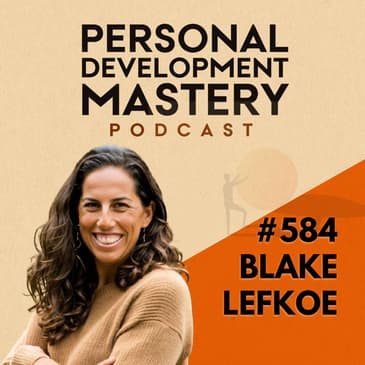
If you’ve ever struggled with self-sabotage, people-pleasing, or fears rooted in past trauma, this episode offers a rare and powerful opportunity: not only do we revisit the transformational Lefkoe Method with certified facilitator and holistic coach Blake Lefkoe, but for the first time, we’re also joined by one of her former clients, Susanna, who courageously shares her personal story and healing journey—live on air.
- Witness a powerful live demonstration of the Lefkoe Method as Susanna clears a limiting belief in real time.
- Hear how she eliminated over 30 deep-rooted beliefs, leading to life-changing breakthroughs in her relationships, emotional resilience, and personal freedom.
- Learn how most people unknowingly live under the influence of subconscious beliefs, and how letting them go transforms how you think, feel, and experience the world.
If you’re ready to move beyond coping and into true transformation, tune in now to experience this rare, real-time emotional shift for yourself.
˚
KEY POINTS AND TIMESTAMPS:
00:00 - Reintroducing Blake and Setting the Intention
02:18 - What the Lefkoe Method Is and How It Works
06:01 - Agi’s Personal Session and Key Realisations
12:23 - Susanna’s Background and Why She Sought Help
15:38 - Core Limiting Beliefs That Were Cleared
21:06 - Life Changes After Eliminating the Beliefs
30:38 - Introducing the Live Method Demonstration
33:03 - Uncovering and Dissolving the “Relationships Are Dangerous” Belief
49:05 - Reflections, Insights, and Closing Thoughts
˚
VALUABLE RESOURCES:
Blake's website: https://www.blakelefkoe.com/
˚
Coaching with Agi: https://personaldevelopmentmasterypodcast.com/mentor
˚
Subscribe to our weekly email: https://personaldevelopmentmasterypodcast.com/email
---
A personal development podcast for midlife professionals, offering mindset tips and practical tools for personal growth, self mastery, personal mastery, and purposeful living. Discover psychology tips for emotional intelligence and growth mindset, including overcoming impostor syndrome and building self mastery.
Personal Development Mastery features personal development interviews and solo episodes empowering professionals, entrepreneurs, and seekers to cultivate self mastery and create a meaningful, fulfilling life aligned with who they truly are.
[Agi]
Today it is my real pleasure to welcome back to the show Blake Lefkoe, who we spoke previously on the podcast. It was about a year ago, Blake. Actually, I wrote it down.
It's episode 456 that we spoke. Coming from the beautiful, exotic Hawaii, you are a holistic health coach and a certified facilitator of the Levko method. First of all, I will say welcome back.
It is really nice to have you again and go further on what we talked about last time, which was limiting beliefs, how they shape our reality and how we can recognize them and change them, which is in a nutshell what we discussed last time. I will stop here for a moment. Welcome back.
[Blake]
Yeah, thanks for having me. It's great to be here. We had an interesting conversation last time and excited to be back.
[Agi]
And the difference perhaps or the next step in today's conversation is that we will demonstrate the Levko method in action rather than talking about it more from a theoretical point of view. We do have one of your previous clients here with us, Susannah, which we will speak with in a few moments. The focus today, and that's how I would like to frame in the beginning of the conversation, is the application of the method and how it can actually change one's trajectory and life.
I would like to start with this. Give us a brief overview for someone who hasn't heard about this before. Give us a brief overview of what you do, what the Levko method is, so we can get a basic understanding first.
[Blake]
Sure. The Lefkoe method is a process. There's actually a few processes, and the primary one eliminates beliefs.
Our beliefs are responsible for our patterns, and our patterns can be behavioral or emotional. Anything from anxiety to procrastination to people-pleasing to overachieving to that negative self-talk, that voice that's always telling you that nothing you do is good enough. Everything that we do, think, and feel is a result of our beliefs.
Oftentimes, people try and find coping mechanisms or a way to try and shift their perspective. I'm going to manage my emotions. I'm going to find a way to breathe through my anger.
What this method does is it actually gets rid of the beliefs that cause the patterns, so the patterns fall away. There's no need to deal with or cope because the issues are gone. It's such a powerful process.
It's so profound. When you eliminate beliefs, they don't come back. There's no integration.
There's no tips and tricks, so I have to remember to switch my perspective. It's like you walk around wearing these sunglasses, and the lenses are the beliefs that you have. That's how you see the world.
That's what shows up for you. That's how you understand things. That's all you see.
When you eliminate those beliefs, it's like taking the glasses off. Now, all of a sudden, you see things differently, different things. You make space for things to show up in your life where there wasn't space for them before.
It not only changes how you see things and how you feel about things, what your reaction and responses are, but it actually creates space for new things to show up in your world. It's an amazing process. I've helped people with every different pattern you can imagine.
This work completely changed my life. My father created this when I was a child, and I grew up in a house with two personal development people as parents and really rebelled against it. I had to go out and live a life that became unsustainable and slightly dysfunctional and find my way back to this process organically.
It wasn't spoon-fed to me. I really had to go do my thing and get to a point where I was like, wow, my life isn't working for me anymore. I'm a single mother.
I'm a bartender. I'm an alcoholic. This isn't what I want to be doing.
Through reconnecting with this process, I completely turned my life around. I got out of the restaurant industry, and I got sober, and I did all the training. Then I started my own practice doing this work.
Having that story enables me to be an even better facilitator because I can really connect with people and be like, yes, I was there. My son's father is this, and I still have to deal with him. Through doing work on myself, I'm able to interact with him in a different way and set different boundaries and have him show up differently because I got rid of all the beliefs that were keeping me engaging.
I've been through the trenches.
[Agi]
Certainly, yes. You walk the walk for sure. I will come to Susannah in a moment.
What I would like to say as a small addition perhaps to this is that I did have the opportunity to have one session with you, Blake, a few months ago. I will share a few things here just as perhaps to give a little bit of context. Blake, afterwards, you can give me if you want your comments on that.
It's been a few months, so it is not as fresh in the memory, but I distinctly remember that the context of what we worked on was my procrastination or self-sabotaging, especially in the outreach to potential clients, which is something, let's say, not very uncommon. When we started working, I remember that some realizations of fear of being judged came up and also the fear of not being good enough or ignored. I think the eventual belief that we came to as what was behind this behavior was I'm not good enough, which is one quite general belief.
What I do remember was some reframing of what some events or it was an event in the past as a child that came to my memory completely. I was not prepared to relive that event, so it just popped up. You helped me reframe it in a way that it was not about me not being enough.
It was about my parents doing what they needed to do to prove themselves to others. That was, in a nutshell, how I remember the process. It was quite, I liked the structure of how it came up and the realization it came to at that time.
I'm not going to go into detail with that, but I wanted to share it as also my own personal experience. I don't know. Before we go to Susanna, who I'm sure she will have much, much more to talk about her experience.
Blake, if you wanted to comment or add anything to that from our experience.
[Blake]
Yeah. Like I was saying earlier, our patterns are created by our beliefs. Eliminating one belief is great.
You go through the process, right? People feel lighter. You're like, oh, wow.
You realize that this thing you held as the truth your whole life is not the truth. It goes away and you're able to start thinking and feeling and acting differently. However, there are typically lots of beliefs behind a given pattern.
It's not like you eliminate one belief and you just stop procrastinating. Although I did have one client who got rid of I'm not good enough and completely changed her whole life. It was amazing.
Typically, the more beliefs you eliminate, the more the pattern dissipates until you get all the beliefs behind it and then there's nothing left to the pattern. So, one belief is cool. It's a really neat thing to experience.
But it takes more work to... And the bigger the pattern, depression and addiction, definitely a lot more beliefs under those where something like fear of public speaking is typically... There's about five or six beliefs most people have.
So, you can handle that in a few sessions. And again, everyone's different. And one of the interesting things is as you start to eliminate beliefs, sometimes people will come in with, I'm really angry and I feel really powerless.
So, you eliminate a few beliefs and then they come back the next week. How was your week? How did you feel?
What changed? And they were like, the anger was gone. But I felt fear.
And it's like you have to go through the layers. Okay, well, what's causing the fear? Well, the fear is I'm not safe.
And the way to be safe is to be in control or whatever those beliefs are. And so, then you clear those beliefs and they come back the next week. And then it's like, oh my gosh, I didn't feel angry and I didn't feel fear.
I was able to stand up for myself and set boundaries and speak my mind. Right? So, it's a lot faster than therapy.
Don't have to sit on my couch for 20 years. But it's going to take more than one session. So, typically when people come, they come for...
I sell sessions in packages of five or 10. I've had clients that have stayed for 20, 30, 40 sessions. But you work on so many patterns.
Right? You clear one pattern. And when you realize how quickly and profoundly this work impacts your lives, people stay.
And the idea is you don't just get to a place where you're sustainable. You get to a place where you're like, what do I want my life to look like? And what's in the way of me having that?
It's not just let's get rid of the anxiety. It's like dreaming into what could my life really be? And what's stopping me?
Right? Who was I before the told me who I should be? And how do I get back to that?
How do I find my authenticity and create a life that's authentic to me? And that's amazing. Right?
So, once you get rid of the patterns that are just keeping you in survival mode, right? Then you take it further. And how do I create this amazing life?
[Agi]
Thank you. And I'm sure that someone watching this or listening to this can certainly relate to what you just said. Now, it is, you know, the authenticity living, what's stopping one living the life they would like to.
So, I would actually like to go to Susanna now and since to get a perspective from the other point of view. So, Susanna, welcome. And thank you for being here.
Let me ask you first, what brought you to Blake? What was the initial reason or reasons?
[Susanna]
So, I was ready for a major breakthrough. And I thought that I wanted to sit through an ayahuasca ceremony to help me through this major breakthrough. I really wanted to recover from a very toxic relationship.
I was going through a very uncomfortable divorce. And I was trying to find myself after being lost in this very toxic dynamic. So, I really wanted to find myself.
I wanted to cut ties with this person who had impacted me for such a long time. And cut ties with, you know, even my own patterns. I really just wanted to change and be done with this old part and be different and find myself.
So, I also have a condition that I needed medication for. I had all of these other medications that I was taking. I wasn't able to sit in on the ayahuasca ceremony.
But Blake said, hey, I do this other therapy where we talk about the beliefs that hold you back. And she just kind of explained it very briefly. And I said, absolutely.
This is exactly what I need. So, please, let's do that. And I have still not sat in on any ayahuasca ceremonies because I don't feel that calling.
Since I've worked with Blake, I haven't felt the desire to have this radical change because I guess it's already happened. So, to me, that was pretty cool. You know, that was really drawing me for a few years.
I thought that's what I needed. And now I don't. So, I'm really glad that, you know, I connected with Blake.
[Agi]
Excellent. And from what I understand, there were quite a few beliefs that you guys cleared. A few dozen beliefs from what you were saying earlier.
Would you like to share with us maybe the main ones that really were holding you back from the kind of life that you wanted? Which, of course, I suppose at that time, you didn't know that they were those beliefs, but you uncovered them while you were working with Blake.
[Susanna]
Yeah, yeah. One is that I'm responsible for other people's emotions. That was a main belief.
And it presented in people pleasing, you know, just kind of losing a lot of myself in my actions by just trying to make everybody else happy because I felt responsible for their happiness and their emotions. That was a major one. People can't be trusted was a huge belief.
And another one was that marriage is forever. And I tell you what, that was so huge because I was, I felt that I was living, I don't know, I was just living a wrong life because I had this huge belief that marriage is forever, even though I filed for divorce and I was going through a divorce and then the divorce was final, but I still had this belief that marriage is forever. And so it was really preventing me from being happy because I wasn't even okay with my choices.
So I was also raised in a very, very restricted kind of cult like religion. And that really impacted my beliefs and they really just set them in stone for my adulthood. So to be able to tackle those beliefs and reframe them and to realize that perfection is a, I don't, I don't need to be perfect and a marriage is not forever in all situations.
Those are just so major for me to be able to move on in my personal life.
[Agi]
I would like you to clarify for us, because I think that's important. Were you aware that you had these beliefs that you are responsible for other people's emotions or that people can't be trusted? Were you aware that there was this set of beliefs running in the background in your day-to-day behavior?
[Susanna]
No, absolutely not. So as I was working with Blake, I would tell her the things that I would do that I would find very frustrating. These are the patterns and behaviors that were, I felt were just super unnatural that they made me feel uncomfortable.
They're draining me. And she would explore those beliefs. Like she would, she would help me get to the bottom of why I would behave this way.
And it was, it was every single time. It was so just mind blowing. I'm like, oh, yeah, you know, that makes sense that I would believe that.
She, she never would, you know, would put it into my mind. If she'd asked questions and it would naturally come up. And I'm like, I guess I do that because X, Y, Z, you know, like it was deep down, you know, in, it was, it was in me.
I just never looked at, you know, why I behave the way I did, why I felt the need to people please and to, you know, just run around crazy, trying to make everybody happy. So yeah, it was not, it was a subconscious belief that this process pulled out. And as I became aware of it, it was so much, it was, I did not have to change my behavior after I realized the belief and after we eliminated the belief, because the belief wasn't there to make me behave that way anymore.
That's really cool.
[Blake]
That's such an amazing explanation. Right? Like, you don't have to force yourself to act differently.
It happens organically, because the things causing the behavior are no longer there. That's the piece. That's what makes this work so different from so many other modalities.
And there's a million amazing modalities out there. Like, you know, do what works for you. But that's one of the things I personally love about this work is there's no, oh, I have to remember to switch my perspective or right, like it's, you just show up differently.
[Agi]
And the reason why I asked whether you were aware, Susanna, is because most people, if not most, many people, but I think most people are unaware of things like that beliefs and patterns that dictate their behavior. I know I've been there with my own realizations. But I think it's important to stress out.
What I also wanted to ask then, as a contrast to what you were saying, can you share with us or give us some examples on how your life has been different in terms of, you know, those particular three beliefs that you mentioned out now that you have, you know, reframe them or change them or eliminate them, if you want. Give us some examples of how things are for you right now, especially with these particular three beliefs.
[Susanna]
Okay, so it's gonna sound silly, but I was in a very, I would say, fragile time in my life. I honestly was afraid to make new friends. So we addressed people can't be trusted.
And I have a very healthy friendship. I've really had a lot of new friendships, which I was really afraid. I was afraid to do that.
I was stuck. I wanted to protect myself. I wanted to keep in this like safe, comfortable zone where it was just me and my kids and my brother, you know, just very small circle.
And now I feel normal, I guess you could say. I, you know, people can approach me. I am not terrified when somebody wants to meet for tea or something.
I'm not kidding. I was that absolutely used to terrify me when somebody would, you know, suggest that we do something on more of just a surface level, I see with the gym high, you know, say hi and move on type of a situation. So now I just I can interact with people and in a normal way without being terrified.
And I don't know how to explain how different that is. Because in that time, I mean, I would, I would just freeze and just not even say not even know how to say no, no, thank you. I you know, like, I'm not, I'm not taking on new friendships at this time.
It was so weird that I would even say something like that. But now yeah, I just I just have healthy friendships and I meet new people and there's no resistance. There's no fear about just, you know, making new any kind of relationship, you know.
So that's, that's, that's one thing. Or the other beliefs, marriage is forever. That was that was also super major.
That was a absolutely limiting belief, because I thought, because I ended my own marriage that I had failed as a person. And it was just really, I guess I just thought I was my life was over, you know, that I had nothing left to give to anybody else, not even to myself, because I made this life ending decision. And I just see things so differently.
Now, I'm able I actually see my ex all the time in the gym. And that used to be such a major trigger for me just to even see him driving down the road. And now I see him and I am able to walk by and have no emotional reaction, no physical reaction whatsoever.
And, and I know that my life isn't over, you know, I still have meaning I have I have meaningful relationships, I have purpose in my life. I'm not terrified of new relationships. Again, that's that was also part that was kind of tied into the whole marriage is forever belief.
So that's, yeah, I feel completely different. I feel like I could be married again in the future. You know, that that was absolutely not on the table before.
It was like one and done. Let's see. What was the other belief that I just I brought up for other people's emotions that people please?
Oh, yes. Yes. Blake, when I when we were working together, I would go to I was trying to kind of put myself out there, I would go to friends get togethers, I would be in the kitchen, you know, just frantically trying to get things ready, you know, help prepare some snacks and treats and put them out there and you know, this hostess at somebody else's party just to keep myself busy.
And because I wanted everybody else to be happy. And, you know, I was stressing myself out. Do it, you know, doing so.
And I have been to so many social situations and gatherings since then, where I am just enjoying myself. I have I'm not even thinking about, oh, I should help. Of course, I'm a helpful person, but I'm not stressing out.
I'm not running back and forth in the in the in the kitchen, trying to do all these things. I'm actually able to enjoy myself in a social situation and just not worry about everybody else. And it's it's wonderful.
And it's also helping with my kids. Yeah, because they're they're young teenagers now. And while I am aware that they have strong emotions now, I am able to just have really great conversations with them about about their feelings.
And we have a safe place so we can talk about our emotions, we can talk about our fears. But I'm not I'm not stressed out about trying to fix them at the same time where I really was before. You know, I was really worried about every emotion that they have.
I'm like, oh, I don't want them to feel this way and I don't want them to be like this. But but now I realize that it's a healthy thing to experience their own emotions. So I feel totally different.
[Agi]
Thank you. And your energy while you were saying all that was, you know, it was quite evident from the the energy you had. So, Blake, I would like to hear a comment for what Susanna said, just to hear your perspective of that.
[Blake]
Yeah, it's it's so like, I'm like sitting here fighting tears because it just it's so amazing. You know, to hear where you're at, and you touched on three beliefs and I counted and we did like 35. So and that doesn't mean we had 35 sessions, just, you know, once you get used to the process, you know, you can you can bang out four or five beliefs in a session.
And just to like just to hear where you're at and the changes is like, it's so amazing. And I'm so happy for you. And I'm so proud of you.
And I'm remembering when you first came to me and the patterns and just the things I have here was like resentment, frustration, anger, you know, you'd see him and you were just in the state of like, anger, but you were so fragile and frustrated. And like there was there was so much fear. And yeah, I'm just was like looking at your early notes.
And so to just see where you are now is just it's amazing. And I'm just so proud of you. It's really nice to be able to hear you speak to all that.
And and I remember this call. You got on and I was like, Tell me about your week. You know, I'm always checking like what what felt different?
What's still there? What sticky? What?
And you were just like, like, everything is like amazing. You're like, I just like I have nothing left to work on. And of course, you go back into life and you know, little things pop up.
But but when you change the like, no, I'm not worthy and I'm not safe and I'm not important and I'm not deserving and mistakes and failures are bad. And, you know, even stuff about money, right stuff about love, and just all these things that produce all these patterns, you're able to face the things that that do pop up so differently. You know?
So it's just really beautiful to hear where you're at. And and it was it was like, was so exciting for you that day to be like, be free, my love. You know, and, and, and also to be like, Oh, my God, I'm gonna just miss this time together.
[Blake]
You know, because I do I like I fall in love with my clients. It's like it's such a special bond, you know, and like, I'm your cheerleader in your corner forever. Like, I love hearing from people, you know, we still text and so yeah, it was just it was beautiful to hear and to see your energy and how different it is and just how grounded and centered you are and how comfortable you are in your own skin and to hear that you're able to just show up for your kids and yourself and that you can see your ex at the gym, like you couldn't even see him drive by before. So that's amazing and that you can enjoy yourself at parties and you have new friendships and like, that's just that's incredible. So thank you for sharing all that.
Absolutely. Thank you.
[Agi]
I think this is the perfect time since we've been talking about this to to do a mini demonstration, if you want, of the how the actual method works. So Blake, do you want to explain how this would work so that the listener can also get an understanding of any or a shortened version, let's say, of how this works.
[Blake]
So I'm going to just take Susanna through the process like we've done in the past. And we haven't talked before this, so I don't know what we're going to work on. But basically how, how it works.
When you, you know, you have your first session, we, we look at the patterns and what are the beliefs under the pattern. And then a second or any session after would look kind of like this, right? So you told me all the changes, all the positive changes.
And then, you know, so what's still there, what's still sticky, what's not working for you? Something that just came up last night. I have two very good friends who are in new relationships.
And when they're explaining their new relationships to me, it sounded wonderful. Like there was a really obvious, meaningful connection that they're making. And my first instinct was to cry.
It was, it was fear. It was like worry for them. Like, are they being tricked?
My, my, my, my good friend, she was saying that this person, her, her interest in her new, new love interest is working through a lot of personal issues, you know? And I was like, are you looking to fix him? Are you trying to fix him?
And you're going to take on this new project that's going to drain you, you know, like all of the, I just, it was fear. It was, it was just fear. And of course I am excited for her and happy for them to be in this new, apparently healthy relationship.
But like my first instinct is like, my throat closed up and I was like, is this okay? So yeah. So just for a second, close your eyes and see if you can get in touch with that fear.
And then when you find the fear, find like, you know, you said it was in your throat, right? So find where it is in your body. And just for a minute, turn the volume up on it, make it really loud and big.
And if that fear could talk, what would it say? What are the thoughts in that fear? It's scary to take a chance.
[Susanna]
It's, it's scary to put yourself out there. This might be a waste of time and it could hurt.
[Blake]
I can get hurt. And what do you think somebody might have to believe to hear about a friend being in a relationship and to feel it's scary to take a chance and it's scary to put yourself out there and this could be a waste of time and they could get hurt or I could get hurt. You think somebody might believe to feel that?
That maybe new relationships aren't safe. Say, say relationships are dangerous. Relationships are dangerous.
I feel that. So this is an interesting part of this whole process. She will have me say a belief and sometimes when I say it, it's like, that seems, I have no connection with it.
There's no connection to the belief, but when I say it, I can feel a connection. Like that feels really true. Sometimes I can't even get it out of my mouth without crying because it feels so real.
So that's how she helps me identify the beliefs that I actually have. Okay. Sorry, Blake.
Go ahead.
[Susanna]
Thank you.
[Blake]
Okay. And when you say relationships are dangerous, like I could see it, there was tears. There was like fear.
Can you, is there anywhere specific in your body that you feel it? It's, um, it's interesting. Cause I'm sitting here like Indian style and I'm like, I'm holding my feet really hard.
Yeah. So I don't know. I'm trying to comfort myself about this.
Okay. So it's uncomfortable. Um, yeah.
And what's the earliest you remember feeling that relationships are dangerous? You think are some of the sources that led to that belief watching my parents? What did that look like?
Their relationship seemed volatile. Um, yeah, I saw lots of highs and lows, lots of dramatic exits, you know, um, lots of time and emotions invested and they still, and they still broke up eventually. And I'm going to do something that I normally wouldn't because this is a live podcast because I worked with Susanna and I know a lot of the details about this relationship and what it looked like.
I'm going to not go into that in a session with somebody I would, but because we're on air and I already know this information, I'm going to not ask her to give me all the details because I already know. So does it make sense that growing up in a house with parents who had a really volatile relationship, lots of highs and lows, lots of dramatic exits, right? There was, there was a lot of toxicity in that house that you grew up in, right?
A lot of, um, yeah, like you said, volatility, right? They put lots of time, there's all these emotions and they still broke up after all that. It still didn't work.
Does it make sense that as a young child, you would conclude relationships are dangerous? Yeah. And that any child growing up experiencing those events would probably conclude the same thing.
It's a very logical belief to come to. Yeah. What are some other ways that we could describe these events?
Some alternative interpretation. I mean, my parents are complicated. Um, not, not all relationships are going to look that way.
Yeah. So my relationship was dangerous, but that doesn't mean all relationships are dangerous. They, yeah.
My parents were not emotionally mature and didn't really know how to handle how to grow with each other. They, you know, they, they really did it. So, so that they just knew how to argue.
Great. So another interpretation is my parents weren't emotionally mature and they didn't know how to grow together. They only knew how to argue, but that doesn't mean that relationships are dangerous.
Kind of like a, a take on the last one, right? Maybe relationships of emotionally immature people are dangerous, but that doesn't mean relationships between two emotionally healthy people are dangerous. Right?
Yeah, totally. Anything else? Any other ways we could other ways we could describe those?
Was it actually dangerous or did it feel scary as a child? It felt, it felt scary. Yeah.
But was there a dangerous, did they both survive it? They did. Yeah, they did.
So I guess, so I guess it really wasn't necessarily dangerous. It just felt that way because your survival was dependent upon these two people. Yeah.
And so when they weren't getting along, it felt scary because your survival, but for them, there was no danger. It might not have been healthy or comfortable, but it wasn't dangerous. Is that a possible interpretation?
Absolutely. Yeah. And if we can come up with all these other ways to describe these events is what you said, relationships are dangerous.
Is that the truth or just one possible interpretation of those events? It's just one possible interpretation. Yeah.
And remember being a kid, doesn't it seem like you can almost see relationships are dangerous. Like there's examples of it everywhere. Mom yelling and dad throwing things and somebody leaving silent treatment and highs and lows volatility.
Yeah. Yeah. And if we go back in time and we're standing in your house and we're in your kitchen and we see your mom, we see what she's wearing.
I can see the refrigerator, the table, the curtains, right? We can see all these things and I can see your dad and I can hear them yelling. Where in that event is relationships are dangerous.
You can't see it. It's not there. And if we go to every event in your childhood, can we see relationships are dangerous anywhere out in the world?
No. And if we can't see it out in the world, where has it been for all these years? This is my favorite part in my mind.
And those events had consequences, right? And the consequences of those events were not pleasant. Yeah.
We'll never invalidate how hard the consequences of an event are. Right. Right.
Not fun to grow up in a house like that. But separate from the consequences, what does it mean that those events happened? What do I now know for sure about anything in any situation with any person anywhere for the rest of time?
What does it mean that those events happened? Nothing. Yeah.
Yeah. So those events don't mean anything. They had shitty consequences, but they don't mean anything.
And those events don't mean anything. Can a meaningless event make you feel anything? No.
Yeah. So what caused the feeling? The significance that I put on those events?
Yeah. Yeah. The interpretation, the meaning you gave.
Yeah. Right. So the meaning that you gave those events cause the feeling not events themselves.
And to make this real, imagine that when you were little, you had an auntie Blake who lived next door. She was just kind of this fun, hippie auntie, always had cookies in the oven and arts and crafts. And you'd go over there all the time and you went over and you were like, Oh my God, my parents were fighting again.
And my dad was giving my mom the silent treatment. She threw things at him. And, you know, auntie Blake said, you know, Susanna, your parents aren't very emotionally mature.
They don't know how to grow together. They lack communication skills. They only know how to argue.
They don't know what a healthy relationship looks like. And they both have so much unresolved emotional issues and baggage that, that they just know how to fight, but there's lots of different kinds of relationships and people that are emotionally healthy and willing to work on themselves and have good communication skills. It can be an amazing relationships.
There's all different kinds of relationships. It just depends on where you are and where that person is, what kind of communication you have and what boundaries you set up. But every relationship is different.
You know, you're like, Oh, that's interesting. I've never thought about that. And then you go home that night and your parents are arguing and things are getting thrown and silent treatment and door slamming.
And you go, Oh, they're not emotionally mature. They don't know how to communicate. They don't know how to handle their emotions.
And as you give this same event, this new interpretation, how does the feeling shift? I just, I just feel lighter about it. You know, it's like not a lot of pressure.
Yeah. That's a very different feeling than relationships are dangerous. Yeah.
Yeah. So just because you felt relationships are dangerous, that doesn't prove the belief is true. Right.
Often we're like, I felt it. So it had to be true. But the reason you felt it was because that was the meaning you gave to that event.
If you had given those events a different meaning, they would have produced a different feeling. Yeah. And if you had given those events a different meaning as a child, would you have ever felt relationships are dangerous?
I don't think so. Yeah. Yeah.
And if you hadn't, then would you have any reason to feel it today? No. Yeah.
And imagine that you were switched at birth and everything about you is the same, same person, same like, same wants, same needs, same everything. And you grow up in a house with two emotionally mature parents who communicated really well and had a beautiful marriage. And as you grow up experiencing these events, does it still feel like relationships are dangerous?
No. But if that was a fact, if that was the truth, that would be true anywhere. Right.
Change facts, right? Things are true. They're true.
Two plus two is four. It doesn't matter where put it, what house we put it in what color, what language and the water on the moon, it's still the same. But we can put you in a different event.
And this belief is no longer the truth. Let it be a fact. No.
Yeah. Yeah. No.
Take a deep breath and say relationships are dangerous. Relationships are dangerous. That felt like nothing.
I felt like no connection to that statement whatsoever. Amazing. Awesome.
Yeah. All right. There's one more little piece here.
This is like the cherry on top, right? So is it real to you, Susanna that you create your beliefs? Yes.
And is it real to you that your beliefs create your life? Yeah. If you create the beliefs that create your life, what does that make you a creator?
Yeah. And typically we go through our lives like who we are is our beliefs, and the emotions, behaviors, and thoughts that come from them. Right?
But you just eliminated a belief. Are you still here? Yes.
We can't be the sum total of our beliefs. We have to be the creator of our beliefs, right? There had to be an eye before there could be an I'm not worthy.
[Susanna]
Right?
[Blake]
There had to be an interpreter before there could be an interpretation. Right? When we're born, we come into this world like a sculptor with a ball of clay.
We go a little bit of I'm not good enough. And a little bit of life is hard and a little bit of relationships are dangerous and a little bit of I'm not worthy and a little bit of right. And then we start going through life like who we are is the sculpture.
And we forget that who we really are is the sculptor. We forget that we are the creator of the beliefs that create our lives. Right?
Yeah. When we come into this world, we're like a little ball of consciousness. And before we make any distinctions about ourselves, people, life, relationships, money, do any exist?
No. Yeah. And in this place, realizing that who you are is the creator of the beliefs that create your life.
And in this moment of no distinctions, not two minutes from now, not two minutes ago. But in this moment, realizing that who you are is the creator of your life. What's possible in this moment?
Everything, anything. Yeah. And in this moment, as the creator of your life, what limitations do you have?
None. And in this moment, as the creator of the beliefs that create your life, what's missing? Is anything missing?
Yeah. So close your eyes. And what's it feel like to be the creator of your life?
Hopeful, exciting. There's opportunities. Yeah.
Just like lots of possibilities.
[Susanna]
Amazing.
[Blake]
Thank you. Fantastic. Thank you so much for doing this live on air.
[Agi]
Yeah. Let me say thank you both for this, because I think it speaks for itself. So anyone, you know, following this, what has just happened can get an understanding of, you know, how powerful it is.
And from my point of view, I will only highlight perhaps in my own words, two or three points that I think were important. The first one was Susanna, when earlier on you said that you were unaware that there were these beliefs. So I'm just repeating that because it is so often the case.
We don't know that there are these scripts, shall we say, running the show before we bring them into light. The other thing that I highlighted, and it was from what you were saying, it was the language that you used to describe, you said that the relationships are dangerous. Where afterwards you realize that they are not dangerous as such, but the word dangerous, the language carried on.
And I'm saying that as a reminder that we often speak to ourselves or to others in with some certain ways. And we incorporate some language that does not represent the truth or the reality. So it has stuck with us.
So it was very insightful to hear your realization that it wasn't dangerous, actually. It was scary, yes, but not dangerous. And the other, the last thing that I will mention as my you know, I could carry on and reflect on much more, but I will keep it concise.
It was the new interpretation of what it meant. And you know that, I can call it internal shift that you described, like something changed internally, which again, I believe, and I also experienced that when I had the session we did with Blake, that kind of lightness or something, you know, feeling differently inside. So, of course, thank you for also doing that live here.
I appreciate it very much. Blake, I think it's a good time to start wrapping things up. This has been the intention was from the very beginning to give something, a demonstration, something practical rather than, you know, describing a method.
And I think from my point of view that the intention has been accomplished.
[Blake]
So, yeah, thanks for giving us a platform to do this. You know, it's one thing to hear about something, but it's another to really kind of almost experience it, you know, to see what that looks like and to hear that the shifts that somebody's had doing this is a lot more powerful, you know, really speaks to, so yeah, just how, you know, profound the changes that this work can bring about. So, yeah, thank you for this.
Thank you both. This was really fun.
[Agi]
What I'd like to, you know, close with one, first of all, Blake, I would like to ask you to direct the listener of this conversation to where they can find out more about your work. That's the one thing.
[Blake]
Yeah. My website is blakelefko.com, and my email is the same, blakelefko at gmail. On my website, the only thing you can read some stuff, but the only call to action there is to book a free 20 minute discovery call.
And you can tell me what you're going through, any concerns you have, any questions you have. It's just time for you. I can tell you how I can help you.
But if you want to know more, or you want to talk to me, shoot me an email or book a free discovery call from the website. Yeah.
[Agi]
Thank you. And for me, what, you know, my little conclusion of this, I will use a phrase that you used, Blake. And actually, I remember you used it also in our first conversation we had last year.
And I think it's a great reminder for everyone. And I will leave us with this, that we think or that we are the actual sculpture, if we, you know, use that metaphor of our life, whereas we are, in fact, the sculptor of that. So, I would leave that as a reminder for us that we are responsible for what happened.
We are creating, better word than responsible, we are creating our life. The sculpture that we see is our own creation. So, that's how I like very much this phrase and this reminder.
So, that's from me, my conclusions, I would say, or my last words. Your takeaway. So, thank you very much, both of you.
[Blake]
Yeah, thank you. It's nice to realize because so often we feel like we're the victim, right? Things are happening to us and it's not our fault because this is happening and my boss sucks and my kids don't listen and this, right?
But when you change, because we can't change other people, but we can change ourselves. And through changing ourselves, your life will change. Don't have to be a victim to it.
You have more power than you ever know.

 5.00 (74 Reviews)