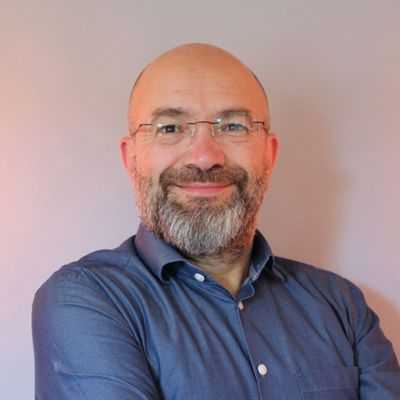
Pat Quinn is a presentation coach who helps people tell their story so they can increase their impact. He has been entertaining, inspiring, and educating audiences for over 30 years, and in different capacities. As a professional speaker he has keynoted the biggest conferences and spoken to audiences around the world, and as a speaking coach he have worked with some of the best speakers, from Olympic athletes to New York Times bestselling authors.
𝗞𝗲𝘆 𝘁𝗮𝗸𝗲𝗮𝘄𝗮𝘆𝘀:
* The importance of storytelling in your growing your business
* The 3 things that make a great story
* Pat's storytelling model: how to tell any story in 2.5 minutes
* Speaking in your customer’s language - not in the expert’s language
* The 2 most important stories you need to work on
𝗩𝗮𝗹𝘂𝗮𝗯𝗹𝗲 𝗿𝗲𝘀𝗼𝘂𝗿𝗰𝗲𝘀:
Website: https://storylinq.com/
Get a free 30-day trial of StoryLinq.com by using the discount code STORY as you register.
Facebook: www.facebook.com/patquinnspeakingcoach/
𝗠𝗲𝗺𝗼𝗿𝗮𝗯𝗹𝗲 𝗾𝘂𝗼𝘁𝗲:
"Stop putting things off for the future... and just start enjoying it along the way."
-Pat Quinn
𝗔𝗯𝗼𝘂𝘁 𝘁𝗵𝗲 𝗵𝗼𝘀𝘁:
I am Agi Keramidas, a knowledge broker and zealous podcaster. I am a firm believer in the power of self-education and personal development in radically improving one's life.
Do you want to gain access to exclusive content, support my podcast, and become part of my inner circle? Then become my patron: http://bit.ly/pdmpat
Join my Facebook group for personal development, inspiration, and actionable knowledge: https://bit.ly/pdmgroup
#PersonalDevelopmentMastery
EPISODE TRANSCRIPT
0:05
Welcome to the personal development mastery podcast. I'm Agi Keramidas. And my mission is to inspire you to rise up, grow, stand out and take action towards the next level of your life. I interview leaders influencers, entrepreneurs, authors, exceptional people who can and will inspire you to improve your life, Jr for two episodes each week, and make sure you subscribe to the podcast to get the episodes as soon as they are released. In today's show, it is an absolute pleasure to speak with Pat Quinn. But you are a presentation coach who helps people tell their stories so they can increase their impact. You have been entertaining, inspiring and educating audiences for over 30 years and in different capacities. As a professional speaker, you have keynoted the biggest conferences and spoken to audiences around the world. And as a speaking coach, you have worked with some of the best speakers from Olympic athletes to New York Times bestselling authors. But I'm delighted and privileged to have you on the show today.
1:18
It's a pleasure to be here. Thanks for the invitation.
1:20
It's my real pleasure. And I will quickly share how I came across you in the first place. It was last year at the knowledge broker World Summit event that was organised by Tony Robinson thing, grandchildren, you were one of the speakers there. And I was very much impressed by your presentation. So it's a real pleasure to be able to have this one to one conversation with you today.
1:45
Oh, I appreciate it.
1:48
I would like to start. But I was reading through your story. I see three distinctive parts in your path. So early in your career, you were a professional magician. And then you were teaching and then the evolution of all that into the speaker and the who you are. And so tell me what what do you need? Andy? Is each of those parts giving you in all that? How does it all blend in?
2:20
Yeah, I think everybody's story contains things that are meant to prepare you for the future. I didn't get my start as a professional speaker, I got my start as a professional magician, as you mentioned, and I worked magic professionally for 10 years. During that time, I learned how to direct an audience's attention how to a little bit of stagecraft, you might say, at some point, I realised I needed to get a real job. So I became a public school teacher, and taught high school math for 12 years. During that time, I picked up an advanced degree in how adults learn. And so along with the stagecraft, for my years of doing magic, I also bring along a real understanding of how the person that you're communicating to. And today we're all about communication, we're about telling your story, sometimes you'll do that one on one to a single person, sometimes you'll do to a group of people at a dinner table, at a conference at a workshop on a webinar, on a Facebook Live, whether you're communicating to one person or a number of people, how does the listener here the information, learn the information, remember the information, I'm hyper focused on your audience, because I want your audience to go further with you to spend more time with you to take the next step with you whatever that next step is. And so I want to know how that person is listening. And when you put those two together, how do you direct the audience's attention and and know, you know, know how to make sure they're paying attention? And then how do you recognise how they're learning it, hearing it, and remembering it. Those two things together really help us I'm helping people with their presentations, and even with their conversations. Some think Shakespeare said All the world's a stage and that's really the world that we're living in right now. Every every time you have a chance to talk to someone, whether that's on the telephone, on zoom, at the sideline of your kids soccer field, or you know, across the table at Starbucks, that's a stage that's an opportunity to communicate your story, the story of your past and the story of your future. And I've been fortunate over the last 10 years to work with some of the greatest speakers in the world. I coach daymond john and some of the sharks from Shark Tank. I coach Tony Robbins and Dean grassy OC on their KBB project, which is how you and I met I coach, Grant Cardone and Michael Hyatt and household names that everybody's heard. But most of the people that I work with are not professional speakers. Most of the people that I work with, wouldn't even consider themselves speakers. Most of the people that I work with, have a business, work for a business, maybe work for a nonprofit or have a message inside them. And they're trying to create change, change and others change in themselves. And I believe The story that you tell is going to be the greatest tool that you have when it comes to creating that change. And so every day I help people just like everybody who's listening today, create change in themselves and create change and others by changing the stories that we tell. Thank you, you
5:17
already kind of answered my next question, which was, you know, the importance of storytelling and, you know, many times we focus on, especially in podcast, sometimes we focus on the business element of things. So with your story, you can attract more business customers. And I'm happy to discuss that a little bit later on. But what caught me even more was what you said about making an impact by sharing your story, or making a connection?
5:50
Well, I believe when told correctly, your story is the greatest marketing tool that you have. It's the greatest tool to create change that you have. And it's the greatest tool to create impact that you have. I mean, telling your story is everything that facts are overrated. facts, create arguments, people think, oh, if I give him more facts that'll convince them know what that'll do is create an argument. What will convince them is telling a great story, you know, that this century will be the century where the storyteller rises as the person who has the greatest influence and the greatest impact on the lives of others. And so we want to make sure not only when we're trying to create change, and others, but when we're trying to create change in ourselves, that we're telling the right stories, and we're telling them the right way. Because a lot of people have a great story, they don't realise it. They're telling it the wrong way, or they don't even realise what the story is. And because of that they're not having the influence and the impact on the lives of others that they could be having.
6:55
What makes it good story, then I remember you were saying somewhere that the normalness of your stories is what makes the story exception. And so I'm asking that because I'm sure you've seen that many times people saying, but my story is nothing special. What What can I tell about my story?
7:18
Yeah, there's three things that make a great story. The best stories are ordinary stories, not extraordinary stories, not. So everybody sometimes will watch a great speaker and think I don't have a story like that. All right, you know, I gotta make something up, I gotta add some fake things to my story to make it more while. Here's what I want everybody listening to this to know, your story is enough. Your story as you have lived it, as you have experienced it is enough, and it will influence the lives of other people. Look, I coach, someone who's climbed to the top of Mount Everest, I coach two different people who've been in space, I actually coach to different astronauts. And when they tell their stories, how many other people can relate to that, know what the other ones who've done it. I coach other people who have much more ordinary stories, I coach somebody who talks about their dog running away and the struggle to find their dog go to someone who tells about arguing with their spouse about whether the toilet paper should come out over the top of the roll or under the bottom of the roll. And when they tell that story, how many people can relate to everybody in the room? What if we judge the stories that we told not based on how many people came up to us afterwards and said, Wow, that was an amazing story. What if instead, we judge the stories that we told based on how many people came up to us afterwards and said, that same thing happened to me, that's your most powerful story. If you have a one in a million story, you're gonna help one in a million people. If you have a one in every household story, you're going to help an impact the lives of a lot of people. So I want you to stop thinking I don't have a story that's good enough, or I can't do this. My story isn't like someone else's story. Ordinary stories are the very best stories. So the first thing we want to think about when we're thinking about our story, we want an ordinary story. Second thing that great stories have in common is that they're short, doesn't take a long time to tell a story. If it takes you 20 minutes to tell your story. You're telling it wrong. And nobody's gonna be around for the end of it. But I want you to be able to tell a story in two and a half minutes. Two and a half minutes is the longest it should take to tell a story. And if you want me to go deeper into that I can go deeper into that but great stories are told quickly not gets the maximum audience and the maximum impact for him. So great stories are ordinary. great stories are short. And the third thing, great stories are told. great stories are kept inside. There's so many People who have a story to tell, but they won't tell it because it's not ready yet. It's not perfect. It's not over yet, stop waiting for it to be ready for it to be perfect for it to be over. Because if you wait for that, it'll never be told your story doesn't help others. And it doesn't help you, if you keep it inside, you have to tell your story. If you hear a really good storyteller, if you hear a really good speaker, and you're like, wow, I could never do it like that, I can almost guarantee you, that is not the first time they have told that story. It is probably about the 100th time, if you hear a really good speaker, it's probably about a 100th time that they've told that story. They couldn't have gotten there, if they waited until it was perfect. If you're waiting for your story to be perfect before you tell it, you will never tell it. You have to have the ones that are ugly, the ones that are terrible, the ones that are messed up in the beginning. So you can get to the 100th time. So people can say wow, that's an amazing story. But you can't, nobody starts there. And so great stories are ordinary, great stories are short, and great stories are actually told, not kept inside. If you keep those three things in mind, you're going to have great stories to tell, and you're going to tell them off.
11:15
That's an awesome summary of that. And especially in like the third part, because it is done is better than perfect. It's
11:27
exactly and people aren't gonna you can't help others if you keep it inside yourself. The number one reason why people aren't telling their stories is because it's not perfect yet. And you just you're missing the idea that the person who you see who's telling a perfect story, they weren't perfect the first time they told it either, but they did it anyway, you know, I coach a lot of speaking contests. And the difference between the winner in a speaking contest and the loser in the speaking contest is that the winner recorded their video and sent it in. And the loser recorded their video and didn't like it. So they didn't send it in. Let me tell you something the winner didn't like their video, either. They sent it anyway. That's the difference between winners and losers and speaking contest, it's the submit button. And if you wait until you like your video, you'll never submit it to anyone, you'll never send it off to anyone. Nobody likes their own videos. That's the way we're created. That's kind of human nature. But that video that you don't like that story that isn't perfect. That's the one that's going to impact the lives of most people. And by the way, there's a new book out called the messengers by Steven Martin right now. And it talks about how the fact that if your story is too perfect, it doesn't actually help people. If you can up in your pristine perfect and you make no mistakes, and you don't say I'm or, or ever look at notes or ever have any flaws. Nobody wants to work with you. You feel guilty all the time hanging out with you who wants to be friends with that person. I make mistakes I say I'm I say I forget what I'm saying in the middle of sentences, I look at notes, sometimes. That's ordinary. That's what everybody does. And when you do that you connect, you reach people, you help people. So I don't think perfect is your goal in the first place, I think real and authentic and vulnerable. Those are your goals. And there's a lot of research to support that including the research in the book, the messengers, by Steven Martin.
13:28
I can certainly relate to to that. Doing it and not really going for the perfectionist. I had this conversation the other day about someone telling me don't you cut off the arms and arms from your podcast? Or when you edit it? I said no and ever do that. What's what, and I really understood it would sound very too much perfect. I'll use it in quotation marks, because naturally I will you know what I just did right now, it's my natural way of speaking. If I thought all of that it wouldn't be it, it would be a very much highly polished version of it, which is not real.
14:13
And that's, that's that's what makes it so good. Everybody talks like that. And there's a reason we talk like that. From a brain research standpoint, when you're listening to someone who makes no mistakes, and they're speaking out who has edited out those little pauses that you do as you're trying to retrieve the right word or, or think about what you want to say next. The human brain can't process perfect speech. It comes too fast. There's no gaps. Hmm. The reason that As humans, we stop it or like, and then it kind of went like this. The reason we have that pause built in is because we're leaving space for the other person to process the story. I always tell people, you know when they're telling a story, and maybe it's a sad story and in the middle They have to stop and take a breath and collect themselves. That's not bad. That's giving the audience time to process the sadness of the story. You know, I coach a bunch of people who talk about a tragedy in their lives or a traumatic moment in their lives, they've been dealing with that trauma for 20 years, the audience is hearing it for the very first time. If you just read through it, with no breaks, and no breathing, and no time to collect yourself, the audience can't come along on that ride, the audience can't emotionally experienced that story with you. He didn't give them time to do that. But when a speaker stops, even to get a drink of water, what a speaker stops to collect themselves, to take a breath to swallow. That gives the audience time to emotionally feel what you felt 20 years ago, and now they're emotionally attached to you and they're coming along for the ride, it makes all the difference in the world. So the reason we have those flaws in our speech, is because speech doesn't work without those pauses. And if you cut them all out to make yourself perfect, you actually hurt the communication process, because the human brain can't process a story that doesn't have gaps and pauses. And our brain just doesn't work that way.
16:19
This is awesome. Because now you've given me an extra, you know, justification, I thought it was a matter of just authenticity. But it's much much more than that. So appreciate that.
16:29
It is authentic, but it's it's authentic and built into the human experience for a reason. Otherwise, we wouldn't understand each other and connect each other as well. Now you've got an excuse every time you do it, you can just be like, I don't worry about that. I'm giving the audience time to process I
16:42
will I will certainly do. But Sal will go back from those three things you said earlier about what makes a great speed through it was the second one, which was the short, and you said about the two and a half minutes to share your story. And that's actually something I was planning on asking you about, because you mentioned it in your presentation in the KBB. event. And I was very impressed with it. It's and I know and I'm sure many of us know people who just start saying something and then they get lost along the way. And they forget what they started. So if you would like to share that with with us, that would be fantastic.
17:29
Well, I'm a believer that great stories are short, and I don't think any story should take more than two and a half minutes to tell. And so I have a model of how to tell any story in two and a half minutes that I can teach you right now it takes about two and a half minutes for me to teach it as you might expect. And so a great story comes in three parts. Every story you should think about is having three parts. The first part of the story is what we call the before, what was your life like before what was happening before and you get 60 seconds to tell us what your life was like before. And even the best stories, you kind of break it down into three distinct things that were happening before three distinct characteristics of what your life was like before. And so you spend 60 seconds talking to us about that. Then the second section is the pivot. The pivot is when the story changes, the pivot is when something happens that changes the direction of the story. And you get 30 seconds to describe to us what happened What changed? What was the event? What did you learn? What did you discover? What did you invent? What happened? What was the pivot? Which brings us to the third and final part of the story, the first parts of the before, then there's a pivot. And the third part is the Astor, or the now what's your life like now? What what what, you know, what is your life like after the pivot, and then the best stories, there would be three characteristics of what your life is like now. And in the very best stories, those three characters would match up, but be the opposite of the characteristics that you talked about before. And so let me show you an example of what this might look like. You know, for years, I struggled with my weight, and I kept gaining weight and I tried everything I could to lose it but I just snack so much. Every afternoon, I would just be so hungry between three o'clock and four o'clock in the afternoon, I can consume about 2000 calories just walking through the kitchen, grabbing different snacks, and I'd have no energy in the afternoon. I don't just want to take a nap. I wouldn't want to move around or do anything. That's how my life was for years. So that's a great before to great before because in 60 seconds, I painted a picture of what my life looks like. I was struggling with my weight. I was snacking too much and I was low on energy, three characteristics. Then, my sister introduced me to overnight oats. I don't know if you know what overnight oats are. They're oatmeal that you just kind of make in the refrigerator and you Don't have to cook it, I grew up eating oatmeal and I didn't like it. It was mushy and warm. And I didn't like it but and I said that to my sister, I said, I don't like oatmeal. She said, This isn't like oatmeal. This is overnight oats, it's totally different, and it will change everything. Well, I didn't believe her, but I tried it anyway. And for the last three months, I've been having overnight oats for breakfast and for lunch. And I'm just eating a reasonable dinner, and it has changed everything. Now instead of struggling with my weight now. So that's the pivot 30 seconds. Now we're into the after. Now watch how I match up the three characteristics and the after, with the three characteristics and the before. Now instead of struggling with my weight, in the last three months, I've lost two and a half pounds. Now instead of snacking every afternoon, I'm full from lunch all the way through to dinner. And sometimes I'm not even hungry enough to eat a big dinner and my energy level, solid throughout the whole day, I have good energy all afternoon. And there it is in two and a half minutes, a 62nd before a 32nd pivot. And then a 62nd after and by the way, look at that after that after, isn't it extraordinary after, I didn't say I've lost 55 pounds in three months. So the last two and a half pounds, it's like less than a pound a month, I'm not breaking any records here. I didn't say that, you know, I never snack I'd say I don't snack in the afternoon anymore. And I didn't say that I ran a Boston Marathon or anything I just said I have some energy. I'm not, you don't have to have the back end of your story be this monster. Now I'm the greatest in the world. I made some incremental product progress on some things that I was struggling with. And here's the deal in two and a half minutes. That's the story. And if the first part of the story looks like the person you're speaking to, if what I'm talking about struggling with weight, snacking, too much low energy, if that's connecting with the audience, and you'll know right away if it's connecting with the audience, because the audience will be nodding and leaning in to a simple simple sign when you're connecting on the language with the audience. When you're saying things that the audience was thinking they will unconsciously nod and lean into you. It works online as well as it works in the same room with someone by the way. So if you're on zoom, or you're on a webinar, and you can see the people look to see if they're nodding and leaning in, if you're at the Starbucks or somebody or you're at a conference speaking to 100 people look to see if the audience is nodding and leaning. And that's how you know you got the before part of the story, right? The after part of the story losing weight, not snacking, having more energy, that if that is what the audience wants, they will smile, if they don't smile, they don't want to. And so you should watch for smiles in that part of the story. It shows that it's the aspiration of the audit. So if you connect those two things in mind before sounds like your life, my after sounds like what you want, I'm telling you, you'll do anything to get the pivot price will not be a factor. You'll overcome all obstacles. If I don't tell you what I do, you'll hunt me down, you'll reach out, you'll find me on Facebook, you'll do something, and you will find me and asked me for my pivot. And so this is a simple way to tell any story. All stories work like this, I had an unsuccessful business that I signed up for this. And now I have a successful business, I was not in a good relationship, then I tried this. Now I'm in a good relationship. It really doesn't matter what you're talking about the three, the three parts storytelling that I'm talking about in two and a half minutes is a better way to tell your story because it's straightforward. It's concise. It goes in one direction, it has a clear turning point. And it connects with the audience and both and before the after. And so if it's taking you a long time to tell your story, if people tell you that you're a great storyteller, but sometimes they're kind of meandering. You want a very simple storyline, you want it to be two and a half minutes. And that is the way to tell a story that will change people's lives. It's also a way to tell a story that will change your life. Because it helps when you when you force yourself into that storytelling model. It helps you recognise what actually changed.
24:12
You know, there was a time in my life where I felt like I didn't have a purpose. And I didn't have a direction. And there's a time in my life where I feel like I'm on fire for a singular purpose. And I'm moving in a straightforward direction. And if I don't tell that story in two and a half minutes, like I just taught you, I might think that was just chance, or circumstance or I got another year older. But when I forced myself into that two and a half minute storytelling model, I forced myself to think about what was the pivot? What changed? And I might look back and identify you know what changed? What changed as I changed my morning routine. I read Howard L. Robbins book The Miracle Morning, and I changed my morning routine. That was the turning point. I may never have realised that if I can, if I have 10 minutes to tell that story, I might tell you that, you know, I've moved, I've moved to a new house, I switched jobs, I read a few books, I went to a couple of conferences, if I have all day to tell you that story, I might lose the power of that story. But the power of that story is when I actually look back and say, in 30 seconds, what changed, and get it down to one thing, and that's the one thing that may be changed. And so I think telling a story in two and a half minutes isn't only the best way to help other people and impact the lives of other people, I think it's the best way for you to recognise what the turning points in your story were. So that you can focus on keeping those turning points in place, and don't miss the big lesson of the story. And so from both helping other people, and using stories to help yourself, a two and a half minute storytelling model is the best way to go.
25:57
That's amazing. Thank you for sharing that. And there were many things that were coming to mind where you were saying that one of them was that phrase that no one ever complains about the speech being too short. And the other thing, and I wanted you to expand a little bit more is that the concept of the pivot, I like very much that you simplified it. And you said, as long as some kind of progress has been made, some incremental progress has been made, you can use that to compare the before and after. But I wanted to ask about the nature of the pivot itself doesn't have to be something really important. Does it depend on the story? I mean, is it the pivot of our life that we're talking about? Or is it some kind of pivot that happened to own smaller? occasions?
26:53
You know that the answer to that question really depends on what your goals are telling your story, okay. Sometimes we tell stories just to introduce ourselves to other people, sometimes we tell stories to be entertaining. Sometimes we tell stories to ourselves consciously and unconsciously. And sometimes we still tell stories as part of our business. I think anytime you're going to tell a story, you should have clarity on two things. One thing that you should have clarity on is what is the problem I'm trying to solve here? And obviously, who am I solving it for? Am I solving it for myself or the person that I'm speaking to? So what is the problem that I'm trying to solve? And then I think the second thing you really need clarity on is, what do I want the person who's listening to this story, whether that's me or somebody else, what do I want that person to do next? That will help you figure out what the best pivot is, if I want you to eat overnight oats, if I if I worked for an overnight oats company, or I'm in a network marketing company that sells out, then the story that I told was the perfect story, because the pivot was I started eating overnight oats. If I had an affiliate link, which I don't, and was selling you how ailerons book The Miracle Morning, then I told the perfect story. The pivot was I read Hal rods book, The Miracle Morning. And so if you're listening to this, you're probably on Amazon right now. Looking up pal, Ron's book, The Miracle Morning. If I have an affiliate link, that'd be great for my business. So I think what you want to do is ask yourself, what is the problem I'm trying to solve? And what do I want the audience to do next, if what I want the audience to do next is donate money, then I should tell a story where the pivot is I started donating money or people started donating money. If what I want people to do is believe in themselves, then I should tell a story where the pivot is I started believing in myself. And so it doesn't have to be that I bought something. Unless I want people to buy something. It doesn't have to be that I did something unless I want people to do something. And it doesn't have to be that I changed what I thought or believed. Unless I want the audience to think or believe differently. That's really the pivot is what you want the audience to do next, that should be the turning point in most stories. So that's why before you start telling a story, asking yourself two questions, what's the problem I'm trying to solve? And what do I want the listener to do next, or the person who the story is designed for to do next? That should be the pivot of the story, because that's how the model works.
29:28
That's great. This, but one other thing I wanted to ask you and you talk about the importance of communicating a problem in the language of your, your audience rather than your own expert language. So I would like your thoughts on that?
29:49
Well, once you've been dealing with a problem for a long time, or more importantly, once you have a solution to a problem that you've researched, or you're an expert in solve Like a problem, your language starts to change, you start to use different words to describe it. All right, anybody who's had a medical condition for a long time has read a bunch of articles on the internet about that medical condition. They've talked to a number of doctors about that medical condition, they watched a tonne of videos on that medical condition. And so the words that they use to describe that are totally different than the words that they used when they first had that problem. I mean, they could, they could just be like, Oh, you know, sometimes I feel like I have bloating in the beginning. But then later, they're like, hey, my cells are having an allergic reaction to gluten and I'm having, you know, I'm in ketosis, and they're using all these, you don't even realise that your language changes, much less if you're an expert, if you're if you solve this problem for people every single day. I mean, now you're an expert. Now you sit around and go to conferences and talk to the same people, you read research written by the same people and your words start to change, they just start to change. And so the key to connecting with people and really helping people is to describe the problem in the language they're currently using to describe it, not the language you want them to use to describe it. Robert Cialdini uses the term pacing, to describe this pacing Before leaving, everybody wants to be a leader. Everybody wants to lead others to the right solution lead others to the right type of life. But you cannot lead until you pace. What is pacing pacing is simply walking alongside someone saying I understand your problem. pacing is throwing your arm around somebody saying I get it, this kinda stinks, I understand. And the key to good pacing is using the same language that they use. So I coached some financial advisors. And if they describe the problem in financial advisor language, like you have to take required minimum distributions and a tax deferred status. It's like, nobody knows what they're talking about. And there's this disconnect between their story in the audience. But if they stand up and say, I get it, you're worried about running out of money, which is not how they would describe the problem today, because they're experts. But that's how they would have described the problem before they became so smart. And that's how everybody describes the problem. I'm worried about running out of money. Like, that's how you connect, I work with a lot of coaches who, you know, use big words like mindset and limiting beliefs. Nobody wakes up in the morning saying, I need to fix my mindset. Nobody, nobody wakes up in the morning and says, I have limiting beliefs. people wake up and say, I can't do this, I have a string of bad luck going on. And I'm bad at selling. Nobody likes me. But they don't recognise that those are mindset and limiting belief issues, because they haven't solved it yet. Now, a year from now, after having worked with a good coach, they're gonna be like, I have some mindset problems, I have some limiting beliefs. But when you have the problem, you don't speak like that. And so one of the real keys to this, when you're thinking about the three part storytelling model that I shared with you at two and a half minutes, when you're telling that before, you have to be very careful in that before not to use any expert words, you have to use the language of the person you're speaking to. How would they describe the problem? I know that you describe the problem differently now. But you've been thinking about this for years? How would they describe the problem now? And they might describe it, as I'm worried about I'm gonna go broke, or I feel like I'm putting on weight, or I feel like nobody likes me. However they describe it simple language is the connecting language and the purpose of storytelling, first and foremost, is to connect. And so you want to make sure you have the language right at the beginning of your stories.
33:53
Thank you. But let me ask you also a question that I bet you get asked a lot. Been public speaking is one of the most fearful things for many people. show what's the one piece of advice? Obviously, there are many strategies to overcome that. But if you could just say one thing to someone who's afraid of speaking out their voice, what would you say?
34:20
The number one thing I would say to someone who's nervous about speaking and scared about speaking, is you have to have clarity on the problem that you're solving for your audience. See that the reason that you're nervous when you go to speak is because you're worried you're not the smartest person in the room. And let me just break it to you now. You're not the smartest person in the room. So you should be nervous if that's your goal. The reason that you're nervous is because you think you have to solve all of the audience's problems, and you can't. And so if that's your goal to solve all of the audience's problem, you should be nervous because you can't On the other hand, if you go into any speaking engagement, whether that's a conversation, or whether that's a presentation, and you have total clarity, and this is the problem that I'm here to solve today. This is the problem that I'm here to solve today, just this one. And I'm pretty good at. I do it every day. I've helped a lot of people just like the audience, that's gonna limit the scope of what you need to do, what you need to be ready for. And you're good at. So you saw me speak at the World Summit. If I would have gone into that speaking engagement, thinking I have to be the smartest person in the room. I mean, I spoke I think right after Tony Robbins and Dean grassy OC, right before Jamie Kern Lima. And there are a lot of smart people there. I wasn't, I wasn't in the top 10 smartest people in that room. And there were I don't know how many people watching. They're probably 50,000 people watching, I probably wasn't in the top 50,000 smartest people at that event. But that wasn't my goal. I should have been really nervous. If that was my goal. That wasn't my goal. I was there to help people get better presentations. Yes, I do that every day. I help people just like the audience that was watching. Give better presentations every single day, if you asked me to talk about that. I'm pretty good at that. I can do that. Now, if I have to answer all their questions, I'm going to be nervous because they're gonna have questions about things I know nothing about. If I have to solve all their problems, I'm going to be nervous because I don't even know what their problems are. But if their questions are limited to presentation questions, I answer questions like those every single day. I'm pretty good at what a lot of time into this. And so my nervousness level goes from 100 down to 20. And 20 is about where you want to be. Because 20 just means this is important to you. And there's, you want to help people and you want to care about other people. So you want your nervousness about 20, that just means you're up for this and you're ready for this and you're not, you're not taking it lightly. And so I just think clarity on the problem that you're solving today. That means I don't have to be the smartest person in the room, and I don't have to solve all of your problems. I'm doing what I do every single day, I do it pretty well. And I do it for people who look just like you. That really helps with the nervousness.
37:21
Fantastic. And but when I'll share with you something that I'm sure you see that when I started my own speaking a few years ago, which I had the my own people, as you describe it from being an introvert not speaking at all to being a podcaster. But I realised when I started speaking, I received some stories, that there was a limited amount of stories. And I understand that you have created a show notion for people to store their stories and to use them and to expand on them. Once they start, you know, using them in the in the way that you describe, then it's I suppose having easier access to a variety or a buffet if you want to follow on stories because john just one or two, we probably if we dig down deep, we'll have dozens of them. I don't know how many you have in your repertoire. But I would like your thoughts on that.
38:31
I think one of the hardest things for anyone to do is keep track of their stories. Every day things happen to you that are part of the fabric of your life. And everyday things happen to you that others can learn from, if you would remember them. I know for me, one of the hardest things to do is to keep track of my stories I would when things would happen in my life, I jot them down on post it notes that backs up napkins in the backs of receipts, I had a folder that had all these little scraps of paper in it. Honestly, I was one good gust of wind away from losing the history of my life and all the stories that I that I can share with other people. Then somebody gave me a story journal. And I thought this is perfect. This is the one place to keep track of all of my stories and I filled it with stories. The problem was the story journal wasn't always with me. Sometimes I would be at work and my story journal would be at home. Sometimes I'd be in a restaurant and my story journal would be in the car. And I thought to myself, I'm just jamming these little slips because what when it wasn't with me, I would jot down my story on a napkin or on a receipt or on a scrap of paper and jam it into the story journal. When I got the story journal, it was one inch thick. A year later, it was like seven inches thick because of that so many scraps of paper jammed into it. And I thought to myself, why isn't there a place in the cloud to store all of your stories? Why isn't there one place where I can keep track of all of my stories? I have a place for my music. I have a place for my photos. Why isn't there a place for my stories and I looked all over For a while, and I couldn't find one. So I created one I created a software tool called story link.com sto r y Li q.com story link is the one place in the cloud to store all of your stories. And it's always with you, it works on your computer, it works on your phone, it's always with you. Now, it started like calm, you can enter your stories, you can organise them by type of story, you can put a title out of them. So that any time you have to give a conversation or give a presentation or have a conversation with someone, you can simply go to story link. com, choose the stories you want to tell in the order that you want to tell them and push one button. And it prints out an organised outline for that complete conversation or a script for that presentation. It takes the process of putting together a presentation from days, down to minutes. And the best part is, I'm right there with you with targeted video teaching showing you how to tell that story in the most effective way. So the tool is called story link str y Li m q.com. And for the people who are listening today, I want to give a special gift. I want to give a special 30 day free trial. When you register at story link. com if you use the discount code story, s t o r y, use the discount code story and you'll get a 30 day free trial. Try it out, watch all of the trading, enter your stories. If it works for you, you can keep using it. If it doesn't work for you, you can cancel at any time in the first 30 days and don't pay anything. But I think you'll find that story length, comm becomes the one place where you keep track of the funny things, the teaching things, the moments of your life that will change the lives of you and others, this is the one place to keep track of them at story link.com.
41:51
That's amazing. Thank you very much for this, I'm going to certainly try it myself as well. And because I have notebooks and different journals, things that
42:01
everybody does. And when you have a story in a notebook that's in a desk drawer that you never open and you never see it. That story. Remember, there's three parts to a good story. good stories are ordinary, good stories are short, but most importantly, good stories are tall. And when they're in a notebook or on a scrap of paper, or a post it note or in the notes part of your phone. People tell me all the time I put that in the notes part of my phone and that I never open it again, then they can't help people. The only way to help people is when they are told,
42:32
I get that. I put five big stars on my nose. They told me it it's it's extremely important. But it's been a fascinating conversation. I would like to ask you some quickfire questions as well to wrap things up if that's okay. First one, I always ask, since it's a personal development podcast, what does personal development mean to you?
42:58
Personal Development means to me that I never arrive. I've talked earlier about the fact that don't don't wait to tell your story and tell your story is over. Because your story is never over. And I'm not looking for a destination. I'm looking to have fun on the ride. I love a good road trip. And I'm in the middle of the greatest road trip right now by life. Because it's never over. I'm on my way. Am I ever going to get there? No. And I think the person who thinks I'm going to a destination, they think, Okay, I'm going to go through this period of learning, and then that learning will stop, but I will have arrived. And that's just not the attitude that I take, I'm never going to arrive. This is a lifetime road trip that I'm I'm here. And I think, to me, that's what personal development is. I'm just gonna keep going. I'm just gonna keep having fun. And I think the other problem with the destination mindset is that you don't have fun on the journey, because you're going to have fun when you get there. And to me, that's just the wrong way to do it. I'm not in a mindset that I'm going to work 80 hours a week now. So that one day I can relax. I'm in the mindset that I'm going to relax now and do my very best. And I'm just going to keep relaxing all the way through this road trip and have fun on the journey.
44:15
I'm 100% with you with that. Let's say you could go back in time and meet your 18 year old self what's the one piece of advice you would give him
44:29
I would have told my 18 year old self what I just said stop, stop putting things off for the future because you're going to get to a destination where you have enough money enough time and satisfaction to enjoy this and just start enjoying it along the way. I just know so many people especially in the entrepreneur space and the personal development space that I operate in, who are putting things off now time with their kids time when time and relationship time for enjoyment because there's starting a business or because they're trying to get this to grow, or they're trying to do this, and they think they're gonna get to this place where now they're gonna have time, now they're gonna have money, now they're gonna, and they're not going to get to that place. Because when they think they're at that place, there's going to be another carrot out in front of them that they're gonna chase after. And I think the earlier you can switch that mindset to, you know, I'm just gonna take the time now, I'm going to do it, whether I have the money to do it or not. And I'm not saying go into debt and buy things you can't afford. But I'm saying it doesn't take money to have fun and enjoy life. Just do it. And so I wish I would have known that earlier.
45:38
Thank you. And one more hypothetical question. If you could wave a magic wand and change something in the world as it is today? What would you change?
45:49
Well, I think I would change the fact I'd want people to be better storytellers. I think, and I just think that when we hear each other's stories, it's harder to hate people. When we hear each other stories, it's harder to fight people. I think even here within our country, when when we have political divisions, we create these versions of the other side. Because we haven't heard their story. And when they do try to tell their story that it takes too long, and they tell it effectively, where if they would just be able to tell a short version of their story. And then I can tell a short version of my story. We may not ever agree on things, that's okay. But I don't think we'll hate each other. And I don't think we'll be as mean to each other. Because once you hear somebody's story, that just doesn't happen in the same way.
46:45
relate to that. That's fantastic. Yes. But as I was telling you, earlier on, before we started, I'm very always very big on giving to the listener, some action of light. And so emerging from this conversation we had today, if you were to give to the listener, one actionable item, something they can take away straight away, what would you advice,
47:08
oh, I'm gonna give them to Elliott. Because there are two stories that you need to get, you need to improve. There's two stories that you need to work on. One story is the story of your past. I think people think that the story of their past is out of their control. And it's not, you get to craft that story, you get to highlight the parts that you want to highlight, you get to ignore the parts that you want to ignore. You get to tell that story in a way that sets you up for success. And, and you control that you control that narrative, you control that story that you tell, and you're not just telling it to other people. You're telling it to yourself. And so in the story that you tell about your past, are you the Conqueror? Are you the achiever? Are you the pivot? What you get to craft that story. And so you don't have to be the weakest character in the story. You can be if you want to be but you don't have to be you get to choose that story. And then the second story that I want you to work on is the story of your future, you get to tell that story, you get to tell that story of where you are going. You don't have to have it be a story of stuck. You don't have to have it be a story of mediocrity. You get to choose that story, the story of your future and tell it to people remember great stories are ordinary stories. They're short stories, and they're told. And so if you start telling people the story of your past, and then try changing that story a little bit, just change it a little bit. And give yourself some of the power back, give yourself some of the choice back, give yourself some of the control back. And then if you start telling people the story of your future, and it's not a story of, Hey, we flatline here, and we're gonna be in the same spot 10 years from now. But it's a story of growth. It's a story of impact. It's a story of happiness, it's a story of joy. You get to choose the stories. And and I just think we are the stories that we tell our pasts as the story we tell about our past. And they say, you know, history is written by the victors. It's your history, be the victor, tell the story. And it's your future. You can't achieve a future that you don't put into story. Because you won't even be able to see it. So to me, you know, it's two pieces of advice. I think they're different from each other. I think they both need work. But I tell you, if I were going to spend an afternoon just thinking about storytelling, the first two stories I would tackle are the stories of my past that I tell myself and I tell others and the story of my future that I tell myself and I tell others changing those two stories here. To change your life.
50:02
Amazing. Where will you direct people who want to find out more about you apart from your story link website.
50:10
Now if you want to learn more, you can go to story link.com ST or ylimq.com. Use the discount code story as try when you register. You can try it for 30 days for free. You can watch all my training, you can do all that stuff all at story link.com.
50:29
But I want to thank you very much indeed, this has been an extremely valuable conversation, I'm sure for the listener, there have been many gems of wisdom. And I personally, I don't think I will ever forget that from now on the ordinary, short and be told those three characteristics. It's especially the number three. I want to wish you all the very best. Thank you again, any last parting words?
51:00
Just get out there and tell your story. When you tell your story. Other people know that they're not alone. When you tell your story, other people know that there are real solutions available. And when you tell your story, other people have hope.
51:15
Thank you for listening. If you enjoyed this podcast, please subscribe and rate it on Apple podcasts. And also share this episode with someone who you think will benefit from it. If you want to find out more about what I do and gain access to exclusive content, join my facebook group but for development mastery. The link is in the show notes or you can simply type B dot L y slash PDM group and until next time, stand out don't fit in
Transcribed by https://otter.ai

 5.00 (74 Reviews)