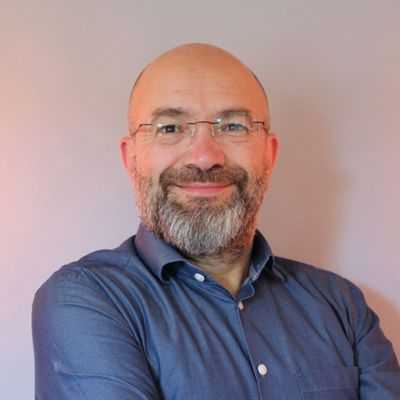
Sarah Watts is a transformational life and leadership coach with over 20 years experience in people management and leadership. She is a qualified NLP practitioner and an ICF accredited life coach, and she is passionate about helping people connect with their joyful mind and create their joyful life!
𝗞𝗲𝘆 𝘁𝗮𝗸𝗲𝗮𝘄𝗮𝘆𝘀:
* Insights by serving as crew at Tony Robbins events
* Is your mission your passion?
* Becoming curious about spirituality
* The enneagram
* Our intuition and guidance
𝗩𝗮𝗹𝘂𝗮𝗯𝗹𝗲 𝗿𝗲𝘀𝗼𝘂𝗿𝗰𝗲𝘀:
Website: https://www.joyfulminds.co.uk/
𝗠𝗲𝗺𝗼𝗿𝗮𝗯𝗹𝗲 𝗾𝘂𝗼𝘁𝗲:
"Don't take things too seriously. What if everything is going to be ok?"
-Sarah Watts
𝗔𝗯𝗼𝘂𝘁 𝘁𝗵𝗲 𝗵𝗼𝘀𝘁:
I am Agi Keramidas, a knowledge broker and zealous podcaster. I am a firm believer in the power of self-education and personal development in radically improving one's life.
Do you want to gain access to exclusive content, support my podcast, and become part of my inner circle? Then become my patron: http://bit.ly/pdmpat
Join my Facebook group for personal development, inspiration, and actionable knowledge: https://bit.ly/pdmgroup
#PersonalDevelopmentMastery
EPISODE TRANSCRIPT
0:05
Welcome to the personal development mastery podcast. I'm Agi Keramidas. And my mission is to inspire you to rise up, grow, stand out and take action towards the next level of your life. I interview leaders influencers, entrepreneurs, authors, exceptional people who can and will inspire you to improve your life, Jr for two episodes each week, and make sure you subscribe to the podcast to get the episodes as soon as they are released.
0:35
In today's show, it is my real pleasure to speak with Sarah watts Sarah, you are a transformational Life and Leadership coach with over 20 years experience in people management and leadership. You are a qualified NLP practitioner and then ICF accredited transformational life coach and you're passionate about helping people connect with their joyful mind and create their joyful life. Sarah, welcome to personal development mastery. Delighted to speak with you today.
1:07
Oh, thanks for having me. It is. It's brilliant to be here.
1:11
It's amazing. I know. Sarah and I will quickly share how I met you. And that was through the Tony Robbins community we were crewing at Tony Robbins event. And I know that you are in a quest of growth and personal mastery like I am. So I wanted to ask you can you share maybe a key defining moment in this journey of yours?
1:41
Oh, gosh, one.
1:44
Which one sticks?
1:45
Well, let's just go off what you've just said. And I know you've got lots of Tony fans in your audience. But growing up who was pretty epic. I often say this to people attending up who was amazing. But crewing, I think was even better. And there was just something about watching the transformation of people around you. But also having the excitement of knowing what was coming, you know, and how amazing an experience it was. And I remember, my sister and I, we were at the end of the fire lane. And as you know, everyone gets invited to walk on hot coals. As part of I think it's day one, isn't it? Yes, it is. And we were at the end of this violaine. And we were just able to watch the transformation on people's faces, you know, literally as they step onto the hot coals, walk across them, and then reached us as that first anchor point. And it just blew me away. You know, the the bravery and the vulnerability and the courage and the elation that people felt when they overcome came their fear. So it was a real privilege to to be there and to be able to do that. So that was about I have a very fond memory around that.
3:08
What about when you first attended? Did you have a big moment there on your very, very first time? I'm asking that because for me that was when a very big shift happened that really steered my life to a completely different direction.
3:25
Yeah, we often talk about these big shifts, don't we? I think I'm more of a little by little shifts. You know, my personal development journey? Well, you know, starting back in my early career, so I decided that I wanted to work in human resources as a job. And that was really around my interest in people. And so from that young age, I was already interested in emotional awareness, what made the difference between people who could show up and have a positive impact on people around them versus those that didn't. And that grew, and I think the point at which it became very personal for me was when I had my children when I had my daughter, who's now seven, you know, I really decided that I wanted to create an environment for her where she could flourish. And I recognise that, you know, in order to do that, I perhaps needed to face some of my own demons if you like, you know, my own limiting beliefs, my own inner critic, you know, the the things that were holding me back in my life and the things that were, you know, preventing me from being, you know, that happy, contented, fulfilled person that I wanted to be. And that's really where it got personal. And it's just grown and grown from there. And it's it's sort of hard to pinpoint one particular point because everything builds on You know, as a journey, I guess. But there have been, you know, other significant challenges. I, after I had my son, Jeremy, who is now five, I really struggled, there was a period of time when I had my daughter, she was two, I had this newborn baby that wasn't sleeping. And I really struggled during that period. And then my personal development journey really shifted from How can I create this great environment for my kids? To How can I manage? You know, and my desire at that point was, you know, how do I heal the things that I need to heal inside of me, that means that I can be at peace, irrespective of what's going on around me. So irrespective of the circumstances I'm in, how do I make sure I'm okay. And that was quite a, yeah, a difficult but amazing period of time of self discovery. And, you know, really just setting that intention that this is the journey that I'm on.
6:07
And, you know, you the way you described it, you mentioned that, in order for you to change and create that life that you wanted to provide to your children, it was a matter of your own inner workings or starting the change within yourself. And I think that's something important for many to understand that it's many times we look outside of us for the answers or the problems for that matter, whereas we have to turn our attention around, what do you think?
6:45
I completely agree, yeah, there's only one way and that's, you know, the inner work, you know, the life that we experienced is a direct result of the inner work that we've done. And that's true in life in the workplace. You know, in parenting and relationships, you know, the only thing we have control over is ourselves. And, you know, if we constantly are, you know, coming up with reasons over why something is a certain way, we're just giving the power away, to circumstance. And it's when we start to change our our inner world, that our outside world changes
7:26
solidly and taking the responsibility. And I will use that word carefully the responsibility for everything that is governing in our life, our present experience, whether we judge it as good or bad. It is our responsibility and our power. That's the great thing with responsibility that if I'm responsible for it, I can change it if it is someone else's
7:55
responsibility, and I get into the victim mode, and I don't really can do much about it.
8:02
Yeah, absolutely. And we know, you know, the, the neuroscience around the fact that we see what we look for, you know, so what we noticed in our world around us, just reinforces the beliefs that we have about the world. And also, you know, it's in our how we respond to those limiting beliefs and those judgments and assumptions. It's how we respond to them that can often create a self fulfilling prophecy, you know, we can end up creating the very thing that we're trying to avoid. So personal responsibility, personal leader, you know, leadership of self is so important. Yes, yeah.
8:45
Do you want to also mention about the words that we speak to ourself of them? Or your thoughts on that top?
8:55
Yeah, I mean, Tony talks a lot about this doesn't hear the the triad, you know, focus and meaning and, and, and our physical states. But words are powerful. Yeah, words are really powerful because they they attached to them is, you know, meaning it invokes a vision evokes an emotion in us. And, you know, our words can make the difference between how we feel, you know, so there was a study done. I think it was done by the Crown Prosecution Service, or the police or something like this around words. They used to interview people who've observed a car crash, right. And when they what they found is they asked people to estimate the speed the car was travelling out. And based on whether or not they said before the bump, or before the crash, you know, they're asking the same witnesses. What do you think that how fast do you think the car was travelling at and they got to two And answers just by changing that word bump or crash. And so it just goes to show how much it influences. You know, our thoughts about things.
10:10
It's very powerful, certainly does. And you reminded me of, you know, there is one situation like the car breaking down and someone can say, use the words, this is devastating, or this is ruining my day, or this is a catastrophe. And someone would say, this is an inconvenience. So it's the same event, but the way that we describe it to ourself and to others will ultimately define what our experience will be. Because it's a different experience of catastrophe, and an experience of an inconvenience, it's very different. And I choose,
10:53
we can choose Absolutely, and I think where, where I'm at now, and the journey I've been on is about rising above it and observing that, you know, so there's something about, you know, honouring our experience and our emotions, whilst not believing them. Right, so we can observe ourselves, being annoyed, you know, if we've had a car accident, or you know, whatever, you know, car breaking down, we can observe ourselves in that moment, feeling frustrated, and feeling annoyed, and maybe using the wrong words or whatever. But we can observe that and have compassion for it, but also not buy into it right, and just know that it's part of our pattern, it's part of our human condition, isn't it to respond in that way. And just to be, you know, remain with presence to those feelings? Because I think one of the things that, you know, can sometimes be a bit of a downside of the personal development world is, is this view that, you know, it's only about mindset, and it's, you know, and it has to be about being positive. And it has to be about constantly raising our standards. And I think there's a bit of a trap with that, you know, where we can then end up resisting, you know, some emotions that we might be experiencing. And that's not helpful either. You know, so I guess there's a watch out, you know, there's a bit of a health warning, I would say, just to make sure that we are being authentic and honest with ourselves and sitting with discomfort, and, you know, maybe some self judgement over how we might be handling a situation and we can just observe it with compassion and kindness.
12:39
Yes. And it's important to understand also that there are there is this way, those ups and downs of our life or our emotional state and to always want to be on the high. It's, it's impossible, it's unrealistic. And, yeah, I know what you mean that sometimes personal development has been wrongly associated with something that is really not natural to the humans. I mean, it's not in the state of being it's one thing to be in a peak state like Tony Robbins says, that doesn't mean that you are happy if something terrible is happening. It is exactly what you said that you are able to observe your reaction, your emotional reaction, or even your thoughts without necessarily being swept away by them and being carried to whatever direction they will take.
13:44
Yeah, absolutely.
13:47
And I changed the subject a little bit, there was something I wanted to ask you, I read, I was reading a blog post you had made about your passion, whether your passion is your mission? Yes. So and you were saying there that you were talking about our work, and how our work impacts us because we it's very closely tied to our identity. So we have an identity associated with our work. Yeah. But many people find that their work is not their passion. So what are your thoughts how that affects someone's identity in someone's position?
14:35
Yeah, sure. So I mean, anything that comes after the word I am, is an is an identity statement. And so when someone says to you, what do you do? You'll say, I am a, whatever it is, you do. You don't say I do this, right. So it does become part of our identity. And, you know, we tend to find that as humans, you know what impact To us what our values are, will lead us to a certain profession, we might have certain needs, you know, that are met, then by our work, you know, if you're someone that's very passionate about being of service, you might go into the police or nursery, you know, nursing or, or helping people in some way, you know, if you're a problem solver, you know, you might end up going into business and it or whatever it is, right. And so I think that, you know, it starts off with this, this kind of merging of our identity and our needs and our interests and our passions into the workplace. And we can get very identified with that. And we know that that's true when people for example, finish, you know, service in the army, you can really struggle to adjust to what that means when they have finished or when someone's made redundant. And they didn't, you know, they didn't anticipate that change, and suddenly they don't have that attachment with work. And I think that's true when people retire. So it has a huge impact on us. And we spend a lot of time at work, don't we? I think the thing around whether your mission is your passion, you know, that was a question that Tony posed, when I was crewing at unit up W and I was sat in the audience as a mic runner. And it was in that moment where I really asked myself that question, you know, because for me, HR had been my passion for a long time, I'd spent 20 years in HR roles in organisations. And and I still feel very passionately about organisational culture and leadership, creating the right environment, you know, I still feel very passionate about that. But I had realised that, you know, do I really have this Spark, now, and is it time for a change. And that's what led me down the route to train to become a coach, you know, get my NLP practitioner, and really start focusing around merging my passion for personal growth with what I actually do for a job as well. And it's interesting, a lot of people I speak to a lot of my clients come to me with these kinds of dilemmas, you know, they feel at a crossroads, they're not quite sure what to do, they feel pushed and pulled in different directions. And there may be two competing parts of them that are in conflict about that decision, you know, and money gets tied up into all of that, as well, and some other beliefs that we might have about things. And really, what I'm passionate about is helping people to create a life that they would choose, right, if you could get to choose your life, what would it be? And then how do you create that? What's stopping you from creating that, you know, and really helping support people to find, you know, find that authentic place that feels true to themselves and, and aligned with themselves. And sometimes it takes a wake up call for us to really stop and reflect and evaluate that. I think the pandemic, for example, has been that wake up call for some people, you know, yes, we've all been in massive change for the last year, but it's also made people go, is this really what I want to do? You know, is there something more? You know, is there more to life than this? Can I can I find more happiness doing something else? And I would encourage anyone to explore that. If they're having those, those doors? Yeah, why not? Give yourself that right? You get one go at this life.
18:39
So why not learn to count, you know?
18:43
Yes. So you remember that phrase that says that the hero of eternity is not the hereafter. It's right here right now.
18:54
If you if you don't get it here, you won't get it anywhere. And you said something about the wake up call that COVID has been lost a year for many people. And I will add to that, I certainly hope so. Because I suppose some people have not really listened carefully, and they still expecting that all this will end at some point. And we will go back to how things were before. It's important to understand that things have changed forever and there isn't a new direction that we're heading I mean, collectively as as as human beings and thrive to hold on to what has been so far I don't think we'll be serving the people who decide to and that brings her back to change that were saying earlier that some people are very resistant
19:55
to change and the whole don't. what's what's your number on advice on Same thing?
20:02
Well, as you were saying that I was thinking about, you know, I support organisations through change, and I did a lot of change management when I was in my HR roles, and I work now with organisations going through change. And the first thing you do is you get really clear on Where are you going, and where are you now, right. And we all seen the change curve, the Kubler Ross, you know, grief, stages of grief that the business has taken into a change curve. And you but you always know where you're going, you know, what you're changing from and to. And I think what what's happening in this pandemic is, we know that we've changed, but we don't really know, what we're changing to. And so it's a constant unknown. And I think that lack of certainty is incredibly difficult. So I guess what I would encourage, if someone was coming to me to talk about that, I would encourage them to, you know, start to really clarify what's important to them, you know, so, you know, how can you bring some of that certainty back into your, you know, locus of control, right? So what is it that you want to see for yourself in your own life, your own relationships, your own health, whatever it might be? and focus on that, you know, because we need an anchoring point. To know, to know what it is we're changing, you know, what's what's changed is to end points, isn't it the starting point, and then well, there is no end point. But we need to have a vision for where we're moving to
21:35
that direction.
21:36
Yeah, direction. Yeah, yeah.
21:42
There is something else that I wanted to discuss with you, Charlotte. And that some,
21:51
I think that and I was telling you earlier, before we started recording that lately, I find myself more and more interested in the spiritual elements of I will put our poses like this, the spiritual elements of personal development if you want. So I'm just playing with the words right now. But I wanted to discuss because I know you are also on a spiritual journey, and I must well in this conversation, so I think they are fascinating, especially, you know, with people who are looking for something and you know, sometimes you get an insight from conversations, and that is enough to steer you towards, you know, opening a book or doing something that will lead to self discovery.
22:47
Yeah, definitely. I think for a long time, I've resisted this idea around spirituality. And, you know, my personal development journey, you know, was very much around the cognitive mindset, side and the physical health side as well. And when I reflect back, I think, you know, perhaps I had some blocks around, you know, faith and maybe some assumptions that I was making around how spirituality needed to include an element of religion. And, and I think that's probably what put me off for some time. I think also, you know, there's there is, uh, you know, I think spiritual communities aren't always easy to access, either, you know, there's some language and, you know, sometimes, you know, strong beliefs and you kind of think, well, how far out is this gonna go? Right? How well is this gonna get, you know, so you sort of feel like, once you step over that threshold, what's then gonna happen? But I, I got to a point where I was becoming curious, I was just becoming curious about, right, I'm trying to make sense of all these things I'm learning I'm trying to put them all into a, you know, into a framework that I can access and use as a tool for myself and as a tool with others. And increasingly, it's just becoming more and more spiritual, because the different avenues are starting to explore, you know, really was around these ideas of oneness and presence with self and disassociating. With you know, previously I may have called it the human condition, but you know, I may also call it the personality or the ego. I, I would really encourage anyone who's sort of starting out down that route or curious to start exploring things you know, which just challenges that sense of who you are in your essence in your Spirit. And I have had experiences that have really challenged me in a good way, you know, to realise, well, actually, we are all connected. And there is something separate than just this, the confines of the personality. And I've done that personally through training with natural success. So William whitecloud, have done a lot of his trainings. He's written a few books if people want to look him up, and also women's circles. So I've trained as a circle leader, and I now hold women's circles, and we do in women's circle, it's about showing up as your authentic self, it's around, you know, sharing your story, allowing that to be witnessed, you know, without trying to fix without trying to problem. So there's no judgement or advice allowed. We're just sharing our stories and witnessing each other. And there's something really powerful when we do that, you know, how often do we have those really authentic, honest conversations in life. And then we also go through guided meditation where we're seeking our intuition. And, you know, the women, by the end of the circle, leave with an intention for the month ahead, that they've they found in their own intuition. And, and so for me, you know, one of the things that's been important for me on my journey is bringing back my reference point to myself, right, so I've always placed a lot of importance on what other people think, you know, and I would, you know, I might have an opinion about something, but I would allow that to be overwritten by other people. You know, I think parenting is probably the only thing that I felt incredibly strongly enough about that I wouldn't care what anyone said, I knew I was very internally referenced about that. But what I've been developing in myself is my intuition, you know, how do I access my own guidance from my intuition that is anchored within myself. And that involves, you know, having access to my spirit to my essence to who I am at my core, and not who I am in my personality. And so I bring that into circle, you know, and create that space for people to do the same, in a very honest and authentic and supportive way. So no, I don't know if I've answered your question.
27:29
I'm just sharing. Yeah. Has that answered your question?
27:34
It has, it was captivating. I got, there are two things I would mention for what you said. One was, you mentioned the one curious, and I really like this word, being curious, I think is the key to discovering new things and new things about ourselves, really, because that's the context on what we're saying.
27:58
Yeah.
28:01
And curiosity, I think it is, it can transcend your beliefs. Because as long as I'm curious about something, I might believe that it might be nothing, but I'm curious enough to research it. So it will go beyond. So I think it's important, especially things we are excited about.
28:23
Oh, the other thing I would mention as well, that's had a big impact on me recently is the enneagram. So I'm training in the enneagram at the moment, which is is kind of like what some might call it a psychometric tool. But it's a tool to understand ourselves and our personalities and our drivers, our basic fears and basic desires, and as different levels of health within each we need within each type. But it's a tool that's also used to access our spirit and our essence as well. So if your listeners haven't heard of the enneagram, go and look it up. Because it's a very, there's a very affordable test you can do online to get your enneagram type. And it's an incredible tool. And yeah, if anyone wants to talk more about that just reached out to me.
29:14
Do you want to share a little bit more about that? Because I'm also interested in also could tell me, is there anything specific that you have gained as an insight by?
29:28
Yeah, so the enneagram is based on the premise that the core wound that we experience as the child so what we decide as a child in terms of our deepest core beliefs about ourselves and the world, you know, that core wound our personality is then built upon that wound, right. So there and there are nine different types on the enneagram and each have different fears and desires. But it's all based on the fact that when we are very young, we become separate, right, we have a separate experience. And actually, when we're born as a baby, we don't know that we're separate. So we go through this process of separation. You know, actually, babies don't have a sense of self, initially, they have to, they have to develop it right. And in order to, whilst they're developing that, in order to do that, they form beliefs, we all form beliefs about ourselves in the world, to try and make sense of these things. And our personality becomes built upon that. So we can then find, you know, that our habits and patterns will all relate to that. So the enneagram, you know, provides nine different types is quite a complex model. But I'll try and keep it simple to for the explanation. And so each time so for example, a three is someone who is a high achiever, right, so their core wound, and their core fear is the fear of not being good enough. You know, many of us can relate to that, right? But what happens is, then, to compensate for that core wound, they become a high achiever. So someone who's always striving for bigger and better things, more achievements, more qualifications, you know, all of these sorts of things. And it's insatiable, right, because nothing is ever going to satisfy it. It it's a never ending quest, you know, once you've achieved something, you just move the bar, and you know, keep going, for example, and number two is the helper and their core wound is that they're not worthy, right? So their personality gets built on that wound, where they go about being a good person, and in their way of being a good person is to help others. Right. So number eight, is the challenger. So a number eights core wound is around being powerless. And so a number eight is someone who compensates by trying to gain power. And they do that by challenging others that they are often high achievers as well.
32:23
There'll be, I think,
32:25
yeah, I think it's, it's obvious something if you recognise where you are in that scale, or which it gives you some insights about yourself really, and some, some core beliefs. And we were saying earlier about changing that the first step is to really to understand or acknowledge what the situation is.
32:54
Yeah, so most driving it underneath it. Absolutely.
32:58
What did you get personally from it?
33:01
Oh, my gosh, well, personally, so I am a six, which is a loyalist. And so a six is driven by the need for safety and security and trust. But also, you know, on the enneagram, this is where it gets slightly complicated is that under stress you you drop down to a different number, and when you're healthy, you can go up to a different number. And for me, you know, one of my core fears is the fear of not being good enough. And so a six drops to a number three under stress. And I recognise that right? So if, if I start to feel like I'm losing a grip on something, I will push harder, I will work harder, I will do more, I will throw myself in, and I know to recognise those signs of, okay, there's a warning sign here. You know, this is going into the unhealthy territory, right? It's not the action in and of itself. It's the relationship I have to that action. So if I'm pushing harder, I know that you know, I'm going down the healthiness levels, right. And that is a warning sign to take a breath, take a moment, you know, step back, observe the situation and start to refocus. You know how you want to tackle this. And then on the other side, the flip side is that a six goes to a nine, which is the peacemaker, which is all about harmony. And a nine's basic desire is for to be unaffected by the world around them. And that has driven my personal development journey. You know, that's really where my personal development journey got got going, was around this desire to be unaffected by things around me and to have that internal peace. And so it was like, wow, this just makes so much sense. And I think what I really like about the enneagram is It's about being able to relate to the fact that there's a personality that's driving these things. And it's not me, you know, it doesn't need to be me. Right? So who am I without those things, you know, I am then my spirit, my essence, you know, my heart. And that is different than how my personality feels, it needs to respond to situations. And I think there's something so powerful from disassociating in that way, because then you can start to see, well, those are just the patterns and the habits. And I might get caught up in them, I might still have the feelings and the experience of them, but I don't need to buy into them anymore.
35:42
That's wonderful. Thank you for for sharing that. You know, I have heard of the enneagram before, but I've never really took the time to study it. So now you've given me the really the urge to sell research on my own. So that's brilliant. So I would like to also ask you some quickfire questions to
36:05
wrap,
36:06
start wrapping things up. So I always ask to begin with What does personal development mean to you?
36:14
So to me, it's about growth. And I there's a quote and I forget now who he said it, you know, that we're all just walking each other home. And I feel like, you know, particularly now with things moving for me moving into a more spiritual development journey is about walking home to my, to my spirit to my essence, you know, and to that oneness. That's essentially the direction we're all headed in.
36:45
In,
36:46
I'll ask you one hypothetical question, if
36:49
you could go
36:50
back in time and meet your 18 year old self, what's the one advice you would say?
36:58
Yeah,
37:00
it would probably be not to take things too seriously. because everything's a big deal when you're 18. But also, I think there's something about, you know, just knowing that everything's gonna be okay. You know, there's a great TEDx talk, what if everything's gonna be okay? What if there's nothing wrong? You know, and actually, I think we can get so caught up cut when there's, there's a problem, there's something wrong? What if there isn't? One if it's all going to be okay.
37:34
It's a very interesting thought. Very, very solid, also piece of advice to, you know, not take life too seriously. I
37:44
would say.
37:48
Let's say you could wave a magic wand and change something in the world as it is. Gorgeous change. Oh,
37:56
that's a big one as I think it would probably be around poverty, and you know, access to decent living conditions. Oh, and there is climate change. Let me see. Can I have both of those? Yeah, I mean, I just don't think that in this day and age, there should be people living in the conditions that they are. And yeah, climate change, we all need to wake up, right? Because we're going to run out of time. So you know, I'm gonna have those two.
38:34
It's your mazzucco.
38:36
Can I choose my wishes?
38:43
emerging from all this conversation we had, if you were to give to the listener, one actionable item, something they can take away and implement in their lives straight away? Or tomorrow morning? What would you advise? Oh, gosh,
38:57
because that so it's difficult to answer that one, because I guess it depends on where everyone is on their own. I know we keep using the word journey, but it's true. No, where are you on your path? I guess perhaps that's the perhaps that's the answer is just to be honest with Where are you on your path? And I think that, you know, sometimes, even those of us who have done a lot of work can think oh, yeah, we've got it down. Now. You know, we've got it sorted. We know our stuff. And and I think that sometimes we can get a bit blind, too, you know, so we're just perhaps get a bit cleverer about hiding our dysfunctions and stuff. But yeah, honesty, just be honest. Where am I right now? Yeah. And sit with that.
39:43
Brilliant. Yeah. Do you want to share a bit of what you what it is that you do at the moment? And how can people connect with you and find out more?
39:54
Yeah, sure. Thank you. Yeah. So I offer life coaching. So one to one life coaching and So leadership coaching, so if you're in an organisation, or want coaching around leadership skills, I do also offer organisations support going through change, whether that's leadership development, or a change programme of some kind. And then women's circles and retreats, I've got some retreats coming along down the line this year. So if anyone wants to find out more or get in touch, my website is joyful. minds.co.uk.
40:29
Brilliant. So,
40:32
is there anything that you were hoping we will discuss today? And we've completely missed it?
40:38
Oh,
40:43
no, I don't think so. Again,
40:47
I'm asking you that because you you were telling me that you wanted to, you know, prepare. So I take it that you had thought about the conversation. That's why I'm saying whether there was something that you really wanted to, you know, share your thoughts about? Yeah, we didn't even touch it.
41:07
No, I think we have we've covered we've covered everything, haven't we? Yeah. Anybody anyone wants to get in touch to speak more? You know, I'd love connecting with like minded people. So very happy to continue the conversation with anyone who would like to,
41:24
I will, I will put all the links in the show notes for the listeners to find and connect with you easily. So I want to wish you all the very best. I really enjoyed the conversation. Thank you for your time and your experience and expertise set with us. All the very best with what you do in your life. Any last parting words?
41:47
Well, thanks for having me, Aggie. It's lovely to be here. And thanks for sharing, you know, your personal development passion with your listeners. I'm sure that is brightening everyone's day. So thank you.
42:03
Thank you for listening. If you enjoyed this podcast, please subscribe and rate it on Apple podcasts. And also share this episode with someone who you think will benefit from it. If you want to find out more about what I do and gain access to exclusive content, join my facebook group but for development mastery. The link is in the show notes or you can simply type beat dot L y sluss PDM group and until next time, stand out don't fit in
Transcribed by https://otter.ai

 5.00 (74 Reviews)