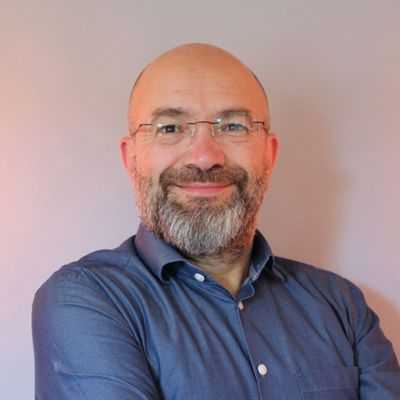
Dan Clark is the CEO of Brain.fm, an app that leverages neuroscience and leading technology to create functional music that helps people focus, relax, and sleep on demand. To date he has had over 2 million app downloads, with power users reporting a 200% increase in focus. His mission is to help people all around the world to actively improve their life, by being able to tap into their desired mental states at will.
𝗞𝗲𝘆 𝘁𝗮𝗸𝗲𝗮𝘄𝗮𝘆𝘀:
* The importance of mastering your mental states
* Brain.fm: functional music to steer you into a desired mental state
* Tapping into a focused state at will
* Productivity hacks and creating strong habits
* What the future holds in this field
𝗩𝗮𝗹𝘂𝗮𝗯𝗹𝗲 𝗿𝗲𝘀𝗼𝘂𝗿𝗰𝗲𝘀:
Website: https://www.brain.fm
𝗠𝗲𝗺𝗼𝗿𝗮𝗯𝗹𝗲 𝗾𝘂𝗼𝘁𝗲:
"Find something that you are passionate with ... it just comes down to commitment, passion, and perseverance to be able to achieve that."
-Dan Clark
𝗔𝗯𝗼𝘂𝘁 𝘁𝗵𝗲 𝗵𝗼𝘀𝘁:
I am Agi Keramidas, a knowledge broker and zealous podcaster. I am a firm believer in the power of self-education and personal development in radically improving one's life.
Do you want to gain access to exclusive content, support my podcast, and become part of my inner circle? Then become my patron: http://bit.ly/pdmpat
Join my Facebook group for personal development, inspiration, and actionable knowledge: https://bit.ly/pdmgroup
#PersonalDevelopmentMastery
___
Episode Transcript
___
0:05
Welcome to the personal development mastery podcast. I'm Agi Keramidas. And my mission is to inspire you to rise up, grow, stand out and take action towards the next level of your life. I interview leaders, influencers, entrepreneurs, authors, exceptional people who can and will inspire you to improve your life, Jr for two episodes each week, and make sure you subscribe to the podcast to get the episodes as soon as they are released.
0:36
In today's show, I'm both delighted and excited to be speaking with Dan Clark. Then you are the CEO of brain FM, an app that leverages neuroscience and leading technology to create functional music that helps people focus, relax and sleep on demand. Today, you, you've had over 2 million app downloads with power users reporting a 200% increase in their focus. Your mission is to help people all around the world to actively improve their life by being able to tap into their desired mental states at will, then it is a joy and a privilege to have you on the show today. I'm glad to be here. Thank you. Awesome. Dan, I would like to start with your story actually, of how you became the CEO of brain a firm because I understand it's a passion driven story of entrepreneurship. And I think it's social, very inspiring. So please, sell sell your story with us.
1:48
Sure. So um, yeah, I've always been an entrepreneur, specifically in tech. So I dropped out of high school, I started making websites started, you know, creating different businesses where I could generate leads. And I realised that what I could do is I could help people achieve their goals while playing with computers all day, which is really fun. I started doing that for higher and higher profile clients, and then eventually ended up moving into advertising and being a digital director of an advertising company, I really optimised for, you know, financial gains. And I found myself in a place where I wasn't doing anything that like was helping people that I felt. And I actually used to teach martial arts, where I would help kids and help people transform from a shy kid or someone that's not confident, into a confident leader. And I'm actually the same exact transformation story of that I was very shy and little chubby when I was a kid and going through martial arts really helped me. And I, I think I became this person, which I just wasn't proud of. Because I wanted to help people more. So I decided to quit my advertising job. And I was looking for opportunities. And I came across brain FM. So I didn't start the company. I was one of the first users when it launched. And I remember putting my headphones in and taking them out and going, whoa, what just happened. And the reason why that was so compelling for me was because I used to work from 10pm to 4pm, during the week, because that's when I could find my flow state where I could focus, like, do double the amount of work. And I remember trying it, and I was blown away, because it wasn't 10pm. And I just remember, like taking my headphones out and being like, holy crap, this is gonna change the world. Because it doesn't matter where you are in the world, doesn't matter if you're, you know who you are. It just matters that we're human. And that's the fundamental approaches for that. So I ended up calling them 12 times, and probably annoying the founders in the beginning, and was just so enthralled to to, to work there. And because I had previous successes, I actually just started working for free. I said, What do you have to lose? And then from there, started leading the tech team, few years, few years later, became CEO, and it's definitely been a wild story
4:25
done. Can I can I go back a little bit before you're born because, of course something. I think it's important. You said that you you started working for free. And obviously you were very what compelled or called, I would I can't use that word to jump into that when you use the app. So tell me a bit about this. This kind of you said something about 12 calls and sign. So yeah, it's a matter of I want to understand that kind of person. valence that overcomes the rejection in this in this case.
5:06
Yeah, so I think it, it just comes down to use perseverance, I guess I would say, you know, persistence, that I knew I could add value. So it wasn't like an annoyance kind of thing, if I really dive into it, it was a, hey, I really think I could add value to your company, let's jump on a call, hey, just following up, I really believe I could add value, I really believe I could add value. Here's something that I've done in the interim, that shows you some of the values was definitely worth jumping on a call. And it was, you know, from that, that passion that we talked about where I did, I'd like I knew I could add value, because that's what I've done many, many other times. And it was also something I really wanted myself personally. So, you know, I believe in Win Win wins, right, three wins. So it's how do I win? How does the other person win, and then how does like some bystander win. And that's kind of how I was thinking, so if I can win personally, because I can be part of part of this rocket ship, the founders can win, because their rocket ship can go faster. And then the users can win too, because then the product becomes better. And we can go further. And, you know, that's kind of how I always approach any kind of interaction. And, and yeah, that's kind of what drove me to keep calling keep messaging, and finally getting on the call. Oh, and
6:34
reflect on reflecting Now, did you feel cold? towards brain FM?
6:42
Yeah, I would, I would say that. I definitely, I had something. It's like, This company has been what I've been searching for, for a really, really long time. And then it came in front of my face. And then you're like, wow, you know, it's kind of like, you know, looking for a relationship and a significant other. And, and then they come across your face, and you're like, this is it, you know, and it's just so outstandingly true. And that's, that's what happened.
7:09
That's amazing. And I want to discuss about the the app and the music in particular in detail. Before we do that, I want to start a little bit earlier on, you say that you help or the app helps people manage their mental states. So give me a little bit of information about when you say mental states, what exactly do you mean, and why, even though I think it's obvious of the importance of being able to manage your mental state, but I would like your your thoughts on that?
7:48
Yeah, of course. So, you know, mental states are so many of them, right? And so happy, sad, you know, joyous, angry, you know, those are like emotional states that we know that but there there are certain kinds of mental state of frustration, things like that. Then you have these other working states, where it's, you know, in focus, or you're doing like, like, I guess a better thing is activity states. So it's it's activities that you're doing, and we perceive those and label them as like focus, relaxing, sleeping, you know, working out recharging meditation, right. And there's all these different kinds of states that exists in us, right? We have really specifically gone under focus, relaxing sleep, because those are like the three categories of, I think, being human that everyone can kind of relate to. But yeah, it's really important to be able to control those because we live in a world that our bodies and our minds that were not created for. So you know, 50,000 years ago, we weren't in cities. You know, we weren't, we weren't having lights in our eyes, we were have phones in our pockets, where people have messaged us all the time. And it's really hard to control our mental states being surrounded by all of these distractions, and what the we believe the power is if I can give you the ability to control your mental state, then you can be the best version of yourself. So you can focus when you want to, you can sleep when you want to, and you can, you know, be able to modulate between those different mental states
9:31
which is great. I think everyone can relate to the times that they had to concentrate but they couldn't or wanted to slave but couldn't or the other way around. So it's it's really important. Let's go then to the actual
9:50
brain offence up and if you can give me an overview of how
9:57
it allows someone to Copying to the desired mental state?
10:04
Sure. So I think first, I should say that we're not the first ones that have tried this before. If you go on, if you go on YouTube, you can search for binary beats or isochronic tones, and you have 1000s, or millions of videos that people are trying to do this. The thing I like to say first is that the way we're doing it's not by neural beats, or isochronic tones, it's actually a novel approach, which I'll get into in a second. But by neural beats and isochronic tones, they don't have the same effects that we're able to see in, in data. And in experiments, fMRI eg we can get into that later. But this is something different. So the way it works from a high level, is that in these different mental states, you can think of your brain having certain kind of patterns, right, these neural patterns. So you and I are talking to each other right now, we have a neural pattern of you know, being here recording this podcast, in the same way you would if you were in deep focus or meditation, what we do is we have those patterns, we understand them. And we create music with certain kinds of kinds of rhythmic pulses in the music, which emulate those patterns, which your brain then mirrors and then can easily switch into. So if you're listening to our focus music, we make music that sounds good. It also sounds different, because it's created differently. With these rhythmic pulses, and these rhythmic pulses, eventually, your brain matches to them. And then you're easier to stay in that mental state. And we call that effect neural phase locking.
11:43
And that's, I was reading about it, actually, because I was telling you before we started I find it fascinating because of my own academic background. And when there is coordinated activity between your work your neurons, that's how I saw it. It makes made sense when I regret that.
12:05
Yeah, so what's happening in your brain is it's a process called entrainment. And and what we're doing is entrainment. If you've ever seen like, what do you call it? There's like metronomes, and they're on like two wheels, and you have them all at different times. Right? What happens is they'll all sync together, right? So we have electrical impulses in our brain, and they're all firing at different times. But through the processes of entrainment, by listening to these patterns, we're actually able to align the functional networks of your brain to communicate at the same time, which allows us to influence the mental state and make your brain a little bit more organised to be able to switch into the next one, on a deeper level.
12:50
And there was another thing that I was impressed when I was reading because personally, I'm not able to concentrate. When I listen to music, I find it to be completely distracting. I know some people use work with music, but for me even driving with music, sometimes I find it distracting, I want to think, yep, so I realised because I have tried Europe for a little while now that it does not take my concentration away. So it's not distracting in other ways. Can you explain that as well? For me? How How is it different than normal? Or the usual music?
13:35
Yeah, so traditional music is really built for enjoyment, right. And it's it's built for perceptions of different things that we want to have, right. So if you play just the radio music, and it's it's music really meant to be listened into enjoyed, but not necessarily to be, let's say focus to write, even focus music and other focus music that has been tried it before. It sounds it like it sounds like focus music, right? But it doesn't necessarily have the properties that induce focus. And that's really the difference in what we're doing. So we start from the ground up with those neural patterns that we talked about. And then we create, with our weather composers in house on different kinds of soundscapes that we apply to those neural patterns. And what we're doing is we're following a specific set of rules, which we have from literature to show that these are the best things for focus or really for any activity. So one of the easiest ones that people will probably aware of is lyrics. So if you have people singing or talking in music, you have to think that your brain even if you're not paying attention, is actually still processing everything you're hearing. So it takes some of your minutes Until energy to ignore that, and especially with music that we really enjoy, you want to dance to it, you want to think to it, you want to, you know, go with it. And that's a distracting effect as well. So we actually try to make music that is sounds great and you'd want to listen to, but is actually not too good. And it's right on that line. But then it also has all the scientific properties of amplitude modulations, and 3d stereo and all those other things that also induce focus at the same time.
15:32
That's great. And I do a little sidetrack here, because you mentioned about the literature and I see that you are placed huge emphasis on the the science first approach on brain FM. So I read a great quote that you, you say that strong claims require the even stronger evidence. And so I would I would like to comment on that.
16:03
Yeah, so um, you know, like I, I've said it before, this, this effect of using music for purpose has been tried before, right. And by neural beats are something a lot of people are familiar with. But in science in research, they actually don't really have the effect that people believe. And and it's more placebo, right? So how do we come into this, saying, Oh, no, we've figured it out. But what they're doing isn't correct. The only way to do that really is to show the massive amount of evidence that we've been able to do, and then also hold ourselves to a really high standard. So, you know, we we won national science foundation grants to investigate this as treatments for ADHD. We have studied how this affects people with ADHD, Alzheimer's, and autism in the brain, as well as people without those mechanisms and making sure that it works. We do fMRI eg start tasking. So we're doing all of these different kinds of tests to make sure that someone can come to us and say, Okay, I don't have to be, I don't have to trust my gut kind of thing, I can look, I can read the science, I can see all the evidence, and then understand that they've done all the hard work for me, all I need to do is put this on and start working. And that's really why we hold ourselves to such a high standard. And, and I mean, selfishly, it's also because of me, like, I want to make a product and I want to use the product, and I want to know it works 100% and that's one of the great benefits that we have, um, you know, for being led, you know, by people that really care and want want to lead, you know, neuroscience on this.
17:52
That's the feeling I get looking at everything I wanted to ask, you mentioned earlier that the music producers, I think you said the reef MC pulses show patterns that they use, eventually the state, the state is not related with the different kinds of brain waves or is a completely different
18:20
topic. It is related, we a lot, a lot of other things that people have done is they've tried to do like make music insert, like Delta wave or stuff like that. We actually alternate between many of them in certain kind of patterns. But it does have to do with that. So the neural pattern that we have for focus is much different than sleep. And if you listen to our music, you can actually hear it. So you'll hear focus, music is a little faster, it has a little bit faster BPM, and then all of the different kinds of pulses and stuff are faster as well. And then if you listen to our sleep, you'll hear much longer waves of music, and much slower patterns inside of that music. And if you think about it, it makes sense because when we're sleeping, we want to be our brain is slower, almost. And when we're working, it has to be faster. And that's kind of, you know, what you can hear in the music. But what's really cool about it is that our music, we have all different types of genres. So it's not just, you know, focus music, it's focused music that is electronic or focus music that's classical or whatever, because the real thing is not about what the music necessarily sounds like. It's those modulations and those different pulses that we're adding to the music with it.
19:40
There was another one that I enjoyed. That is the rain falling and it's not even music, but it's it's it's love like that, right. So, just because I wanted to clarify that it's not as simple as I have a method that induce is a kind of brain frequency in my mind that goes, for example to beta or gamma or whatever it is. It's more you say that the music goes in different of these.
20:14
Yeah, so so that's a great question. It is, it is a little bit more complicated than that. Because the brain is really good at normalising right. So what happens is, if you have a stimulus, let's pretend as a truck backing up, beep, beep, beep, five minutes, it's annoying, but after five minutes, you don't hear it anymore, right? And then eventually, when it stops, you hear the absence of it, right? And it's because our brains are designed for danger, right? So things that are in our environment that are new, which we call salience, we're very sensitive to. And, you know, that's a property of sound, it's also the same kind of thing that happens in your brain. So, you know, people get, like, if they drink a lot of coffee, they get less sensitive to it, you know, things like that. So if we only play like beta, for example, what's going to happen is your brains going to normalise to it, and then you're the effects are going to diminish. So we're actually oscillating between different kinds of patterns and different kinds of, you know, brain frequencies, if you want to call it that. And that allows us to, to keep a consistent state of, you know, focus, and one of the things that we're looking for first off is always behaviour. So, you know, data is important, and we always lead by that, but it has to work and people have to, you have to feel it, right. But we can see that those effects by looking at fMRI. So if you look at different slices of the brain, while they're listening to focus music, you can actually see predictively the blood flow into different areas of your brain that are specifically associated with higher levels of focus and concentration.
22:01
I see thank you for that, too. Yeah, of course, I get it. And I'd like to wear because I've used the app myself. So the main focus, the main mental state that I've triggered is focus because it is find it very important to be able to do that. Or, for me, let's say, a slave is not really any show, I've used the app a couple of times to sleep. And it was very effective, but I can't have much comment on it. Whereas with the focus in particular, I realised that it was it's hard to explain, but the music was like, it was not around, but it was more like in front of me like with the task that I was doing. So like it was drawing me or drawing my concentration towards, you know, in front of me wherever I look in and I found that very interesting as an observation that, you know, you normally you hear the music around you and I suppose that's one of the reasons that someone needs headphones or earphones so that you can position the sounds.
23:15
Yep. So with that, it's all on purpose. We do that to make it so that you're you're really tunnelled in on what you're doing. And there are certain kinds of audio techniques that allow us to make the music sound like it's in front of you, we listen to our relaxed music, you'll actually see it hear the music oscillate, right to left, almost like you're in a hammock very slowly. For similar kinds of reasons. When we are making the music, specifically, it's for headphones, because that's the highest fidelity of sound. You know, people do use it without, but I always recommend with headphones, especially for the focus product, because it allows us to not have any kind of other sounds enter your ear without us, you know, being able to match them in certain ways.
24:01
That's great. Do you want to tell me also about how the app can help with meditation in specific meditation?
24:10
Sure. So you know, as we said, we do focus, relaxing, sleep, you know, really, inside of relaxation is you know, recharge, you know, chilling out, but also what you're saying is meditation. And and meditation is really interesting, because there's tonnes of apps that do meditation, right? So we're not, we don't believe it's our mission to teach you how to meditate. There's some great apps that do that. But users have found that when they they already know the practice of meditating, and they come into our app and they try it. They're able to slip into deep meditation way quicker. And if you think about it, it's because we're using the same kind of principles. So we understand the neural patterns of meditation. They're heavily studied. We're able to emulate that in these different patterns. And then people that have they've learned how to ride the bike of meditation. so to speak, they're able to go extremely fast and deep, because we're kind of the wind pushing their back while they're running towards it.
25:11
That's very interesting what you said about riding the bike of meditation. Because that takes, it's, it's, it's subjective. I mean, what is riding the bike of meditation? My question, my question is nearly. And I'm asking that, personally, because I've used the brain from a few times to meditate. I'm not sure if I have ridden the bike of meditation practice in meditation for years. But I, in I found that using the app did not take me Well, in the same way. As you know, with the focus, I had no question whatsoever, because I could see that after 45 minutes, I will still own it. With meditation, it that's why I'm asking whether it is a matter of someone being more, let's say experienced, or is there any any line on that? Or is it a matter of people experimenting and finding out if it's,
26:19
yeah, I think all of them may be true. The, the, the interesting thing is that, you know, everyone is different. Everyone has different spectrums of you know, ADHD, of insomnia, of experience in meditation of different kinds of neural patterns in their heads, things like that. And, you know, where we've been putting a lot of our attention, and the most in focus, which you can see by that's probably our strongest part of the product, you know, meditation, even sleep, they have more things that we can do. But there's also a lot more variability in meditation and in sleep. So you have to think that sleep, you know, are you sleeping with a partner? Are you sleeping in a cool, better warm bed? Do you sleep on your side? On your, you know, there's so many variables, right? Actually, meditation also has a lot of variables, depending on how, how, you know, is it your first time, or you've been doing it for a year? Are you a yogi? Are you are you sitting down, you standing up, are you you know, there's all these different kinds of things. And focus actually has probably the least. So because of that, that's why we've been able to hone that product into something that's really, really great. And then as we move into the future of the product, which is integrating wearables into our application and making dynamic music for individuals, then we will be able to do a better job at that, I think. But I think it also is something that, you know, is worth experimentation, if it doesn't work for you. totally okay. But but maybe it does, or maybe you you find one track that does it, you know, and, you know, it's it's part of that until we get to a place where I'm like, Hey, I know you I know exactly where you have used this track. It's going to work every single time. And we'll get there soon.
28:06
That's great. Awesome. There is something actually that I wanted to ask pretty much since we first when you first talked about going into mental states and inducing mental states that way. Yep. And you said that, you know, the focus, relax and sleep those three states? So could we do it with different states as well? goodwill?
28:33
Yeah, so totally, it's, it's much easier to do activity States than just like emotional states. Emotional seats are very fleeting. If I told you a story, I could probably make you really happy, really sad, and then happy again, you know, because we're emotional creatures. But activity states are a little bit easier. So we are experimenting with workout, we have been working on that for the last, let's say, a year or two years, it's very complicated. Because of all the different working outs all the different variables. It's helping us develop our sleep stuff, for that example. But there's a lot of other different arrays of things that we're also experimenting with. And that's kind of the one of the most exciting things about, you know, working here and developing brain FM, is that we're really just trying to figure out what we're capable of at one point, right. So some of the stuff that we're doing, which is really exciting, aside from our consumer product, and enterprise, we also have medical, so we are doing pilot studies with with labs where we, you know, people go into surgery, and they're, you know, stressed out, right, they're going under under anaesthesia. And we started one just to give them a better experience and give them relaxed music. So we started doing that have had great results. We did experiments we did using psychological profiles called palms and things like that. We were willing show that we can beat the most relaxing sound of the song in the world. And that was really cool. But what's really, really interesting is when we started using that we started giving them focused music or a specific type of focus music to help people wake up more. What's the right word? controlled, I think from anaesthesia, because I don't know if you've ever had surgery, but you wake up and you're like, all foggy, and things like that. And we started playing this wakeup music. And doing that the doctors were blown their up, their mind was blown. They're like, What is going on? Because people are in our pilot study. So this is still inconclusive. It's not it's it's the pre, it's a pre, you know, before we go into a actual study, but people are waking up 200 to 300%, faster from surgery. And the doctors are like, what is going on here? And so we're investigating that we're investigating things with Alzheimer's, we're invested things some stroke care, we're investigating things with some other stuff that I can't disclose right now. And we're really trying to figure out, okay, we know we have we know this works, right, we can see data on it. But how far can this actually go? And that's one of the really exciting things that you touched on that we are pursuing. But it's it sciences expensive and slow. And we want to make sure that because we are following science first principles, that we're doing it right. So it's definitely a lot of exciting stuff on the road for us.
31:33
Sure. So if I leave the slow science and all that behind for a moment, for a moment, and the app focused purely on your vision for let's say, five years from now, where do you see brain FM?
31:48
Yeah, great question. So there's some things I unfortunately can't disclose. But out of the things that I can, I definitely see brain FM as being a consumer app that allows people to switch on. So being able to say, Okay, I want to have, you know, deep focus, and come out of their, their app or on their web, on the website, click a button and get right in their focus state every single time. And then as I was talking about before, as we start learning about people, with wearables, and different kinds of other things that we can, you know, gathered from them, as long as people want to tell us, then we can really start deepening that, making custom music for you. So right now, we do personalization, and those kinds of things. But I want to go deeper, and I make music specifically for Michael in Idaho, you know, and that's different than Katherine in Brazil, you know, and, and really want to push that, I think there's also opportunity for us to, you know, really expand globally more than we have so far. Because right now, people do use us all around the world, but we are really only an English and we want to go everywhere, because it doesn't matter if you speak English, French or Mandarin, it matters that you're human because of the psychological or the, the physiological effects of these, these pulses. And, and really, that's kind of the start of that. And then, you know, with medical, we'll see, I think there's some really great opportunities for us what we're heavily exploring, and then, you know, the time will tell how we get there.
33:27
It's certainly truly fascinating times that we live in, do you see brain a firm being impacted by emerging technologies like neural link?
33:41
a great question, um, I, I don't necessarily see that being impacted. Personally, I may not be up to date as some of our neuroscientists on the team that have, you know, definitely, that, you know, we work with and they kind of advise us and also develop this technology. But I think that neuro link, from my understanding has different aims, it has, has aims to, you know, interface and to, like, extend the brain to be able to do certain things, etc. And we're actually not trying to do that we're trying to modulate the brain. So music is a great neuromodulator. And that's the it's one of the things we're very sensitive to as humans with, you know, heightened sense of hearing. And really, we, I think, can live in both places because we're modulating and not necessarily doing some of their the aims that they're doing. Does that make sense? Yes.
34:43
And may I add it music is also much less invasive than the drill in a Microsoft 100% 100%. Yep. Yep. And then there was one thing I wanted to ask in terms So I will use the term harks because even though I don't really like that word, it's very much used and people know that it's like a shortcut to, you know, the desired outcome or state? Sure, it's, I believe it's safe to say that brain FM is a good productivity hack. Can you tell me apart from that, from your experience and other productivity hack? Yeah, we probably don't have enough time for all of my productivity hacks. Tell me tell me the number to show his brain, the firm is number one, what is number two?
35:40
Number two is by far, creating strong habits. Okay, so it's not about like, so if you want really great productivity, it's not about working when you want to, it's working and training your body and your brain to work when you need to. Brain FM is a great training, we'll, we'll save for that, because it allows us to slip into that. But it's something that we don't, you don't necessarily have to get rid of, because the effects, they don't ever depreciate over time, if anything, they just appreciate as you use the service more and more. But what's really important is, you know, sitting down and developing habits, so for me, personally, I start every morning with a nice coffee. I put on brain FM, and I journal, and I journal right to do list, I figure out what I need to do today. And then I go and I use brain FM for the next, you know, 90 minutes or so, before I start my day. And I do that every single Monday through Friday, and sometimes a Saturday or a Sunday kind of thing. Um, but now it's not a Oh, I have to work. It's this is how I start my morning, every single morning. And that is by far. The second most important thing I would I would advise anyone listening to this to do.
36:57
I will agree with that 100% habits. Well, it's, it's the key. And then I would like to ask you all for some quickfire questions to start. start wrapping things up. Sure. The first one I always ask is what does the term personal development mean to you?
37:21
Yes, the personal development means to me is, is always pushing and getting better every single day is developed me myself personally. You know, I guess I can't say it for everyone else. But But for me, it means that I am better today than I was yesterday, or the day before that. And even if it's 1% better, that's something to celebrate.
37:48
And let's say you could go back in time and meet your 18 year old self. Give him one piece of advice, what would that be?
37:58
I want to talk to Tony, I said I want to talk to I think I think, you know, if if I was given any of the answers that I wanted, where I would be would be different than I am now. And would it be better or worse? I'm not sure. But it's something that I strongly believe that you know, you can't change the past. So So if you think about that, or what, you know, like, let's just go forward and move. And if I didn't learn the lessons then or along the way I'm gonna learn them in the future, you got to learn all these lessons. So
38:39
yeah, no, I appreciate your answer. And I know it's hypothetical. And of course, yeah, many, many people think of, you know, advice that they could generally give like the deceit their advice.
38:54
If I was going to tell some other 18 year old today, I would, I would most likely say, you know, find something that you are passionate with, and find, you know, like, when I was a kid, my parents always told me you can do anything you want, you know, and and, and, you know, everyone says that, right? But I actually believe it's extremely true. And it just comes down to commitment and passion and and, you know, perseverance to be able to achieve that. And, and not being too rigid either. Because I when I started I thought I was gonna be, you know, like, if you asked me five years ago, I was like, I'm gonna I'm gonna own a huge advertising company. I guess as long as like eight years ago. I'm gonna own a huge advertising company. We're doing a B and C and D I would have never guessed that I'd be running this company instead. But I'm you know, I it's from that passion and from listening to my gut. That allowed me to, you know, be here
39:53
especially on more hypothetical question, if you can wave a magic wand and change something in the world as it Today, what would you change?
40:02
Oh, geez, so many things, how do I pick one? Um, I. So there's a lot of social imbalance in the world, right? You know, you have people here in America that are on what level of living and your people in Africa that are completely others. And the challenge in solving stuff like that is it's extremely challenging, like a lot of really, really smart people that have a lot more money than you and I have tried, right. And it's super hard. And if I could wave a magic wand, it would be, you know, maybe not fixing everything overnight and be figuring out or starting that change, because there isn't a societal unbalance in the world. And I believe, you know, as humans, we want to, like our one of our greatest achievements will be when we normalise society to, you know, similar levels around the world. And I believe that is possible. But it's it's very challenging to do so. Sure. And
41:09
even though I'm running a risk now, because I'm going to ask a question that maybe should not belong in a quick fire section, but I want to ask it, because you you grew a company, a tech company, as a CEO, ensure that you have gone through lots of ups and downs, I can only imagine. Is there one lesson that stands out from your experience as an entrepreneur and CEO of a tech business?
41:43
Yeah. I think one of the biggest lessons is, is asking for support and being vulnerable. The more vulnerable I am, the better and faster brain FM can move. And, and, and that has been a really challenging thing and to, you know, split from having all the answers to, you know, knowing all the things that you can do to then started realising the things that, you know, sure you can do. But can you do it now? Can you do it the best? Is there things that you don't know, and flipping them becoming vulnerable, and then sharing that with people that you trust? is probably one of the biggest lessons I've heard over the last five years.
42:31
Thank you for sharing that. And then, emerging from this conversation we had today, if you were to give to the listener, one actionable item, something that they can, you know, implement straight away, what would you tell them?
42:48
I mean, I would certainly tell them to try brain FM. I think that's the easy thing. I'll give you another one as a bonus, but, um, but yeah, I mean, you know, I I, that my story is true, like, I wouldn't have left my job or or done all the ups and downs, as we were just talking about, unless I truly felt this. And and it's, it's really amazing. So I definitely encourage everyone to try it. I think it's something that, you know, it's something that if you try, and you you have, it can change your life, right, there's a lot of tools. So I think brain FM is a tool. And there's a lot of tools that that are exists in the world, that if you can find they make your life better, you know, and some of them are simple, and some of them are not. But you know, you have to think of the human race is everything that we have is just a tool. And we've been building this and I think this is another kind of tool that people can try. And and that's it, I just encourage everyone to try it as a bonus. Because I know I'm speaking about brain events. The other thing I would say is if you're not developing healthy habits in your life, definitely pick up atomic habits, read that book. It is one of the best things for you to do for yourself, and to develop for, you know, to achieve your goals. That's great. Thank you. And
44:17
can you I will put the links in the show notes. But can you share the website and any other links that you wanted to share with the listeners?
44:25
Yeah, sure. It's so it's just brain.fm. And we have a website there. We're actually depending on when this is released. We have a brand new website and web app and branding and all that fun stuff coming out. So that'll be exciting. We also have apps if you search for brain FM on the app store's will also come up you can download us and as of this recording, we give everyone three days free to try it so you have time to be able to integrate it, see if it works for you. And then be able to, you know, decide if you want to put this into a habit of your life.
44:56
It's amazing that it's been In a truly fascinating conversation, I want to thank you very much for your time and the insights and knowledge that you shared. Is there anything that you were hoping we will discuss today? And we completely missed it?
45:14
No, I, you know, this has been great. I love talking about, about what we're doing here, because it's not about me, it's about this cool technology that we're trying to spread with the world. And I'm just really excited that we could dive this deep, and chat about the things that, you know, make us tick and why we're doing it.
45:34
Yeah, that's great. And I also can support and endorse the brain if I because I've used it, and I can tell you for sure that it works. It has worked for me and with billions of people. Thank you, again, done very much. It was a real pleasure. I wish you all the best and I hope that brain grows and goes to where you envision it to be and making a huge impact around the world. All the very best. Any last parting words from you. Now just you know, everyone be their best self. Thank you for listening. If you enjoyed this podcast, please subscribe and rate it on Apple podcasts. And also share this episode with someone who you think will benefit from it. If you want to find out more about what I do and gain access to exclusive content, join my facebook group but for development mastery. The link is in the show notes or you can simply type beat dot L y slash PDM group and until next time, stand out. don't fit in
Transcribed by https://otter.ai

 5.00 (74 Reviews)