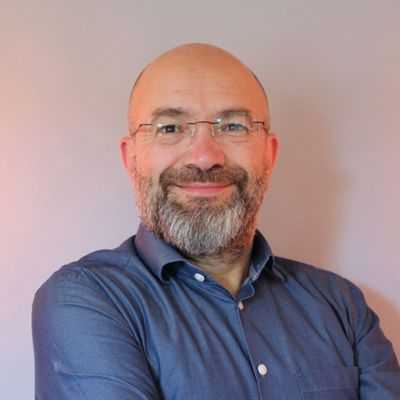
Mark Gober is an international speaker and the author of "An End to Upside Down Thinking" which was awarded the best science book of 2019, and its sequel book "An end to upside down Living”. He is also the host of the podcast "Where Is My Mind", featuring his interviews with world-leading consciousness researchers.
This is the conclusion of this fascinating conversation - listen to the first half in the previous episode #132.
𝗞𝗲𝘆 𝘁𝗮𝗸𝗲𝗮𝘄𝗮𝘆𝘀:
* Where does our mind come from?
* The ripple effect of our actions is interconnected
* Scientific evidence of spirituality
* The close mindedness of dogmatic science
* Life review and near-death experiences
𝗩𝗮𝗹𝘂𝗮𝗯𝗹𝗲 𝗿𝗲𝘀𝗼𝘂𝗿𝗰𝗲𝘀:
Website: https://markgober.com/
𝗠𝗲𝗺𝗼𝗿𝗮𝗯𝗹𝗲 𝗾𝘂𝗼𝘁𝗲:
"I'd have a different way to frame the suffering: Ok I'm suffering right now, but maybe I need this for a certain reason."
-Mark Gober
𝗔𝗯𝗼𝘂𝘁 𝘁𝗵𝗲 𝗵𝗼𝘀𝘁:
I am Agi Keramidas, a knowledge broker and zealous podcaster. I am a firm believer in the power of self-education and personal development in radically improving one's life.
Do you want to gain access to exclusive content, support my podcast, and become part of my inner circle? Then become my patron: http://bit.ly/pdmpat
Join my Facebook group for personal development, inspiration, and actionable knowledge: https://bit.ly/pdmgroup
#PersonalDevelopmentMastery
___
EPISODE TRANSRIPT
___
0:05
Welcome to the personal development mastery podcast. I'm Agi Keramidas. And my mission is to inspire you to rise up, grow, stand out and take action towards the next level of your life. I interview leaders, influencers, entrepreneurs, authors, exceptional people who can and will inspire you to improve your life, Jr for two episodes each week, and make sure you subscribe to the podcast to get the episodes as soon as they are released.
0:36
This is the second half of the utterly fascinating and mind blowing conversation with Mark Gober.
0:45
If you missed the first part, please go back to the previous episode 132. And the conversation will make so much more sense if you start at the beginning of it.
0:58
This is great. And I wanted to ask you going back to what you were saying that what if the brain does not produce consciousness, but instead it receives it like an antenna. This Overture has tremendous implications in the way that people live their life, because most people, arguably, I think it's most people that
1:26
don't have that idea at all, even in a in a spiritual sense if they're very, very
1:36
absorbed, if I can use that word with the conscience, their life experience, their awareness is all in here. And there are so many phrases in the language that kind of describes that as well. So my question really is, is there something that one could do to have a different understanding or maybe accept that little bit more in order to be able to research it?
2:08
Well, as you were asking that question, I think there are two significant implications, or more than that, but to that, I like to focus on the Whirlpool in the stream analogy, because I think this is a starting point for how someone could look at this from a different way. If you imagine that you're a whirlpool within a stream of water, if some of the water from my world will get into your world, or which could happen in an interconnected stream. That would be analogously, like some of my consciousness getting into your consciousness,
2:34
that would be like a telepathic or a psychic effect. So one of the predictions of this model of consciousness is that psychic phenomena would be real, they wouldn't be weird anomalies, they wouldn't be paranormal, it would be normal, if we just changed what we agree to be normal. If it's all one consciousness or something like that. That's number one. Number two is if you imagine a whirlpool,
2:53
that de localises, it stops being a whirlpool, the water just flows back into the stream.
3:00
That would be analogously. Like someone who's in a body, where the physical body dies, their consciousness actually doesn't die, it transitions into a new state flows back into the broader stream. So these are the two big implications. For me, as I've studied this, that wait psychic phenomena would be real. And also there would be something known as the survival of consciousness after bodily death, meaning you don't die.
3:24
Which is a very radical thing to say. But now for me, I'm almost desensitised to it, because there's so much evidence. And the way I've approached this, from a rational academic perspective, as someone who's in business saying, if I'm going to write a book about this, and do podcasts, have to have a rational, rational way of looking at this, if, if any, there's any evidence for psychic abilities in any evidence for survival of consciousness after bodily death, even one piece of evidence, then the model that the brain creates consciousness
3:55
cannot explain it.
3:57
Or we have an extremely difficult time explaining it, because those things should not happen. If consciousness comes from the brain. That would mean your consciousness is just almost like an illusory construction that emerges and pops out of your skull. And it's stuck there. There can't be anything that goes outside of it. Because there's, it's it's not connected to anything. And there could certainly be no consciousness after death, because the mechanism for consciousness is your body and your brain. And when that turns off, it's like a computer shuts off. So there can't be any consciousness anymore. But if they're if we're connected as one stream, what Erwin Schrodinger, the Nobel Prize winning physicist said, he said, In truth, there's only one mind. So the quantum physics is understood this, if we're part of one mind, and we are like, as kastrup says, it's like one mind has dissociative identity disorder. And we're dissociated into these, these alter egos, whirlpools and we can explain this stuff very easily of psychic phenomena and survival of bodily death. And that's my first book actually, it's structured that way in the podcast to an extent a structure that way. I have chapters on these things.
5:00
So in the book, there's a chapter a lot on telepathy, mind to mind communication. There's a chapter on the evidence for remote viewing, which is seeing something that's far away with your mind, both in space and time. There's evidence for pre cognition, which is knowing or sensing the future before it happens, which is this idea that consciousness is not only fundamental, but it's also beyond space and time. So it can reach forward, it can reach backward, because time doesn't even exist at this level at this high level. I also look at psychokinesis, which is the mind impacting matter, just sort of like if you change, we change the waves in the pool in the stream, then the physical manifestations of reality, which change in a corresponding way, so the mind is actually impacting reality. That's that. So that's the psychic abilities. And I also looked at this, the evidence for all this stuff with animals, because they're scientists and looked at this. And then I look at near death experiences, which people that have no brain functioning at all, or little brain functioning, like they had cardiac arrest or some kind of major physiological trauma, or they're under General anaesthesia. And yet they have lucid experiences, which we can talk about a bit more, because there's evidence that that's not a hallucination, looked at communications with the deceased. So these are people that claim that they can get information from dead people and then communicate it mediums, there's actually a scientific evidence for that. And then finally, I have a chapter on children who have memories of a previous life. And I'm referring to research done at the University of Virginia, over 2500 cases for decades. And sometimes the children have memories that can be validated by the researchers looking at historical records. And sometimes the children have birthmarks or physical defects that match with medical records of a person that did die in the manner that the child describes crazy stuff. So my overarching point, here he is, wait a second, if any one of those things I said is real. We haven't even talked about all the evidence, if there's any evidence for one thing, that's what I want to harp on one thing.
6:54
Brain equals consciousness can explain that very well. It's much more, it's much easier to explain if I want to be rational to say, Okay, we got to shift the model of consciousness and we can accommodate for all this stuff. And that's my starting point for anyone who wants to look at this, from an intellectual perspective, is to say, Okay, can I deny all the science? And if I can't deny it, then wait, maybe I have to rethink my view of reality.
7:20
Thank you for this answer, Mark. And, you know, what came to mind where you were saying that was that
7:29
science really is finally catching up with some elements that a while back, they would consider completely the elements of religion, because what you were said, we will send about consciousness
7:44
not disappearing, once we die, but going back or dissolving, or in other words, that doesn't die, it is something that religions, no matter how much the message has been distorted through the ages, but they have been saying that we are immortal. So I will say or we made in the image of the Creator, and so on. So it's, for me, it is amazing, because I have both scientific background and spiritual or, if you wish, curious background,
8:20
which leads to the to the other one. So it's great to see that they are finally that chasma, that gap that is starting to be breached, and finally have proof, I think it is only inevitable, it's only a matter of time before the proof will be so solid, that no one would be able to ignore that it would be like astrogliosis gravity or something.
8:51
Well, I agree with you. And
8:54
one of the things that shocked me most when I first started on all this is I couldn't believe how much research there was. on all of this. I mean, peer reviewed scientific papers. The US government has declassified CIA documents, talking about the reality of remote viewing psychic spying, using people's minds to find things that are far away in these documents. And on my podcast, I interviewed Russell targ, who was one of the leaders of the programme in the 1970s and 80s, which went into the 90s. And he was ever part of that time, but actually training people to do this. So there's so much evidence for it. And yet, how could it be that the mainstream scientific community doesn't talk about this? And in fact, there's an aversion to it? Because now I've gotten to know many of these scientists who study that these anomalous topics, the paranormal, among the board of the Institute of noetic Sciences, which was founded in 1973 by an Apollo 14 astronaut, who had a mystical experience coming back from the moon that he speaks of, I suppose he passed away but he spoke of frequently and said, Well, we need to be studying this stuff scientifically in an independent institution, because at most
10:00
Places, if you're a scientist who says, Hey, I want to study pre cognition, which is how you could know something before it happens, they're gonna say, Okay, good luck getting tenure.
10:09
It's not going to be an easy path for you. So I've had to think really hard. Okay, what's going on here? Because it's, it's, we are at the infancy of learning about these things, I will acknowledge that, like, we might know that there is an effect, but we don't really understand it. However, there's strong evidence for the fact that there is an effect happening.
10:28
And it's been going on for a while that we've known about this. And I thought I had a good education. And I knew nothing about this. And if I talk to my colleagues about it, they would tell me, I'm crazy. And they have said, Okay, that's crazy stuff doesn't exist. So what's going on here is part of that, I think, is there's a paradigm shift happening. And with paradigm shifts, people have a difficult time changing their thinking, especially if you're a PhD. Imagine you're a well known Professor with tenure. And someone comes along and says, look, you know, this theory, you've been talking about your whole life, you missed the biggest thing ever, which is that actually, consciousness is fundamental. And you have to, you have to rethink everything you've done, even though what many scientists have done, there's reality to it, I would just argue it needs to be recontextualized in the context of consciousness. So I think there is a resistance naturally to this stuff, that in some ways, I'm discouraged about, because in the last few years, maybe there's been a bit more receptivity to this, but in a lot of ways, they're still closed mindedness, even though the evidence seems to accumulate, and it gets more and more airtime. I'll tell a personal story that really helped me understand this resistance. So my first book came out and end to upside down thinking, I hired publicist to help me with it, and tell me get the word out. And I was so excited to get this message out to people because they said, Look, I put all the evidence in one place. And I, this is life changing, I changed my whole life, and I could help people so much in science to change. So let's get it out there. And I really wanted to get this the mainstream scientists, even though I knew that there's been resistance, and I wrote about some of the scientists who will say, look, I won't even look at the evidence, no matter what happens, some of them will say thing, they'll say that, that they there might be evidence, but I don't want to see it. That imagine that how I'm scientific is that
12:16
it's so unscientific, but that's the irony of it. Science has become a religion. In that sense. It's, it's dogmatic. But we reached out to, among other places, that mainstream scientific journal to say, look, there's this book, and many scientists have endorsed this book, would you like to feature it in your scientific journal, or at least talk about it? This is a big time editor at a big time scientific journal that everyone knows. He just said, No, I'm not going to look at it. And I told my publisher, we got to show him some evidence, let's just, let's send him the CIA documents. And let's send him a paper that came out in 2018. It was published in American psychologist, which is the official, peer reviewed academic journal of the American Psychological Association doesn't get any more mainstream. And it compiled all of the statistical evidence for things like telepathy, and remote viewing and pre cognition psychokinesis, those things I mentioned of psychic phenomena. He compiled it's called a meta analysis, taking all this analysis that's been done putting it together in all these areas and saying, look, there's a strong statistical effect where in other areas of science, we accept these things to be real, if we get this level of significance, and doesn't mean that it's a very big effect. It's just statistically significant. And I'll give an example, to give your audience a sense of how this works. In the study of telepathy, mind to mind communication, the classic study, it's known as the ganzfeld experiment, you have one person in a room, we'll call that person, Bob, and you have another person, we'll call her Jane. These are not people that claim to have psychic abilities. They're just normal people. Sometimes they're college sophomores doing studies, just to because the scientists need them to be done. Yes. And Bob sitting in a room, he's put into a relaxed meditative state, because the scientists know that when you're in a more meditative state, you might be more receptive psychically. So but he's just put in a more relaxed state. And Jane is shown an image.
14:12
And she's asked to try to mentally send the image to Bob from far away. So she's, she doesn't know what's going on. She's trying to mentally send this image to Bob, excuse me. And Bob doesn't know what she's looking at. So after a while,
14:26
Bob has shown four pictures, he's comes out of his relaxed state, and the experimenter say, Bob, which of the four was Jane sending to you mentally?
14:34
I will say, I don't I don't know. But this one, you would expect the bob would guessed correctly, one out of four times if there were no effect should be 25%. One out of four, overtime over many, many trials, it should approach 25% because how could Bob get any information from Jane and they're not psychic and psychics not real. So what? Actually what the studies show is that it's closer to 32% of the time that Bob guesses correctly or the person in Bob's room. There.
15:00
80% versus 25%, that's nothing you might say that's 7% differential. But statistically speaking, it's massive effect. And it's in a category known as six sigma. There are other studies that meet this too, and psychokinesis. In other areas, Six Sigma means that the odds this is happening due to chance alone, this deviation, due to chance alone is more than a billion to one against chance, more than a billion to one. So this is what's known as small but statistically significant. And what Dr. explicar Danya. In this very well respected journal, what he put together is the statistical evidence for all this stuff. Back to my story, we sent him the editor, this paper, we sent him the CIA documents, which say, I'll give a direct quote, remote viewing, which is the ability to see something far away with your mind. Remote Viewing is a real phenomenon. implications are revolutionary. And they show the scientific panel that evaluated these studies, including someone from Caltech, in the declassified document that's now open to the public. So we send these two documents. And I said, Okay, surely this will be enough to get him to engage. And his response was, the CIA is not a scientific body.
16:11
And he said something to the effect of the American psychologist paper is laughable. Something like that just didn't take it seriously. And that was the end of engagement. He didn't want to engage beyond that, and didn't want anything to do with it.
16:27
I suppose, like anything that
16:30
not everyone is ready to receive a knowledge at any given time, everyone.
16:38
When the time is right, they do receive it. And remember that quote, that I like very much as well. That truth goes through these three stages, always the first it is ridiculed, isn't it then violently opposed. And third, it's accepted as self evident show. And the more you The more I see, these things appearing or new knowledge, or even with God's going on with with COVID knowledge does go through these stages, it's very easy to ridicule, something that only time will tell whether it was to be ridiculed, or whether it became the truth as with everything really in history, we can't see the future.
17:27
Right. This is how science progresses through paradigm shifts and learning new learning, the old way of thinking needs to be revised. Excuse me, in my, in my professional career, I worked a lot with intellectual property, especially when I moved to Silicon Valley. So things like patents. A patent is something that is both novel and non obvious relative to everything that's been done in the past. So thinking about this idea of paradigm shift, I saw this all the time. If there were a new patented technology that would come out, there would be resistance in the industry to by definition, because it's something novel and non obvious, and that the scientists, the mainstream scientists are the ones that work in proceeded this invention would say it would be it would say no, this is not how it's done. We do it this way. So there's always this tension in science, and there's a human, a human desire for their own belief systems to remain intact. There's an egoistic aspect to it, if one especially has promoted an idea to be resistant to something that would challenge it. And then it also takes a lot of mental energy to chips one's way of thinking. I mean, for me, it took so much energy and so disorienting and disturbing to think that I was so wrong. I mean, I don't know exactly what's right now, still, but I knew I know that whatever I thought before was completely wrong. And I think there's even another level to this, that's probably harder to put our finger on. But what we're talking about here is an incredibly empowering idea. It empowers the individual that we are
18:54
part of this universal consciousness, that means every single person is significant in some way in every person's mind, as has power and influence in the world, no matter who you are, no matter what your socio economic class is. So there, one could imagine that those in positions of power, or have who have this kind of knowledge would not want everyone to understand how this works. So it's hard to understand what the if there are social engineering forces as well, in addition to the our own resistance to new ideas, that there could be reasons for this information to be suppressed. And I'm receptive to that, because there just seems to be so much evidence in such such resistance in it, and even in the meat within the media to ridicule this kind of thing. I'm thinking to Dr. Rupert Sheldrake, who is a Cambridge, former Cambridge biochemist who studied a lot of these psychic abilities. His Wikipedia page says that he's like, he's a pseudo scientist that uses something like that in the first sentence. So if you are an everyday person who doesn't have much time to research and you say, Look, let me look at the psychic thing. I'm just gonna look at Wikipedia. He's a pseudo scientist. You're you're probably not
20:00
Continue. And that sort of thing, I think keeps the science down. Yes. And the I won't even go into Wikipedia or Facebook or all the others, media outlets would control eventually what information will be received by, by the general public because one who really wants to go deeper, probably will go past Wikipedia. But for most people, that would be enough to stigmatise a person and for people to say no, this is not credible, if he's a quack or because Wikipedia said, So whoever writes that that's a different, that's a different story. What can I ask you?
20:42
I'm looking forward, you know, as more and more of this, no LEDs and scientific evidence comes
20:51
around, and people realise it and more people accept it, and there is less and less resistance. So looking ahead in the future, how do you see humanity changed by this realisation?
21:07
I'm thinking of Rupert spyera, who is a philosopher in this area, he talks about how we look at the world's problems, we can name them very easily, there's so many problems that we can all point to in the world. He says they're all symptoms.
21:21
They're not the disease, the disease is the misunderstanding of reality and the misunderstanding of our identity.
21:26
That we our identity is consciousness beyond the body as an interconnected thing. Our identity is not our body. So that that's the biggest thing of all, if we could understand that if everyone really understood that and lived it, and this is more of my second book, and and upside down living, how do we embody that?
21:44
That's huge. But it's hard. I mean, because there's so much conditioning, we have to overcome our old our old way of thinking, and we're in a body that makes us believe the world as we see it is what it is. So there's a lot of a lot of hurdles to overcome in this process. But I think that's the ultimate thing that we can really, if we can get to. And there's a dedication component to this, that it takes so much mental energy and time and commitment to really want to go down this path to fully embody it. And some called the path to enlightenment there lots of different names for it. And I can say this from my own experience, because I prioritise this left my my career.
22:25
There are challenges to it. But I think if more people committed to these things like personal development and spiritual development, it could improve the world in many ways.
22:40
Is there a line do you think?
22:43
Where that try to transcend that by idea that consciousness is inside our head? Is there a line where this goes beyond just intellectually understanding it and having to use some kind of, you know, deeper understanding spiritual, if you want, or
23:06
something more than the mind itself?
23:11
Now, as I pointed here, with our conversation, it's a mistake. What is at least I realised when I did well, I want to say comment on that because our sensory organs are located up by our edge. So we here we see, we taste so it feels like our consciousness is up there. Some people have offered a thought experiment, what if our eyes were on our, at our feet? When our ears were down there, what will we where are we experienced consciousness, but you're getting to a very important point, which is the embodiment and the experiential aspect of all this.
23:46
I like the way the yogic tradition breaks this down, they talk about four pathways, which I think can be incorporated into any tradition that you could think of. The first is the pathway of wisdom, it's known as Yana yoga. And in theory, all of these lead us to an embodiment and an understanding of all the things we talked about. So there's the wisdom path, there's the Karma Yoga path, which is selfless service. There's the bhakti yoga path, which is devotion. This could be rituals, chanting prayer and attitude of being gracious in the world. And fourth is generally energy, which could be anything from yoga, to meditation, to breathing exercises, to nutrition, anything to focus on the energetic aspects. So wisdom, selfless service, devotion, and energy. They're like different pathways up a mountain. That gets you to the same point of that many enlightened sages have spoken up. They speak very similar things of oneness and an unconditional love.
24:43
Which, by the way, comes up in the near death experience, when you get the brain out of the way people talk about it. People talk about this with a psychedelic DMT that this one mind is an infinitely loving state of being. That's actually our true nature. And we're sort of trying to get back to that and get rid of all these blocks.
25:00
So then it becomes a path of how does one, how does one do all those things to get the knowledge and the wisdom all the way up and to be doing selfless service and to be devotional and to have energetic practices for each person might be different. And as having studied spiritual paths, which is more of my second book is like, what are the commonalities, whether it's the religious figures that people talk about, like the Buddha, or Jesus Christ, or we could, Muhammad, there's parallels and all these people that have elevated themselves in consciousness, but also in modern day life. There people are going through these awakenings all the time, when there's a podcast called Buddha at the gas pump, which has been very influential for me, because the coast Rick Archer interviews, he's interviewed hundreds of people that have had these awakening experiences everyday people, you're, it's like you're pumping your gas at the gas station, and you see someone there. And that person could be at a very high enlightenment level, but they're just normal people,
25:51
that people go on these four pathways. But
25:55
for me, it started with knowledge. It was all wanting to learn,
25:59
you know, what, what is the science say? But as I progressed, in my own journey, I've been thinking about these other pathways, how am I?
26:07
How am I serving? How am I being devotional? What kinds of energy practices and what am I doing? And the interesting thing about these pathways is that they're interrelated. That when one learns more about the nature of reality, the conclusions that one will reach is that we, the conclusions are that we are part of this one mind, there's an unconditional love aspect, we're interconnected, and that would naturally want to make us want to be of service more, because we're interconnected. It would also make us naturally more devotional and more gracious, because we're part of this broader intelligence, it would naturally make us want to want to improve our,
26:43
our energetic body to be more connected on a physical level to this. So it's like you started on one path, but the others naturally become incorporated with it.
26:51
So what is the going back to your original question? I think what you're alluding to is like kind of how do we add an individual and collective level get to this point where we're more connected to truth? Because I think truth is something along the lines of what we're discussing. And I think the way we do it is by reorienting our lives. And I started my second book by asking you a question, I say, what is the overall intention of your life? And I asked people to think about that. And the whole book is devoted to answering that question. And I answered for myself. But if we really think hard about what's the intention of our life, where's our compass pointed? And, and then actually live a life that seems to be in alignment with reality? To me, that is the ultimate solution. Because when we shift our consciousness, reality shifts, and if we shift consciousness, collectively, how does reality shift? That's a big deal. And I want to give one really concrete example that I like to talk about in every interview, if I can, because it's, this is a life changing topic. It's actually Episode Six of my podcast, we did a whole episode on it. It's called the life review. Yes. And the life review is experienced in the near death experience. In short, it's an N d, n, n D, which I mentioned is a time when the brain is barely functional or non functional. And yet a person has a lucid experience. So Dr. Bruce Grayson from the University of Virginia who I interviewed for my podcast, he's been studying these near death experiences for decades. And he's, he says, we're left with this paradox, that at a time when the brain isn't functioning, the mind is functioning better than ever. What is going on, you get the brain out of the way and people are hovering over their bodies. They talk about this unconditional love stance, they see deceased relatives, sometimes sometimes they see beings of light. And sometimes they'll see things in the room, that upon being resuscitated are validated as accurate.
28:37
So there'll be like, I hovered over my body, I saw my own resuscitation, I saw something in the other room. I saw something on the roof or the ledge or something outside, and they come back in, and then the doctors and family say, Wait, no, no, you could that's not possible. What you're describing is accurate. These are very significant. They're known as vertical out of body experiences, meaning the thing they experienced was verified as accurate. You know, that means it's not a hallucination, by definition. So I give that preface to say that okay, what happens in the end D state, the near death experience is very significant to tell us something about the nature of reality. What are we missing with our brain? What is the blindfold blocking out, and what people often report is a life review, also in this state, of being out of their body or whatever, where they relive their whole life in a very short amount of time. So something with time is weird, that you could relive your whole life in a short amount of time. But what people say is that not only do they relive the events through their own eyes and feel everything that they experience, but they relive it through the eyes of the people that they impacted as if they were that person.
29:40
Okay, so this is the idea of interconnectivity. The one mind it's like, it's like wearing more in this other dimension of reality, the one mind can switch lenses, it can be multiple whirlpools at once. This is incredibly significant, because when people come back in their bodies afterwards, after the life review, they say, Whoa, whoa, whoa, these materialistic things I cared about
30:00
Those are not the things I was seeing in my life review, I didn't see how much money was in my bank account, my life review, I saw how I treated the cashier at the grocery store, and how that action positively or negatively impacted every other person in line afterwards. So what people say frequently is the little things are the big things in the life review. And they change their life when they come back often, sometimes they change their jobs, they get divorced. I interviewed a man named Danny and Brinkley for my podcast who's had four life reviews, in four near death experiences, he was electrocuted, struck by lightning, he had open heart surgery twice brain surgery once and each time we had a life review, where he relived his combat days in Vietnam. So he experienced the deaths of the people that he killed through their eyes got to feel that pain. And for him, it was very difficult to talk about to have to live through that multiple times. He also told me that he experienced the pain of the child that would no longer have a father because he had killed the Father. He felt the indirect effects. He said they were not quite as strong, but he felt the indirect effects. So you can see the rippling of our actions. So just hear that fact, for your listeners. And I always I we never know who's going to hear this when it could be next week, it could be years from now someone hears this. But think about the possibility that any that a percentage of what I just said is true.
31:22
Think about it, that this is the nature of reality. We're interconnected, we have an amnesia somehow from it. We don't remember it in this state. But that's the nature of reality, that we're interconnected and our actions actually matter that can dramatically shift our lives and also shift the lives of others around us because of the way we start to treat them.
31:41
Wow, this is mind blowing. And
31:46
yeah, that ripple effects. I never thought of it in such a way but yours. It does make complete sense and
31:57
extremely intriguing conversation that could that could go on for a very long time. I would I would like to start wrapping things out, though. And I'm going to ask you some quickfire questions, just to
32:12
start concluding. And the one I always start with is what does personal development mean, to you? Since this is the personal development mastery podcast? Yeah.
32:26
Well, I would like to commend you on on having a personal mastery podcast because I think it's,
32:32
it's the most important thing we can do. It is the evolution of our being. And that's to me, if we combine the reincarnation research that I mentioned, at the University of Virginia, it's like the recycling of the water and the Whirlpool in the stream, you know, you become one Whirlpool, and some of the water gets transferred into another. There's strong evidence for that. And this life review suggests that we're evaluating ourselves, we're seeing how we do in life, no matter what our circumstances are rich or poor, it doesn't matter race, none of that matters in this day, it's how are we treating each other. So what's personal development, then it's the evolution of our consciousness, some would call that our soul.
33:06
To me, it's the most important thing we can do. Because from one life to the next, even if there is reincarnation, and we may be physically have some, no aspects of how we were harmed in the past life shows up in this life. The research suggests that's true, maybe some of our characteristics from a past life transfer. But I'm not going to take my house with me, my car, my bank account, they don't come with me in the next life. So they're, what's transferred is the evolution of our consciousness. That seems to be a theme. In my research, however, the information is obtained through spiritual connections. Everyone says the same thing, that we're here to evolve our consciousness, at least that's part of what we're doing. So personal development, that is the evolution of our soul of our consciousness. What more important thing Can we do that That to me is the centrepiece of our whole life is evolving. And it could manifest differently for different people. Although the elements of the evolution are very similar. It always comes back to self love.
34:02
That usually seems to be the what is, there is a lack of that in whatever thing we're trying to develop in some way. And that could be if we, if we don't love ourselves enough, we then mistreat other people, it can manifest in different ways. But it usually comes back to this concept of love, not not romantic love, so to speak. But it's it's this something that's transcendent, the idea that we're interconnected, and we're expressing that in some way, but it also means that we are, we're whirlpools within the stream. And I think in the spiritual community, that can be a tendency to be to say that there's only altruism, which is very important, the altruistic aspect, but then there's the individual development aspect. So that can be lost sometimes to say, well, all I'm going to do is focus on everyone else, which is very admirable important, but there's the focus on the self too. And it's sort of like when you're on an aeroplane, they tell you to put your mask on first before your oxygen mask before you can help other people. The personal development will will then enable you to help others
35:00
People more.
35:03
Thank you. That's a wonderful answer, then.
35:08
Let's say you could go back in time and meet your 18 year old self, what one piece of advice would you give him? I was thinking about that this morning, I was thinking about things that have happened in the past. And it's interesting, I have much less regret than I used to. Because everything that's happened has led me to this point. And even the things that I maybe cared about before in terms of accomplishments and more material things that led me to work really hard in school and professionally. And all those things enabled me to write a book so quickly, and to do the things that I do now. So if I were to go back to my 18 year old self,
35:45
it's hard because it led me to where I am today. And that enables me to be this vessel.
35:51
But I would tell myself, I would I wish I knew what I know now, because there would be much less suffering. There was a lot of suffering that came from having expectations and wanting to have certain achievements, and being focused on that without having any context for it.
36:08
Can I argue with that, that, that suffering might have been your own evolution of your consciousness? And you had to go through it?
36:17
Yes, you're completely right. It's it's paradoxical. That suffering enables evolution. Absolutely. Right. And I look at life that way now, because I feel that we are in an evolutionary machine effectively, with intelligence. And this is an important point that I've, in the last few years of like, more solidified within myself, that not only is the one mind unconditionally loving, because that seems like that's what people always experience. And it kind of makes sense to me.
36:44
But it's intelligent and infinitely intelligent. Now, how do I get there? Well, I'm intelligent, you're intelligent, every living species has a degree of intelligence. And we're part of the stream. So that means the stream has intelligence, logically, it follows. But if we look at the complexity of the universe, down to the smallest levels, looking at atoms to the biggest galactic levels, there's infinite complexity. So it would stand to reason that this one mind is of infinite intelligence to be able to embody this complexity of the universe. Yes. So that means everything in our life, could it be that everything that happens in our life is almost like a mathematical calculation derived for our own evolution, and some would call this karma. It's almost a different way of thinking about it. But the same thing, that what happens in our life is a magnetic attraction of what we need in some way to evolve, whether it's coming from this light or from past life that we're trying to work stuff out. For, with, you know, our consciousness is continuing. So we might be working out things that happened in the past, like two.
37:42
So I think this there is this element of maybe needing to suffer to balance things out or to learn. And I'm thinking now of nisargadatta Maharaj, who I think was a great sage died several decades ago. He said, life is the supreme guru.
37:57
Meaning that everything that happens in our life is our teacher. And if we look at life that way, even though something happens that causes us to suffer, if we can zoom out for a second and be the helicopter looking down, it's like we're almost in a maze. And we don't see the high level perspective, we just see what's immediately in front of us. If we can take the time to zoom out and say what's, maybe there's something ahead in the maze that I don't see this suffering, that's near terms leading me to something later, that's a good thing. So maybe, to re answer your question, the suffering maybe needed to happen, but I would have had a different way to, to frame the suffering. To say, Okay, I'm suffering right now. But maybe I need this for a certain reason.
38:37
Yeah. And it is, as you said, it is a paradox. But it's, it's it. I love this question, because it I get some very interesting answers wrong quiz.
38:48
Mark, out of all this conversation we've had today, if you were to give to the listener, one actionable items, something they can take away and implement, and
38:59
what would you tell them?
39:04
I go back to the life review.
39:07
To just there could be a tendency to not want to think about that that conversation that we just have, because the implications are so immense, you almost want to say, Oh, wait, what have I done in my past or? Well, my implication, my everything I do has ramifications in the world, and there's rippling effects of my actions, and I'd take personal responsibility.
39:27
I think that's a big part of our life is to take personal responsibility. And I think one of the issues in society is a tendency to become a victim and not take responsibility.
39:38
I will close with this. Ken Wilber, the philosopher, he says. It's not just about waking up, which is this, you know, having maybe incredible experiences and meditation feeling the one mind the unconditional love, that can all be in the bliss, that's part of it. But there's also other areas of development that are somewhat independent. He says there's waking up, there's cleaning up and there's growing up, this will be the party
40:00
message to your audience. Waking up is very important. So maybe that's doing our knowledge and our and our meditation and our devotion and our selfless service. But there's cleaning up too, which is looking at our own trauma and figuring out maybe what's been repressed, and allowing that to be expressed. Because if we don't clean up, it's gonna come back to haunt us in some way. And we're gonna be forced to, but there's also growing up, which is this life review concept of responsibility to accept responsibility for our own actions. And to, to not just want to shut it out and not to be naive to acknowledge that there can be darkness, as well. So there's waking up and cleaning up and growing up the maturation process. If we think about our lives in that way, how are we waking up? How are we cleaning up? How are we growing up? And just maybe for a minute a day? ask yourself that question, and then ask the question, what's the overall intention of my life? Yes, I'd come up with an answer for it. I know, I just left a lot of different things.
40:57
But I will summarise it by by saying this, to ask yourself the question, what is the overall intention of my life? How am I orienting my compass? If you ask that question, everything else will flow from it.
41:09
And that way, small people would ask that question, because I bet that if you asked that question to lots of people, most of them would have never even considered to answer it. Sadly.
41:24
Mark, how can people connect with you and find out more about yourself and what you do?
41:32
My website, which is my name, Mark Gober, calm, Ma, rk geobee, er, calm. Also my two books in end to upside down thinking and an end to upside down living? They're available on Amazon. They're in Kindle hardcover on Audible. And my podcast, where is my mind, which is available on Spotify, Apple podcast, all the major players?
41:54
Is that I know we,
41:56
for me, it was a really intriguing conversation. And we talked about many things. And I'm sure there were like, 20 times several more that we could talk about. But from your point of view, is there anything that you were hoping that would be discussed today, and we completely missed it?
42:15
We covered a lot. Thank you. You asked great questions, very well informed questions. And I, I can tell that you've done a lot of thinking about personal development and orienting your compass by based on the questions you've asked. So I think we've covered
42:28
we've covered what, what I would hope to cover and at the same time, we're in an intelligent universe. And whatever came through in this conversation probably came through for a reason that I don't know, because, and you ask questions, probably that you might not understand fully. And so I'm just gonna hope that your audience listens to this, whatever they do, and that they get what they need from it.
42:50
That's brilliant. Thank you very much, Mark, I want to thank you again, for your time and sharing your insights with me today, I want to wish you all the very best with
43:02
all your plans for the future and helping to bring that nor LEDs.
43:08
And that scientific proof of what is happening to the world.
43:13
Any last parting words?
43:16
I want to thank your audience for listening this far as the conversation because if you have the you've been exposed to a lot of ideas, what's fun for me is that I get to spend all this time learning and then pick out the what I feel to be the most important pieces, and then we can have these conversations. So but I would just encourage your audience, that if you're interested in this, and you feel a poll, not everyone feels the pull, but some people feel a really strong pole, I would say go with it. Because
43:42
what is the nature of reality, if what we're talking about today is even partially true, then there's probably a desire for all of us innately to want to understand ourself, because our self is connected to the nature of reality. So I would just give your I would give encouragement to go for it and to maybe if you're really busy even to instead of listening to one podcast a week, listen to podcasts, so we think about how you can ratchet it up. And I say this from personal experience that is really life enhancing and has helped to reduce suffering. There is still suffering, but I can contextualise it much more. And so life improves. Even though it can be a rocky process upward there can be some downtimes it's an overall upward trajectory.
44:24
Thank you for listening. If you enjoyed this podcast, please subscribe and rate it on Apple podcasts. And also share this episode with someone who you think will benefit from it. If you want to find out more about what I do and gain access to exclusive content, join my facebook group but for development mastery. The link is in the show notes or you can simply type beat dot L y sluss PDM group
44:51
and until next time, stand out don't fit in
Transcribed by https://otter.ai

 5.00 (74 Reviews)