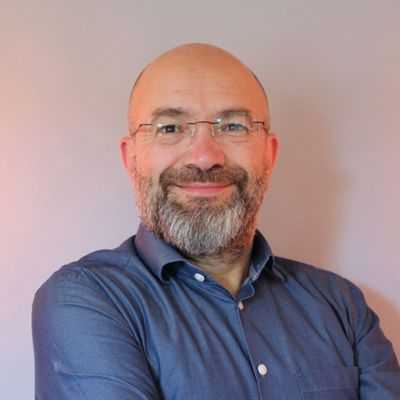
Sébastien Fouillade is a product leader at Microsoft, but an entrepreneur at heart. He has been involved with spiritual work for 10+ years, and with psychedelics for over 6. During his spiritual journey, he discovered that psychedelics allowed him to go deep; but he kept his new self away from his corporate identity due to the stigma of psychedelics. He eventually came out of the "spiritual closet" as he says, freeing his authentic self. He is on a mission to remove the stigma associated with psychedelics and inspire people to find their authentic selves.
This is the first half of this fascinating conversation - tune in to next episode #145 for the conclusion.
𝗞𝗲𝘆 𝘁𝗮𝗸𝗲𝗮𝘄𝗮𝘆𝘀:
* An out of body experience during a yoga class
* A journey of "spiritual renaissance"
* Psychedelic = a Greek word meaning "soul manifesting"
* The stigma around psychedelics
* The difference between drugs and medicine
𝗩𝗮𝗹𝘂𝗮𝗯𝗹𝗲 𝗿𝗲𝘀𝗼𝘂𝗿𝗰𝗲𝘀:
Website: https://fooyad.com/
𝗠𝗲𝗺𝗼𝗿𝗮𝗯𝗹𝗲 𝗾𝘂𝗼𝘁𝗲:
"Slow down. Focus more on the moment and the depth."
-Sébastien Fouillade
𝗔𝗯𝗼𝘂𝘁 𝘁𝗵𝗲 𝗵𝗼𝘀𝘁:
I am Agi Keramidas, a knowledge broker and podcaster. I firmly believe in the power of self-education and personal development in radically improving one's life.
Here's my Essential Personal Development Blueprint: bit.ly/agiscourse
Join my Facebook group for personal development, inspiration, and actionable knowledge: bit.ly/pdmgroup
#PersonalDevelopmentMastery
_____
Episode Transcript
_____
0:03
Welcome to the personal development mastery podcast. I'm Agi Keramidas. And my mission is to inspire you to grow, stand out and take action towards the next level of your life. I interview leaders, authors, successful entrepreneurs, spiritual teachers, exceptional people who will inspire you to improve your life. Tune in for two episodes each week, and make sure you subscribe to get them as soon as they are released. In today's show, it is my real pleasure to speak with Sebastian Fouillade. Sebastian, you are a product leader at Microsoft and entrepreneur at heart, and you have been involved with spiritual work for 10 years now. And with psychedelics for over six, during your spiritual journey, you discovered that psychedelics allowed you to go deep, but you kept your new self away from your corporate identity due to the stigma of psychedelics, eventually, you came out of the spiritual closet, as you say, frane, your authentic self, and you are now on a mission to remove the stigma associated with psychedelics, and to inspire people to find their authentic selves. So once then it's a real delight in the joy to be speaking with you today. Thank you very much.
1:34
Thank you, Maggie, thank you. It's a pleasure to be here and to follow my mission and my calling.
1:41
And and it is a topic that I find intriguing myself, I have a personal fascination with it. So I'm very much looking forward to listening to your views. Let's start though before we go here. Let's go back and start with some bit of your of your January your story. So can you so I want to go back to just before you started your spiritual journey 10 years ago when you say so can you take us back there and paint a picture of who you were, what were you doing before you had that? That moment of transformation?
2:27
Yeah, I mean, I was a typical entrepreneur at the time as an engineer, I love to create companies and software and product. My whole background was in engineering. And what's interesting is actually, if I go further back, I also loved art a lot. But I had to choose when I went to college, between art school and engineering school, and my family really pushed me for engineering because we had a lot of artists in that in our family. And there were what you'd call starving artists. And it was really hard for them. So it's like go to engineering school. So I went to engineering school. And I got really busy for many years, being a good engineer, starting companies joining companies. And I kind of buried that part of myself during that time. And about 10 years ago, now, I decided to do a start up to help families reconnect with nature, to help them get their kids off the couch, go do scavenger hunts outside because when I came to the Pacific Northwest, where Microsoft is, I saw a lot of parents were just giving the phones to their kids as as babysitters. Yeah. And that drove me crazy. I was like, This is not natural. This is wrong, I need to do something about this. And so while I was doing that startup, in order to cope with the intensity of the startup, I took on the yoga. And as part of yoga, I did meditation training. And I also did teacher training to teach yoga. And as part of teacher training, we did some really intense, bright breathwork yoga classes. And it was called Kriya Yoga. And, and they talk about that in the in the book The Autobiography of a Yogi as a very powerful mode of yoga. And basically for two hours, you've got your eyes closed and you do some breath work. And at the end, you do some humming and there's different things involved. When I got to the end of the class, and I did the humming part. I left my body. I mean I literally was in I felt in two places at once. I was in a different room. The room was dark, but it felt like a room. And I saw a symbol on the wall. And it was only about 10 seconds. But I had, I was like, Oh my god, all the spiritual stuff is true. And I had tears in my eyes. And that moment really changed my life forever. Because before that, I was the engineer who tried to understand how everything works, the why behind everything. I mean, I knew how to build computers from the the microprocessor to the compiler to the code, you know, from the bottom up, this is, this is what I learned in college. And so that my reality was very Cartesian. It was like zeros and ones, it's like, you know, it's like, I can touch it, it's real. And then all of a sudden, I get hit with this. And, and my mind was like, Oh, my God, like, all that stuff that I thought was fairy tale, all that stuff that, you know, I thought that was just like religion, or make belief or all that. Like, it's, it's real. It's another reality. It's and so it's just a little bit I hate to say that, like me, Oh, wait, waking up in the matrix and discovering in our world. And so that just started my, my journey and my quest to learn more. And to deepen my understanding of that.
6:28
I'm curious about the symbol that you said that. You said that you could see a symbol Did you find out what that symbol was?
6:37
Uh, you know, it's interesting, because I researched that. At the end, I think it actually looked like a very simplified version have two hands in a prayer mode, it was it was kind of like a one line that curved and had a peek at the top. And it looked like two hands that were put together in a prayer. And it was yellow on dark background. And so but I had to write it. So the first thing I did is I grabbed a post it in the yoga studio and wrote the symbol because I had another fear at that time in my life, which shows forgetting, I was really afraid of, of memory and forgetting things. And I don't know why. And I, the medicine actually helped me come to terms with that. But I didn't like to forget, thanks. I wrote it down. Right away.
7:41
Can I can ask you I have one more question, because I'm very curious about this moment. So after you've had this experience, I suppose you shared with the group or your teacher there? Is that based on what they said, Is that something that happens to many people? Or was that some as an experience, it was very unique to you, was that something that you had that caused this experience to appear?
8:13
I think it happens to some people. Because we're we're breathwork you can really attain mental states that are similar to the states you can attain with psychedelics. And the breath work that we did was extremely intense. And I went really intensive to it at the time. I was actually using anger to fuel my energy. Like Yeah, yeah, you know, and, and using that actually, just drained me so much. And got me into such a state that I think it opened that side of me that actually got me to to leave my body. Later on, I found out how to manage my energy better and, and pulling from a more positive source of energy. But like, it doesn't happen to everybody, I think it's you get out what you put in, in those classes, and then the breath work. But there's also people who just focus on breath work and out of body experiences with breath work and able to have more repeated results. This was on the intent of the class necessarily, I just, I feel like I just stumbled on this. Or maybe it just, you know, people would say it appeared when it was meant to appear. And it did,
9:42
and it obviously changed the direction of your life completely afterwards, because you took on this journey, this quest of looking inside and looking into the spiritual development. Can you share briefly what kind of steps you took afterwards? or How did you went on to expand your knowledge of this new awareness that
10:09
you had? Yeah, yeah. So in parallel, I had also learned Transcendental Meditation. So I was doing Transcendental Meditation religiously, in parallel. And going very deep. Like I was just appearing, when I went deep, I was just nowhere. Even if I had an alarm clock next to me, it would not like I would not hear it. I was gone when I did my sessions, and I would wake up or come out of it. 20 minutes Exactly. After I started my programme. But the other thing that happened that was interesting is we have float tanks, which our I don't know if you're familiar with that. But it's basically sensory deprivation tanks where you're just floating in salt, water and complete darkness. So I started doing that, because some people had really good experiences with it, where they went back to their childhood and, and other things happened. And I was curious. So I started that, for me, it actually made me because I'm tall and the float tanks tend to be not as tall as I'd like them to be. I didn't go as deep as I went with meditation. So I was like, Okay, I tried that. And I've tried tried float tanks. The other thing that happened is in the state of Washington, cannabis became legal. So I started using cannabis with meditation. So it was more as a tool. And and so the first time I used it to meditation, I was like, oh, wow, there's even more there. There's, there's this colours, I can go deeper. It's almost like going between dreams, like almost lucid dreaming, but be be going to dreams and being awake. And so I did a little bit of that. But there was there's kind of some side effects of using cannabis, at least for me, that I don't really like. So you know, I didn't I do that. I mean, I do it on and off, but but not too regularly. And so I think that's takes us to about when I met my wife. And so when I met my wife, and we were dating, she was she was going to the temple of the wavelight, which is a retreat centre, in the jungle of Peru. And I really wanted to go with her. But but they were booked. So instead, I went to do I was ceremony, so she was going down to the jungle to do I was cast ceremonies I wanted to do was get
12:56
ceremonies and she'd done it before or was she going for the first time?
13:00
She had done it a couple of times before, but it was not formal. It was with it was with a guy that also helps people do tourism.
13:14
So just curious to see her level of experience compared to you. Yeah, that's why I asked No, no, yeah.
13:22
Well, we actually did teacher training together. And I think what was good in our relationship is we had similar spiritual foundation in the meditation, the yoga. And so the reason I wanted to go do I was with her is I wanted to continue to grow that common base together. So because I couldn't join her in a jungle, I actually went to work with Native Americans locally, who do who are allowed to do I was cast ceremonies as well as pod ceremonies. And so at the same time, as she was doing ceremonies in the jungle, I was doing ceremonies on the Olympic Peninsula, in Washington State. And the first ceremony I had so now that was six years ago, was just amazing. I mean, it was a group of about 60 people around a giant bonfire with the chief and his wife kind of in the centre, not the centre of the circle but the looking next to the altar looking at the fire and and you drink the you drink the medicine, and about 45 minutes to an hour and you start filling its effects. And I was looking at the fire. When I started feeling the effects and the fires started sinking into the ground. And it started breathing. Like the earth was was breathing like it was a heartbeat. And the sparks of the fire started connecting to the sky. And I had that, that huge smile and and I was so thankful that I also done all that yoga work before and meditation work because it kind of all flew very nicely together. And, and then I left my body. And I was aware that I had left the body. And I met my wife, who was doing ceremonies in the jungle. And this is a, this is a great story, because the first lesson I got from from my last guy I didn't ask for, and it was very powerful, but I met my wife. And still being an engineer, I wanted to test everything. So I was like, Honey, I'm gonna give you a number. And when we meet again in person, you'll give me back the number. I want to know if this is real or not. So I give her a number and the number was six 363. And, and then she was in the jungle for two weeks after that. So I couldn't talk to her. So I waited two weeks after that. And when she came back from the jungle, I was like, Okay, so what's the number? She's like, what, what number I, we met and we talked. And she's like, it's just like, when I was going through my process, I didn't get a number. I'm like, oh, man, like it didn't work. But what's interesting is about a year later, I was looking at an old French photo album of my family, when I grew up as a kid. And the margin of the album, where there was some pictures, I see the numbers, six, three, I need to sell the memo, which means six, three, mom's birthday. Because in France, you write the numbers in the opposite order, as in the US, it's like the day and the month. And what's funny is every year I until that point, I knew my mom's birthday was in March, but I kept on forgetting the day. And so the first the first lesson from the I was get medicine was Do not forget your mother's birthday. Here's your mother's birthday and that was that was my first ceremony and and you know what it highlights is so many good things about iOS guys is one is people go cold I was a mother I was cow or grandmother I was cow. But there's a very strong feminine side to I was calm, there's also a very strong sense of family when you do a ceremonies. And and the other thing it highlights is a lot of time you go in there with a certain intent. And you get a different lesson from the medicine. And
18:15
and for me that first ceremony, it's and sometimes you also don't understand the lesson until much later later. And so this is what happened that first ceremony and then the second one I saw the birth of our daughter in the in the fire there the spiritual soul of our daughter coming out and and everybody around the fire was was like birthing her. And and she was born two years later. And it's almost like I had already met her. And so the the second ceremony was was fantastic. And I was actually really, really blessed with my my first few iOS cast ceremonies. And and so you know, after that I the next year I went to the jungle and I wanted to follow in the path of my wife and do what she had done. And then I got another lesson which is you You shouldn't try to follow her path. You shouldn't be here for yourself. And and that that was that was a hard lesson. But once I got it kind of halfway through the ceremonies, it really changed everything. So yeah, I mean, I could I could go on for hours. I got so many lessons. I journal a lot. I've got two journals full of teachings.
19:50
I want to certainly discuss deeper about Ayahuasca and its effect and more things about that. Before we go there, I would like to also discuss that element of your story that you've done all this wonderful things which are very unusual to most people. And then you come back in your day to day life with your work and everything, and you have to keep your mouth shut because it is a conversation that is taboo. So can you share your experience in that? How are you feeling? And eventually what tipped the scale and you decided to get out of the spiritual closet? As you said?
20:40
Yeah. So six years ago, I don't think people were talking about psychedelics as much as they're talking about them now. And and so when you come back from a ceremony, like like this, especially the first one that really makes you question reality, it makes you question how we've organised our society. It makes you question the importance of what you do every day sometimes and maybe the the rat wheel, where we're stuck in it makes you question and all of that. It's a little bit challenging, and there's different ways to to manage that some people journals, some people have kind of a buddy, person that they ever did ceremony with, or a friend that can talk to some centres provide integration. For for me, I, I journaled, and I came back to I was doing, I was actually transitioning. So I had a little bit of time to myself, I was transitioning between a startup and Microsoft. And I had a week of buffer. And that was really good. Because I wasn't talking much about it. Because I had created two different personas, I had created my work persona, which was usually wearing dark colours, and was very conservative and serious. And I have my persona at home, which I had to be a dad, I had two boys, I have two boys and order now. And so I never when I came back, I actually didn't integrate my shift in the high school the world with my life yet. I knew there was something there. And it was a little bit of a struggle for a while because I continued to do ceremonies that continue to get lessons. And I think what happened is there was a there was a bigger shift between those two sides of my life, the more square side that had been living for so many years. And and the more spiritual side that was just growing like crazy. And eventually, I think it wasn't until three years ago, when I went to Peru and the Sacred Valley and I talked about in my, in my book, why I did another ceremony and and in that ceremony, I met elders from a tribe called the shipibo tribe. And it was in the vision that I met them and they're like, No, you need to follow your calling. Like you need to be authentic, authentic to yourself, and you need to help people and you need to heal people. And you need to saying like, Whoa, that's a lot and I'm not ready to go all hippy on that and drop everything that I'm doing and and challenge I'm in charge of my life and the safety of my family and because it's it's a big deal coming out of the spiritual cause that when you have kids too, and and a family and you have responsibilities, and I tried to have my cake and eat it too, where I tried to continue on my spiritual path but also stay in the closet and continue my corporate job and and about a year and a half to two years ago. I started getting very depressed. I had brain fog. My motivation was down. It was hard for me to stay focused. It's almost like my subconscious was like trying to slow me down every time I was trying to do my square day job. It's like what the heck are you doing? You're not doing the right thing. And I think I had another I was cast ceremony that made me realise,
25:08
like, dude, like, you need to bring everything together. You can't avoid your calling. And it's funny because I had met people in the past. And they told me Well, I got this calling. And I became a pastor asked like, what do they mean by a calling? And it became very clear for me at that point is like, no, this is something that you cannot avoid. This is something you're cold to. And this is something that if you try to avoid it, your subconscious will pull you back toward it. And this is what what was happening. And you know, I after that, I was like, No, I'm just, I'm just very open, like everybody at my work, knows what I do. I'm open about it. I've got coworkers that come to me when when they have challenges I you know, I lead with the heart and talk with them. Some of them have questions around working with medicine, I help them if I can. And and I tried to help on the side psychedelic companies, so it just feels so much more natural and freeing. And, and honestly, like it it, it really did have to take all that for me to realise how deep of a calling it was.
26:35
And that's the thing with the calling when you embrace it, and you follow it, you kind of know that it is the the calling.
26:47
Yeah, it's a little scary. That's the thing. It's like, it's a little scary, because when you open yourself to the calling the universe answers and the universe answers in many folds. And it's really been very clear for the last seven months that I've talked to, I've met so many amazing people. I've gotten so many opportunities to help amazing people. And I'm like, wow, like this is what it feels to be free and to be yourself. So you know that that's another mission that you know, talking about being authentic, that that's something that I really want to help people with is I wouldn't call it finding your calling, because I think it might be a little scary to some people. But finding your authentic self, I think is as important as finding your calling. And if you do that it's very freeing, and it actually opens up opportunities that you wouldn't never think of.
27:54
Absolutely. And I would like to discuss a question about the, the stigma associated with all this before we actually go into the some more details and things that I really want to ask you. But let's talk about the stigma first. What do you know about it? When Why is there SATs? I will use the word stigma again. But I think it's very accurate. Why do people perceive psychedelics? Obviously, the question could expand to other things as well. But let's leave with our conversation now to the psychedelic since we're talking about it. Why is there a stigma in the first place?
28:43
Well, there is a very effective, well, effective war on drugs. And when I say effective, it was effective in creating that stigma not necessarily effective as far as the results obtained, but it was effective as creating the stigma. When I moved to New York City with my parents in the 90s, I remember the posters and the subway that showed this is your brain. This is your brain on drugs, and it showed scrambled eggs. Or just say no to drugs, it created a very binary view of the world, which is if it doesn't come from a doctor, it's bad. That was it. And the other one that that had created was like a feud. If you do something that doesn't come from a doctor, you're you're gonna overdose and die. That was another one, or you're a loser. And or you know, and so like those were all the different different stigmas that were created as part of the war on drugs. And then on top of that, they created a lot of fictional stories about the bad side effects of of using some of those medicines. And they still do that, in fact, you know, there's something called kratom. And, you know, I was listening to a podcast the other day, and they're still active. I hate to use that word fake news. But, you know, in the case of the war on drugs, it's that's probably where some of that started. That that's happening. And so, uh, you know, that was part of the stigma, and, and then my parents, you know, also got fed that and so then they kind of raised me with that information. And that, that built on that. And so I think that that was a really bad thing that happened. And also, the other thing that it did is it forced people in the closet. It forced very good people, very smart people, very accomplished people in the closet, people that are very public. And, you know, if you look at the influence of psychedelics on society, over the last seven years, it's ginormous, it's huge influence, like the computer revolution influenced, you could even argue space travel, and influence so much, I mean, art music, of who we are, and a lot of that people stayed in the closet. And so like, it's really important to give credit where credit's due. And I'm also hoping that moving forward, and you see that more and more, as you know, celebrities are coming out of the closet and talking about their experience, I think it wasn't Lady Gaga, but it was like, Billy Ray Cyrus, I think she talked about our wasco experiences recently. I mean, you've got Mike Tyson, who's known to talk about his Toad experiences. And it's, it's good, it's got some drawbacks, because not everybody wants to go straight to psychedelics, and you can probably phase into it, you don't have to jump right into it. But yeah, no, that's, that's kind of my experience with the stigma and trying to break it. Or there's another thing is, if you're also brought up religious, because I grew up Roman Catholic, I think it's very much against those altered states of mind, where you can actually have a spiritual religious experience with God, that is not controlled by what I would call a patriarchal organisation. And, and that's considered a bad thing. When I've probably come closer to God than I ever did, through my use of medicine. And I've prayed, I've had the most profound prayers in pod ceremonies, where I finally realised what what real open heart prayer is. And I was taught that from Native American prayer circles. And I, you know,
33:24
the thing with religion is that they're very prescriptive or dogmatic of what it is that you can do to reach God, and it usually involves their practices in their space. So and that's something that it is what it is, I'm not surprised that church would not condone use of substances, because they they will take away some of the churches role that it has established that us intermediate between human and and God, so I will, I will leave that after this. Yeah. There was something else when you were saying about the war on drugs, there was obviously it has never worked. And the more you put water on something, the more you get more of that back, this Wharf was never the answer. And there was one other thing that came to my mind when you were saying that luxury I was looking at some things earlier on when I was preparing for this conversation. Because there are many times in jaquar, SCA, and psychedelics, the term plant medicine is used show I was looking because, you know, I truly believe that words have power inside that we don't necessarily say so. I want to see the definition of medicine and the definition of drug See what references. So I just you know, I didn't do any extra searching just the Oxford Dictionary of English and it says that made the sin is a drug or preparation for the treatment or prevention of disease. On the other hand, drug is a medicine or substance which a substance which has a physiological effect when ingested or otherwise introduced into the body. So for me, the big difference between the two was the, the disease part, or the treatment of prevention of disease that the medicine has, whereas the drug is just a substance. So, in many ways, now, relating this back to myself as well, the same exact compound, if you want, either natural or chemical, or anything can be used as a drug or as medicine. So maybe it has to do with the overall intention of using it. And certainly not by whether a doctor prescribes it or not, as you were saying earlier, because that's the dogma of religion has now been especially now there's been substituted by the dogma of science. So science knows the truth, which part of science and who it's part of the truth, that's a completely different matter, but it's very dogmatic again, it's either our way or you're wrong and burn in the fire. And
36:33
why and it's, it's dangerous, because that that what that stigma does, is it actually puts people kind of in the shadows, who still use those plant medicine, and then makes it harder for them to seek help if they need help. So you know, in the US, for example, if if someone and just substance and they get really sick, and they need help, because of the stigma, they might be afraid to actually mention what substance they got, which makes it harder to treat them. So that's, that's kind of a side effect of the stigma and the war on drugs. Whereas in other countries, I think it was Amsterdam, where they're more open with that, you know, what I was reading last week is people are very open about the substance they got the police, that's helping them is not there to reprimand them about the substance, they're there to kind of help them back to their house if they got the substance at a festival. So it's a it's a very different approach that is a lot more helpful to people in that case. Yeah.
37:49
And it has worked. I'm not a politician, but it looks like that model worked very much. There's no war, there are profits generated by the government. And let's go back then now, Sebastien after all this, tracking aside tracking here, then let's talk a bit more about the psychedelics, the plant medicine. And again, I will bring a linguistic topic again, because I'm great, as you know, so immediately the word psychedelic, it is a Greek word, and it has to I was actually looking at it to see the proper English translation of how because I know how it is in Greek, but to transfer it in English, it's better if I use someone else who is, you know, a linguist and they said that, basically it means it's sholde manifesting to bring out the show, that's what the how I would translate it from from Greek, the psyche, which, of course, in modern terms, psyche has more associated with the mind. But in in Greek psyche is not the mind. It's the short show. psychedelic, something that brings out the soul. Yeah, let's, let's start. Let's start by by this and really discussing about this as a spiritual experience, really, because that's what I will. I would like to, for the listener, if there's something that I would like them to get out of the conversation is the spiritual element of this. Yeah.
39:46
It brings up you know, it's everything words are important. And the other thing that's interesting is when you use words, it helps you box some concepts And it's interesting because one of the things psychedelics do is unbox some concepts. And and it's, it's really, you know, I love the use of words, because a lot of time it gives somebody something safe to get anchored to in the conversation. And then some of the psychedelic experiences you really, the words really don't do it justice, you really can't explain what you went through. And talking about freeing the soul, I mean, I can talk about one of the last guy experiences I had as an example. But one experience I had was basically seeing, seeing my death in a beautiful way. Lying on a field of, of grass, and being reclaimed and pulled back into the earth and seeing that whole process that whole cycle, and but living it and appreciate it, appreciating it, and understanding that we're all connected, it all goes back to nature, and then somehow creates trees, it creates new humans new beings. And so it gives you depth of understanding that even using those words, I don't do it justice. It's I mean, I live that, in my experience, you know, not another experience I had, I was able to see the relationship between Mother Earth, and us through our lungs. And I was seeing that there was that symbiotic relationship of us breathing the air that comes from all around us. And I could see all those little trees in my lungs, created by Mother Nature, because we are and interacting with with that oxygen. And, and I had that message at that point that we were living the unconditional love of Mother Nature with every breath that we take. And every all the arm harm we do to the planet. It's like, we have to remember that it's like there's that love all the time. Every breath we take this is something that's relationship that's developed over, you know, like 1000s millions of years. And, and those are the kind of spiritual, you know, soul. I don't know if it's the soul at that point. But it's the core of the essence of who you are, you get those experiences and those lessons in a very vivid experiential way. And, and for me, it's transformative to the soul.
43:01
I hope you enjoyed listening to this first part of the conversation with Sebastian. And if you have then I can assure you that the second half is even better. Tune into the next episode 145 for the remaining of this fascinating conversation. I hope you enjoyed listening. If you have please share this episode with someone who you think would benefit from it. If you want more inspirational and actionable knowledge, join my facebook group personal development mastery. The link is in the show notes or you can type bit dot A y sluss PDM group and until next time, stand out don't fit in
Transcribed by https://otter.ai

 5.00 (74 Reviews)