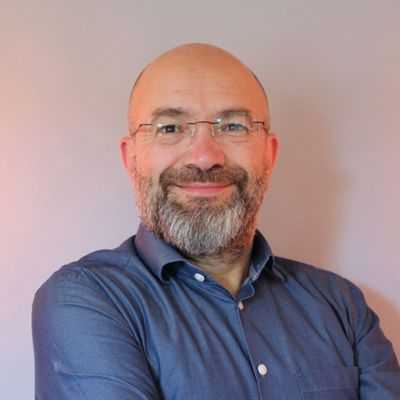
Sébastien Fouillade is a product leader at Microsoft, but an entrepreneur at heart. He has been involved with spiritual work for 10+ years, and with psychedelics for over 6. During his spiritual journey, he discovered that psychedelics allowed him to go deep; but he kept his new self away from his corporate identity due to the stigma of psychedelics. He eventually came out of the "spiritual closet" as he says, freeing his authentic self. He is on a mission to remove the stigma associated with psychedelics and inspire people to find their authentic selves.
This is the conclusion of this fascinating conversation - tune in to previous episode #144 for the first part.
𝗞𝗲𝘆 𝘁𝗮𝗸𝗲𝗮𝘄𝗮𝘆𝘀:
* Different kinds of plant medicine and their uses
* Psychedelics: who is it for and who is it not for
* Ayahuasca and retreats in Peru
* Transcendental meditation
* What is the next step you'd like to take on your spiritual journey?
𝗩𝗮𝗹𝘂𝗮𝗯𝗹𝗲 𝗿𝗲𝘀𝗼𝘂𝗿𝗰𝗲𝘀:
Website: https://fooyad.com/
𝗠𝗲𝗺𝗼𝗿𝗮𝗯𝗹𝗲 𝗾𝘂𝗼𝘁𝗲:
"Slow down. Focus more on the moment and the depth."
-Sébastien Fouillade
𝗔𝗯𝗼𝘂𝘁 𝘁𝗵𝗲 𝗵𝗼𝘀𝘁:
I am Agi Keramidas, a knowledge broker and podcaster. I firmly believe in the power of self-education and personal development in radically improving one's life.
Here's my Essential Personal Development Blueprint: bit.ly/agiscourse
Join my Facebook group for personal development, inspiration, and actionable knowledge: bit.ly/pdmgroup
#PersonalDevelopmentMastery
_____
Episode Transcript
_____
0:03
Welcome to the personal development mastery podcast. I'm Agi Keramidas. And my mission is to inspire you to grow, stand out and take action towards the next level of your life. I interview leaders, authors, successful entrepreneurs, spiritual teachers, exceptional people who will inspire you to improve your life. Tune in for two episodes each week, and make sure you subscribe to get them as soon as they are released. They This is the second half of the fascinating conversation with sebastiaan full yet, if you haven't listened to the first part, go back to Episode 145. And listen to it, it will provide some context , it's absolutely necessary in order to get the most out of this part of the conversation. Enjoy.
1:02
...another experience I had, I was able to see the relationship between Mother Earth and us through our lungs. And I was seeing that there was that symbiotic relationship of us breathing the air that comes from all around us. And I could see all those little trees in my lungs created by Mother Nature because we are and interacting with with that oxygen. And and I had that message at that point that we were living the unconditional love of Mother Nature with every breath that we take. And every all the arm harm we do to the planet. It's like we have to remember that it's like there's that love all the time. Every breath we take this is something that's relationship that's developed over, you know, like 1000s millions of years. And, and those are the kind of spiritual, you know, soul. I don't know if it's the soul at that point. But it's it's the core the essence of who you are, you get those experiences and those lessons in a very vivid experiential way. And, and for me, it's transformative to the soul.
2:35
If I were to ask you, so Who is it for? Who should consider?
2:45
I would I'm laughing because it's a tricky question. It's what everything is.
2:52
Well, it's, it's for when people are ready. I don't think I wouldn't look at it as it's for everyone or some people, there's also a readiness aspect to it. Yes. And the other thing is the psychedelics is just the substance, the awakening can also be reached, we're breathwork and so I kind of also look at it as like everybody is on their own spiritual journey and they will find something that that will expand them at one point and they'll get to another level in that journey and and psychedelics can be helpful breathwork can be helpful sensory deprivation tanks can be helpful. So I wouldn't say it's for everybody. I said, it's for you know, if you if you kind of feel like it, it's on your journey. I like to harmonise my journey, meaning I like to build to it. I'm not necessarily in the rush. I did yoga, I didn't meditation. I mean, I've done toad. I've done mushrooms. But like all of these came at the right time, and that didn't necessarily rush to them. And that's one of the things that worry me where when celebrities come out and say, Well, you know, I did Toad and it changed my life. I'm like, Yes, this is what worked for you. And it's great. You're educating people on that. But please also educate them that there's many things they could do to change their lives. And there's many paths to get there. And, and there's also what I like to say, is eating your vegetables before you get to your dessert. Like there's also there's a lot of things you can do in your life, to improve your life that have benefits on spiritually before you jump to psychedelics.
5:01
So it's a,
5:03
it's not a black and white answer. I was not expecting a black and white answer until you actually gave me a very good answer. And I will let me flip that question. Even if you might answer the same thing, but is there someone who is not for? Is someone listening to this? intrigued in a way, but maybe not for them?
5:29
Yeah, well, there's there's conditions. Think bipolar disorders. There's different sets of conditions that people might have that you were allowed to do psychedelics on. And I'm not an expert in that part. So like, people need to research that is like, if if they have a certain condition, let's see, hey, is that is that for me or not? There's also like, medications. Medicine, people might take over the counter medicine that would have really bad interactions with psychedelics. So it's, it's really important to research that as well. And I don't want to say anything here, because I'm not the specialist there. And there's a lot of resources online to to help people with that. You know, and what's interesting is, in Peru, kids do I was really, little kids, in ceremonies still join, they have a little cup. And because they, they have a lot less baggage is in their mind, it's a lot easier for them to do it than than grownups. Or maybe because they already connected with that way, that magical way to look at the world. So you know, that's another stigma we have, it's like, well, kids shouldn't be doing it. It's like, no, there's this culture is where kids do it. And so yeah, even even pregnant. Woman, I've done I wasco. And the babies are amazing.
7:23
And that's awesome. And let's, I wanted to ask you also about what happens once you've had this experience, because you mentioned the word integration earlier on. And I'm very curious. So you have this lessons, as you called, call them, which, I suppose they can be very profound inside of you, rather than just listening to someone saying, Oh, that was a lesson is one thing, but really leaving it in your core and your being? it? It sounds like something very profound. What do you do with those lessons? How do you apply them or what kind of applications they have in, you know, the personal life, the professional life or, you know, the other elements of your life apart from the spiritual
8:28
or all of that. I use journaling a lot to write right my experiences after ceremony. And by journaling, you're actually able to remember things that you wouldn't be able to remember otherwise, because it helps you kind of follow the stream of what happened. And it's like, oh, and this happened. And in fact, in ceremonies, you'll get so much information. Sometimes it's hard to remember everything that you got. And so like my latest ceremonies, it's like, just try to remember three things that are really important to you, that you want to carry forward. And yeah, those those lessons for integration is a huge topic of like how to integrate that back in life. Drawing is a good way because I tried to write this is the lesson I got. And it might be I need to play more music to my daughter, I need to show my kids that I appreciate them more. And so they're little things like that, where I turn maybe a very deep experience into an action. or helping people like that was the big one is like, if I get a lesson that tells me you should you should help people and you should say more. It's like okay, I need to try to be creative in my life and see me you know, the other thing Sometimes people don't have the support to integrate their learnings and to turn it into actions and follow through. I mean, it's like, it's basically crying, creating a development plan, after your ceremony of like, what did I learn? What am I going to do about it? How do I follow through, and, and having the discipline to do that. So I, it's interesting, because integration is important. But I don't know if it's necessarily as difficult as it might sound, it's, it's more of a matter of discipline and being organised, it might be difficult, in the sense of, if you identified a problem with your relationships, which is a lesson that can happen, where it's like, oh, wow, there's this dark energy here in my life, I need to stop that relationship. Well, that that's hard, because you have to stop that relationship. And you have to follow through with it. So from that perspective, you might need some support to do that. And, and also, the other thing that happens is, as you get further away from the medicine ceremony, you might question yourself, because you get pulled back into the routine. So the the journaling is a way to kind of go back and reaffirm your trajectory to and go back to what you wrote. And so there's, there's different ways to approach it. Though, for me from my work. Because I build products. It's, it's been really helpful. Gonna bring empathy, even more empathy into, into into my work and realising that people use our products have their own lives, they have their own things going on. And it doesn't necessarily revolve around technology or our products. So when they use our product, they want the product to be invisible and easy to use. And what psychedelics often helps you do is see other people's perspective. So you kind of develop that muscle a little easier and easier every time you do a ceremony. And then you can use that in your work to get into other people's shoes. Yeah.
12:25
You know, there are so many things that come to mind and try to keep a direction to the conversation and but I also wanted to discuss a little bit because we mentioned initially the term psychedelics. And then there was more of a sole focus on Nyah huascar. So, in a nutshell, or briefly, can you tell me about other psychedelics? Do they all belong? Sal was in the same group when I was guys at the apex? Like, or is there? Different potencies different things? Because we use the term psychedelic so I'm wondering, what else is there that you could be talking about apart from my horoscope?
13:22
Yeah, yeah. I was kept for me played a very big role in my spiritual development, and also creative development because I play music during iOS cast ceremonies. But there's there's other psychedelics I want to be careful for listeners are big on words, but like magic mushrooms, or fungi medicine, not plant medicine. And so there's this fun guy medicine, magic mushrooms, which are amazing, as well. And I've also attended magic mushroom ceremonies as well. And it's been very transformative. But it's, it's different.
14:08
And how are they different? and curious, how is it different?
14:13
It's your experiences different so for me, I was guys a very internal so it's, it's hard because there's the whole set and setting aspect of psychedelics which basically explains that the substance is only part of the bigger equation that that results in the experience you have, and the mindset and the setting in which you're in also has a huge impact on that. So you could do magic mushroom as at a Grateful Dead concert, or you could do magic mushroom. In the context of the ceremony, the Where you might be with, with a group of people, you pray out the beginning, you play some music, there might be some incense. And it's, it's a completely different experience than the Grateful Dead concert. Yes, and the result, the result will be different. And so like when you compare them, you have to also compare the set and setting as well. In my experience, there's, there's, well, there's, there's many difference between magic mushrooms and I was Scout, but you can, you can also use them in similar set and setting. Other differences is how it impacts your senses, impacts your visual senses, even auditory senses, how you process information, while you're on the psychedelic is slightly different. For firewall scouts, very much more of an inward journey for me. For magic mushrooms, it's a it's a much more connected, outward journey where it actually breaks reality. Like if you have magic, you know, if you take magic mushrooms, you have a lot more visual artefacts around you, where you almost feel like reality is changing. But, but you can also get that move I was scout under the right condition. And I've I've lived that as well with I was scout. And then there's LSD, which is different because that lasts like 12 hours versus magic mushrooms would last six hours. But with LSD, you get a huge, at least for me like huge creative boost, and lots of creative energy. If you play music, so I love playing music. And I never know what I'm going to play before I play it. The tunes I play with each of the medicines are completely different. And the path it opens up for the music because as a player, I see different pathways and the pathways that I would get with LSD with much from Avaya wasco, are completely different. And then the biggest one for me is the toad medicine, which is five Meo DMT. And that's the one mike tyson talks a lot about. And that one is about 30 minutes to an hour. And it's something you inhale. And you basically just vanish, you disappear, you're gone. And you and it can be very intense for some people in the sense that they don't even remember what happens that might have been screaming. They might have been feeling like they were dying. I'm in really intense experiences. And that's the one where it's taken many years to develop a relationship with the medicine. And then there's other medicines like pod that open your heart, and you can use that for prayers. And it's it's the most beautiful prayers possible.
18:45
Now that you said it was the first psychedelic that I read about when many, many years ago when I was reading Carlos Castaneda, and he was talking about a Mexican someone who was using a yachtie muscle so I remember that from from there. And it said, you know, what you were saying right now makes me understand very clearly that what we're talking about the the intention behind what what you're doing and also you said about the setting the environment where you are, when you have that experience are extremely important and they can really create a transformational beautiful experience or something or they are on the other side and they will not understand the other side. And is that there is one one more thing I want to To ask about psychedelics as it was then and then there are some other things that I also want to discuss with you before we run out of time. And that is your, your work now that you have taken on this mission that was given to you and you, if you you work with other innovators in this field, too, can you explain a bit more of what it is that you do in this field of bringing awareness to the people?
20:34
Yeah, I do, I do a few things. One is I work with a retreat Centre in Peru called the earth medicine experience. And so of course, with the COVID pandemic, this has been extremely challenging on us, because there was Peru had one of the most restrictive quarantine, law in effects where they use the army. And so there was no tourism, basically, for the last year. So we're starting again, we're doing retreat and and so here, what we're doing is I'm working there as kind of the narrative creator communication marketing and creative director where I help the retreat centre, tell their stories and ensure that we have beautiful experiences for people who who come to visit us. And we, we keep our journeys, or retreats small to like eight people, and we put a lot of focus on the individual. So that's, that's one way I'm helping here. make them successful and, and have more people experience the medicine. But travelling to Peru isn't for everyone, not everybody can afford it, or make the time for it. The other thing I do, and I started doing that six months ago, is advising companies in the space who want to advising them on their strategy or advising them on their products, their platform. And, and when I talk about advising again, it's kind of funny, because it all goes back to creating a journey for somebody, whether it's through the use of psychedelics, or whether it's looking at a user interface, or whether it's looking at strategy and an entire customer journey of like, from from the time where they learn about your company to the time where they use your product a lot. This, this is what I've been doing with companies and some of those companies are really small. Some of them have been in business for like 10 years in the space and will basically look and get into the mind of the customer. And also I look for authenticity in what the company's doing. And and sometimes challenge them on what it means to stay authentic, and to help you users. And, and to follow your path. And I try to avoid companies that just get in the space. Because the CEO growth opportunity, or potential return on investment. And it's hard, there's a lot of nice people that are getting in that space right now, just because of the growth opportunity. And and I'm really interested in helping the companies that are getting in the space and have some experience working with with psychedelics, at least at the founder level, and are really wanting to change the world. And so so that's that I'm doing on the side of my day job at Microsoft, where in my day job, I'm building products for enterprises, to help leadership, communicate with their users and to help users have great experiences with their enterprise platform. And so it's not it's not as exciting necessarily in a way as as the work of psychedelic companies, but it's exciting in the way that I can use a lot of what I learn from psychedelics, to get into the shoes of the users, and to also reach higher because one of the messages I got with psychedelics is when we come together, we can accomplish amazing things, beautiful things, some of the things I've seen, were like cathedrals made out of glass that were gigantic. And I was like, you know, like we can accomplish and build as those things. We we have the vision we have the possible Ability we can come together, we need to do that more, and we need to raise the bar for ourselves, and, and not sell ourselves short. And that's one of the things that I tried to bring up my work to push people for just reaching higher, doing better, and building more quality software.
25:24
If I were to ask you 10 years from now, where do you see things? Or why would you like to see things in this regard? Oh, you
25:35
know, it's, it's a good question. Because I, there's that there's a desire in our society to think with the end in mind. And I, it's, it's the expectation, it creates an expectation. And I actually like intent without expectation. So I honestly don't know, I see myself on the path on the path today, but having grown and maybe it's a different path, but I see myself still as authentic in 10 years from now. And that's really what I want to do is I want to stay authentic and true to myself. And 10 years from now, I want to feel like the last 10 years, I've been authentic. I've helped people and and I've really opened my heart to be true to myself. That's that's really where my see myself I don't, you know, like, I don't have a specific goal like, well, in 10 years, I'm going to have two houses and three boats and five cars. Like that's not it's more like in 10 years, I'll be even more authentic than I am now. I don't know if there's a way to be more authentic. But I will I would be happy to follow the path. That's where where I want to be sure.
27:03
I appreciate your your answer what, even though I meant more in terms of psychedelics rather than your own personal life, but I get what you're saying that you immediately create an expectation and expectation, by definition, can not always but it can really rob you of the journey towards the present moment by constantly looking at the expectation. So it's balanced, right? Absolutely.
27:40
I do, I can't, I can't, I have no expectations. And in terms of psychedelics, I think, you know, my experience is going to continue to grow and I'm going to continue to help people. That's that's where I'll be 10 years from now is helping more people. either here or in Peru, playing more music. I love playing music. So
28:08
I've watched some of your videos with the harmonica By the way, it's a it's quite funny when you when you look at the the visual effects is when Sebastian There is one last thing I wanted to ask. Just to clarify, there is something that you mentioned earlier, and I wanted to clarify that for myself, most of all, you mentioned transcendental meditation, that you have been practising for years and you said you would get lost. What is in your experience, the difference between transcendental meditation and some other kinds of meditation, for example, focusing on the breathing or on the bounds of the hands or something like that
29:00
is there's more complex meditations where there's, there's a certain process you have to follow. to peel different layers. I think we've transcend Oh, meditation, it's actually very simple. You You have your mantra, and you. You let the mantra do its work by kind of repeating it and having it disappear in your subconscious and then kind of cleans things away and you accept the thoughts that come in. And it's it's very simple, and it doesn't necessarily have like a very strict position you need to get into in order to do it. And then I have been reading a lot of Buddhist magazines and they have very rigorous meditation practices, to achieve different goals. So that there's lots and lots of different flavours, I think what's nice with the transcendental meditation is it's very approachable. You can you can learn it quickly. And a lot of it meditation and all its flavours, it's, it's, you have to make room for it in your schedule, you have to repeat it, like you won't get results right away. I mean, if you do, it's great, some people will, but you have to repeat it. And, and what's nice with a simple practice, like Transcendental Meditation is you just need to do 20 minutes in the morning, 20 minutes at night. And that's it. If you can't make that time do you don't have to be hard on yourself only thing. And some other practices that require just more prep more work more time. So I think it's it's again, it's finding what works for you. Tm was on my path, and I embraced it. I'm curious about other modes, and I've actually even practice other modes of meditation myself, like with the with the breath work, I do breath work in the morning. And it gets me to some great states as well. But it's it's just different. Different tool, different purpose different.
31:19
And that's what I get the you also mentioned, for a different thing earlier that it is in your path. So you had this tool and thought tools, those are the doors that you found in your path, and they were the appropriate ones for you. So I kind of get that as a message between the lines. Not you didn't say that explicitly. But that's my understanding of some things that you say. So I appreciate that. And I suppose then I would like to also ask you some quickfire questions to start up in this conversation. My first one is what does personal development mean to you? Ah, I was waiting for that one. said you're missing.
32:14
I said, I listened to your previous shows. And you know, when I first heard it, I was like, Huh, but you know, what it means to me. It's honouring myself. It's honouring, who I can become as an individual. And, and working toward that, wherever it's like spiritually, physically, as as a dad. And so personal DevOps, it's, it's really working on reaching that potential, reaching, reaching my full potential. And I kind of like to also call out, it's not necessarily it's not about bio hacking. It's not about pushing myself beyond that potential. Because I do believe we all have great potential without the need to do hacks. And so that that's what it means to me.
33:19
Thank you. And if you could go back in time and meet your 18 year old self, what's what piece of advice would you give him?
33:29
Oh,
33:30
you know, I've answered that before by saying have some magic mushrooms. But it's interesting, because I don't know if I if I tell my 18 year old to have some magic mushrooms. It might be it's interesting. I'm seeing my 16 year old right now. Who's blowing me away. Because if my friend Chris is helping him with some personal training, and he's got that grit, and I'm like, What would I tell my 18 year old when I see what my 16 year old is doing? I might tell him like work out a little bit more, take care of yourself. Look into meditation. You'll all know, try out yoga or enjoy life. Don't don't don't have such high expectations of yourself. And I don't mean that in a bad way. But sometimes if there are too high, you can kind of torture yourself. Because you're you're they're not realistic. And so I would say you know just make make room in your life and take care of yourself and you know, you brought a personal development. I might tell my 18 year old I was like, hey, think about doing some personal development in a good way. Not necessarily as too serious way. And so yeah, it's nice slow down, I would tell him to slow down. That's actually the biggest thing I would tell him because I see my 16 year old and is like, dude, like you need to slow down, like, slow down and focus more on the moment and the depth. But I don't you know, there's, it's a really hard question, because at 18, I don't know if I would want to slow down. And I think the maturity I have now is because of the hardship I went through. And all those years. So anyway, it's I haven't found a perfect answer. Yeah.
35:49
It's for me, it's a very interesting question, because you can get all sorts of different answers. So and it's common that yes, 18 year old self would probably not listen to anything we have to say to them. But Exactly. Because we are all men. Like, I know, you're not gonna listen. So Boston emerging from this conversation that we had, if you were to give to the listener, one actionable item, something they can implement today or tomorrow and make a step towards improving their life, what would you tell them,
36:32
identify where you are, in your spiritual journey, what that means for you. And what is the next step you'd like to take. And I'm keeping a broad here, because everybody's on a different path on that journey. So if you haven't tried yoga, and you think of yoga with a certain stigma, maybe try yoga, and see what it does for you, if you haven't tried meditation, maybe try it. If you've tried all those things, and you know, you, you haven't tried cannabis. And you do your research, and you can do it, try it with meditation, you know, some of the things is, is figure out what that next step and don't obsess necessarily about reaching a certain goal at a certain speed. Because I do believe, if it's, if it's meant to happen, it will happen and you don't have to necessarily rush toward it. Like you have to be healthy. First. So yeah, it's like figure out where you're at in your journey, set your compass and start walking. That would be my, my, my ask and be true to yourself. I mean, that's the biggest thing is like look inside and work on identifying what is what are you keeping away? Because of trauma because of stigma, what are you keeping away? And what is keeping you away from being your authentic self? Like, those are the things that I would ask people to think about as actionable.
38:32
And if I can, thank you and if I cannot do what you just said, the last Wait is that by when you keep yourself you also keep yourself from the world you don't allow others to benefit from, from your Divine Presence if I can use that word, because that's what we've been talking about. Spirituality anyway. So yes,
39:01
I do want to add one last thing, man this this is actually a beautiful experience I had it was in one ceremony talking about the divine self and the hole. In one I was testimony that I my wife was next to me and I was struggling a lot. I was going through a lot of struggle and and trying to heal myself in the ceremony. And then I realised I could draw energy from the elements around me I could draw energy from the water be fluid like a water I could draw energy from the mountain be strong like the mountain I could draw energy from my power animal like the tiger and be strong like the tiger and and give me more energy and then I went forever. And I realised I could draw energy from the people around me and I could actually find their skills and draw the energy I realised I could draw energy from my ancestors. And I drew all that energy left and right, and I was sucking energy and I was stronger. And then I realised we were all one. And we were all one entity, and that I didn't need to draw all that energy. Because together, we were strong. And, you know, when you talk about divine and next steps, and I think it's really important to remember the power of the connections together, the one that we have, and there's a lot of obsession sometimes about drawing energy, like I was doing in that ceremony. And I was focused on that. And when I realised we were one, I reached the peace. And so, you know, that's another thing I'd like to leave people with, because it was a very powerful message. I haven't shared that in other podcast. But I thought about that this morning. I was like, you know, that's, that's really important. Because sometimes we feel like we need to draw from something when if you have a family, you have that unit that energy together, that in and of itself, it has energy.
41:31
Where would you Where would you direct people who want to find out more about you?
41:38
Well, they can find me on LinkedIn, like, I'm pretty active there. Because I think there's a there's a lot of corporate people that need to hear that message. And LinkedIn is a good platform for it. And then I've got my website, which is fouad.com. That's fyad.com. That's phonetics spelling of my last name. And it's got links there to my book to the videos where I played harmonica love a link to our podcast on there as well. So that's, that's the best way.
42:20
Is there anything you were really hoping we would discuss today and completely wasted so much, then,
42:28
you know, I could have talked more about music and the importance of music and ceremonies and how that completely transformed my perception of music, listening to music and ceremony and how much it is a tool and how important it is. listening to somebody playing guitar during an eye wasco ceremony is one of the most beautiful experiences I've ever had in my life, you you can hang on every single note and glide. And it is so powerful. So cleansing, so beautiful. And, and playing music, which is something I've done myself during ceremony is a gift that I humbly receive. It helps you take people places, and helps them heal and all that. And the importance of music and ceremony as a tool to heal people cannot be understated. And it's something that I wish everyone could experience in their life. Because it's it's very transformative. So we I don't think we touched on that and just wanted to call that out. Absolutely.
43:50
So much then this has been one of the most intriguing conversation for me, I really, really enjoyed it from the beginning, even if even before we started recording. It was so much so many things that were of great importance, I think so thank you very much for your insights and your your time. I want to wish you all the best with your mission to share this message with with the world. Any last parting words?
44:29
All Thank you. Thank you. Thank you for having me. This is a great conversation. I hope people enjoyed it. They can take something from it and then journey so don't hesitate anyone to reach out to me. I will respond. And you know, I really appreciate when people reach out if they read the book. I love to hear what they thought. And so yeah, reach out. I'm approachable.
45:02
I appreciate you listening. If you enjoyed it, please share this episode with someone who you think will benefit from it. If you want to support my podcast and gain access to exclusive content from me and my guests then Become my PATREON. The link is in the show notes or you can type bit dot L wise last pdmp ad and until next time, stand out don't fit in
Transcribed by https://otter.ai

 5.00 (74 Reviews)