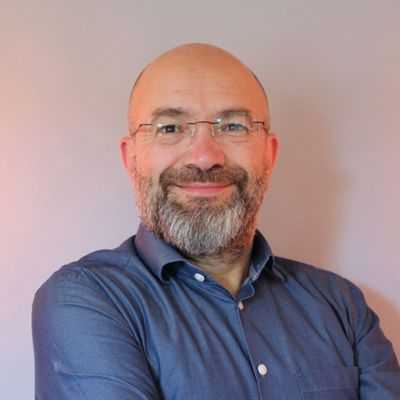
Erin Jewell is an executive mindset and performance growth coach, awarded the "Thrive Global" top 10 coach of 2021. She is an international speaker, a fellow podcaster, and a professor of leadership at Villanova University. She has over 20 years of leadership experience in the healthcare sector at Fortune 500 companies, and as a coach, she is passionate about helping leaders to get the most out of their teams and create a culture of empowerment.
𝗞𝗲𝘆 𝘁𝗮𝗸𝗲𝗮𝘄𝗮𝘆𝘀:
* The flow state when you're at the weakest point
* Compassionate remembrance
* Differences in the leadership style of women and men
* Non judgement self observation increases self awareness
𝗩𝗮𝗹𝘂𝗮𝗯𝗹𝗲 𝗿𝗲𝘀𝗼𝘂𝗿𝗰𝗲𝘀:
Website: https://erinjewellconsulting.com
𝗠𝗲𝗺𝗼𝗿𝗮𝗯𝗹𝗲 𝗾𝘂𝗼𝘁𝗲:
"Personal development for me is all about arriving at our fullest potential as humans."
-Erin Jewell
𝗔𝗯𝗼𝘂𝘁 𝘁𝗵𝗲 𝗵𝗼𝘀𝘁:
I am Agi Keramidas, a knowledge broker and podcaster. I firmly believe in the power of self-education and personal development in radically improving one's life.
I have partnereted with Brain.fm! Get 20% off this amazing app: brain.fm/agi
Join my Facebook group for personal development, inspiration, and actionable knowledge: bit.ly/pdmgroup
#PersonalDevelopmentMastery
_____
Episode Transcript
_____
0:03
Welcome to the personal development mastery podcast. I'm Agi Keramidas. And my mission is to inspire you to grow, stand out and take action towards the next level of your life. I interview leaders, authors, successful entrepreneurs, spiritual teachers, exceptional people who will inspire you to improve your life. Tune in for two episodes each week, and make sure you subscribe to get them as soon as they are released. They show I am delighted to speak with Erin Jewell. Erin, you're an executive mindset and performance growth goals. Our the thrive global 10, top 10 coach of 2021, you are an international speaker, a fellow podcaster and a professor of leadership at Villanova University, you have over 20 years of leadership experience in the healthcare sector of Fortune 500 companies. And as a coach, you're passionate about helping leaders to get the most out of the themes and create the culture of empowerment. Aaron, it is a real joy to to speak with you today. Welcome to the show.
1:22
Thank you so much. Again, thank you so much for having me. It's great to be here.
1:27
And, Erin, I was I realised very clearly now that I gave this kind of introduction about us that maybe this introduction might not necessarily be very relevant to what I wanted to discuss to you about. So there were some other elements in your personal journey that I find extremely fascinating. But Shall we start, go back a little bit and start with your genuine background. And if you could just pick one or two, let's say milestones along your way that might help us understand better of how you became who you are.
2:17
Absolutely. oggy. And you know, I want to say this. Yes, the introduction that you gave certainly is focusing more on the corporate and leadership side of the work that I do, which I think is important, because it's a little bit of a qualification, you know, my spiritual journey and my journey of personal development is not something at least here in the US that is openly discussed by many business professionals. So, you know, one of my intentions as a human is to empower even the most dynamic and busy engaged business leader and business professionals to recognise that spiritual development and personal development well being self care, these things are not a luxury for them, they have access to this as well. So perhaps it was no mistake at all. So I am born and raised in Philadelphia, Pennsylvania, United States had a pretty normal quote unquote, upbringing, I you know, was raised by two very loving parents who are still married, I have a brother and sister I went through private Catholic education went through some really great schools, I played sports. So overall, you know, I, I checked a lot of the boxes growing up and when college and then immediately after college was recruited by one of the world's largest pharmaceutical companies became a sales professional for them. And then my career just kind of continued to take off after that financial abundance was definitely part of my story throughout my career, which was wonderful as well as recognition and status. However, despite all of that, you know, which we're taught so many of us are taught and raised to believe is kind of the end all be all I was there was an emptiness inside that quite honestly, I wasn't even very conscious of. But there was a layer there was a gap and it really started to show up for me after I graduated from the Executive MBA programme in 2010, at Villanova, and I think what happens for me there was I it was a pretty transformative experience. I had to get vulnerable, I really had to step out of my comfort zone, which wasn't new to me. But there was enough of a personal transformation and I had a few professors that were teaching me things as an adult, that weren't really what I I was used to hearing so talking about things like, you know, being accessing more being on you know, on the lookout for not only financial well being but also overall well being. And and what does that look like and I, at the time, I had no idea what that looks like for myself, we would go through these, you know Clifton Strengths Finder assessments, and we would look at our strengths. And, you know, even though I worked for some of the world's largest health care companies who trained me and developed me as a leader, and we would do these sorts of things, somehow, it was different. And so after the programme, I was actually promoted and moved to Miami, then I became responsible for businesses in Latin America. This was a massive culture shock for me, I was now responsible for 46 countries. And even though I lived in Spain, as a child, and I was fluent in Spanish, I really didn't know what I was getting into. And so this would be what I say I would say the milestone, the major milestone for me happened during this time. So between the years of 10th 2010 and 2012. And what happened in December of 2012, I was on a business trip in Peru. And after the meeting, a handful of us went to Machu Picchu, and we didn't hike up, we bust up. So I just have to say that out loud. I don't want to take credit for the long intensive hike. But we only had a few days, but we bust up and we got to Machu Picchu and it was a total spiritual awakening, something happened to me. And when we came down from Machu Picchu over the next few days, I proceeded to get very, very sick and flew home. And this is December 2012, by the way, which was the month and year that the Mayan calendar ended. So there were a lot of people around the globe that were under the impression like the world was going to end. Well. My interpretation of that was that my world did end, a very old and unnecessary world ended that month. So I was sick for about two weeks, which I had some individuals later tell me that I was shedding skin massively, and that's why I got so sick. And what happened after that was I became aware that the role that I had this job this place that I was placecard that I had in life was not that I had access to much more than that. So you know the story goes on. But you know, to answer your question, that's that's a part of it.
7:42
I want to ask you, there is one thing you said that when you went to Machu Picchu Something happened but that was the what you said can you explain a bit more what was that something that because it sounds something very important?
7:59
You know, often Yeah, absolutely. Up until that point, I really, I was I was a big I put people on pedestals I put my company on a pedestal, you know, the the things the money, the is definitely the people there anyone that had, you know, a higher rank than me at my company. I just I put people on pedestals which means I you know, I basically, it was almost like I idolised these people. And so I was constantly feeling intimidated. And I was always working really hard to prove myself and stand out. And I would burn the candle at both ends, no problem at all. And so on that mountain or on Machu Picchu, I was travelling with these other executives, and I recall feeling really nervous about travelling with them and going on this journey with them, not really knowing what it would bring to me and I recall being like, around these alpacas that were all kind of sitting near me. And I looked around at these other people that I had placed on such a pedestal and all of a sudden I realised I was right next to them on top of this very, very high, you know, this peak the summit, I was right next to them. And, and even we hiked wine, a Picchu one day, which is a bit of a challenging hike. And one of the executives It was a she's a very, very tall woman and i and i ended up helping her. She She became frightened on part of the climb and actually was stifled and stopped and couldn't go any further. And I was able to help her continue on. And it completely shifted our relationship where before I was, I was always looking up to her physically and figuratively. And so I think I just became aware of our equality and how much more we have in common in that in that place,
10:02
that's very interesting. And so once you go back and what how was your mindset may be different obviously, then your actions and behaviours will have been different but what what was different in their inside the, the head?
10:21
You know, based on the nature of your questions, I'm sure that you know that there are so many bifurcations and trifurcation and little stories and, and serendipitous things that took place. But essentially, when I got back to Philadelphia for the holidays, because it was around Christmas time, and I was like quarantined to my parents house. I had met a man a few weeks before, and it didn't sort of resonate, it didn't register the nature of our connection. And until when I got back to Philadelphia, I started calling him and I started sharing my story. And I felt very confused. And I felt what I knew was I was really getting sick a lot. And that was not okay, I was 33 years old, I was an otherwise healthy human being I was a runner, I you know, and so we started talking, and this person started saying things to me, like, we would talk for hours a day. And he would say things like, God is love, and you know, practising non judgement, and these these terms, and these words I just had never heard of before and I had never thought of and it was all about compassionate remembrance. And, and so I just listened, and I listened. And sometimes he would talk for three, four or five hours on Skype on a Saturday night, I would just listen. And these people just started coming into my life. And, you know, I had prayed on it, I put my hands up in the air at a certain point during this time, and I said, God, I give up. I don't know what to do. I thought I had it figured out and I don't and so he was kind of like my first spiritual teacher in this new chapter. And, you know, I'll share this with you because I know there's an interest. But during one of our Skype conversations, I was talking about, you know, I was like, I don't have time for meditation, you know, I'm just too busy for that, you know, like, that's just not for me, you know? And he's like, Okay, he's like, Well, have you ever heard of Qi Gong? And I said, No, absolutely not. What is that? And he said, He's like, here, do this, you know, and he said, bend your arms in a 90 degree angle, face your palms together, relax your fingers in your thumbs. And, and he said, and then breathe in. And every time you breathe in, accuse an expansion and when you breathe out, excuse this coming back together, but but don't touch the hands, right? And he's showing me and he's doing this. And he said, just do this on your own sometime, you know, just just try it. And, and so that's again, that goes off into a whole other part of my story. But what I did to answer your question, you know, I felt confused. So I reached out and I prayed on it, and people started coming in to my life. Doubt.
13:00
That's so captivating. I mean, you said that at some point that the word surrender came to mind when you said that. You don't know what to do, but and I think that's a wonderful way of dealing with some of the challenges that we have in our life, especially if we keep on hitting our head against a brick wall, or something like that. Sometimes the best thing to do is to just allow things to happen, rather than trying to be in control, which hasn't been working anyway. And otherwise, we wouldn't be banging our head. Well, what do you think of that of just as a way so zero for taking a decision, a difficult decision just to allow?
13:56
So here's what I've been taught. I've been taught first of all, the higher the IQ, the heart of the lessons. And, you know, I was taught that by a wonderful, a wonderful friend, a physician who I was friends within in Miami surgeon. And he said, the higher the IQ, the harder the lessons. So, I've learned that I'm an intellect. I, you know, I'm all about the head. I'm a very heavy person. So a university professor, very, very heavy, I can go down rabbit holes all day long. So for me, I find that I am the strongest and that the flow state is the most powerful for me when I am at my weakest point. Because what happens in that moment, is the universe just takes over. And it's, for me, it's a universe that I trust. So what you are saying I completely agree with it is in the moments when I am waiting So basically, by my human definition of what weaknesses, right, oh, can't figure it out, I don't have a solution, you know. So I just call I call like is in those moments when I feel the weakest when I feel I have, I have nothing else to offer, I don't have any more solutions. Everything's kind of just swimming around my head. That's when the magic really starts to happen.
15:30
Hi, it's Maggie here, interrupting you with something you may find useful. The most frustrating feeling is when you're trying to focus. But you can't get your brain to concentrate and let you zone in on the important work in front of you. This happens to me all the time, especially the days that I feel, I have too many different things to do. And if it happens to you, you're not alone. 40% of people say they have to make a big effort to concentrate. This isn't some minor thing. But if you're having trouble getting focused, I have a solution for you. I'm so excited to be partnering with brain FM. Brain FM is a great app, and I use it to block out mental chatter and droning on my number one priority of the day. Brain FM uses functional music backed by science and research, which is designed to give us that extra edge when we need our undivided attention. But they also have relaxation, meditation and deep sleep modules that help you unwind and recharge. So if you want to be able to place your full attention exclusively in the activity you choose, whether that's meaningful work or relaxing or getting high quality sleep. Right now personal development mastery podcast listeners get 20% off brain FM slash IE that's an amazing deal for such a great app 1000s of people have given five star reviews to brain FM find out why brain.fm slash ID I like to use the phrase flows that you are in a flow state when when you're at your weakest which it's a very interesting topic the way you describe it because flow state for me hasn't been combined before now with this with being at low at our low emotional your vibrational level. I think I understand how you mean the how that the your flow state is how I conceive it to be mean by just trying to explain something now in my head I just to see if I can if I understood the correct what you what you told me because for me it flow state is when an abstractedly you come up with ideas or maybe they come to you rather than you coming up with them. Show is that what you were meaning earlier about being at your lowest and having that flow state?
18:30
Well, the words are important. And I'm a big fan of conscious language choices. So I appreciate what you're saying here. You know, perhaps another word is, is you know that word surrender, or even allowance, as you say, is, you know, the reason I use the word weak because my ego hates the word weak. My ego doesn't want to be anywhere near that word. And I don't want ego anywhere near me to achieve the flow state. So that's like my, my word to say, oh, ego, no room for you. I'm completely, you know, like opened up. And and in this weak state. I mean, it's just mind games is for me personally, but to your point, it's it's allowance. It's the yin and the yang. That's really what we're talking about here. And honestly, I, I talk about this in leadership all the time. I mean, it can be defined as masculine and feminine. But I don't know about you, but in the US those words have have become so highly political, that I tried to talk about it in other ways. But we're either in a state of doing and giving or we're in a receipt state of receiving and allowing from a leadership perspective, especially in the more patriarchal cultures and societies. They're missing half the half the body is just underdeveloped. You know, and so, I was raised in a very patriarchal culture, like Mark, you know, the United States is quite patriarchal, right? We're starting to shift a little bit more. And so with that, as I grew up, learning to initiate, to activate, to give, to provide to protect, and it shows up very powerfully in my life, right? So for me the work is, and this is what has I've been doing really, for the past 10 years is cultivating the art of receiving the art of allowing, right the art of surrender. weakness, as I want, these were all weaknesses. For me. I have a tattoo on my foot that says surrender, right? It's the funniest thing when I was leaving industry, they threw this like party for me at the company, and the President of the region was sitting next to me at this like bar restaurant we were at, and I just gotten a tattoo and he looked at it, he said, what does that say? I said, Well, it says surrender. It's just right on my foot. And he said, surrender. You mean never surrender? Right? You know, and I said, huh, okay. Right. And so, you know, the world I grew up in, it wasn't like, all this talk that you and I are having right now. Like, it didn't work in that space, although I do think it's changing.
21:29
So it's about time to change. I mean, and I think there are many things that are changing now. And especially these years, I think they are accelerating. And some things like that had to happen. And actually, since you mentioned the, the men in the world, the masculine, the feminine. No, you didn't mention that actually show. But I wanted to ask you one question about leadership. I know that there is it's a topic that I was telling you earlier, it's very difficult in a conversation like this to go to many topics. But there is one question that I really wanted to ask you about leadership, I don't want to live live without and it was the differences. So I will say about men and women as leaders or us leadership style. So if you could share something that the audience can take and maybe utilise in their interactions, as a leader or towards leaders, based on whether they're male or female?
22:43
Yeah, it's a really important question. And again, you know, there's such a paradigm shift happening right now, however, you know, there are differences. So, if you're beginning with a human who identifies as male and a human who identifies as female, so we'll, we'll base the explanation off of that. And also, individuals who have been generally raised in more patriarchal environments, which the corporate sector tends toward that, for the most part, I mean, I'm, I'm not I can't speak to every country in the world that I've worked in, you know, the United States, Europe, Latin America, and parts of Asia Pacific, right. So I can, I can say that in my assessment, many of those places tend toward a patriarchal type of a culture, right, so. So what that means is you're going to have more of a predominance of certain leadership characteristics, things like initiation, activation execution, or have a fixed mindset, versus a learning mindset. Right? So which is essential for the profitability and success of an organisation. But it's not the end all be all. And so for example, let's take fixed mindset and growth mindset. So we're learners mindset. So if a company hires a bunch of people who operate with a fixed mindset, they're going to have delivers, they're going to have people that execute on outcomes, they're going to have people who are highly disciplined that work well with a lot of structure, and things like that, which is great and essential. What they're not going to have is a lot of creativity, which is a huge driver of growth and innovation. So you'll tend to have companies that have a lot of people with that growth, or I'm sorry, fixed mindset. They're kind of known as like old boys clubs, or they'll have like these other names to kind of define being very almost outdated or antiquated or very established. That kind of thing. That's, that's when you're hiring that profile of a fixed mindset when you have a growth mindset. You know, this is more asking questions. This is more that person that says, I don't know. So for example, the CEO of Southwest Airlines, he's known for making this statement. And I always I've been, I've been quoting it for so long that it's become quite butchered along the way. So I forgot to look it up again, at some point. But it's something like, I had to hire 36,000 people to keep this company going to do the things that I don't know how to do. Like, and like, basically saying, like, I am so ill equipped, and I am I there's no way I could do all this, I had to hire 36,000 people, right? And it's so fabulous. And there's so much humility in that statement, right? And that's the kind of leader that is incorporating that growth and fixed mindset. So when we talk about leadership in men and women, what tends to happen, what can happen, nothing's 100%, right? is if you're growing up in that patriarchal culture, as a male or a female, you're going to have a tendency toward things like that fixed mindset, execution, you know, and, and deliverance and all this stuff, right? Well, you're not going to have is a lot of inclusive behaviours, you're not going to have a very inclusive community, you're going to lacking creativity, you're going to lacking innovation, you're going to lack in effective communication. Because when you're executing, you're skipping steps sometimes, right? You're skipping over things like building rapport, building trust, and, and, and a really big one. And this is prominent in sales. So I do some work on consulting for commercial strategy, as well, because of my background in sales and healthcare. And one of the biggest mistakes that commercial organisations make is teaching sales representatives to be in that fixed execution mindset. And not fully cultivating that learners mindset. Because in that learner, and that growth mindset exists, something very important. That's where the listening happens. And I'm not just talking and there's there's four levels of listening, if you look into this, you've got active listening is level one to holistic listening, as I call this three, four. And again, that's a whole other conversation. So as you can see, yes, there are differences that are generally defined as masculine and feminine. But as you can see, it's almost even bigger than that, because it becomes about that culture, right, which is when it's patriarchal, patriarchal, being more on the masculine side, it has a tendency toward those things. And the women that are brought up in in this tend to be called things and tend to be known a certain way. And they tend to be to this and to dominating and to that, and the fact is, they're emulating what they see.
28:12
So this is, right, this is the way you describe is complete. In terms of the communication between the men and women as leaders, can you give a comment on that as well?
28:33
Yeah, yes. And you did ask about, you know, kind of some tips and thoughts, I just wanted to give a chance for a pause there. So, you know, the work honestly, there's a few angles, this the work that I do, as an executive coach is I do focus on women communicating with women. And the reason I do that is because women have not had an opportunity in certain sectors, at least in some of the more traditional corporate models, to really interact and get to know other women and support each other and learn from each other. And, you know, a lot of times women over time, as they take on leadership roles. When it gets to the top, so to speak, they're surrounded by men. So from a communication perspective, women, I encourage women to really go out of their way in their lives in general, to connect with more women to find opportunities to partner with more women in the workplace. And, you know, to not only and this is what I say the idea is that women, women do not have to support women. However, women get to support women. See, in the United States, there's a study that was published that showed women now more than ever want to see women succeed. They want to see women To rise up the ranks in the organisations and be leaders. And interestingly enough, these women also still prefer to report into men. So as you can see, there's a discrepancy. So then what about the men? Well, let me give you an example. I was involved, I am involved in this coaching group, and it's all men. And they invited me to join the group several months ago, because they wanted a woman's perspective. So I agreed, and it has been a very interesting experience, to say the least. They are amazing, amazing humans, and I just absolutely adore all of them. And we've also had some really challenging conversations. And mind you, I don't represent every woman on this globe, right? I represent, I am a woman. And in some ways, I'm every woman in some ways, I am Aaron Jones, right. So my opinions and my perspective, or through my lens, I just happen to have a focus on women's empowerment. So just to give one example of of what opportunities men have with communication, and possibly to if you're open to it, but quickly, so at one point, the comment was made, okay, everyone, in one minute or less, share about, you know, what, what mood you are experiencing today and why. And so we all went around, and we shared. And then the next week, the same question was asked, and there was a comment made by one of the men that said, Aaron, I think last time last week, your your share was at least three minutes. So try to keep it under one minute this time. Okay. And he was kind of joking, right? And I responded, and I've known him a long time. And I responded, and I said, Well, you know, that statistic data shows that women speak three times as much as men. So one minute for you is three minutes for me. So thank you for giving me the appropriate amount of time to communicate. And the other men in the group just loves that. Because my response wasn't, I know, we talked too much. My response was, actually the way we communicate is different from how you communicate. So one minute for you is actually three minutes for me. So that's appropriate. Do So do you see the the opportunity exists? At the very least for us to see differences as just that? Not women talk more than men and men talk less than women or women are less clear and more complicated? How about women are really comprehensive and beautifully complex with how they process information.
32:42
You know, so just men finding ways rather than letting the insecurity surface and, and, and finding opportunities, you know, to reflect that insecurity with comments and a feel really soul and instead recognise any and all differences, like in those moments when men maybe don't even understand what the woman is saying, maybe they've, they've lost the ability to kind of stay attentive during a conversation. Listen, I'm a coach, you know what I learned as a coach. Pay attention to the last few sentences, if somebody is sharing and sharing pay attention, last few sentences, and you're going to capture the essence, do that, and honour it and be respectful about it, rather than Oh, you totally lost me back there. I have no idea what you're saying. Just, at the very end, capture the last few sentences. You know, there's just so this is just one of many examples.
33:42
I hope that's helpful. It is, you said you would share another one. So I would I would love to listen to one more as well. So
33:50
here's here's the other one. So I was a, I was sharing some experiences about my life. And men sometimes feel the need to rescue and fix things. Right. It's just it's it's a generalisation. It's the stereotype. I get that. It's also something that happens, right? And in fact, there's a book called Wild at Heart that I recommend, highly for men and women to read. It's by john Eldridge. And it really talks about the man's journey, and how the man has this desire to rescue a beauty. So I'm conscious of this, right? So you know, sometimes when women share men will have a desire to fix, they'll respond when the woman is simply desiring to share. So we were in the space and I was sharing. And when I finished hearing, the man said, I think I can help you. And he began to share all of the ways he thought he could help. And he began to say things like, you know, I've taught women over the years how to, you know, to make sure they lock their hotel doors, and he's you know, as he's going on, I'm thinking to myself, wow, the way he's talking just sound so paternal and, and he's he's almost saying that he has more Common sense than women by what I'm hearing. And you know, this was just my interpretation, right? And he was like, you know, women just they need to be careful and, and I'm thinking, gosh, I've travelled the world, and I always locked my hotel room doors. And I don't think a man's ever had to tell me to do that. But okay, and I was just listening. And then at the end, he said, You know, I have a book for you to read, you know, it's a great book. And he said, it's act, it's called act like a lady Think Like a Man. So, so, I mean, I listen, don't get me wrong. I am sure that there's some good stuff in this book. And he proceeded to after that, he said,
35:38
the good things.
35:40
Well, I mean, listen, it's like your reaction is the same exact response that others said, because I, so my response to that was, you know, and his comment was, you know, men were actually very upset when the book was written, because their secrets were getting out. And I said, Okay, I said, here's the thing. I said, I'm not going to read that book. I'm not going to take that recommendation. I said, but I do appreciate what you're trying to do. You know, and I, and I, I'll be very honest with you. It was a it was a difficult interaction. He didn't understand he was just trying to help. And I get all of that, right. I get all of that. But, you know, I had two choices in that moment, right, I had the choice of not saying anything, I three, not not responding or saying, Oh, that sounds great. I'll get the book. Thank you. Right, or saying what I did. And there's there's another option, advocacy through inquiry, I could have asked him what inspired him to make the book recommendation, right. And I didn't do that I, in that moment, I made an assumption. And this assumption is based on my past, and my upbringing, so if I'm being if I'm taking ownership in this situation, I'm saying that my perspective was, he was saying to me that men know best, right across the board. That was my perspective, that may not have been somebody else's perspective. So what opportunity do we have here, and this would be my second learning. And this isn't just for men, but it's for women as well. If as a woman, I think that a man is exhibiting a, you know, maybe sexist or condescending behaviour, rather than making that assumption, asking the question, right, just asking him like, hey, what, what inspired you to to, you know, and there's a really good chance, his response would have been really heartfelt, and intentional. And I would have said, Hey, you know, this is where I'm coming from. And it could have been a, you know, so that example was actually an opportunity for, for me to also show up more powerfully in and I will, and I will because of that. So,
37:41
yeah, that's, that's a wonderful, thank you for sharing that. And it makes me realise more and more over and over again, how important it is to test or question something, whether it is an assumption of ashore, is it real and more often than not, we it is an assumption based on our own filters and conditioning. So Aaron, I want to thank you for this fascinating conversation who had I was telling you just before we started recording that I'm not sure which direction we will go because it's, I think I let the conversation follow its own flow. So I hope it's been a coherent First of all, for the for the listener, and then for your may because we with that the two or three different topics, but I think we give a little bit more detail than just a completely superficial. And I would like to also ask you some quickfire questions to wrap things up. And my first one to you is What does personal development mean to you?
38:55
Personally, personal development is all about potential for me, so just arriving at our fullest potential as humans which involves so much more than the word potential offers, where I'm not just talking professionally But personally, making people more important than profits making. overall well being just as important as financial well being you know, there's there's layers and layers to it, but I would say it's about reaching our fullest potential.
39:28
And let's say you could go back in diamond meet your 18 year old self and what's the one advice you would give her?
39:36
Well, I do that all the time. Anyway, I go back to previous agents all the time, and I give them I give those versions of me big hugs. I tell them I love them and I tell them that all their dreams come true.
39:48
That's it's very, very reassuring and heartwarming, the way you say. And
39:56
Aaron emerging from this conversation we had today and Keep in mind that we spoke about some different things. But if you were to give to the listener, one actionable item, something they can be can implement, if they want and hopefully improve their lives. What would you tell them?
40:15
You know, self observation increases self awareness. And if you can find yourself in a state of non judgement, practising non judgement with self where you can really just be the observer, it's going to liberate you. And it's going to liberate you through increased self awareness. As you become more self aware, you become more self accepting, you become more self appreciating. And so be the observer, you know, from a place of non judgement and just explore, discover, and recognise that you are whole, complete and healed as you are, and there's nothing to fix.
40:59
That's wonderful. How can people connect with you and find out more about you and what you do?
41:08
Well, as you said, we covered a few things today. So if anybody has any questions or any, you know, just follow up with like any materials or any references, publications that any statistics that I mentioned today, you can just reach out to me at Aaron jewel consulting Comm. So that's all one word, er, i en je w e Ll consulting.com. I also offer free guided meditations on the website, as well as blogs. And you can just go ahead and book a console for free not to worry any listeners of the show. And I'd be happy to have a conversation with you.
41:46
That's fantastic. Aaron, thank you very much for your time for sharing your insights. With us today. I want to wish you all the very best in your life and in your mission. Any last parting words?
42:02
Now I just thank you so much. It was wonderful having time today and thank you for the insight and thoughtfulness of your questions.
42:12
I appreciate you listening. If you enjoyed it, please share this episode with someone who you think will benefit from it. If you want to support my podcast and gain access to exclusive content from me and my guests then Become my PATREON. The link is in the show notes or you can type bit dot and wise last pdmp a d and until next time, stand out don't fit in
Transcribed by https://otter.ai

 5.00 (74 Reviews)