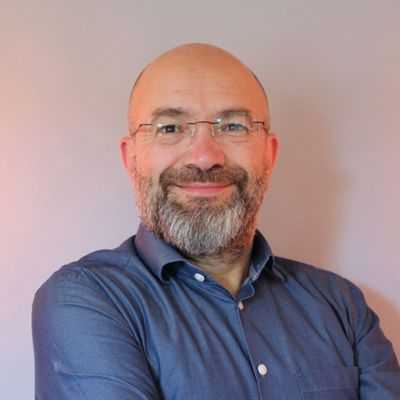
Julie Broad is an Amazon #1 best selling author and international book award winner, as well as a successful entrepreneur, real estate investor and speaker. She is the founder of “Book Launchers”, a self-publishing services firm, and her latest book is called Self-Publish & Succeed. She is an expert on writing a book with marketing in mind, and she is passionate about helping entrepreneurs write, publish, and sell non-fiction books that boost their business.
𝗞𝗲𝘆 𝘁𝗮𝗸𝗲𝗮𝘄𝗮𝘆𝘀:
* Who should write a non-fiction book and why
* The author, the writer, and the team behind writing
* What's the biggest mistake in self-publishing a book?
* How to overcome the #1 reason why you are not finishing your book
* Your reader is not a demographic - get to know them
𝗩𝗮𝗹𝘂𝗮𝗯𝗹𝗲 𝗿𝗲𝘀𝗼𝘂𝗿𝗰𝗲𝘀:
Website: https://booklaunchers.com/
𝗠𝗲𝗺𝗼𝗿𝗮𝗯𝗹𝗲 𝗾𝘂𝗼𝘁𝗲:
"Don't do an MBA! ...I would have been better served just getting into the entrepreneurial world sooner and learn from my mistakes."
-Julie Broad
𝗔𝗯𝗼𝘂𝘁 𝘁𝗵𝗲 𝗵𝗼𝘀𝘁:
I am Agi Keramidas, a knowledge broker and podcaster. I firmly believe in the power of self-education and personal development in radically improving one's life.
I have partnered with Brain.fm! Get 20% off this amazing app: brain.fm/agi
#PersonalDevelopmentMastery
_____
Episode Transcript
_____
0:02
Welcome to the personal development mastery Podcast. I am Agi Keramidas and my mission is to inspire you to grow, stand out and take action towards the next level of your life. I interview leaders, authors, successful entrepreneurs, spiritual teachers, exceptional people who will inspire you to improve your life. Tune in for two episodes each week and make sure you subscribe to get them as soon as they are used.
In today's show, I am delighted to speak with Julie Broad. Julie, you are an Amazon number one best selling author and international Book Award winner as well as a successful entrepreneur, real estate investor and speaker. You're the founder of book launchers, a self publishing services firm, and your latest book is called to self publish and succeed. You are an expert on writing a book with marketing in mind. And you're passionate about helping entrepreneurs write, publish and sell nonfiction books that booster business. Julie, welcome to the show. It's a real pleasure to speak with you today. Thank you so much for having me. It's a pleasure to be here. I'm very much looking forward to
pick your brains on some things about books, which I think it is, as I was telling you just before we started recording, in many ways, books and personal development are very, very close together much than anything else, possibly. So as I will start with a little bit of background and your journey, I usually ask for something that is a pivotal moment. Maybe you'd like to share with us your publishing journey, and specifically how you turned into self publishing, which then became a business of yours. Yeah, certainly, um, it side note, though, I mean, if you think of pivotal moments, for me, you know, one of my pivotal moments was from a book, you know, and then a second one was from my own book.
2:14
The first one, the first one was Rich Dad, Poor Dad, which is kind of a common story these days. But for me, I was kind of a year and a bit out of university working in my first job, and one of my co workers said, like, you need to read this book. And you know, I got in the car and drove to the store, because back then that's what he had to do. And I read the book, and it really changed my mindset for just working, you know, getting my money working for me. And that's what got me into real estate. So I started investing in real estate before I even bought my first home. You know, I started investing, I think it was 23 or 24, when I bought my first two rental properties, and kind of just kept going from there. And that's really what led to my first book. Because I was young, I didn't have money, I ended up going down the road of using other people's money and kind of using a lot of creative strategies to buy properties, which meant I was buying other people's problems and a lot of challenges. But I kept going in the real estate space. And I ended up doing an MBA in real estate and finance and I just I went all in on real estate. And so my first book was a real estate investing book. And I had started a training company, a real estate training company to go along with my real estate investment business that I was working that I did with my boyfriend, who later became my husband, and the training and education company. I did YouTube videos and you know, content, things like that. And I was introduced to a couple of publishers, and the publishers, you know, that just all of a sudden just like ignited this, this little girl in me that actually thought she would be a writer until somebody told her writers don't make money. And then I went to business school.
3:54
But I was all excited. And I was like yes, I've got a book idea. And I told them about this real estate investing book idea had and they all kind of said no like it that's too general real estate that's been done. But Wiley, which is one of the major publishing houses said, You know what, we don't want that book idea. But we have an idea that we've been looking for an author to write. And so they gave me an idea. So we went back and forth and built the proposal together over a three month period, which is very unusual. Typically somebody gets an agent and then the agent shops you to a publisher so to have a publisher saying here's an idea and you build the proposal together was was unusual. And so I just assumed I was getting a book deal, right? It just didn't even enter my mind that there wasn't a book deal in this. But at the end of the three month back and forth I got an email that said the marketing department doesn't think you have a strong enough platform to sell books. So the first my idea wasn't good enough and now I wasn't good enough.
4:46
And I laugh now but I was crying man like I was truly really quite heartbroken and devastated and and I had friends that had gotten booked deals and I didn't understand what they had that I didn't like it was just you know, it was one of those moments and it
5:00
really pushed me to reflect on whether I really wanted a book and what the book would be for. And I realised after a while it took probably four or five months. But I realised that the original book idea that I wanted to write was one that people really did need, there was new investors who were making the same mistakes that I made that bought problem properties. And I really wanted to give them a real perspective, I wanted to share not how to get rich in real estate, but how to make better decisions in real estate and how maybe real estate isn't even right for you when you understand the risks and the challenges that you're going to face. And so I wrote that book, because I knew somebody needed it. And I was determined, and I also was so badly burned or ego, my ego was crushed so much by the publishers that I decided, if I'm gonna do it, I'm gonna do it better than if I had gotten a publishing deal. And I dove into self publishing. And I just learned everything I could, which in 2011 2012, wasn't a tonne, self publishing wasn't as mainstream as it is today. And I just, I just went all in, you know, I spent hundreds of hours on the book hundreds of hours on publishing process. And I took that book to number one on Amazon. So I had had number one in print books, a lot of people when they say they're number one Amazon bestseller, they're number one in a category, I was number one in print.
6:18
So it was pretty awesome to have that, you know, that experienced it. But it also opened my eyes to the tremendous power and opportunity in self publishing. And in fact, I believe that Wiley turning me down was the greatest gift I ever could have been given in my publishing. I mean, I don't even in my publishing, but in my professional life, I think that was one of the greatest gifts I've ever been given. Because it forced me into self publishing, which turns out, in my opinion, to be substantially better than if I had gotten a traditional deal. It's usually one of those moments where your the rug gets pulled under your feet that at that moment, it looks it seems to be terrible. But looking at it from the future, it's a great pivotal moment. And yes, the Rich Dad, Poor Dad, which you said is probably one of the most common books that have changed. I was also one of the people that was very much influenced by it. When I read I thought, Oh, my God, they should teach this at school.
7:18
Yeah, I mean, it's it is something that I think that even just that mindset, right of how to look at your money. Exactly. And how to look at how you earn your money, I think, yeah, it was it was tremendous.
7:28
So Julia, I would like to discuss a bit more specifically about
7:35
the process of writing a book. And to clarify, for the listener, we're talking about, we're not talking about fiction, we're talking about nonfiction, personal development, books, business books, books, which you share knowledge. So
7:52
I would like to ask you first my first question, Who should be considering writing a nonfiction book? Yeah, this is always a fun one. Because there's a lot of people who will tell you Everyone should write a book. And and I actually believe everyone has a book in them. But whether you should write the book or not, is a totally different question. And I think you have to look at a couple of things, I think you have to look first at your own goals. So what what are you hoping this book is going to do for you? And also, like, what, what's the impact that you want to have? And how committed are you to creating that impact and to, you know, getting the book to where you want to go, because the challenge that I have seen, and the book projects, you know, in book launchers, we've now worked with more than 300 authors, and some of them didn't finish their book. And so I can tell you, you know, life throws curveballs, especially, you know, in the last 18 months, we've seen a lot of curveballs. But you know, some of the people that kind of start their project and give up are people who really truly aren't committed to the impact. They've done it for ego reasons. They've done it for like, I want to be famous, I want to be rich, I want to, you know, kind of those ego reasons and books can do that. But truly, if that's the reason you're doing the book, it's a hard one to stay committed to because it is a tough process. But I think the people who succeed are people who look at kind of like I did with my book, and I went, there are real estate investors that are not getting served that could, you know, really, really benefit from learning from the lessons that I've learned. And I really wanted to share with them some of you know, I had a crack house that I didn't intentionally turn into a cracker I was it just it turned into a cracker, you know, things like that. And I wanted to share how to prevent that. I wanted to share why that happened in the first place. Because it was my It was my fault. Like as much as I would love to blame all of the people that turned it into a crackers. It was mine and my boyfriend's fault for some of the decisions we made that led to this whole thing happening. So that was really the perspective and I was really passionate about sharing that so that got me through all those moments of thinking. Nobody's going to buy my book. You
10:00
Know, while he doesn't think I can sell books and all the dough, because I was driven to have an impact on a certain person. So I think that that person should write a book, if you if you know you have something that's going to help somebody and you're passionate about helping them, I really believe that that person should write a book. But they also have to have resources to commit to this. And that's the other piece. And when I say resources, I do mean money. But I also mean time, and energy. Because a book is a really big project, if you want to do it, well, you can do a book in 30 days and put it out. But if you want to have a great book that you're going to be proud of, for a long time, you know, it's a 12 to 18 month project, and then it's, and then as soon as you stop marketing it, it's probably going to stop selling. So it's really a commitment of however long you want this book to be out there in the world for you to be talking about it. So. So the other side of that is just the desire to have an impact and the message that will impact it's also the resources, which which is time, money and energy to bring the book to life. Absolutely. And thank you for this answer. And I understand that 12 to 18 months, timeframe that you said, Can I ask you in by with your experience in terms of impact? How much more impact to someone expect writing a book or being with someone who is already impactful in some way?
11:30
What do you think? Is there all of that? Yeah, it's tremendous. So So a couple things. I mean, first of all, when we talk about pivotal moments, right pivotal moments in your life, so many people come back to a book, it's not a TV show, it's not a podcast, sometimes it's a talk, right? Sometimes it's it's hearing a speaker on stage. But you know, I'd say most of the time, it's a book that was a pivotal moment. So that's, that's part one of that. But Part two is just looking at the way books open doors for you. And the more doors that are open, the bigger the impact that you can have. And what I mean by that is when you if a new show, for example, is looking for an expert, they're looking for the author of or the holder of the PhD on the subject, right? Like it's either a degree or a book written on the subject. And that's your credibility factor. It's very similar when you want to do speaking, a lot of conferences, a lot of events. On the speaker submission form, it's what books have you written? It's not have you written a book, it's what books have you written, the assumption is, if you're going to be on our stage, speaking, as an expert, you've written books to prove your expertise. So it opens doors, it also, I've seen this for me, as well as for my clients, it also kind of elevates your, like where you're at. So what I mean by that is, you know, when you're, before you write a book, you'll be in the audience of an event. And after you write a book, you'll be in the speaker's lounge, you know, and it's not a given, but it's kind of like, now you're associating with the people that used to sit in the audience and learn from and that's really, you know, those kind of things happen with a book. And so now your colleagues aren't the people that are learning the stuff, your colleagues are the people who are teaching this up. And those those transitions happen slowly after a book comes out. But they do happen for a lot of authors. And I don't see that happening with a lot of other things.
13:19
Do show right now that you said it makes complete, complete sense. And
13:26
let me ask you something else that I'm very much interested about, let's say during the process of a book, and I will leave aside for the moment the benefits that you just mentioned about, you know, by more impact or opening doors or credibility during the process of writing, what benefits should one expect by the process itself? And I mean, since we are in a personal development podcast, what kind of personal development growth should expect by this journey? I love that question. So because a lot of people don't think about the fact that writing the book itself has massive value to you. It's one of the reasons when I first started book launchers, I actually only had writing coaches that would coach you through writing the book, because I was such a big believer in the fact that writing the book was half of the benefit. Eventually, enough people demand it writers that we also have a team of writers that will help you write the book. And I understand there's you still have pain and suffering to develop yourself to write the book when you have a writer. So I've come around, but initially I had this real determination that you need to write the book to get the benefit. And that is because of the hard thinking work that you have to do. So most of us are so busy doing things in our day that we don't reflect and we don't think about our ideas, our stories and how they've impacted us and how you can tell a story to to teach someone else what you've have learned. But writing a book forces you to do that. And the benefits are enormous. If so first of all, I mean yourself you get to know yourself.
15:00
in a different way, you take that important thinking time, that reflection time that I'm just as guilty of this, you know, I keep telling myself, I need to carve out thinking time, and then that thinking time on my calendar gets filled with other things because I'm like, Oh, I need two hours to get something else done. So thinking time is really, really important. And your book forces you to do that thinking time. And that's what takes so long right to write a great book, people think it's, it's a lot of the other things, it's the thinking time, the books that come out fast are the ones that they're already thought through in the author's mind. And they just have to get it out of their head. But the third benefit is kind of a marketing benefit. And that is, as you write your book, you will find ways to explain things that are better, that will connect better with your audience. So this is really important for people who have a business or thinking of starting a business. Because you're going to really define yourself as an author, you're going to define the hook of your message, the core of your message, and you're going to find ways to explain things and teach things that really sell what you do, even though that's not your intent. When you set out to write a book, it's a tremendous benefit, again, because of all the hard thinking work you're doing. Thank you. And
16:11
let me ask your showboats, the team you mentioned to already about writers and editors, what, what's, what kind of process or people should someone expect by to support them into writing a book? And I'm asking that, Julie, because for many people, and I know that I was one of them not so long ago, I would assume that writing a book is something that you just sit down and do it yourself. So it was I remember, still it was I was very surprised when I first heard that the author and the writer can be two different people in my mind, it was, you know, always the same. So tell me a bit about the team, what kind of people need to cooperate in order to create a successful
17:05
book like this? Yeah, I mean, it does depend, you can do it with less than what we do it. But you know, there's about 12 different people who will work on any any of our books. And again, we're going for that traditionally published book quality or even higher, because for me, if you're going to self publish, and you want to have a meaningful book out there, you don't want somebody to pick up your book and be able to tell it was self published. So it's, it's almost like we hold it to a higher standard.
17:33
And also, a lot of our authors are really busy. So they need a little bit more support than, say, somebody who's retired. But regardless, you know, for us, we start everybody with a story expert, and the story expert is there to figure out how to define you as an author, what's the hook of your book, so what's that outcome and that unique angle that you're offering, because I mean, it's really hard for you to come up with a category that doesn't already have a bunch of books, right, there's already a book written on your subject. So what's slightly unique about you and your book, so we have to define that. And then we have to create the plan of how you're going to write an engaging book, because a lot of people will sit down and just dump out their information, that's boring, it's really boring, or they'll write their story. And they write it in chronological order, which is also boring, and they put details in there that don't matter to the reader. Because they know the story, what your teaching might be about it might be about you, but it's not for you. It's for your reader. And so you have to craft the book with the reader in mind. And so that's what the story expert does. They really work with the author to do that. And then we have a writer or a writing coach. And then we have three different kinds of editors. We have a Content Editor, who is a higher level editor who looks at it from a structural engagement point of view, credibility, does the author have enough credibility? You know, is it a page turner, I mean, that's really what we're going for as much as we possibly can. And then we have copy editors who go through and copy editors are what most people think, are editors. The reality is the content editor actually makes the book better. And then the copy the copy editor polishes it. So they're they're doing word choice, sentence structure, grammar, punctuation, and then we have proofreader at the end who goes through and make sure all the things are consistent. You know, you've if you've done an acronym here, you're not spelling it out later, you know, things like that. The proofreaders job is that along the way, we have a team of marketers who meet with you to do your website and social media audit to start talking about influencers and endorsers, we have a copywriter who after actually Before that, we have a researcher who does your book, sorry, your keyword category pricing research. We're keyword researching for Google as well as for Amazon. Then we have a copywriter who takes all of that and writes it into your book description and bio, then a cover designer then the interior layout and then finally marketing.
19:53
So it's, it's quite a process and and nobody has all the skills to do it extremely well.
20:00
themselves, right? So the same mind and you can't you can't edit your own work anyways, it's just your mind will always show you what it's supposed to say not what it actually says. So you absolutely can't edit your own work. No matter how great of a editorial mind you have, you just can't. And so you have to have editors. And then usually, if you're the kind of person who can write the book, you're probably not the person who should design it or lay it out.
20:28
You know, they're all very different skills. And so it really does require different people in order to create something great.
20:37
Hi, it's Maggie here, interrupting you with something you may find useful. The most frustrating feeling is when you're trying to focus, but you can't get your brain to concentrate and zone in on the important work in front of you. This happens to me all the time, especially on the days I feel I have too many different things to do. And if it happens to you, you're not alone. 40% of people say they have to make a big effort to concentrate.
21:07
This isn't some minor thing. But if you're having trouble getting focused, I have a solution for you. I'm so excited to be partnering with brain FM. Brain FM is a great app, and I use it to block out my mental chatter and zone in on my number one priority of the day. Brain FM uses functional music which is backed by science and research. And it is designed to give us that extra edge when we need our undivided attention. But they also have relaxation, meditation and deep sleep modules that help you unwind and recharge. So if you want to be able to place your full attention exclusively in the activity you choose, whether that's meaningful work or relaxing or getting high quality sleep. Right now personal development mastery podcast listeners get 20% off
22:04
brain.fm slash Aggie that's an amazing deal for such a great app. 1000s of people have given five star reviews to brain FM, find out why brain.fm slash Aggie.
22:24
That's great. And if you just reminded me now because of what you were saying about editing time to edit yourself, you reminded me of when I was writing my thesis for my master's degree. And then I was rereading it, I would sometimes miss very obvious things, even if I would reread them over and over. Because it was my own. And I think
22:48
let's move on a little bit, then fair there. So I'm, I'm trying to take the process from the beginning and move it on. So let's assume now that we have gone through all this wonderful and very detailed things. And the book or the the text of the book is is read. So now it is the the time for the publishing the self publishing. Can you
23:19
take us through that process as well, once the book is written? What What happens next? What is the the the important
23:30
parts in in this process? Yeah, I mean, it does depend on your goals and where you want distribution. Yes, we kind of have a mind mind map or a What do I call it like a flowchart of decisions to figure out where somebody wants distribution. Now, most of our authors are going wide. And so what that means is they're set up to be distributed in many channels, not just Amazon. But you can go exclusive with Amazon, especially digitally and make a lot more money. And Amazon sets up a lot of really attractive programmes in order to entice people to be to be exclusive with them. Personally, I'm not an advocate for that even though you make more money per copy sold. But you know, there's kind of two reasons why I advocate for going wide. And that's because one, I don't like all of the power to be in the hands of one company. It always makes me uncomfortable. You know, I've used the analogy of a Canadian living in the States as I am.
24:32
All of the power when my visa is up for renewal all of the power is in one border agent who reviews my my business operations and everything. And that's very, very uncomfortable because if they're having a bad day, I'm about to have a really bad year.
24:47
So it's kind of the same thing. And same with social media, right? Like I don't like to have all my eggs in one basket because you never know when somebody is going to change the rules. And so I'm not an advocate for you to have Amazon as your exclusive
25:00
distributed distribution channels, however, it can make sense to take advantage of some of their programmes. And so that's why we go through this decision tree to figure out what's most important.
25:10
And so most of our clients will will usually be widely distributed print wise, which for us means going through a company called Ingram. And then most bookstores, internationally, English speaking countries can order through Ingram. And then we use a variety of channels on the ebook side in order to achieve different results. So some people will only go through KDP, which is Amazon's company, or others will go through we use it what's called an aggregator called draft to digital who will distribute an aggregator does all the distribution to libraries, international programmes, you know, especially there's a lot of great subscription programmes out there, especially in Europe now, for for ebooks, so draft to digital distribute to all of those, so you can reach your audience wherever they're looking for books, and it's simpler than uploading to 50 places is using an aggregator. So so that's what we do. And that's, that's typically the setup, but it does it does vary. Sure. And, Julie, if I were to ask you,
26:12
what, in terms of self publishing, what is the biggest mistake that you see people that maybe do it themselves. So what is the biggest mistake they make? There's a couple, actually, but one of them is that they sit down. So one of the biggest differences between traditionally published books and self published books is a lot of self published books, the author sits down and writes the book, and then tries to figure out how to sell it. A traditionally published book is only on the market, because there was a marketing plan before it was written. And if you think about my first story about my journey into self publishing, they rejected me because the marketing department decided that I didn't have a strong enough platform to sell books. So they decided that there wasn't a strong enough marketing plan behind this book to sell it. And so that's why I was turned down. So when you self publish, if you want to succeed, this is why we start with a story expert, we're figuring out how we're going to be selling that book before we even start writing it. And that is really vital. And then everything we do is really this is the driving reason why I started book conscious is because there's a good companies that will write your book and edit your book, and there's good marketing companies. But if it's not all under one roof synced to the same goal with the same message, you're you're not set up for success, because marketing needs to be built into your book from day one. And that is something most self published authors don't do. It is really a big gap. And then they put their book out there. And they're wondering why nobody's buying their book. I get a lot of people who contact us, you know, three months after their book launch, and they're like, can you market my book, and I have to tell them look like you need to have us six months before you launched your book, in order to get your book up to succeed. Now we got to redo it.
27:58
I understand. And I remember reading something on your website that you will send how to set up your
28:07
know how to write the book that is set up for marketing success. And what you said just now makes sense to think of that before you venture on writing the book, and I can only imagine that most people will do it the other way. You said there was another mistake. Do you want to share that too? Yeah, I think a lot of people skip hiring the right professionals. So and one of the one of the things so some people even well intentioned people who know they need to invest, they'll hire editor, but they hire a copy editor and they don't know the difference. And so it's that's why I've always when I talk about this, I'm very clear like the content editor who's is the person who actually makes your book better. The copy editor is the one that makes it right. And so you need both and they're and they're distinctly different people. A lot of people say, Oh, I hired an editor and they did both. But what I have found is a copy editor is a rule person, right there. They understand grammar sentence structure rules. A Content Editor is like our best content editors are journalists, because they sniff out things that don't smell Right, right. Like they're like this doesn't read right? This doesn't engage me this you know, this needs more more to make this credible. And, and that is a very different mindset than the person who's like, there needs to be a comma here, you need to change this word, right? They're two very different people. And a lot of authors don't understand that and they hire an editor who's doing a comprehensive edit, and the book does improve but it doesn't get great. And that's the mistake that they've made is is they're very well intentioned. But and then of course, the other mistake is they think they can just run it through Grammarly or or writing aid pro and you know, it's been edited.
29:53
I see and tell me you mentioned that period of six months before the launch of the book. That is you need to create
30:00
The awareness marketing and
30:03
what what happens? More specifically during these six months? How do you set up?
30:12
Yeah, I mean, it starts with that hook. Right? So that's the fundamental backbone of this is there has to be a real clear marketing hook to the book. And, and a lot of people, so I'll just give you a kind of a generic answer or a generic example. So if you write a book on leadership, right, that's incredibly hard to sell. There are so many books on leadership, so that we want to dive into this and go, okay, like, what, when somebody learns your particular angle on leadership? What is different for them? Are they now going to be able to lead millennials? Are they going to be able to lead the remote workforce? Are they now just a leader, when they walk in a room? People know they're the leader? Like, you have to define it and dig deeper? And and also get clear and specific on who you're serving? You know? Are you serving CEOs who need to step in? Or is it somebody who, you know, one of the books that we're working on, I think it's actually just about to launch, she is talking, she's in tech. And these are fast growth companies where somebody who's barely been at the company two years, and this is their first job, and now suddenly they're managing, right? So how does that person who is so new to the workforce now suddenly manage a huge growing team of people in this really fast startup? So that's a very specific audience with a very specific need. But that stands out because you know exactly who this is for where you're going to reach these people. And what the message is that they need to hear versus I've got a book on leadership, like, you know, unless you're Tony Robbins, how do you how do you market that book, it's very difficult. So that's, you know, that's one of the things we have to start with. And then some of the other pieces aren't as obvious as is that it's, you know, even making sure your chapter titles, every chapter title needs to be a little salesperson for your book, they have to create curiosity, sell a benefit. Because those those chapter titles, especially in personal development, that can become your keynote talk, that can become a workshop that can become you know, a video series, there's lots of things that will stand out, somebody will put you on their podcast, or their TV show or their stage based on those chapter titles. And most people don't spend enough time on those, your title and subtitle need to be reader friendly, and search engine friendly. And a lot of people fall madly in love with a title, that's terrible. And it might actually be like a fun title. But it's terrible for reasons like there's seven other books with that title, or it doesn't say who this is for or what it's about, or what the benefit is to the reader. So there's so many things, besides the fact that we also do want to be rallying a book army, we want to be getting reviewers, we want to be setting up your social media and your website, so that you have a an alignment out there in the marketplace for your message before your book comes out. Because when your book comes out, and you start marketing it, and immediate goes to your you know, your Instagram, for example. And up until two weeks before you were talking about something totally different. You don't look like an expert in the subject anymore. You know, suddenly they're like, Oh, they just they just started talking about this two weeks ago, when they're when their pre launch started with their book. So there's Yeah, I mean, it's it's a huge, huge, there's so many elements to it. But those are those are some, thank you, thank you for sharing. And it's it's fascinating to hear, and can I just ask randomly, one more marketing arrows that comes to your mind. Another marketing error is is not being set up for marketing. So what I mean by that is a lot of people think that your book, you know, I get on a podcast, and my book is going to stop, right. So you know, and that's not really how it works, you're going to get on a podcast, somebody might hear you, and they might go to your website, or if you give them a clear, you know, call to action, which you know, I'll give you guys a download at the end of this. And that's a perfect example of how to, you know, build relationships with people, you know, give them value, you give me your email address, and now we are in contact, you'll learn more about me, and if I can help you in the future, you'll connect. And that's really what you need to be doing. But a lot of authors aren't thinking that far ahead in the future. So they haven't created the opportunities for the book to open those doors. So they get on a podcast and they go, yep, just you know, here's the 10 places you can connect with me, and people will go nowhere.
34:27
So it's preparing for that marketing. And then also thinking, Okay, after my book is somebody going to want to, you know, hire me to speak, maybe I should have a talk ready. If somebody's going to want to ask me for consulting, maybe I should think about how my fee structure would be. So you really want to plan those things because some opportunities are going to catch you by surprise. And that's kind of the fun part of writing a book is you don't always know. One of our clients ended up going getting a TED talk and it was a TED global ideas talk and he's six weeks opponents
35:00
And he's had 1.2 or 1.3 million views on his touch. So you know, it wasn't a direct path from his book. But you know, being ready when those kind of opportunities come up is really smart from a marketing perspective. And just knowing that it's not this happens book sells, right? It's this happens, this happens, book sells, this happens, this happens, you get a talk, this happens, this happens you get a client.
35:24
But the books the instigator for all of that. That's great. And let me ask you one more question, Julie about I, I read it, I think it was in your, one of the chapters of your, your book where you describe or you mentioned the the main reason why people start the book and leave it in the middle and you already mentioned something earlier on. But is that would you say there is one prevalent reason that people start and not finish?
36:00
I mean, I I think it's the monsters the mostly and I can't pick one monster because everybody has different ones. And so what I mean by monsters is, is really your fear of failure, your fear of success, your fear of judgement, or your imposter syndrome. And I think a lot of people get in their own way with their book. And they said, these, I call them the monsters because they're, they're always there and and we all have them some and it's just kind of which one's your bigger one, right? imposter syndrome has always been my bigger one, like, Who am I to do this? Who have I, you know, you know, like, even talking about publishing, it's like, I've only done three books, right? Well, that's three more than 98% of the population. But you still can have those moments of Who am I to write this And who am I to share this. And, and so I mean, just to kind of tip to handle that is you look at the person that you really want to serve. And with my real estate investing book, I think when I wrote it, I, I done 30 deals, maybe. And I kept looking at the people who had done 100 or 200, or 300 deals, and I was going Who am I? But the reality was, I wasn't writing this book for the 100 deal person, I was writing the book for the zero to two deals, and they were going badly, right? So think about the person you're writing the book for. And again, that impact and why they need your book and what's going to happen to them if if you don't write this book, and it can quiet the monsters, but you're never going to get rid of those monsters, they're always there. So you might as well make friends with them and bring them along for the ride. But But that is what stops it. And fear of judgement I think crushes a lot of books because they even ask people who are supposed to be supporting them.
37:38
And they get some feedback, and then they abandon ship. And, and that's, you know, that's really sad. And we see that a lot of times we see some really bad covers come out of people asking the wrong people for advice, you know, caring about what your your spouse, or what your colleague thinks more than what your reader is going to really pay attention to, that can really be damaging to a book and it can stop a lot of authors too.
38:03
Yeah, as they say free advice is worth any, every penny. Oh, my God, I think sometimes free advice is the most expensive, but
38:12
in a different way. Yes, the thieves and that this answer you just gave me about the monsters as you said, or the fear sores. The inner villain knows the inner demons as I called them. I think it's really the the reason why we don't complete anything that can start in general. And there was something that you said just now and you mentioned in the beginning, and I will reiterate it because I think it's very important you were saying rather than focusing on
38:47
your ego or wanting to have the the fame or the status, the status of being an author, instead of that focusing on the reader who needs you and focusing on serving the reader. And I think that is for me, it's a very important distinction to be made from this conversation that and I think it it completely changes the perspective of overbook. They remain reason why you're doing it. It's not for you. It's for contribution is for helping others show that's something that came across more than once so I wanted to read the read it in my my own words, Julie.
39:35
I would like to also ask you some quickfire questions to start wrapping this conversation up. And the first one and I think it's very relevant is what does personal development mean to you? It's, I mean, it's everything. I think it's growth. It's learning. It's it as soon as you stop learning and growing, I think, you know, kind of stopped living even if you're still alive.
40:00
Yeah, every everything in nature it either grows or dies doesn't know that there is no still smarter some people who would like to believe that. Yeah.
40:12
And let me ask you a couple of hypothetical questions, then if you could go back in time and meet your 18 year old self, what's one piece of advice you would give her?
40:24
I mean, these kind of questions are tough, because I'm like, I'm wouldn't be where I am today, if any of my experiences had changed. And I think, you know, I'm very grateful to be running a business that I think I was always meant to run. And I, it's going well, because of all of the lessons I learned. But I think if I had to pick one, if you said, you have to choose something, I would say, don't do an MBA, you know, the NBA was really, a lot of money put towards something I didn't use and didn't get a tremendous amount of benefit from. And I would have, I would have been better served just getting into the entrepreneurial world sooner and learning my mistakes.
41:03
And let's say you had a magic wand, and you could wave it and change something in the world as it is today.
41:10
would you change? Goodbye? COVID.
41:17
I mean, there's so many things I want to change. But truly I want COVID gone.
41:25
And, yes,
41:27
I suppose most people's wish would be that until the I don't ever want to know what else might come instead of it. So that is the well that's the thing, right? But yeah.
41:40
Julia, I'm always keen on giving to the listeners, something actionable as a result of this conversation. So if you were to give to the listener, an actionable item, something they can implement to make an improvement in their life, what would you say? Yeah, I mean, I think that's where the download comes in. Because I it's really going to walk you through thinking through who your reader is, and what impact do you want to have, what's the outcome for them. But if you don't download it, that's what I would do is, is get clear and your readers not a demographic, that's one thing we didn't get into today, your reader is somebody who has a specific problem or specific situation, and you want to, you know, help them you know, make more money, be happier, be healthier, be more fulfilled, whatever that outcome is, and how that's going to change their life. So the download is how to write a business book, and you can get it at book launchers.com, forward slash business book. And that will walk you through kind of the set the steps of figuring out what your book should be about who it's going to serve. Thank you for this. And I will, I will put it in the show notes for as download it, give me a one more comment on what you said. And then I'm going to isolate the phrase out of context or context, but you said reader is not a demographic. Do you want to expand on this a bit? Yeah, sure. So I mean, what I'm saying is, is your reader is some people think, Oh, my readers, women between the ages of 40 and 60. And you know, that the, the different ways that we solve problems is so varied. Like I wear contact lenses, a lot of other people might get laser surgery, or they might get glasses, you know, so if you have, we all have problems, but we all choose to solve them in different ways. And you have to get clear on the kind of person that you want to speak with and how you're going to help them solve that problem. Because you're not talking to anybody that has, you know, needs that can't see perfectly right, that's not your audience, it's that person who's like, I don't want somebody cutting my eyeballs, right? But I need to see better. So what are my options and kind of going down that, and I'm using a weird example just to illustrate a point. But But yeah, it's really understanding who they are. And even understanding how they've tried to fix it, and what they haven't, what hasn't worked about that, and just really getting to know them. And you can do that by reading forums, you know, going on forums that have your audience in them, and also reading some of the books that are in the category and reading the reviews of what got mist. And so for one of the books we worked on, it was a cancer, a book around cancer, and reading some of the other books that were very similar. One of the common themes in the reviews was this was excellent information, but it missed covering the emotional challenges we faced in dealing with this, it missed how this impacted my family. So we knew with this, we were like okay, you know, position this as the support guide for your emotional recovery from cancer. And you know that that data really clear hook and she could still teach her core message around what she was talking about. But she could also hit this unique angle that people weren't getting from these other books. So that's what I mean is like dig in, get specific and really see how you can help solve a problem in a way that isn't getting addressed by other books or other means that people are pursuing.
45:01
And you gave an awesome tip there with looking at similar category books, and looking specifically the reviews of what people thought of that. That's, that would give you loads of feedback on what you're trying to do so brilliant.
45:17
Julia, what is? What would you direct people who want to find out more about you and what you do? Yeah, I mean the book launches.com forward slash business book that gets you that download, it'll get you on our launch letter, which I send out every two weeks as tips, resources, links, everything you need. And then that gets you an email address. So if you want support from us, you can just hit reply and and a human will respond.
45:44
That's beautiful. I am. I want to thank you very much. This has been a fascinating conversation. As I told you before we started recording a book for me something that I have been contemplating for a while I've actually started writing bits of it. But you know, it is I found it very interesting. Also for myself to learn some things from you. And it's really you've given incredible value to the conversation. So I want to thank you very much. And
46:18
to wish you all the best with this mission, you have to help people spread the message and because this way, they help others. And this is very important.
46:30
Any last parting words?
46:33
No, I mean, the missing piece is always action. So the book isn't gonna help anybody if you don't write it. And that's for you and for anyone listening.
46:44
We'll
46:46
keep that very much in mind. Thank you. Thank you very much.
46:52
You're welcome. Thanks for having me.
46:58
I hope you enjoyed listening. If you have, please share this episode with someone who you think will benefit from it. If you want to know more about what I do, visit my website agikeramidas.com
47:14
And until next time, stand out. don't fit in.
Transcribed by https://otter.ai

 5.00 (74 Reviews)