On my ongoing journey towards Personal Development Mastery, I have decided to change the format of Thursday's episodes. So instead of adding more knowledge, I will be revisiting the previous episodes and consolidating the wisdom imparted by my guests.
In this episode, I revisit episodes #002 and #003. I hope you find the approach useful!
𝗞𝗲𝘆 𝘁𝗮𝗸𝗲𝗮𝘄𝗮𝘆𝘀:
* From knowledge to wisdom, and from information to action
* Today is my favourite day!
* Healing the inner child
* The ancient Hawaiian practice of Ho'oponopono
* Visualisation techniques
* How to deal with the difficulty believing in what you don't yet see
𝗠𝗲𝗺𝗼𝗿𝗮𝗯𝗹𝗲 𝗾𝘂𝗼𝘁𝗲:
"I realised that many of those 'actionable items' remained as interesting ideas; they were never actually implemented, never transformed into actions."
𝗩𝗮𝗹𝘂𝗮𝗯𝗹𝗲 𝗿𝗲𝘀𝗼𝘂𝗿𝗰𝗲𝘀:
* To find out more about Ho'oponopono: https://joevitalehooponopono.com/
* Impactful book: "Think and Grow Rich" - Napoleon Hill
𝗔𝗯𝗼𝘂𝘁 𝘁𝗵𝗲 𝗵𝗼𝘀𝘁:
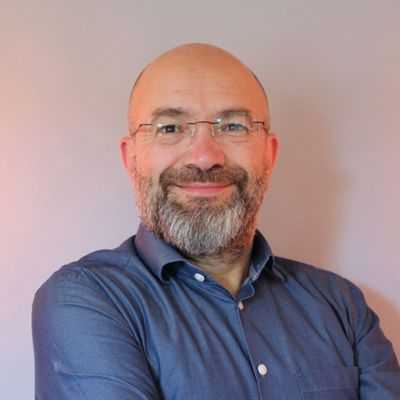
I am Agi Keramidas, a knowledge broker and podcaster. I firmly believe in the power of self-education and personal development in radically improving one's life.
I have partnered with Brain Fm! Get 20% off this amazing app: brain.fm/agi
#PersonalDevelopmentMastery
___
Episode Transcript
___
0:02
Welcome to the personal development mastery Podcast. I am Agi Keramidas and my mission is to inspire you to grow, stand out and take action towards the next level of your life. I interview leaders, authors, successful entrepreneurs, spiritual teachers, exceptional people who will inspire you to improve your life. Tune in for two episodes each week and make sure you subscribe to get them as soon as they are. Welcome to Episode 169 of personal development mastery. Today's the first episode of consolidating the knowledge and I spoke about this a couple of weeks ago on episode 165. And the only thing I will share again here in order to have some context is that I have realised after having spoken with over 100 people now that many of the actionable they implementable knowledge that I would get from the conversations. While I would say at that time, this is something that I can integrate into my own life into my own routines, if you wish, whatever realised was that many of those things remained us thoughts and ideas. In other words, they never became auctions, they just remained ideas. And what I will do in this episode, and the the episodes that I'm going to be doing on Thursdays from now one is I will revisit some of the previous episodes and specifically pick from each of them. They're actionable items, they're the moments when something was discussed or an insight that was implementable. And it's something that if it resonates with us, you can pick it up and just do it. And I will also share very authentically with you that this is going to be a lot of experimentation until it reaches a specific format. For the time being I will revisit and share my learnings and actionable items from previous conversations. And I'm sure that over time, it will change and tweak its form and the way it is presented. But as always everything is a walking motion. It's a it's a journey. For sure. So having said that, today I'm going to revisit Episode Two and episode three, which were the two interviews out of the three episodes when I launched my podcast show basically my first two interviews, and the first one was with Allan Kleynhans. And that conversation has of course a special place in my heart. Since it was the first interview I've done for personal development mastery. And Allan has a fascinating, extraordinary story from growing up in South Africa amongst apartheid and then being in the army in some horrible situations. And from that, transforming through a series of personal development books, courses, events, transforming to becoming a facilitator for Tony Robbins learning spiritual psychology being a becoming a high performance coach. And I've talked about many things and one thing I still remember and I have personally implemented is the fact that every day when you start your day, the first thing to do is connect with yourself. And there is one affirmation that I have learned from Allan and I use it all the time myself. And that affirmation is, today is my favourite day. It is a very powerful affirmation and it is very actionable and very easy to implement. Whether you're doing affirmations or not. It's just something you can always declare at the beginning of your day. Say it out loud or write it in your journal today is my favourite day. That really changes the perspective of everything really in your day. One of the things that Allan talked about was about healing the little child that we have inside of us and he talked about this full size idea around love or the false premises around love that most people get growing up as children
And I will share here a little snippet of Allan talking about this particular thing. So that you don't hear only my voice in this episode. So a very quick snippet of what he discussed on this topic.
5:17
And we all form a false premise, or a false idea around love. So when we were young, we believe that love came from our parents love came from other people. And when our parents didn't love us, and there were moments, lots of moments, all children go through moments where they believe their parents don't love them, because they either weren't picked up the right time, or they weren't fed at the right time, or their parents scolded them, or spank them or put them in the bedroom or, you know, told them to sit on this naughty step and keep quiet. And so when a child is good, then it gets love and affection, and it gets recognised. But when a child is not behaving the right way, then parents don't recognise the child in a loving way. So what we learn unconsciously is Oh, if I'm good, I get love, if I'm not good, I don't get love, we carry that into adult years. And so what we all trying to do as adults is to be accepted and be and feel like we can, you know, we're gonna we'll make it you know, and then we'll fit in. So all of that is affecting us. So in order to continue to release that you need to really recognise that we are all little children inside. And we all need to remember that we are all little children that are crate we craving love, and we didn't get mad, perhaps we didn't get that love that we thought we deserved. Or perhaps we got something that we felt we didn't deserve when really young.
6:35
And in terms of practices or actions that one can take towards healing their little child was gratitude, forgiveness. And a probe that he recommended something very visual that you can use is having some photographs of you in different ages, as a child, maybe when you were two, maybe you when you were five, seven and 10 or something like that and looking at yourself as a child facilitates the process of healing and sending forgiveness and gratitude to our little child inside of us. One other wonderful practice that I've learned from my conversation with Arlen was when I look at my reflection in the mirror, and that will add to that that it doesn't even have to be a mirror, you can use a black screen so if you turn off your computer monitor or if you look at your phone while the screen is off, you can see the reflection show send good vibration sent love to that man or that woman that you see in the mirror. Finally, one more very powerful method that Alan discussed was the Hawaiian practice of ho'oponopono. And there is a wonderful book by Dr. Joe Vitale called zero limits, which describes the practice in detail. And it is an all Hawaiian practice to help you heal and reconcile and I will link in the show notes some resources about ho'oponopono if you want to explore that topic more. Personally, I believe it's fascinating and I have personally implemented it on and off periods of times and to overly simplify the the practice ho'oponopono consists in repeating to yourself and you don't even have to say it out loud. You can repeat it to yourself inside your mind for phrases and it doesn't matter which order you will say them. These four phrases are I'm sorry, please forgive me. I love you. Thank you. And you just repeat them over and over again. And it leads to some moments of more awareness and reconciliation and calmness and I have experienced that it is an excellent practice to explore. Also one of the books that Allan recommended and it was actually the book that turned his life around when he was 21 was think and Grow Rich by Napoleon Hill. It's a classic and certainly worth a read or a reread if you have read it in the past. And the last thing I will share with Alan's action, Blyton's was something that he said when I asked him about what advice he would give to his teenage self, if you could go back in time, and he said, I will tell to myself, doubt yourself less. Take chances. Don't be afraid of life and other people's opinions. And for me that this is a beautiful phrase encompasses lots of wisdom, doubt yourself less, take chances, don't be afraid of life and other people's opinions. It's a beautiful and simple and yet profound. And the last thing I will share as my as part of my reflection and distillation of this wisdom and actionable items I got from our land claims is a snippet of him talking about personal development,
10:38
those kinds of things, it causes us to shrink a little bit, just a little bit, we shrink a little bit more, we shrink a little bit more, we shrink a little bit more, and then we then we, we've, we suddenly find ourselves in our 20s in our, in our 30s. And we were not expressing ourselves with freedom, you know? And so personal development is not Can you discover who you really are, and what your strengths are and what you really love to do and, and when you develop yourself in certain areas you develop, you find out Oh, well you can express yourself, you know, you do have a voice You know, you can speak out you have got an opinion you know, you do have certain strengths and attributes that you can apply in different areas. That's what it means for me really.
11:20
And the second one I will reflect on is Episode Three which was doctor Wasi Saleem was he is a medical doctor from Houston, Texas who has a fascinating story because it seemed like his future was carved in stone after nine years of training to become a medical doctor and hundreds of 1000s of dollars of expenses in education universities, he actually shifted his career completely away from my descent into his passion. And it is very inspiring for anyone who wants to change direction in their life and to follow their dream. Even if it looks like there are no options like their path is carved in stone was he talked a lot about believing in the impossible and using your God given ability. That's how he called it to create your reality. And in terms of actionable items, takeaways from me from the conversation, visualisation and the way that he used the power of his mind to manifest the goals that he had said was very intriguing. And so I asked him in quite detail about his specifically his visualisation techniques, how he did it for how long, how often and so on. And I also asked him about dealing with the big challenge of our conscious mind that doubts, our belief when we try to visualise something that is outside what we are familiar or comfortable with. So his tips for visualisation One of them was to do it all the time as often as you remember. So if you have a goal and an aspiration to achieve something to manifest that goal, every single time you are aware, you are conscious, use that visualisation muscle, and you could be driving, you could be shaving, you could be washing the dishes or whatever. And another thing he said was, when you write your goal down, say out loud, and believe it and it may be hard to believe in something, sometimes it's hard to believe in something when it's not there yet. So his advice was to start believing just 1% just believe 1% that it can happen. And then once you are comfortable with that, increase it go to 5% and then 10%, etc. And I will put here a little snippet of this conversation about how he described this particular element.
14:14
I had no idea how that was going to happen. But I when I made the belief and I made the intention. I thought okay, well if I believe in this 1% just 1% for now, that's enough for me to get started in believing in it right. And now I just have to believe in it hard. And that's a concept that I also love teaching my students is, you know, when you can start to believe in something just 1% and then practice believing it every single day. And that's called believing in something hard. It's like when you're choosing to believe in something impossible when you know that there's no evidence for it to happen or exist, but you choose to believe in anyway, that's when the magic happens. And so I continue to believe in this impossible going from 1% of one to 5% 10% 15% and what happened is that My brain started to come up with ideas and ways for me to get closer and closer to that goal.
15:08
One other great tip or another action he gave was when you visualise to move mentally into the future, project yourself five or 10 years from now and get into the place of your future self. And that's a very, very powerful technique. Another interesting fact about Wasi was that when I met him at that time, when we had the conversation, we were both a part of the knowledge broker blueprint programme by Tony Robbins and Dean graziosi. And was he was one of the people who won a competition and when I went and met Dean Graziosi at his home in Arizona, and I asked was he what was his biggest takeaway from spending one day with Dean Graziosi, and what he told me his biggest thing he got the insight was that they will be on our journey, as entrepreneurs or on our life journey, there will be times with progress in terms of roadblocks, and you will learn either way. But the important thing is to keep your eye on the long game. And I will close my reflection about was this a limb with what he would advise his teenage self, if you could go back in time, he said, Love yourself, stop caring about what other people think of you. You are an imperfectly perfect human being, and you are on this planet for a reason. I think that's again, a very solid piece of advice in very profound. Short, these were my reflections and the culmination of the knowledge of light items, the actionable items I got from Allan Kleynhans them sent Wasi Saleem, those two conversations. And as I said in the beginning, this kind of reflection, I will tweak it and maybe in the following episodes, or we'll have a few more episodes or categorise some of them. As I said earlier, it is a work in progress. And that will allow my intuition to guide the best direction for this project. In either way, I really hope that you find this useful. repetition is the mother of skill and implementation execution is the the ultimate power, it's not knowledge show. Again, the biggest purpose of me doing this consolidation that I will be doing on Thursdays is to convert the knowledge into wisdom to convert information into action, which can lead to transformation. So I hope you found that useful. And I will be looking forward to your feedback. So go to my website that I get keramidas.com and send me a message through there with any feedback. I really appreciate you listening. I'll see you next week and until next time, stand out. don't fit in.
Transcribed by https://otter.ai

 5.00 (74 Reviews)