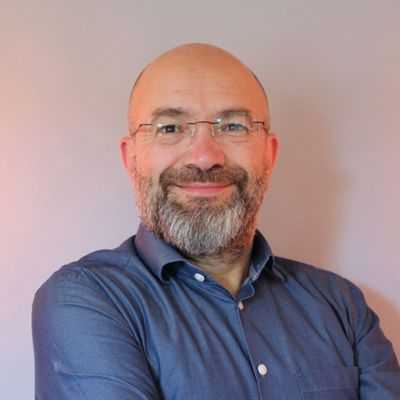
Francis Cholle is an international business consultant, having trained and worked with 250,000 business students and executives. He is a Wall Street Journal & USA Today best-selling author, a keynote and TEDx speaker, as well as CEO-founder of The Human Company, SQUIRCLE Academy, and the Know Better World Foundation. He is passionate about helping companies adapt, innovate and succeed, and he uses deep human learning and cognitive science to help leaders solve complex problems and thrive in disruption.
𝗞𝗲𝘆 𝘁𝗮𝗸𝗲𝗮𝘄𝗮𝘆𝘀:
* Experimentation is a must today
* How to access our intuitive intelligence
* The SQUIRCLE model
* The false opposition between the intuitive and rational sides
* Synergy between reason and instinct
𝗠𝗲𝗺𝗼𝗿𝗮𝗯𝗹𝗲 𝗾𝘂𝗼𝘁𝗲:
"Relax. It's going to be ok!"
-Francis Cholle
𝗩𝗮𝗹𝘂𝗮𝗯𝗹𝗲 𝗿𝗲𝘀𝗼𝘂𝗿𝗰𝗲𝘀:
Free "SQUIRCLE" test: https://squircleacademy.com/
𝗔𝗯𝗼𝘂𝘁 𝘁𝗵𝗲 𝗵𝗼𝘀𝘁:
I am Agi Keramidas, a knowledge broker and podcaster. I firmly believe in the power of self-education and personal development in radically improving one's life.
I have partnered with Brain Fm! Get 20% off this amazing app: brain.fm/agi
#PersonalDevelopmentMastery
___
Episode Transcript
___
0:02
Welcome to the personal development mastery podcast. I am Agi Keramidas and my mission is to inspire you to grow, stand out and take action towards the next level of your life. I interview leaders, authors, successful entrepreneurs, spiritual teachers, exceptional people who will inspire you to improve your life Kulin for two episodes each week, and make sure you subscribe to get them as soon as they are released. In today's show, I am delighted to speak with Francis Cholle. Francis, you are an international business consultant, having trained and worked with about 250,000 business students and executives, you're a Wall Street Journal and USA Today best selling author, a keynote and TEDx speaker as well as CEO and founder of the human company squircle Academy and the No Better World Foundation. You're passionate about helping companies adopt innovate and succeed and helping leaders solve complex problems and thriving disruption. Francis, I'm overjoyed to be speaking with you today. Welcome.
1:21
Thank you, Agi. And likewise, thank you very much. And
1:25
Francis, I would like to start with asking you to give us a little bit of your background and your journey. So there was one there were quite a few intriguing points that I discovered looking at your your story, but there was one that I wanted to ask you about. In particular, you say that when you were 25, you became a millionaire. And that changed your perspective on life and career? Would you like to explain take us back there and explain what chains How did that change? You?
2:03
Sure. Um, so there were there were previous change to this maybe. Which is when I was what age 1819 1919. I was actually when I was 18. I got into business school. And I decided not to take it and to study again for one year to get into better business school. So from number three to number one, actually, and I don't even know why I did this, honestly. But I did it. And the reason I'm saying this is because once you enter that school in France, you feel you've arrived, and that was at 19 a wage. Okay, I don't know, it's I don't I don't think it's a right thing. But I think it's a it's a perception that we share when went to that school. Okay, so that was one threshold. And then and then a few years later, so I see for three years and then I did what's called a civil service in France, you know, so I went to Germany for a year and a half, I didn't really clearly knew what would be my path. So I went back to school for one year to be the assistant assistant to a professor. And, and then I got the job I got which was to be the managing director of a art book publishing house in Paris to do its turn around because it was not profitable, very much was going through difficulties and early on had success very early on for six months, something really big happened and big contract came in that I was able to nail for the company and which represented your margin of the business. And soon enough, I was offered to become a shareholder of the company for secure my position and my commitment to the organisation and, and I had a plan of acquisition against markers of shares all the way to becoming one of the key shareholders of the organisation. So that's why I became a millionaire very young, because we turn around the company quickly. Over three years, we double its size and made it the most profitable publishing house. So that was like a big achievement at a very young age. And that brought wealth. So now I'm coming from this business school, I have wealth, so I felt like something had been achieved very young and I feel had completed my journey as a businessman at 27 and I left for New York. So those have been very, I say, my cup my career as a small business co owner doing a turnaround and doing it very intuitively. instinctually and of course a lot of thought and a lot of work involved weekends and late nights. I had two jobs actually, I can explain later in the organisation, but I Yeah, so I've had this very short, intense series. have successes or relative successes and, and condense business life. And I felt like that was done at age 2028.
5:09
And what did you do? Next thing you said that you went to New York,
5:14
I went to New York to find ideas about what would be next for me, because I always love New York, I studied in New York when I was 18, at Columbia University for a summer. And I love and I went back for my work as an output publisher in New York was a big capital of the world of publishing and, and we, and I went there with a friend. And the idea was just to be inspired and find new ideas. I had a very intense for years, and honestly had not really taken much time to think about my life. And I was at that moment where I guess I was reevaluating. So I went there with the idea of creating a performing arts centre, stage and music, but to help people to become more human, more happier, more whole, not to create concert pianists, and you know, and stars. But to create people were more balanced, more happier, fuller with our lives. And when I arrived in New York, I said, Oh, you know what, I'm not gonna repeat that centre, I'm going to live it, I'm going to experience it before I create it. So I joined an acting school where everybody wanted to become Robert De Niro. And I wanted to become Francis, you know, myself. So that was a bit of a disconnect one once more, but because the life I had between 24 and 28, was rather disconnected from most of my friends, you know, I was at big responsibilities, both in business, but also intellectually, because I had these two hats of learning the craft, of becoming an art book publisher, and learning the craft of leading a business.
6:57
That's great. And that's very, very interesting, because there is so much contrast between a business school and an estate like to they are very, very, on different sides, if there is a spectrum of different things. And there was something that I read that you said that during the time you went on stage in New York, you learned something that you you couldn't have learned in the business school. And that was the I think it was the play in the creativity. So I wanted to ask you about this. So maybe use this same transition to move all the conversation towards the squircle. But I would really like to find out about this creativity and play because you know very well, they are so important. And also we know that many people really luck play in the life.
8:02
So before I go into this Adji, because we're going to go more into, you know, the methodology I developed, I would like to tell your audience that and you that I developed all of this, based on an assignment that I received as a consultant, as I was still in the arts, in the Performing Arts in New York, for the CEO of L'Oreal, and the management of creative teams. So another scholar, and someone, so I don't have a PhD in in the subjects that I talked about, but researched quite heavily for L'Oreal, to the point that we developed training programmes globally, to help managers motivate creative teams and work with creative teams and manage creative teams better, because creativity is essential to L'Oreal, global leading beauty group in the world and and in since then, I've put to test the model I developed, as you said, Tony 50,000, people have, you know, taken that assessment that I developed and, and we've worked for more than 20 fortune 500 companies in the past 15 years. And we've seen it work. It's kind of counter mainstream in the way we approach things, but it does deliver results. So I just want to share with you that I feel compelled to share what we do and reasonably confidence that it can be replicated by replicated by others because I've even taught it to other consultants and coaches for them to use it. So this being said, what I discovered on stage is really the underpinning of performance, the underpinning of engagement and the underpinning of creativity and also probably a certain take on intelligence. So ideally, love the concept of intuitive intelligence, the synergy between our rational mind and our instinctual aptitudes, the rational minds will be trained at school, mostly, you know, being able to analyse a text Critical Thinking mathematics, the ability to reason in sophisticated theories and models, and the instinctual attitudes are we born with, you know, the ability to sustain our existence, you know, as individuals and as a species. So that's how I understand those, those two terms. And the synergy between the logical mind and our instinctual attitudes, you know, create intuitive intelligence, a form of intelligence that I think is very much suited for the creative process, and very much suited for the complexity of our times.
10:56
That's amazing. And the same energy that you say something that I want to discuss a little bit later on? Can I bring us back a little bit and discuss the squircle concept, because I found this extremely fascinating. I will share a little bit later my own personal result with this, but I will ask you What about the concept if you would give me a definition, before I do that, can I I will give a little bit of introduction by using a quote that I think is very relevant. It's something that Einstein said, then you have on your website, and I will just read it because I think it sets the tone very well for what you're going to tell him next and assurance that said that the the intuitive mind is a sacred gift. And the rational mind is a faithful servant, we have created a society that honours the servant, and has forgotten the gift. And you know what you were saying earlier about those two sides and the one that is very much cultivated in our society where whereas the other one is not. I like very much this description of the gift versus the servant that are not treated as such. So I would love to hear your thoughts and guide us through the Discworld concept.
12:28
Okay, so why don't we start with a story because I think it's easier to understand. In the book, I completely like a bit a year ago, pretty much called squircle, a new way to think for a new world. I speak about a true story of an executive from Unilever, by name a Philip, who is a seasoned experiment experienced marathon runner, who that's here and decided to run again, the marathon in New York. And he shared that story one time when I was offering a presentation at a global executive search, who had decided to invite their key account executives and, and give me the floor to, you know, offer them what we do and and as a as a gift at the end of the year, or beginning of the year actually was in January. So Philip went through the methodology, which starts with a game by which people can realise that there's another way to solve complexity than the usual way of thinking. So anyway, so Phillip story is. So and after he went through the experience that Oh, my God, that reminds really me that we might be really strongly of something that happened to me and hear what happened to him. So he sets out to run New York marathon. So you probably know that because I know that you've run one recently, AG, congratulation on this, you train for three months. And as you get closer to the race, of course, the discipline is even more important. And in the case of Philip, the first two months had been able to train according to His plan, but the last month was much more difficult because of heavy travel. And the last week especially got really crazy for him. And he didn't feel that he prepared himself as well as he had planned to. So he called his coach Jennifer and he said to her exactly what I told you, I'm not sure I'm ready. What should I do? And Jennifer, New Yorker, pragmatic, will usually is all about what's your performance? How did you sleep? What have you ate? How did you run? This time told him listen for it. If your concern is to hurt yourself. Don't worry about this, you've trained very reasonably for this race. And the second you're seasoned marathon runner, so your body is ready for that marathon. Now, given the unusual circumstances under which you will participate, if you decide to participate, I would advise you to do two things, one, do not look at your watch throughout the race, and to stay connected to your breathing, really pay attention to your breathing. And feel it was kind of baffled, you know, surprised, astonished by what she told him because that was not her usual speak, when home, decided to go to bed, nothing about it, because he really didn't know what to make of it, and setting what you would decide next in the morning. So now he's having breakfast, and is thinking, you know, what, I've trained olive running, you know, I love running the marathon of New York, it's a fabulous journey, every time I'm going to do it, and you know what I would experiment? In other words, I'm not ready to do it the way I used to do it, so why not try something else. And which is, by the way, what we all of us go through today, you know, we can't do things the way we used to do them, and we have to experiment. So he experimented. And he, it was hard for him to not look at his watch, because, you know, is, is is thriving, on achievements. You know, like all of us, he is thriving on strategy and goals and achieving those goals. So it was a battle. But he decided not to look at his watch. And then connecting with breathing was kind of also a very disciplined, ask, you know, to really stay in the moment and be physically present, if anybody did. And what happened is, he got his better score every delta time ever. So that really stunned him. And that stayed with him that impacted the way he was working after that, from that point on and the game that we took him through and the model that explained to
17:15
that I share to explain what's happening in the game was very intriguing to him. I think they didn't understand better deeper and be able to make it more actionable. This knowledge is understanding for what he does at work in managing teams and managing it himself. Is a Unilever executive at the time was a executive at Unilever. In New York, yep. Yeah.
17:40
Hi, it's Maggie here, interrupting you with something you may find useful. The most frustrating feeling is when you're trying to focus, but you can't get your brain to concentrate and zoning on the important work in front of you. And if it happens to you, you're not alone. 40% of people say they have to make a big effort to concentrate. But if you're having trouble getting focused, I have a solution for you. I'm so excited to be partnering with brain FM. Brain FM is a great app, and I use it to block out my mental chatter and zone in on my number one priority of the day. Brain FM uses functional music, which is backed by science and research. And it is designed to give us that extra edge when we need our undivided attention. But they also have relaxation, meditation and deep sleep modules that help you unwind and recharge. So if you want to be able to place your full attention exclusively in the activity you choose, whether that's meaningful work or relaxing or getting high quality sleep. Right now personal development mastery podcast listeners get 20% of brain FM slash Aggie that's an amazing deal for such a great app. 1000s of people have given five star reviews to brain FM, find out why brain.fm/id If if I were to ask you to breathe them the story with those two sides of the square. Can you elaborate a bit more? Sure. Sure.
19:29
So there are two approaches to running the race. So one is I have a strategy I have a plan a strategy, you have got metrics. I got a process to get there. And I will stick to the strategy stick to the process and reach my goals. That's pretty much traditional thinking that's what I learned at school. Okay. And I and we can all relate to this. That's how that's the milk that we grew up in. Okay. And then and then there is the Apart, which is what happened to Philip, something happens, you know, that actually throws the plant out of the door. And, and then you have to adapt and make decisions. And in his case, he decided that he would focus on the experience experiment, like a scientist, you know, identifying two aspects of the experience that he would do differently and be willing to be surprised, be willing to not know, be willing to give up the outcome. Why? Because he finds himself in circumstances that are no longer the circumstances that he had planned ahead for. So what do you do when you being surprised? What do you do when things don't go the way you thought they would be going for you to execute on strategy? He did what scientists do, okay, I have a model, this model is no longer relevant, because circumstances have changed. And that's what the scientists does. You know, I think that the theory, or the rules, the laws of physics, you know, that we believed in are not enough to approach progress evolution, or, or an intuition, a sensation I have that we could actually do better. I'm going to experiment. And scientific experimentation has very precise aspects to it, but also non precise aspect to it. It's really about perception, it's about discovery, it's about being surprised, it's about being confused. And that's exactly what he went through. He allowed himself to be surprised, he was somewhat confused, he was challenged in the process of not looking at his watch, unusual, and being connected to his body. And what's interesting here is that he got a better score, he got a better time. And he felt better at the end of the race, because his body was more relaxed, because he was breathing throughout the race. And he enjoyed himself more because he was present to the moment. So that speaks to burnout at work, low level of engagements, how to perform in a disruptive environments, how to pivot and adapt, when things don't go the way you thought that it would be going and not going the way you had anticipated anticipated would go as you have planned your strategy to reach your goals, so we can all relate to this thing. Now, if someone had done what Philip? Did, would that person also get the better? reading time? I have no clue. But what I know is that Phil it allowed himself to go through a true experimentation grew out of it expanded his ways of understanding performance, performance management, expanded his way of understanding how to adapt to unknown circumstances. And the cherry on the cake is that he had a better time, his body was less tired, and he got a better running time. And I have no clue to tell you ag if that would work for you or not. Okay, I know the principles are right. But the experience is unique because we're all unique. And that's why today, as we trail blaze through totally new avenues of how to do business, how to respond to the unknown, and uncertainty. We all placed in Philips shoes. And they are solid principles that we can operate from. That will get us further, but not necessarily where we want to end up perfectly, but there will be a game. And if you are able to evaluate the process and look at it and learn the lesson to learn you know, you will eventually get to your goals.
24:09
Francis, I wanted to ask you one more thing about this. There's two sides the logical derision side and the the intuitive sides because you come back to what you said about synergy earlier, which is a great way to use and both of them. However, I think in many people's eyes, these two sides seem to be like opposites.
24:36
So let me get to it. Let me get to it. You know, let's go back to Philip because that's his story. It's a simple situation. That's really very much mirroring what we're all going through. Okay. The logical strategic path. We are all grown up with. Okay, would have done two things. Either he would not have run and not gained any learning or would have run with this idea. They were not ready, and probably forcing himself because psychologically he was battling the idea that it was not up to par. Yes. Okay, what will be the outcome, I cannot tell you. But most likely, he would not have had a more pleasant experience a more relaxed body. And I don't know about the running time, okay. But we know that his body would have been less under duress, I mean, has been less under duress. And if you had gone there with the stress that I am not fit, I'm not ready. I've not done what I was supposed to do. And I am going to force my strategy through in spite of this, or I give up strategy and goal, and I'm experimenting with something else. So this is where this is where we need to really understand one thing, the, the, let's say, the intuitive aspect, or the improvisational aspect, where you manoeuvre through intuition, you know, he decided intuitively to run, there was not based on facts, you know, he said, you know, what, that's interesting, what is offering it, I can consider it, I can adventure, I can experiment. So was really staying in the process, and not focusing on the outcome. So you are really present to what's happening, and you oriented yourself through your sensations, your perceptions, what you feel, that doesn't deny logic. It enriches logic. Okay, because all along, he's been thinking, but he's not let his strategic mind his logical mind, dominate his experience. He made space for the logical mind to be with him, but not dominating his availability to the experience from a physical sensorial place. Whereas on the other end, had he dominated where the logical mind, I'm going to push through, I'm going to steal strategy, I'm going to reach my goal. Okay, that approach would have kept him in his head, and now being present to the experience not being present to his physiological, physiological needs, and his body. And because I've had many, many talks with many marathon runners, his buddies would have actually paid the price for his forceful approach, where the mind would be set on what it wants, and push through no matter what. And in a world where disruption is the new normal, we need to understand that it's not disruption in the sense of Oh, my God, I'm going to fail, if I don't, if I'm not up to disruption is no, it's asked to navigate with a different awareness with a different way of thinking, which includes logic, which includes measures, but doesn't dominate through logic and measures, which is very hard in business, of course, and especially hard in public organisations are publicly traded with quarterly reporting, etc, which is different than small businesses, obviously. But what's hard for small businesses is that we believe that the harder we work, the more results we'll get. And what Philips story points to is that there's another path. It's not it's not either, I'm not ready, or I'm ready is, I am where I am. And I'm going to experiment being present to my circumstances, both in a logical way, in a perceptual way. And it's going to be an interesting, richer experience by which I can stay being rational and in fact, based, but not limiting myself to what I see what I know, and being open to experiment. So that's what squircle does it reconciliation, those two approaches and a label enables a synergy. So synergy means that the two approaches the logical strategic one, and the more perceptual improvisational one could interact with one another. So that coming together, being respected for what they are both of those approaches, they interact and they create more than the sum of those two, give me let me give you a simple example. You know, scientific medicine, medical science,
29:39
cannot reconciliation with traditional medicine like Chinese medicine. Two different logic. They count reconciliation from a logical point of view from the medical science framework. It doesn't it's not adding up. However, today in many hospitals and some of the greatest the Mayo Clinic ache in America, for instance, they will integrate acupuncture prior to anaesthesia, past anaesthesia, they will incorporate acupuncture in trauma management in, you know, pain management, okay. So they cannot understand from a medical science, what traditional medicine adds to patients, but they see experimentally, experiments through, you know, through experience experientially that it adds value, it accelerates the healing, it makes the patient heal faster, get out of the sick bed faster. So they've integrated it. And they allow those two disciplines which cannot be reconciled logic and intuition or, you know, medical science and traditional medicine, but let them interact by not trying to understand but letting knowledge and experience lead them and and have the and reap the benefits of both without opposition without exclusion in a in a holistic manner, when you look at those two treatments as a whole, and let them interact with treatments to create better outcomes. So that's exactly what squircle offers, allowing Philip to be both strategic, trained, applied disciplined, and at the same time open to experimentation, so that he can reach beyond whether logical mind can understand and have access to performance boosters, in this case, higher level of well being, and for higher level of performance.
31:44
That's great. So let's say that someone who's listening to this now has much more weight into the rational part of his decisions, as I suppose most people are. And they would like to tap More into the other side, the intuitive side is there. What would you recommend?
32:07
Yeah. So you know, it's it's actually quite straightforward, you know, because we practice intuition and our instinctual gut feeling all day long. It's deconstructing the way we make decisions. Okay, and holding the space for both. So yes, there is strategy. Yes, there is. Goals, we all have to have them in the world we live in. Okay, so it's really not about discounting this or throwing this other window are all it is about enriching, adding, with? What do I truly feel? How do I truly feel about the situation? On paper? It makes sense. But is it exactly what I feel inside? You need to take stock of what you feel about any situation, you know, this contract in Japan, this, this new product, launch and campaign, this new clients that's coming into a roaster, and seems to be like, Oh, my God, such a big opportunity. Okay, so how do I really truly feel and take stock of this? And and let this inform you? If you have a question that you cannot answer with a black and white analysis, then let it inform you don't give up the questions that I don't have the time. On the contrary, there's something here that doesn't add up. I'm not sure what it is. Let me let me let my, my brain by myself, you know, stay with it. So I hold on to the question. I hold the question. But I don't think about it from an obsessional place of I need to have the answer. I let the answer come to me. So it's just a matter of changing the attitude from will to openness, determination and openness versus will and forcefulness. And that makes a huge difference. Why? Because suddenly, you have access to a reservoir of perception intelligence that you cannot have access to. If you stay in the will and the forcefulness
34:27
that's fantastic and yes then this intelligence this deep intelligence is is amazing. That goes something I want you to elaborate a bit more you said to ask yourself how do I feel? Yeah, what kind of answer should one expect from that? So how when you say feel, is it a physical sensation is it I feel lighter feel? How the
34:53
sensation absolutely the body doesn't lie. You know, the body doesn't lie. so it doesn't lie, but he will send you messages that are not explicit, yes. Okay. So you have to make sure that you are open to the messages that the body sends to you. And you need to revisit your vocabulary in making sense of that message, you know, because your grammar, your syntax, your vocabulary is of another order, you know, you won't be able to make sense of it. But you know, the funny part Agi is that I advise, you know, global CEOs of global organisations and their teams, and I don't know, one single SEO, he or she, that doesn't do that exactly what I say. Okay, and they do it very quickly. There's which there's research that say that, SEO, the long long term research is research I found for my for my first book I wrote in 2000, that was published in 2007. I wrote in 2005 16 years ago, but the research was saying that leaders prefer to make a decision quickly than not make a decision, because they know that in 80% of the cases, they'll be right from experience, okay? Because they're seasoned because they have experts advice around them, because they've, you know, learned their craft over decades, and so forth. So, so so so they do this, they do that, I don't know, one single leader, successful leader who's not, you know, making let's call them like holistic judgments or holistic decisions, meaning facts, analysis experience, and some other dimensions, that it cannot really put in a box that it cannot necessarily represent intellectually, or logically, but that informs very astutely that decisions. Now, the problem in organisation is that you can do that with yourself, because you trust yourself. How do you do this with teams? Okay, because it's not a you trust yourself, but you trust this process, this intuitive process, because you've, you've gone through it within your own inner dialogue, but you don't partake in the inner dialogues, have your associates at work, and team members. So that's where it become very difficult. How do I replicate this inner dialogue within teams, when it's something that's so ethereal, so not, you know, tangible, where everybody has their own vocabulary and syntax and grammar, to engage with those inner perceptions. So that's why there's a huge deficit. This is where we come in, and we help organisation actually create circumstances by which that perceptual intelligence that everybody has, can be honoured in group decision in teamwork. But the irony is that this language of the body is universal. Our unique relationship to this body, our relationship to this body language, universal body language is unique. But the language itself is universal. So when you get people to play games, serious games, you know, that universal language becomes much more obvious, tangible, and, and because the mind when you play, the mind is not in the way, you know, you just play you in the moment you immersed, just like Phillip, looking at his watch, enjoying the moment being present to his body, you know, shifted into a different quality of presence. So that's the same quality of presence that you have when you play, it's been researched by scientists all over, we never more human than when we play, and more whole, and when we play and more and more full of potential activated then when we play. So that's how this collective intelligence, you know, can be surfaced and deliver results like No, no time before. I worked in a company in Chicago, 60 year old business, Midwest technology company with a CFO group, very exact people. Okay, in less than eight hours, we came up with many different things, but one of them was the vision for that Financial Group. Okay. And everybody like, Oh, my God, you know, they really came up with a vision that was so clear, so clean seven, eight words. So, so, so powerful, so, so engaging, you know, they were surprised. And yes, I pushed Yes, I challenged the process and everything as a consultant, but I told them, it's not about me, it's about the group emergence process, you know, that something of that quality was able to happen because you're very seasoned professional, you know, what you do, and you know, what you aspire to, and that that's just surface because people were very open to this emergence process of emergence, which is the process of nature.
39:49
That's fascinating and the thing anyone that has experienced this intelligence, this higher intelligence and receives an answer or an idea of From it knows exactly what you're talking about, you
40:03
know, at I will not say superior intelligence because that creates a hierarchy and we're back into strategy and goals, okay, I would say a deeper into any judgement that we cannot have access through the logical mind which stays at the surface, you know, and at the surface is very, very, very, very powerful, you know, equated science, you know, it's very powerful, it needs to be respected, obviously, and understand its limits. And every great scientific researcher gets that every get great entrepreneur gets that every great leader gets that. Now, the difficulty is how do you orchestrate this in an organisation where you don't work alone? You work with other people? How do you invite this? How do you make that actually a norm, you know, of how you work? And how do you encourage that that's a challenge, because that's not the way we've been trained. This is not where we feel comfortable. It requires a deeper involvement.
41:05
Absolutely. Francis, let me ask you also, I would like to ask you some quickfire questions to start wrapping this conversation. And it's been fascinating so far. So the first one I always ask my guests is what does the term personal development mean to you?
41:29
You know, what, I was having conversation with this client, actually the past few days.
41:36
Personal development or professional development or talent development, to me has to be at every level of the value creation chain of the value chain today. Because you know, that centred I heard from somebody from a financial group, you know, the new skill set, is that your mindset? And do new mindset needs to be shaped at every touchpoint of value creation for companies to really be adaptive as a way to be adaptive. Yeah, so
42:09
amazing. And and hypothetical question, let's say you could go back in time and meet your 18 year old self, what's one piece of advice you would tell him? Relax. It's gonna be okay. I'm smiling because I've heard this kind of answer in different words from so many times. It's a common theme, and Frances emerging from this conversation we had if you were to give to the listener, one actionable item, something to take away and implement, what would you tell him more?
42:50
Yeah. So experimentation is a must today, you know, when you enter the jungle, you know, you can't orientate yourself the way you used to. So you have to experiment with the first step. And no first step is going to be easy. And now the second one and the third one, because you're in the jungle, and everything can happen. So you need to develop that experimentation muscle. So what I do with my clients, I tell them, Okay, let's experiment in a low hanging fruit in something that's not too, too big of a risk, but with a real risk with a small stake, because it needs to be real. Okay. You need to be facing the real dragons. Okay. Wow, I don't have control of it. I will say that no one has control, you know, we only have the illusion of control. So you're not giving up much. But emotionally we give up a lot. Okay, psychologically, emotionally will give a lot. So, So experiment with nothing control, improvising, and perceiving what's happening. So you can develop that muscle, that channel of knowledge in a way that will serve you for bigger stakes. So start small and smart, but do start experimenting, because this is the way forward.
44:03
Perfect, fantastic. Where would you direct people who want to find out more about you, Francis, what's the best place?
44:12
So you know, my first and last name, Francis, shall ch o ll e.com. You know, that's one website. But I would like to send your listeners to squircle academy.com. And to take the test. There's a simple free assessment that will provide some customised insights about their responses and also other insights about their team members and people around them, whether it's clients, whether it's spouses or whether it's children or gym teammates, workmates, or, or, you know, again, vendors. Clients are so so it's a 24 page report and it's free. And I would like to say one thing. We are much more complex as human beings than any assessment could be really honoured. So it's not an assessment. It's a conversation starter. For everybody who answers those questions, it takes three minutes to reflect on how they approach life, the square approach is absolutely fine. The circle approach is totally fine. The problem we have is we live in a society where we dominate with the square, as opposed to enable the square and a circle to function on an equal foot. And that's where the opportunity lies. So it's not like the square are bad because they're too structured and too strategic. No, no, not at all is fabulous. Everybody needs to know what's on their bank account and how to manage their money, what's the return on their investment, and the circle needs to be freed. Because if you put the circle, if you terminate a circle with a square, you know, imagine the image of a circle within a square, it's boxed in, it's like a wild animal in a cage, a wild animal, a wild bird in a cage is no longer a wild bird, it becomes an object of decoration, it loses its capacity to adapt, and thrive in nature. Okay, and thrive in the unknown in uncertainty. So that's really the point of skwerkel liberate the circle from the square and let them interact together. So go to squircle academy.com. And on the you'll see the menu, take the test, and you'll get a hopefully, interesting insights in this way forward that we all have to onboard.
46:38
Can I second that, and I will say very quickly that I did take the test myself, and you know that the test is very good when the first sentence that you read in the results, makes you realise, oh, my this is me, this is a very accurate description. So yeah, it's it's a great test. I will put it on the show notes as well. Francis, I want to thank you very much for your time and a truly fascinating conversation I had with you today you shared some incredible things that I believe, have value immense value for the listeners. So thank you very much. And any last parting words from you?
47:18
Let's put the words well, thank you very much. You know, as a human being, being thrown into the unknown, like everybody else, and having to adapt and pivot. Don't judge yourself in that space. You know, I think that's the biggest gift to not judge ourselves in that space the same way as you would not judge a beginner you know, starting to play tennis or you will not judge a child learning the alphabet. We're all beginners today, you know in that space.
47:52
I hope you enjoyed listening. If you have, please share this episode with someone who you think will benefit from it. If you want to know more about what I do, visit my website AGIKERAMIDAS.COM
48:09
And until next time, stand out don't fit in!
Transcribed by https://otter.ai

 5.00 (74 Reviews)