___
Episode Transcript
___
0:02
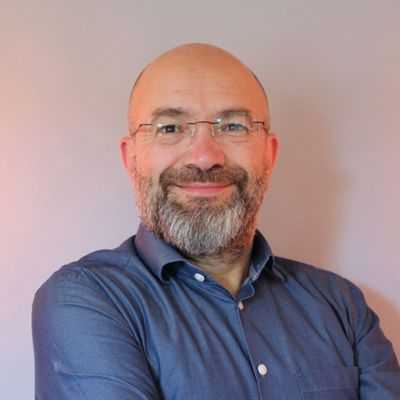
Welcome to the personal development mastery podcast. I am Agi Keramidas and my mission is to inspire you to grow, stand out and take action towards the next level of your life. I interview leaders, authors, successful entrepreneurs, spiritual teachers, exceptional people who will inspire you to improve your life Kulin for two episodes each week, and make sure you subscribe to get them as soon as they are released. In today's show, I am thrilled to speak with Dr. Fred Moss. Dr. Fred, you're a thought leader and transformative psychiatrist who has served the mental health industry for nearly four decades. While your initial interest in psychiatry was to expand on communication and human connections as primary healing tools. A shift in the medical paradigm in VA this led to physicians diagnosing patients with imbalances and prescribing medications as a primary way of dealing with life's distress. That led you to take a new approach with your patients assisting them to reclaim their lives without psychiatric diagnosis and medication. As an advisor, speaker and educator you are committed to humanity and to globally transforming our mental health conversations. You're also the host of Welcome to humanity podcast, which explores what it means to be human and how to live an extraordinary life. Dr. Fred, welcome to Personal Development mastery. It's it's a joy to be speaking with you today.
1:48
The joy is mine. Thank you for having me. It's really, really great to be with you. Agi this morning. Thank you. Thank you. Thank you.
1:55
Dr. Fred, I want to ask, I want to start with actually this is a question that you are familiar with? It's a very simple question. And yet it's a very deep question. And I just said right now, you know, in the introduction, your description. So my question with is your question really is Dr. Fred, who are you?
2:19
Thank you. So I wondered what day it would finally happen that a podcaster would load me up with that particular question which I so freely asking the Welcome to humanity podcast to nearly all of my guests. So, you know, I watched them sort of Quake and quiver when they are faced with this nine letter question of who are you? So you know, who I am, is I'm a stand for, you know, people having a true voice for people actually bringing out their authentic message into the world. It is really important to me that people be allowed to speak and more so. And in this day and age, that people can listen to everyone law and everything, listen to the world around us be in wonder BE IN THE MIRACLE be in, you know, curiosity for what is going on? What is happening, what is going on now, in my world, but also maybe more importantly, what's going on in your world are this world that is outside of me? Can I take in everything can I embrace all of humanity. And if I can do that, it's possible that I can be Assam, for other people to do that, so that we can sit in the wonder of what life is. Because life is much more extensive, much more expansive, than we might actually pay attention to. If we focus down on the things that we have been convinced is important to us. Now we have an opportunity to see that there's so much of absurdity in life and there's so many incongruent seeds in life, but there's so much beauty in life and then there's so much misery in life. And there's so many things that I seem to understand. And then there's so much things that I am completely aimless and, and lost or anxious and depressed or nervous or fearful. And all of those things play a role and what it really means to be alive. And if I can be a stand for that, perhaps I can be a stand for other people to get all of that and still keep a smile or a joy in every single breath that I take. So that's the best I can deliver this morning into Dr. Fred, who are you?
4:39
I think that's a wonderful answer. It was. I don't know what kind of answers you you normally get or if people have trouble expressing it. You have obviously thought about it very carefully to describe it. And you already mentioned some things with some going To come back to a little bit later in the conversation about finding your true voice and the authentic message. But I, I would really like to have a some comments from you on that, in particular that part of your story with us, a psychiatrist, you realise that the paradigm was to give more labels to people, excuse me, if I'm going to use some simple terms, sure, but label people for this and that, and then give more medication to hear that. So I would love to hear your, your thoughts. And I know we can't go deep on this topic. But I would love to hear your expertise on this situation that had happened and your response to it.
5:55
Yeah. So thank you for that question. So what ended up happening or how this ended up looking like it looks is I'm, I've always been enchanted with the whole notion of communication, creating ideas, and then I'm the face of ideas, creating plans and on the face of plans, creating actions, and then actually the world changing as a function of us uttering sound waves and using our ears, the whole idea of communication, the multiplicity, and the simplicity, as well as the outcomes of communication and really have been, have noticed over the years that communication and connection conversation with people had such immense healing qualities that created purpose, it created opportunities, so much could happen when we shared our voices. So early in the when I went to college, you know, college didn't work out that perfect for me. So I left college and I went into, you know, I thought I took a job and try to figure out what my life was about. And I got a job as a in a state hospital as a childcare worker, I was working with 12 to 14 and 14 to 16 year old boys, who were housed in a state hospital for an extended period of time. I really enjoyed the conversations, there was so much healing going on between me and these kids who were, you know, less than 10 years were less than 10 years apart from me at that point. And I really began to believe that I could do this, that there was something in the world available where a conversation could be what I could do for an occupation. So ultimately, the thing I didn't like in that job is the way psychiatrists dealt with the children, actual psychiatry, so we would call the psychiatrists and say that the child is up to eight, or he got in a fight with his friend or it wasn't listening to the staff. And it's and then the psychiatrists would come and have a one second conversation with the child, and then write some sentence something in the chart, and then we'd have to hold the child down and inject him full of medicine. And then he would just, you know, be stupor as for the next half a day or a full day, and then we would write that it was successful. And to me, that was just a painful agony. And so I decided that way to go at this would to be to use my passion to use my interest to I even had a brother who was a psychiatrist. So I bet I would go back in and be a psychiatrist who stood for conversation and connection. And indeed, I went right back to school, and I went to I finished off at Wayne State University in Detroit, and then went to Northwestern University Medical School, and before too long, voila, there I am as a psychiatrist. But in the meantime, the paradigm did shift, like you mentioned, in 1987, Prozac was introduced. And then psychiatry, all of a sudden became a field of Biological Psychiatry or chemical imbalances. And it was like, hey, hey, that isn't what I came into the field for. But since you did it, I guess I'll have to be an expert in this area, even though I went in here so that I wouldn't have to medicate people. So over the next several decades, I really learned how to medicate people and I became, you know, almost ironically, I became an expert psychopharmacologist. But each time that I learned about new medications, I really was sceptical and became more and more sceptical that medicines weren't doing exactly what they were marketed to do. And that these diagnosis that we were freely giving out to our patients, to our clients, to the people who are asking us for assistance, maybe weren't serving them as well as we had hoped. So in 2006, approximately so that would be almost 15 years later.
9:53
And really, you know, a given that I started my psychiatric career in 1988 that childcare with a job who could say 25 years later, 26 years later, I finally decided to take people off their diagnoses to start looking at people what would happen if I didn't pay so much attention to the diagnosis or began to take people off medicine. And when I started doing that people got better, so much faster. So it was like a shocking how fast people got better. It was truly shocking. And it was reliable that people could get better off their medicines. But it wasn't like for anyone. So with our listeners here, I'm not saying get off your medicine, you'll get better, it takes a lot, you know, you have to have a lot of things aligned, your family, your friends, your caregivers, you need to be ready to go through the changes that are going to call that are going to happen once the grip of the medicine is lifted, there might be a methodology so that it's more comfortable than a you know, painful to come off match. I'm not quite, I'm not saying come off medicine. So I don't want to be heard as that. But what I am saying is that when people are ready coming off medicine, and not only just coming up medicine, coming off a diagnosis, and realising something like humanity is what we're doing here. So when I'm looking at you, or looking at my client, I'm looking eye to eye and I'm no longer interested in a diagnosis, which creates a permanent power gradient between the doctor and the client. So I began to even the playing field and to start really looking at people as just another human trying to figure out what the next step to take is in life because that's really all we're doing. That's it there's nobody who has any kind of good recipe or any kind of good idea other than to be good, you know, be good do kinda acts of, you know, create joy, living a life have some degree of worthiness be of service to others, maybe be creative. So there's something like really what what happens when we're creative, the new paradigm started to soak into my life and as a psychiatrist, I become less and less interested in diagnosis and medication, and much more interested in self expression and creativity as a source of healing. So over time, that has been what has occurred and I have now become an have called myself sort of be and doctor and like you mentioned a restorative, transformative, psychiatrist, one who, when ready can assist people in coming off their diagnosis, coming off their medication, and then really coming off their whole doctor under undiagnosed on Medicaid on Doctor name. And the you know, what then happens is it communication connection and creativity become the source of interactivity. And a worthwhile illness actually emerges meaning, the possibility of optimising a life that was otherwise perhaps lost to a diagnosis or progressive deterioration of mental health, the possibility of actually having a life that now slopes upward again, towards being productive, joyful, actually, like, worthy of living, like really getting the beauty of life becomes available to any and all people. So now that's what I get to do at this point in my life is really, I don't have to act in ways that I was taught. Instead, I can bring back what I went into the field knowing in the first place, which is a communication, connection, conversation, and creativity, in the form of self expression are at the source of all healing of all types. What else is there better to do than communicate with another and then listen to what they have to say, and really, really, really get that what they have to say is worth listening to.
13:57
Hi, it's Agi here, interrupting you with something you may find useful. The most frustrating feeling is when you're trying to focus, but you can't get your brain to concentrate and zoned in on the important work in front of you. And if it happens to you, you are not alone. 40% of people say they have to make a big effort to concentrate. But if you're having trouble getting focused, I have a solution for you. I'm so excited to be partnering with brain FM. Brain FM is a great app and I use it to block out my mental chatter and zoned in on my number one priority of the day. Brain FM uses functional music which is backed by science and research. And it is designed to give us that extra edge when we need our undivided attention. But they also have relaxation, meditation and deep sleep modules that help you unwind and recharge. So if you want to be able to place your full attention exclusively in there tivity you choose whether that's meaningful work or relaxing or getting high quality sleep? Right now, personal development mastery podcast listeners get 20% off BRAIN.FM/AGI, that's an amazing deal for such a great app. 1000s of people have given five star reviews to brain fm, find out why BRAIN.FM/AGI
15:34
I love personally, I love this approach. And there was a question that came to my mind when you were describing this. And what do you think it would take for more of your colleagues to adopt a similar curiosity at first, and maybe it changed towards this approach, rather than the what is most, you know, common in western medicine anyway?
16:05
Wow. That's a great question. I I don't know exactly what it's going to take I you know, the the whole indoctrination of what it is to be a physician. You know, when I went to MIT, I love Chicago, Illinois, and I have a warm space for Northwestern University Medical School in downtown Chicago. And, you know, my growth and development during the years that I was in Chicago, also included sort of the transition from being a medical student to a medical doctor, or, you know, a pre medical student to a medical student to a doctor. And in that timeframe, you know, there's a indoctrination, if you will, of learning what is so like actually, opening ourselves up to a new vocabulary of how and how the human mind works, how the human body works, who we are as doctors in a stand for the health of the public. What are we supposed to represent? What about, you know, the medical boards? And what about our colleagues? And what about standing together? That creates a whole context as to how to proceed in our particular subspecialties. So in the subspecialty of psychiatry, especially since 19, since the mid 80s, it's been a real push towards this notion that that Biological Psychiatry or that giving medications to, to offset chemical imbalances was the acceptable prevailing paradigm. The question you're asking, I think, has to be met with an honesty that my physician colleagues would have to explore that what they have, or they are we have been doing may not be the best approach to actually helping the players, patients and clients that we committed to help me that doing what we do, just because we do what we do, even if it may be doesn't work as well as it could. Maybe the whole thing is subject to transformation, maybe the whole narrative can be reconfigured and recontextualize. But it would take some massive courage from not only my colleagues, but you know, not only my physician colleagues, I I think that my physician colleagues do what they do in the greater good, you know, people that they're doing, they woke up every day and do their very best to bring their very best to their clients and the world around them and their families, just like any other, you know, upstanding citizen, what would it take is really maybe experiencing the example that conversation communication and connection as well as creativity, self expression, have a value that supersedes any kind of chemical induction. Any kind of diagnostic impression. Can we look across the table at these people that we call our patients and get that we are no different than them? Can we cut into us versus them? And have that become us? Can it be that what I bring forth isn't an how to be an expert human. It's just an acknowledgement. That being human is the challenge that each and every one of us have. So when we work together do we have if I can be a coach, if I can be one who takes a stand for exploring directions of my friend of mine A colleague of mine human counterpart, can doctors see that in the form of creativity, connection and communication, that that is a significant upgrade in the possibility of healing another person from the old paradigm, or the prevailing paradigm of psychiatric diagnosis, chemical imbalance, induction of laboratory based medication, and hope for the best it is, it is my hope and dream that this could actually seep into my field. And yet, with all due respect, it isn't that anybody's doing anything wrong, we're actually doing what we're taught, it may be that we can reduce the interventions that we're having, and actually have a much greater impact on the healing of the world around us.
20:59
Absolutely. And there is so many new things that come up new, more, if I can broadly use the word merging the spiritual or the elements that were not part of, you know, science, but they are more and more merging and with what's happening in the world anyway, right now, there is more and more pressure into science, because if you can't give the answers, you can keep on saying trust me, I'm the science if you if you don't have the valid answers. So I want to go back to something that you said about the conversations and there was a phrase that I read on your website about, and I will read it as it was the heart of all healing, is someone who really wants to be heard. So can you explain that to me how you mean it in? In what sense? What healing and heard in what sense?
22:04
Can you repeat what is
22:07
it at the heart of all healing? Is someone who really wants to be held? And I guess, already earlier on in what you were saying,
22:17
yes, yes, I really, I really maintain that each and every person and I mean, 100% of people more than anything else really want to be heard and heard is different than listened to. And heard is different than having, you know, being in the presence of one's utterances heard is actually being heard resonated with gotten, you know, uh, you know, like, like, actually absorbed, you know, actually received, you know, and I have it, I've never met a person who's not interested in being heard. Now, there are people out there, I don't give a hoot whether I'm heard well, those people want to be heard for not giving a hoot about being heard. So everybody still really wants to be heard. And when I have had the opportunity, rare as it is, to actually resonate with another person, such as Bay feel heard from their match where miracles happen, once someone is heard for whatever their core wounds are, or whatever it is, they're dealing with, with life, you know, either circumstantially or internally, from their history, like the thing you know, the unfortunate traumas they might have had, or the unfortunate traumas that might be going on right now. Even the losses are the pain, the suffering of the grief. There's all those sort of negative feelings that it's important to be heard. But it's also important to be heard as the special, the special Divine Being that each of us are. So getting the whole picture and being heard. For me, I have found myself in various times, you know, I like to say there's 40,000 People in the last 40 years, who at least for a moment, and I had me as their doctor. So whether it was a nursing home or in a homeless shelter or in a residential facility or a home visit, inpatient unit, outpatient unit, all the many places that I've met people, what I really, really am so certain is that when I have the opportunity to be the person who finally heard somebody, like, oh my god, doctor, you're the first person who has ever listened to me. It is from there that that person's life transformed instantly. There is no need for re diagnosing there's no need for change. are increasing medicine, there's no need to, you know, put somebody on the couch for six months or six years, there's no need for very much follow up. Because once someone is heard, they're not as lonely as they were, before they were heard. And that loneliness that's devastating, that's treacherous, I have something that no one can hear, and no one should hear. And I'm never going to say it, because I can't tell anybody because no one will ever hear me, is a prison, that's a prison, that's an internal prison. And when we're able to expose our true self, to another person, or to a group of people, and have it resonate, such that we're heard, it is truly from there that all healing emanates all, not just in mental health, illness, or mental health, but in all of our human suffering, and all of our human pain. And all of our human wants and needs comes from the ability or their interest, the reflection of another person such that we are heard. And when that happens when that happens. And I think we all know the experience, there's something called Love that actually shows up there. One can actually you might get a we might get argue that we're resonated, you and I talked before the show that we are up to very similar things we came from little bit different directions as each other, we both have this beard. And as Bob had, we both come from the healing professions. We're both love podcasting. And we're both about really having other people express themselves.
26:43
What if you and I got right now, that's the magic that's coming between you and I getting each other even a little more, that that space that we're creating has a healing eminence, a healing capacity, like a stone in a river, and the people who are watching and listening to us that can warm their hearts, and give them the possibility of being heard. So that they go through today, actually more healed than they were before they saw Fred and Aggie actually getting along with each other in such a way as getting each other, and hearing each other and listening and being with each other as an act of humanity. What if that's the impact that you and I are having right now? On even one other person? Wouldn't that be just wonderful?
27:31
Yes, it wouldn't. I think you will agree with me being a fellow podcaster that this is actually the deeper reason why we do exactly what we do. And you're earlier on you kind of read my mind on a question I wanted to ask when you said that being listened to is curative, not just for mental illness, but for many healing really. And that was something that I wanted also to, to eat a bit and make sure that the listener understands that. It can also be the physical illnesses and not just the mental. So I would appreciate the comment specifically on that. Dr. Fred?
28:15
Well, I have I have a friend that another physician friend, a colleague, who was a, we were a partner together in business and in life for three years in Sacramento. And she does she's a She's a remarkable paediatrician. And so, a shout out to Dr. Louise Glaser in Sacramento, and you know, as a paediatrician, and now as a paleo Tiv physician, I just spoke with her yesterday, so I'm fresh on this. She is really able to cure and heal physical illness and it's not a matter of like touchy feeling or FAPI nothing like that. She goes into these conversations with a skill set that includes a deep passionate interest and in getting another person whether she used to talk about being able to cure your aches by listening to people, you know, to clear to actually cure ear infections by listening to these children and or to cure knee pain or to cure back pain or to cure a toothache. You know, to their it is outstanding, what happens inside the realignment of our whole self. When we can resonate with another person. You could say something like, maybe like a tuning fork, you know that when you pop a tuning fork and another tuning board starts to go at that same, you know, the same resonance, that level of collegial ship if you will, a being fellow humans, fellow people, causes curative value, not only in the mental realm, and perhaps not only in the physical realm, but mental, physical, spiritual and emotional rounds are all resonated with, and a new level of aliveness or a new level of alacrity, a new level of purpose, naturally correlates naturally arises from that resonance, so that the miracle of healing can take place really, right in front of our very eyes, by being attuned with another person.
30:42
And I would add to that list, you said also, it would be a new level of humanity as well, when we're able to operate like that us as a collective.
30:56
Yes. I will. Yes. Amen. Is that Amen.
31:01
They certainly, we can hope into maybe also, apart from hoping which is not doing much really, it's also contributing each to their own, extending their own way by being who they aren't, you know, maybe perfecting what they are capable of to be able to extend that we were talking earlier about the rippling effect. And I want to I wanted to ask you, also, Dr. Fred, about the you have an upcoming film that you are making about you called it's called Global madness, and it is about the global state of mental health and love let's, what I would like to ask really is how do you envision being able to look at how do you envision looking at mental health rather than how it is now?
32:02
Yeah, great question. Thank you for asking. And you know, the global madness project has been put in the backburner, but it's actually coming back onto the front burner. So I'm excited to speak to it. You know, what I saw where this was, before. We were before the changes in travel restrictions that have taken place in the last couple years. What I saw was the possibility of going around the world I have done a fair amount of world travelling, and I did some studying on how mental health and mental illness is defined and described in various cultures worldwide. So you know how big mental illness or we'll say, mental distress or discomfort is dealt with in Zimbabwe. And Rwanda is a little bit different than how it's dealt with in Sydney, Australia, or in the heart of China, or Singapore, or Finland, or Norway, or Little Rock, Arkansas, or Vancouver, Canada, or if you want to even say, you know, Ken Kuhn, Mexico. And the idea here is that if there's multiple definitions of what mental health and mental illnesses then that just means that there's no definition Yes. Like, if I have a broken arm, I my broken arm will be broken. If I go to Tokyo to my it'll be no one will say, Oh, you don't have a broken arm. You're in Tokyo. We don't call that a broken arm. No, a broken arm is a broken arm in Tokyo. It's a broken arm and Jakarta. It's a broken arm in Dubai. It's a broken arm in Sacramento. Mental illness that is not the truth of mental illness. It's possible that being labelled mentally ill in Sacramento could actually not be mentally ill in San Francisco, just two hours down the road. In fact, it's possible that being mentally ill in downtown Sacramento is not the same as being mentally ill in suburban Sacramento. And when we start looking at debt definition is so liquid. And therefore ZIL is so variable. My intention with global madness was to go around the world interviewing is to go around the world and interview caregivers, interview patients, client, interview family members, and see how does this notion of being outcast or the notion of being afflicted or affected or defective or ill? How is that dealt with in various cultures? And I started to learn about some beautiful things that are going around the world that are way more effective than this diagnosis, chemical imbalance intervention paradigm, and some of them are just simply beautiful. There's a man in Australia who has serve therapy. So you come with him for two weeks, he teaches you how to serve. And then whatever you had mental illness, Wiseman you arrived is long gone after two weeks. There's someone in I think it's in Zimbabwe, where they have a shortage of physicians. So they've had to come up with what they think was an alternative mechanism for dealing with mental distress. And there's these orange picnic benches for which grandmothers sit on the picnic bench or was sort of waiting all day for the next person to come up to them. What does she do? She listens. That's all she does. She listens to the point of getting the person understood, when that person has now resonated with grandmother, we've already talked about what's happening. What happens then is the miracle of healing. Right there. Right then right now is the miracle of healing upon the heels of being hurt. Now, different cultures have different ways. But the thing that's part of where I think I got this idea that being heard, and then applying creativity is the best we have taken care of ourselves, making sure that we reduce or at least deal with the toxins that were being fed all day long, and all our senses, and then really steadying ourselves and being with other people, allows them to be with us. And in that I'm not sure that it gets any better than that in the world of you. I think that might be I think that might be the highest level of humanity.
36:37
I think so too. And I liked you said the phrase, the miracle of healing and just sharing my my own perspective on that it is indeed the miracle because I think that it's not no doctor or no medicine can actually do the healing it is they own the body that does the healing the doctor that facilitate the process, but they don't do it. And so thank you, thank you for this, this miracle of healing because it is indeed a miracle. And in many ways, we don't even know how it happens.
37:18
We really don't.
37:21
And it's a it's a very fascinating conversation. And I am sad that I have to start bringing it to some conclusions. Okay, Fred. So there are some questions that are I always ask my guests and I would love to get your, your thoughts. Sure. One I always ask, well, it's not who you who aren't you, which you do. It's what does personal development mean to you?
37:49
What is personal development mean? It means that I am not perfect, it means that the opportunity here is to always commit myself to growing and developing. You know, my wife and I are working through things. And you know, last night, we had a conversation and it was it didn't end. It's a perfect note. But we woke up this morning, and there was an opportunity to really see, oh, we can use that as a stepping stone to grow into a new self. You know, development is something is, you could say recovering from core wounds as part of development. Or you could say growing into a man, a human, an adult, a heat up a person, a citizen, who is curiously looking for where I can be a contribution, where can I be a valuable contribution to the world around me? To me personal development is circulates around that question of where can I be a valuable contribution to the world around me?
39:01
Absolutely. And it's I've also come to understand myself for that personal development, even if he says personal. It's not about the person. It's about contribution as you as you said. Doctor for the hypothetical question, let's say you could go back in time and meet your 18 year old self. What's one piece of advice you would give him?
39:27
Yeah, I think the one piece of advice I would give my 18 year old is you have a wonderful heart and your curiosity is spectacular. And be careful not to be seduced by by the world around you for pursuing admiration and accolades be so in other words, be careful not to go simply for shiny objects, that my heart and my soul and my curiosity are enough to carry the day. And that there's some danger in just chasing down shiny objects and the shiny objects are going to be my nemesis, most of my life, I could tell my 18 year old better, if you don't watch out shiny objects will be your nemesis for the rest of your life. And these last 45 years have been proof of
40:58
I wanted to ask, I'm always ended this part of what I what my intention is, as this podcast host is to give to the listener, something that is actionable, because I believe that information which is useful, yes, but taking the action and doing something with the information is by far more useful. So based on what we talked today, if you were to give to the listener, something actionable they can implement, what would you advise?
41:31
Well, based on the conversation we had today, I think, you know, each, each of us are going through our own lives. This is a crazy life without any recipes, it's crazier than it's ever been, it's impossible to completely unknown, and negotiate properly what our next step should be, it's even impossible to know, who's in our tribe, and who is our who's developing as an enemy, or, you know, it's there's so much going on, they're sad, and, and, you know, can be very uncomfortable and even miserable, or even approaching intolerable. And that that's very real. So can one can, number one, there's something about be compassionate with your own pain, there's something about be forgiving and accepting for the damage that you may have caused in your life. You know, like, and one of the ways to walk out of that misery if I was to give an actionable step. In my book, The creative eight, I speak to eight different things that one can do to instantaneously reduce any kind of mental discomfort, the eight different artistic methodology like art, music, dancing, singing, drama, cooking, writing, and gardening. But then there's a couple more. And finally, there's this third, there's this last one and the one when all else fails, help anyone do anything. That would be the actionable step, help anyone do anything. And from there, there's so much that becomes available instantly. All my pains go away. When I do that, I help another person. And there's just a warm, pillowy warmth of what it means to be a human when I'm helping another person, do whatever it is that they're doing. So that's the step. I think.
43:30
That's beautiful. Thank you. Thank you for sharing that. That's heartwarming. Dr. Fred, what is the best place for someone who wants to find out more about you? What's the best place to go?
43:43
Well, the the website is due for reconstruction. It still represents me maybe a couple years ago, but it's a fine place to go. So welcome to humanity. dotnet is that website there? You can the email that I think is the best way to get a hold of me it is the best way is Dr. Fred, Dr. Fred, at Welcome to humanity dotnet you can come listen to my podcast, as you said to welcome to humanity podcast, or you can find me on social media. And I'm looking at some other ways to be found as well. But in social media, I'm in Facebook, I like Facebook and LinkedIn. I don't really like Facebook, I do sort of like LinkedIn and and I don't really like any of it. But there's you know, I'm also on Insta and Twitter and YouTube but really LinkedIn and Facebook i The places to find me and I you know I'm open for discovery calls. I'm open to talk to people about ways that I can be useful Ken, how can I help anybody do anything? And what kind of conversations are there spaces where I can be used for for families or for groups or for individuals who are just interested in rebalancing and resonating and getting their life back, you know, like actually getting that we are simply humans. You know, figuring out what our next steps are.
45:10
I want to thank you very much this has been such a in, in May was enlightening conversation with me for me. So I appreciate very much your insights and everything that you shared with us and I want to wish you all the best with your projects and your vision and what you are working towards. Any last parting words?
45:37
Yes, you know, we talked earlier and I think we can both both resonate with this I have a programme the most exciting new programme is this true voice podcast you programme that I've just put out and the true voice podcasting is an opportunity to get people to, to show people how easy and fun it is to do what me and you do like the opportunity to really be able to step behind a mic and explore, explore areas of interest that might resonate with other people. And it can be anything from you know, crazy thoughts like how to be a single mother in Texas with Pomeranians. If you had a podcast that was that it would have a following. And so what I do in true boys, podcasting is really helped people find their message that they want to, that they want to spin out to the world, the message that is actually resonating with them, and then show them how the art and the art of podcasting, but really, it's right here to be had and it's right here to explore. And it might be the last remaining vestige of unmonitored free access to free self expression that's out here in the whole world. So there's an urgency in getting our messages out and to boys. Podcasting really is a 13 week programme that that brings you your very own podcasts at the end with four published episodes. And it's super fun, and I'm having a great time and if anyone's interested in that I just would, you know, you get to be like me and you. I mean, you know, how much fun are we have? We're both like kids in a play in a candy store. You can say that. Thank you very much, Dr. Fred. Thank you. It's been great.
Transcribed by https://otter.ai

 5.00 (74 Reviews)