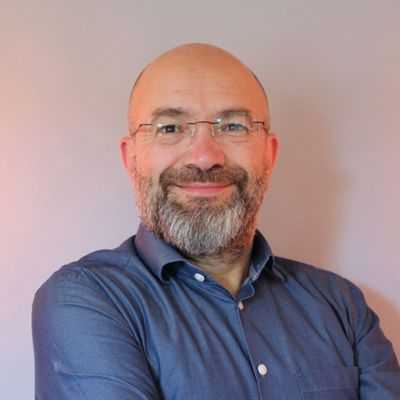
Mark Gober is the author of "An End to Upside Down Thinking", which was awarded the best independently published science book of 2019. He recently released the third book of the trilogy, “An End To Upside Down Liberty”, which he dedicates to "those who want to be free".
This is the second, concluding part of my conversation with Mark, recorded in November 2021. The discussion in the previous episode was about how government threatens our liberty. And looking around me as I write this, I see our liberties eroding away: more lockdowns, more censorship, increased surveillance, mandatory vaccinations, suppression of dissenting opinions. One could argue that our society is on a slippery slope towards a dystopian totalitarian society, where a central authority dictates what the citizens can and cannot do.
If you are concerned about our liberty and the kind of society our children will live in, then listen carefully.
𝗞𝗲𝘆 𝘁𝗮𝗸𝗲𝗮𝘄𝗮𝘆𝘀:
* An alternative to traditional government
* The difference between the state and the functions of the state
* How does metaphysics relate to politics?
* What bridges do we need to build as humanity to transition there?
* Critical mass and a shift in consciousness
𝗠𝗲𝗺𝗼𝗿𝗮𝗯𝗹𝗲 𝗾𝘂𝗼𝘁𝗲:
"And as we spiritualize, waking up, cleaning up, growing up, plus doing things to get government out of our lives, to me that's the pathway to liberty."
-Mark Gober
𝗩𝗮𝗹𝘂𝗮𝗯𝗹𝗲 𝗿𝗲𝘀𝗼𝘂𝗿𝗰𝗲𝘀:
𝗔𝗯𝗼𝘂𝘁 𝘁𝗵𝗲 𝗵𝗼𝘀𝘁:
I am Agi Keramidas, a zealous podcaster and a knowledge broker. I am on a mission to inspire others to grow, stand out, and take action towards the next level of their lives.
I have partnered with Brain Fm! Get 20% off this amazing app: brain.fm/agi
#PersonalDevelopmentMastery
___
Episode Transcript
___
Mark Gober 0:00
There are things happening right now, which are explicitly totalitarian. And we're only accepting of them because they've kind of crept up on us and we're in this pandemic, and there is this issue of safety. And so there's a tendency I see in people to rationalise, but like Australia, they have quarantine camps quarantine centres. They're called quarantine camps. But that's not far away from who knows what that could turn into, could that turn into a real concentration camp at some point? It's a horrible thing to think about. But we're heading in that direction where the government based on your health status can put you in a facility. That is it unbelievable development. And like you mentioned Austria, where they want to make the vaccination compulsory, that's making a medical decision on your behalf. Which What could that lead to what other medical decisions could could make with your body. So this is not far from totalitarian. And some would argue we already are there. So having information and being able to look at what's real and not being mind controlled and escaping that hypnosis and escaping the spell is really important for all of us as individuals and collectively, but for our safety, because if we don't see it, if we're just hypnotised by what we're told on the news, no, this is okay, and you're not hurting, you don't hear about any of the alternatives, then we could be in big trouble.
Agi Keramidas 1:13
This was Mark Gober, the author of the book, and then to upside down liberty. Welcome to personal development mastery Podcast, episode 185. And this is the second half in the conclusion of my conversation with Mark Gober, in the first half, in the previous episode, we talked about whether freedom comes from the government, we talked about whether politicians are really, that trustworthy and or not honourable servants of the people, as we are conditioned to believe. And we also discuss the brainwashing that is happening through the media and the censorship of opinions that are alternative to the narrative and how the government, in the end threatens our liberty, which is Mark's main message in his book. In this second part, and conclusion of the conversation, we talk about the alternative to this traditional structure of government, and very importantly, the changes the breeds is that we need to build us humanity in order to transition to this way. I hope you find the conversation thought provoking. Let's let's move to the next thing, then, which is, what else can we do? Really, because the way that it is described that one could reach the conclusion that well, then humanity is doomed, because there doesn't seem to be any alternatives there. You talk about an alternative model to this traditional government, which you call it voluntaryism. And I would like actually to ask you to give me your, your thoughts, your description. And let's start with that and see what alternatives we have a society and humanity.
Mark Gober 3:22
Well, the difficulty in this discussion, there are a few. One is that it's, it's theoretical, yes. So we're talking about what we'll be talking about now is a totally new type of society that would depart from the way it's been done all over the world, and has been done for a long time. So we have to put on our imagination caps when we do this. And what I'll be describing is an imperfect solution. What I argue, though, is that, theoretically, at least, it is less imperfect than the current system. And we have a lot of data on how imperfect our current system is, and it's becoming very dangerous. If we look at the history of mass murder, through war, genocide, slavery, like you mentioned, those of us who lived in certain countries where we felt free, we were just might not be as attuned to it. But if we spoke to people in countries where they've been oppressed, they are very attuned to the fact that governments in the current structure are inherently predatory. And the citizens aren't are inherently like prey. That's just not how we're many of us are trained to think so that's the flip. Okay, so earlier, I mentioned this, this rationale for government for the state, which is that, look, we can't handle ourselves, we need a group of people to look over. So we're going to take a subset of ourselves, even though we're not really responsible people, and those people are going to look over us. What if we just got rid of that, and didn't have this group of people because they're human beings. They're not supernatural gods that we're putting in control. That would be a different situation. We're taking human beings with all our foibles to control us and we're giving them a platform of power. That just seems to be suboptimal. So what I explored this concept of voluntaryism is removing the state altogether. Now that doesn't mean removing the functions of the state. There's a big differentiation there because the government does they they serve very important functions as a service provider. But what if all of the services were agreed upon voluntarily, so you as a citizen, if you want certain services, you pay for those on an individual basis, rather than right now, you are coerced into paying basically into a big pie and the government gets to decide what work goes even if you find the causes to be immoral, even if you find it to be inefficient. And you end up with a much more self correcting mechanism, a system of accountability because of that. So Murray, Rothbard, ROTC HB ARD, I think he's a very brilliant political philosopher, I quote him many times in the book who talks about this idea of voluntary ism. There are other names, it goes by some call it and Narco capitalism. So there's a bunch of names. I like the term voluntary ism, because it's descriptive. But he said he defines the state, to summarise, he says it's the only type of institution in society that obtains its revenue through coercion, rather than through voluntary exchanges. So if I go to a store and want to buy an Apple, and a banana and some soup, I pick the things that I want, and I pay for those things voluntarily. And guess what if they start to sell out bad apples and soup that I don't like anymore, I don't go there. And they might go out of business, because they're not doing a good job of providing good service. The government doesn't have that no matter what it will get revenue, because of taxation. And also there's a if there's a central bank, it can basically create money out of thin air, but its revenue is generated through its citizens no matter what, meaning there, there isn't the financial incentive for it to do a good job. Because and in some cases, there's actually a financial incentive to do a worse job. Because you could say, look, alright, if you do a poor job with education under the state, then you can the politicians say, Look, we need to put more money into this, because we're doing such a afford, because it's not going well, we need to invest more. So the incentives are all off when you have this structure that is going to get revenue no matter what it does. And that's what I'm arguing for, ultimately, is one where there's accountability to all the businesses involved. And most importantly, there is respect for private property, again, private property referring to your body and anything that you own, rightfully,
the primary principle in voluntaryism is it's known as the non Aggression Principle, meaning it is not okay to initiate a form of aggression against someone's property. Aggression could be physical violence, coercion, fraud, extortion, theft, and so on. If those things happen to you, self defence is appropriate. Okay, but we'll talk about initiating aggression. Now, if you believe in the the non Aggression Principle. And I think there are spiritual reasons to believe in that which is separate has to do with consciousness and the nature of reality and different scientific ideas. But even if you don't believe that, if you just morally say I don't think it's right to initiate aggression, then the state cannot exist, because the state only exists because it initiates aggression, upon private property taxation is one example. And there are many other examples. Now we see in terms of mandates that are being done, where something's being imposed, that someone might not have voluntarily signed up for. It initiates aggression, and it can't survive without it. So that's ultimately voluntaryism As you eliminate the state, and all of its functions remain, but they exist within a free market where there's accountability to the service providers, and you pay for the things that you want, which obviously, will then require a bit of heritability, because those who can afford certain services, what happens to them, and that's a separate discussion. But ultimately, I argue this society can only work when you have charitable individuals, which relates more to my first two books of society moving to a different definition of consciousness.
Agi Keramidas 8:53
Yes, and we'll certainly discuss that as well, because it's it's the it's very important. And I will share with you when I was reading your book, when I read that chapter, that was the first time that I struggled to envision this kind of society, this what you say to differentiate between the state and the functions of the state is something that I hadn't thought about before. And if it is like that, in my mind, I suppose that in many people's minds, the functions of the state are the same as the state. In other words, they can't exist without the state and it took me a very careful reading and some imagination because you said that already at the outset that we will need some imagination because it is something new. And you do share examples of how for example the police which in my mind for this was the first thing that is very much associate did with the state or other things like the army or the fire services or, you know, lane roads and the big gun shows justice resolving disputes, we have learned that the government via its its legal system is the one that we will tend to if we're wronged. So this chapter took some effort for me to really see that. Is this really possible? And, of course, when I read don't, and then you entered the second element of our hidden enslavement, which is the metaphysical slavery that we're in with, we're going to discuss a little bit about us well, because it's very, I think it's the missing ingredient. What makes is this together? Because this new, my personal opinion, is that this kind of society couldn't exist the way that humanity's right now it would need a different mindset are a different collective way of thinking, living and doing things in order to embrace that and make it work. So that's an observation that came to me from reading the book. It is unknown territory, isn't it, mark, but what you said that it might be imperfect, but the system we have now it's certainly imperfect? It's very, right.
Mark Gober 11:42
Yes. And what people will say is, well, it's the best we can do. That's what I hear a lot, is it? So we have to, but is it exactly is it and, you know, in two of the chapters of the books that your book that you're referencing, I talk about the mechanisms of a free market, because we do have data on how marketplaces work. And we tend to think of society in most of the free world, quote, unquote, as being a capitalistic society. And what I argue and I talk a lot about the Austrian School of Economics, there's an institute called the Mises Institute, m is m i s, e s.org. They have lots of great lectures that simplify these topics. So if you're interested, I would recommend you can watch any of their lectures, they actually have a good series called economics for beginners, they're little cartoons, it's like 30 minutes. And it really breaks down some of the assumptions that I had. I mean, I studied economics for a period of Princeton, and there's, there's such a focus on how the government is going to fix the economy, the government's going to impose itself. And in some ways, like, I understand that, because these are experts, they're PhDs, and they're going to come in and tweak the economy in a certain way. The problem is that when you have a group of people that has that influence, then they could tweak the economy in a way that benefits them, or the people that are funding them. So there's a great quote from PJ O'Rourke. He says that when buying and selling are controlled by legislation, the first things to be bought and sold are legislators. And this is the big problem with having government involved in our economy in any way, because it will be skewed and the system could be distorted. So I'll give it example, with taxation. With taxation, we're forced to put our money in a certain in a certain way, the government tells us, you're going to have to put your money here, and then we're going to distribute it how we want. The problem is that doesn't give the market the information that it needs for things to be supplied properly. And what I mean by that is, let's say you didn't have to pay those taxes, and you spent the money on the things that you really care about, that's giving information to the market about what the demand is leading, ultimately, to something that's more efficient in terms of what can be supplied. And so that principle is really important of the idea that the participant in the marketplace has preferences, and you know, what you want, no one can tell you what you want, you know, and your preferences might change over time, the things you can buy and can afford or things you want those change, and you get a PhD and a computer model isn't going to be able to know that for every single person in the economy. So there's really a great deal of arrogance to think that a few people could tweak it and get it right for everyone, even though not every single person has agreed to this. So let's bring that to the to your point about like, Could this kind of society work? Could we have police that are outside the government that are in a private market? Really? Are there companies that provide police services that you pay for if you want? My argument is that ultimately that will be relatively better? Because you end up with something services that match the demand of what people want? So like, let's say imagine we have the current government in its form, and instead of your payment being taxation, you pay for nothing if you don't want to, you only pay for the things that you want. What would happen to the government services, a bunch of them would go away, probably because they wouldn't get any funding, the government would shrink. And also there would be accountability for Other services. So let's say police are not doing a good job of servicing one area, and they're, they're just servicing another area, then maybe people in the underserved area aren't gonna pay anymore until they correct it. So you you pay, right so that the market will adjust to what people need. And money is a way to do that. So I, I take them, there's this tendency in society right now to be I don't know, it feels like there's a push against capitalism and towards a socialistic system, where there is government control over your property, including your money. Whereas I argue that in a freer system, you end up with accountability. And yes, you will have some people that end up with more wealth than others. But ultimately, this the fact that it's voluntary will lead to much more balance in the end.
Agi Keramidas 15:47
I want to move on, actually, Mark and I will leave that again, that's that piece of the conversation with, I will quote, a comment that you have made in your book, just say that the state is neither necessary nor uniquely qualified to provide services. And one could envision superior private market solutions for any potential issues in society, which basically is what you were telling me right now more, yes, as a summary of a sentence. So I quick comment, because you were saying about the socialistic versus capitalism model. And I think, based on this conversation so far, and everything that's going on, one would instinctively think that giving more power to the government to fix things and equalise things, is the wrong way to do it. It's going to actually lead into the that. totalitarianism?
Mark Gober 16:52
Yes, yes. And one point I would add, is that not only do we end up potentially in a system where we're more controlled, and it's sub optimal for us, is that when you have service providers that have a financial incentive to service you, that gives an incentive to innovate new things. So there might be things within our government that are stale, because they're not going to innovate, they're not going to be creative. But if you look, if you need to do better than the competitor to service people, you could have much better service providers. So there could be systems of police or technology with roads, where you have a private company in a marketplace, they could give us a better more efficient service than we currently have. So I will just leave it there as a thought experiment,
Agi Keramidas 17:31
suited I don't move on them to the next part of of the conversation, your book, really, which is the third part about the metaphysical framework? And I will, I will ask you a question. I want to see how you're going to answer it back. So forgive me if it is broad, but how would you simply explain how does metaphysics relate to what we've been talking about politics, economics? What does it have to do with it?
Mark Gober 18:00
Yeah, this is to me the missing piece in political discussions and a lot of political theory, because that question is not often asked of, well, what is life? That's really what it comes down to? Why why are we here? Does life matter? Does it matter if we become enslaved? If the state takes over? I don't know, maybe it doesn't matter. Maybe there's no meaning to life? To me, we have to get to those questions first. And in my first two books, in my podcast series, I spent a lot of time thinking about that. So this was, this book was really the next step of the first two, we're looking at what's the nature of reality? How does that inform how we live individually? But the next question is, how should we organise society based upon those principles? And that's this metaphysical discussion. And the very short answer is that, I think there, there's a lot of evidence suggesting that life has meaning. And therefore, the way in which we organise society matters a lot for our evolution, at the level of our consciousness. And therefore, it's essential that we have the liberty to live in the way that we want to live, not initiating aggression on people. And if you do, there's penalties for that, of course, and their property, but to have the liberty to live and thrive, and also to make mistakes. And to be able to learn, what happens often with the state is the state comes in and determines risk preferences for you. We see that right now, in a pandemic, this is risky, we're going to tell you what to do in order to compensate for that risk. Whereas, let's say other health issues, heart disease, cancer, lots of other issues going on, and they're not telling us what to do in terms of risk in terms of how much we should exercise or vitamins. So the government takes control of risk. And what happens and Ron Paul, the former congressman says this really well, is that when you get to a situation of absolute risk reduction, is like you know, this zero COVID phenomenon that I hear sometimes governments talk about some say we have to, to to eliminate all risk with this one thing that leads to totalitarian control, which means you don't have the freedom to do as many things which means you don't have the liberty to do learn and grow and make mistakes and thrive and do all these things. So that's how I look at it from a metaphysical perspective, we can justify it, you know what, how I got there. But this to me is very critical. Because if life does have real meaning, then we have to get the system right so that we can evolve as much as possible.
Agi Keramidas 20:16
For me, it makes complete sense that this is, as of its it was so instinctively essential that and we've talked before and for me, life does have a meaning and evolving, but my podcast is all about personal development in the broad sense of the word personal development implies development of who I am, apart from my physical body of my essence, development of that or evolution. And as an extension of IT development of the collective the humanity and who knows what other else is beyond there, but it is. It is essential for me, I don't think it could be any other way as far as I'm concerned. Anyway, that's it that is my, my opinion.
___
Hi it's Agi here, interrupting you with something you may find useful. One of the most frustrating feelings is when you're trying to focus, but you can't get your brain to concentrate on the important work in front of you. This happens to me all the time. And if it happens to you, too, you are not alone. 40% of people say they have to make a big effort to concentrate. But if you're having trouble getting focused, I have a solution for you. I'm so excited to be partnering with brain fm. Brain fm is a great app. And I use it to block out my mental chatter and zone in on my number one priority of the day. Brain fm uses functional music that is backed by science and research. And it is designed to give us that extra edge when we need our undivided attention. And they also have relaxation, meditation, and deep sleep modules that help you unwind and recharge. So if you want to be able to place your full attention exclusively in the activity you choose, whether that's meaningful work or relaxing or getting high quality sleep, right now as my podcast listener, you get 20% of brain fm subscription, at BRAIN.FM/AGI ! That's an amazing deal for such a useful app. 1000s of people have given five star reviews to brain fm- Find out why: BRAIN.FM/AGI
___
I'd also like to discuss mark the the future or a potential future so and see where things could could go. Assuming that they don't go into the George Orwell's society. Yeah. So going to voluntary society, which you say in your book that, and we talked about it already, it might seem unimaginable in the world that we live in today. But ask the collective consciousness us how we operate and see things as human beings changes or shifts, this will become more and more obvious that it could be done. And a very fair point that you make, and I want to stay with that for a while is that this transition is not going to happen instantly on a global scale, it will have to gradually grow into becoming the norm if if he does. So if you say that one could envision small communities emerging, which adopt this model of organising society and testing the principles before really go in there. More and more. So tell me your thoughts about that.
Mark Gober 24:05
Yeah, this is an area it's, I'm glad you brought it up. It's the one where I have the most questions, because it's so hard to predict human behaviour, especially on such a massive scale. And we're talking about a huge shift in the structure of society. So I really don't know how it happened. It would imply that at some point, either local state or national governments would have to collapse effectively or become much smaller, while these other communities are rising up. And you could imagine maybe some parts of the world become more voluntarist, where the state still exists in other places where it's much more controlled. So I don't know. And and the way I describe this solution at the highest level is it's all about a shift in our consciousness in the way that we envision our own individual liberty. Because I think even listening to this conversation, having the conversation with you and talking about it, it continues to reinforce for me and I hope for your listeners that we are way more free than We have been trained to believe, inherently, we grew up in the system. And we have had to do things that we just go along with. And we're taught things that maybe we didn't even want to learn. And our money is going places where we don't always want it to go. And we're being told to do things. So a breaking free from that mental is a huge step, to say, Okay, this is happening, I'm aware of it now. And maybe there are steps I can take to avoid certain things while still playing by the rules and not doing anything crazy. But to make myself more free, not always to just trust the authority, because it's an authority, maybe sometimes they're right, but maybe other times they're lying, or they're just wrong, innocently, like it could be any of those things. So it's going to start I think with, with some kind of a critical mass of us realising this, that it is not necessary to organise society in the way that we're doing it. Excuse me, and there are, there are ways, there are alternative ways. And when we allow the creativity of the individual and of consciousness to flow through us, and as in unique individuals to give our gifts to the world in new ways. Society can be incredible. I mean, many of us would say that society is pretty good right now, in spite of all the horrors that are going on, a lot of people would say it's pretty good, but we're talking about here is something way freer than we could probably even imagine. So that's what I try to hold. Because when I see what's happening in the news, I'm very upset about it. And I like I want to tell people, okay, this is happening, just least be aware of it, because you're not going to see this on the mainstream media. So we we need to be aware of what's happening, but not let it consume us with fear. The key step I think, is to accept it as an as an adult and say, This is reality. And sometimes reality is not pleasant, and take responsibility for it as much as I can. But at the same time, I want to be thinking about solutions, and what can be done in the future. So that mindset is one I've been trying to hold on, I just wonder what could happen on a on a massive scale, if more of us do it. And I should add, we haven't talked about the metaphysics as much. And maybe listeners could go back to the previous interview or past material of mind. But the idea is that all of reality is an interconnected consciousness. We are like whirlpools, individual whirlpools, within a stream of consciousness. And there's lots of scientific evidence for it. But the idea is that if all of reality that we consider to be physical is actually just consciousness as metaphysical, then when we shift our consciousness, there can be things happening that we don't see, multi dimensionally at the level of quantum physics, I don't know. But there's a lot of evidence that our mind actually impacts physical reality. And so I'm on the board of the of the Institute of Noetic Sciences, which has been around since the 1970s. It was founded by an Apollo 14 astronaut who realised this when he was coming back from the moon. That's his story. And he built this institute to study these phenomena. And there was a new study that came out. Dr. Dean Raiden was the head of it, which talks about quantum entanglement, okay, which is two particles that are physically distant from each other. There's a connection. So when you alter one, the other one that's far away, is altered at the exact same instance. So Albert Einstein called the spooky action at a distance, couldn't believe it. And now it's been proven to be true. So there's an interconnectivity. What Dean Raiden showed, with quantum entanglement in this new study will need replications, of course, is that the human mind impacts entanglement.
That is just totally mind blowing revolutionary stuff. And there are other studies that point to this. The key though, is that the mind impacts physical reality. So what happens if our mindset shifts to one of liberty of that worse, we're sovereign individual beings, we don't need to have a ruler that imposes on us things that we're not doing voluntarily, what can that do to the quantum field, so to speak, this stream of consciousness? That's my hope is that there's, we just don't know, we don't know how things work. And I want to mention one more thing that I've talked about in all my books, the it's called the butterfly effect, okay, where a butterfly flapping its wings in China mathematically can create a hurricane in New York. And meteorologists have shown this to be true. In other words, if you if you alter one of the inputs, in a model for the weather, by just a few decimal points, you get a vastly different outcome. So what if we do that with our mindset of you, and all your listeners, if you're still listening at this point? Thank you. But curious people, you're very curious people to want to challenge paradigms so much. What if you're the decimal points that affect the field? And that's where I think there's a message of hope within all of this, that our mindset can shift, and then maybe our actions and the manifestation the physical world can shift accordingly.
Agi Keramidas 29:34
Mark, I liked what you just said very much that each of us individually can have maths in our bodies, in my own words, and much bigger impact in that what we can realise or understand one person can have a tremendous impact but their own ripple effect and the other people that might be influenced by that one person. And you said about this shifting of mindset and transition into this. So what, let's say bridges do we need to build in order to to change this way of thinking and evolve? What do you think? Yeah. How do we move from here? What's the next actions that we can take us humans really to advance towards that direction?
Mark Gober 30:28
That is the big question. Yes. Yeah. Well, to me, what I found is that education is a very important part of my own development, but for everyone is to become aware of what is actually happening. And to know where we don't know, there's so many things that we don't know where the media tells us, this is true. And then two months later, it's not true. Like the the lab leak theory with the pandemic, that was conspiracy theory in the beginning. And now it's, there's, it's a very credible theory. So for us to know where something is not factual yet, and to acknowledge, okay, this is the existing theory. And if we look at history, lots of times the existing theory changes over time. And to have that intellectual humility is really critical, because then we remain more open minded, less closed off. So that's part of it. I think, a lot of what we spoke about, and you raise some great questions of just thinking about human beings and human nature and questioning those who are in positions of authority, are they looking out for us? Or are they not? And one of the ways that I have started to evaluate politicians and people in positions of authority is to look through this lens of non Aggression Principle? Is this a person who is suggesting that my property, body and material property should be infringed upon? Because of the alleged common good? Or for someone say fear for my safety? Or are they saying no, no, you have your own rights, we suggest this, because of XY and Z, but you make your own decision. So when I hear that kind of rhetoric, no matter whether the person is politically correct, whether the person is likeable, otherwise, I've become less interested in that because the actions of what they're doing to me my body and my property, and those of my citizens, fellow citizens, that's the key. So just to start being more attuned to those things. I mentioned in my book, David Hawkins, one of my favourite spiritual teachers, he used to be a psychiatrist and became very enlightened and just is great at deconstructing the ego and human perception. He says, the distinction that we have to watch out for is perception versus essence. Perception is what we see on the surface. And the essence is what something actually is. So let's just say in an extreme example, you have a politician, you don't really like the way the person speaks, seems kind of mean, but the person advocates for your liberties, the essence of what the person is doing the function as a politician is in line, but the perception of what you just see on the surface is not what you like. So what are you going to be swayed by the perception or the essence. And he also references a term that's used by many people, but he references it a lot. And that's where I got it from. He says, We have to be aware of the wolf in sheep's clothing, and to constantly wonder, who is a sheep and who was really a wolf. And to at least, these are the questions when we start asking them more, I think we could see more of a shift.
Agi Keramidas 33:08
And you mentioned the perception vessel services. And it could also be the other way, you mentioned an example of a politician that you don't like the perception, but their essence is, could be also the exact opposite, that the essence is not likely, but the perception is manufactured, if I use that word to appeal, let's say, or hide the, the actual essence that is behind that. Yes. Mark, I will, you know, I will, I will try and start bringing these things to some kind of conclusion. And you mentioned in the last part of your book, that the the way to end this upside down liberty that we we've been discussed is by by to two ways, actually, there are two things to do. One is to stay in, use your words spiritualize our lives, that's the first thing and the second, get government out of over life. So I think we mostly spoke about the second part and I did that and I try to explain that to you before we started recording my intention. Even though the then the spiritual part, the metaphysical part is probably even more important than the other one. I think in the context of this conversation, it will have to come second because it is a matter of someone first recognised what is happening and maybe the evil that is happening around us. Because recognising that can lead to further discoveries or further enquiries really, but when you went on is completely asleep and feels that this is how it has to be, then. So that's really the reason why I focus more of the conversation on that part rather than the spiritual. It's not because I think it's less important at all. I just wanted to clarify that I don't know how it came through in the conversation.
Mark Gober 35:29
No, well, thank you for doing it that way. And it's actually the way I structured the book that way for this exact reason. So I'm glad we're on the same page, is that the first the preface in the first five chapters of the book are all about these political and economic discussions and human discussions of human nature? Because they're just issues that many of us haven't thought about. So starting there is important, but the context is really the most important. What is what does life matter? What is what do we live in a spiritual reality? Do we not? And spiritualizing our lives as one of the two things to do to end upside down Liberty spiritualize our lives and get government out of our lives? We've talked about how to get government out of our lives, restructure society, move towards voluntary ism, reduce government, all that. But what does it mean to spiritualize our lives and this is really been my personal journey for the last five years, starting in 2016, when I heard Laura power's podcast, and then started to research and found scientific evidence. And my whole reality shifted, I used to think we lived in a meaningless universe, when our body dies, that's the end of our consciousness is the end of our ability to think our memories are gone. It's the end. And I personally ended up in not a very good place thinking that way. But I was okay with that. Because I thought that's what reality was, and I'm going to be an adult, and I'm going to accept it, even though it's just hard, and life doesn't matter. Okay? business deal, I lose a business while I'm upset about it in the end, right? I'm not there doesn't matter. Anyway, that's how I used to think with anything, oh, we become enslaved. I don't like that, but I'm gonna be dead. And so is everyone else in the planet. So who cares if we have a global Nazi Germany, communist, funk, you know, who cares. But if we get from a spiritual perspective, where those things that I just said, are based on assumptions that are untrue, they're based on assumptions about consciousness being completely linked to our brain. And that's the centrepiece of my my previous books, is that consciousness, there's tonnes of evidence that our our sense of experiencing life is beyond our body. And we are actually part of an interconnected field of consciousness where there's meaning embedded within it. And I want to briefly mention the life review in a near death experience, because it gets to the heart of spiritualizing our lives. So very briefly, a near death experience is when a person is has some kind of physiological trauma, where they're basically knocked out, let's say cardiac arrest persons clinically dead, they come back in their body after being resuscitated. And this is happening more and more, because our medical technology is better. And they explain this elaborate thing that they saw. They were immersed in unconditional love. They saw things happening from over their body that were there proven to be accurate, because a doctor said, yeah, that did happen. And you saw it from a vantage point where it was not in your body. But also people talk about a life review, where they relive their whole life in a flash. And they relive experiences, not only through their own eyes, but also through the eyes of people they impacted. So they feel the pain they inflicted on people through those people's eyes. And they also feel the love or the joy that was given. So that you get to see the interconnectivity in the life review. It's like you switch lenses from one Whirlpool to another Whirlpool, When consciousness is liberated from the brain. And there's a lot of evidence that this might be real, rather than a hallucination. And that's the the premise of a lot of this stuff. So if we take that to be reality, that there is this sense of accountability at a metaphysical level for all of our actions, and we are the ones that are that are going to experience that it's not a third party judging, it's we are the ones that are part of this whole, and you feel the effects of your actions on people. That can lead to a different lifestyle. For me, it certainly has, and I wouldn't say before that I didn't care about people I actually always did and try to be good person, but there's a different level to it now. different, completely different level, from the level of thinking about the state. If you believe in the life review in the spiritual stuff, the state is very problematic spiritually, because it's doing things to people that you wouldn't want to do it. You wouldn't want experience in a life review. Let's put it that way. So that's one aspect of it, but from the lens of spiritualizing our lives, how do we then live on day to day basis? Well, we can see from people that have near death experiences, what happens to them, many of them get divorced, they change their jobs. One man I interviewed in my podcast Dannion Brinkley, he became a hospice volunteer, after reliving in his life review what it was like being in Vietnam and he killed people. He was vicious and combat came back and was like, I life is different. It's not what I thought it was. So he became a hospice volunteer and has done other things that are more altruistic. So
There are multiple lenses. I think they're worth mentioning here because it's this is the practical part of, of like, how do we, how do we get to this awakening that people always talk about it. For me, it's been a clear spiritual awakening because I was one way before. And now it's so totally different terms of how I think sometimes it's more gradual for people, but it's like been very stark for me. There are different paths. And very briefly, to summarise, there's a pathway of knowledge, that's been my primary path. I've just learned as much as I can about the nature of reality. What are we doing learn about near death experiences learned about quantum physics or telepathy, listen to lectures from people that have had amazing experiences in meditation that are similar to the near death experience, for example. So that's the knowledge base pathway. There's a service, selfless service pathway of wanting to be of service, not necessarily for one's own game. There's a pathway of devotion, which is having the sense that we're part of a whole together and being very gracious. Some would call it a pathway of like, love for the divine, because we're all part of this thing together. And it seems that love is built into consciousness itself. That's what people often describe when they reach these other states. So that's the pathway of devotion. And then there's an energetic pathway, which can be related to like meditation, or breathing exercises, or anything that has to do with the physical body nutrition. So many areas where we're affecting the physical in a way that's connected to the metaphysical. So it's the pathway of knowledge, selfless service, devotion, and energy. Those are ways of, of being in the awakening path. Now, I should clarify here that this is a very important clarification. That often in spiritual circles, there is a big focus on awakening to our true nature and doing all those things, which I fully support. But there are other things that are part of our evolution. And Ken Wilber, the philosopher he calls it waking up, cleaning up and growing up. And a lot of what I focused on was the waking up part. But to me, cleaning up and growing up are part of the spiritual evolutionary process. Briefly, what is cleaning up cleaning up is acknowledging the darkness within ourselves and our own trauma that every human being has to some degree, and acknowledging it and trying to transcend it. Very important, because you can be super awakened being the state of selfless service. But if you have unresolved trauma that can rear its head, and lead to problems. So there's a cleaning up aspect. And I think on your podcast, part of personal mastery, and development, this is there's a lot of cleaning up involved, there's waking up a lot of cleaning up involved too. And there's growing up, waking up, cleaning up growing up growing up is multifaceted to me, but it's ultimately about maturation, and taking accountability and full responsibility for our actions, and not being a victim. And part of that involves acknowledging the reality of evil, and that there are people that will do things to us that we would never consider doing ourselves, and being mature enough to acknowledge it without like wallowing in fear. Those things, they're all interrelated, but they're somewhat independent. And as we spiritualize you know, waking up cleaning up growing up, plus, doing things to get government out of our lives. To me, that's the pathway to liberty.
Agi Keramidas 43:14
That's beautifully said. And it's I'm glad that you explained those things about the cleaning up growing up and waking up the first one, yes, because they're so important. And, Mark, I will ask you also, just to wrap things up and close a few last questions, maybe quick fires, and I will ask you a hypothetical one, because we haven't talked anything like that. Let's say you could right now wave a magic wand and change something in the world. What would you change?
Mark Gober 43:54
Okay, it's a complicated question, a great question, but a complicated one. Because this gets to the way I look at spirituality, which is that we're all here to learn. And when we're entering a body, we have an opport a unique opportunity to learn because that life's life. circumstance gives you things that other people wouldn't have, by definition. So my life is different from yours. It's different from your listeners. And even though there's some similarities, we're going to have different challenges and things we're going through. And there seems to be that seems to be built into reality itself more, this is more discussed in my second book, where we have to go through this learning process. So whatever I say, however, I answer your question of waving a magic wand would potentially deprive someone of a learning experience. And I'm very careful to to not want to control other people. I'm like, super paranoid about it because I don't I don't know what the karma so to speak, you know, if we go back to life review, what if I'm forcing someone to do something they don't want to do? Was the karma for me. So I'm cautious about waving a magic wand but let's just get rid of all that. What would I do what I feel like oh, you know, I just wish society could do this to me. i The mind control. I wish people there seems to be hypnosis, and especially with some very smart people, it's not limited to the non spiritual community, it's all everywhere, evenly distributed, I would say, or it's distributed across many different populations of people who are, I think brainwashed in some ways in that they are not open to looking at other narratives. And they will actually be offended at the prospect of it. Part of it, I think, is a self defence mechanism. Because it admitting that we're wrong is really hard to do. And it's even harder to admit that you're wrong, and that someone else was right. So that's what's happening is like, people are going to use the poker term, their pot committed, they put so much in to this hand, so much money in the pot, they're not going to just fold. So I think if people would fold and if also those of us who feel like we've been more open minded, and I say this, I'm trying to be open minded, but I'm sure I'm brainwashed in other ways, too. And, you know, I don't know what I don't know. But there's an attitude of, of trying to acknowledge it and that some people don't want to take. But for those of us who have more of that attitude to say, look, it's okay, I understand where you were, we've all been brainwashed to some degree, and rather than, like push it in people's faces, if we can have that kind of a mentality, that would be my magic wand, because then we become much more aware, we wouldn't allow people to get away with the things they're getting away with. We would call out the hypocrisy, when someone says this. And then they say something that's completely the opposite. And they get away with it. There's no accountability. We wouldn't allow that if we had less of a brainwashed mind controlled mentality.
Agi Keramidas 46:39
Thank you, Mark, what's the best place for people who want to find out more and follow you? What's the best place to go?
Mark Gober 46:48
My website, which is my name, it's Mark Gober, calm, Ma, RK, G O, br Calm. My books are on Amazon, they're available on Audible Kindle, and hard copies, all three of them, depending on what you like. And also my podcast, where is my mind, it's available on Apple, podcasts, Spotify, etc. And it features my conversations with many of the people that study the science, I talked about near death experiences, you know, quantum physics, all that stuff.
Agi Keramidas 47:15
The your podcast is, I've told you that before in private conversation, it's, it's magnificent. It has inspired me to do some things with my own podcast that I would I wouldn't have done otherwise. So it's, I will certainly direct people to listen to it. It's, it's brilliant. And it passes the point that you're trying to make across very skillfully and in a way that someone gets really intrigued to keep listening. So certainly check that out. And I will link it also in the show notes. Mark, before I let you go your with your closing statement, there is first of all, I want to thank you very much for this marathon conversations that we had today, we want to warn a bit more than we were considering I really believe we covered some important topics. And I want to thank you very much for sharing all this with with us today. There is it's one of the last, but not sure if it is the last sentence of the book. Certainly it's in the last page that you say for each of us today, it's time to take to make a decision as to whether we want to start leaving with a mindset of liberty, rather than fear. And for me, that sounded like a great call to action for someone to take on. So tell me your last parting words and anything you want to share us actionable to the listeners as a result of you know, listening for, for our speaking for almost two hours.
Mark Gober 49:00
Yes. Well, I want to thank you listeners for listening this far. But we covered a lot of ground, you've asked great questions. So thank you for that. What's coming up. As you raise this last statement is an analogy I've been using, which is that if there's a tiger running at us, a hungry tiger, it does not serve us to ignore it and say, oh, there's no tiger there. I don't want to be negative. I don't want to be negative. That's yeah, that's to mean I don't want to think about that. That's that's kind of where I see the world right now. But it's, it's, it's more that we don't even see it as a tiger. It's the wolf in sheep's clothing. We see it as a sheep just kind of walking towards us when in fact it's a wolf. So that's where I would. That's the thought I would leave your listeners with to be questioning and discerning to try to figure out what's good, what's evil. And there's there's grey areas with all of it, but to be really aware of that and There's an individual responsibility for us to do that. Because if we can't protect ourselves individually, then we can't be of service in the best way possible. So it's this balance we had, we did not talk about this. And I'm glad we're getting here. Now, this balance of being an individual, and being the collective at the same time, because from a metaphysical lens, if you believe in this one consciousness, one mind stream thing that we talked about, where the Whirlpool and the stream at the same time, even though we don't perceive that on a day to day basis, so we're both the problem in the world today, one of them is that we get pushed towards this pure collectivism, where its own, the only thing that matters is the state or society or the common good, this very abstract thing, which ignores the fact that there are individuals that make up society, you can't have society without individuals. So we have to be both individually focused and collectively altruistically focused at the same time. So what I was just talking about was, with the tiger and the wolf in sheep's clothing analogy of wanting to protect ourselves, it's more from the individualistic lens, which I think we have to hold on to. Because if we can't be protected as individuals, free individuals, that we can't serve as much, we can't be as collectivistic as we want to be. So there's this distinction that I think is often made wrongfully of, of like, well, if you're an individualistic, then you're selfish. At some level, we have to protect ourselves and it's not selfish to do so it's actually altruistic to do so because we're then able to serve more. So for your listeners who are hearing this, if you feel like guilt, sometimes there can be a societal pressure of well, I'm focusing too much on myself, I might be hurting the common good. You have to look out for yourself. And if we don't do that individually, there's going to be no society left. There's going to be rulers and the rulers determining what's the common good and you just listen to it even if it does not benefit you personally.
Agi Keramidas 51:48
Mark, thank you very much. Thank you. I hope you enjoyed listening. If you have, please share this episode with someone who you think will benefit from it. If you want to know more about what I do, visit my website AGIKERAMIDAS.COM

 5.00 (74 Reviews)