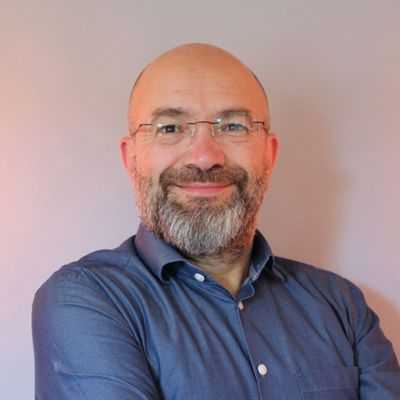
Yemi Penn is an engineer by profession, an entrepreneur by passion, and a transformation mindset coach by mission. She is an author, a TEDx speaker, documentary producer, and a serial entrepreneur with businesses in Sydney, London, and USA. She is a thought leader on 'creating your own memo', meaning writing the script of your life, and she speaks & writes about engineering powerful people. She is passionate about raising the vibration of acknowledging and healing our individual and collective trauma.
𝗞𝗲𝘆 𝘁𝗮𝗸𝗲𝗮𝘄𝗮𝘆𝘀:
* Create your own memo - getting to write the script of your life
* Facing the discomfort and pain, the restlessness of the soul
* Engineering powerful people
* Different kinds of trauma: Is my trauma bigger than yours?
* Looking at that event in your life that healing can act as a catalyst for growth
𝗠𝗲𝗺𝗼𝗿𝗮𝗯𝗹𝗲 𝗾𝘂𝗼𝘁𝗲:
"There is no wrong way, so just do it."
-Yemi Penn
𝗩𝗮𝗹𝘂𝗮𝗯𝗹𝗲 𝗿𝗲𝘀𝗼𝘂𝗿𝗰𝗲𝘀:
Website: https://www.yemipenn.com/
𝗔𝗯𝗼𝘂𝘁 𝘁𝗵𝗲 𝗵𝗼𝘀𝘁:
I am Agi Keramidas, a zealous podcaster and a knowledge broker. I am on a mission to inspire others to grow, stand out, and take action towards the next level of their lives.
I have partnered with Brain Fm! Get 20% off this amazing app: brain.fm/agi
#PersonalDevelopmentMastery
___
EPISODE TRANSCRIPTION
___
Please note, while an effort is made to provide an accurate transcription, errors and omissions may be present. No part of this transcription can be referenced or reproduced without permission.
___
Agi Keramidas 0:02
Welcome to the personal development mastery podcast. I am Agi Keramidas and my mission is to inspire you to grow, stand out and take action towards the next level of your life. I interview leaders, authors, successful entrepreneurs, spiritual teachers, exceptional people who will inspire you to improve your life. Tune in for two episodes each week, and make sure you subscribe to get them as soon as they are released.
In today's show, I'm delighted to speak with Yemi Penn. Yemi, you are an engineer by profession and entrepreneur by passion and the transformation mindset codes by mission. You are an author of a TEDx speakers, documentary producers and a serial entrepreneur with businesses in Sydney, London and the United States. You are a thought leader on creating your own memo meaning writing the script of your own life. And you speak and write about engineering powerful people. You're passionate about raising the vibration of acknowledging and healing our individual and collective trauma. Yemi, Welcome to the show. I am honoured and grateful to be speaking with you today.
Yemi Penn 1:27
Oh, it's an absolute pleasure. Thank you so much for having me.
Agi Keramidas 1:31
Let's start a bit with some relevance of your story. Yeah, me born in the UK, childhood in Nigeria, then? Short time in Japan and now Australia. So a fascinating story. And I know that you're good in giving summary. So just for the sake of getting us a brief overview of your path towards where you are today. Can you give us a summary of the journey?
Yemi Penn 1:59
Well, let me give you two short summaries I usually explain firstly, that I'm a British born Nigerian living in Sydney, Australia. And that there's usually a story to that, you know, the first story I tell people is, I just wanted to see the world. But the real story is I was searching for something because something in life just didn't have the meaning I thought it should have. And this is what I call the memo. So you know, I am from Nigeria, I was born in the UK, my parents were very strategic. My mom in particular, every time she was pregnant, she would get on a plane from Nigeria to England and give birth to every one of her six children, because she knew the relationship between the UK and Nigeria might not always be as fruitful when we had a lot of oil. And she kind of had that foresight. And I think that would have been the beginning of this kind of insatiable need to see the world because Japan only came when I decided to follow the memo and, and get married. But the truth is I was running away from from a traumatic incident. And I believe it was that incident that got me then travelling to Australia, and I might travel again. But Australia is the place where I rebirthed. And so this British born Nigerian might be here for a while.
Agi Keramidas 3:23
I will. And so then we ask you about the memo. And it's something that I find interesting. If I one more thing I wanted to ask about your story. I know there are so many things that you could talk about, but maybe in something I'm looking for a turning point, something that you feel it's relevant also to the conversation that we're going to have maybe something that will help us understand better you said that you were searching. And you also said about that show. I don't want to dictate what part is more relevant for you to share. But feel free, please share with us some turning point.
Yemi Penn 4:11
It's a great question and a reason why I'm so grateful for you know, being invited to interviews like this, because every time I have a conversation, I learned more about myself. And it's a fascinating journey. So I'm always so grateful. So I just wanted to let you know that because my mind is saying me there should be one particular turning point. But the fact that I said that there was this comfort, this searching. I remember being put in boarding school in Nigeria, and I usually explained in all my interviews because when I say boarding school somebody thinks of Prince Charles or Harry, no, no, this was boarding school in Nigeria. This is in the deep, deep bushes of Africa with no camera crew to come and save you. And I think a turning point for me there was because I felt lonely. If I felt really, really lonely, and I didn't have the language or the vocabulary then, but there was something in me that I didn't know that said, I have to find a way out. And I think I wrote letters from my mum who had relocated to the UK with my younger siblings. I wrote letters to her for two years to get me out and bring me to London where my younger sisters were. And I guess I didn't know that I even had that kind of tenacity. So that, for me was a turning point. And another one, which I'm sure we'll talk about is the the traumatic incident I speak about in a lot of my work would have actually been in my 30s. When I had to ask myself, are we going to operate from an eight year old Yemi paradigm? Or are we going to operate from a 30 year old me? And once again, I didn't have that vocabulary. But that was the crossroad and the turning point. How was that? So those two things come to mind.
Agi Keramidas 5:59
Thank you. And I completely can relate with what you said about free interview, allowing you to get to know yourself better, because if I was with me, as well, when people ask me things, some of the things I had never thought before, let alone articulate them in sentences. So it's, it's I believe, it's invaluable. There was there were already many things that I want to ask you, and I'm trying to have a kind of a structure, because there will be so many, but I will start with actually trauma because it is something that it is part of your, of your life of your mission. And I was watching your TEDx talk, which I enjoyed very much. And there was something that I'm sure that myself like many other people are completely unaware of that. The you call it like, Is my trauma, trauma bigger than yours and in and I will honestly admit that in my mind, if I think of trauma, I think of something horrible. Something like you know, the SEC being sexually abused as a child or things like that. But you describe that story with the boy with the goldfish that how that show. In order to bring that down all this to one question really for for you. Tell us about them different kinds of traumas or if is is a trauma. That how can a trauma affect the life? You mentioned the paradigm of the eight year old? Yeah. 30 year old? Yeah, me? Yeah. So tell me about this difference in the size of trauma or the definition of what what trauma is, really, because I think that's a good starting point for what we can talk about later.
Yemi Penn 8:09
I mean, it's worth saying, so I've just recently started a PhD in trauma and Melbourne here in Australia. And I'm the primary question is, Can trauma be transformative? I'm really intrigued, but I'm looking at it from a non psychological perspective, that's really important for me, because I think there are more non psychologists in the world than there are psychologist or psychiatrist. But yet, when you look at the percentage of people who have experienced a distressing or disturbing event, which is the simplest way to define trauma, you're probably looking at, oh, I think you're in the 90s. The statistics I used in my TEDx was in the US, I believe it was 70%. UK, Europe 66%. So you're talking that in every two people you come across, at least one of them has experienced a distressing event. And so that's how I define trauma, just basic. But what's happened is, I believe the world for decades and centuries, has labelled trauma as if it could only be experienced if, say, you were in war, or some really violent sexual assaults of some sort in and I don't know why it might be part of my research, we've kind of put it to the side that trauma should only really be mentioned by people who have gone through some really deep dark stuff. And even when they have we put a timestamp on when they really should have gotten over it. But what I found that was really that the the big point in my TEDx was when I started my personal development journey, I would go to lots of workshops and and this this guy got on stage, and he was sobbing uncontrollably in his his mid 40s have an event he thinks had changed the way he was operating as an adult. I mean, it was affecting his marriage. And I found myself crying. Like I was crying. And I don't believe I even cried for my traumatic incident at that point I hadn't. And we can talk, why may I may have done that, but I, I hadn't. And so I sat there thinking, Whoa, why is this moving me more than what I went through. And I find out later that it's because part of it is dissociating, sometimes you can go through something that you just completely detach yourself from it, because it's the best way you can survive. So I believe it was in that instance, I realised we'll do trauma, due to traumatic events need to have a magnitude scale. And what happens if we constantly decide that our trauma is so small, it's not worth looking at, then that's like having a wound, and just constantly covering it with our clothes and saying, it will be fine, there'll be fine. And every now and again, something like a relationship will bother it, or something like the loss will brother or something like a job or how you show up. And I believe those are the signs saying, you know, that thing you think is really irrelevant. It's actually affecting you being your whole self, your whole brilliant self. And so I've just gotten really fascinated with it. And it's, it's been a struggle to, to talk about trauma, because it's, it's not the most exciting thing to talk about, because of the the meaning we've all been kind of adopted. But I'm still questioning whether there is a magnitude scale to trauma. Yeah, and I'll let you know when I find out.
Agi Keramidas 11:43
Hi it's Agi here, interrupting you with something you may find useful. One of the most frustrating feelings is when you're trying to focus, but you can't get your brain to concentrate on the important work in front of you. This happens to me all the time. And if it happens to you, too, you are not alone. 40% of people say they have to make a big effort to concentrate. But if you're having trouble getting focused, I have a solution for you. I'm so excited to be partnering with brain fm. Brain fm is a great app. And I use it to block out my mental chatter and zone in on my number one priority of the day. Brain fm uses functional music that is backed by science and research. And it is designed to give us that extra edge when we need our undivided attention. And they also have relaxation, meditation, and deep sleep modules that help you unwind and recharge. So if you want to be able to place your full attention exclusively in the activity you choose, whether that's meaningful work or relaxing or getting high quality sleep, right now as my podcast listener, you get 20% of brain fm subscription, at BRAIN.FM/AGI ! That's an amazing deal for such a useful app. 1000s of people have given five star reviews to brain fm- Find out why: BRAIN.FM/AGI
brain.fm/id What comes to mind with what you said is that many people are completely unaware or not conscious. If you weren't that there is an event a traumatic event, you use the word label, and learn about what trauma is. And I can say for myself that if you had asked me because now I have spoken with a few people more about this, and I understand better. But if you had told me two years ago, are you? Did you have a trauma in your childhood? Or I would say no nothing because nothing like that nothing major comes to my mind. It was like pretty much uneventful, normal, San Jose childhood. So I want to ask, and maybe you can explain that for us. For people who haven't really thought that there might be some event in the past that really is affecting the behaviour. What's it what's an approach that someone can take to understand whether there is something like that, and I don't mean that the old views big ones, as you said, the more subtle ones?
Yemi Penn 14:30
You know, it's a it's a wonderful question. And I have to say that what's great is I just filmed my third documentary a couple of weeks ago. And it's one of the questions that I asked every therapy practitioner I don't want to just say therapist because they're different fields. And they said it best which is, there will be this discomfort in you. There'll be some uncomfortable feeling or there will be a repetition of something that keeps on happening. Your perception of it, it could Relationships, it could be jobs, it could be, you know, not being able to finish certain projects. It's what I call, you know, when there's a restlessness with the soul. But the best way to describe that is, is just uncomfortable. But then what you have to do really is then get comfortable with being uncomfortable. Because if you cannot sit with discomfort, it's highly unlikely you'll find out what it is. I'll give you an example. I so for my documentary is titled than the one coming out in a couple of months. It's titled cleaning our trauma, and I have a range of people share their trauma stories, but actually share how they've started to clean it in the process. And this gentleman who originally is from Syria, but has been in Australia for a couple of decades, was meant to talk about how he experienced war in Syria before he relocated to Australia at the age of 10. But on the day, he gets to me and he says, to me, can I talk about something else, I usually only talk about war, because it seems to be the cool thing to talk about. I want to talk about the moment that I was three years old, and I was sleeping in the car. And I woke up and my parents went in the car and I was screaming frantically. The window was slightly down. This was in Syria and a man comes through and he puts his hand through the door and starts to open the door. And he shrieks as a kid. But his parents were really just down the road, I don't know probably getting some food and they ran over. He somehow believes that that's why he has anxiety in his relationships. He's always wondering, Is she going to leave me? He was the one in nursery who would always be shaking at 530 is my mum come in? That requires an awareness. I mean, for me, that was profound. And I need to find a way to get that into the documentary. It's asking the questions that you know, are making you go through some sort of pain, it's usually pain that will be that will be your real guide. And just start to ask the questions that you've avoided, we have to create safe containers. So I don't want to say what I'm saying lightly, because there are steps to it. But typically, there is discomfort and pain. And if you're willing to sit with that, you will be able to somehow pinpoint what, what possibly has happened that I've got you live in, in that paradigm.
Agi Keramidas 17:19
Thank you. And I suppose this discomfort and pain and then most people's desire to avoid that and not face it is what keeps the trauma back, isn't it? So do you want to share your thoughts on that? And maybe related to your story as well? Because you said that you didn't recognise it or acknowledge it until you're in your 30s?
Yemi Penn 17:47
Right? Yeah, absolutely. And I get it. And it's another reason why it's not that I even just want to do this work, I have to do this work, I have to do this work from a non explicit psychological scientific method, I need to bring it back to the people and how they feel. So I understand why anyone would not want to talk about their trauma, whether it was big or small, because I remember going to a psychologist, a therapist, or one of them, and I said, Look, I've been feeling really low. But I don't have time to feel low. Because I've got two children, I need to look after, I've got to go to work, I can't afford for you to crack me open. And I'm left to just walk the streets, bleeding for one of a better word, because that was my perception of what therapy would do, we will bring things up. And then I don't have my therapist at home to deal with stuff. And you know, we both laughed, but there was a seriousness in it. Especially if you come from a culture or a way of thinking which most of society does. We don't want to talk about it because that's constantly highlighting that that wound you have is infected. Some of us don't want to hear that. So I get it and I empathise, however, my mission and my particular story, which, you know, the biggest one of the biggest traumatic events for me was, you know, sexual abuse towards me as a child and uncle had abused his sexual power. That's how I put it in my setups. But I think, I really think and thought I was doing okay, really did, there was some signs, and I'm probably still looking at those signs. But where it completely threw me out of my body was when I found out in my 30s that this particular uncle who had abused his power was now looking after a little girl who was the same age as my daughter. But what was quite interesting is that I only seemed to feel courageous enough to do something when it was another child at risk. So that was already fascinating for me. I didn't seem to have done any weeping or healing for little yummy and that was part of my healing journey. So it was quite interesting that the only way I was able to Look at me was when I needed to care for somebody else, which is why I love the human race, even though we have a tendency to destroy things. But I do love the human race, because at a deep level, we care for other people, sometimes more than for ourselves. But that was the gift in that real ugly situation. That made me realise, oh, wow, you can bury something for decades, that it will still come. But here's the killer Aggie. It doesn't even stop there. My teenage daughter, nothing to do with my type of trauma was going through something else. But what was fascinating is that I responded to her trauma, the way I responded to my by this associating. So when we talk about intergenerational trauma, we think it's just the events. No, it's the way you respond to it. So you know, that message, you can run but you can't hide. It's really relevant. And that's kind of remember your question, but it felt like the things to share. That's how it showed up for me, and why this work is really important. And it's yeah, my journey will be ongoing. But I really want to take as many people as possible with me along the way.
Agi Keramidas 21:13
Thank you. And I appreciate and I believe I understand what you're saying that through wanting to help someone else, you were able to do more and to get over maybe your reservations or your fears to do so. I can relate with that with my own journey and own transformation, shall we say? Because doing things for others, allows you and gives you the motivation, because it's something for the greater good. And well, we could talk about that for it's a big topic on its own. But I liked what you said that when you feel you are able to do more for others and get out of your comfort zone as a method as a way of contributing. And I think that is is is key in that particular thing.
I'm thinking I'll come back to something you said. I think it's important, my mind is stuck to that and I want to talk about it a bit more. You said about them. You use the phrase restlessness of the soul. You said discomfort pain. And I want I want you to elaborate a bit more on this feeling of this understanding that there is something there not right. And the reasons why we tend to ignore it or we want to ignore it.
Yemi Penn 23:10
Before I said the term restlessness of the soul, I heard this inner voice saying gimme will people even know what that means. Don't be that person who just says words that no one knows. But I felt guided to say it because sometimes we don't have the words for how we are feeling. So even till today, I couldn't I couldn't be finding words was so means but in any sort of really deep academic way. I just know that there's a feeling I have that doesn't seem to be this physical body, it seems to be deeper. And some people might call it spirit. It's like, you know, when you go to a job, and you've done it so well for two, three years, but then all of a sudden, something just doesn't feel right. Like you're always finding something wrong something up with it. And I have to say I think it can be the same for relationships, not a relationship expert, but I think it can. And that it's that that's it that you start questioning, and I've had it you know, I'm now in probably one of the most loving relationships I've ever had. And there are times that I think I'm having that restlessness of the soul, but the differences are now have the guidance and the ability to compassionately inquire, well, is it him? Or is it my stuff? That's something I could never do before because I'd always always put it out. And that's where a lot of my work around trauma is. Before you go talking about the other person. Just hold off from them for a minute, and just start with you. And just be really honest, but be kind. And that that for me is when you start to look deeper, especially when you're wrestling with the soul. You know, I think I heard in one of your last interviews with John is it demark Dr. John Demartini if I've got that right I know there was a lot of talk about gratitude. But he mentioned something and I can't remember the exact word, but I loved it. Grace, is when you can look at the things that have been difficult or painful moments, and still express gratitude. That is, that's a big ask of some of the work I'm doing. And I get there eventually, or whoever's ready for it. But that that's part of the journey as well with the restlessness with the soul is not to try and blame somebody else. But to say, what is my soul wanting? What am I wanting? And is it okay for me to have a and this is where my whole notion of the memory comes? Because the memory is just screwed us all over? That we don't even know what our soul we don't know when our soul is knocking on the door. And we don't know. We don't know what it wants.
Agi Keramidas 25:52
Let's talk about the memo then creating our memo and that memo that was given or not given to us, but we we follow it. So explain to me Well, what what do you mean by the memo?
Yemi Penn 26:08
Oh, the memo, the memo? i Yeah. Yeah. Remember, you know what, the memo for me is that you are born to two loving parents. And they have some kids, they put you through education. So we just assume they've got the money, they put you through education, you live in a nice house, you've got a white picket fence, maybe got a dog and a cat, you, you get a good degree and you get a great job. So you're guaranteed that job after university. And then you get, you know, you keep on going up the ladder, get good salary, and then you just work to earn 6570, whatever it is, and you retire. But somewhere along that line, you've redone the whole loop again, that your parents had done. And I say that with the utmost respect, because I think that has worked for for centuries. And I think it's created some great generations, some great models. But something's changed in my you know, I'm listening to another book, I think it's called the fourth turning because I'm interested in patterns and cycles, because I'm having another restlessness of the soul of what's going on here. Should I just lean back and enjoy the ride? Or is there something I can do to change the course. But that memo of that whole life, I tried to follow it, I really did it, I tried my best, it really arm like, like, I'm even getting emotional, because I don't want people to think that this is just, you know, some gimmick. I really did. And when I failed, I thought I failed. When I got divorced, or I had two kids were two different beds. I felt like an absolute failure. I literally felt like the people in biblical times who had leprosy and had to be cast out. That's how deep the shame was. So when you want to know, what this girl's doing in Australia is because I was getting divorced. When I at that stage. I didn't know but I felt something wasn't right. And I just needed to go hide somewhere where no one knew me. That was underlying. So I had to call BS on this. On this moment. I needed to I needed to investigate it because it was only when I started to get a bit more vulnerable and say, oh, yeah, yeah, I feel really embarrassed. Or I would be that single mum that would drop my daughter to school and run away. Because it was obvious. I didn't have a husband there with me. And so that's the memo for me the memo is this, this beautiful life, which really is beautiful, if and when you can have it. But what happens when you can't? What happens when you don't?
Agi Keramidas 28:47
Yeah. I think I understand exactly what what you mean. And I believe that the big challenge comes when you follow the memo of this unwritten memo, and you do everything that you were describing earlier and you feel an emptiness something a void inside some gain. I might use the word discomfort to say but it's and then you realise that whatever it is that you have been doing is leading you to a place of unfulfillment. That's the word I was looking for fulfilment. And then the question becomes, do I keep on rolling on and doing the same thing? What because that's what I've been told to do or what is expected of me to do and what about this and it's a battle and many people unfortunately decide to not to face that and carry on with what they know rather than doing the uncomfortable thing that is you know, they their unique path in life. That's how I see it. Yeah, I
Yemi Penn 30:03
mean, yes. You're You're absolutely right. And in sport and an even as you're saying it, I've kind of got this voice in my head saying it, but that's how it should be everybody else has done it. Why are you complaining? You know, when I started,
Agi Keramidas 30:18
though it's not everybody likes to say that everybody does that. But it's not. It's like it's a perception, not everybody.
Yemi Penn 30:27
And you know what, and if we were to be really honest with ourselves, it's, it's our family, we don't want to hurt and upset. It's those immediately around us. It's, it's the fact that you have to go to that family dinner. And if you're not married, or you don't have kids, someone saying, Oh, no. And that's what it is. Because you're right. It's not it's not everybody.
Agi Keramidas 30:52
Yeah, if I add to that, I think on the contrary, many of the people, if not most of the people that we tend to admire and look up to have broken out of, and we admire them for actually breaking out of that. But still, we stay in that because everyone is in that it doesn't make sense, if you think about it like that.
Yemi Penn 31:16
But this this is this is the madness. And this is my this is the this is the restlessness of the soul. And and so I've now gone through a stage whereby I just, I can no longer apologise, I mean, you know, the last few years for me personally have gone really fast. And I don't know whether that's because we've just had to all focus on one thing around the world. But life is it's too short, I want to treat people as I want to be treated with love, compassion, empathy, all of that stuff. But I also want to enjoy the full force of life, the good and the bad. I'm, I'm here for it. And if these kinds of conversations can, I don't know, give somebody peace to let them know, they're not alone, in that restlessness. What joy? Can they find me? That would make me happy.
Agi Keramidas 32:08
Mental. You know, one of the reasons that I'm doing this podcast is to trigger that in people that that inspirational moment that leads them to take some kind of different action might be very small action, but small actions can lead to very big results, especially over overtime or different trajectories of life. That is something else I really wanted to ask you. And even though it's not the same topic, I will, it's something you share about powerful people been not been born but been engineered. So I suppose that's has to do with your engineering background as well. But can you explain to me the how the you mean, the engineering? Is it another way to say personal development? Or is it something even more than that?
Yemi Penn 33:08
No, it's it's it's pretty much exactly that look, it's a part play on words, because I'm an engineer by profession. Yes. But when I sat down speaking to people about it, I found that I've had to deconstruct myself. So I've had to deconstruct my belief systems, which made me and I'm now rebuilding it. So there's an element of engineering in there. And that's the part of it. It's the personal development. But it really is, it's the same way you, you see a building some people tear it down, I don't know there's asbestos in it. There's something in it. But then you can now rebuild, it can be more sustainable. It can, it can be ongoing, it can give back. That's the engineering that's the engine. And it's quite interesting, because sometimes I'm always worried people will see that as Oh, we trying to artificial intelligence ourselves. I believe AI does have a place. But this engineering is about saying, What can we Yeah, what can we unpack and what can we rebuild? And I definitely think we can and you know that even you just seen it. Now, I've never said this, but the minute we're born, most of us are born into something that's already been defined. I mean, I look at my kids and I still make a lot of decisions for them. I'm trying to create this new paradigm is my favourite word in this podcast. But this new agreement, this new paradigm, with my 14 year old, for instance, that keeps her safe, but also lets her true personality blossom. And it's one of the hardest things ever. But I want to know what does it look like when I can still teach her boundaries respects but actually also let her have a say. So the person that was born she followed different rules because I was living the memo, and I was killing myself to live the member. And sadly, when I became a single mom with her, she had to bear a certain brunt of it, because I I was stressed, I was stressed I was panicked. I was full on in victim mode. So she was definitely born into something that I think is a very different life to what she's currently living now. Like she's just come back from six months in the UK. So we were apart for six months because I needed to make a call that she needed the village during a lot of these lockdowns, her dad's in the UK, I knew that instinctively. But if I followed the memory, so you can't take her out of school. And I just had to recreate the one I wanted, which was what? Can she homeschool? While she's in the UK? Can you support me school as I do this so that I can give her lease of life so that I can give me a lease of life. And that I've obviously in that process deconstructed a belief system she had, and definitely one that I had. And that's what engineering powerful people for me means. I didn't even know any of that. You're the first one. I've shared that with. Thank you. I felt so good.
Agi Keramidas 35:57
Thank you. That was a phrase that came to mind when you were speaking about its phrase I heard from someone else actually, who has an engineering background. And he was doing some spiritual work. And he referred to it as Inner Engineering. So I like that.
Yemi Penn 36:18
Oh, I love that, you know, engineering, let me write that down. Like that.
Agi Keramidas 36:27
I would like to start wrapping this conversation up and I will ask you some quickfire questions, which I always ask as you listen to the body as you're aware of them. So my first one is What does personal development mean to you?
Yemi Penn 36:44
Making the decision to empty your cup so you can fill it with things you didn't know before.
Agi Keramidas 36:51
Thank you. And if you could go back in time, and meet your 18 year old server, your 16 year old self? Or one piece of advice you would give her
Yemi Penn 37:07
there is no wrong way to just do it.
Agi Keramidas 37:13
I have to say that your your quick fire the quickest way.
Yemi Penn 37:20
I could give longer, but I just there is no wrong way. So just do it like Mike, just do it for
Agi Keramidas 37:27
us too. And let's say you could wave a magic wand and 10 something in the world as it is today. What would you change?
Yemi Penn 37:37
Oh, honestly, okay, I was gonna give some other big answers, but it'd be for everybody to clean their individual trauma. I think it would be. I think if everyone cleaned it, individual trauma will be like the third eye, their vision would become so much more there'd be no fear and therefore the need to have so much there'd be no fear that there's, you know, the need to steal, kill, because of fear of not bringing food to the table. I really think our leaders would be doing great things for the world. So if I had a one, there'll be for everybody to clean their individual trauma.
Agi Keramidas 38:17
That sounds wonderful. Thank you. Embarrassing from the conversation that we had today. If you were to give to the listeners, one actionable item, something they can take and implement, what would you tell them?
Yemi Penn 38:36
I would say become your biggest champion. And when I say that I mean it in this perspective. Meaning that when something is really feeling wrong off hurtful, just spend some time with yourself, whether it's something as little as just putting your hand on your shoulder or on your arm. Start asking yourself the questions of what's really wrong. What's really up but remember you are your biggest champion. So you ask that those questions from nowhere but a place of love and no one's going to judge you because you're your biggest champion and you might be surprised what you find out I think that yeah, I think that would move a lot of people
Agi Keramidas 39:19
that's how it sounds like to me as well. Yeah me this this questions asking ourselves ourselves powerful questions of this kind of self inquiry. Nature is can lead to some very big realisations. Can you share with us how can people find out more about you and connect with you?
Yemi Penn 39:46
Okay, so the best way to connect with me is on Instagram Instagram is where I am my funniest. It's also where I'm more cheeky is also where I'm also more serious So Instagram is at Yemi dot pen. That's why am i dot p and also you can check my website which is yummy pen.com Those are the places they update what I'm what I'm doing. Yeah, say hi to me on Instagram. Cool.
Agi Keramidas 40:12
I want to thank you very much for this conversation. I really enjoyed it and I'll see you again somehow feel we've just scratched the surface. I hope that there were some deeper things I'm sure they were but another part of me thinks there is so so much more that
Yemi Penn 40:32
interview. I will be back.
Agi Keramidas 40:37
Sounds good to me. So thank you very much once again for your time for sharing your wisdom with us today. Any last parting words?
Yemi Penn 40:50
As always, thank you for giving me the platform. And I just hope everybody else gets to use their voice the way I have been blessed with so thank you
Agi Keramidas 41:03
I hope you enjoyed listening. If you have, please share this episode with someone who you think will benefit from it. If you want to know more about what I do, visit my website AGIKERAMIDAS.COM
And until next time, stand out, don't fit in!

 5.00 (74 Reviews)