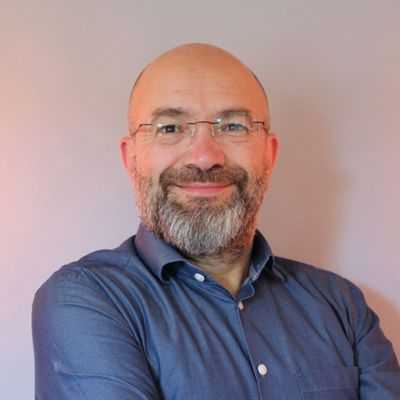
Shireen Jaffer is the CEO and co-founder of 'Edvo', where she's building technology to help people think well and make better sense of the world. Prior to that, she founded and bootstrapped her first company 'Skillify' to 7-figures, and helped over 150,000 students learn better through internships and mentors. She has been recognized on the “Forbes 30 under 30” list and she is an active community builder, angel investor, and advisor for early-stage start-ups. She is passionate about helping people think better and build lives on their own terms.
𝗞𝗲𝘆 𝘁𝗮𝗸𝗲𝗮𝘄𝗮𝘆𝘀:
* What does it mean to be educated?
* Learning how to learn and how to think better
* Passive and active learning
* What does learning mean to you?
* How to be a super-learner
𝗠𝗲𝗺𝗼𝗿𝗮𝗯𝗹𝗲 𝗾𝘂𝗼𝘁𝗲:
"Do everything you do from a place of love and from a place of betting on yourself and believing in yourself."
-Shireen Jaffer
𝗩𝗮𝗹𝘂𝗮𝗯𝗹𝗲 𝗿𝗲𝘀𝗼𝘂𝗿𝗰𝗲𝘀:
Twitter: https://twitter.com/shireenjaffer_
𝗔𝗯𝗼𝘂𝘁 𝘁𝗵𝗲 𝗵𝗼𝘀𝘁:
I am Agi Keramidas, a zealous podcaster and a knowledge broker. I am on a mission to inspire others to grow, stand out, and take action towards the next level of their lives.
I have partnered with Brain Fm! Get 20% off this amazing app: brain.fm/agi
#PersonalDevelopmentMastery
___
EPISODE TRANSCRIPTION
___
Please note, while an effort is made to provide an accurate transcription, errors and omissions may be present. No part of this transcription can be referenced or reproduced without permission.
___
Agi Keramidas 0:02
Welcome to the personal development mastery podcast. I am Agi Keramidas and my mission is to inspire you to grow, stand out and take action towards the next level of your life. I interview leaders, authors, successful entrepreneurs, spiritual teachers, exceptional people who will inspire you to improve your life. Tune in for two episodes each week, and make sure you subscribe to get them as soon as they are released.
In today's show, I am delighted to speak with Shireen Jaffer. Shireen, you are the CEO and co founder of Edvo where you're building technology to help people think well and make better sense of the world. Prior to that, you founded and bootstrapped your first company Skillify to seven figures and helped over 150,000 students learn better through internships and mentors. You have been recognised on the Forbes 30 under 30 list and you are an active community builder, angel investor and advisor for early stage startups. You're passionate about helping people think better and build lives on their own terms. Shireen, welcome to Personal Development mastery. It's a real joy to speak with you today.
Shireen Jaffer 1:29
Thank you so much. I'm excited to be here.
Agi Keramidas 1:32
I'd love to start with asking you to give us some elements of of your story or your journey. And what I would ask specifically as a self made entrepreneur. Tell me, what where do you begin? How did your initial stabled what triggers you to go to that path?
Shireen Jaffer 1:56
Yeah, so very loaded question. There's so many so many things that triggered a lot of the different journeys that I've been on, I think the biggest one, and I often get asked, Why did you choose to be an entrepreneur? And I always say, I don't think being an entrepreneur specifically was my choice. Because I didn't know what an entrepreneur was, I had never even heard of that word. Which sounds crazy, by the way, once you find out where I grew up, but point being I did not set out to be an entrepreneur, I set out to solve pains that I just did not want to feel anymore. I just, you know, I my first company that I started when I was 18. It did not start as a company. It started as a summer project I did to help my friends learn how to get internships. And the pain I felt is that when I was looking for work, and when I was looking for internships that I actually wanted, they weren't things that I was just doing for the sake of putting something on my resume. It was really hard to find those opportunities as a 16 1718 year old because everyone said I was too young. My friend's parents would say, why are you letting yourself get distracted? By work, just focus on your schooling and your studies. And so no one was willing to teach me skills that I needed to go find myself to go explore to go figure out what makes me feel excited. So I taught myself those skills all throughout high school. And then I saw my friends struggling with those exact pains. And I said, Okay, well I fixed it for myself, let me fix it for other people. And then that summer project turned into a business I bootstrapped to seven figures over four years. So that is really what triggered many of the different entrepreneurial journeys, as you'll say, throughout throughout my life.
Agi Keramidas 4:04
You said the skills you use the words learning skills that you wouldn't be taught in school are these play in the traditional education system and the word self education came to mind which, in my mind, tell me what you think in my mind, self education and personal development are pretty much the same thing. One can't happen without the other, the more you educate yourself on the things that matter to you, the more your personal development journey grows, and vice versa.
Shireen Jaffer 4:38
Absolutely. I'm, I'm a huge advocate for self directed learning, self education. And the reason for that, and this was a recent aha moment, mostly recent, I say, you know, I think about 18 months ago, so pretty recent, relatively. This aha moment I had when I was really asking myself that question. What does it mean to be educated in our society? what ways do I want to develop myself in order to really feel that I'm educated? And when I asked myself that question, the voice that was constantly in my head was that, well, how do you know what to educate yourself on when the world is moving so fast, the world is changing constantly, the skills you might need to know, they change year over year, decade over decade. So the best thing you can do for yourself, and for me, personally, the best thing I could do for myself was learn how to learn and learn how to self educate, because that gives me the confidence that no matter how the world shifts, I will be able to pinpoint here is the batch of skills that I need to develop myself into, to build this type of life that I want based on where the world is going, and then educate myself on those skills. So I'm a huge, huge advocate for self directed learning. And I would say it's arguably the most important skill you can develop for your life.
Agi Keramidas 6:16
I agree. 100%. And you said, and I wrote that down? Because it's an excellent question, what does it mean to be educated? Because nowadays, it's very different than it was, let's say 20 or 30 years ago, let alone if we go back to, you know, what, the previous generation that education there was much more simple in its definition. I mean, if you had gone to the university, it would be safe to assume that you unless you cheated, that you were educated. Now, nowadays, this is completely maybe even irrelevant. I would say, Trabzon in many ways and understanding what it is that you should learn how to learn. It is something that I don't think it's been taught anymore, not in not in traditional education settings. Anyway, it's something that you have to figure it out yourself. And many people take a very long time before the discover this.
Shireen Jaffer 7:16
And I'll call something out. Because this is all about personal development, being educated, that the definition of education is personal, in my opinion, what does it mean to you to be educated? Because no one can tell you what life you want to live? And so you have to understand what is the life I want to live? How do I want to feel everyday? What do I want to contribute to what are things that I care about? And then what is the education needed for that. So even when you mentioned, you know, back in the day, it was a lot simpler, because you could go to education and, you know, be considered educated. That's the key word, right? be considered Sure, externally, you can show off your degrees and fit a societal definition of educated. And I would argue, that really doesn't matter. It really doesn't matter for your personal journey. It certainly matters for certain survival needs, no doubt, and there's always a conflict with that. But it really doesn't matter for your personal journey. Because I am sure you know, and and everyone in the audience knows so many people in our lives. And frankly, we could be those people in our lives that have so much societal education, we've worked at those big companies or we have those degrees, or we've done those certain boot camps or whatever it may be. Yet somehow we are struggling to build the life we want. We're struggling to find financial independence, we're struggling with our health, we're struggling with our mental well being because we've neglected to educate ourselves on the things that actually matter to us. And that I think is a is an opportunity that truly is an opportunity for us to lean into.
Agi Keramidas 9:10
I liked very much how you said when we neglected that because it's really our responsibility and the education system and I'm sharing only my own personal opinion now it's it has failed it's not adequate for the times that we live in it so going to school or to university in most cases anyway, I don't want to say for everything, but it's it's a waste of time you get end up with tremendous debt that you have to pay off for the rest of your life and you don't learn and that's what you were saying. That's what I got that you don't learn really what's important to live a fulfilled life to get the skills to be able to manage your emotional state and be able to focus on what you're doing rather than being distracted every five seconds by something and all these things are, in the end our responsibility to find out and educate ourselves and learn and, and improve. So it's great that I completely understand that then I like how you said very much that it is it is up to us, we have neglected it. So it's up to us to, to fix it to realise that. And I wanted to ask you brings me nicely to a concept that we talk about a lot. It's called the lifelong learning that it's not it doesn't stop. You know, maybe when you finish your I don't know, maybe your education, your university or school, it doesn't end there. So tell me what you think about this concept of lifelong learning? And is it something that people talk more about? Rather than do do it? Or?
Shireen Jaffer 11:00
Yeah, I've that's a great question. I found lifelong learning to be this buzzword, that if you say it enough, it feels like you're doing it. And you know, step one is to become aware of what is lifelong learning and why it matters to you. Because once you can figure out once you you know, humans have an incentive, if the incentive is strong enough to take something seriously, they will. And so creating and really internalising what Lifelong Learning unlocks for you the immense opportunity that it'll amongst for you, making time to just understand that will allow more people to really embrace lifelong learning. So, for me, you know, I think about what is I learned a lot from nature, I learned a lot from just, you know, observing mother nature and the environment around us and seeing, you know, why certain things were designed certain ways, how do ecosystems flourish? How do ecosystems get destroyed? Right? What are those things, and I think about human humans, just us as kids, and the most human thing, one of the most human things is to learn, you know, babies, I, my nephew was recently born, he is almost 18 months old. And this, this has been top of mind for me, as I've been observing him. Babies learn so fast. They learn so fast. We all know this, we all know this, we, if we don't have exposure to kids, or toddlers around us, we certainly hear about it. They learn so fast. And and we learn so fast. We learned so fast as we were kids. So we were built to learn our bodies are constantly learning, our cells are constantly recreating themselves. And, and so we are meant to learn. And somewhere along the way, we start being taught that it's worth more to pay attention to someone else, that we need to be dependent on someone else, like a teacher or a parent to teach us than to listen to ourselves, and then to listen to our own curiosities and to own our own, you know, questions to really just be able to answer our own questions. And, you know, I think about my high school experience. So I grew up in the Silicon Valley. And so let's go back to the first thing I said, I did not know what it meant to be an entrepreneur, I had not even heard that word growing up in the Silicon Valley, the centre of entrepreneurship and innovation. How crazy is that? How did I never know about entrepreneurship growing up in one of the best high school districts in the nation. And the reason for that is the focus was so much on those the traditional definition of education, getting into college, doing the things that get you into college, that feeding our own curiosity, even looking outside of the walls of our high school and understanding what's happening on page mo Road, what's happening at you know, Stanford and the entrepreneurship programmes at Stanford, what, what's even happening in those areas. Very few people, very few students got to see that and it was usually because of the exposure they have from their parents. But I coming from Pakistan as an immigrant, I the daughter of a, you know, middle income class at best single mom, I did not have that exposure. And so I was funnelled with the majority of students that were just told to keep your head down, get good grades. Don't ask too many questions, get into a college and then you can live your life. And that's an that's insane. So lifelong learning to me is something that is often set, but very misunderstood. And so it is up to us to really internalise it and understand the impact of that as our most human skill set and what that can do for you. And I promise As you will want to embrace it. As a result, once you understand its power.
Agi Keramidas 15:07
Hi it's Agi here, interrupting you with something you may find useful. One of the most frustrating feelings is when you're trying to focus, but you can't get your brain to concentrate on the important work in front of you. This happens to me all the time. And if it happens to you, too, you are not alone. 40% of people say they have to make a big effort to concentrate. But if you're having trouble getting focused, I have a solution for you. I'm so excited to be partnering with brain fm. Brain fm is a great app. And I use it to block out my mental chatter and zone in on my number one priority of the day. Brain fm uses functional music that is backed by science and research. And it is designed to give us that extra edge when we need our undivided attention. And they also have relaxation, meditation, and deep sleep modules that help you unwind and recharge. So if you want to be able to place your full attention exclusively in the activity you choose, whether that's meaningful work or relaxing or getting high quality sleep, right now as my podcast listener, you get 20% of brain fm subscription, at BRAIN.FM/AGI ! That's an amazing deal for such a useful app. 1000s of people have given five star reviews to brain fm- Find out why: BRAIN.FM/AGI
And let me ask you, let's talk about learning actually learning betters and because it's it's very important. So if you were to speak to the listener that is very intrigued now, and he says, or she says that I would like to re explore or redefine what's happening with with my learning. What are some, you think key elements, key factors that we haven't learned about learning? And you we might we want, we need to find the right words, we need to learn in order to learn better. Mm hmm.
Shireen Jaffer 17:17
Great. So step one is to accept that you are learning all the time. Whether you recognise it or not. You are learning all the time, you are forming opinions all the time, you're exposing yourself to beliefs that you will find yourself just believing all the time. This happens all the time. So step one, except that you're learning all the time. Step two, is that asking yourself well, how are you learning? How do you learn right now at this moment? And the reality is the answer for most people will be that they learned passively, that they learned by consuming a lot of content online, they consume a lot of news, they consume a lot of opinions on social media like Twitter, Instagram, LinkedIn, whatever it may be, they listen to a lot of podcasts, and they just listen while they're driving, or they listen while they're cooking. And so there's a lot of passive learning going on. And the problem with passive learning is that it doesn't allow opportunity to really think about what you are learning your body or your mind or whatever, will just start soaking in a lot of these ideas and a lot of these thoughts, and before you know it, they will influence your own decisions, and you never made a conscious decision to have learned those things. That's the crazy part about passive learning. And the majority of us learn passively. So step two is doing that self reflection around. Well, how do I learn today? Where do I learn from, and when you become aware of it, you'll start noticing day to day, just hour to hour, you'll be like, Oh my gosh, I just read this article, and then moved on to this other article and then moved on to my slack notifications. And I didn't even think about whether this article was true or who the author was or who this media source is. I didn't even take a minute to look into where is my information coming from? Right. So that is all passive learning. And we all do it. Why? Because our media environments are actually let me take a step back our information environments where we get our information about what's happening in the world, about what might be important to us. Those environments are one way streets, they broadcast to you. There is no opportunity to have a discourse, there is no opportunity to ask questions, they just broadcast to you. Right. And we consume this information usually online in our browser. And our Chrome's or Safari is just our browser. And our browser was built to simply fetch that information and display it to you. Okay, broadcast, right? That's all it does. So then it doesn't create space for you to actually actively learn. And that's step three, is really understanding how can I go from passive learning to active learning, learning that empowers me to be to have a choice to have a choice of do I believe in this or not? Do I want to learn this or not? Do I want to learn this in this way? Do I agree with this way of doing things? Do I agree with this way of thinking things? Do I agree with this perspective on the world that is active, those are things that are empowered by active thinking. And so then step four is creating environments for yourself that enable more active thinking than passive thinking, more active learning than passive learning. And that's what I've been obsessed with. For myself, a lot of the work I do, as I mentioned, is a result of the pains I've felt. And so when I started becoming more aware of how poorly I had been learning my entire life, and then made the choice of I want to be an active learner. And I want to be more aware of what I think and why I started realising oh my gosh, there is no technology or tooling to help me do this. And I found myself with endless amounts of notebooks, just know taking all the time, and spending more of my time feeling anxious and scattered than actually in the flow of real learning. And that's when I started building tooling for myself, that I like to call my personal learning management system, things that helped me not just learn actively, but then also connect my learnings to each other and really unlock my own power to be a super learner, and learn anything I want. So those, you know, to recap, so step one, really accept that you're learning all the time step two, identify and reflect on how you learn today, you might recognise that passive learning is your default. Step three, understand what active learning can be. And then step four, create environments that empower you to be an active learner, more than a passive learner.
Agi Keramidas 22:27
I want you to tell me more about this environment that you create, because it's, I think it's a natural. Next question. So going from passive learning to activating you say, creating the environments. What do you mean by environments?
Shireen Jaffer 22:40
Yes. So I found for myself, I was learning online all the time, I'm spending eight hours pretty much on my computer during my work day. And I'm learning online. And so I asked myself, Well, where am I spending my time online? It was in the browser, I read a lot of articles, I read a lot of white papers, I read Twitter threads, I, you know, people are always slacking me. My colleagues are always slapping me, oh, this is an interesting read, or what do you think about this, or I get these text messages. So all of that was happening in my browser? So my first step was, oh, my gosh, how do I even interact, actively interact with this content, and leave notes on it and leave thoughts on it without having to reach for a pen and paper that just seems archaic, as much as I love and a paper, it's just so inconvenient to have to go Bumble for it, and try to write down your thoughts. And your thoughts are in a completely different area than the information that you're criticising? Right? Or critiquing or reflecting on So, step one for me was, okay, how do I build just basic tooling that allows me to do simple things? Like, if I'm reading an article, can I highlight something and then leave a note that appears right next to that highlight? Can I ask a question? Can I write down all the questions that come up naturally, as I'm reading, or watching a video? Can I quickly reference something that I know I've read before or consumed before to this thing that I am now consuming? Right? Can I make those connections between my knowledge? And so I started looking for tools. I said, Okay, I was doing that. And I came across a lot of different extensions, Chrome extensions that allow you to, you know, highlight things, and then and then, you know, take notes on them. But they never worked on every single web page across the web. If you think about the millions of pages that exist, the content that's out there every two years, we produce more information on the web than what existed prior. That's crazy. It's crazy. Every two years, guys, it's insane. And so, we have all this information available to us. Not all of it is honestly great. So we need to teach ourselves the you know, the ability to tell good from bad, right from wrong, whatever. It's all subjective, but whatever makes sense to us. And so you have to have these tools be usable across the web. And so that's where it gets tough. And so I said, Okay, can I build a tool that actually does that? It allows me to convert any web page into an active learning environment. So, you know, that's one of the tools we built. That's, you know, what we do now. That's what I do professionally as I have a team. I have a brilliant engineering team, and we build these tools all day long.
Another type of tool I think a lot about is, you know, the biggest distraction to learning to optimise learning and just being able to think without feeling anxiety. The biggest distraction to that is all the context switching we do every day, right? All the scatters we do. So if you think about, you know, if you're trying to learn, let's say about cryptocurrency, right, very hot topic. If you're trying to learn about cryptocurrency, information around that might live across four or five different places. Forget the web for a minute, right? All the different places lives in the web. But just in your own, you know, you might have taken notes and your apple notes, you might have had a conversation with a friend and that conversation on cryptocurrency is stuck in your I messages. Or you might have had a conversation in your discord community and one of the discord servers for you know, that you belong to, you might have emails with newsletters on cryptocurrency, you might have your, you know, your your podcast, right? And, and so all these things live in all these different places. And so most of the time, you're just trying to switch between these apps, you're just trying to find where was that thing again. And so in the limited time that you believe you have with your busy life, you're spending most of it just trying to stay organised. And that is a detriment to real learning. And so tool number two that, you know, we built. And these all work together, of course, but another subset of the tooling that we built is how do you create spaces for the different things you're learning about whether it's topics like cryptocurrency, whether it's, you know, just being able to organise your thoughts on a feedback, you need to give a colleague right. So if I'm giving my colleague feedback on a website design they did, I need to be able to see the designs, I need to be able to see my notes, I need to be able to see previous versions of the designs all in one place for real thinking to help it. And so in our technology that we call Advo. Advo allows you to create spaces for the things that you are learning about and then bring in all the applications where information exists within one space. So you have your discord, and your notes, and your articles and your podcasts and your YouTube videos all in the same space. And it's your personal learning space to just make sense of that specific topic and stay in the flow. So I think about what that enables someone to do for their learning and also for their efficiency. And so those are the types of tools that I have been building for the last 18 months, and that we're now just bringing to the world.
Agi Keramidas 28:12
That's very interesting. And I can certainly relate to that the word overwhelm comes to mind sometimes with what's going on with the input, the influx of information we have on so many different sources. And eventually, as you said, it's you spent time trying to find out in which was it on an email that I read that or was it on, on LinkedIn, and then in the end, you just rely on the limited ability of your, your mind to recall these things, or you're going to miss them. So that's a it's very, it's fascinating, actually, as a concept to be able to collate them and have one space, as you said, for each of the topics that you're learning. It certainly helps the concentration, the focus and minimising the relevant stuff. So that sounds brilliant.
Shireen Jaffer 29:06
Have you heard of the first brain second brain concept? No. Okay, because that's what you're talking about. And I think it's really valuable to the listeners as well, because I think it's fascinating. So the first brain second brain conversations that have been happening, they're happening in the personal knowledge management space, PKM space. If you have used things like notion roam research, obsidian, they all, you know, market themselves as personal knowledge management systems. And the conversations that have been happening is exactly what you said is when your first brain is limited in its ability to recall and its ability to make connections with other you know, information you might have in your brain from years ago. Things that can actually help you make better decisions, faster decisions. When your first brain struggles with that. Can we build a second brain With the use of technology that complements your first brain to surface that type of information and help you then learn faster and make better decisions. However, what I've noticed that's happening is we've been confusing the value of the second brain. So I'm seeing a lot of the tools and technologies that are coming out, really thinking that oh, what we care about is storage, what we care about is, oh, we can't store enough stuff in our first brain. So let's have a second brain, a personal knowledge management system, where we can hoard information where we can no take on everything and where we can, you know, yes, connect things to each other. But it's really more of like, put everything in this thing. And the reality is, I don't really care how my first brain stores things. I don't really care where it's stored things. I mean, I, I'm excited to learn about it. But like, I don't really care. All I care about is, is my clock speed fast. Can I process quickly? Can I recall information quickly? Can I remember the things I want to remember? And then can I remember them accurately? And we all know our memories, not very accurate. So the power of the second brain is in the processing? Yes, storage is a result of the processing of how when does a surface information to you? And does that information lead to a better outcome for you? Does it lead to a better decision for you? Does it lead to better thinking for you. And so if we can really build a second brain, which is what we're going after, that can help your first brain think better, while also complementing it with better processing. We've just unlocked a lot of efficiency for people, we've saved a lot of pain for people, we've allowed people to really take a learning into their own hands, for the first time, honestly, for most people. So that's the first brain second brain conversation that's happening. That, you know, it's typically happening on Twitter, folks in the space, but I think it's just fascinating to think about it that way.
Agi Keramidas 32:12
Totally does. And yes, I hadn't I but I find it fascinating as well, the way you describe it. And I want to you mentioned earlier on the world in our era, I wanted to come back to that and ask you the word super learners. And I also find that was very intriguing. And I want you, I want to ask you, is that something Who do you think can access that can tap into that? Do you think it is universal? Do you think intelligent people have more motivate? Or is it something? What are your thoughts?
Shireen Jaffer 32:50
I think it's universal. And I think it's universal. Because all of us are born with it. We are born to adapt. It's humans have to adapt, you know, like, we look at evolution. I mean, it's not obviously limited to humans, but learning is just so fundamental to our survival. And because of that, it feels like it's gonna reversal. And so in order to become a super learner, does everyone have the potential to unlock that within themselves? Absolutely. And I and I very intentionally say, unlock within yourself, because it is there. I don't say. And I just talked to my team about this, we don't say, become a super learner. We used to say that, by the way, but it's not about becoming anything. It's about unlocking what's already there. And as a result, being more of yourself. And so do I believe everyone can do that? Yes. Do I believe that everyone has the privilege to do that? No, because this takes so much time, and so much self awareness, and, frankly, time, most people don't think they have time. And a lot of people are currently trapped in situations of no fault of their own. But don't give them the privilege to even think about these things because they have to survive. And that is a very sad reality of the world we live in and the society that we've built, where if we chose today, if humankind chose today to solve poverty and solve all these sad problems that exist, we could solve it. We have more than enough resources to do that. However, we don't, for many reasons, by complex reasons. So that's my answer from a place of empathy from you know, a someone again, who was born in Pakistan who has I have friends and loved ones in really awful situations. I know that all of us can be a super learner. However, not all of us have the privilege and the way One thing I care about, is helping people unlock that privilege. Helping people get to a point where, you know, it honestly doesn't take that much time in the grand scheme of things. But the amount of programming that we need to fight, the amount of programming that we need to overcome to then get ourselves to believe that we can be super learners, and then become super back takes most of the time. So that's my, my answer to your question.
Agi Keramidas 35:32
That's awesome. And so you said about you know, the active being an active learner, and this this process, or processing all the information, and I always on the podcast want to, you know, from this processing, I want to even go to the next step, which is actually taking the action based on your loads. In other words, application of that filtered knowledge. So I always want to offer to the listener something actionable as a result of the conversation that we had shown to ask you, based on what we said, if you were to give to the listener, something actionable to they can implement tonight or tomorrow morning, maybe that will allow them to take a step towards unlocking that potential, they have been a super learner, what would you tell him or her,
Shireen Jaffer 36:29
it goes back to the four steps that I detailed earlier, you have to start with becoming aware of what learning means to you before you can take action, we fall in the trap of doing doing doing without thinking about why we're doing things, right. So I will never say here, do this one thing, it's going to change your life because it's not unless you're doing it with the right intention. So the first thing you can do tonight, is just ask yourself, What does learning mean to me? Do I value learning? And how do I know the answer to that, right? Because if you say yes, I do value learning. Well, how do you know? Of course, you're listening to this podcast. So there's, there's clearly a design, because that's a good indication. But how is your you know, are you listening to this podcast while you're cooking? Are you listening to this podcast while you're driving? This isn't coming from a place of judgement. It's simply coming from a place of becoming aware of how you do things, and how much value do you really give to learning and really understanding what that means to you. So do that first. And I would say the second thing, which is going to take you more than a night to do in most cases, is build that environment for yourself that allows real active learning to happen. And it takes a lot of time, because of course, now you have to find the tools and the configuration of tools. And if all that fails, and frankly, don't even start there, start with Edmo, come to Advo Ed veoh.com. And we built that tooling. And because we're so early, by the way, it's absolutely free, because we are looking for early adopters to come use this environment that we've created, honestly, for ourselves and see if it works for many different types of people. Does it work for you based on the type of job you have the lifestyle you had the learner, you are the type of thinking you do your starting point. If it can work for you, and you and you and you and many, many people, then we've unlocked something really powerful. So come if you want to be an early adopter and be okay with you know, the bugs that come with early technology started Advo. But otherwise, at least make the time to understand what is it that you need to really embrace learning as your daily habit. And by the way, let's not just learning as a daily habit, active learning as a daily habit, because they're learning everyday anyways, and build the environment that enables that.
Agi Keramidas 38:56
Thank you. That's great. And I will just reiterate, in my own words, would you said that? To answer the question, what does learning mean, to me? And whether I value learning and even more importantly, how do I know that? I do. So that's a I think it's a great exercise if you wish to take some time and reflect on it because it will lead to some very interesting observations.
Shireen Jaffer 39:25
And I and I will say one other thing on this, you know, the word learning. I can't tell you and I still struggle with this. By the way, I can't tell you how many people I've told, or I've discussed learning with and I've told that I'm building tools for learning, and they always say, Oh, what, what age kids are you working with? What age kids are you building this tools for? Because when we hear the word learning, I don't know. I mean, I don't know if the audience resonates with or do you resonate with this but something resists thing comes up to me where I'm just like, oh, this is more than learning, like learning is for kids. And I always feel that resistance even now, even when I'm so obsessed with learning, I think part of me being so obsessed with learning is to teach myself that learning is lifelong. And it's for all ages. And it's not a term that only applies to schooling and kids, and it's something we have to take seriously for ourselves. And so I also want to put that out there is, you know, if you're feeling that resistance to taking learning seriously, it's okay. I don't blame you. I feel it. And I think you just have to ask yourself the question, what does it mean for me to build the life I want? What does it require for me to adapt to this world that changes overnight? 2020 shows that so clearly. And what is the most important skill I need? And I will say, learning is that skill. And empathy is very, very important. And we don't need to talk about that. But empathy is also learned, in many ways. So learning is absolutely that skill.
Agi Keramidas 41:15
There's one, it's one of my favourite quotes by Albert Einstein, he said that the moment you start, you stop learning, you start dying. So for me, personally, I don't feel that resistance that you that you do, but I'm sure that many people do, I'm sure that they do. Shareen I would also like to ask you some a couple of quickfire questions, just to wrap things up for today. And my first one is, what does personal development mean to you?
Shireen Jaffer 41:47
Being my best self experiencing better versions of myself.
Agi Keramidas 41:57
And let's say you could go back in time and meet your 16 year old self, what's one piece of advice you would give her?
Shireen Jaffer 42:07
bet on yourself. Do everything you do from a place of love. And from a place of just betting on yourself and believing in yourself and do not if you ever feel fear or anxiety, or you're taking an action because in that moment, you're experiencing those fearful emotions, those survival instincts, those I shouldn't say survivors, like those in that anxiety. Take a minute and step back and just ask yourself, How can I do this from a place of love? How can I do this from a place of self belief? That's the most important advice I would give my 16 year old self.
Agi Keramidas 42:49
Thank you. That's beautiful. And one more hypothetical questions. And let's say you could wave your magic wand and change something in the world as it is today. What would you change?
Shireen Jaffer 43:02
I would bring life to an education system that actually educates people, that actually allows people, it's not even educates people. But that actually allows people to feel like they have the education they need to build the life they want. And it's not about it's not about bringing down the current education system. I just don't think an education system even exists. So we have to create one. And so what the magic wand that is what I would create.
Agi Keramidas 43:33
I would love to see that that's that's new educational system. There are so many things. And it's digressing completely from what we talked about. But there's so many things that are changing in in humanity, I would say and we're recording this end of 2021. So there are so many things that are happening and I'm hoping that the new education system along with other new systems will replace the current failing structures that we have in society in general and that's completely off topic. I just wanted to get it off my chest if you weren't sure in what's what's the best place for someone to connect with you and find out more.
Shireen Jaffer 44:15
I am active on Twitter can find me on Twitter just shrink if you just look up Shireen Jaffer. Advo on Google or Twitter or any social media, I should be the first one that pops up. So Twitter is the best place to reach out to me. You can also find me on LinkedIn. And you can of course, reach out to us on avvo.com Edie? veoh.com
Agi Keramidas 44:40
Thank you. I want I really enjoyed our conversations today. And I feel that this topic of learning, it's one of the most most important topics because it is something that we do anyway. As she was saying earlier, but we don't do it in the right way, and certainly not today in a focused way that can lead us to the result. So I want to wish you the best with your project, which sounds I've just learned about. Now that sounds very intriguing. And I will certainly take it out more in detail myself and give some feedback to you and all the very best any last parting words from you?
Shireen Jaffer 45:29
One, thank you so much he further sound words and for this conversation, of course, I can talk about learning all day long. Last words to the audience. You're you have more power within here than you realise. And I would just ask myself, if I were you and I do ask myself this all the time. You know, anything that you believe right now about yourself about your abilities about the type of life you think you can have, just ask yourself where those beliefs come from. And I think you'll find that those beliefs were never yours, which again, creates a beautiful opportunity for you to self create beliefs and for you to really build the life you want and develop the skills you want. And I really, really wish that for all of you. So thank you again, Aggie for having me here.
Agi Keramidas 46:28
I hope you enjoyed listening. If you have, please share this episode with someone who you think will benefit from it. If you want to know more about what I do, visit my website AGIKERAMIDAS.COM
And until next time, stand out don't fit in!

 5.00 (74 Reviews)