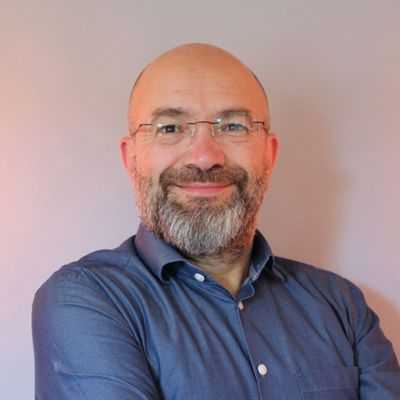
Geneviève Pépin is an accredited life coach, a certified mindset specialist, a productivity and leadership development coach for Fortune 500 companies, and an improv facilitator. Before coaching, she built her career internationally in event management and marketing, living and working in more than 20 countries, in four different languages. As a result of her own journey in the professional world, she is now very passionate about helping leaders & teams go from busy and stressed to happy and productive!
݆
𝗞𝗲𝘆 𝘁𝗮𝗸𝗲𝗮𝘄𝗮𝘆𝘀:
* How the “yes, and” improv principle helps your efficiency
* How to recognise burnout and how to get out of it
* The 3 questions to realign your mindset to productivity
* Shifting our focus to co-creation
* Productivity is not doing more!
݆
𝗠𝗲𝗺𝗼𝗿𝗮𝗯𝗹𝗲 𝗾𝘂𝗼𝘁𝗲:
“Trust yourself. You know more than you think you do. That little voice has something to say, at least explore it!“
-Geneviève Pépin
݆
𝗩𝗮𝗹𝘂𝗮𝗯𝗹𝗲 𝗿𝗲𝘀𝗼𝘂𝗿𝗰𝗲𝘀:
Find Genevieve on LinkedIn: https://www.linkedin.com/in/genevievepepin-productivity-time-management-executives-managers-leaders/
Website: nettolacoaching.com
Do you sometimes have trouble getting your brain to focus and concentrate on the important task in front of you? Then I have a solution for you: an amazing app called Brain FM. As my podcast listener, try it for free and get 20% off if you join. Use my partner link: brain.fm/agi
݆
𝗔𝗯𝗼𝘂𝘁 𝘁𝗵𝗲 𝗵𝗼𝘀𝘁:
I am Agi Keramidas, a zealous podcaster and a knowledge broker. I am on a mission to inspire others to grow, stand out, and take action toward the next level of their lives. Visit my website: agikeramidas.com
#PersonalDevelopmentMastery
___
EPISODE TRANSCRIPTION
___
Please note, that while an effort is made to provide an accurate transcription, errors and omissions may be present. No part of this transcription can be referenced or reproduced without permission.
___
Agi Keramidas 0:06
You are listening to Personal Development Mastery podcast, where you will find both the inspiration to grow and the actions to implement towards your next level. I am your host, Agi Keramidas, and my mission is to inspire you to stand out and live your best life. I interview thought leaders, authors, entrepreneurs, spiritual teachers, exceptional people who will inspire you to improve your life and offer, through their wisdom, actions you can take and implement. Tune in for two new episodes each week and make sure you follow the podcast to get the episodes as soon as they are released.
In today's show, I am delighted to speak with Genevieve Pepin. Geneviev, you are an accredited life coach certified mindset specialist productivity and leadership development coach for Fortune 500 companies and improve facilitator. Before coaching you build your career internationally in event management and marketing, living and working in more than 20 countries in four different languages. As a result of your own journey in the professional world, you are now very passionate about helping leaders and teams go from busy and stressed to happy and productive, then we have welcome to Personal Development mastery podcast, it's a real pleasure to speak with you today.
Genevieve Pepin 1:46
Thank you so much. I'm so excited to be here. Agi thank you so much.
Agi Keramidas 1:51
Salary start I gave your background is fascinating. I would like to start before we move on to these things to ask you about a part of your journey, your your story, I would like to ask him specifically, if you can isolate a key defining moment a milestone in your journey that led you towards what it is that you're doing. Now. I would love to find out that about you.
Genevieve Pepin 2:23
Yes, thank you. Definitely, I can think of a key moment when when I realised the power of the choices I was making my life and the power of the patterns I was creating as a result of my mindset and how I thought and the decisions that I thought that was a key defining moment. And how it happened is that in a nutshell, in many experienced professional experiences in my life, I ended up burned out, I ended up not being able to get out of bed. And even though I loved what I did, and I attributed different external factors for that which mattered, right. But, you know, in one instance, it was a toxic environment. And the other instance I was thinking, well, maybe that's the culture or maybe that's the cultural background of where I was living at the time, it was not in my home country of Canada and, and I moved and I went away from all of those external factors that I thought were leading me to exhaustion and to have tension with people. And I changed all of those external factors, including the language where I lived, and, and job and people and so on. And I saw the same patterns coming back. And that's really when I had an aha moment is like, hold on a second. Yes, external factors, external factors do matter at some point. But the only common denominator in all of these situations is me. I could not I came to the realisation that I could not blame it on anything else really, like it really started with me. And this is how I started my personal development journey.
Agi Keramidas 4:16
I can personally relate to what you just said, because when I was about to leave my home country, I realised that a part of me wanted to run out of a situation and but that situation was not out there it was I could run away from other things but never run from who I am. So just saying that as a person I can I can understand how you mean. And you said you started your personal development journey after that. Can you tell me any defining moment there something that really changed things in your mindset as a result of that?
Genevieve Pepin 4:58
Well, what really What really is helped in, in this journey is first of all, to get to know myself really well to really understand those that my thoughts are not the truth. Right. And one defining moment I can think, especially in productivity that led me to go into to help people in productivity is a defining moment when I understood that I was creating my own business. Right in the even though because development personal development is exactly I love I love this podcast for this. It's a mastery, it's a long term development is it's not oftentimes we think, oh, yeah, now I got it. There's like boho to life, it's a lifelong journey, and there's gonna be ups and downs. And that's the beauty of it. And the idea is really to embrace all of it. And I had started, you know, my mind's a journey of really getting to know myself really knowing where I was going, and so on. And there's one day when I found myself, once again, crying on the kitchen floor thinking like, why is it that I'm so exhausted? And I'm so I'm so busy. And I realised that I was creating my own business. And that's when I went and looked at my calendar and looked at really, what is it that I really want to do? What is it that that? Where's my highest point of impact? And how can I prioritise that and what is not the highest point of impact? And why what am I fill in my calendar with that is not really useful. And that is actually just a result of me wanting to prove myself or wanting to do because of the sake of doing and not really being intentional about how I spend my time and energy. So that was a that was a big one.
Agi Keramidas 6:52
Can you tell me about that? What you said about the way that you were feeling? You mentioned the word burnout in your website, and you said that two out of three professionals experienced burnout symptoms, which is a statistic that it's much more than I was expecting to read to be honest with you. It can we talk about burnout a little bit first. So my first question, when you say burnout symptoms, can you be more specific? How do they present so one can recognise exactly what you mean?
Genevieve Pepin 7:30
Yes, burnout symptoms, like there's not a one type of burnout, I would say that there's various burnout symptoms can range from being exhausted continuously. And it's really about cynicism also. It's like, why am I even doing this really losing the, the motivation and and the reason why we're doing what we're doing, you know, not being able to, to get up in the morning, a depletion of energy constantly. And that can lead to not being able to finish the task that we would have before for example, and it's really close to, to some times having just really negative thoughts all the time around what we're doing, and just not having a purpose anymore, I would say that these are, these are the, the symptoms that will lead to a longer term burnout because there's some sometimes we can be burnout in a in a very, in a shorter term. Like for example, when I was in event management, there's the post event burnout that a lot of people experience where it's so intense, so intense, so intense, and then the event happens and then there's kind of like a goof and then there's a there's we're very tired and so on but with a little bit of rest and we can get back on our feet. Right so and so that would be the shorter term but then there's the longer term where it's feeling a lot of stress continuously and losing the losing our purpose.
Agi Keramidas 9:20
Thank you, it's, it's interesting and the way you describe about the loss of energy even that thing alone, it's something that I'm sure that many can associate with and recognise whether you know they have it or not. We can go back into that later on if you want but I really want to switch a little bit to the conversation to the the principle really you have I can see the you have the frames on the wall behind you the yes end. So first of all, I want WASC because we're going to talk about the improved principle that you say, what does improve have to do with with it in the first place? So that is my first question. Can you bring that into context?
Genevieve Pepin 10:16
Yes. Oh, I love it. I love that she has it like that. What does it have to do? Yeah, that's that's a fair question. Improv it's so it's a performance art. But very quickly, when one starts to practice improv, we find out that it's actually it's actually the art of life. Improv is the art of collaborating with somebody and creating something out of nothing. And then when I started my improv journey, I, I found out right away a lot of blocks coming in, I wanted to control I wanted to look good. I wanted to give my ID I wanted to be funny. I wanted to I wanted to look good in front of people. And that came up like really quickly. Or I wanted to say the right thing, I was judging myself. And through improv and through the practice of the improv principles, and through the practice of improv and itself for the, for the sake of practising it. I could really understand myself better. And I could overcome a lot of those things, which ended up being really useful in real life. And not only that, but the people I was practising with, because I started my own group on the island where I'm in Tenerife came back to me and said, like, Wow, I feel so much more confident. I feel I just love to come here and play it. It's like an outlet for me to just to let out my authentic self. And that's when I realised like, okay, like, there's something there. It's not only me experiencing this, but there's definitely a magic into the safe space of building something out of nothing together. And exploring what, what can happen.
Agi Keramidas 12:17
Cynthia, Can I Can I ask you, let's say for those that don't know exactly what it is that you're talking about, you said it's a form of art that you create something out of nothing? Can you give an example? So someone can understand if they haven't heard of it before?
Genevieve Pepin 12:32
Yes, yes. Thank you so much for bringing that up. I'm sorry, if I wasn't clear. So that's. And so improvisational theatre, it's, there's different forms. But I would say the most basic is people being on a stage or in front of people in the space. And having one suggestion, it can be with suggestion, it can be without, but normally, these are suggestions from the audience, like Apple, for example. And then the people would start a scene, start telling a story acting out a story out of this, right, just being inspired by an a word like apple. And we would go through the art of you know, the story, and the scene can be long form short form, and it doesn't matter. There's different ways of doing this. But it's really about creating an experience that is interesting to watch. Out of nothing. And when I say out of nothing is because we don't consult the our partner before, it's really, we need to create something that is coherent, out of nothing, because also there's no scene, there's no set, there's no like sofa, and you know, if there's no objects around us, we're really creating a world from scratch. And this is what this is about. Okay.
Agi Keramidas 13:58
Thank you for clarifying that. And so where does the yes end? Is how does that connect to improve them?
Genevieve Pepin 14:09
Yes, yeah. Yes. And is the pillar foundation of improv. Yes, is accepting the information that is given to us and building on it, adding to it. So here's an example. When you jump on a stage with a partner, and you only have a suggestion from, from the audience, Apple, for example, and your partner's says something like, I'm so happy to be picking up with you today, grandma, right? If you're hearing this and you say, What are you talking about? We're in a kitchen, please pass me the butter for this apple pie. Right? You see that? There's like hold on a second. Like we're not agreeing or whatever. happening right now. So it's when you're on a stage like this and you need to create something out of Scratch. This is not the time to start negotiating. No, no, this is not true. Or this is not where we are here is my idea. We need to take what the other person offers. It's like a gift. Right? Okay, so I'm your grandma will begin apple. Great. Yes. And yes. And can you help me dear, because my back is a little bit hurting me from all these Apple, we're beginning for example, right? So we need to add to what is created. Now, this is an improv context, right? But the really, the essence of this is to accept without judgement, and adding to it building co creating. And there's so many ways and we can go if you want, I can go deeper into that. But there's so many ways this can be useful in life. Because when we dig a little bit deeper, and I and we see that, you know, when I when I do improv activities with people, especially in the beginning, how our first who will receive ideas, a lot of the times our first reflex is to say, No, or yes, but, and that is when the energy is cut. Right? We're in with the Yes, and we're expanding the energy.
Agi Keramidas 16:26
Hi, it's Agi here, interrupting you with something you may find valuable. One of the most frustrating feelings is when you're trying to focus, but you can't get your brain to concentrate on the important work in front of you. This happens to me all the time, and if it happens to you too, you are not alone. 40% of people say they have to make a significant effort to concentrate. But if you're having trouble getting focused, I have a solution for you. I'm so excited to be partnering with brain FM. Brain FM is a great app. And I use it to block out my mental chatter and zone in on my number one priority of the day. Brain FM uses functional music that is backed by science and research. And it is designed to give us that extra edge when we need our undivided attention. And they also have relaxation, meditation, and deep sleep modules that help you unwind and recharge. So if you want to be able to place your full attention exclusively in the activity you choose, whether that's meaningful work or relaxing or getting high-quality sleep, right now, as my podcast listener, you get a 20% off brain FM subscription at BRAIN.FM/AGI ! That's an incredible deal for such a valuable app. Thousands of people have given five-star reviews to brain FM. Find out why: BRAIN.FM/AGI
§ There are many questions now that are stemming from this, I would like to start with how can this be applied specifically because you teach it to in terms of efficiency. But then now I would like to bask in some other elements of our life as well. But let's start with something more, which I think many of the listeners will be interested in more efficiency and how can we utilise this? I find it fascinating. And I personally understand what you say about the Yes, but which basically means no?
Genevieve Pepin 18:34
Yeah, so beautiful now?
Agi Keramidas 18:38
Yes. So yeah, tell us a bit about the how can this principle be applied in increasing one's efficiency? First of all?
Genevieve Pepin 18:49
Yes, great. Well, I would like to offer those many ways. But I'd like to offer three things. Right. So first of all, you can yes and with yourself. So when I say that is that you can? Yes and with your own thoughts. So this helps with opening up your creativity, we all naturally extremely creative, but most of the time our creative our creativity is under a few layers of know of what if this happens, right? And we don't allow ourselves to, to explore ideas in order to move forward. And what happens is that, oh, maybe I could do that. No, maybe I could do that. Or maybe not. Right. And we're doing that with ourselves. Oftentimes, we don't realise we're doing this. And that's, that's what's so interesting. So how can the yes and help with efficiency? Well start actually, when we have ideas, we start saying, yes, delete a judgement and explore a little bit like, how could that help? How can I help move forward? And how could that be good enough? Instead of getting into the self doubt and the perfectionism of love? Oh, that's not good enough. So and adding to it so Are we delaying the judgement? Yes, and going with our ideas. Now, sometimes I would say that this can help with perfectionism. Sometimes perfectionism is seen as a virtue because we say that we're striving for excellence, which oftentimes for high achievers, like, that's what God has here, right? That's what got our success, to strive for excellence. However, when we let go of some of that perfectionism, we can go so much faster. Having high standards is really good in some situations, and in some other situations is just slowing us down. So identifying those situations, for example, an email that you're writing, or the colour of the slides, or whatever it is that you're creating, what is good enough? And what if you say yes, and you expand on your ideas instead of constantly blocking your ideas, and therefore, being less efficient and and redoing and redoing things that don't really matter? And I say that with, with air quotes, because oftentimes, this is this is another thing, also, this is a big thing with efficiency is that we, we think that a lot of things may be really important or urgent, when they're not really and that's where we're wasting a lot of our time and energy. And we want to to make sure that we spend our time and energy on what matters the most. So that's one another tip is yes. And with the circumstances, when there's a problem that arise when the circumstances are changing around us, instead of staying in the, ah, I really don't like this, or this is happening. And this is not helpful. And how can I find it? Find it? Let's yes, and yes, accept, it doesn't mean you agree with it. Right? Sometimes things aren't happening, and they're wrong. But we need to deal with them. Anyway. So yes, accepted? And how am I going to deal with that? Right, so we get out of our own way, we look at the situation, yes. What is the situation that is presented to me? And how can I move forward with that this really helps with problem solving. When it comes to example, during the pandemic, for example, I had an improv group here in person. And then all of a sudden Spain had extremely strict restrictions where we couldn't literally couldn't get out of our house, except for going to the doctor going to the grocery store and getting out with a dog. And, and the, the person I organised this with said, Maybe we should just cancel, you know, we can meet in person. And I was like, oh, let's ESN this, there's a way there's a way to do something else with this. And we started Yes. And then and we decided that how can we create a win win out of this? Well, let's do it online, let's create a group online, we can open up to people outside of the region. And we did it and it was a success. And we sustained our improv group, online during the pandemic, through this method of accepting things as they are and adding to it and CO creating with it instead of against it.
Agi Keramidas 23:09
That's wonderful. And, you know, the, the co creation that you say, and as a result of this way of thinking the yes sandwich, accepting the situation and shifting. That's how I understand it. To some extent, you're shifting, shifting the attention from the situation for the from the problem, if you want, some people call it like that, to their solution to what is it we can do about it. And I liked very much what you said that accepting doesn't necessarily mean that I agree with it. Because some people have an issue with things they think that it is. passivity, if I just accept everything that happens to me, then I'm just a passive receiver. But there is I believe there is a fine line there. It's not like that you can accept and not agree. So if you I would like your thoughts on that a bit more. Let's go a bit deeper on this.
Genevieve Pepin 24:10
Yes, I think this is great. This is a great topic. Because when we don't accept and we fight, like again, here's there's a nuance there, there is a nuance, because I can accept the situation and decide how I respond to it, which can be too i can i can be physically fighting it right like taking action in order to go against that or to to respond in a way that I want to change something, right. How, however, I am not stuck in the feeling that I have no power that this is happening to me, and I move right away. into what can I control? What can I control? Do I want to respond in a way that that I want to change things? Well, great, well, then let's do this right, then I'm going into, I accept that this is happening. I'm not in denial. I am not in Oh, poor me like this is happening. And I have, there's nothing I can do about it. And I have no control over this. I go directly into Okay, well, this is happening. stuff happened, right? And then, and how am I going to deal with this? And that can be in any way I desire. But at least I'm moving forward instead of letting the slow me down.
Agi Keramidas 25:43
And it takes away I think, correct me if I'm wrong, but his way of thinking takes away quite a lot of judging of out what is happening.
Genevieve Pepin 25:56
Yes, because here's the thing, it, it doesn't serve us yes, it doesn't serve us to judge it doesn't serve us to judge the situation ourselves. We're hurting ourselves. And and it's how much how much energy does it take to ruminate on something? It's it's, it's, it's energy that is not invested in creating more of what we want. And that is, you know, I'm very passionate about this, because I really, I there was a point in my life where I felt powerless, right? When I told you like, oh, all of this is happening to me, all of these factors are creating my unhappiness. And then when you switch that, and you're like, hold on, what can I do about it? Right? There's it's a completely different shift. And there's the energy is better investing your energy
Agi Keramidas 26:55
100% percent, I think that's very common with anyone who starts a personal development journey, they have this shift in their mindset that they are creating, what is around and they're never it's we're not victim of the circumstances, but in many ways, and when we believe they are because it's easy, you don't have to take responsibility. You say, Oh, poor me, this is happening. And that takes away much of your responsibility. But that's completely the wrong way to deal with it. Cynthia, can I ask you something slightly different? You mentioned earlier, and I certainly want to discuss it. It was about distinguishing between the things that are really important in terms of our show, you know what to do. And the things that just keeps us is there is that phrase, being busy being busy. Oh, yeah. So you talk about the mindset of productivity. So I would like your thoughts on that. And that distinction, that doing more being busier? Doesn't mean that you're actually progressing the way that you you should absolutely share your thoughts of that. Absolutely.
Genevieve Pepin 28:19
And progressing means that when we do progress, it means that we're progressing towards something. So I define productivity as having clarity of direction plus intentional action. Right? So when you're doing for doing I call that busy work, when you when you're doing and you're not, there's no direction, there's no vision, it's just because I maybe I have a belief that if I'm not doing I'm useless, that was definitely my case. And that's something I hear a lot, maybe I have a belief that I, you know, doing less is lazy, which is definitely something that we hear a lot in today in today's society were working more and working late and and, and it is a badge of honour being busy is a badge of honour. And so I would say the first thing I look at with clients is, and I mentioned that a little bit earlier, is ask great, start asking yourself every day, what's my highest point of impact? What is your highest point of impact? It's not an easy question to answer. It's not an easy question to answer. But again, ask yourself that everyday just reflect a little bit. What's my highest point of impact? What's my highest point of impact for the next three months? Where am I I'm in my business, or in my in my work? Like, what is it that is where is my time and energy best invested? And when we get clear on that, when I work with managers, often it's developing my people, right? So really spending time developing relationships and helping my my report grow, which is often something that we, because it's not so urgent, is it's so easy to push because we have other a lot of urgent things. But then again, we pay the price in six months where we have to do everything ourselves because we haven't delegated further development, for example. For entrepreneurs, it can be developing relationships with people, serving my clients is the best of my ability, it can be developing a network. So in in the next few months, what is your highest point of contribution, focusing on that, and what we've noticed that when we get clear on that, that is my highest point of contribution. What is not your highest point of contribution becomes a lot clearer. And that's when it becomes a lot easier to say, No, that's when it becomes a lot easier to set boundaries. Because you're clear on what you're accomplishing, you're clear on what you want to work on what you want to spend your time on. And that is also paired with having a clear vision. Right? Like, what is it that I'm actually moving forward? Like not only the next three months, but in where I want where I want to be in a year, what do I want to be in 10 years? What are the skills? Would what impact I want to leave it in on this world? Why am I spending all that time anyway? So that's where I would say, that's where I would start. And that's that's the number one mindset of of, of productive people, which is the opposite of everything is important.
Agi Keramidas 31:36
What is my highest point of impact? That was the question you said wasn't Yeah, yeah, clarity is certainly probably the most important thing to set a destination where you want to go otherwise, you're just going. And again, I'm sure you see that a lot like I do, people just go. And they are very busy. And they're doing stuff, but they don't exactly know where they're, they have very vague ideas about the future. One day, there's nothing specific, there's nothing measurable. And time goes by without really, you know, moving the needle and moving really towards the goal, because the goal is is fuzzy, it's not something that you can directly go and hit. So yeah, I think that's one of the most important things for me as well to realise what's high on our values or unimportant. So what will move us towards where we want to be? And feel our time with that? And, yeah, if we have time for other stuff, we can do it as well. Otherwise. Again, that's something I learned. not so very long ago, personally, that that the fact that something needs to be done doesn't mean that I have to do it. Yeah. But yeah, how many people get into the loop that this needs to be done in the roll their sleeves up and do it and over and over again? And that leaves no time for the the highest point of impact, as you said, because the day gets filled up with distractions?
Genevieve Pepin 33:29
Yes, yes. And I think that also when I when I speak with managers that have 12 hour, 12 hours of work anyway, and that's where we start. I would have them identify what is their highest point of impact today? Like, I chunk this down, right, reverse engineer, like, okay, so this is your highest point of impact. What is it today, and then prioritise it, prioritise it during the day, and even if the rest needs to be done or needs to be dealt with, right? At least, what is the one thing like if you were to do one thing today to move toward what's really important, what would it be? And at the least at the end of the day, then you can say, Well, my there was a success, because I did a mini step or a big step. Right? It doesn't, it doesn't matter because again, this is the consistency of the step if you do one important thing every day. Well, after a month is 30 important things. And then after years 365 Important thing so it the progress is going to happen. Even though we don't fill our time with what's important. Sometimes it doesn't need to fill our time. Sometimes it's really just about doing the simple things consistently every day even though it's an hour maybe it's less, who knows. Depends on what this is. But identifying those things and doing them consistently can create so much progress and then again, the rest is gravy. Right? The rest is can happen will probably happen. You know, people I've worked with our high achievers have they're going to do more than that one to three things a day. That is important. But at least they're doing progress on what matters.
Agi Keramidas 35:06
Yes. Yes, thank you. And I think that's it's so important. And we'll leave that you have given some very interesting perspectives for the listeners to really pick what really resonates the most out of their own circumstances in their professional or personal life even. And take it and move it. I would also like to ask you some quickfire questions. And we're just to start wrapping this conversation now. And my first one always is What does personal development mean to you?
Genevieve Pepin 35:49
self management and self mastery becoming with every chapter of our lives, we need to there's a new chapter of us. And personal development is about allowing us to be the person who to becoming the person who will make our dreams come true.
Agi Keramidas 36:08
That's great. And let's say you could somehow go back in time and meet your 18 year old self, what's one piece of advice you would give her?
Genevieve Pepin 36:18
Trust yourself? Trust yourself, you know more than you think you do. And that little voice that little voice has something to say just at least explore it.
Agi Keramidas 36:34
And one more hypothetical question if you could wave a magic wand and change something in the world as it is today what would that be Wow,
Genevieve Pepin 36:49
there's so many but if we're staying in this in this conversation, I would say I would tune up the level of Korean the natural curiosity of people so that we can start understanding ourselves better and doing less assumptions about others and therefore also this helps with efficiency a lot because when we understand better we can tackle the actual real issues or real situations and move forward more efficiently together co creation
Agi Keramidas 37:23
I like that both of the the natural curiosity so then of course co creation which we mentioned briefly earlier. I'm always very keen on given to the listeners one actionable items. So of course, we've already discussed about quite a few. But if I were to ask you out of what we've discussed today, if you were to give to the listener now one actionable item they can pick and implement so that they can progress or grow. What would you tell them?
Genevieve Pepin 38:08
I bring back the Yes. And and I would say when you're facing a situation where you're feeling it annoyed or frustrated? I would say try to yes and for a bit delayed a judgement accepts what's happening and and explore what if I were to do something about it? What would I do? Just explore? Because you're human, and you're naturally creative, you're naturally resourceful. It's really just about letting that happened. So delay to judgement. Yes. And, and options and possibilities will arise. Guaranteed.
Agi Keramidas 38:48
100% I agree with you. Share with us how can people connect with you and find out more about you and how they can contact you?
Genevieve Pepin 38:59
Yes, well, my I would say the easiest way to contact me is Find me on LinkedIn. It's just my name is MDF by and connect send me a message I love talking with people we can I love hearing people's stories and really just connecting and also you can check out my website if you're interested Natoli coaching and E TT o la coaching.com. And yes, and I'm I'm hosting various things I create productive play sessions for professionals so that they can practice all of this goodness in a safe space. I also host a free masterclass once a month or so. So just reach out.
Agi Keramidas 39:44
Thank you. Is there anything that you were really hoping we will talk about today and we completely skipped?
Genevieve Pepin 39:55
No, I think that was great. I love talking about improv. Yes And, and productivity, those model my topics of choice. So thank you so much.
Agi Keramidas 40:05
It's my pleasure. I really enjoyed the conversation, I believe there were some very important messages that were there. And obviously, different people can pick different things depending on what resonates. But I think there were some really strong points made there that can really add value once once someone decides to action on them and not just listen to a broadcast because that hardly changes anything. It's only when you put when you implement what you hear what resonates. That makes sense. So thank you very much. I want to wish you all the very best with your work with what you're doing to empower people endless any last parting words from you?
Genevieve Pepin 40:58
I will say thank you so much for for this conversation. Thank you so much for having these conversations. It this is I know that your work is having an amazing impact in the world. So those My Last Words are to you and you thank you so much.
Agi Keramidas 41:17
I hope you enjoyed listening and that you got a huge amount of value from today's episode. If you have, please share this episode with someone who you think will benefit from it. If you want to know more about what I do, visit my website, AGIKERAMIDAS.COM And until next time, stand out, don't fit in!

 5.00 (74 Reviews)