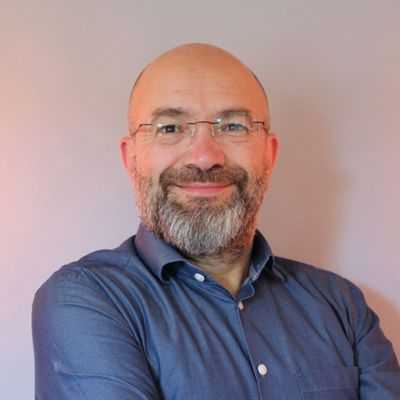
Paul Levitin is a mindset & self-confidence coach, a certified personal trainer and nutrition coach, a health & wellness expert, a speaker and a writer. He is the host of the “Happy Healthy Human” podcast, in which I had the pleasure to appear as a guest earlier this year. He is passionate about helping millennial professionals overcome self-doubt, make more money doing what they love, and become happier, healthier humans.
݆
𝗞𝗲𝘆 𝘁𝗮𝗸𝗲𝗮𝘄𝗮𝘆𝘀:
* Impostor syndrome and self-doubt
* The seed of self-sabotage
* Is this a fact or a feeling?
* The root of all unhappiness stems from expectations
* Our personal development is a duty, not a luxury
݆
𝗠𝗲𝗺𝗼𝗿𝗮𝗯𝗹𝗲 𝗾𝘂𝗼𝘁𝗲:
“Read. The compound interest of knowledge is the most powerful thing that we have at our disposal.“-Paul Levitin
݆
𝗩𝗮𝗹𝘂𝗮𝗯𝗹𝗲 𝗿𝗲𝘀𝗼𝘂𝗿𝗰𝗲𝘀:
Self-sabotage masterclass: https://paullevitin.ac-page.com/quitting-masterclass
Happy Healthy Human podcast: https://www.podpage.com/the-healthy-happy-human-podcast/
Instagram: https://www.instagram.com/paullevitin/
⠀
Books mentioned in the conversation (associate links to Amazon UK):
The 7 Habits Of Highly Effective People - Stephen Covey
The Icarus Deception - Seth Godin
݆
𝗔𝗯𝗼𝘂𝘁 𝘁𝗵𝗲 𝗵𝗼𝘀𝘁:
I am Agi Keramidas, a zealous podcaster and a knowledge broker. I am on a mission to inspire others to grow, stand out, and take action toward the next level of their lives. Visit my website: agikeramidas.com
#PersonalDevelopmentMastery
___
EPISODE TRANSCRIPTION
___
Please note that while an effort is made to provide an accurate transcription, errors and omissions may be present. No part of this transcription can be referenced or reproduced without permission.
___
Agi Keramidas 0:05
You're listening to personal development mastery podcast where you will find inspirational conversations and actionable takeaways to master yourself and improve your life. I'm your host Agi Keramidas and my mission is to inspire you to grow, stand out and take action towards a purposeful and fulfilling life. In this podcast, I invite myself inside the minds of successful entrepreneurs, authors, spiritual teachers, thought leaders, people who share their journey, milestones and failures for you to be inspired to grow. In each episode, you will find actionable takeaways that you can implement right now. So make sure you follow the podcast to get them as soon as they are released. I remind my regular listeners here that for a short while the podcast will have one episode a week rather than two.
Agi Keramidas 1:08
In today's show, I'm delighted to speak with Paul Levitin, Paul, you are a mindset and self confidence coach, a certified personal trainer and nutrition coach, a health and wellness expert, the speaker and the writer, you are the host of the happy, healthy human podcast in which I had the pleasure to join you as a guest earlier this year. And you're passionate about helping millennial professionals overcome self doubt make more money doing what they love and become happier, healthier humans. All Welcome to the show. And it's a real pleasure. And it is my turn to welcome to my show after our previous conversation we had a few months ago. So it's great to have you here.
Paul Levitin 1:56
Yeah, thank you so much. I'm super excited to be here. I've been looking forward to this conversation for a while and I'm very honoured to be here on your show as well.
Agi Keramidas 2:03
I really much was looking forward to it as well. I remember our conversation on your show was very authentic, and it went in many different directions. And it was very nicely free flowing. So yeah, certainly one of those conversations that you want to have again with someone when it goes like that. So here we are. We are going to speak for about personal development and some elements of it. In specific before we go there someone we start with a bit of your story, your background. So do you want to share with us maybe a turning point a big milestone in your life in terms of your journey that maybe stirred you into a different direction?
Paul Levitin 2:52
Yeah, for sure. So as you as you mentioned in the intro, you know, I have my My professional background is in all different types of coaching. So I am a confidence coach, but I was I was a personal trainer, I was a nutrition coach. So I've been helping people change for a long time. But all of that came from me changing my own life, actually, because when I was younger, I was not this guy, I was not the happy, healthy human. When I was younger, I was partying a lot, I was drinking a lot, I was doing a lot of things like that. And I was also being from New York City where I where I'm from, I got into some rough crowds. And I was I will say a bit of a criminal. And I ended up I ended up in my early 20s getting arrested. And in a real way facing a serious amount of jail. You know, I was so I was arrested. And I had literally come to Jesus moment that first night when I was spending the night in jail and I you know, it wasn't like, Okay, this is something that I'm going to just be in and out and it wasn't like, Oh, this is like I'm gonna get out of this. It was like I literally had to with no one else to blame but myself, sit and realise that like I actually threw my life away. And I was fortunate enough to be that it was my first offence and also probably because I am a straight white male from a well off family and could afford a lawyer and all the other privileged things but for a confluence of reasons. I spent about 30 days in jail, which is a considerable amount of time it's it's not nothing but then I got out and I got you know probation and a bunch of other things. But at that moment I understood I was like my I had for all my friends at the time were in that world I had my friend you know that's that's that's all I knew. It was just you know, you run around and you you're making money and you're doing all this stuff and that's what I was all about was making money and partying and doing this stuff. And then I saw that. Clearly I'd see where that world is taking me and I But I had the very unique opportunity of getting a scrape, but not getting being too badly, you know, have not have not really. And at that time, I decided that I had to change. And that was when I started. It's all of the time that I was taking, partying that I was taking with drinking, that I was taking, doing drugs, going out, trying to find new girls, doing whatever I was doing to make money. I took it and I started reading and go into personal development seminars and listening to podcasts and watching YouTube. And I just changed everything because I there was no other I had nothing else right? I didn't have any real like, I mean, you know, I had I had a job, but it was a job so much is that like, I just needed something to do. So people didn't think I was doing other things, you know, but I started to really actually take things seriously. And I was lucky enough that my job at the time was a personal trainer. And the reason I say that's lucky is because it's in the in the world of making yourself better. Yes. So because I started so I decided that I already had this job, I was just going to start taking it seriously now. So again, I started to learn about fitness, I started to learn about health, I started to learn about behaviour. And when I did that, I started to help people. And I realised that like, Well, yeah, like when I was younger, I thought it was cool to make a bunch of money and spend it at a club or something like that. And what did that got me got me arrested and in jail. And then I was had this job where I was helping people and I was helping people live longer. And I was you know, helping people play with their kids. And I was helping people be healthier. And like, that got me fulfilment. And it got me to feel good. So I was like, I just, you know, I kind of, you know, left one world and went all in into another because i That was the only way that I saw that I could write I couldn't be half in and half out. So I put all my time and energy into just making myself better. So I could be a better trainer or a better coach. But it was always for me. Because I needed that to be able to survive. And then the thing that happened was I just got really good at it. And I realised that I could help people and that I could have a good life by helping people. It wasn't it didn't have to be about again, making money and doing stupid things and anything else. Because that stuff, I did it and it didn't fulfil me, you know, it was just another everyday it was just another Okay, let's go Let's go drink, let's go do drugs because you are empty inside. Whereas when I committed myself to helping others and helping myself, I could wake up and feel good about about what I did the day before and not regret my night my actions for the night before and I could look forward to the day that I was having today. So that's a long way of saying that this all started with me changing myself. And then once I had it I saw I was like I get I saw both sides of the coin. It was like Oh, I know what it's like to have a bad life and I know what it's like to have a good life and it's so simple like it you know people and then once you see that, it's like I've seen people struggling and again not in the way that I was I'm not talking to people I'm talking about just people struggling because they're unhealthy struggling because they're unhappy, struggling because they're just they're just not enjoying life. And I see I'm like there's there's a better way and once I understood that I just dedicated my life to spreading that knowledge
Agi Keramidas 8:13
low that so many things that came to my mind now you were saying that what you said at some point that you started growing and developing yourself because you had to us but then you realise that you were also helping other people that reminded me of I also felt for a big while when I started personal development I felt like I was doing it for myself but there is you know there is a very blurry territory between what is good for yourself and what is good for others especially when they are related with that because on the one hand you have the growth your personal growth but as you grow inevitably you contribute to help others show you show your personal development is collective development that took me a few years to realise that but I just remember that when you were saying your story because it starts with us and then by helping people change as you said we feel good we contribute we do it's a beautiful cycle or a spiral in that way that that goes upward so did you want to add something to that? Yeah,
Paul Levitin 9:43
yeah, for sure. Well, one I agree completely right. Right. One of my favourite sayings is a rising tide raises all shift, right? And this is why you know people have this thing about like self care, right is self care selfish. And I'm like, the thing is that people think look at something like self care again, like me spending my time going to see seminars or spending money on a coach or, you know, what are all these type things? How can you say to do that when I if I have kids or if I have a spouse or if I have family, but it's like, the best version of me, is the best version of me for the world. Right. So the best version of you is not as not a burned out, overwhelmed, overstressed version of you. It's It's the it's the vigorous version of you the lit up version of you. So when people understand that, it's like, it's not just a better me, it's like a better me as a better uncle a better means a better brother a better me as a better son. So it's not just a selfish and it's funny, you said a spiral, I think of everything in spirals, right? I always say there's only two directions. We're either spiralling up or spiralling down. Yes. Right. Because a lot of people when they think about, you know, personal development stuff, right? They might say, well, well, like, that's great. I wish I could do that. But like, I've just been like, it would be nice to be better. But I'm not the worst where I'm at right now. But what people don't understand is you don't get to stay where you are, you're either going up or you're going down, right life, life is motion, right? The universe is motion, the universe is entropy, atoms are colliding, everything is moving, right? A plant, a plant does not stop growing, it's growing until it dies. Right? That you are, your body is changing all the time. So I just, that's why I again was so once I understood this, that becomes a very binary choice for me, right? It's not, I'm getting better, or I'm staying where I am, it's I'm getting better, or I'm getting worse, I'm getting healthier, I'm getting sicker, I'm getting smarter, I'm getting dumber, and then when I have that decision, to me, it becomes a very simple choice. It's like I don't, I don't want to choose to get worse. So that means I have to choose to get better. And I have to take that upward spiral. And the cool thing is that when you do that, again, it's it's helping you and it feels better, and it gets easier, and then you help more people and then they help you and it just it just is better for you and better for the world. And I can't see in my head a better way to be.
Agi Keramidas 12:02
It's a great distinction, what you said about people believing that it is there's things still whereas other factor, not that you can't stay still, if you're going up, you're going down and it's once you see it like that, and you should use the old binary, then it is it's much more obvious it becomes and I will add to what you said that everything moves, that the tendency of things is to move downwards. So if we live things without effort, our own effort in any way the effort of growth in this case, we will go down it's it was a boy can't stay it like floating, it's like a you know, a bear donor or an aeroplane, it needs effort to go up. Otherwise no effort, it goes effortlessly, very much down because the gravity, which is you, you said like entropy, it is pretty much the same analogy. So it is it is a journey following a lifelong journey. And that's how I see it, you can never say I've arrived there and stop your efforts, because then you will start going down. There is no there is this agenda.
Paul Levitin 13:24
Yeah. And I think that it's 100% True, right? Exactly what you just said. But I think that to some people, that seems overwhelming, right? They go it's a lifelong journey. I never get to stop that. Like, what do you mean that like, I just want to I just want to get to it, I just want to finish. But to me, it's, it's it's more of like, it's like you get to continue this forever, right? You get to always grow, you get to always move forward. And it's it's such a it's a thing that is a gift that we get to do that. And again, this is all how you frame things. Because I can look at that in that way and say oh my gosh, it's a life. It's a lifelong journey. I have 80 more years of this, this that's, that's crazy. How could i How could I keep going and like never stop learning or something like that. Or I could say, oh my god, this is a lifelong journey. I get 80 more years of this, like I get to keep going and never stop learning. And it's the same scenario but it was just how I choose to frame it in my mind.
Agi Keramidas 14:18
Yeah, and the journey will end one way or another it will and it's up to us to either you know choose to make the Air Force which you know, it may sound like it is some kind of a strenuous you know, vigorous effort but it is what the fulfilment lies in I mean, yes, it does lead therefore, but sometimes I smiled when people say I would like to, you know, have margaritas from the beach or it is this kind of that portrayed as you know, the ultimate time out or time off, but for how long? Will you do that? A few days, a few weeks what what you can do that it's, it's you're not growing when you do that. Paul, there is something a particular topic that and I'm kind of switching gears now. But there is a topic that I did want to discuss with you because it's one of the things that you talk about often and it is the our self doubt the imposter syndrome, which is, as I believe, very much related, and I wanted to ask you first with, from your experience working with your, with your clients, how does this, you know, express itself? How it is appear? Does it appear clearly a self doubt? Or does it may be disguised itself as something else?
Paul Levitin 16:02
Yeah, so I think it can be in both areas, right? Some, sometimes it's very straightforward. Like, people are like, I just can't do that. Like, I just don't, I don't believe in myself. I don't, you know, there's no way that that can happen. And then there's some times where we get into, you know, I call them like, thought gremlins. And it's like, you're where your brain will, will kind of drop these little thoughts into your head that will spiral again, right? And they'll grow and grow and grow. And they end up in self sabotage. And it seems like, it's, when I say talk, Gremlins, what they do is they justify it, right? And it makes it seem like it's like, well, I had to quit, I couldn't do this. But it's really it's a small seed of self doubt, that is watered and watered and water. Right. So what that might look like and you mentioned, imposter syndrome, impostor syndrome is just a form of self doubt, right? Imposter syndrome is the, the feeling like I don't deserve this level of success. It happens a lot with, you know, entrepreneurs, but CEOs, anyone who reaches this, or anyone, you know, anyone who reaches a certain level, they, you know, they go, Well, who am I to have this. And that's just, again, that's just self doubt. But it starts with because you have that in you, right, you had that that seed in your brain, your your mind, you might start to, again, self sabotage and ways of you might not show up as powerfully at your meetings. You know, if you're, if you're if you're a young executive sitting around a board, a table of 10 people in a meeting, and you have some self doubt, and impostor syndrome, you're not just going to get up and quit. But you're not going to raise your hand as often. You're not going to stand up for yourself, when you have an idea that you know, will work. And these little things. They seem logical to you, because you go oh, well, like, yeah, you know, Tom's idea must be better than mine. Or, or, you know, maybe maybe I'll maybe if my idea was that good, they would have asked me about it, I shouldn't have to like raise my hand or something like that. And in a roundabout way, eventually, you're going to, you're going to quit, you're going to lose out of what you're doing. And that ends up being self sabotage, right? So it doesn't come in to you. But when that happens, when it's three months from now, and they pick that other guy's proposal over yours. It's like, oh, well, you know, that's just what it is, he had the better idea. But it came from that seed of self doubt, that seed of imposter syndrome that didn't let you take the steps necessary to actively do what you need to do that, again, if you realise that would have been the actual best thing for everyone. Now, not only are you hurting yourself, you're hurting the company, you're hurting, you're hurting everyone around you, because you didn't have the wherewithal to, you know, fight against those, those thoughts that started as negative, right, that started is just a little thought, like, you know, maybe, maybe I don't have the best idea this and all of a sudden, it's six months later, and your your company is on a completely different direction because of a small little thought that changed everything.
Agi Keramidas 18:45
That says there are two important things, there's one is that what you said about the seeds of thoughts that there are, it is usually very small ones that over time they multiply if we allow them or if we nurture them, even sometimes we'll do it without knowing but whereas the more you entertain a thought, whichever thought it is it will grow inevitably over time. And you know, when you're saying that example, about the executive who doesn't speak this thought up, you reminded me of me? Not so long ago, let's say by eight years ago, I was doing my master's degree from the University at a lecture hall wanting to ask a question, a clarification question, which will mean raising my arm and you know, asking in front of, I don't know how many 50 or people who are in there. And because of these thoughts that you know, there were all sorts of different things from one of them. It was even that my English is not you know, good enough for a classroom because I was in Manchester in England, so I thought my English is not good enough for that. All these thoughts that had planted the seeds, as you said, from a long time had was manifesting in me, you know, not raising my hand not asking the question because I thought maybe the question is ridiculous, maybe people won't will think of me and so on. And the crazy thing is, the funny thing is that I would hold the question to myself only to have someone else if you seconds later, ask the exact question that I was thinking of asking. And, you know, the professor saying, this is a great question. So that would even make me feel even worse, because on top of that, then I had the shame that you know, that didn't speak is what is a good idea? So how do you approach this with the one who has this kind of impostor or self doubt and don't speak? How do you approach it in terms of, you know, beginning to correct it or improve it?
Paul Levitin 21:04
Yes, it's interesting, because, you know, self doubt and impostor syndrome, they're the same, but kind of opposite ends of the spectrum, right? You know, like, self doubt is more like, I don't have anything good to say, and impostor syndrome is, I'm gonna say this, but I don't understand why people even listen to me. Right. And I think that all of this comes in mind, this is just my own personal philosophy or my own theory. All of this comes from the understanding, we live in a society that has status, and has upper and lower, but deep somewhere deep inside of us. As humans, we have to understand that we're all just humans, right? So impostor syndrome is I can be the boss in my company, and I can fire and I can hire, I can be the, you know, the, the rich guy and looking down on someone who's poor, but I understand that I'm just a human. And, like, I no matter what money says, or society says, at some internal level, I have to understand that there is nothing that makes me better than anyone. It's impossible. Right? So you know, like, because I know, we're all gonna die the same, we're all going to be buried in the same plot of land, you know. So it, we have these two dualities fighting inside of us this one thing, where it's a society, I'm getting all these accolades, I'm getting promotions, I'm getting money that these things say I'm better than someone, and yet, that person is a human, just like me, and quite possibly, is happier than me is healthier than me as all and all these other things. So we have our internal humanity up against the societal norms of status, and, and all of these things that are come into play every day and societal games. And that puts us at a, it puts our brain in a weird place. Because in reality, like in terms of human evolution, these societies like this have still been like a blip in terms of evolution, right for, for for any time, you know, if you're talking about going evolutionarily hunt 10s of hundreds of 1000s of years, we were hunter gatherers, we lived in a tribe and everyone was more or less on the same field, there might be like a chieftain or someone who's physically stronger. You know, like that was like that was a physical thing for a while. But the thing of having someone who can just be above other people, because they have more money, or because they were born into the right family, or something like that, that's only you know, a couple of 1000 years old, maybe. So it doesn't really jive with us. And then self doubt is kind of the same thing in the other direction, right? It's kind of like, I know that I'm the same as everyone else. But I'm lower than them, for some reason, right? It's like that, like, again, like that guy is on stage. And he's speaking, he deserves to have his his thoughts expressed. But he's obviously he's smarter than me. Obviously, he has, you know, better things to say than me. I'm just sitting here in the audience, who am I to raise my hand, even though again, at some way, we realise that it's like, Why the hell is this guy different than me? So we have inside of us all the time, these things going inside. And the way to start? To break out of that, in my experience, is what I just call, it's just getting to the facts, right? Because everything that we that I'm talking about, these discrepancies come from feelings and emotions, against facts, right? So the fact is, we're both humans, the feeling is he's above me. The, the fact is, he's a professor and I'm a student. The feeling is that means my, my thoughts and opinions are not up to par with his right. So we have to just really, and this is a very hard thing for people. So I don't I don't say that may seem like oversimplify this, but it really is when you can look at yourself and realise, like, what am I doing that's based on fact and what am I doing that's based on feeling? Then you can start to discern between okay, like, is this real or not? And then you can start to make different decisions. Because when you realise you're like, you're like Again, like, Okay, wait, no, like, yes, he's speaking on stage. But that doesn't actually mean that I'm stupid, right? Like, that's just like, that's how I feel in this moment. But, you know, I feel lots of ways all different times, sometimes I feel happy. Sometimes I feel sad. Sometimes it's a great day. And I feel sad. Sometimes it's a horrible day. And I feel happy emotions are just weird like that. So when I realised that I can have a little bit more control over my emotions, I might not be able to change the facts. But often, it's not the facts that are getting me that are getting me mixed up. It's the feelings.
Agi Keramidas 25:28
I was about to say that the emotional understanding of how you feel is. So big game changes it not only in this situation that we're talking about, but I think in pretty much everything in life. And as for the stage, you were saying, for some reason, you reminded me, that's another time. Second time you reminded me of something from my past that when I was, in my first my early personal development journey steps when I would used to go to the events forever. And you know, every other week, I would be at an event. The people on stage, I was very much looking up and being inspired by them. I didn't feel like, you know, I was worse or better. I didn't have this kind of feeling. But I was obviously they were on, you know, on the stage speaking, but the main feeling that I had from being in that room was, you know, inspirations that wow, this person, I would love to be like, that person. So that was the main, you know, feeling. And just that just came up for me to share. I'm not sure why I did what just came? No, but that's
Paul Levitin 26:56
that's interesting, because I think that's exactly it. Right? So that's the difference between someone who was self doubt or not, right? You just said you saw those people in that crowd say there's 5000 people in that crowd watching some Tony Robbins on stage or whatever, some people are going to feel that that self doubt that why you know, he's better than me. Some people like you are going to feel inspired, because that's the feeling of that that other feeling that I was saying, there's like, there's nothing different about him than me, right? So if I see someone on stage like that, I go, Wait, we're the same. We have the same 24 hours in a day, we have the same, we have the same abilities. There's nothing that he can do that I can't. So if he can do that, that means I can. And that's super cool. To me, that's like now I'm inspired. Now, it's like it's the opposite. It doesn't, it doesn't weigh me down, it lifts me up because I see what's possible. It's just a different again, it's the same where two different people sitting in the same crowd seeing the same thing. And we take such different things away from it. And that just goes to show you how different people are in the way that we see things.
Agi Keramidas 27:54
Yeah. And what you said showing you what what is possible, because yes, theoretically, because we both whatever one can do, the other can do as well. But theoretically, practically, it's not exactly like that. Maybe it would be if we recall, lies, time and other factors. But yeah, being able to go towards that direction and in your own way, because we each are very unique. So you can't copy anyone else, because that is really a terrible idea. And whoever has done it, not only they felt in coping, but also they have I don't think they have full fulfilment. I think it was Jim Carrey, who said it's better to fail at what you are than to succeed at something that you're not something like that. So yeah, being authentic also is very important. And being yourself and not someone else is not Yeah, not a different version of someone else. It's yeah, yeah.
Paul Levitin 29:04
Right. And that that definitely can I think trip people up to is like, exactly. You a lot of people seek someone else's version of success. Right? So they see that and they say, you know, this is why and then they want most people won't get there but to if they do they find that they're not nearly as fulfilled as they would have right and this is the person who climbed the corporate ladder and you know, gets the whatever job and then they're like, Wait, what the hell I you know, I don't like this or the person who goes to all the seminars and does all the yoga and does all the things that are like oh, so and so said that this is what's supposed to bring me you know, the thing and this is the hard part is that people want an answer. Right? Everything lies in the grey area they want but people want black or white. They want to tell me what to do. Right give me the exact steps I can follow them. But the thing is that even if you follow the exact steps that I take the the exact steps that you've taken, other people are not going to feel like we feel because they're there is different. Some people needed a different route? Some people love Tony Robbins. Some people hate him. Some people love meditation, some people get nothing out of it. So there is no one right answer for this stuff. And that is the frustrating piece for people because it's like, doing the work is already hard enough. But now I have to actually figure out what to do as well, you know, just you know, I, they want it to be the simple math, but in real in reality, it's like It's art.
Agi Keramidas 30:24
Yes, it isn't. If life was simple as a thing is much, much point in, if there was nothing to do or figure it out, and you know, everything would be taken care of figures that thing. It's part of, you know, the experience and the fun. And it's a challenge, but it is what grows us. Paul, based on this conversation we've had today, let's say you were to give to the listeners, something actionable, something that they can pick an implement tonight or tomorrow morning to make a change, what would you tell him or her?
Paul Levitin 31:07
Well, I mean, the best piece of advice that I can give someone, I think, to change your life is not easy. It's simple to say. But to put into action is not easy at all. But I think that the root of all discomfort and the root of all unhappiness, stems from expectations, X expecting things to be one way and then they turn out another way. I expected to be rich, I expected to be skinny, I expected to have kids by 35. And I'm not even in a relationship. It should be like this. It was supposed to be like that. I did, I did all this whole, this whole project. And my boss should have noticed me. He he was supposed to give me a raise after that. shoulds and expectations. Conflict going back to what I was just saying with facts, right. So facts are what is expectations and shoulds are feelings about something I'm imposing on the reality of the universe, right? So understand to say, I should be healthier, I should have more money, I should anything is the same thing as me saying the sun should set at 12 midnight, not at nine o'clock at night. It's like I'm arguing with the reality of the universe. So anytime I say I expect or I should. I'm saying that things are this way they are they literally are. But I want them to be a different way. And inherent in that is I'm going to be upset because now my my version of what I want reality to look like does not look like reality. And that can't be a comfortable place to live. So it's hard. But the every time I talk to a client, every time I start with anyone, I have to just say whenever we're talking, I'm just saying what is the root here and nine out of 10 times when they're talking about something they're upset about something they're angry about something that they're frustrated with, they're struggling, if we just dig in, they're gonna go expectations, because I expected it to be one way. Now that's not to say that you can't have expectations about the future you want to write, I go to work every day because I expect to get paid, right? I eat healthy because I expect to lose weight in the future. That's fine. But I have to detach from the the the outcome and focus on the actions because actions, again are facts I can I can get up and move my body. I can read more if I want, I could do the work. But I cannot have an emotional attachment to the expectation of the way that it should unfold, because that's outside of my control. So the more I can focus on my own personal actions, and the less I can focus on external outcomes. I think that is like the key to everything. It certainly
Agi Keramidas 33:52
is in the legs very much. You said that when you put your expectations it's like arguing with the reality of the universe. And it's, it's a very great way to put it and because you mentioned Tony Robbins a couple of times in our conversation. He says that he's about expectations. He says trade your trade your expectations for appreciation, and your life will change in a moment and yeah, expectations. It was also very great what you said that yes, it's good to expect things but we were not in control of the outcome. So yeah, detaching from the outcome is key. So thanks for that. That's very indeed very useful. invaluable. Paul. I want to ask you also workable. Tell us about your podcast, as well and worse. Do you want to direct the listeners who want to find out more about your work? You do and then I also have some quickfire questions to end the conversation.
Paul Levitin 35:06
Sure, yeah. I appreciate that. So my podcast is called happy, healthy human. You can find it anywhere that podcasts are found, I'm sure there it exists. And Augie was on my show a few months back. But there's a tonne of episodes if you like these type of conversations, these are the types of conversations I love having. This is why I wanted to to be on Augie show. And also if you want to connect with me on social media or anything like that, it's just my name, Paul Levitan across all social media platforms, very simple Instagram, tik, Tok, Facebook, LinkedIn, wherever, wherever the instant internet exists, I exist as well. And I do if people are interested in you know, some of the things we talked about earlier about self doubt about what I was just saying about, you know, detaching from expectations. I have a masterclass around getting out of cycles of self sabotage, where I talk about a lot of this stuff. So if anyone wants to it's a free 45 minute masterclass that I will send to Augie and you can get the link from you know, wherever.
Agi Keramidas 36:03
That's great. That's fantastic. Sensible, I will put it in the show notes. For sure. Sure, let me ask you then some quickfire questions to start wrapping things up? And because I know you've listened to my podcast, you know, the first one I always ask is, What does personal development mean to you? And I think you asked me that question on your show. So now it is, it is my turn.
Paul Levitin 36:30
Yeah, full circle. And it's funny, because I do I was just listening to your show yesterday. And I was like, that got to that part of the thing. And I was like, Oh, I gotta have a good answer for this. And now of course, I
Agi Keramidas 36:39
already do a lot of repairs.
Paul Levitin 36:41
Yeah. But honestly, I think, at its, its base level, personal development, is everything. Right? Because of what we've said already, you're you're getting better or you're getting worse, you're spiralling up, or you're spiralling down. So it's not you know, personal development, or chill, it's personal development or die. Right. And, you know, in a physical way, you know, I again, I come from the fitness space, so I think about my physical body a lot. But also the the mind, we know for a fact that people who read more who do Sudoku, who do more puzzles, who are mentally more active, their brain ages much more gracefully, they have less chances of having Alzheimer's, less less chances of dementia, a million things like that. So personal development to me, it becomes our duty. It is not like a luxury of, oh, well, that's cool for them, but I don't have time. It's, this is part of the human experience, just like exercise, right? Like people will look at exercise as if it's like, well, that's a cool thing that I'll do when I have time. It's like, No, you don't this is the entry ticket to a life well lived, is moving your body and moving your mind. And it doesn't have to be in the ways that Auggie and I have talked about where it's like going to seminars every weekend, like obviously, I'm a little insane with this stuff. I understand that. But it can just be I don't know, again, reading one book a year, the average American reads no books. So just read one book a year, you're better than average, right? You're watching. Sometimes when I'm cooking dinner, I'm watching YouTube instead of like, or like having dinner, I'll watch like a TED talk, instead of watching Netflix or something like that, you know, it's small things. I'm not saying that you have to reinvent the wheel. But small things to make yourself better, I think are unnecessary part of a life well lived.
Agi Keramidas 38:29
Thank you. And let's say you could go back in time and meet your 18 year old self. What's one piece of advice you would keep him?
Paul Levitin 38:38
Well, obviously, other than the avoiding the whole scenario that I got myself into, but assuming not that, right? Yeah, that'd be a good one. But just general advice would be read. So I read now about I'm on pace to read 100 books this year. I've read about 60 So far, but time between the time I was 16 and 28. I didn't read a single book I was that, you know, so people hear that. And they go, Oh, that's so impressive. But it's like I was not a reader. Once once it was like school did not force me to read a book I stopped reading for my entire life. It wasn't until again later i understood personal development. And I found that binary choice again, I said, Oh, if reading makes me better, and not reading makes me worse than I should read. And I was like, and then if there's that I see all these books, and I'm like, Oh my God, there's so many books out there. And there's so much stuff that I don't know. And I was like, I just need to read it all. So I've just again, I'm a little bit crazy. So I read a lot, and I read all the time. But if I wish there's you know, again, there's no way that I'll ever know all of the things that there are to know but I wish that I would have just started a little bit earlier. And I know that the compound interest of of knowledge is the most powerful thing that we have to our disposal.
Agi Keramidas 39:51
That's great. So based on what we'll discuss today, what's one book that you would recommend to the listener as a result
Paul Levitin 40:01
So, there's one book that I recommend to everyone is The Seven Habits of Highly Effective People. Stephen Covey. That's to me like the, the book of all the books I look every other book after that, I'm just kind of like, they're just kind of trying to do what he did a little bit, you know, like it, he kind of said it all ready. But I also recently read a book called The Icarus dilemma by Seth Godin, which is more about the being able to bet on yourself as a as a as a person as a creator and getting out of the trap of the societal trap of being just another cog in the machine. And that was a really like, eye opening one for me that I that I really think will help people shift out of that one place in their life to get to that next that next step.
Agi Keramidas 40:52
Well, I want to thank you very much for this conversation today. I really enjoyed this second podcast conversation we're having. So thank you very much for joining me today. I want to wish you the very best with your mission of helping people and creating that show as needed ripple effect in the times that we live in. Any last parting words from you?
Paul Levitin 41:20
Now I just wanted to say thank you and to anyone listening. I said this to argue before but I think these are the conversations that will change the world right? I think that stuff like this is what's important. And I appreciate anyone who's listening and you know, I hope to do it again in the future.
Agi Keramidas 41:34
I hope you enjoyed listening and that you got a huge amount of value from today's episode. If you have please share this episode with someone who you think will benefit from it. If you want to know more about me and what I do, visit my website AGIKERAMIDAS.COM
Agi Keramidas 42:04
And until next time, stand out, don't fit in.

 5.00 (74 Reviews)