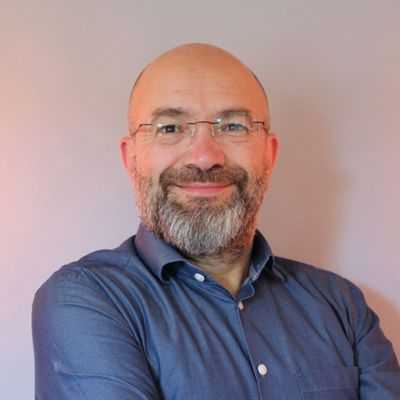
Adam Adams is an investor and a seasoned podcaster, who sold his real estate podcast to shift his energy and focus on serving podcasters. He is the founder of GrowYourShow.com, where he helps others get their message out to the world. His podcast, “Podcast on podcasting” is ranked as a top show for podcasters.
݆
𝗞𝗲𝘆 𝘁𝗮𝗸𝗲𝗮𝘄𝗮𝘆𝘀:
* Why podcasting is personal development
* Why having a podcast is an asset to your business
* Who is podcasting not for, and how to sell your podcast
* Challenge your money threshold
* Having a conversation with your listener
݆
𝗠𝗲𝗺𝗼𝗿𝗮𝗯𝗹𝗲 𝗾𝘂𝗼𝘁𝗲:
“If you're trying to talk to everybody, you really are talking to nobody.”
-Adam Adams
݆
𝗩𝗮𝗹𝘂𝗮𝗯𝗹𝗲 𝗿𝗲𝘀𝗼𝘂𝗿𝗰𝗲𝘀:
Website: GrowYourShow.com
Podcast: The Podcast on Podcasting
⠀
Books mentioned in the conversation and links to Amazon:
Darren Hardy - The Compound Effect (Amazon US, Amazon UK)
݆
𝗔𝗯𝗼𝘂𝘁 𝘁𝗵𝗲 𝗵𝗼𝘀𝘁:
I am Agi Keramidas, a podcaster, mentor, and knowledge broker. My mission is to inspire others to grow, stand out, and take action toward the next level of their lives. Visit my website: agikeramidas.com
___
EPISODE TRANSCRIPTION
___
Please note that while an effort is made to provide an accurate transcription, errors and omissions may be present. No part of this transcription can be referenced or reproduced without permission.
___
Adam Adams 0:00
If you're trying to talk to everybody, you really are talking to nobody, because you're trying to be too broad, and no individual thinks it's fully for them. So focus on that person. Let them be there for you. And I think it'll be very, very helpful as you start your podcast.
Agi Keramidas 0:23
You're listening to personal development mastery podcast, where you will find inspirational conversations and actionable takeaways to master yourself and improve your life. I am your host, Agi Keramidas. And my mission is to inspire you to grow, stand out and take action towards a purposeful and fulfilling life. In this podcast, I invite myself inside the minds of successful entrepreneurs, authors, spiritual teachers, thought leaders, people who share their journey, milestones and failures for you to be inspired to grow. I remind my regular listeners here that for a short while the podcast we have one episode a week rather than two.
In today's episode, I am delighted to share the conversation ahead with Adam Adams. Adam is an investor and the seasoned podcaster, who sold his real estate podcast a few years ago to shift his energy and focus on serving other podcasters. He is the founder of grow your show.com and his podcast is called podcast on podcasting. And it's a top ranked show with over 250 episodes. We talked about the ways that podcasting ease personal development, why having a podcast is an asset to your business. And the number one biggest mistake people make when they start a podcast. Enjoy the conversation.
Adam, welcome to Personal Development mastery podcast. It's a pleasure to speak with you today.
Adam Adams 2:13
I'm really excited to see you again Agi. Thanks for having me.
Agi Keramidas 2:16
My pleasure. And yes, saying seeing you again because you had me as your guest in your podcast. And it was a very, I found it a fascinating conversation. So it's great to be on the other end.
Adam Adams 2:30
Yeah, likewise.
Agi Keramidas 2:32
So Adam, I will start a little bit with something that goes back a little bit you started from real estate. Now you are in podcast in business and particularly helping podcasters. So do you want to share with us one or two milestones or key defining moments in this journey in this transition?
Adam Adams 2:56
Yeah, definitely. A couple a couple of things. First and foremost, I did only full time real estate for a short time. I started real estate investing 2005 started doing multifamily investments in 2008. And it didn't, it didn't happen until 2015 that I became full time in real estate. So in the very beginning of 2015. I just said you know what, like, I've made some money, so I'm gonna go full time real estate. And and it was a fun journey, a very challenging journey for 2015 and 16. And then 17 I started being like, making a little bit more money. 18 even more 19 was my best year ever. And then, and then I started feeling like there was going to be a crash. So to answer your question, what are the defining moments in this journey? It was 2019. In July, when I said you know what, I think there's going to be a real estate crash in 2022 or 2023. So I'm going to stop buying because I told you I owned multifamily back in 2008 I lost one of my properties. And it's not fun. It's embarrassing. It's scary. It's it doesn't feel so hot to lose a property because of the economy. And so I just decided to start making the switch and the transition. So in 2019 was the last was the last apartment building that we bought. It was about $10 million, but we used other people's money so I'm not a big shot or anything. We raised the money. And then in in July I started serving people as a as a podcaster. I had helped a lot of friends to grow their podcasts and I just thought to myself, Man, I this is something I love. It's something I'm passionate about something I enjoy teaching and coaching and mentoring on. And, and I've been doing it for a long time. And I kind of know the secret sauce. So I just said, I'm going to I'm going to do that. And about six months later COVID happened. And for COVID coming around, it really scared me. And I was like, Oh, I'm really glad that we had that I stopped buying because this crash that I thought that was gonna happen in 2022, or 2023 is now happening in 2020. That's what I thought I was like, Okay, I'm really glad that six months ago, I kind of got this off the ground. So I decided to sell my real estate podcast to to a friend. And I got I had four offers three of them above 50 grand
Agi Keramidas 5:51
can do so little together. And I just want to go back a little bit to clarify what you just said now, because you said that you had the podcast, the real estate podcast show, can we go but can you tell us a bit about that podcast? So how long was it going on? I suppose that was your Was that your first podcast? Or did you have another one
Adam Adams 6:12
was my first? That was my first you're correct. And I started it. I started a meetup group in 2016. I started recording for the podcast in 2016. The podcast actually launched in 2017. And so at this time, I had only had it for about three years. And I was selling it to somebody else who I thought could use it. Who had the avatar that that podcast was serving. But yeah, I had it had gotten it had grown to top 1% of the world we were having. It's funny because when I started to sell it, it had 3500 downloads per episode, which is it's not it's nowhere near some of the biggest most famous podcast, but it's actually really strong, it's actually a pretty good number. And as we were selling it, we did a 12 month transition period where where he and I would be co hosting a lot where there would be a lot of my episodes, my solo episodes coming out. So we decided to do a long transition period to slowly move people over to him. So it wasn't like the the head person was just gone. And they felt left out we co hosted for a long time. And during that transition period, it got up to 6500 downloads per episode. And I was like, kind of kicking myself, to be honest, I was thinking, Man, I could have got $150,000 for this podcast. And I sold it for less much, much less and. And it was hard. But I knew that I had made the right decision. I knew that my focus wanted to be podcasting. And but to go back to part of what we had already talked about this transition, it's not a transition from real estate because I still have like 200 ad rentals. I don't, I'm not going to be completely away from real estate, there's just acquisitions mode and dispositions mode. There's there's acquiring these properties and selling these properties. And we've been selling a lot since 2019. And we probably I probably will be back into purchase mode either in 2023 or 2024. So right around the corner.
Agi Keramidas 8:48
That's great. I liked you know what you said about that transition period that you had with your co host while sailing the podcast because you I was about to ask how can something like that happened because a podcast 99% of the time, if not 100% is about the horse or you can just vote. So this is a brilliant invention or this transition period. And I would like to talk a bit more about podcasting. Since we started talking about yes, and in particular, there is something that you say and I completely agree with you that having a podcast is an asset to your business as an entrepreneur. Apart from that rather general statement, which as I said, I completely agree with you would you want to share with the listener that may be interested in starting one what exactly how exactly is it an asset to the business?
Adam Adams 9:51
I if I had if you had wrote written this down and said Adam, I'm going to ask you this. I probably could have been prepared with why bullet points, because that is a super good question. But I will go ahead and wing it. Here's a few reasons why it's an asset. Number one, personal development, it is not easy to a stay consistent with the podcast, it is not easy to be put yourself out there on a podcast. And so these consistency and this vulnerability opens us up as people in helps us develop as human beings, personally, so that we can take on the world, anything and everything that we can do as human beings, as business owners, as leaders, in our communities, in our families, or in our, our businesses. Anything we can do to grow who we are first allows us to be a better person. So by by sticking to something gives us that feeling of accomplishment, it allows us to be it allows us to feel like we were doing something we're better. And then all of the all of the like conversations that we have grows us as well. It puts us out of our comfort zone, most of us that now there is maybe 2% of the population, I'm not among them, I am not among them, that literally just is so eloquent. They want to be in front of people all the time. And this is a main thing that they're focused on, right? I'm not that person. I am shy. When I was in kindergarten, I was the smallest child in my whole class. And it allowed me to get beat up a lot. And a lot of people were fighting, and I was not the smartest kid either, like I have dyslexia and ADHD. And so people would poke fun at me because I was smaller and I was different. And that those memories seem to resonate with me, I better get wonder what are those things called? What are those people called? Hypnotism? I better go and find a hypnotist to get it out of my head. But I'm telling you to be honest, I still remember that kindergarten atom. I still remember being feeling less than feeling scared feeling like if I put myself out there, it's not going to be accepted because it wasn't always accepted. Right. And the podcast helps me grow through that. For example, I have had hundreds of conversations on my two podcast, we've we've published over 600 episodes on one. And we published like 250 on another one. So this is like 850 conversations that I've had so far just on my show. And additionally, I've probably been interviewed on other people's podcasts somewhere in the range of 350 times where they will ask me an on the spot question that I'm not prepared for because it's my own fault. And then I'll have to figure out how to express this in a good way, right. And it allows me to grow as a person, as a business owner, as a leader. And it helps me to be better dad a better
to serve my employees and to serve my clients, just the small conversations that I have on both sides of the mic. On top of that there's a lot more that a podcast can do. For example, your network is your net worth. So if you are listening right now, and you're thinking man, I don't have much of a network. Maybe that's why I don't have much of a net worth. Well, the podcasting is pretty remarkable, because every time you have a conversation with somebody either on their show or on your show, I've also been invited many times in the real estate space. I've spoken on most of the real estate stages in the country in the US. And additionally, now this podcasting, I've been able to speak at three different types of podcast conferences, where different podcasting conferences will have me speak. And that network, the the know like and trust factor happens so rapidly, and it comes through the podcast. And to give you the best example of that. I would never have been invited to some of these podcasts or stages, if I wasn't, quote, an influencer myself. Now, it's hard to admit that we are influencers when we have a podcast especially when we want to be humble. You know, when we want to be gracious when we want to be respectful. It's hard to say that we are this person but the truth is, we are even if it's to one person or two Then people, or 500 people, or 3500 per episode or 6500 debt per episode, we are influencers, we are helping other people getting getting them to the next level. And the better we do at that, the more likely that we will do business. And there's a guy, I'm trying to remember his name right now, who said, who said, you will get everything in the world that you want, if you help as much other people. Now I'm paraphrasing, I'm not saying it perfectly. I don't even remember the guy's name right this second, Zig Ziglar. May be, but he said, If we, we will have everything in this life that we want if we help the most amount of people. And I feel that I feel like that grows our network. But it also allows us to make more money. And unfortunately, there is a selfish thing, where most of us have some type of benefit that we can have. That's on top of personal growth, that's on top of consistency that's on top of having these conversations with different people and growing as a person. But it's also we will make more money in our pocket, because we're serving more people naturally. I could keep going and going and going with the podcast and how it can benefit you. But there's a tonne of ways to monetize a podcast that you grow exponentially as a person through podcasting, and your perfect avatar. Who wants you who needs your service? needs your product? Who needs your message? They're fine, they're seeking you out. And you need to be there to be able to serve them.
Agi Keramidas 16:45
Absolutely. No, thank you. And I'll come back to one or two of those souls are those things that you actually I was taking notes while you were saying so the end of my three to eight now a few of the key points aside, in my own words of what you said, because it is very important. There was that point, you said that when you arrive at an interview, and you've been asked questions that you have never been asked before or been prepared to answer. And I will testify myself also that you it has allowed me this situation to really think and not only think but articulate when able to, you know, express in words, some ideas that I had, with some cars completely unclear of before that question was asked, and I think you asked me a couple of those, your interview. And there was, you know, the consistency, you mentioned the beginning and how you by having to put the time the effort and being consistent to produce or record the podcast, not necessarily produce it yourself, but recorded created, gives that momentum gives that consistency, that discipline that you need that can escalate or cascade maybe to two or in other areas of your life. As for the network equals your net worth, I think it's I don't think I can add any more to that maybe the only thing I would say is that through the podcast, one has the opportunity to have conversations with people that there is no way that you would have a conversation with these kinds of people. And especially so being able to ask them whatever you want, which is an added bonus on top of that. So thanks for this comprehensive answer about the benefits. I will stick to the last one you said because the last one was about actually create on top of all the other the personal growth and the networking and all these things it was the directly the monetizing, because I found and tell me if that is your experience as well that personal development or growth or all these wonderful things do not sell very well. So you in order to to persuade someone you have usually if you say that you can monetize it, and you can make money out of it. people's ears open up and they pay more attention rather than saying it is consistency and personal growth. So do you want to share some of maybe insights or ways that the podcast can be used specifically for an entrepreneur to make money?
Adam Adams 19:54
Yeah, on my podcast, I don't remember if it's Episode Five 10 or 2510 20, or maybe it's 30. But it's it's these are different episodes on my podcast that talk about monetizing. And one of them. The title is, there's more ways than one to monetize. And I don't recall the exact number, but it might have been seven different strategies of monetizing, and people are like, whoa, they're seven, what would they be like, what what would all seven be, and just try to throw a couple of them out at everybody. You can do affiliate marketing. So for example, if we're in the podcasting space, that's my space right now. And I'm using a microphone that I love, and you're using another microphone that I love. Okay. So the, there's a lot of people that might want to monitor, excuse me, they might want to have a podcast. And so what I've done on my podcast is become an affiliate for the mic that you're using this mic, and three other microphones. So I've only got five mics that I recommend. And I like them because they're priced really well. And they sound really, really good. And I don't want just somebody to buy a mic, that sounds really good, but it's overpriced. So what I've done is I've created a web page on my website, it's grow your show.com, forward slash PDF. And then we created a PDF with all of these mics, and the lighting, and the sound proofing equipment, and the webcams and anything that somebody would need to get started. And it's a resource, it's a helpful resource. But on there is all of these mics that I love that I recommend it I become an affiliate relationship with. So somebody goes to grow your show.com Ford slash PDF, they download the PDF, and it has direct links to all of the things and they can just purchase it. And I might make a couple of bucks. But that's one way that we can monetize is because we have hundreds or 1000s of listeners, taking action, getting the PDF and starting they're either upgrading their equipment or starting their, their studio from scratch with the lighting and different things. So that's one way. Another way would be to have advertisers or sponsors now advertisers are one thing. And sponsors are another thing. So sponsors are more like a partner of the show. A sponsor is more like somebody who supports the show no matter what and, and they share your avatar and advertisers less like that it's it's usually somebody who just wants to pay for an ad space, they might not even share the avatar at the same avatar. But they want to get in front of the most amount of people. So advertisers generally pay this thing called CPM cost per mil. That's basically how much money per 1000 downloads you get on each episode. And it's not very much money. But if you have like 3500 downloads per episode, then and you're at a, for example, let's say it's a $30. CPM, you're making about 100 bucks, 100 bucks every episode, it's not bad. But the sponsors are even better, because they share your avatar and you can reach out to them and say, Hey, I've got the show that serves this person, the personal develop mastery, the podcast on podcasting. And then this is who listens to my show, do you want to be partnered with me. And that's how I think of the sponsors is as a partnership, they're they're going to be with you for three months, minimum, six months or 12 months, staying in front of your listener so that they can get the most amount of value through the same podcast and you guys grow the show together, you take that money and you get in front of more listeners so that you both are coming out ahead. So that's that's the fourth way and there's way more there's there's also you selling your own product. There's also you selling your own service, your own coaching programme, your own mastermind, your own online programme, your own books, your own, whatever, there's so many options, maybe you made your own microphone, and you could sell your own microphone on your podcast, whatever it is, you can sell your own stuff. And I think that's one of the highest paid ways to go.
You can do a combination of three or four or five of these, or you can just go all in and select one and really pour into it. For me, I mostly sell my own products and services. So I've got a company called Grow your show. And we help podcasters we help them market their show, we help them edit their show. And so a lot of people are thinking, Man, I would like to have a podcast. But I don't want to do all that. So we we share that we do that on our podcast. And we get enough clients that the podcast more than monetizes itself, by the time by the amount of time spent podcasting. I did the math about six months ago, and I have a feeling that it's higher now. But I haven't done the math in a while. But I was I was making $1,000 an hour for my podcast. So that's not bad. I've know a lot of attorneys that would have to work for four hours to get 1000 bucks. And it was one podcast episode. And we were netting more than 1000 per episode per hour. I think that's decent money. And the point is that this is us selling our own product, our own service. And I want to say one last thing about this. A lot of people are scared to monetize, please write this down. If you're listening and you have, there's any amount of truth to this for you. You're afraid to monetize you think if you do monetize, you're doing your podcast for the wrong reason, you're afraid that if you make a certain amount of money, a certain threshold, then you're now all of a sudden a bad person, you were a good person when you had a modest income. But now you're a bad person when your income goes up a little bit. When you're making $1,000 an hour you self sabotage, and you're like, Ah, I can't be making four times the amount as an attorney or a doctor, there's something wrong here, I'm making too much too fast. I need to find a way out of this so that I can feel congruent, I can feel at peace with whatever. So all I want to do is pour into the listener, like whatever you do with your podcast with your business. Don't let that threshold be there. Just challenge it and ask yourself, why do I think that I can't make 1000 an hour, there's people dumber than me, and less and less resources than me that are already making hundreds of millions per hour. And I can pinpoint one person who was who used to be a president of the United States, who I don't feel is any smarter than me. But he's, he's a billionaire. You know what I mean? It's like, I feel that if if it can happen to that person, it can happen to me. And the only thing is, if you really do feel bad about making 1000 An hour or making more than you used to make, because your podcast is performing. So well. Just take a moment to ask yourself, if you're if you believe in your service, am I actually helping these people? That's what I have to do. Because it's hard to make so much money, it really is, I have to step back and say, All right, am I am I having full integrity? am I serving them? Are? Am I helping them are their lives better, because they're spending that money with me. If you really feel like you're doing a great service, you should be making hundreds of 1000s or millions of dollars, because you just have the capacity and the ability to do that. ethically and morally, because you're serving the most amount of people like Zig Ziglar once said,
Agi Keramidas 28:37
That's a great and there were so many now the things that you opened up for and I will start with what you just said towards the end. So to challenge your threshold, if you think that $1,000 Or x amount is too much for you, it's great to to ask that question why do I think that this is my my limit my threshold that is I think a very good way to deal with any self sabotaging thoughts, especially once we become aware of that threshold because not not everyone is aware that there is that threshold in the first place. There was a couple of other topics which I also wanted to you know quickly have a conversation but I will stick with podcasting just for a two more two more really quick questions Adam and one is so don't elaborate too much. But just to give me an idea of what you think the first one is. What do you will see or what do you think it is the most common mistake that people who start the podcast do
Adam Adams 29:54
100% It's ready fire aim. Those persons that People that we're talking about, have been told by many people. Just start, quote, yeah, don't overthink it, quote, you can always change it later. ready fire aim, and Done is better than perfect. This is the biggest mistake, because podcasters are losing out on the first eight weeks where you can get the most amount of traction. And for that you need a plan and a preparation. The big takeaways are you have to know who your avatar is. Who are you serving? What is your niche? What do you do differently from anyone else? who serves that avatar? And what am I going to teach and preach on my podcast about? Like, what can I say that helps that person. And then they start focusing on this 100%, making sure that the colour schemes that they use on their, on their podcast artwork attracts their avatar, making sure that the fonts attract the avatar, people are sitting here being like, it doesn't even matter, I'll just throw something together, I can change it later. But the problem is, it never builds enough traction. Because they never did the marketing. They never focused. They didn't know who they were serving in the beginning. And so the biggest problem again, ready fire aim, we help our coaching clients go Ready, aim, fire.
Agi Keramidas 31:28
This is a I see that as well, very much that it is in your show, right? Because generally the Done is better than perfect for many other aspects is a very solid piece of advice, especially when you grow a business or in other aspects. But podcasting as you said, you have a limited time slot when you launch to make the most of it. And yes, you can tweak and change. But you can only have launch once or at least the initial launch the you can't go have that again. And there was also one other question which came to me, I don't know if anyone has asked you that before. So tell me that as well. Who is podcasting? Not for who should just stay away from it and not even bothered? Yeah,
Adam Adams 32:19
it's hard to pinpoint someone ahead of time. Yeah, here's a couple of ideas that that make it harder for somebody who to have a podcast, if the person that they are serving is in a small geographical area, then it's probably more of a waste of time to have a podcast. Now you can have a podcast, there are ways to make the podcast work. If that's who your avatar is. But it's less likely to be great value for you. When you're mainly working for a small geographical area, a better way to do your to get more business is to speak at local places like to connect with the people that run webinars in your geographical area. And or they run in person meetups or events or conferences in your area where they're helping your avatar you can combine with them and start getting in front of their audience. Or you can do Facebook ads for your audience in a local area. So so that's one person that it's makes a lot less sense to have a podcast. For me, I can serve anybody in the world easily. I can as long as they speak Spanish or English. We are, I guess, also fill Tagalog and some other Filipino languages because there's so many is long as they as long as their podcast is in one of those three ish languages, then we can serve them, you know, even if they're in Australia, even if they're in England, even if they're in South Africa, my company will be able to serve them. So who else has a hard time? Who else would maybe be a somebody who shouldn't have a podcast? Number one? I think it's mindset around a podcast if your mindset is, I'm going to be a millionaire tomorrow because I started this today. You might want to find a different way because I'm not saying that podcasting is not successful or helpful to a business or you as a person. I think it is all those things. But it should have a three year picture in mind is your minimum. So when you're starting a podcast, if you're a dabbler if you are saying to yourself man, you know what, I'll try this for a couple of weeks. If it doesn't work, I can quit or even Hey, you know what, I'll try this for a year. If it doesn't work. I'll quit. Though that mindset is the wrong mindset for podcasting, we, if you can have a three year minimum in in mind, then you should probably go ahead and start a podcast. But if you're thinking, I'm going to dabble in this, I'm going to try it for a couple of weeks, I'm going to try it for a couple of months, I'm going to try it for one year. And if it doesn't work, I can almost I can always quit. I think that's way too short. And you probably shouldn't have a podcast, you're there's probably other things that you should do. And then I would say that there's some people like they prefer to write a book, they prefer to have a blog. If that's you, if your personality is, I need to thought leadership platform. But podcasting is not for me, I wouldn't love it, I wouldn't enjoy it. Maybe you do something that you do love. Maybe you do YouTube, maybe you do a blog, maybe you write a book instead. For me, I started a podcast first I'm going to write the book. I'm writing the book now. But I did the thing that I love, and I'm passionate about first. And then slowly, I can bring on some of these other opportunities. As you know, the podcasts became very simple for me. If you're wanting to write a book, once that's out of the way, maybe you could start your next type of thought leadership, whatever it is, you have to have Gary Vee said if you don't have a thought leadership platform by 2023, you will lose in business. So your listeners got to take that quote from Gary Vee Gary Vaynerchuk. And say, man, it's it's basically already 2023 Right now, it's basically already there. And Gary Vee has been saying for years since 2016. If you don't have it, by this time, you will lose in business. I've already seen a lot of people lose in business because they didn't have a podcast. But they're their competition had a podcast. So definitely focus on it, focus on it. Now, if it's not a podcast, it's some other type of thought leadership. But it's essential.
Agi Keramidas 37:08
Thank you, and I will what you said about not if you're dub dabbler and just go into with that mentality, probably that's the reason why two out of three podcasts out of the, I don't know two and a half millions that are out there. Two out of three have stopped before at number 10, episode number 10. So it is something that unless you have a clear reason why you're doing it, and I would also add some accountability or something, someone to push you towards doing it. It's not going to it's too much work without a specific reason to do it. And based on, you know, all this conversation that we had today, if you were to give to the listener, one action of light and something they can, you know, pick up implement, what would you tell her or him?
Adam Adams 38:09
I would I want to point out exactly what you just did right now. You know how you're saying, Adam, what would you tell the listener? You have one listener? Other podcasters are thinking, hey, what, share this with my audience share this with all the people. All the people don't want to know that there's other people. We want to talk to him, we want to talk to her. He or she is listening. It's it's Augie. It's Adam. And it's the listener. And I think that that's an important point. Because when we're thinking of a listener, one, one thing that happens is we feel less uncomfortable. We are less likely to say something dumb, because we're trying to impress everybody. Secondly, if you're trying to talk to a lot of different people, like so I'm saying for the first one, you're intimidated, basically, you're acting differently because you are thinking of too many people. The second one is that if you understand your perfect listener, and that's that him or her that you're talking to the on your podcast, you're going to be able to resonate with them a lot. You're going to be able to share things that he or she is going through instead of just random stuff, random conversations, random information, random stories. It should relate to him or her and you should know him or her very, very, very well. You should know who listens what they're worried about what there's struggling with. So it's really just identifying that avatar and speaking to them, is there one person, I think of it like when I'm having a, quote, solo episode, I think of it as a dialogue. I know it might sound weird, but I'm thinking, It's me having a conversation with my listener, my one individual listener, even if I have 1000s, right of downloads per episode, I think I'm only having that one person. Next. And the last thing that I'll say about this is when you have a conversation with your just your listener, that one person, and you're using language like you, instead of you guys, you are allowing yourself to have more of a personal, intimate relationship with that person, you each of those people, right? But when you are saying you instead of you guys, are you people are my audience. If you're just speaking to a person, it resonates with them really, really well. Like as if they feel like they're in the room with you. And so what you're automatically doing Auggie is what I want your listener to do also when they have their podcast is to remember that they're talking to one person, if you're speaking to everybody, if you're trying to talk to everybody, you really are talking to nobody, because you're trying to be too broad, and no individual thinks it's fully for them. So focus on that person, let them and let them be there for you. And I think it'll be very, very helpful as you start your podcast.
Agi Keramidas 41:44
Yeah. And you know what you just said about not not you guys, I can only imagine, you know, on a YouTube video, you can say you guys because it is it feels like that. But the podcast has a much more intimate quality. It's not you guys, it's like when you read the book, it doesn't say all your readers that are reading this book, it talks to the readers, they were the one person which holds the book. Um, I have some last quickfire questions to wrap it up. But before before I asked you that, where will you direct the listeners who wants to find out more about what you do and your podcast,
Adam Adams 42:26
one or two places. They can listen to the podcast on podcasting, wherever they're hearing this, it is a completely free resource, a lot of content, a lot of value. And if they're ready, and they want to have a discovery call and figure out if working together make sense. They can go to grow your show.com. It's our website. And they can schedule a call. So one of the two places if there's if they're just wanting to learn podcast on podcasting, if they're ready to hire, grow your show.com.
Agi Keramidas 42:59
That's brilliant. And don't your podcast, either. You'll be able to find our traffic conversation as well. Which, yes, yes, an added bonus May I, which
Adam Adams 43:09
is basically coming out the week that we're recording this. So as soon as they hear this, they can already look for that episode.
Agi Keramidas 43:16
That's awesome. Adam and so some just final quickfire questions. And my first one always is What does personal development mean to you?
Adam Adams 43:28
Well, I'll just say it means the world i It means everything to me. Now, I kind of started mentioned how the podcast can help you with personal development. But I, in short, want to say, you know, my physical health, my spirituality, my mental health. These things are critically important to me, my family relationships critically important. For a long time, I focused on my business way too much at the expense of my health, at the expense of being a great father, and at the expense of some of these other things that are really important to me like mental clarity. And it was the wrong way to go. As soon as I switched and focused on personal development, reading more books, implementing the things that I learned listening to podcasts like yours, about personal development, I started becoming a better leader becoming a better father. And so, to me, personal development as we've probably stated in this episode already, it allows you to be better at all of the things.
Agi Keramidas 44:37
Thank you. Based on our conversation, is there any book that you could recommend to the listener that might help us in his rush?
Adam Adams 44:46
There's a lot but I'm gonna say compound effect by Darren Hardy. Compound Effect has a really good message where you don't try to get rich overnight. You try to put in the work each and every day. The cool thing about compound effect is it shares its personal development 100% It shares how just adding that 1% Difference year over year, day after day, can help you with your podcast can help in your business can help you with your family, your your your loving relationships. And the compound effect is a book that helped me to see it in a way that was taking a bite of an elephant one at a time, instead of eating the whole elephant. Being feeling overwhelmed feeling like that I have to go from zero to a million overnight. just allowed me to think of it like small changes, I go to the I go to the restaurant. And I make a conscious choice. To eat slightly healthier, I see four or five different options. And I pick one of the two more healthy options. When I'm when I'm deciding what to do on a day. I'm like, You know what, the gym would be good for me better than a bed better than a couple of beers, right? Those couple of beers keep adding pounds on you. That gym keeps taking pounds away from you keep supporting you in your ultimate goals. And it makes it not too stressful or overwhelming. So I'd recommend anyone read compound effect by Darren Hardy.
Agi Keramidas 46:32
I will second that it has it was one of the books that I remember made a big impact of me when I understood that how in time our daily habits escalate who don't see it on day to day, but look in one year or five years. It's It's massive. So Adam, I want to thank you for this conversation we had today and for you sharing your insights and so much value. I want to wish you all the very best with everything that you do, which is very important helping people you know, express and share the message with the world and it is I think especially in this time she's very much needed any last parting words from you?
Adam Adams 47:18
know there's there's not just, you know, you feel compelled when when someone says Do you have any last parting words? You always feel compelled to find something? Have you noticed that? So I'm going to find something I'm going to say I'm going to say it's not ready, fire aim. In some cases it's Ready Aim Fire. So figure it out ahead of time begin with the end in mind like Stephen Covey has always said in The Seven Habits of Highly Effective People, yes, begin with the end in mind, figure out what you want to accomplish and work backwards, reverse engineer it and dive in and use the compound effect by just doing a little bit each day.
Agi Keramidas 48:05
I hope you enjoyed listening and that you got a huge amount of value from today's episode. If you have please share this episode with someone who you think will benefit from it. If you want to know more about me and what I do, visit my website AGIKERAMIDAS.COM
And until next time... stand out, don't fit in!

 5.00 (74 Reviews)