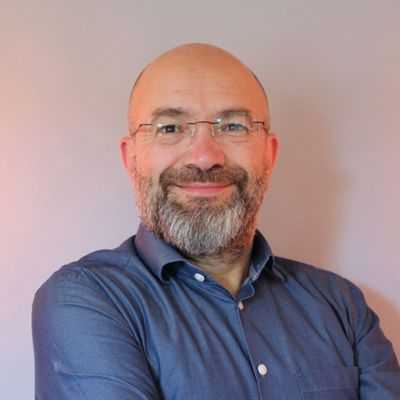
Ronny Leber is a renowned keynote speaker, stadium host, and legacy coach from Austria. He has entertained over 5 million people live at worldwide sporting events, corporate events and seminars, and he also has thousands of hours on live television as a host and anchorman. He is passionate about helping high-level individuals create their legacy by building an emotional bridge to their audience and creating raving fans.
𝗞𝗲𝘆 𝘁𝗮𝗸𝗲𝗮𝘄𝗮𝘆𝘀:
* Why it is important to know your audience
* How to connect with your audience, from 2 people to a crowd of 200,000.
* How to present yourself on video so you radiate energy
* The focus on serving
* Love what you're doing - the fire burning inside
𝗠𝗲𝗺𝗼𝗿𝗮𝗯𝗹𝗲 𝗾𝘂𝗼𝘁𝗲:
“Ask yourself now what you’re passionate about and follow that calling.”
-Ronny Leber
𝗩𝗮𝗹𝘂𝗮𝗯𝗹𝗲 𝗿𝗲𝘀𝗼𝘂𝗿𝗰𝗲𝘀:
Ronny’s website: https://www.ronnyleber.com/en/
⠀
Books mentioned in the conversation (and links to Amazon):
The 4-Hour Work Week - Tim Ferriss (Amazon US, Amazon UK)
𝗔𝗯𝗼𝘂𝘁 𝘁𝗵𝗲 𝗵𝗼𝘀𝘁:
I am Agi Keramidas, a podcaster, mentor, and knowledge broker. My mission is to inspire others to grow, stand out, and take action toward the next level of their lives. Visit my website: AgiKeramidas.com
___
EPISODE TRANSCRIPTION
___
Please note that while an effort is made to provide an accurate transcription, errors and omissions may be present. No part of this transcription can be referenced or reproduced without permission.
___
Ronny Leber 0:00
The people that you're talking to, they're not gonna care about what you know until they know how much you care. That means that it's not about the words that you say they're not going to remember the words you say. But what they will remember is that the way that you made them feel. So it's all about really, it's all about caring and giving back to them.
Agi Keramidas 0:30
You are listening to personal development mastery podcast, providing those with the desire to grow with simple, consistent actions needed to master personal development and create the life they yearn for. I'm your host Agi Keramidas. A few years ago, I found myself unfulfilled and unmotivated like I had lost my sense of purpose and my life was merely passing by. Since then, I've been on a continuous journey of personal development that has transformed every aspect of my life. Now, my mission is to inspire you to grow, stand out and take action towards a purposeful and fulfilling life. In this podcast, I invite myself inside the minds of remarkable entrepreneurs, authors, thought leaders, spiritual teachers, people who share the journey milestones and learnings for you to be inspired to grow. In this episode, you will find practical action points that you can implement right now. So make sure you follow the podcast to get them as soon as they are released. Today's episode is about how to connect with and wow your audience, from a one to one conversation to a crowd of 50,000 people. Let's dive right in.
Agi Keramidas 1:51
In today's show, I'm delighted to be joined by Ronny Leber. Ronny, you are a well renowned keynote speaker, stadium host and legacy coach from Austria, you have entertained over 5 million people live at worldwide sporting events, corporate events and seminars. And you also have 1000s of hours on live television as a host and Anchorman. You're passionate about helping high level individuals create their legacy by building an emotional bridge to the audience and creating raving fans. Ronnie, welcome to the show. It's such a pleasure to speak with you today.
Ronny Leber 2:30
It's such a pleasure to be with you, Agi and it's Hey, hi. And thank you for having me.
Agi Keramidas 2:37
I'm looking forward to our conversation. And without giving too much away right now, I will say that we will discuss for sure about how to, as you call it to wow your audience. But before we go there, let's start with a bit of your journey. So I would like you to take us back to before all these times before you became a professional public speaker. And what happened? What was the shift there?
Ronny Leber 3:08
Wow, great question. We're getting right into the meat. So what was the great shift? Well, you know, before that, I didn't really know what I wanted to do. Like, there were several things that I was interested in, in life. And at the same time, I was always like, Okay, what do you really want to do? Like I was trying to figure out, what is it in life that I that I want to do? And? Well, I mean, I guess that's quite some people have had this experience in the past? Or maybe it's to living through it, like, what is it? What is the one thing that I really want to do? And before that, there were many things that I was interested in. But I was not, I didn't really have that fire burning, it was not like, this is really it. And I there were many things where I have this growth experience that I started out like, for example, it was a few years in sales. I was a few years in, in actually teaching people. And still I was like, Well, now that I've had this this growth experience and I've grown to a certain level, I thought okay, what's next? So I was really kind of desperately looking for that one thing.
Agi Keramidas 4:23
And doing at that time, Ronnie, what were you doing at the time, my professor was
Ronny Leber 4:27
actually just getting getting done with my university studies. I studied economics and sports, like two different studies and it was like, as long as I was studying, I was fine with doing different things. Like as I said, like in sales and also teaching other people or educating people on sales on Office things on also, it was basically people that were unemployed at the time. And so also on how to get a get a job and all those kinds of things. And so that was quite nice next university. But at the same time, I always knew that there's got to be something else, there's got to be another level. Because also wanted to work with people that actually want to work where they actually love what they're doing. And I also wanted to love what I'm doing. And so I thought, but what is it? What is it? And then I thought, well, you know, the best thing is probably when you, if you want to get an expert in something, when you get an expert in something that you're passionate about. And for me, it was important to be an expert at something because I knew in order to get paid really well, he needs to be an expert. Like you need to have some, some some knowledge about something. And not just like, like a little bit of knowledge of this, this and this and this, like all kinds of fields, because nobody is going to pay you for that if you just scratch the surface everywhere except maybe if you go on Who Wants to Be a Millionaire, and but that's probably not a sustainable business model. And so I thought, well, what am I going to do? And then I was starting to ask myself some questions for for actually, for weeks and months, I was asking myself questions like,
Ronny Leber 6:20
what is it that moves me emotionally? What is it that I talk with my friends about? What is it that I keep thinking about? What is it that that I spent money on? What is it that already as a kid has moved me emotionally. And so was asking myself those questions over and over and over again, to get to the core of what I'm really passionate about. And I did this for for several months, maybe even half a year. And I always came back to the same point. It was always that already as a little kid, I was passionate about events that bring the whole world together. And for me, having a sports background, there was of course, something like the Soccer World Cup, the Olympic Games, it was like when those events were all, to me, the whole world was evolving around those events. It seemed to me, or also when you're not into sports, but maybe you are into music, and you go to a concert, when you're at the concert or thinking about oh, I need to go to the hairdresser tomorrow or I need to write a text message. You're totally there, you're totally in it. thought, wow. That's an environment that I want to work in. I had no idea what. And of course, if you don't know the what I didn't know how to get there. But I was I knew the why and you did desire. And I did have some imaginations about different things that I might be able to do there. And I was not thinking about being like a stadium host and then and like a TV host and all those kinds of things. Like who does that? And I mean, how do you how do you get to that anyway, so that was not not the goal. But then I was just like, keeping my eyes open, and thought like, Okay, let's see what's gonna happen out of this out of this knowledge. And also in that summer of 2008. It was back then a professional soccer team from Vienna. If you're from Europe, maybe you might know it. It's called rapid, rapid Vienna. And they are they were looking for a stadium host for the youth teams to under 17 or under 19 year olds, and like once a month on a Saturday afternoon to go there and host a few games and be like, play some music and analysis, the gold scores and so on. And some of their youth coaches. Were studying with me at the sports university, and they recommended me and through that, like I was like, Alright, let's do it. And I got a little a little milk money was not it was really not a lot. I got 70 years per game, which was like, and I thought, wow, I really gambled big back then. But anyway, so I was just out there for the fun. I didn't think about like a professional opportunity or something. It was just like, Hey, that sounds like fun. Let's just do it. And the coolest thing was actually the invitation to the Christmas party, and that I got the free tickets for the big guys. So anyway, I enjoyed it. And one year later, in the summer of 2009 It was actually 25th of June 2009. It was the day that Michael Jackson died. I was at a at a party of the sports university. And when I went out there at 515 in the morning, at the same time that I went out there a friend of mine went out who was working at the professional ice hockey team in Vienna. And I was like hey, I mean typical situation. 515 in the morning, you know Hey, by any chance you're looking for new stadium hosted the eye soccer team. And she was like, I have no idea. But I'll ask. And the next day she calls me, you know, we're looking for somebody. And I was like, Okay, great. And then a few few conversations later with the manager, I got my opportunity. And the first ice hockey game of that team that I saw live in my life, I was hosting and doing the music, like a total Hail Mary, actually, out of the day's view, it was really, you had to learn very fast to be gone. But at the same time, I really enjoy the challenge. And that was the first time that I thought to myself, Wow, this could be a career, this could be an opportunity, because I love that I really enjoy doing that. And I would love to do more of that. And I invested the whole money from the first year of ice hockey into voice and speaking education. Like just to, I thought, you know, I have no idea what comes out of the ice hockey. But anyway, I want to do more of that. And that's why I started to invest. And then it came from there, because then I knew that what, and then it was just about figuring out the how. So I had to fire I had the dream. And then it was just about making it happen.
Agi Keramidas 11:22
That's wonderful. And there were some things that you said about this that really piqued my interest. And one was what you were doing about asking yourself those questions that would lead you eventually to the answers having that introspection, what it is that I like, what I enjoy, what do I talk about all these questions, I find that they are very useful once they're used to elicit answers that that come from somewhere deep within us, it might be here rather than up there, but they really come into the end, I really appreciate what you said that once you you've got an answer that you were happy with. You just kept your eyes open and waiting to to receive something rather than Okay, now I've got the answer, how will I make it work in pushing it? So it was something that I think it is useful as an approach. And there was one other thing that you said about you use the for the phrase, the fire burning, and I think that for me describes very well or the lack of fire burning when we are stuck many times in habitual situation with our life with a professional with whatever it is. And it's okay. But there is not that that spark that fire, that enthusiasm, that thing that say, Wow, this is really at the end, I think you know it? Well, when you feel it, you know, it's original, no doubt
Ronny Leber 13:06
about that. Think think about it. Like, would you ever go into a relationship with a woman when you're upfront thinking like, she's okay. Like, come on. Like, that's, that's never gonna be like something that you want to be in long term. It's not like you want to be with a woman who you're like, Wow, this is or if you're into man, of course, then it's you want to like with you want to be with a significant other where you're like, amazed and juiced up. And I want to, by by by you bring this out, I would like to actually point something out as well. Because the other thing that I would like to point out was, when I was asking myself those questions, two things. First of all, I was not focused on the money. When I was asking myself those questions, I was not focusing on what can make money with, because I thought at that time, if I'm going to find something I'm really passionate about, I'm going to be good at it. I'm not just going to be good at it, I'm gonna grow naturally. And I will love to do that. And that means I'm going to be getting better. And if you're great at something, if you're the best at something, and maybe if even if you're the best in the world at something, you're going to figure out a way to monetize it. So it's like I thought, let's first figure out the passion. And then let's worry about the money thing later. And because so often when we think about something, immediately our brain kicks in like, Who are you kidding? You cannot make any money with that. Like, come on. Like like really? How is that? And so don't worry about that, like the money thing comes later. First you need to figure it out. And then you really need to figure out how to monetize it.
Agi Keramidas 14:47
That's really useful piece of advice in which you should know to focus about rather than focusing on the money, focus on getting really good at that and then you will figure it out. Hey, Ronnie, I would like to change a little bit the direction of the conversation and discuss about something that, you know, you talk about, and you talk about how to grow your audience. So let's discuss this. And because I think it's always useful nowadays, people have much more interactions or virtual especially, it's much more easy to be in front of an audience, even if you can't see them. But you are much more often than early on when you had to actually be physically on a stage in front of people. So it's a vast topic. So I will, my the first question, I would like to ask, I think it's important that you talk about connecting with your audience. So can you tell me how do you mean, connecting with the audience, and also, what's something simple that one can do that speaks to be able to have a better connection with that audience?
Ronny Leber 16:08
All right, of course. And then first of all, when we are talking about an audience and the audience size is going to vary, it's going to be, I don't know, it can be an audience of two people, it can be an audience of 20,000 people, it can be like, whatever kind of audience, it can be that you see your audience, and that you cannot see them. Because maybe it's virtual, the you're just talking to a camera. But one thing that applies to everything is you never going to have one to 50 50,000, whatever conversation, it's always going to be a one on one conversation times 50 times 50,000 times whatever number is. So you always need to think about keeping the one on one concept, like really talking to somebody one on one. And that also means you need to know who your audience is. In order to connect with somebody, you need to know exactly who who is that person that you're talking to. Now, you might be going like, come on, I cannot know who those 50,000 people are, even if it's just 50. I don't know who they are. But think about who they represent to you. And then actually, I want to go one step back ties back with what's your outcome? What's your outcome with? Like, why are you there? What's the outcome for you to talk with them? What is the message that you want to give, that you want to bring? And what is the one that what's the commonality between the people that are there? What do you know about them? What do you know about them that binds them? How are they also involved emotionally, with with wherever you're speaking? If you're speaking there? Are they like, are they there? Because they have to be there? Or are they there because it's juicy them up. For example, if you work in sales, or let's say you are in insurances or in the finance sector, it's going to be a various different conversation, if you have a family there, who actually want to insure their home or actually get a financing for a new home. Or if you are maybe the same person, and you sell a car insurance to somebody, because they have to buy a car insurance. It's not, it's not going to be the same conversation, also the emotional involvement, it's not going to be the same. Because on the one hand, you're fulfilling their dream, you're actually fulfilling their passion. On the other hand, you're just a necessity, because they need to do that. So think about what is your role? What is the emotional connection they already have with you? upfront? Are they there because of you? Or are you part of a bigger event? Are you in the middle of something? Are you the main act? And if you are in the middle of something like what comes before you and what comes after you? What is the journey they're going through? Where are they at the time? Where are they emotionally? Where were they before? They went all with you? Where are they going afterwards? And also, what is the feeling that you want to leave them behind? Because if you know where they were before, you already know something you already know, like, what is probably their, their state's going to be when they come there. For example, since I also work in stadiums, and when I work in a stadium, I need to think first who is my audience and also that ties back to it there because of me Well, probably not maybe the two people who got the free tickets from me, but the others are not there because of me. So the others are actually there because of let's say as a national team match Austria versus and then it depends the emotional ball involved in is going to depend on the other person or on the other team on the size of the enemy. If we're playing a friendly game against Liechtenstein, for example. And I mean, if you're from Liechtenstein, no offence, but your soccer team is not known as one of the best in the world. And so basically, when they come and it's a friendly match, then you're like, I mean, what is the expectation, you're not expecting a hard fight, you're expecting your home team to win by a big margin if they're not playing like,
Ronny Leber 20:31
one of the most beautiful games and it's already not like, really awesome. But if you're playing, for example, if we are playing against Germany, and then it's also is it a friendly or is it going to count for something? And well, if we're playing against Germany, it's always like a World Cup final for us, I can tell you that. So it's always going to count. And then you know, first of all, you know, it's going to be a sold out stadium, you know, that the people are going to be totally on fire. And you know, that they're absolutely engaged and involved and that they just like, they are there because there is hope, you need to understand them, they're, they're there, because they're like, maybe today, maybe today is the day that we're finally gonna beat them. Maybe it is. And they are just and you need to, to know that you need to feel, what is the emotional involvement that they have. And if you feel that you can play that you can take them from where they are at. And you can just ride it, you can ride the wave, or you can just make like, you can lay out their emotional carpet. And the same thing is true when you are whatever your topic is, whatever your your time is that you have with them. Know the state that they're coming there with know their intention, bring in your intention, and then just lay out the emotional carpet and take them on a ride take them from a from where they are at to be where you want them to be or how you want them to leave with also think consciously upfront, what is it? What is when you are done with them when when your time with them is over? What is the feeling that they that you should leave behind that they should have? And also what is what is the action you would like them to take if there is one, for example? So those all those thoughts need to be going through your mind before thinking about anything before you're thinking about how am I going to start it? How am I going to handle it and so on? To worry about all of that. First, you need to answer those questions.
Agi Keramidas 22:33
I want to take a short break from this episode and quickly let you know about something I'm really excited about. For me having a podcast made a tremendous difference in my life's journey. And I know the kind of impact that can have on one's personal development. And that is why I'm so passionate about helping coaches who are ready to amplify their methods and reach a global audience by creating launching and growing a top quality podcast, even if they aren't tech savvy and are limited on time. Maybe you have thought about having your own podcast but you don't want to go through the time consuming learning process of how to create launch it, how to record the ad to host and so on. If you said yes, I have a solution for you something that takes away all the complexity and allows you only to concentrate on creating quality content. Go to my website I Jeremy does.com. To find out more and to get your free copy of my guide about creating and launching your podcast. All right, let's jump back to the episode. Obviously speaking on states or speaking in a stadium or in front of 1000s of people is something that most people will not experience most likely in their life. I would like to direct a little bit more your expertise on Obama speaking on some other situations that I think many of us will find themselves in or much more likely sir, we say find themselves in and the first one is when you speak in front of the camera, as you said, like on a bonus zoom call or something like that. And actually, I will not ask about the second one. Let's focus on that first because there is a big difference between having the energy of the people in front of you and I've spoken not not in stages like that what I have spoken in front of people and there is a very different feeling you have this excitement, this butterflies, this nervousness or however you want to call it this energy of the people which when you speak in front of a lens. You don't and so what's something that One can do to maybe recreate or intensify that internal energy that is completely lacking when you have a speech or event or something like that over the camera?
Ronny Leber 25:15
That's a great question. And first of all, everything I said before, applies to a stadium. And it also applies to this, like this applies to everything. Because you need to be those thoughts need to be going through your mind, whatever interaction you're going to have with somebody else. So whether it is like you always need to know what is your outcome, what is their outcome. And also, if you get hired from somebody, what is the outcome of the event, for example. And at the same time, you also need to know who you're talking to, you always need to know that and why they're there, what is their intent, and so on. Like, you need to know that. Because even if you have somebody or just listening to you, on a podcast, or if you're just talking to a camera, you need to know what why are they listening to me? Why are they watching me? For sure, it's not going to be because they're bored. Because there are 1000 other options. So So what is it, and when you're talking about a specific qualities when you're talking to a camera? Well, first of all, as you already pointed out, you have nobody in the room, you have nobody in the room that actually gives you feedback. So you're, you're really you have to rely on what you thought. So it's even more important and critical. Those thoughts to do that to happen before because you really have to rely on that you need to know who is another person, or who is the like, imagine one person that you're talking to like this, when you are looking into a lens, and when I'm talking like into the camera is really into the lens, like for example, when you are to computer, the lens is not the screen lens is basically the eye of the person that you're talking to. And that is, if it's an internal lens, usually above the screen, or on the phone, you have it also above your screen, like on top, where you normally put your ear when you listen. So there is a lens, so you really need to talk into the lens, because that's the way you build connection. That's the way that the others can feel you because also they feel like, Hey, that guy is looking at me. The guy is not just like, the whole time looking down because he's looking at the screen, but he's actually looking at the lens. If at least subconsciously, they will pick that up. Even if you see the other people in like in a Zoom Room, for example, you still need to have most of the time to be looking at the lens. You might be like, well, but then I don't see them. Yes, at times, yeah, train your peripheral vision. And like really, most of the time look at the lens, because that way they can feel you. And you're going to be building a lot better connection with them. The next thing is, of course, besides the way that you look at them is and one more thing actually, it's not just your facial expressions also, of course, but also the way that you use your hands. And when you're when you are actually in, in a virtual setting. And just with the camera on your on your computer. And when you use your hands, great, but at the same time, be aware that you cannot just like in a face to face conversation, you cannot just make open gestures and stuff because they're not going to see it. So be aware of where is your screen? Like how is that? How do you fit into your screen. Also, when you're actually first doing this, and first setting the camera, you need to also see that you're you have a great frame, that you're not like the tiny dots in the right left, right bottom corner. So or bottom right corner. So you really want to want to see that you're centred, you're in the middle, and then you're also at the same time, like there is not a huge air in front of you, and on top of you. So you really have to fill out the screen. And then the next thing, of course, is the voice. How do you do that? Because normally, of course, when you are in a room, we naturally tend to kind of project your voice because we want to reach to people, even though you have a microphone, but still you're projecting your voice. When we're alone in a room.
Ronny Leber 29:21
Natural a natural thing to do would be like to have instead of an external voice to shift an internal voice, like alright, what do I need to do? I need to buy groceries and what do I need? I need some carrots and potatoes and so you're talking a different voice because you're internal. But you still need to project and go external the same way as if you would be talking to somebody in person and for example, what I always recommend to do is project your voice as if you're talking to the end of the room where you're in, like really projected not just even to the lens but even further projected. Like till the end of the room all Although you have a microphone, it doesn't matter. Because it's all about the energy, you need to reach the other person energetically. You need to let them know that you're there and that you feel that you understand them. And then they will feel that. And of course, do you care? Did you care for them that you don't take their time lightly that you don't just feel great, you're here, beautiful. Now, you're trapped? No, you're not. So that's why that's a great, that's really, really, really important to have an engaging voice like to not to be just monotone is talking like, Okay, I don't know how to go up and down with my voice. And that's why every sentence sounds the same. Or there is a dot that means I need to go down. No, it's not going to be like that. So you really need to kind of be natural. And, okay, so we have the camera, we have the camera, we have the voice, the voice. And of course, we also have been talking a bit about body language as well. And one more thing, two more things actually light. When you are at home, for example, in in a, you have a zoom conversation, you need to be careful that you have great light on your face that people can see you. Because, you know, you probably have seen this also because we have been and probably many of our listeners have seen that, that you've been in a zoom conversation with somebody. And they had an amazing background, maybe at the ocean or something or there was a mountain behind her. It was like it was amazing. It was really incredible. And it was like bright and sunny and everything. And they were sitting in front of it. And you could see this amazing background, and you could see nothing of the person in front of you. Because they were totally in a shadow was everything was totally dark. And it looked like somebody out of a witness protection programme. So it was like, or as if they were going to make an offer that you can't refuse any moment. But you were not seeing anything. So basically, you don't want to be the person you want to turn the other way you can enjoy the view. But the point is, you need to have light on your face. So if you're if there's a window through the window behind you have the window in front of you so that the window brings in light, obviously during the day, then, or have some light in front of you instead of behind. So that's really, really key. The last thing is about the background. Because I mean nowadays, I think most people are aware of that, when we started just started going into the pandemic, like 25 years ago, you could see everything, like people hiding in the kid's room and they were like all the all the clothes on the floor and whatever kind of stuff and like nobody wants to see that. You want to you wanna make this a beautiful, comfortable environment where it's easy to follow you the focus is on you and people are gonna be the whole time like, Oh my God, what's going on in the background. And so and if you say well, but I have a budget, the most important thing that you need to focus on is get a great microphone or get a microphone where people can understand you. Because even if the picture credit quality is not the greatest. If people can hear good, they're still going to be able to follow but if you have an amazing clear HD or 4k or whatever picture quality, but people cannot hear you they're going to lose interest very fast.
Agi Keramidas 33:37
Absolutely. And I as a podcast host I know all about this and it's been sometimes very frustrating to see people arrive for a podcast interview. Were in the airports or something like that despite the numerous recommendations before that. In your previous answer, I will reiterate very quickly two things that I think they're very important or I found personally very important one was what you said about projecting your voice, like you're speaking to someone at the end of the room rather than here which I think is a very good trick. And something else that came to mind is that when you look and you said about looking at the lens, which is greater I remember someone talking about looking at beyond the lens like there is someone behind that show you you have a different energy so I think that's really the the important thing that came to my mind when you were answering and of course there are some the technicalities about the frame and to the lighter all those things. Absolutely. There is another situation that I would like a quick comment from you on and that is when you are being interviewed in a podcast. What do you think is the apart from the microphone? What is the The other major difference or something, one thing that one needs to be extra careful when they are in such a setting?
Ronny Leber 35:12
That's a great question. And also, actually, because I also was doing more than I have done more than 700 interviews live on television as well, like I, I know, both perspectives. And I think, also as somebody who's being interviewed, and we had this conversation before we started, also here, I want to know, what is your outcome as, like, what is the outcome of the interview? Like, if I'm the guest, on your platform? I want to know what what is like, what is your outcome that you have? And the second thing is, I also want to know, who is your audience? How would you describe your audience, like, this is something that I need to know. And if you don't know it, then ask. And then you just like, okay, then I know, like the rules of the game. And that's how I like in kind of, in those within those rules, I can then bring my message, I can then do whatever I need to do in order to serve that outcome, in order to serve to that and bring to that. Because basically, we are all here to serve. And if you to provide value, if you're going somewhere. And if you if you are allowed to speak on a stage, if you're allowed to be interviewed at a podcast or on TV. It's really about providing value. And you know, I'm gonna actually give you some bonus thing here, a bonus tip, because maybe there are some people out there who are like, Well, how do I get to? How do I get on TV? How does the TV station get to me? And it all comes back to actually, first of all, they need to know you. But what I can tell you that we had a lot of guests who were expert on a topic that we invited over and over and over again. And the reason why we invited them over and over and over again, was because they were interesting to listen to. They were when they were answering it was something resonated with the audience. And how is that because they were they were telling stories, they were also it was vivid, the way they were answering, it was like in pictures, it was kind of that you were like, Alright, okay, I feel this person. And, and it was not just about them. There was something that was triggering the audience. And that's why it's so important to know who you're talking to.
Agi Keramidas 37:35
Fantastic. Thank you, Donnie, for this, this answer. Emerging from this conversation we had today, if you were to give to the listener, something actionable, I know you already have quite quite a few. But if you were to give something one thing in particular that they can implement to improve their, I don't know their speaking skills or whatever else that you feel it's irrelevant. What is it that you would tell him or her?
Ronny Leber 38:06
Okay, two things. First of all, about the speaking skills, the people that you're talking to, they're not gonna care about what you know, until they know how much you care.
Ronny Leber 38:23
That means that it's not about the words that you say they're not going to remember the words you say. But what they will remember is that the way that you made them feel, so it's all about really, it's all about caring, and giving back to them. And then they will be able to follow they will be able to take that in. And also another Mindset related point that I wanted to that I would love to pass along. Because I think, especially in the last two and a half years, what we've been we've been going through mindset is everything. It's so important, it's so critical. And just remember wherever you are, and whatever your situation is that you are right now and whatever your season is that you're in right now, maybe you're right now in winter, and everything looks like it's dying, or you're in spring or you're where everything starts to bloom or in summer where you're just like enjoying and waiting for for the harvest in fall. And you're just reaping the rewards wherever you are right now. At any moment, you can make three decisions or you can decide on three different things. The first is what do I focus on? Because what however dire the situation might be or however amazing it is. You have the right to choose. You can choose what to focus on. And there are a million different things that you can focus on any moment. You could focus on what you see on something that There are many, many things. Also what you hear, you can focus on what you feel what your skin is actually right now taking in or maybe you can feel, you can focus on what's going on inside, like your heartbeat, or your breathing and all those kinds of things. So there are many, many different things, what you can focus on any moment, focus on something that is empowering you that is moving you forward. The second thing is, what you can decide is what does it mean? What does this actually mean? And also there, you have the freedom to choose. Because whatever happens to us, it's never what happens to us. It's always what what that means to us. Because that's going to determine how we feel. And the third thing is, what am I going to do about that? What action am I going to take? When you know what to focus on? What does it mean? And what am I going to do about it? When you answer those three questions consciously, then you're in command. That means that you are not like you are responsible for your actions and for the situation that you're in. So whenever you feel that you are not that you cannot control the situation, take control with those three things. And if there are things that you cannot control, because there are always things outside of control, focus on the things that you can control.
Agi Keramidas 41:34
Thank you. And I will repeat those, those three questions. Also, it's their show important, what do I focus on? What does it mean? And what I'm going to do about it? So thank you, that's a reminded me of the Tony Robbins teachings the way that you said that. Ronnie, I have some last quickfire questions to ask to wrap it up. Before I do that. Share with us. How do you help people? And where can someone that listen to this and enjoyed it can find out more about you and connect?
Ronny Leber 42:16
Thank you very much for asking me it. So first of all, I mean, how do I help people and companies is under one way, of course is the house and as a keynote speaker, but also help people who want to be better on stage who want to be who also want to improve, to better connect or to better while their audience. So that's something that I do with them as well, whether it be for a keynote speech, or for example, to have you're a startup or you're a CEO, and do you have some important messages to bring out or maybe a pitch coming up or an exit scenario and I'm gonna be the person who prepares you for that. And how to find me is very easy on Ronnie lieber.com. I guess we might have the link in the show notes. And also of course on social media. You can find me on LinkedIn on Instagram On Facebook. Dash Ronnie Lieber or not dash slash, yes, slash Ronnie Lieber. And there, you're going to find me very easy.
Agi Keramidas 43:20
That's great. Thank you. And and so some final quick questions then. Ron nice. And the first one I always ask is What does personal development mean to you?
Ronny Leber 43:32
Personal development means to me the journey to your true self.
Agi Keramidas 43:39
And let's say you could go back in time that's a hypothetical question and meet your 18 year old self what's one piece of advice you would give him
Ronny Leber 43:50
ask yourself already now what you're passionate about and and follow that calling.
Agi Keramidas 43:57
Thank you. And based on the the topic we had today, what's one books that you would recommend to the listeners
Ronny Leber 44:07
one book that really also when it comes to when it comes to of course to finding your calling to also finding your passion away on book that really has moved me and also brought me forward as as a as a business person. But also like if you if you're an employee, I think this could really help to make the next step is the four hour workweek from Tim Ferriss. That really resonated a lot and I read this book three times.
Agi Keramidas 44:38
Thank you. I've read it as well. It was an eye opener. So when I first read it probably 878 years ago it was really even though it is it is one of the classic books that really show you that there is another way that what we are so much conditioned into believing so Thank you for this reminder of this, this classic book by Tim Ferriss. Plenty I want to thank you very much for this conversation with me today, I enjoyed it very much. And I believe there was some both value for the listener also things that are very easily implementable. And there will make certainly a difference in someone's presentation or how they present themselves or express themselves in, in an interview or in a speaking situation. So I want to wish you all the very best with what you're doing and everything in your in your life. And thank you again, any last parting words from you?
Ronny Leber 45:43
Thank you as well and also thank you to you listener right now. Thank you for for listening, and I hope that you got some great value out of it. And if you did, feel free to let me know I'm happy to hear from you. All the best.
Agi Keramidas 46:02
Thank you for listening, and I hope you got great value from today's episode. And if you'd be so kind, please take a moment to leave me in Apple podcasts review, sharing how personal development mastery has made a difference to you today and I will read the review in the podcast. Until next time, stand out don't fit in!

 5.00 (74 Reviews)