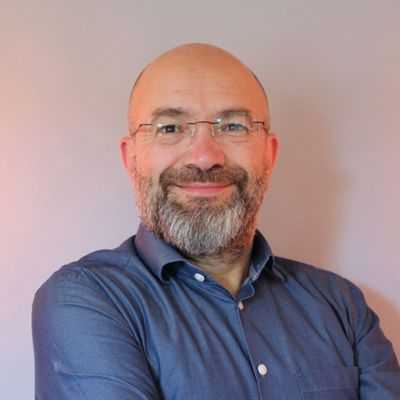
Richard Friesen has 30 years of experience in the financial world and trading and he has also trained as a therapist, coaching traders and financial professionals. He is the author of the book “A Private Conversation with Money” discussing how our beliefs shape our financial situation. He is passionate about helping professionals and business leaders to increase their personal effectiveness with joy and grace.
In this episode, we dive deep into the world of financial beliefs and how they shape our financial situation. With the help of my guest, Richard Friesen, we explore his fascinating story of overcoming internal limitations and how this led him to help others uncover their hidden beliefs that may be holding them back financially.
We discuss the concept of the "money thermostat" and how it can limit our financial success, as well as the importance of understanding that not everyone following the same system will achieve the same results. Join us for this insightful conversation as we examine our relationship with money and the idea of money as certificates of appreciation
⠀
𝗞𝗲𝘆 𝘁𝗮𝗸𝗲𝗮𝘄𝗮𝘆𝘀:
* Exploring Our Relationship with Money and How Our Beliefs Shape Our Financial Situation
* The Money Thermostat and Limiting Beliefs * The Impact of Childhood Trauma on Financial Behaviour
* A Private Conversation with Money
* Appreciating Money as a Certificate of Value Delivered
* Money and Relationship: Awareness, Acceptance, and Agency
⠀
𝗞𝗘𝗬 𝗣𝗢𝗜𝗡𝗧𝗦 𝗔𝗡𝗗 𝗧𝗜𝗠𝗘𝗦𝗧𝗔𝗠𝗣𝗦
0:09:51 - Limiting Beliefs & Finances
0:16:53 - Exploring Our Relationship With Money
0:34:02 - Achieving Money Meaning & Success
⠀
𝗠𝗘𝗠𝗢𝗥𝗔𝗕𝗟𝗘 𝗤𝗨𝗢𝗧𝗘
“You’re ok, Rich. You’re ok.”
⠀
𝗩𝗔𝗟𝗨𝗔𝗕𝗟𝗘 𝗥𝗘𝗦𝗢𝗨𝗥𝗖𝗘𝗦
Richard’s free online course: https://conversations.money/mastery
⠀
𝗔𝗕𝗢𝗨𝗧 𝗧𝗛𝗘 𝗛𝗢𝗦𝗧
I am Agi Keramidas, a podcaster, mentor, and knowledge broker. My mission is simple - to inspire you to take action towards a purposeful and fulfilling life. Visit my website: AgiKeramidas.com
⠀
𝗦𝗨𝗠𝗠𝗔𝗥𝗬
Agi Keramidas was delighted to interview Richard Friesen, who has 30 years of experience in the financial world, trading, and therapy. He is the author of the book A Private Conversation with Money which discusses how our beliefs shape our financial situation. They discussed the topic of finances and financial situation, and Richard's background story and transition. Richard worked for an arbitrage firm, trading options, stocks and futures, and then went on his own, but felt he was capped at $200,000 a year. Through his own discoveries, Richard now helps professionals and business leaders to increase their personal effectiveness with joy and grace.
Richard Friesen was a philosophy major and MA in clinical psychology who had a business trading on the Pacific Exchange. He heard a voice one night telling him he was only worth $200,000 a year. He went to the exchange the next day and took the best spot, which was usually commandeered by the most aggressive person. Richard went berserk, making much more than $200,000. He then realized that many of his traders were limited by their own internal voices. He asked his sister, who was a budding hypnotherapist to help uncover these hidden voices. This experience led him to write the book Private Conversation with Money, which is a process to help uncover these hidden voices for everyone.
Agi Keramidas and Richard Friesen discussed the concept of a money thermostat and the idea that not everyone following the same system may have the same results. Agi was intrigued by the idea that there is a hidden element that guides people to a limit in terms of money and financial success. They discussed the possibility of using hypnotherapy to uncover limiting beliefs about money and financial situations. Richard suggested there are many paths and many books related to this area of exploration.
Richard Friesen is a therapist who helps people discover their underlying issues with money and finances. He does this by paying attention to their physiology and following the reactions that come up when talking about money. He then encourages them to exaggerate the facial expressions and emotions they're feeling, and to ask themselves what age they feel like. This leads to uncovering internal conflicts and from there, having a dialogue with those voices. Richard doesn't eliminate those voices, but rather invites them to be listened to and helps the client to develop skills to upgrade the voices and put them in their proper context. He also believes that many of those voices are there for a good reason, and that it's important to understand the context in which they work best. Richard has seen clients have epiphanies and realisations as a result of this process, and has also experienced it himself.
[A.I. Summary created by https://deciphr.ai]
EPISODE TRANSCRIPTION
___
Please note that while an effort is made to provide an accurate transcription, errors and omissions may be present. No part of this transcription can be referenced or reproduced without permission.
___
Richard Friesen 0:00
By delivering value, it ends up that people give him what I call certificates of appreciation. Most people think, well, if I get money, I'm taking money from somebody else. But if we're delivering value, there's an infinite amount of value that we as human beings can deliver to each other.
Agi Keramidas 0:22
You're listening to personal development mastery podcast, helping you take the simple actions to master personal development and create the life you gain for. I'm your host, Agi Keramidas. And my mission is simple to inspire you to take action towards a purposeful and fulfilling life. In this podcast, I invite myself inside the minds of remarkable entrepreneurs, authors, thought leaders, spiritual teachers. So if you're ready to find practical insights that you can implement right now, make sure you follow the podcast and get the episodes as soon as they are released. Today's episode is about how our beliefs shape our financial situation, and about looking at money as certificates of value delivered. Today, I am delighted to speak with Richard freezin. Richard, you have 30 years of experience in the financial world and trading. And you have also trained as a therapist, coaching traders and financial professionals. You're also the author of the book a private conversation with money discussing how our beliefs shape our financial situation. And you're passionate about helping professionals and business leaders to increase their personal effectiveness with joy and grace. Rachel, welcome to the show. It's such a pleasure.
Richard Friesen 1:52
It's a pleasure to be here. As I've mentioned before, I've listened to a few of your podcast, and the quality of your guests and the ideas that come out of it. So I'm honoured to be here. And thank you.
Agi Keramidas 2:03
It's a real pleasure. And as I was telling you, just before we press the record button, the topic of finances and financial situation is a topic that I see that it has a lot of traction and popularity in the podcast. So I was really excited when I connected with you to discuss about our relationship with money, really how our beliefs and all those things affect our financial situation. So that will be our topic for today. Before we go there, I would like to ask you a little bit about your background, your your story, and especially that that transition in you talk about a voice that you heard that really changed things for you as a result, so can you please take us there and describe that so we can get? You know, an understanding of who who reads? Are these?
Richard Friesen 3:02
Sure I worked for a large arbitrage firm, we traded options, stocks and futures, lots of capital, PhD quants figuring out values. And then I went on my own. And I was very, very careful. The first year, I made $125,000. And for some people that might seem like a lot, but in that financial world, it's really tiny. And, and so next year, I made 150 than 175 than 200. And then 200. And, and I seem to be capped at that. And what happened was in April of 95, I heard a voice it was the middle of the night. And this voice said, rich, you're only worth $200,000 a year. It woke me up. When I looked around the room, I fully expected somebody else to be in the room. My wife was sleeping peacefully beside me there was nobody else there. So I came to the realisation that that voice was something deep inside of me. So I showered, got dressed, drove across the Golden Gate Bridge to the Pacific exchange. And I got there so early, the doors were still closed. And I thought about that voice as I sat on the concrete steps. Thought about my life, my identity, who I was what I believed. And when the doors opened, I went to the pit where I normally trade now rich freezin was a philosophy major MA in clinical psychology. Not really that aggressive. And so I always stood at the back of the pit. Now, young people don't know what pits are anymore where people are yelling and screaming and buying and selling so it's all electronic. But at that time everyone all the orders came to a pit and people competed for them by yelling and screaming. I always stood at the very back and I would carefully pick out an order here. carefully buy something here and carefully sell something there. Because I was, I told myself, I didn't want to take a lot of risk. But it turns out it was something deeper than that. So that day, I thought about that voice, that the pit was totally empty. I got there so early. And I thought, I'm done with that voice. And I went and stood in the best spot in the pit, right between the two busiest brokers, and right in front of the order book officials. So I get here, all the orders, and be right there. So I stood in that spot. So the rest of the market makers, brokers and traders came in. And the guy who always stood there, you got it and and you're most of your audience won't appreciate this. So I'll explain it is in the pit. You don't own a spot, you don't rent a spot that's commandeered by the most aggressive. The person with the most capital, the meanest, the person who can command bullies who command the social hierarchy. And so here's rich philosophy major, stepping into the best spot in the pit. So the rest of the everybody else started coming in. And the guy who always stood there and looked at me looked at the clock. And a couple of minutes before the bell went off, he just tapped me on the shoulder say, okay, okay, young man, you can go now. I didn't move. And so the whole pet wet wall. And everyone kind of stood back as they knew what was going to happen in this shoving match and students, we were warned immediately by the book staff that if we got into a fight, it would be a $10,000 fine for each of us. So I held my ground, the bell went off. And normally rich, freezing, just you know, careful. I don't want to blow yours off. So I'm gonna go move back a little bit from the mic. I went by 50 sugya 20 by 30 Sol Sol by the by them. I just ended the pit that rich freezin had gone berserk. But I ended up making many times that $200,000 that year and I went on to build a trading firm. And then what's fascinating is about a third of the traders following my system would just make money. A third of them would do okay, it wasn't bad, but it wasn't great. But a third of them just couldn't make it same market, same process, same trading. So I thought what if they all had their internal limitations like I did. So it turned out that my sister Wendy, was a budding hypnotherapist just out of school and very eager to ply her trade. So I brought her in. And sure enough, one of them come from abject poverty in West Virginia and the United States. It's a really poor area. And he had, you know, dozens of cousins and uncles, there's a huge family constellation. But if he got wealthy, his family would reject Him, because that wasn't part of their culture. Another one, he grew up with a handicap brother younger brother, and his younger brother got all the attention because of the handicaps. And so he felt resentful, and left out. And he knew that if he made money, his mom would come to him to take care of his little brother. So he solved that problem. He just didn't make money. And there was many more examples of that, that under hypnosis, we found just like I had an internal voice. So my mission now has been, is there a process where we can uncover those hidden voices for everybody? And that has led to the writing of the book, private conversation with money.
Agi Keramidas 8:49
Thank you. That's a very fascinating story, the way you were saying it, and there were some things that made an impression on me one was the what you were saying about the the limit that you were hitting of the 200k which I have heard of that as the term the money thermostat, yes, we go above that, then it drops us a property to reach that, what I found very intriguing the way you explain it was that you talked about you know, some of your clients are following a system which the system should be, you know, provided you follow if the system was is good, it will lead to the same results. But it is very interesting, the observation that not everyone following the same system had the same results. And I have also experienced similar things with myself in my own you know, journey of personal development, and it is very intriguing. That realisation that it's not just about you know, doing doing doing all the actions taking on ticking all the boxes in terms of course, these things are important and necessary, but there is a hidden element that many of us are completely unaware of. And really it guides us to a limit of money in this particular case. So I would like to ask you specifically about because you mentioned the voice that you heard, if we can call that a limiting belief or a set of limiting beliefs of its, do you think and I will ask you this, we'll start with this question. You mentioned hypnotherapy. Do you think this is a way to for someone that wants to understand what their limiting beliefs are about money and financial situation? Do you think that hypnotherapy is a way to discover that?
Richard Friesen 10:50
No, there's just so many paths and there's so many good books and so many ways to do it. Some people find it through meditation, others through hypnotherapy, others through different kinds of therapy. When I work with a client, one on one, what I will do is I'll just pay attention to their physiology, when they talk about money or their finances. And at some point, there will be a physiological expression of grimace, a tight mouth, a hunched over a tense voice. And then I will follow that and I will say, become your face right now. What is your face like? Oh, it's tense. I've got a furrowed brow. I'm breathing shallow. Okay, let's exaggerate that. Tighten the breathing, tighten the face tighten the tighten the face tighten the voice. Okay. What are you feeling right now? I'm feeling really left out. I'm feeling lonely. How old do you feel? I feel like I'm five. What's going on with five year old Brian? I'm hiding under the bed. Because my dad came home drunk again, I can hear him downstairs. So the physiology then leads to if we exaggerated to that internal voice. And then once then I I'll say, can I talk to five year old Brian. And then we'll have start to have some discovery. So what we do is basically look for all those voices, those internal conflicts. And we don't judge them with it's not like we're trying to change them. But then we invite them to just be listened to. And once we listened to that voice, we can ask it wouldn't like to improve its skill levels, then we can start to upgrade it. But it's all about developing rapport with all those voices. Now, some, many of those voices are there for a very good reason. So in context, sometimes it works to be angry, it works to be pushy, to set your boundaries, sometimes to be soft and loving. So depending on the context, so we don't eliminate those voices, we just invite them to a proper context that where they really shine and work the best.
Agi Keramidas 13:03
I suppose you've had people working with you. And after having this kind of realisation having a sort of Epiphany, yes, major aha moment, because whatever happened at five years old, we usually don't have conscious access to it, we don't even know that it is there, affecting our financial behaviours. So I suppose that's what I was asking whether you've had this kind of seen clients have a P font isn't telling you wow, I didn't even know that this was there or something like that.
Richard Friesen 13:43
Yeah, what you're pointing out is that sometimes that all of a sudden, the client will go, Oh, my God, I've had this voice, it no longer serves me or not my context of my work, and then start building from that. Other times, sometimes the trauma is so deep, so painful. That is just sanding away. It just takes time and love and attention to start to create a new belief and a new identity because sometimes it's damaged it at a very primal stage, and that isn't going to shift. We all have developed survival mechanisms. And those survival mechanisms. Were there when we needed them to help us survive. But oftentimes that process of that survival, we incorporate and then this is nobody believes. But we actually create a world that allows that survival mechanism to be used. So you know, an example is if a woman grew up in an abusive relationship with her father. Many of them find men who will provide that same environment because they know how to survive it in my own life. I've made choices that don't serve me very well. Because, you know, I grew up with a depressive mom and narcissistic father. So as a result, I have recreated those in my life, because I know that rich freezin can survive them. Whereas can I survive in a more wonderful environment. And our survival mechanism says, we don't know about that. As crazy as that seem that that seems it keeps coming up.
Agi Keramidas 15:33
I want to take a short break from this episode and quickly let you know about something I'm sure you will find useful. We are drowning in information but starving in wisdom. This podcast, for example, has almost 300 episodes, and as you can imagine, there is ample wisdom in them. But who has the time to listen to 300 podcasts. My mission as a knowledge broker is to convert this vastness of knowledge and distil it into wisdom into implementable insights. So I have created a free special resource for you, I have chosen the top 10 podcast episodes that offer the greatest value in three main categories of life. First, the top 10 episodes about money. Second, the top 10 episodes about health. And third, the top 10 episodes on mastering your personal development. This free ebook is a curated catalogue of those top 10 podcast episodes in each category that will offer you the greatest value, and in the shortest time to get it go to personal development, mastery. podcast.com/top 10. And you will also find the link in the show notes. Alright, let's get back to the episode. Thank you that's very insightful, the way you say that about the survival mechanism and how we create situations in our life, that the survival mechanism can actually work and prove its point of existence. I would like to ask you rich about your your book, a private conversation with money. And the first question is, what was it that motivate you to write a book?
Richard Friesen 17:28
You know, I had the experience in the financial markets watching people and their belief system express itself in limited financial outcomes. And so what and I look at my own experience of my own internal limits. In fact, I'm still have internal limits. I look at myself now. And you know, I've raised the bar, but they're still there. So then I thought, how can I really help people. And so we take character, Joe, Joe is an activist left leaning. The world isn't fair, we need more social justice. Capitalism is just a way for the wealthy to rob the poor. And in the middle of the night, it's a setup, he meets a character Money, money comes in, much like that voice that I experienced in the middle of the night, and wakes him up and says, Joe, it's time for some conversations. So the bulk of the book then is Joe fighting money, Joe arguing with money, and a series of Socratic type conversations, where Joe comes to peace by delivering value to others. And by delivering value, it ends up that people give him what I call certificates of appreciation. Most people think, well, if I get money, I'm taking money from somebody else. But if we're delivering value, there's an infinite amount of value that we as human beings can deliver to each other. And if I deliver value to you, Auggie and you, you pay me, you're given me certificates of appreciation. In a previous podcast, I forget who it was with, they talked about their appreciation journals, waking up and just being you know, appreciating the world. And so, if I look at money as a, as a certificate of appreciation, the more money I have in the bank, oh my God, the more value I've delivered to the world. Now, that's not to say that money is the only way to deliver value. You know, my family, my kids, my grandkids, my community. You look at Martin Luther King, you look at people who've changed the world for the better, had nothing to do with money. But for those in the commercial realm. If we think about money as a certificate of the value we've delivered All of a sudden that that tension that that stress around being wealthy or successful just disappeared, because those are certificates of appreciation.
Agi Keramidas 20:14
I like it very much the certificates of appreciation, I would like to ask you, you know, that shift you talked about from making money to delivering value? How can one recognise that, you know, in their mindset, this shift has not happened yet, my focus is still more on making money. And what's something practical that one can do to, you know, start shifting the way of thinking that money is a result, it's not the main thing it is the value delivering?
Richard Friesen 20:54
We're in the book we have. And also, I'm going to give your listeners a free online course. And if they go to conversations dot money slash mastery, there will be a course with a dozen exercises that bring out that exactly. So the question was, you know, how do you make that shift? What do you do it so one of the things we do is we have an exercise, the three chair exercise, where I sit, if if a person's in my office, I put a chair across from them. And I put a third chair watching both of them, and I have them address money, I asked them to bring in something that represents money, I've clients that brought in gold, some brought in a pile of $100 bills, or bank statement, whatever it is for you. And I have them actually talk to money. And in the conversation that I mean, if you haven't done this, it doesn't sound real. But they'll look at money, I'll have a client says, You always leave me, I get some of you and you always just go away. I never can keep you I can't hold on to you what some and then they'll go into swear words and be really angry, then I have him sit in the chair for money. I'll say, ah, what do you think about Sally, she's so angry at me, I don't want to be around her. So we go back and forth with the conversation and we haven't sit in the chair of the wisdom chair and say what you notice about this relationship, and oftentimes they'll have the wisest of epiphanies about that relationship, and then go back and sit in their own chair, and then have a new relationship with money. So there's there's many exercises that that we do, along with the reframe of certificates of appreciation, we look at our history where what beliefs our parents had, what we've absorbed from that. And once if somebody reads the book goes along with Joe fights money all the way. And so if you if you just give somebody a different belief system with them, they haven't struggled through it and arrived at it on their own. You know, it's it's not as powerful. So our job is to give people the tools to arrive at a relationship with money that honours your values and is in rapport,
Agi Keramidas 23:22
from your experience needs are those limiting beliefs, those voices completely unique to its individual, or there are some big patterns that are very common and prevalent.
Richard Friesen 23:35
So working with traders, especially one of the some of my clients are like professional money managers, traders. And there are six major issues that keep up and then there's a few peripheral ones. And there's always little variations. But it's a major thing. And if I look at my clients who are just around money, there's some major patterns. And some of them are just internalised beliefs from the family. Oh, money is easy, come easy go. Money is the root of all evil. Money, you got to hold it tight, because people are going to take it from you. The world's not fair. It's going to treat you badly. You know, the wealth have all the money and as a result, they're not sharing it and the world is evil. So you have all these messages you grew up with? Oh my gosh. And if you're a good hearted person, you want the best in the world? Well, it's so difficult. So my job is to reframe things so that as a good hearted person that you want the best for the world. You want to honour your values, and you want to deliver value and have a great financial future. So that's the invitation that I make.
Agi Keramidas 24:55
So what would you say to someone listening right now then today? realising that, you know what I have really realised that my relationship with money, there is something there that I hadn't seen before there is something there that maybe prevents me from really taking my life and everything that I want to different level, what would you recommend service as some kind of an actionable step to move towards that direction? Maybe? First of all, clarifying it, or even even better, changing it. I know, it's a complex topic. But let's say I say, a step, some kind of action, something that can be implemented. Okay. So
Richard Friesen 25:48
the first step is awareness. So you brought up, you know, I may have some things and thoughts and stuff. So right now, what are you aware of in terms of thoughts that come up? If you're willing to do this, in terms of just right now? What thoughts pop up in your head? About money in your relationship to money? Okay, don't answer. But just Yeah. So you know, I'm not going to ask you to broadcast that to everybody. But just notice, what thoughts about money. If, if you were in that chair, talking to money, just notice what you say. So the first step is awareness. And we do that without judgement. And we've called acceptance, these are the what I call the golden keys. First is awareness. And our exercises bring all these voices, all these conflicting parts and beliefs. They bring them to the surface, so we're aware, then the next is acceptance. So rather than beating ourselves up for having this perception, we say, Wow, is that fascinating? I'm really curious about all those voices and beliefs I have. That is interesting. So if a person can come to it's like a anthropologist, or maybe an archaeologist who's digging down through sedimentary layers, if we can just say that it's not right, for me to have that belief, well, then those your awareness is limited. So if as you dig down to the layers, you just say, this is fascinating. And then the third thing is agency. Okay, so I have the these beliefs, I'm going to make myself aware of them, I accept them. Now, how do I what do I want right now. So we can go through the step of awareness, acceptance, and then agency and creating a higher level that is aware of everything down here is accepting everything down there. But it can now ask, so what would I like?
Agi Keramidas 27:47
Can you tell me a little bit more about the second step, the acceptance phase, because you know, the awareness is something that personally I find that it is, let's say simpler, there are tools, exercises, questions that can guide you to recognise then from the acceptance and what I mean is really true acceptance and not just say, Oh, yes, these are my limiting beliefs, and I accept them. But really forgiving if that is an appropriate route for this forgiving yourself for heavy this limitation. Is there some kind of additional step there are elements to, you know, to actually accept it and not just, you know, say, Okay, this. I like how you use
Richard Friesen 28:39
the acceptance part, as you're pointing out, and I think why you're pointing to it and wanting to drill down, because for some, this is a real challenge. Many of my clients say, I motivate myself to get where I am today, because I judge myself, I'm brutal to myself, I push myself, and if I didn't judge myself, oh my god, I would just turn into a puddle and not do anything. So people have a process of motivate them through negative thoughts and behaviours and judgments. And its revolution. I mean, they can't even imagine accepting themselves as they are, and at the same time, still moving forward and getting things done. So one of the exercises that I've done for myself, and I, some clients, I'll invite them to do so. Is every time you have a judgemental thought, you get a big Machar pot, and you put $1 in it. And the first time I did this, I I went to the bank got $51 bills. And by the time the morning was over, I was having money in the chocolate so is just awareness and with it when some people realise how often they just had these little, many dings, many judgments that are ongoing No, no, it's it's the Awareness itself is almost curative as a whole. This isn't very helpful. I was not aware of how much I beat myself up.
Agi Keramidas 30:21
Thank you. And there isn't, of course that I was asking that. And I think that's why when you started laughing, you realise that I was working on my behalf and based on my own personal experience, so it was a genuine question coming from IP threat, because I've had this challenge of really accepting beliefs which I've recognised. So thank you for this. Also, the practical exercise I might do that with with the jail, let me
Richard Friesen 30:54
know how it goes. I'd be fascinated.
Agi Keramidas 30:59
Soon. Richard, I do have some final quickfire questions to ask you before. To wrap it up. Before I do that, can you direct the listener to what is the best place to connect with you. And you also mentioned about a gift that you're offered today.
Richard Friesen 31:23
I'm really love connecting with people. And so rich at mind. muscles.com is my email. And if they go to conversations, dot money, slash mastery, there will be a coupon for for the online course. And the online course takes you through all the exercises that are in the book. And, and you can take them at your own leisure. If you have any questions or comments, you can send me an email.
Agi Keramidas 31:57
Thank you very much. And we'll have all the links in the show notes. And Rich, can I ask you a couple of quickfire questions as well, which I always ask. And the first one is, what does personal development mean to you?
Richard Friesen 32:14
Oh, it's moving closer to reality, one of your hosts before I listened to a podcast that when you have expectations that are different than reality, you get angry, you get upset. And so our job is to develop maps and models that are in rapport with reality. So for me, transformation is always looking to how can I adopt my maps and models? So they work with reality? Much better and get me to where I want to go.
Agi Keramidas 32:47
And let's say hypothetically, you could go back in time and meet your 18 year old self, what's one piece of advice you would give him?
Richard Friesen 32:56
Oh my gosh. Girl boy, and so naive, tall, six foot two skinny 170 pounds, unsure of himself in the world, I'd put my arms around him and give him a hug and just say you're okay, Rich. You're okay.
Agi Keramidas 33:15
Thank you. And it's I want to thank you very much for this conversation I had with you I think there were some important topics that we discussed and some practical elements that you know, I always my intention with the podcast is not just to provide information and we have enough of it in our era information is it's over. It's overwhelming information as we start for wisdom, which is you know, the the the actionable things, something that one can actually implement and not just accumulate more knowledge. So I believe there have been quite a few of those today. So thank you very much. I want to wish you the very best with your mission and what you're doing as a contribution to to your clients in the world in general. And I will leave it to you for your last parting words.
Richard Friesen 34:14
Tyagi, tell me how the jar fills up as you mature. What if pound notes in it rather than dollars, but keep me posted and just love to continue the conversation and just wish everybody out there rapport with money, meaning and success.
Agi Keramidas 34:35
Thank you for listening and I hope you got valuable insights from today's episode. For your free ebook with the top 10 podcast episodes that offer the greatest value in three main categories of life. Go to personal development mastery podcast.com/top 10 Until next time, stand out don't fit in!

 5.00 (74 Reviews)