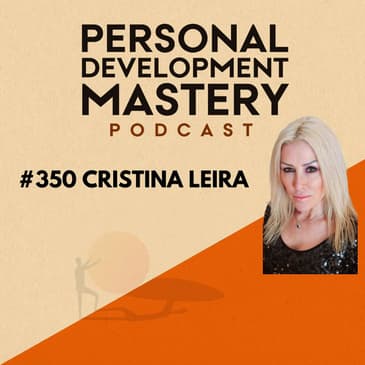
Join us for an insightful chat with Dr. Cristina Leira, an extraordinary individual with a profound passion for bridging the gap between science and spirituality. Cristina walks us through the unique characteristics of science, spirituality, and religion, offering a holistic perspective that could enhance your understanding of these distinct yet interconnected fields. We unravel how science provides a methodical, evidence-based approach to knowledge, while spirituality represents an individual's unmeasurable experience of life.
We then turn our focus to the crossroads of spiritual practices and mental health, exploring how rituals such as meditation, prayer, and contemplation can help reduce stress and mind wandering, and alter consciousness states. Dr. Leira paints a fascinating picture of how advancements in neuroscience can trace the neurochemical changes linked to these spiritual practices, thus improving mental health outcomes. We also discuss the importance of finding a practice that suits your individual needs and proves helpful during times of distress.
We further explore how neuroscience and technology allow us to comprehend the intricate cognitive and emotional processes involved in spiritual experiences. Dr. Leira talks about the effects of these mystical experiences, such as dissolving the illusion of 'self', and the potential drawbacks of attempting to bridge science and spirituality. Listen in as we discuss whether it's possible to measure what we believe and how we can integrate science and spirituality into our lives. This enlightening episode is not to be missed!
Listen to this episode to discover:
1. How to cultivate spiritual practices like meditation, prayer and journaling to build resilience and better regulate emotions, especially during times of crisis.
2. How to gain a more holistic understanding by exploring the connections between neuroscience and spiritual experiences.
3. How to integrate science and spirituality in a way that enhances mental and physical well-being, such as reducing stress, increasing compassion, and supporting self-healing.
⠀
𝗞𝗘𝗬 𝗣𝗢𝗜𝗡𝗧𝗦 𝗔𝗡𝗗 𝗧𝗜𝗠𝗘𝗦𝗧𝗔𝗠𝗣𝗦
0:00:00 - Individual and Shared Spirituality
0:04:39 - A Forced Pivot
0:13:29 - Personal Passion and Life's Lessons
0:17:51 - The Power of Neuroscience in Self-Discovery
0:20:27 - Neuroscience's Role in Spiritual Practices
0:24:53 - Symbolic Bodily Sensations in Spiritual Practice
0:31:59 - Neurotheology's Fascinating Findings
0:32:47 - Bridging Science and Spirituality
0:40:28 - The Power of Artistic Expression
⠀
𝗠𝗘𝗠𝗢𝗥𝗔𝗕𝗟𝗘 𝗤𝗨𝗢𝗧𝗘
"If you want to go faster, listen to yourself."
⠀
𝗩𝗔𝗟𝗨𝗔𝗕𝗟𝗘 𝗥𝗘𝗦𝗢𝗨𝗥𝗖𝗘𝗦
Connect with Cristina Leira on LinkedIn: https://www.linkedin.com/in/drcristinaleira/
⠀
𝗔𝗕𝗢𝗨𝗧 𝗧𝗛𝗘 𝗛𝗢𝗦𝗧
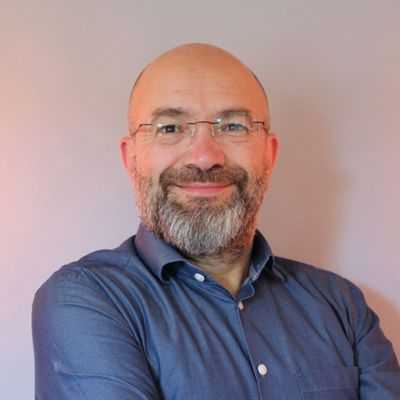
I am Agi Keramidas, a podcaster, knowledge broker, and mentor. My mission is simple: to inspire you to take action towards a purposeful and fulfilling life.
Get your free copy of my first book:
⠀
𝗦𝗨𝗠𝗠𝗔𝗥𝗬
Discover practical advice for integrating science and spirituality into your daily life by listening to this insightful conversation between Agi Keramidas and Dr. Cristina Leira.
This episode provides valuable insights that can help the listener gain a more holistic understanding of themselves and the world at a time when many feel disconnected or seeking deeper meaning. Bridging science and spirituality, as discussed, can enhance mental and emotional well-being by cultivating presence, resilience and compassion - qualities that are especially needed during life's uncertainties.
Listen to gain:
1. Practical advice for integrating spiritual practices like meditation, prayer and journaling into daily life to improve emotional regulation and mental health.
2. Perspectives on how exploring both science and spirituality can help reduce cognitive dissonance and provide a more coherent worldview.
3. Examples of how neuroscience research supports the positive impacts of spiritual experiences on well-being, life satisfaction and self-healing.
Gain insights into bridging the gap between science and spirituality for enhanced well-being by listening to this thought-provoking discussion:
* How to Build Inner Strength Through an Integrated Approach of Science and Spirituality
* How to Find Peace of Mind by Bridging Neuroscience and Religious/Spiritual Practices
* How to Enhance Well-Being by Exploring the Links Between Brain Science and Our Deeper Selves
⠀
EPISODE TRANSCRIPTION
___
Please note that while an effort is made to provide an accurate transcription, errors and omissions may be present. No part of this transcription can be referenced or reproduced without permission.
___
Cristina Leira 0:00
Spirituality. Well, it's something that we practice individually, could we share in that community, but it's mostly our own experience of life cannot be really quite measured right? You cannot measure your beliefs, you cannot measure your faith.
Agi Keramidas 0:21
Welcome to personal development mastery podcast. I'm your host Agi Keramidas. And my mission is to inspire you to take action towards improving your life. In this podcast, I invite myself inside the minds of remarkable people and I distil the wisdom for you show if you want to find practical insights that you can implement right now. Follow the podcast and get the episodes as soon as they are released. Today is a very special episode 350. In this episode, we breeds science and spirituality. By listening to this conversation, you will gain a more holistic understanding by exploring the connections between neuroscience and spiritual experiences. You will also discover how to integrate science and spirituality so you can enhance your mental and physical well being, build resilience and better regulate your emotions, especially during times of crisis. This is an enlightening conversation. Let's dive right in. Today, I am delighted to speak with Dr. Cristina Leira, PhD, a remarkable individual and also a very dear friend, Cristina, you have a rich and diverse background that spans the realms of language, culture and neuroscience. Coming from Buenos Aires, Argentina, your journey took you from the world of linguistic translation in teaching to a remarkable career with the United States Navy SEALs. Your unique blend of expertise in language, cultural, psychology, and neuroscience has led to a deep passion for bridging the worlds of science and spirituality. And today, we will explore the connections between these seemingly distinct domains. Cristina, a heartfelt welcome to the podcast, it's such a pleasure to speak with you. It
Cristina Leira 2:46
is a pleasure and an honour also to be with you. And I cannot wait to start this conversation to raise awareness.
Agi Keramidas 2:54
I was thinking because we met earlier this year, we almost known each other for a year we'll head over 30 conversations during this time, which is I think extraordinary and all that led to this point where we're here discussing about bridging science and spirituality. Before we go there, I briefly said, you know, the introduction of briefly mentioned a few highlights I will say of your story. Would you like to share with us one key defining moment in this journey that probably relates very well with these topics that we're going to discuss today?
Cristina Leira 3:39
Absolutely, I get my life started pretty much, very simple in a way raised by a wonderful family, my father, foot doctor. My mother accompanied my father all along through and they devoted their lives to studying and believed wholeheartedly in education. So that's the way my life started. And then I pursue my studies here in the United States with my master's in that by linguistics. And then I was working with the Navy Special Warfare for almost 26 years. So up until there seems like pretty linear, my life, right, like great family, of course, you know, like everybody ups and downs, and then coming here to pursue my American dream. Then I go to to pursue my next dream, which is working with special forces during the language and cultural development there. And then something interesting happened when I thought my life was going to keep being linear. I was forced to pivot and my programme was defunded. So here I am, in the middle of my life and thinking that I had this for the rest of my life and I grew up, very, I grew up very religious and spiritual. And at that moment, I tell you, when I was literally devoid of my identity, I felt dying. And I felt like nothing could help me out of there. And I was wondering what happened, right? What will happen is that I had identified myself with what I did, instead of trying to find who I was different from what I did, or what I have. So this is a way for me to express that. This is how my next chapter in life started with a forced pivot. And I started studying something that I always loved, but I never knew much about which is mindset, the mind how that works, what makes us resilient, what makes us overcome the worst of our moments, when nothing works, when everything that we have our side of us, seems to be falling apart. So that led me to the new aspect of my development, which was neuroscience, cognition, instruction, and psychology. So that is, how I got where I am today.
Agi Keramidas 6:30
I liked what you said, the realisation that what you were, and what you were doing, or what you had the difference. And it's something that I believe many, myself also I will hold my hand up many fall into that trap of thinking in such a way. I would like to, you know, dive straight in because I think this is a really important topic, breeds in science with spirituality. And I would like to start, you know, because many times we use these terms very easily, or we hear them without taking a moment to reconnect with what it means. So I would like to ask if you could give us a brief definitions of what is science? What is spirituality that we're about to attempt breeds in in this conversation today? Thank
Cristina Leira 7:34
you. Great question. So science is this systematic, methodical approach to acquiring knowledge, right? It's empirical observation, experimentation, evidence based explanation, objectivity, that you have to be able to repeat, it has to be peer reviewed. That's beautiful. Now, what about then spirituality? Spirituality? Well, it's something that we practice individually, could we share in that community. But it's mostly, our own experience of life cannot be really quite measured, right? Cannot be evidence based, like if you do this, then you cannot measure your beliefs. You cannot measure your faith. Well, of course, then we could say, well, what is the difference with religion and where religion is more doctoring is more dogmatic and is more organised, institutionalised in a way. Now, religion is confirmed by spirituality, because it's still faith is just a different expression, different ways to express faith through an organised system religion or through a different type of systems, which could it be, for example, meditation, or any other type of spiritual practices?
Agi Keramidas 9:01
Thank you, I'd say there is. I think, as I said, I believe the definitions are important. I mean, we all have an idea of what we understand by that, but it's also always useful to really hear that but there is something you know, sometimes I have heard people talking about merging science with spirituality and tell me why you use the word Prejean. Instead, what what is the I know there is a subtle difference there, but tell me what you think. So,
Cristina Leira 9:36
when we think of the symbol of a bridge, it means that they have two different in a way, identities yes, that they don't necessarily coalesce. So a bridge is finding ways to connect or build connections between two realms, in this case, science and spirituality. They maintain their separate identities, which is navigate, we explore the understanding of the space between them. Merging is more like an intensive integration is like trying to blend science with spirituality. So you explore how these two domains can come together to provide a unified, understanding more holistic approach.
Agi Keramidas 10:26
That's great. And I think, since we have set the tone for the conversation, I think it's also important to discuss why we are talking about it. I mean, what is the, the real importance? Because for all these centuries, millennia science, spirituality that each of them had their own place, shall we say? Bye, but what are the implications? What are the benefits of breeds in the two together?
Cristina Leira 11:02
Beautiful question, and I wish this will be more mainstream. Because we are, in fact, there is not an attack of, you know, two games, you know, Team A versus Team B, is just the reason or the rationale behind the exploration of merging science with spirituality is to have a deeper and comprehensive understanding, have a more holistic understanding of how the universe works, and how we place in it our values, reconcile our beliefs, right? Like, we may have seemingly divergent perspectives. But by understanding both science and spirituality, we can reduce our cognitive dissonance. What is cognitive dissonance when you believe one thing, but then you act in another way, it's like a noise and mental noise. So by learning to bridge them, we can provide a more coherent worldview. Also, we can also help our health and well being, because there is no doubt that knowing more about science, and spirituality will promote our mental and emotional health, and definitely will help advance science why? Because science will learn about what works better for our betterment and how we can improve our health. And also we will add more to spirituality, how well the spiritual practitioner will speak to the spiritual people will also see like how so then there is some scientific evidence behind the power of prayer, the power of the power of meditation, the power of contemplation, and there is
Agi Keramidas 12:57
there is a lot indeed, and it's coming to the mainstream little by little, and I think that's, for me, also one of the reasons of the importance of this conversation, because we're adding to that wave, if you want to have this raising awareness of these topics that fits not to different domains as we have led to believe or, or, generally, is the opinion. Before, you know, there is one other thing I wanted to ask you before we actually dive into the the actual breeding. I'm interested to know, I'm curious to know what is your you know, you have a personal passion about this. So where does that come from?
Cristina Leira 13:49
Is that deep question? Because it everything in life has to do with our story, right? If we want to learn whatever we want to study in life, it always relates back to something that happened to us that we want to have deeper understanding. In my case, I wanted to learn more about why I made decisions that were detrimental in my life. Why I did not follow my intuition. Why did I allow other voices to guide me? And because of that, I ended up with choices. They're the tour me from where I want it to be. And I am thinking very thoroughly what I'm saying because I never said wrong choices and never said mistakes. Because one thing that I'm learning and I am making peace with that is that there is no such thing is unmistakably nothing. Nothing is really wrong in our universe. That is not it's not possible. It's just a lesson. So whatever we do whatever But we decide it's just a lesson in life. So I, that always led me to feel like, what is it? That I could? How could I learn more about the mind, and that is what led me to neuroscience. And, and which is, of course, that is the nervous system. And what is the nervous system is the brain, the spinal cord, the peripheral nervous system, which sounds very complicated, but it's really who we are. It's like, you know, it's like, when we watch TV, you think that the TV is just that screen, right? But when you disarm it, it's like, Oh, my God, all these cables. It's just the simple TV we see, but it's comprised of all that. So neuroscience is that it's a multidisciplinary approach, and combines biology, psychology, physics, chemistry, and helps us understand the structure, the function, the development of our nervous system, but also in the most important thing helps us understand our emotion, our behaviour, our consciousness. And so, that is why I mean, I was so I was so into understanding myself. And then there is another important thing that I worked with Naval Special Warfare. And I could see how these people had their mindset, ready before deployment, and how they had to train their own behaviour, their emotional state to be in peak performance, and almost zero margin of error. So, all that led me to, to all this passion for the mind, the mindset, spirituality, neuroscience, is, in fact, he has been a journey to understand me more. And since I believe that we are all one and it sounds today cliche, because, you know, we hear that everywhere we are one, and I truly, truly believe it, that we are one, you know, we are literally we all, you know, sometimes when I'm about to fall asleep at night, and you know, I have my doubts and anxieties and fears, the same as I have moments of relief or happiness of celebration, and I'm thinking every single human being has that at night, we either are celebrating what happened that they are we are like, you know anxious about tomorrow. So in the end, that is what I mean the oneness that we all have experience. When we you read poetry, right? When you read any any type of art, when you look at any type of art, you realise that in the end, our beliefs, our emotions, our behaviours are pretty much one.
Agi Keramidas 17:51
If you're enjoying this episode, can you find one person that you think would add value to and share it with them, I would really appreciate you and it really helps grow the show and also helps you add value to people you care about. Thank you so much. Let's get back to the episode. There are so many things here at what you were saying. What I find really fascinating was that this desire or need if you want to understand yourself better, you know that journey of self discovery, that's how I describe it for myself, it's fascinating to see that it led you, you know to study and study all those things and even reach and do a PhD. And it's fascinating to see you know, the driver behind this the driving force, you know, behind this. I wanted to ask you then because you You did mention about neuroscience giving you some answers about you know, the questions you had to who you are to understand yourself better. So, can you give me an example of let's say one instance that studying neuroscience gave you a personal understanding of an element of yourself?
Cristina Leira 19:18
Yes. For example, I will say in times of adversity, in temples of psychological distress, neuroscience helps us and I will not say helps me because that will be too pretentious helps us all human beings to enhance our coping mechanisms. Why? Because provides us with what happens at the neuronal level when we're going through stress or trauma and helps us find ways at least how the brain reacts with Beautiful neuroplasticity and what is that how our change our beautiful brain changes to adapt, to adapt to whatever is happening in our lives, right? So by, by using or by learning how the neuroscience helps us is, the more we can even find better ways to cope. Now, how is it in everyday language? Well, for example, brain imaging, right? So you have the functional magnetic resonance imaging, are the electroencephalography that helps us observe the changes in our brain during, for example, meditation. But we also have other studies that help us see how, for example, contemplation, or prayer can help us reduce the mind wandering and increase our present moment awareness. In them, for example, well, it can again, stress reduction, like for example, with meditation, I keep going into meditation because it's like, I could say prayer, but it's more like towards spirituality, right? Even though meditation doesn't mean that in religion, we don't meditate, but helps are, for example, reduced the activity of the amygdala, which is the one that is involved, when we have stress or negative emotions. And also neuroscience helps us with understand how we altered states of consciousness, which happens when, for example, we let go of thinking, and we we go within, which happens again, in contemplation, in prayer, in meditation, you go within, so you alter your state of consciousness, and then you let go of what is happening outside? Well, neuroscience can help us even measure that, how that that happened. And of course, the neurochemical changes, right, with the release of neurotransmitters that help us increase our well being or the, our mood. And then those who are saying that clinical applications that could help clinicians or anybody who is open to, to merge in one in the other, see how the right spirit, the spiritual practices can help us with conditions like depression, anxiety, and chronic pain. This
Agi Keramidas 22:39
is fascinating. I would I would like to hear a bit more with Can you expand a bit more on particularly the the mental health element and generally the the well being, I would say, but more of through a mental perspective,
Cristina Leira 22:58
mental health? Well, there is one thing that we don't talk much. And that is mental health. We all want to be, especially now with the digital world, right? We all want to look good, we want to say, Oh, we're doing great. The truth is that there is a disconnect between what we see and what we really are going through. So, the mental health is about also how we regulate our emotions. And I have conducted a lot of research on that, how the use of spiritual practices helps us learn to regulate better our emotions. Now, interestingly enough, when we are in times in times of calmness, right? It's very easy to say oh, yes, the only thing you have to do is breathe in breathe out and then meditate, go with him beautiful. The thing that happens when we are going through an anxiety moment, or crisis is different. So there you don't have time to say well, I know I have to redeem Yeah, because if you try to do that, you will do that. Right. So it's like a bank account, we need to put more in the account before we need it. So that when we need to withdraw, we already have it there. So, we need to create, we need to create the the practice of building what works for us, what works for us. So that when we are going through a critical moment, we just go there in practice and that is why we need to practice it whatever works for us, right some people meditation works other contemplation and, and I in my study, I started religious symbols, and I found that each of the symbols that I analysed, they had they, they had these bodily sensations that help to connect within in different ways. So for example, incense, you say instance? Well, yes instance because it's when you breathe in, it just goes directly to your neural system as well. And is what is the symbology, behind instance. So you say everything is nothing is separate, it's it's an impossibility that things are separate is, is an illusion is so interconnected, that, for example, incense, through the, through a sense of the smell, or sacred bells, through the sense of the sound, or sacred music, or touching the rosary, for example, or touching the math, you know, the mandala in the Indian faith. But on some, if you go to Latin America, of course, I'm from Argentina, when you go to the church, you see a lot of people touching the image. And they just touch the touch the the feet of the saint, or the feet of Jesus, they even kiss it, because it is a bodily sensation, all that all that helps to a mindfulness intervention, that benefits us spiritually, mentally, emotionally, and any has to be done prior to the crisis. If we like. Now, that doesn't mean that okay, okay, I haven't done it, and then go through crisis. I don't have any options now. Thank God, thank God. And I do believe in God. And I like saying, Thank God, thank God, we do have options, because we, it isn't like you only have one chance in your life. And if you miss it, you're doomed. No, you haven't done it, you don't have, you know, the practice built there. Or you can learn in terms of distress, which is what happened to me, I was not using it before. But then I said, Okay, I have option A IDI, because you can die of a heart attack when you're going through extreme stress. And I went through that, or Option B, do something about it, and I did something about it. Now, it's much better to start ahead of time, so that when the crisis comes, you're better off than where I started, which I had to start from zero had to read about it. And I couldn't concentrate, because I was so nervous. I didn't feel like reading but I, I was like, Christina, read, calm down meditate. And I was thinking about how can I meditate when I have to do this and this. So if I humbly can suggest to the, to whoever is listening to this and can feel served with this message is start before start before the moment of crisis, building your own account of what works for you. And for that you have to do soul search, you see sometimes what, what works for you doesn't work for me. So sometimes meditation may not work for you. But going for a walk in the, in the beach may or just sitting with your back against a tree may or just listening to some classical music may or you may even be listening to you know, other type of music, whatever works for you build that, so that when you go through darkness, and Aggie, we all go through darkness. We all go. It's what we do about it, or how long we stay there. That's the only difference. So I only always say Make no mistake. Everybody, everybody, Mother Teresa, Jesus, everybody. And everybody like up in the Kabbalah, you know, like, all different because I don't want to just mention one religion over the other in all religions. We all humans go through that is the moon right? The dark side and the light is how long we stay in the dark will make the difference in the
Agi Keramidas 29:26
world. Thank you, first of all for this answer. And there were many things one thing I really liked the analogy you used about, you know, deposit in like in a bank account before you need it before you have that crisis, as you call it. And I also got and the highlight is and I think it's important to repeat it and that the the spiritual practices or practising some spiritual practices and Thank you also for your last clarification that you know, for many it is meditation. But it's not only meditation, it is soul searching yourself and finding out what works for you what is your spiritual practice. But what I wanted to say is that the importance of doing that is the ability to regulate your emotions, because really from that, and you gave the example of, you know, dying on the spot out of a heart attack, because of the crisis you're facing, or being able to regulate that emotional state and do something about it. There was, you know, there is a natural question that comes to my mind now, because we were talking about neuroscience earlier, and science and measuring. So is there some kind of evidence coming up of what is, you know, out of all these different, let's say, spiritual practices? Is there one that is, has measured to be, you know, more effective or more better suited to most people? Or? Or am I just asking a question that can't be handsome,
Cristina Leira 31:20
beautiful, Aggie. And the beautiful thing about asking questions is, it's just the, the magic of asking questions, whether we answer it correctly or not. Time will tell and even time, right. We used to think it was the flat the flat world right, then with round. Now we're reading all these fascinating new things about the electric world. So many changes. So it's not about right or wrong. Questions. The beautiful thing is about asking questions. So about evidence, I would like to tell you one thing that I'm passionate about, about many things, I'm passionate, I'm passionate about life, but that is the this emerging science concept called neuro theology. And it's a relatively new field, and explores the relationship between neuroscience and spirituality. So it seeks to understand how our brain functions and in connection with religious and spiritual experiences and our practices and our beliefs. So, neurophysiology uses the neuroscientific methods to investigate the neural correlates of religious and spiritual phenomena, which I just needed to mention that because I think is fascinating. So I think the part I, I was fascinated with neuro theology. So I interjected that, but I think you were asking me about our findings that were related with compelling neuro scientific finders. And that is the beauty, the more we evolve. And technology can be used as a tool or as a weapon. But when we use it as a tool, it's beautiful. So yes, new neuroscience has helped us with the like, basically, understand which parts of the specific brain regions are activated, when we have spiritual experiences. And, and according to which part is activated, is it just will leave lead us to understand what more about the complex cognitive and emotional processes. Also, the neuro imaging is helping us understand how spirituality is linked to the dissolution of the self, like spirituality, the source the the illusion that we're separate, and it leads to the feeling of interconnected interconnectedness. And also, neuroscience is a helping us understand better the implications of mystical experiences. Yes, fascinating.
Agi Keramidas 34:12
Yes, I got the dissolution of the server. You said? Yes. I will ask, you know, because another thing that comes to my mind is, you know, we've been talking for half an hour now about bridging science and spirituality and to all the the benefits it can bring. But I want to ask also, if we look at the other side, because these two domains, if I can call them that have been separated for a very long time. Is there do you think any, are there any negative sides into trying to bridge those two things? Well,
Cristina Leira 34:55
I think that it would be a disservice to say there are no negative sides right? Hmm, one of them could be really? Do you really want to now find evidence to faith? Really? Do you really want to measure what I believe? So there could be resistance to understanding that invite in science to spirituality can be a threat, I will say there is nothing that is a threat when it will enhance our self awareness. Also, imagine learning more about more and more about how we can regulate our emotions. So mindfulness, meditation definitely helps us increase our presence. And when we are in the present moment, we can like slow everything down, right? And then make the right decision. So the same as stress reduction, compassion, empathy. So yes, there could be this sense that I don't want science to tell me whether it is or not possible, that I have my belief, my faith that I believe in this, and I believe in that. I don't think that science will put the head in the crocodile's mouth by saying, If I cannot prove evidence that God exists, by the way, God doesn't exist, because we couldn't quite prove it. I don't think they will do that. I think that they have science has many more things to put their their tools to work, rather than trying to measure what we only see the results because faith, how can you measure that? But how can you also tell me that faith doesn't exist? Right? So we see the results of faith. So yes, reductionism is one of the cons. Or, on the other side, science could also say, No, this is like a make believe, in fact, there is no such thing as the spirituality benefits. But again, I think that is not going to let go very long. Because now again, when you do theology, neuroscience, and all the wonderful technology that we have, we can see that the transcendental experiences have definite impact in our sense of well being life satisfaction, and even self healing.
Agi Keramidas 37:34
Thank you. And what came to my mind just now was that it is I think it's inevitable, because we were saying earlier that all is one and we hear that and if all is one, it's how can we separate one on the other all of them will be breached, or even merged, if just the point that came to me, there is one. One thing I want to ask you, and it will, I'm smiling, because it will it might probably sound a bit contradictive. But I would like to ask for some practical advice, because we have been talking about all these things so far. But can you give some practical advice to the listeners looking to integrate science and spirituality into their life?
Cristina Leira 38:28
Thank you for asking that question. Because the truth is that if we don't have practical advice on theory, it just remains that beautiful knowledge that is a dusty book that will never open. Yeah, so I definitely have practical advice. The first one is to educate yourself, attend lectures, explore, read books, there's so many things out there that we can learn. Now, be careful, look for like I like to read. Of course, Google is great. But I go to Google Scholar, why Google Scholar has articles that are peer reviewed. And so you have a lot of things that you can learn. And it has been, there is a lot of research behind then have open mind this cultivate intellectual humility, which is we don't have the final answer. So be more humble. Accept to participate in interfaith dialogue, attend scientific seminars, join, discuss discussion groups, do it with respect, do it with curiosity, as do it with a sense of awe and wonder be a kid, you know, like become a child again. I just, you don't have to like play marbles. You just can be a child with just been at all. And also a journal journal, which we're feeling and now I'm saying that and to be honest, I start So many times journaling. And then I either wake up late, I mean, I'm Latin after all. So I wake up late, I'm like running headless chicken. And I forget to journal. But try, if you can try to journal and in the journaling is something that you don't need to do it, like, you know, three hours, just if you just put like two or three words, you will remember what you meant. Another thing is artistic expression. And that is like, by doing any type of art, music, dance, painting, anything also takes you to the other side of your brain, right? Not the analytical is the creative. And this is this creation, that makes us be in our higher state. And so for example, in my case, I love to paint I love I stopped doing that because you know, life had a lot of demands on in my life, but I tell you, I, I have it there ready. And I'm going to start in a couple of weeks painting again. And and I also like to compose music. And so I'm going to start doing that I have to get my keyboard. Why, because when we are doing something with art, we are tapping into this. This deeper intelligence, which is the subconsciousness we're tapping into the creative godlike force. And, and that is huge. practice gratitude, and then embrace uncertainty. And that is huge. Because sometimes we just want to have everything certain. Accept that we don't know what will happen today. I will say, walk in faith and not inside doesn't matter whether you are religious or not either spiritual or not. But you have to have faith, right? When you're driving in the interstate, you have to have faith that your tire doesn't explode. You have to have faith that the car next to you doesn't cross the line. And there is a huge disaster, right? So there is faith, that we don't have to say no, I don't believe okay, you may not believe in some spiritual or religious fears. But if you don't have faith in the unseen, you cannot live, you cannot be to anything, right. So embrace uncertainty and have faith.
Agi Keramidas 42:29
Thank you. That's a wealth of practical advice you gave it your pick, there were so many. Thank you. Christina, thank you so much for a really enlightening conversation and deeply engrossing. I will, I have to ask you my two because I always ask my guests on the podcast by two quick questions in the end. And the first one is waters personal development mean to your
Cristina Leira 43:04
personal development? Ah, it's all if we don't, if we don't develop, we don't grow. If we don't grow, we don't expand. If we don't expand, we die. So personal development is just that it's life. And now when we say personnel is own it, is not mass development. Now it's not technological development is personal development is just is it's just you and yourself. How would you want to meet yourself when you're about to leave this body to become spiritual? Not spirituality, like when you when we die, when we go to the other round? So personal development is how, what suit what spiritual suit we want to where, where the moment comes to go. And that is, to me personal development. What how do I want to look in my spirit when I'm ready to go?
Agi Keramidas 44:07
In the hypothetical question, if you could go back in time and meet your 18 year old self, what's one piece of
Cristina Leira 44:16
advice two years ago?
Agi Keramidas 44:19
What would you tell her? What's one piece of advice you would give that young Christina?
Cristina Leira 44:26
I wish I could have that 18 year old you know, I was so I had a pure heart, which I still keep. But unfortunately, I had too much volume outside. So I lead now because I was living in when Osiris who has a lot of volume really noisy and everybody's blow the horn and all that but I really had a lot of noise. I did not listen to me. So everybody, everybody knew more than I do in my perception, everybody was better than I was, everybody was more beautiful than I was everybody was more successful I was everybody was more intelligent. So I acted like that. I actually like I was completely behind the scenes for everything. So if you go back in time, I never raised my hand in anywhere. I did very well, that's cool. Because I was always cheering. But I didn't have many friends, I was hiding behind my books. And I did not raise the volume of my voice, it took me decades or decades to put the volume up. So what I will tell myself is, don't now it won't say waste, because again, nothing is wasted. There were lessons. If I had not done that, prolly today, you and I wouldn't be talking, I will be doing something different. So I will say, if you want to go faster, to meet where I am today, so many decades later, listen to yourself. Listen to yourself, it's okay, you have a little bit of voice around, lower the volume, listen to yourself, that is what I will say to myself, listen to yourself, Christina, you will go faster, to meet me.
Agi Keramidas 46:18
I want to thank you very much for this conversation, Christina, and to wish you all the best with your mission and everything you are going to do from now on. And I know because we have spoken. So I'm it is exciting for me also to to know what is happening. I want to wish you all the very best. And I will leave it to you for your final parting words for today.
Cristina Leira 46:45
I will say I would have never been able to do this, if I cannot have faith that I could contribute to society. So I will say thank you, ally for your personal development. podcast. Thank you for inviting I've been following you, you have invited the top of the top in so many fields. Thank you for doing that. We need that. We need to hear different voices, we need to hear those voices that have done some self awareness journey so that we don't necessarily have to do that. Right. It's like, well, if you know that suite will lead you to the cliff. Just learn from whoever did that and fell off the cliff. Don't go there and fall off the cliff. Right? So what you are doing with your podcast is that you're raising awareness so that we can say, Ah, I never thought of that. Okay, that's, that's wonderful. i That's a great idea. So my parting words is, is people like you that make people like me want to contribute more to society. So thank you, Agi, for everything you do for us.
Agi Keramidas 47:59
If you have you enjoyed this episode, can you find one person that you think it would add value to and share it with them? I would really appreciate you. Not only does this help grow the show, it also helps you add value to people you care about. Thank you. And before I leave you for today, how would you like a free copy of my book "88 actionable insights for life"? The book is based on the conversations with notable people ahead doing this podcast and as my listener you can get it for free. It is my present to you. Go to AGIKERAMIDAS.COM/88 for your copy. Until next time, stand out don't fit in!

 5.00 (74 Reviews)