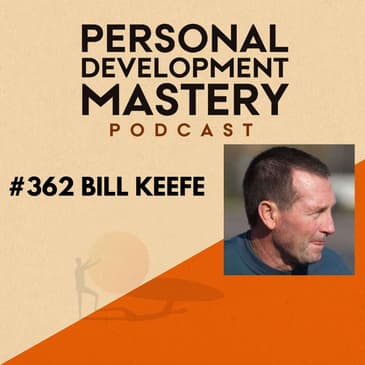
Join me on an insightful journey with Bill Keefe, Fire Team Captain for the Tony Robbins Organisation and Co-General Manager of Namale Resort and Spa. Bill's story is an introspective look at how life can flourish when we take a bold step into the unknown. He shares his experience of relocating his family to the South Pacific, reveals the essence of family unity in decision-making, and offers a glimpse into the power of taking leaps of faith and the rewards that await.
Our conversation delves into the mindset of resilience, drawing inspiration from the relentless spirit of the likes of David Goggins and the unique challenges of Tony Robbins' Fire Walk events. Discover how the collective mindset and camaraderie of a team can push you beyond your perceived limits, especially during the most challenging times. Bill and I reflect on the importance of commitment and the role it plays not only in enduring physical and mental fatigue, but also in overcoming adversity - a lesson that applies to all facets of life.
Finally, we turn our attention to the principles of calmness and detachment, particularly in high-pressure situations. Using the metaphor of the 'rock in the river', Bill illustrates the importance of maintaining focus in the midst of chaos, and how leaders can benefit from remaining objective in their decisions. Tune in for an engaging discussion that's sure to leave you with a new perspective on life's possibilities.
⠀
𝗞𝗘𝗬 𝗣𝗢𝗜𝗡𝗧𝗦 𝗔𝗡𝗗 𝗧𝗜𝗠𝗘𝗦𝗧𝗔𝗠𝗣𝗦
0:03:18 -Relocation to Fiji and Career Change
0:07:48 -Overcoming Obstacles and Successful Business Transition
0:12:10 - Fiji Factor and Fire Team Perseverance
0:15:10 - Resilience and Perseverance
0:19:07 - Testing Resilience and Overcoming Limits
0:22:47 - "The Rock in the River
0:28:52 - Metaphor of Rock in a River: Detachment and Focus in Chaotic Situations
0:32:29 - Key Lessons Learned From Tony Robbins
0:41:08 - Unleashing Potential Through Discomfort
⠀
𝗠𝗘𝗠𝗢𝗥𝗔𝗕𝗟𝗘 𝗤𝗨𝗢𝗧𝗘
"Don't quit when you're tired, quit when you're done."
⠀
𝗔𝗕𝗢𝗨𝗧 𝗧𝗛𝗘 𝗛𝗢𝗦𝗧
I am Agi Keramidas, a podcaster, knowledge broker, and mentor. My mission is to inspire you to take action towards a purposeful and fulfilling life.
Get your free copy of my first book:
⠀
𝗦𝗨𝗠𝗠𝗔𝗥𝗬
Listen to learn:
1. How to cultivate resilience and perseverance: Learn about the importance of not giving up when faced with fatigue or adversity, but rather pushing through until the task is complete. Drawing inspiration from figures like David Goggins and the experience of fire walk events, the conversation delves into the mindset needed to exceed perceived limitations and the power of a supportive team in overcoming challenges.
2. How to maintain composure in chaotic situations: The podcast highlights techniques for staying calm and focused amidst turmoil, using the metaphor of the 'rock in the river.' You can understand the value of breathing techniques, detachment, and global awareness in high-pressure environments, skills that are transferable to daily life and leadership roles.
3. How to manage your state for personal growth: Through the insights shared about learning from Tony Robbins, you can discover the significance of managing one's state of mind to handle life's challenges effectively. The episode underscores the continuous journey of personal development, emphasising the need to reframe perceptions and beliefs to maintain a positive outlook and become the best version of oneself.
—
The podcast episode featuring Bill Keefe is highly relevant to individuals who are facing uncertainty in their lives or seeking personal growth and resilience. The discussion revolves around how embracing life's unknowns can lead to transformative experiences and a deeper understanding of one's capabilities.
For those dealing with current problems that involve making difficult decisions, venturing into new territories, or enduring challenging circumstances, Bill's insights offer guidance and inspiration. His journey from the Bahamas to Fiji, which led to unexpected personal and professional growth, exemplifies the potential rewards of taking risks and stepping out of one's comfort zone. This narrative can resonate with listeners who might be contemplating a significant life change or feeling stuck in their current situation.
Furthermore, the episode delves into the importance of resilience and perseverance, drawing from the powerful messages of individuals like David Goggins. For the reader who is tired and close to giving up on a goal or project, the mantra "Don't quit when you're tired, quit when you're done" serves as a motivational reminder that endurance can lead to achieving one's objectives. This can be particularly relevant for those working on long-term goals that require sustained effort and commitment.
The concept of being a 'rock in the river,' maintaining composure amidst chaos, is another key takeaway from the episode that addresses a common desire among many people: finding peace and focus during stressful situations. This skill is invaluable for listeners looking to manage their reactions to the fast-paced, often overwhelming demands of modern life.
Lastly, the episode emphasizes continuous personal growth and the management of one's state of mind, as taught by Tony Robbins. Listeners interested in self-improvement and better handling life's challenges can gain from the discussion on the importance of reframing one's perception of events and maintaining a positive outlook.
In summary, this podcast episode provides actionable insights for listeners seeking to navigate life's uncertainties with confidence, strengthen their resilience, and commit to a journey of personal development. It encourages listeners to push their boundaries and embrace the beauty of life's uncharted waters, offering advice and real-life examples that can lead to fulfilling outcomes.
⠀
EPISODE TRANSCRIPTION
___
Please note that while an effort is made to provide an accurate transcription, errors and omissions may be present. No part of this transcription can be referenced or reproduced without permission.
___
Bill Keefe 0:00
Constantly reminding yourself that what's bothering you isn't necessarily what's happening. What's bothering you, is what you believe about what's happening
Agi Keramidas 0:14
Welcome to Personal Development mastery Podcast, episode 362. I'm your host Agi Keramidas. And my mission is to inspire you to take the actions you need to improve your life. In this podcast, I invite myself into the minds of remarkable people and ideas, distilled their wisdom to equip you with the simple, consistent actions you need to master yourself and create a life of purpose and fulfilment. If you want to cultivate a resilience mindset, learn how to not give up in the face of adversity and be able to stay calm in the midst of turmoil. Then the following conversation with my guest, Bill Keefe is for you. Bill is the fire team captain for Tony Robbins, and I met him last year when I volunteered to us, a fireteam crew member for the Tony Robbins Unleash the Power Within event. The mindset and skills we are discussing today are immediately transferable to everyday life and leadership. Let's dive right in.
Agi Keramidas 1:37
Today, I am delighted to speak with Bill Keef. Bill, you are five team captains for the Tony Robbins organisation. You are currently living in the islands of Fiji in the South Pacific for the past 13 years as code general manager of the Luxury Resort and Spa, family owned by Tony Robbins. I had the privilege to meet you in person in 2023, during Tony Robbins event, Unleash the Power Within in Birmingham, where I was volunteering as a fireteam. Crew member. And I will say two things here. The first you were one of the most inspiring leaders I had the privilege to meet and serve with. And number two, I learned so many things from you those three days. There are some learnings that will stay with me forever. So Bill, I'm very grateful to have you here with me today.
Bill Keefe 2:44
Well, thank you. And thank you for those very kind words. I'm humbled by that. Yeah, it was great. Great meeting you and working with you there in Birmingham. And you did an outstanding job for us on the team. And happy to be here today.
Agi Keramidas 3:05
Thank you. And that adds many intriguing topics, too, that I want to explore with you today. And some of them include those learnings that I got from you that I mentioned in the introduction. Before we go there. I would like to start with, you know, some relevant elements of your journey or maybe a key defining moment. So I know that it was 2011 that you relocated with your wife and three daughters to Fiji. Can you tell me a bit about the transition there and how that changed? So let's start with with that. Sure.
Bill Keefe 3:53
Yeah. Well, in 2011, I'd already been contracting with the Robbins organisation. For seven years I began as a contractor in 2004 is Assistant Fire Captain and then fire captain starting in 2008. And so Tony knew me by that association, and he also knew that we were living in the Bahamas, my wife and our kids. And we were in the scuba diving industry in the Bahamas, and I guess he was looking. He first reached out in 2010. They were looking to make a management change here at New Mali, and he just reached out and said, Hey, do you have any interest at all and possibly looking into this opportunity and changing hemispheres for a few years? And I was very, very flattered by make the offer. And we had discussions. And we have three, we have three daughters, and they were ages 12 to 17. And there were a number of things that kind of were I saw it as obstacles. But I did commit to come out and take a look at the property in September of 2010. And I'd never been to the South Pacific, never certainly never been to Fiji before. And when I got here, I was here about maybe a day and a half at the resort looking around. And the I called back home to my wife. Now listen, I said, Listen, I know we're still probably not going to be in a position to take this job. But we have to look at it much more seriously than we originally had. I was kind of coming out just as a courtesy to Mr. Robbins, he had been nice enough to, to extend this offer. And I had told him that I thought there were a lot of things that that might prevent us from being able to go and he said, but you're still interested, right? Tony, you get single minded at times. And I said, Yeah, and so he came home from that trip. And it was really the time all about the kids, us not wanting to uproot the kids. And so it was coming to decision time, are we going to pursue this or not pursue this. And so we set the family down completely anticip anticipating that this is not something that our children would be, would want to do right now. And, you know, we were both novel, and I were very keen to kind of watch their body language, because they might say yes, just because they thought that the parent that we wanted to go. But we, we didn't want to do this without giving them a vote in the process. And to our surprise, all three said, Heck yeah, we want to go when would we ever get a chance to, to live in Fiji? And what we're like, wow, I didn't expect that. And so when Tony, Tony flew my wife and the kids out at that point to have a look, and it was it, they loved it when they were here. So it's really funny how you know, the universe kind of guide you through things. Once that major hurdle was over the other 14 or 15 reasons I've listed into why we couldn't go just started to fall away. And we had we had owned a small family run dive business on the island of Bimini. And with we were at a a major hotel there, based on property, and the hotel, once they saw, I went to Fiji that my wife went to Fiji with the kids to look around, they kind of figured, you know, they added up one and one and got two and preemptively came to us and said hey, if you guys are thinking of moving on, we'd rather than put the business up for sale to an outside buyer, they said we we would just like to buy it from you. So that we retain control over that. And that really was the second big chunk. So kind of all the other objections fell away. And by December of 2010 we'd reached an agreement and we flew out here on February 11 of 2011. And it's been it's been probably one of the greatest, you know, moves that we made. It's really worked out for us our family, I think the organisation his his felt it was a worthwhile shift for them also. We we came out with a contract that was supposed to be to two years with an option to five for five and like you said earlier, it's now been 13 years.
Agi Keramidas 9:37
And thank you there is a good something that you said from that story that once the the major handle was taking care of all the small ones fell away. So that's something that I'm repeating because I think it is an important point. There is something I wanted to ask you about Fiji, which I haven't been I mean, of course, for most of us, it sounds like a really beautiful exotic destination. But I have heard about something called Fiji time, which apparently, is not very easy with, you know, cultures like ours to get used to. So how did you cope with it with that Fiji Thai culture?
Bill Keefe 10:25
Well, you know, backing up prior prior to being in Fiji I have I have not actually lived in the United States since 1981. Night, I had moved to I had moved to the Bahamas in 81 as a diving instructor, scuba instructor, and that's where I met now that her parents had moved to the Bahamas, from Canada in the early 60s, so that this is this is where we met so I've we've had a lot of years of quote unquote, island living and we're almost regardless of which Caribbean island you're in South Pacific Island you're in you've got Bahamas time, you've got Jamaican time, you've got Fiji time, it's just it in, in these Island cultures. There's not as much emphasis on the clock. And so, you know, it's it's something but it's, it's probably overblown, the whole concept of Fiji time. fee will our guests really like Fiji time, but the resort does not operate on Fiji time. When we say something's going to happen, it's seven o'clock. And it's happening at seven o'clock there were we we do have kind of a culture amongst the, the staff here. And so it's okay for the guests operate on Fiji time, it's not okay for myself and the wonderful workers that we've got here. It's it's not that it's not that much of a It's not that much of an issue, there's another thing in Fiji called the Fiji factor. Now. And that's what that is, is there's there's some really great things about living in a first world country. There's a lot of great things about living in a developing country. So you, you know, you take the good with the bad, just because of how remote the country is, or the island is. It means that if you're if you're making plans, three months down the road, you've got to put some fudge factor into whatever it is you're planning with deadlines and things of that sort. Because it's it's much more complicated to get some of the items that you might rely on it, things have to come by freight boat, or if they're coming by air airline, it's incredibly expensive and time consuming method of shipping things here. So you have to take the good with the bad or the or the challenging with the easy. And that's kind of behind what you were asking about in terms of fizzy time.
Agi Keramidas 13:39
That's great. Now, thanks for that. It's really nice to envision it like that. Bill, I would like to steer the conversation towards really what we set intention to discuss about and some of the, you know, the fire team moments and insights and learnings, which, as I said in the introduction, they had a very big impact on me. So I think you know, I was thinking of which one to wear to begin with. But the one I will begin with and it was the one that you had a quote on your T shirts, which it was kind of followed us and I think it applies with so many things in life really into our endeavours and everything that we do. And that was something that David Goggins had said, Don't quit when you're tired, quit when you're done. So I would like to hear your your thoughts about that phrase, and maybe some how do you perceive Daytona motor on that level, you know, connected with your experience in the fire team and so on.
Bill Keefe 15:09
Yeah, that that's a very that's one of the very, very powerful kind of phrases that I picked up on. I actually saw that on a poster. The poster was of David Goggins. But it was long before. David Goggins was a well known common name. David Goggins is an incredible individually, she's accomplished some amazing physical feats. He, the, the poster that I saw it on, he's, he's one of these ultra marathon runners. And it was, it was just a picture of him, you know, running in the middle of some huge desert. And it just said, Don't quit when you're tired, quit when you're done. And that, the minute I saw it, I said, Man, that sounds a lot like fire team. Because where, you know, as you know, you had the experience, this past year, the on, we do a lot of preparation the day before the firewalk. But on fire walk day, it it generally begins about seven o'clock in the morning. And, you know, in in this case, it was a Thursday, so 7am on a Thursday, and we don't finish on a on a good night, we would finish at 3am, the following morning on Friday. And I think that was about the time that we wrap things up when we were when we were filming it is yeah, yeah. But this is if you take the average person, you know that that is in a workaday world, you know, you've got, you've got an eight hour workday. And because because of where we are with technology today, probably 65 70%, maybe even more of those people who are doing an eight hour work day are doing it sitting at a desk, or maybe they're working from home remotely. But they are not outside making a living by doing something physical. There are, there's a lot of people that do, but but they don't. So when you combine the fact that we're now asking these these volunteers to do like two and a half, full workdays. And as you know, the hardest part of that work day, was at the end of that day, from about midnight until three in the morning, where that's where we needed everybody's energy. And we talked a lot about that I said, we have to clean this place up when we're done. And that's going to be where you got to dig deep. You've got to, you know, you've got to find your your level of resilience to get the job done. And it's it's got a, it's got to be the team that has this mindset, not just an individual, but every individual. If you remember, we also talked about make sure that that you are there when we finish whenever that happens to be. And we realise that that people have physical limitations. And we're not. And we talked a lot about this, that we're not asking that, that people people do ridiculous things beyond their physical capabilities, we're not asking anyone to get hurt, we're not asking anyone to do anything that would cause them endanger their health. But on the other side of that the phrase that kind of goes along with with don't quit when you're tired, quit when you're done is that concept of 20x. We also talked about that most people really never kind of push in test and see how resilient they might be. And here, here's an opportunity to kind of test that. You're one of I think we had close to 70 volunteers for the job and Birmingham, and you've got a strong team around you. So you've kind of got a safe environment to you know what maybe I can, you know, maybe before I sit down and take a rest, and we did encourage everyone to you know, you're the best judge of what you're capable of and what you're not capable of. But you can take this opportunity to maybe push yourself a little bit farther see see what you've Got, and just make that decision at the beginning of the day, I'm not going to quit and go home when I'm tired or when I'm exhausted or when, you know, I'm staying until this job is finished, and I'm gonna contribute at the highest level and do the best that I possibly can. And most people find that they are capable of a lot more than they had originally believed that they were. And unless the team has that mindset going into this, that the whole thing can collapse, especially in those final three or four hours, where, you know, we're cleaning that parking lot up, or whatever venue we use for the firewalk. And, you know, basically makes it look better than it was when we started the whole operation. So that's kind of the long answer on that one, but that don't quit when you're tired, quit when you're done also goes, we don't we don't quit when it's raining, we quit when it's done. We don't quit when it's snowing, we quit when and we're done. There's a lot of slightly different versions of that, that we use based on, you know, what we encounter.
Agi Keramidas 21:21
If you enjoy this episode, can you find one person you think would find it useful and share it with them? I'd really appreciate it helps the show grow. And you'll also be adding value to people you care about. Thank you. And now let's get back to the episode. And, you know, I found personally that these perceived limits because these limits that we perceive them, they are not real limitations, it's our minds that tells us that you are exhausted whereas we have much more dry capability. So I found you mentioned about digging deep and finding that resilience and for me, I remember the I drew that resilience and that strength from the team, the environment, the people around me and the tasks we were doing so there was a combination of factors that really allowed me easily i Would that also easier than I thought maybe to go past those, you know, perceived limits and to your right about 12 o'clock, and that's when all the fun is finished all the anticipation. It's now it's not. It's the anticlimax afterwards. So that's, it's also the most dirty and filthy and stinky. But that's the topic but So yeah, that's a it's a great, I believe philosophy, to face. things in life, don't quit when you're tired to quit when you're done. And, Bill, there is one other thing that I learned those days. And I actually mentioned that it was what I mentioned when we were doing the debrief after after the experience after it, it was worked. So just to explain all 70 of us shared our experience our challenges, whatever felt like it was appropriate at that time and it was a very worth it. I think it was five it was many hours that there but it was so deep, so emotional, so vulnerable, showing emotional roller coaster. But I'm digressing now talking about the actual debrief, the the learning itself was. And I think also it's that was mentioned many times during those days, it was that metaphor of the rock in the river. And that came to me as a realisation. You had mentioned that when we were doing the training before, but it wasn't for me when we were doing the actual when the fire was happening and that was holding my wheelbarrow full of hot coals and I had to be the calmness in amongst the kills that was happening to the to my left and to the right was people jumping and walking and screaming. So the realisation and I will ask you about your take on it. My realisation was that this kind of when I when I managed to focus on my breath in on my ground in on where I was wasn't when I what I had to do everything else that was happening moved to the periphery, it was not in the forefront of my attention, it was still happening. But it was around me, it was not on me. And it is that metaphor with like a rock in the river vary, the water moves around the rock, but rock doesn't care about that rock remains doing what's the rock does. So it made me realise how this is a metaphor for life in the sense that when life throws at us, okay, all sorts of difficulties, then we can indeed maintain our posture, shorter speaking, whereas the whatever life is throwing at us is still happening in the periphery. So that was my, you know, interpretation or how I show it, but I would love to hear your thoughts on this rock in that event.
Bill Keefe 26:04
What will you You hit the nail right on the head, that that's, we're, we're sharing this with the volunteers, one in primarily because we need you to be in that state of calm, focus, and global awareness that those are the three things. And it's one of those those skills that you can take away from this experience from from working on a fire team. And use it in your in your daily life, if you look at, it's basically being calm amongst the chaos. And this This isn't to say that the firewalk is chaos, it's absolutely not, it's kind of choreographed chaos. But as you know, there were I want to say 12,000 participants in the firewalk, and then another 300 350 crew members, besides our team separate from fire team, that we're actually conducting the walk the people over the coals, and they all need to be in a specific state, in order to do what they're going to do, the participants need to be in a very heightened state, they need to focus but they need to be keeping themselves in a peak state, and the the event crew who are guiding them over these firewalk lanes, they also need to match that state. And, and be very enthusiastic to make the whole thing work. Our team, as you were saying you were behind a wheelbarrow full of coals, those coals, as you know, they were in Fahrenheit, they were about 1200 degrees in the wheelbarrow. And there were two wheelbarrows full of coals in between every pair of lanes. So we had to be very, very focused, to protect that wheel barrel and make 100% sure that not one individual participating in that firewalk or leading guiding that firewalk and ourselves, we're going to be injured by that. And that's why we did all of the training. But the rock in the river, is it's a mental exercise, to be able to be detached from what's going on around you. And not detached doesn't mean not paying attention. be detached, not get wrapped up in the you know, the drums that are playing the cadence, the chants that people are, are doing to get themselves ready so that they're gonna walk across the coals, you have to be able to be in the midst of that, become be centred, globally aware, always aware of what's going on around you. You know, when we taught people how do you protect the wheelbarrow? How do you make sure that no one, you know, veers into the wheel barrel and you guys did an outstanding job at that. And I guess I picked up that metaphor, going back to when I was a volunteer on this team. And I was one of the shovelers I just remember standing there in between two lanes with people flowing past me very, very quickly. And you could not focus on any one person. Because now everything is all of your, your emphasis is looking at one or maybe two people and you're not aware of what's going on around you. You always have to be aware of what's going on around you. And it's just it. The mental image that came to me is there's there's this rushing water I went by, and I'm this big rock in the middle of a river. Back in my younger days, and boy scout days, I used to lead lead some whitewater canoe trips, and you kind of get to know what the different level of rapids will do. And you see a lot of rocks, depending on what river that you're in, and the rocks don't move. The rocks simply stay there. And they don't care that it doesn't care how much water is coming down the river, rock doesn't care. And so that's where the rock in the river metaphor comes from. And a lot of people pull from that. And then I think I also, in order to keep yourself calm, you also have to keep your breathing, under control, and I shared with the team, some of the breathing techniques that will allow you to stay calm and centred. But if you need to respond, you're going to be able to quickly respond.
Agi Keramidas 31:03
Thank you, if I go to phrase that you said, I really liked it, you said to be detached from what's happening around you. And I think that is a perfect, you know, explanation in a very concise way of the beam being detached.
Bill Keefe 31:22
Yes, I ended up I mean, I've been talking about the rock in the river for a while. But the whole concept of detached came later, when I began to read things I've been I've read quite a bit of Jocko willings. stuff. And he really talks about that. In terms of leaders and people in leadership positions. Sometimes you can't be in the middle of the fray. In order to make the right decision. You have to be able to detach, maybe separate yourself a little bit. Yeah, see what's happening. What what's happening, what's your team doing? What's the result? And by being able to detach you can you have a much better chance of assessing what's happening, and then making the right call about what you need to do about it. So it kind of kind of bolstered up something that that I had very roughly stumbled upon years earlier. Yeah,
Agi Keramidas 32:27
I really like it. That's I, as I said, it's something that I will, it will remain with me as a metaphor, a national image and as an experience and as a learning and a practice, actually, for forever. So, Bill, this is truly a fascinating conversation. I will. Before I start wrapping up there is there is something I wanted to ask you, you know, you have been Tony Robbins fire captain for many years you have been in his proximity. You've known him for a long time. Tell me one of the most important things you learned from him.
Bill Keefe 33:16
Oh, boy. I've learned so much from being in the Robbins organisation. I went to my first UPW in 1997 went through all the Life Mastery programmes, and I didn't even go to volunteer crew until to the year tooth 2001. So I guess
Agi Keramidas 33:44
I know it's a difficult it's a difficult question. And I'm not saying to asking you to give me the one but maybe one perhaps relevant to our discussion. If you will,
Bill Keefe 33:57
yes. And and Auggie you just used one of Tony's primary teachings. He knows what he knows, if you try and get someone to say what is the best? You know? So it takes to take the pressure off by saying, Well, what's you know, what's one of your top four or five? Exactly, you know? And in that, but this it's it's probably state management overall. And we're constantly reminding yourself is that it's what's, what's bothering you isn't necessarily what's happening. What's bothering you, is what you believe about what's happening. And if you can shift your belief if you can shift your state, your state really guides Almost everything that you're going to do in the way that you're going to perceive something. So you, no one, no human can stay in a peak state in a positive state 24/7 365 Just, it's impossible. But if you can catch yourself, you know, going down an avenue that that, you know, isn't serving you, you know, you know, it's, this isn't good. And you can consciously say, All right, I just need to do a little two millimetre shift here, I need to do. I just need to reframe how I'm perceiving what's happening. You know, what's what's really true as this situation as bad as I'm making it to be? Or is it? Am I just kind of feeling sorry for myself. So this, there's, there's so many other learnings, as you know, you've been in the environment now for quite some time. But that overriding approach to things in general, has has been one of the really key tools that I learned from Tony a long time ago, and carries with me today. And the just to add on a little bit, I also because we work outside is his fire team. But there was a period between 2004 and 2010 2011, where when I was done with fire team, I joined the security detail for Mr. Robbins inside at the events. So I had a lot of years, standing at the stage for up W's and the date with destiny events. So I had the privilege of hearing Tony, teach people, these, these skill sets, and it just, it just kind of engrained itself in my brain. And so a lot of folks don't have the opportunity like that, to hear to hear him so many times, over and over again. So that was a an all my all my co workers on the security team felt the same way. We just, you know, sit there and listen to Tony reinforce these really core principles. And it really helps it it helps me and that that thing about managing state, and really digging in deep and saying is are things as bad as I'm making them out to be? Or do I just need to do a shift here? That's, that's key, again, the long version of the long answer to the question you asked.
Agi Keramidas 37:52
Thank you. Thank you. Appreciate it. It's a I know, it's a difficult question. But yeah, I took what one thing you said that towards the end to that he was reinforcing, which is important to get that all this. It's not a one off, the more you listen to something empowering, the more it becomes ingrained. I think you use that Bill repetitions
Bill Keefe 38:19
the mother's absolute
Agi Keramidas 38:23
bill, I have a couple of last quickfire questions which I always ask my guests. And the first one is What does personal development mean to you?
Bill Keefe 38:37
To me, it means using what I've learned over the years, to just be a better person, just to try and be the the person trying to be the person that my kids see. And try and hold that standard. And I guess I guess that's it. I guess that's in personal development never stops. You have you don't get a you don't get a diploma at the end of a programme and say, Okay, I got it. But it's an ongoing process and just keep working on yourself.
Agi Keramidas 39:17
That's brilliant. And a hypothetical question. If you could go back in time and meet your 18 year old self what's one piece of advice you would
Bill Keefe 39:25
give him? Oh, geez. Probably probably put, put more effort into the four year university experience you're about to set yourself. I was you know, I I was a solid C student all the way through college. I swam in college and that was my big thing for me, and I wish I had put a little bit more effort into my studies when I was there. But who knows? I don't know if that would have changed the course of my life at all. I've been very blessed. But yeah, if I, if I was going back to talk to an 18 year old me it would be a pay more attention, spend more time in the books.
Agi Keramidas 40:20
Thank you. Bill, I want to thank you very much for your time for this conversation. I very much enjoyed it. And I believe we, we covered and I hope that we went a bit deeper on some important principles. So I want to wish you all the very best. And I would like to leave it with you with your final thoughts or parting words, or one thing I enjoy given to the listener is always some kind of practical piece of advice, something that they can implement, you know, as maybe as a result of listening to the conversation. What's the next step? What's something that one can do? To get clarity on?
Bill Keefe 41:18
First of all, let me thank you. It was great. I had a lot of fun on this. And, and this is my very first podcast interview. So yeah, yeah. So thank you for that. And I guess if, if I were to leave one piece of advice, it would be using one other phrase that we use on fire team, and that is, give yourself the opportunity, challenge yourself at something. And you'll remember the phrase, get comfortable with being uncomfortable. If you can do that, if you can put yourself in a situation that makes you a little uneasy, a little uncomfortable. And just do the best that you can add that that's probably one of the top three or four key things that you can do, to really start to find out what your limitations are, are more likely that the limitations you had put on yourself really aren't true for you that you are capable of a lot more, but put yourself in those uncomfortable situations, do your best, and you're gonna get results out of that.
Agi Keramidas 42:45
And before I close today's episode, I want to add two very important things. The first is an open invitation to you who are listening right now. I invite you to find me on Facebook or Instagram or LinkedIn and send me a direct message. And we can chat about anything you want. You can tell me who your favourite guest has been so far. Or tell me who you would like me to interview next, or anything else you'd like to discuss about the podcast and how it can serve you better. So that's an open invitation. Drop me a line and we will chat. The second thing I want to mention here is something that people often ask me about and that is how to work with me. So one of the main services I offer is one to one mentoring on mindset, personal development, confidence and finding your voice. You can find more information about my services on my website and please feel free to contact me for any further details. Until next time, stand out don't fit in!

 5.00 (74 Reviews)